
How to Clean Water Based Paint Walls Without Damage
You can safely clean water‑based painted walls with mild soap, warm water, and a soft sponge or microfiber cloth; always test a hidden spot and work top to bottom to avoid streaks. Match your pressure to the finish—flat needs gentler handling, semi‑gloss can take more scrubbing—and rinse with clear water, then dry gently. Use vinegar or rubbing alcohol sparingly on stains and protect outlets; keep supplies handy and follow simple troubleshooting tips if problems persist to learn more.
Quick Plan: Safest Method to Clean Water‑Based Painted Walls
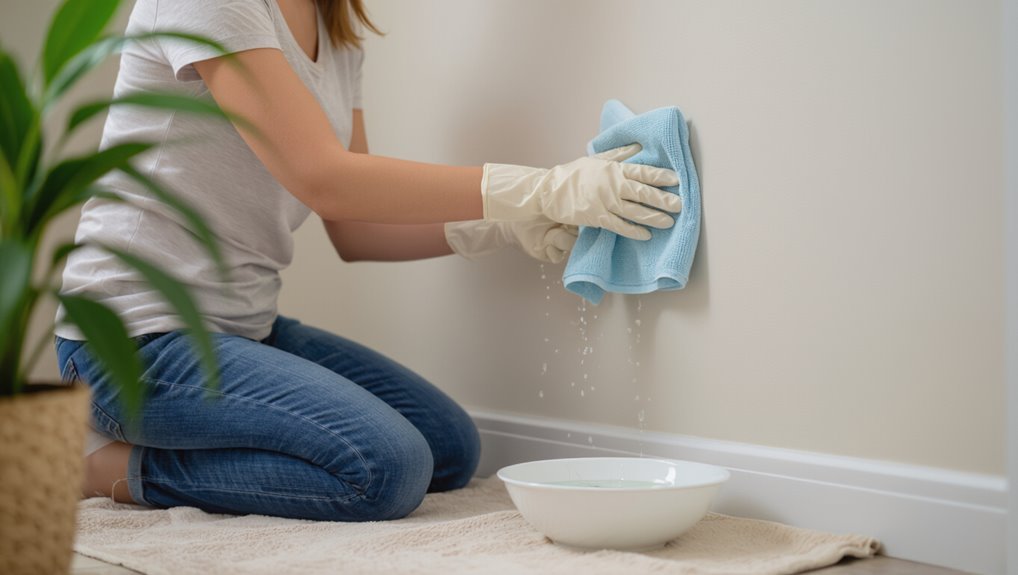
Before you start, gather mild soap, warm water, a soft sponge or microfiber cloth, and a bucket so you won’t be interrupted mid-clean.
Test a hidden spot, work top to bottom, rinse with clear water, and dry gently.
Use eco friendly products and gentle wall cleaning techniques to avoid damage.
Repeat only as needed, addressing stains promptly for best results.
How Paint Finish Affects Cleaning: Flat, Eggshell, Satin, Semi‑Gloss
Because sheen changes how durable and washable a wall is, you should choose your cleaning method based on the finish: flat paints hide imperfections but scrub off more easily.
Eggshell offers mild washability, satin stands up to regular cleaning better, and semi‑gloss tolerates the most vigorous scrubbing and moisture.
Adjust pressure, cleaner strength, and frequency to protect paint durability and respect finish sheen.
Why Water‑Based Paints Clean Differently Than Oil‑Based Ones
Although both types aim to protect and decorate surfaces, water‑based and oil‑based paints clean differently due to their chemistry and surface properties.
You’ll notice water based advantages: easier soap and water cleanup, less yellowing, and quicker drying.
Oil based drawbacks include solvent reliance and tougher stains.
Feel relief, caution, and confidence as you choose cleaning methods:
- Relief
- Caution
- Confidence
- Pride
Essential Tools: Sponges, Brushes, Ladders, and Protective Gear
1 essential kit will make cleaning water‑based paint from walls faster and safer: sponges for gentle scrubbing, soft‑bristle brushes for textured areas, a sturdy ladder for reach, and basic protective gear like gloves and goggles.
You’ll learn sponges types for finish care, make careful brush selection to avoid damage, follow ladder safety practices, and wear protective gear to keep yourself clean and safe.
Safe Household Cleaners for Water‑Based Paint
Start by gathering a few mild, household cleaners you can rely on to remove dirt, smudges, and light stains without harming water‑based paint finishes.
You’ll want gentle, tested choices—eco friendly options and common products that won’t strip finishes.
Test hidden spots first. Choose cleaners that rinse easily and avoid abrasives.
- Mild dish soap
- White vinegar
- Rubbing alcohol
- Commercial mild cleaner
Homemade Cleaners That Work and How to Mix Them
When you need an inexpensive, effective cleaner that’s safe on water‑based paint, a few simple homemade mixes will do the job—just measure carefully and always test a hidden area first.
Mix 1 cup warm water with 1 teaspoon dish soap for light dirt.
Mix 1 cup warm water with 1 teaspoon dish soap for gentle, effective cleaning—test a hidden spot first.
For stains, make a paste of baking soda and water.
Use diluted homemade vinegar (1 part vinegar, 4 parts water) sparingly.
When to Buy a Commercial Wall Cleaner and What to Choose
If your homemade solutions can’t remove stubborn stains or you’re dealing with large areas, it’s time to upgrade to a commercial wall cleaner.
Look for a formula labeled safe for water‑based paint and matched to the soil type (grease, crayon, mildew).
Always test a small hidden spot first to confirm it won’t strip or discolor the finish.
When To Upgrade
Although many stains you tackle with mild soap and a soft sponge, there comes a point you’ll want a commercial wall cleaner — especially for stubborn grease, nicotine buildup, or textured surfaces that resist DIY methods.
Consider upgrade considerations and budget implications before buying; weigh frequency, severity, safety, and long-term savings.
- Frustration
- Relief
- Confidence
- Pride
Choosing The Right Formula
1 smart pick can save hours of scrubbing: choose a commercial wall cleaner that matches the type of paint and the soil you’re tackling—gentle, non-abrasive formulas for flat or matte finishes; stronger, grease-cutting solutions for kitchens; and enzyme or nicotine-targeted products for organic stains.
Read labels to match paint types and choose cleaning agents with pH and solvent info. Test a discreet spot first.
How to Test a Hidden Spot Before You Clean
Wondering whether your chosen cleaner will harm the paint? Test a hidden areas patch first to check surface compatibility and colorfastness.
Use a damp cloth, wait five minutes, then blot dry. If no change, proceed confidently.
- Heart-sinking stain avoided
- Relief from damage
- Confidence restored
- Satisfaction with safe results
How Much Pressure to Use When Scrubbing Painted Walls
Start scrubbing gently—use light pressure and small, circular motions—to avoid removing paint or leaving shiny spots.
You’ll monitor pressure sensitivity by increasing force only if stains persist, testing a tiny area first.
Use controlled scrubbing techniques, slow and deliberate, to lift grime without abrasions.
Stop if paint dulls or flakes, then switch to gentler cleaners or reassess your approach.
Best Sponges and Cloths to Protect Texture and Finish
Once you’ve settled on a gentle scrubbing technique, pick sponges and cloths that protect both texture and finish.
Choose soft non-abrasive sponge types and lint-free cloth materials to avoid scuffs. Test in an inconspicuous spot. Use gentle motion and rinse often to prevent grit buildup. Trust tactile feedback—if it drags, switch tools.
- Microfiber cloths
- Cellulose sponges
- Soft foam sponges
- Cotton muslin
How to Use a Magic Eraser Without Stripping Paint
Before you start, test the Magic Eraser on a hidden spot to make sure it won’t remove the finish.
Use light pressure and short strokes so you lift grime without sanding the paint.
Rinse the area with a damp cloth and dry it to stop streaks and check the result.
Test On Hidden Area
Although a Magic Eraser seems gentle, you should always test it on a hidden spot to make sure it won’t remove or dull your paint.
Create a small test area to check paint compatibility and finish. If it passes, proceed cautiously. If not, stop and choose another cleaner.
- Relief
- Confidence
- Caution
- Satisfaction
Use Light Pressure
If your hidden test spot held up, move on to cleaning with a gentle hand: press the Magic Eraser lightly and let its texture do the work rather than scrubbing hard.
You should use light pressure, following careful cleaning techniques to lift marks while protecting water‑based paint.
Work in small sections, check progress often, and stop as soon as the stain fades to avoid thinning the finish.
Rinse And Dry
Once the mark’s gone, rinse the area with a damp microfiber cloth to remove residue from the Magic Eraser and prevent further abrasion to the paint.
You’ll use gentle rinse techniques, blot excess moisture, then apply careful drying methods so paint stays intact.
- Relief — stain is gone.
- Care — you preserved finish.
- Calm — no streaks.
- Pride — walls look renewed.
Prep the Area: Move Furniture, Protect Floors and Fixtures
Start by clearing the room of movable furniture and accessories so you have unobstructed access to the walls. Adjust furniture arrangement to clear pathways and staging areas. Lay drop cloths or plastic sheeting for floor protection and tape edges. Cover fixtures and switch plates.
| Task | Tip |
|---|---|
| Move furniture | Use sliders |
| Protect floors | Secure cloth edges |
Remove Dust and Cobwebs From Painted Walls
With furniture out of the way and floors protected, grab a soft-bristle broom or a long-handled microfiber duster to sweep dust and cobwebs from the highest corners down.
With furniture moved and floors covered, use a soft broom or long-handled duster to sweep dust from high corners down
Use gentle dust removal techniques and simple cobweb cleaning methods to avoid abrasion. You’ll feel immediate relief seeing clean walls.
- Satisfying
- Calm
- Proud
- Refreshed
How to Remove Fingerprints and Hand Marks
When you spot fingerprints or hand marks, reach for soft, non-abrasive tools like microfiber cloths or a sponge.
Use a gentle cleaning technique—light pressure with a mild soap and water solution—to lift oils without damaging the paint.
Rinse with a damp cloth and pat dry to prevent streaks.
Gentle Cleaning Tools
A soft microfiber cloth and a mild, damp sponge are usually all you need to lift fingerprints and hand marks from water-based paint without damaging the finish.
You’ll prefer gentle scrubbers and microfiber cloths to avoid abrasion. Choose soft, clean tools and gentle soaps.
- Soft microfiber cloths
- Mild damp sponge
- Gentle scrubbers
- Soft-bristled brush
Effective Cleaning Technique
Start by testing your cleaning solution on an inconspicuous spot to guarantee it won’t dull the paint.
For fingerprints and hand marks, dampen a microfiber cloth with mild dish soap and water, wring well, and gently rub in circular motions.
Rinse with a clean damp cloth, dry immediately, and repeat if needed.
These Cleaning Techniques support regular Wall Maintenance and prevent abrasion.
How to Remove Food Splatters and Dried Sauces
If food splatters or dried sauces have crusted onto your water-based painted walls, loosen them gently before you scrub so you don’t damage the finish.
Use mild soap, warm water, and a soft cloth to lift stains. Try food splatter techniques and sauce residue solutions to avoid scrubbing hard.
- Breathe — stay calm.
- Soak gently.
- Blot, don’t rub.
- Rinse and dry.
How to Remove Grease and Cooking Stains Without Sheen Loss
When you’ve lifted food splatters, you’re probably dealing with grease spots next — they cling differently and can dull your paint if handled poorly.
For grease removal, mix mild dish soap with warm water, test an inconspicuous spot, then gently wipe with a soft cloth.
Rinse, dry, and repeat for stubborn cooking stains. Avoid abrasive scrubbing to preserve sheen.
How to Remove Crayon and Marker From Painted Walls
Sometimes kids (or guests) leave colorful surprises on your walls, but you can usually remove crayon and marker without damaging water-based paint.
Gently test a hidden spot, then try soft erasers, mild soap, or rubbing alcohol on a cloth. Focus, be patient, and avoid scrubbing hard.
- Relief: crayon removal works.
- Hope: marker stains fade.
- Calm: test first.
- Care: rinse gently.
How to Remove Ink and Pen Marks Without Smudging
Before you start, test a small hidden spot to make sure the finish won’t lift or discolor.
If the test’s fine, use a gentle eraser (like a white vinyl eraser or a melamine sponge held lightly) to lift ink without smudging.
Work slowly from the edges toward the center and blot away loosened ink as you go.
Test Spot First
Curious if your cleaning method will lift the ink without spreading it? You should test spot first to gauge surface sensitivity and compare test methods.
Start small, wait, inspect, then proceed only if safe.
- Calmly choose an inconspicuous corner.
- Gently apply cleaner.
- Blot, don’t rub.
- Assess residue and paint reaction.
Use Gentle Erasers
If your test spot shows the paint holds up, reach for a gentle eraser to tackle ink or pen marks without smudging. Use gentle pressure, work small areas, and avoid soaking. Combine light strokes with effective scrubbing only where needed. Stop if paint dulls; rinse residue with a damp cloth.
| Tool | Pressure | Tip |
|---|---|---|
| Eraser | light | small strokes |
| Cloth | gentle | blot |
| Brush | medium | spot scrub |
How to Lift Scuffs and Shoe Marks Effectively
Many scuff and shoe marks come off with simple, targeted techniques you can do quickly at home.
You’ll protect paint while removing stubborn blemishes using gentle motions and the right supplies for scuff removal and shoe mark removal.
- Magic eraser: rub lightly, don’t scrub.
- Baking soda paste: pat, rinse.
- Melamine sponge: test first.
- Soft cloth + mild detergent: blot, dry.
How to Remove Adhesive Residue and Stickers Safely
Before you start removing stickers or sticky residue, test your chosen method on a hidden patch to make sure the paint won’t lift.
Use gentle adhesive removers like soapy water, rubbing alcohol, or a citrus-based product and work slowly with a soft cloth or plastic scraper.
After the residue’s gone, clean the area with mild soap and rinse well to remove any remover residue.
Test Hidden Area First
Wondering how a cleaning trick will affect your paint? You should try test patches in hidden areas before tackling adhesive or stickers.
Small trials prevent surprises and protect finish. Note color change, tackiness, or shine loss.
- Relief — you’ll avoid damage.
- Confidence — you know the method works.
- Caution — you’ll proceed slowly.
- Satisfaction — clean results without regret.
Use Gentle Adhesive Removers
When adhesive or sticker residue won’t budge, reach for a gentle remover designed for painted surfaces so you don’t strip the finish; test it in an unseen spot, apply sparingly, and let it soften the glue before you rub.
Use gentle adhesive techniques: blot or lift softened residue with a plastic scraper, avoid harsh solvents, and rely on safe removal methods to protect the paint.
Clean And Rinse Thoroughly
After you’ve softened and lifted most of the residue with a gentle remover, you’ll want to clean and rinse the area thoroughly to remove any remaining adhesive, solvent film, or debris.
You’ll use mild soap, warm water, and soft cloths. Follow safety precautions, and adjust cleaning frequency to avoid wear.
- Relief
- Confidence
- Care
- Pride
How to Remove Mold Stains Without Damaging Paint
If mold has stained your painted walls, you can remove it safely by tackling the spores gently and using the right cleaners so the paint stays intact.
Start with stain identification and surface preparation: dry area, test a mild cleaner.
Begin by identifying stains and prepping the surface: dry thoroughly and try a mild cleaner first.
Use recommended cleaning methods, note ventilation importance, and follow cleaning frequency for mold prevention.
This aids paint maintenance and provides effective wall protection.
How to Treat Nicotine or Heavy Smoke Residue on Walls
Tackle nicotine and heavy smoke residue by breaking the job into manageable steps: ventilate the room, test a small patch of wall, and choose cleaners that cut through tar and oils without stripping your paint.
Use degreaser solutions and gentle scrubbing to lift smoke odor and treat wall discoloration.
- Breathe fresh air
- Test discreetly
- Clean thoroughly
- Restore confidence
How to Remove Water Rings and Mild Staining
Once you’ve handled heavy smoke or nicotine residue, turn your attention to water rings and mild stains on water-based paint.
For water ring removal, blot excess moisture, then gently clean with a soft cloth and mild detergent solution. Test a hidden spot first.
Use mild stain solutions like diluted vinegar or baking soda paste for stubborn marks, rinse lightly, and pat dry to avoid damage.
How to Address Pencil Marks and Charcoal Stains
Pencil marks and charcoal stains are common and usually easy to remove when you act gently and promptly: You’ll dab with a soft eraser, use mild soap and water, and test hidden spots.
Learn pencil removal techniques and charcoal stain prevention to avoid repeats.
- Stay calm
- Blot, don’t rub
- Test first
- Repeat gently
How to Remove Grease From Hands Transferred to Walls
If grease from your hands has smeared onto the wall, act quickly to prevent it from setting: blot excess with a dry cloth.
Then apply a mild dish soap solution on a soft sponge and gently wipe.
Rinse with clean water, pat dry, and avoid scrubbing.
This grease removal method preserves paint and supports proper wall maintenance without harsh chemicals or abrasion.
When Gentle Cleaning Fails: Prepare to Spot‑Prime and Touch Up
When gentle cleaning won’t lift stains or scuffs, prepare to spot-prime and touch up to restore the finish without repainting the whole wall.
You’ll feel relieved fixing small areas. Gather primer, small brush, clean rag and matching paint.
Apply primer only to damaged spots, let dry, then touch up gently.
Prime just the damaged areas, let dry fully, then gently touch up for seamless repair without repainting the whole wall.
- Relief
- Confidence
- Satisfaction
- Pride
How to Match Paint Color for Touch‑Ups on Water‑Based Finishes
Now that you’ve spot-primed and touched up the problem areas, you’ll want the repaired spots to blend invisibly with the rest of the wall.
Start by comparing paint samples and color swatches under varied lighting effects. Consider finish types and match sheen.
Use proper paint supplies and precise touch up techniques. Test small areas, adjust mixes, and document formulas for future color matching and blending methods.
How to Feather and Blend Touch‑Up Paint Into the Existing Finish
Start by prepping the area: clean, dry, and lightly scuff the spot so the new paint sticks.
Apply the touch-up sparingly and work outward from the repair, keeping the edges wet as you feather with a brush or small roller.
Blend by softening the wet edge into the surrounding finish until it disappears.
Prepare The Surface
Before you touch paint, smooth and clean the area so new pigment can merge with the old without obvious edges.
You’ll prep by checking surfaces and using dust removal techniques after wall inspection tips reveal imperfections.
Then act calmly, repairing and sanding tiny flaws.
- Breathe — steady hands matter
- Visualize seamless finish
- Remove dust thoroughly
- Lightly sand and wipe
Blend Wet Edges
Feathering the wet edges lets you blend fresh paint into the surrounding finish so touch-ups vanish.
Use wet edge techniques: keep the new paint slightly wetter than surrounding areas, work quickly, and overlap strokes lightly.
For blending methods, feather outward with a damp, soft brush or sponge, back-roll if needed, and match texture to avoid visible seams.
When to Repaint the Whole Wall Instead of Spot Cleaning
If stains, fading, or texture differences cover a big portion of the wall, you should repaint the whole surface rather than trying to patch it, because spot repairs will stand out against the surrounding finish.
You’ll know the reasons repaint is needed when signs repair won’t blend.
Repainting restores uniformity and peace of mind.
- Frustration
- Relief
- Confidence
- Pride
How to Prevent Future Stains and Make Walls Easier to Clean
To keep your walls looking fresh longer, establish simple habits and choose protective products that stop stains before they start.
Wipe spills immediately, use doormats and chair pads, and enforce no-food zones to reduce contact.
Regular dusting and spot checks simplify wall maintenance.
Regular dusting and quick spot checks make wall care effortless, preventing buildup and costly touch-ups.
These preventative measures cut cleaning time, prevent deep stains, and help you address issues before they require repainting.
Protective Products to Consider: Washable Paints and Clear Coats
When you pick washable paint, you’re choosing a finish that stands up to repeated wiping without losing color.
You can also add a clear protective coat over the paint to guard against scuffs, stains, and moisture.
Together these options make routine cleaning quicker and extend the life of your walls.
Choosing Washable Paints
Although washable paints and clear coats might seem like extra steps, they’re the easiest way to keep water-based painted walls looking fresh: You’ll choose based on washable paint benefits and paint durability factors—scrub resistance, finish, VOCs, and cost.
Consider how your family lives and how often you’ll clean.
- Pride
- Relief
- Confidence
- Comfort
Applying Protective Clearcoats
If you want your water-based paint to stand up to scrubbing, adding a clearcoat gives you an extra layer of protection that’s easy to apply and maintain.
For protective clearcoats application, choose compatible water-based or acrylic clear coats, prep surfaces, and follow thin, even coats.
You’ll see the benefits of clearcoats: increased durability, stain resistance, and easier cleaning without altering color or sheen.
Cleaning Schedules: How Often to Wash Different Rooms
Different rooms need different washing rhythms based on use and traffic: high-traffic areas like kitchens, entryways, and kids’ rooms usually need a gentle wash every 1–3 months.
Bathrooms and laundry rooms every 1–2 months, and low-traffic spaces such as formal living rooms or guest bedrooms can go 6–12 months between cleanings.
You’ll set cleaning frequency by room priorities.
- Calm relief
- Pride restored
- Comfort preserved
- Confidence renewed
Special Guidance for High‑Traffic Areas and Kids’ Rooms
For high-traffic areas you’ll want a quick weekly wipe-down with a mild detergent to prevent dirt build-up and scuff marks from becoming permanent.
In kids’ rooms use gentle, non-toxic cleaners and a soft cloth to remove fingerprints and crayon without damaging the paint.
If stains are stubborn, spot-treat promptly to avoid repeated scrubbing that wears the finish.
High‑Traffic Maintenance Tips
High-traffic areas and kids’ rooms need routine, targeted care to keep water-based paint looking fresh; you’ll want a simple weekly wipe-down and immediate spot-cleaning of scuffs and spills to prevent stains from setting.
- Schedule cleaning frequency to stay ahead of grime.
- Use gentle cloths to avoid abrasion and worry.
- Tackle marks instantly to reduce stress.
- Rotate tasks so maintenance feels doable.
Kid‑Safe Cleaning Methods
You’ve already got a routine for common scuffs and spills; now focus on kid-safe cleaning methods that keep little ones healthy without harming your paint.
Use kid friendly products (mild soap, vinegar solution) and soft cloths.
Teach simple cleaning games to involve kids safely—wipe zones, reward small tasks.
Spot-test solutions, rinse thoroughly, and store cleaners out of reach to prevent accidents.
How Humidity and Ventilation Affect Cleaning Outcomes
Because moisture and airflow change how paint dries and how dirt responds, humidity and ventilation directly affect your cleaning results: damp air softens water-based paint and can make stains smear or re-wet, while good ventilation speeds drying and reduces streaking.
So always aim to clean when humidity is low and fresh air is circulating.
- You feel frustrated when humidity effects ruin effort.
- You breathe easier with ventilation impact.
- You gain confidence as surfaces dry fast.
- You avoid regret by choosing the right moment.
Safe Cleaning Around Electrical Outlets and Fixtures
Before you start scrubbing near outlets, turn off the power at the breaker to prevent shocks.
Remove or cover outlet and switch plates with painter’s tape or plastic to keep water and cleaner out.
Work with a damp (not dripping) cloth and avoid spraying cleaners directly toward fixtures.
Turn Off Power
When you’re cleaning walls near outlets or light fixtures, shut off the circuit at the breaker to eliminate shock risk; leaving power on while wiping can turn a routine job into a dangerous one.
You should confirm breakers and label power sources, follow safety precautions, and test switches before touching.
- Fear
- Relief
- Confidence
- Responsibility
Protect Outlet Covers
To protect outlet covers while you clean, remove or loosen plates and wipe them separately so water and cleaner never drip into the box.
If you leave plates on, cover them with painter’s tape or a dry cloth to keep moisture out of openings and switches.
You’ll practice outlet safety by preventing drips, using cover protection, and drying plates fully before reattaching to avoid shorts or corrosion.
Tools and Techniques for Textured or Knockdown Surfaces
Although textured and knockdown walls hide imperfections, they need different tools and a gentler touch than smooth surfaces. You’ll want the right brushes, rollers, and sprayers to reach into crevices without flattening the texture.
Use these focused cleaning techniques for paint maintenance, surface preparation, stain prevention, cleaning frequency, wall protection, and gentle scrubbing:
- Soft-bristled brush
- Microfiber roller
- Low-pressure sprayer
- Spot-clean solution
How to Clean Exterior Water‑Based Painted Surfaces (Overview)
If you want exterior water‑based paint to last and look its best, regular gentle cleaning prevents buildup of dirt, mold, and mildew that can degrade the finish and lead to costly repairs.
You should rinse surfaces, use mild detergent and soft brushes, test a small area, and avoid harsh chemicals or pressure washing too close.
Proper exterior cleaning boosts paint durability and appearance.
When to Call a Professional Cleaner or Restoration Service
If you spot visible structural damage like cracks, bulging, or loose siding, you should call a professional right away to assess safety and repairs.
If stains or discoloration won’t come out after proper cleaning, a restoration service can determine whether deeper treatment or repainting is needed.
Don’t wait on issues that could get worse or hide underlying problems.
Visible Structural Damage
When you see cracks, bulging, or exposed drywall beneath peeling paint, call a professional—these signs often mean structural damage that simple cleaning or spot repairs won’t fix.
You shouldn’t ignore compromised structural integrity or hidden issues in wall materials. A pro will assess safety, moisture, and framing, then repair properly.
- Fear of collapse
- Hidden mold risk
- Worsening moisture
- Costly delays
Persistent Stains Remaining
Though you’ve tried gentle cleaners and spot treatments, persistent stains that don’t lift are a clear sign to call a professional cleaner or restoration service.
You should stop DIY attempts to avoid worsening paint or substrate damage.
Pros use tested cleaning solutions, specialized equipment, and expertise in persistent stain removal.
Contact a reputable service, describe materials and previous treatments, and request references and a written estimate before work begins.
Cost and Time for Common Cleaning and Touch‑Up Jobs
Because small scuffs and stains are common, you’ll want realistic expectations about how much time and money routine cleaning and touch‑ups require: plan based on cleaning costs, time estimates, maintenance schedules, and quick touch up tips to keep walls fresh.
- Quick wipe: minutes, low cost — relief.
- Spot primer and paint: 20–40 min — calm.
- Recoat whole wall: hours, moderate cost — commitment.
- Professional help: day, higher cost — reassurance.
Troubleshooting: Paint Bubbles, Peeling, and Color Change
If paint bubbles, peels, or shifts color on your walls, you can usually diagnose the cause and choose a targeted fix instead of repainting everything.
When paint bubbles, peels, or discolors, identify the cause and spot‑repair—don’t repaint the whole room.
Check for moisture, poor paint adhesion, or incompatible finishes.
Scrape loose areas, sand to match wall texture, then prime with a compatible primer.
Spot‑repair stains or color shifts; only repaint sections after proper prep.
Quick Safety Checklist Before You Start Cleaning
After you’ve fixed peeling, bubbling, or color issues, don’t start scrubbing without a quick safety check.
You’ll want proper safety gear, know potential cleaning hazards, and protect floors and furnishings. Calmly assess surfaces, ventilation, and product labels before you begin.
- Wear gloves and eye protection
- Ventilate the room thoroughly
- Test cleaner on a hidden patch
- Clear trip and spill risks
Final Tips: Keeping Walls Fresh Between Washes
While regular deep cleans are necessary, you can keep walls looking fresh between washes by tackling small issues quickly and establishing simple habits: follow wall care and maintenance tips like spot-cleaning stains, adjusting cleaning frequency seasonally, performing routine checks for scuffs, and using wall protection near high-traffic areas.
Consider environmental factors to prevent damage and preserve paint longevity through prompt stain prevention and gentle upkeep.
Frequently Asked Questions
Can Cleaning Products Harm Nearby Wood Trim or Baseboards?
Yes — cleaning products can damage nearby wood trim or baseboards if they’re too harsh, abrasive, or left wet. You should test first, dilute cleaners, use gentle cloths, and protect wood with tape or coverings.
How to Remove Mildew Odor From Painted Walls After Cleaning?
Right off the bat, nip it in the bud: you’ll deodorize by washing with a vinegar-water mix, rinsing, then applying baking soda or commercial odor neutralization spray; guarantee mildew prevention with dehumidifiers and improved ventilation.
Is Steam Cleaning Safe for Indoor Water‑Based Painted Walls?
Yes — you can, but cautiously. You’ll use low‑heat steam cleaning methods and gentle pressure; steam cleaning benefits include sanitizing and mildew removal without chemicals. Test a hidden spot first and avoid prolonged saturation to protect paint.
How to Clean Painted Walls in Historic Homes With Lead‑Based Paint Risks?
A landlord cleaned a Victorian foyer using HEPA vacuuming and wet-wiping; you should follow lead paint safety, hire certified abatement for unstable paint, use HEPA filters, wet methods, PPE, and prioritize historic preservation protocols.
Can Pets’ Saliva or Urine Stains Be Fully Removed Without Repainting?
You can often remove pets’ saliva or urine stains without repainting if you act fast; use pet stain removal methods and appropriate cleaning solutions, blotting, enzymatic cleaners, and gentle scrubbing to lift odor and discoloration effectively.
Conclusion
You’re almost done — regular gentle cleaning keeps water‑based paint looking new. Did you know the average home accumulates about 40 pounds of dust yearly? That’s why wiping walls every few months matters: it prevents grime buildup that can dull color and force repainting sooner. Use soft tools, mild cleaners, and test a hidden spot first. With simple care, you’ll protect your paint finish, save money, and keep rooms feeling brighter and fresher.
