
How to Detect Mold in Walls: Warning Signs and Inspection Tips
Check walls for musty odors, dampness, bubbling paint or wallpaper, and discolored or soft patches; run your hand along baseboards and sniff near closets and outlets. Use a flashlight, moisture meter, or infrared camera to spot hidden wet areas and document any findings with photos. Inspect bathrooms, basements, kitchens, and crawlspaces where leaks and condensation are common. If you suspect mold, isolate the area and consider professional testing—keep going and you’ll get practical inspection and next-step tips.
Quick How-To: Find Mold in Walls Fast
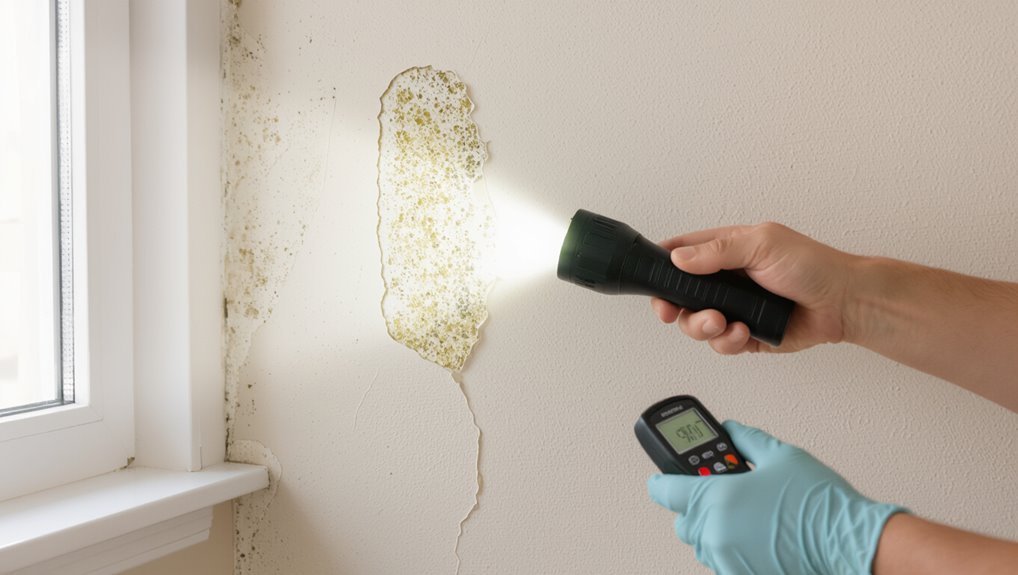
If you suspect mold in your walls, act quickly: start by looking for visible stains, peeling paint, or bubbling wallpaper.
Then run your hand for damp spots and sniff for musty odors.
Use simple mold detection techniques like moisture meters and flashlight inspections.
Follow wall inspection methods—check baseboards, outlets, and closets—and document findings with photos so you can decide next steps or call a pro.
Signs That Mold May Be Inside Your Walls
Look for a combination of clues—discolored patches on paint or drywall, a persistent musty smell, unexplained increases in humidity or condensation, and recurring respiratory irritation when you’re home—that together suggest mold is growing inside your walls.
Use targeted mold detection techniques and hunt hidden moisture sources. Feel alarmed? Act quickly:
- Inspect odors.
- Check stains.
- Monitor humidity.
Why Mold Grows Inside Walls
Because mold needs just a few basic things—moisture, organic material, and warmth—it can take hold inside walls where you least expect it.
You’ll see mold growth when leaks, condensation, or high humidity introduce moisture sources that wet studs, drywall, or insulation.
You should check for hidden dampness, poor ventilation, and unnoticed plumbing or roof issues so mold doesn’t spread.
High-Risk Rooms for Hidden Wall Mold
Check bathrooms and shower areas first, since constant moisture and steam make walls prime spots for hidden mold.
Don’t forget basements and crawlspaces where leaks and poor ventilation let mold thrive out of sight.
Kitchens and laundry rooms also pose risks because plumbing and condensation create damp pockets inside walls.
Bathrooms And Shower Areas
Bathrooms and shower areas are prime spots for hidden wall mold since they stay damp, trap steam, and often have poor ventilation.
You should inspect for musty smells, soft drywall, and stained tile grout near fixtures.
Check for shower leaks behind panels and around seals.
Act fast—mold spreads quietly and harms health.
- Fear
- Urgency
- Relief
Basements And Crawlspaces
1. You’ll check basements and crawlspaces for mold types, moisture sources, and risk factors using inspection tools and detection methods. Note health effects, apply prevention strategies, and use proper cleanup techniques if you find growth.
| Area | Common Cause | Action |
|---|---|---|
| Foundation | Water seepage | Inspect tools |
| Crawlspace | Poor ventilation | Ventilate |
Kitchens And Laundry Rooms
Because kitchens and laundry rooms combine heat, humidity, and frequent water use, they’re prime spots for hidden wall mold that can start behind cabinets, appliances, or drywall.
You’ll want to inspect them carefully for stains, musty odors, or peeling paint.
Check areas where kitchen humidity or poor laundry ventilation concentrate:
- Behind sinks and dishwashers
- Around washer hookups
- Beneath cabinets and vents
How Moisture and Ventilation Enable Mold
When humidity stays high or water leaks go unseen, mold gets exactly the conditions it needs to grow inside walls; tiny spores land on damp surfaces, feed on organic materials like drywall and wood, and colonize quickly. You should prioritize moisture control and ventilation strategies to prevent growth.
| Source | Risk | Action |
|---|---|---|
| Leak | High | Repair |
| Condensation | Medium | Ventilate |
| Flood | Very High | Dry/Replace |
Use Smell Tests to Pinpoint Hidden Mold
If you notice a persistent musty smell, that’s often the first clue there’s hidden mold behind your walls.
Walk rooms systematically and close doors to isolate where the odor is strongest.
Use that smell to guide a focused inspection—peeking at baseboards, outlets, and vents where moisture might’ve collected.
Recognize Musty Odors
Although you can’t see it, a persistent musty smell often tells you there’s hidden mold nearby; use your nose as a first-line detector and note where the odor is strongest to narrow down likely problem areas.
Pay attention to musty smell intensity and possible odor sources. Feel unsettled? Act fast.
- Panic
- Worry
- Resolve
Isolate Odor Sources
Start by isolating the area with the strongest musty smell so you can rule out competing sources and focus your inspection.
Close doors, ventilate adjacent rooms, and move potential odor sources like trash or damp laundry away.
Walk slowly, sniffing for variations to locate the mold odor.
Mark suspected spots and note odor sources before proceeding with visual or tool-assisted checks.
Use Smell-Aided Inspection
Wondering where that persistent musty odor is coming from? Use smell intensity as your guide: move slowly, note changes, and mark likely spots. Trust your nose, then confirm visually or with a moisture meter.
- Close doors, sweep rooms.
- Breathe shallowly, compare intensity.
- Trace toward walls, vents, baseboards—pinpoint odor sources and investigate further.
Paint and Wallpaper Clues That Suggest Mold
If paint is bubbling, peeling, or showing dark streaks, you should suspect moisture and possible mold behind the surface; wallpaper that’s lifting at the seams or stained with yellow, brown, or black spots often signals the same problem. Look for paint discoloration and wallpaper peeling near vents, pipes, or exterior walls.
| Clue | What it suggests |
|---|---|
| Bubbling paint | Trapped moisture |
| Dark streaks | Mold growth |
| Seams lifting | Adhesive failure |
| Stains | Water intrusion |
Surface Stains vs. Penetrating Stains: What They Mean
When you spot a stain on a wall, determine whether it sits on the surface or has penetrated deeper—because that difference tells you how serious the moisture issue might be and what steps to take next.
You’ll notice:
- Surface stains: often powdery or flaky, feel superficial.
- Penetrating stains: darker, spread into drywall or plaster.
- Act fast if stains recur or smell musty.
Inspect Wall Cavities With a Flashlight and Mirror
Grab a bright, focused flashlight and angle it along the cavity to reveal textures and color changes.
Hold a small mirror at varying angles to see behind studs and into corners where light can’t reach.
Look for fuzzy growth, discoloration, or musty residue as clear indicators of mold.
Proper Flashlight Use
Start by shining a bright, focused flashlight into any accessible wall cavity while angling a small mirror to catch hidden surfaces; you’ll spot discoloration, texture changes, or mold colonies that a bare eye misses.
Choose flashlight types with adjustable beam brightness.
Stay steady, move slowly, and note suspicious areas.
- Fear
- Relief
- Action
Mirror Angles Technique
1 useful trick is angling a small mirror inside a wall cavity while you sweep a focused flashlight across hidden surfaces; this combo lets you inspect behind studs and insulation without dismantling drywall, revealing discoloration, mold spots, or texture changes that direct light alone can miss.
You’ll adjust mirror positioning to catch angles, use clean reflective surfaces, and move the light to map problem areas quickly.
Spotting Mold Indicators
When you angle a small mirror into a wall cavity and sweep a bright flashlight across hidden surfaces, you’ll quickly spot the key indicators of mold: dark or discolored patches, fuzzy growths, and damp-looking streaks or stains on framing, insulation, or the back of drywall.
Check for:
- Musty odors triggering concern
- Visible mold types and textures
- Signs suggesting health risks
Check Baseboards, Trim, and Outlet Covers Safely
Before you pry anything loose, scan baseboards, trim, and outlet covers for discoloration, soft spots, or a musty smell—these clues often signal hidden mold.
Use mold identification techniques like visual patterns and odor association while employing safe inspection methods: wear gloves and a mask, limit disturbance, and note affected areas.
Photograph and document findings for further assessment.
Safely Remove Outlet Covers for Inspection
Before you touch anything, turn off the power to the outlet at the breaker and double-check with a tester so you won’t risk a shock.
Use a screwdriver to remove the cover screws and gently pull the plate away from the wall.
Inspect behind the outlet for discoloration, musty smells, or visible mold on the box and surrounding drywall.
Turn Off Power
1 simple safety step you must take is shutting off power to the room at the circuit breaker before removing outlet covers; this prevents shocks and lets you inspect the outlet and surrounding wall safely.
You’ll follow safety precautions for mold testing and look for discoloration.
- Feel relieved
- Stay cautious
- Act promptly
Remove Cover Screws
Now that the power’s off and you’ve confirmed the area is safe, you can remove the outlet cover to inspect the wall behind it.
Use a properly sized screwdriver for controlled screw removal, keeping screws in a small dish.
Gently lift the cover straight off, avoiding force.
During cover inspection, note cracks, warping, or moisture stains before proceeding with further checks.
Inspect Behind Outlet
With the cover removed, carefully pull the outlet forward a few inches to expose the wall cavity without stressing the wiring; you’ll want enough room to look and feel for signs of mold but not so much that you tug on the cables.
Follow these steps for outlet inspection and electrical safety:
- Shine a flashlight, sniff for musty odor.
- Feel for dampness with gloved finger.
- Note discoloration, take photos, reseal.
Detect Mold Behind Drywall Without Cutting It
If you suspect mold behind drywall but don’t want to cut into your walls, you can still gather clear clues using noninvasive methods—visual signs, musty odors, moisture meters, infrared cameras, and air or surface sampling each give useful evidence that helps pinpoint hidden growth.
Use mold detection methods and practical wall inspection techniques: probe baseboards, test air near suspected spots, and document moisture patterns for targeted follow-up.
Use Moisture Meters: Where and How to Read Them
A moisture meter lets you quickly quantify how wet wall materials are so you can distinguish normal humidity from a leak or hidden mold risk.
Use probes on studs, surfaces, and near plumbing, checking reading moisture levels against baseline.
Probe studs, surfaces, and areas near plumbing, comparing meter readings against a baseline to spot hidden moisture.
Perform regular moisture meter calibration.
React fast if readings stay high.
- Shocked
- Relieved
- Empowered
Infrared Cameras: Spotting Cold Spots That Hide Mold
An infrared camera helps you spot temperature differentials in walls that can signal hidden moisture and mold.
Learn to interpret cold spot patterns—linear or clustered cool areas often point to leaks or poor insulation where mold likes to grow.
Always confirm thermal findings with a moisture meter so you’re not chasing false positives.
Detecting Temperature Differentials
Wondering where hidden mold might be lurking behind your walls? Use thermal imaging and temperature mapping to reveal cooler areas where moisture hides.
You’ll feel urgency, relief, and control as you:
- Scan walls systematically.
- Mark cold spots for follow-up.
- Prioritize inspections in damp zones.
Act quickly when temperature differentials suggest persistent moisture to prevent mold growth.
Interpreting Cold Spot Patterns
When you scan with an infrared camera, pay attention to repeatable cold spot patterns—clusters, streaks, or linear runs often point to concealed moisture paths like pipe lines, roof leaks, or floor joints. You’ll use thermal imaging to map cold spot causes and prioritize follow-up.
| Pattern | Likely Cause | Action |
|---|---|---|
| Cluster | Leak | Inspect cavity |
| Streak | Runoff | Trace line |
| Linear | Pipe | Check joints |
Combining Thermal With Moisture
Because thermal images show temperature differences but not moisture itself, you’ll combine infrared scans with a moisture meter to confirm whether cold spots indicate damp conditions that can foster mold.
Use thermal imaging for patterns, then verify with moisture assessment. Act quickly if readings are high.
- Shocked — unseen decay
- Worried — health risk
- Relieved — confirmed next steps
When to Use Borescopes or Inspection Cameras
How do you know if a borescope or inspection camera is the right tool for a wall check?
Use them when you suspect hidden mold but want minimally invasive access.
Borescope benefits include visualizing voids, insulation, and leaks.
Employ inspection camera techniques like careful insertion, angled viewing, and lighting control.
If you see discoloration, cease probing and consult a professional for safe assessment.
DIY Sampling: Swabs and Tape Lifts
If you find suspicious spots through a borescope or need a simple, low-cost check, you can collect basic samples yourself using swabs and tape lifts.
Use proper Swab techniques: press, rotate, seal.
Apply a Tape lift flatly, press firmly, and store in a clear bag.
Follow safety: gloves, mask, minimal disturbance.
Send samples to a lab for reliable identification.
3. 1. Fear 2. Relief 3. Action
Interpreting Home Test Kits: Limits and Pitfalls
Home test kits can miss low concentrations of mold because their sensitivity is limited, so a negative result doesn’t always mean your walls are mold-free.
You’ll also get false positives from common contaminants like pollen, dust, or leftover cleaners that trigger the test chemistry.
Keep these limits in mind when deciding whether to pursue professional testing.
Test Sensitivity Limits
While DIY mold test kits can give you a quick signal, they won’t catch every problem; you need to know what their sensitivity limits mean for your results.
You’ll use sensitivity testing for rough mold detection, but low spore counts can be missed.
Consider feelings and action:
- Frustration — when results look clear.
- Anxiety — when you still smell mold.
- Relief — after professional follow-up.
False Positive Causes
Sensory cues and test sensitivity limits can leave you unsure even when a kit shows contamination; you should also watch for things that make results look worse than they are.
You’ll encounter mold misidentification sources like dirt, pollen, or paint discoloration. Environmental factors — recent renovations, humidity spikes, or airborne debris — can skew home test kits.
Confirm positives with professional sampling before costly remediation.
Symptoms That Suggest Hidden Mold Exposure
Noticing unexplained symptoms in your household can be the first clue that mold’s hiding inside walls.
Boost your symptom awareness and note health impacts like persistent coughing or headaches. If you suspect hidden mold, act quickly.
- Unexplained respiratory issues
- Chronic headaches or fatigue
- New allergy-like reactions
Assess Mold Risk for Infants, Elderly, and Immune-Compromised
If you have infants, older adults, or someone with a weakened immune system at home, you should recognize they’re more vulnerable to mold-related health problems.
Watch for worsening respiratory symptoms, persistent coughing, wheezing, or unexplained rashes and skin irritation.
If you spot these signs, prioritize a prompt professional assessment to determine if mold in the walls is the cause.
Recognize Heightened Vulnerabilities
Because young children, older adults, and people with weakened immune systems can react more severely to mold, you should treat any signs of growth in their living spaces as urgent.
Watch for persistent damp smells, unexplained respiratory symptoms, or visible patches on walls and act quickly to investigate and remediate.
- Consider mold susceptibility factors.
- Note environmental triggers.
- Prioritize swift remediation.
Observe Respiratory And Skin Signs
How can you tell when mold is affecting vulnerable people in your home?
Watch infants, the elderly, and immune-compromised individuals for new or worsening respiratory symptoms like coughing, wheezing, or nasal congestion.
Note unexplained skin irritation, rashes, or itching after time spent near suspect walls.
Track symptom timing and locations to link health changes to possible mold exposure.
Prioritize Prompt Professional Assessment
When you suspect mold in walls and have infants, elderly family members, or someone with a weakened immune system at home, get a professional assessment promptly to reduce health risks and limit spread.
You should request a mold assessment and professional evaluation immediately; don’t wait.
Consider:
- Rapid testing to protect loved ones.
- Temporary relocation if needed.
- Clear remediation plan for safety.
Temporary Containment Steps If Mold Is Active
Act quickly to limit spread: isolate the affected room by closing doors and sealing gaps with plastic sheeting and tape, shut off HVAC to prevent spores from circulating, and ventilate nearby spaces only by opening windows away from the contaminated area. Use mold containment methods and temporary barriers; wear N95, limit traffic, and keep a log.
| Sheet | Tape | Vent |
|---|---|---|
| Door | Gap | Fan |
| Seal | Cover | Window |
| Limit | Log | Mask |
Quick Fixes to Stop Leaks and Damp Before Calling Pros
After containing the area and limiting spore spread, you’ll want to stop water at its source to prevent more mold growth. Small leaks and damp spots are often fixable with simple tools and materials until a professional can arrive.
Use quick leak prevention and damp solutions to buy time:
- Patch tiny pipe drips with plumber’s tape.
- Seal wall cracks with silicone.
- Run a dehumidifier immediately.
When to Call a Mold Inspector: Red Flags
If you notice persistent musty odors, spreading stains, or health symptoms like worsening allergies or respiratory irritation, call a mold inspector—these are clear red flags that DIY fixes won’t handle.
Don’t wait if stains expand, paint peels, or multiple occupants report headaches, coughing, or unusual fatigue.
Professionals assess mold types and link visible issues to potential health effects, guiding safe remediation.
What a Professional Inspection Includes
When you call a mold inspector, they’ll do more than look at visible stains—they’ll perform a systematic inspection that pinpoints active growth, moisture sources, and exposure risks.
You’ll get clear findings based on mold inspection methods and the inspector’s professional qualifications. They’ll document, test, and recommend next steps:
- Visual survey and moisture mapping
- Air/surface sampling
- Risk assessment and report
How Remediation Differs From DIY Cleaning
When mold is widespread or embedded in walls, remediation goes far beyond the surface cleaning you can do yourself.
You’ll need specialized equipment, containment procedures, and protective gear to manage the risk and prevent spread.
Know when to call a pro so you don’t expose yourself or make the problem worse.
Scope And Severity
Because mold varies from small surface spots to hidden, structural infestations, you need to assess both the extent and the type before deciding whether to tackle it yourself or call professionals.
Consider mold types and health effects when choosing action.
- Small, cosmetic spots — you might clean.
- Moderate spread — consider pros.
- Structural or hidden growth — hire specialists.
Safety And Equipment
Although small patches you can wipe away with household cleaners pose minimal risk, larger or hidden mold requires different safety gear and professional techniques. You should prioritize mold safety, wear proper protective equipment, and hire pros for contamination, structural fixes, or HVAC involvement. Professionals use containment, HEPA filtration, and wet removal to prevent spread; DIY lacks training and tools for safe, thorough remediation.
| Task | DIY | Professional |
|---|---|---|
| Containment | Limited | Full |
| Filtration | Basic | HEPA |
| Structural repair | Rare | Standard |
Questions to Ask a Remediation Contractor
How do you choose the right remediation contractor for mold in your walls?
Ask about contractor qualifications and specific remediation methods, guarantees, and timelines.
Check references and insurance.
Feel empowered, cautious, and relieved as you decide.
- Are you licensed and certified?
- What remediation methods will you use?
- How will you protect my home and health?
Estimated Costs: Inspection and Remediation
When you’re budgeting for mold in your walls, expect costs to vary widely based on inspection depth, extent of contamination, and whether structural repairs are needed.
A basic visual inspection with moisture readings might run a few hundred dollars, while full testing and clearance can push into the low thousands.
Remediation—from targeted spot removal to extensive demolition and rebuilding—can range from a couple thousand to tens of thousands depending on severity and materials affected.
You should get multiple quotes to compare mold inspection costs and estimate remediation expenses.
Ask for itemized bids, and factor in containment, disposal, and potential repair contingencies.
Prevent Future Wall Mold: Ventilation, Gutters, Grading
If you want to keep mold from coming back in your walls, focus on controlling moisture through proper ventilation, well-maintained gutters, and correct exterior grading; these three elements stop the water that feeds mold before it ever reaches your structure.
You should use ventilation strategies, routine gutter maintenance, smart grading solutions, and active humidity control to protect your home.
- Inspect.
- Fix.
- Monitor.
Mold-Resistant Building Materials and Finishes
Choosing mold-resistant building materials and finishes gives you a straightforward, long-term line of defense by reducing the surfaces where mold can take hold. Use mold resistant paints, synthetic drywall, treated wood, resilient flooring, moisture barriers and waterproof membranes. Add mold inhibitors, ventilation systems, humidity control and air purifiers to manage moisture and spores.
| Material | Benefit | Tip |
|---|---|---|
| Paints | Surface protection | Low-VOC |
| Drywall | Less porous | Seal joints |
| Flooring | Durable | Waterproof |
Routine Inspection Checklist for Hidden Wall Mold
Because hidden mold often starts where you least expect it, a concise routine inspection checklist helps you find trouble early and act fast.
Because hidden mold often starts where you least expect it, a quick routine inspection helps you spot problems early.
You’ll check for musty odor, damp spots, and compromised wall integrity.
Follow this emotional prompt list to stay vigilant:
- Smell — trust your unease.
- Visuals — dark spots or peeling.
- Feel — damp, soft drywall suggesting mold growth.
Document Mold for Insurance and Landlords
1 simple step can make the claims process smoother: document everything the moment you suspect mold. Photograph damage, note dates, and keep repair receipts for mold documentation and insurance claims. Notify your landlord or insurer promptly, send dated emails, and request written responses.
| Photo | Date | Notes |
|---|---|---|
| Wall stain | 2026-04-10 | Musty odor |
| Patch test | 2026-04-12 | Lab sent |
Common Myths About Mold in Walls: Debunked
While mold can look scarier and more mysterious than it really is, you don’t have to guess what’s true—many common beliefs are wrong.
You shouldn’t assume all discoloration is toxic or that mold only grows in damp basements. Use a proper wall inspection to decide.
Common mold misconceptions debunked:
- All mold is deadly
- Bleach fixes every patch
- Small spots mean no problem
Quick Decision Guide: Repair, Remediate, or Monitor
Decide quickly by matching what you find to three clear options: repair, remediate, or monitor.
Decide quickly: repair if localized, remediate for extensive mold, or monitor minor, dry growth closely.
If damage is localized and source fixed, repair and apply mold prevention strategies.
If mold is extensive or causing mold health effects, hire pros to remediate and remove contaminated materials.
If growth is minor and dry, monitor closely, document changes, and act if odor, staining, or symptoms appear.
Frequently Asked Questions
Can Mold in Walls Cause Structural Damage to Studs or Framing Over Time?
Yes — mold can slowly eat framing like rust gnawing iron; you’ll need mold prevention methods and wall inspection techniques, because if you don’t act, saturated wood will weaken, warp, and eventually compromise structural integrity.
Can Renters Compel Landlords to Test or Remediate Hidden Wall Mold?
Yes — you can compel action: you’re entitled under tenant rights to request tests and remediation; landlords’ responsibilities include addressing health hazards, so document issues, notify them in writing, and pursue local housing or legal enforcement if needed.
Do HVAC Ducts Spread Mold From Wall Cavities to the Whole House?
Yes — if mold in wall cavities gets into ducts, it’ll hitch a ride and spread spores housewide; you should treat it seriously, keep HVAC maintenance up, schedule regular duct inspections, and get remediation promptly.
Are Insurance Policies Likely to Cover Mold Remediation From Gradual Leaks?
Usually you won’t get mold coverage for slow leaks; insurers often deny claims for gradual damage. You’ll need to document sudden events, file insurance claims promptly, and show maintenance records to improve your chances of approval.
Can Mold Inside Walls Release Allergens That Persist After Remediation?
Yes — even after remediation, mold inside walls can release mold allergies–triggering spores and fragments that linger, so you’ll monitor indoor air quality, clean HVAC systems, and use HEPA filtration to reduce persistent allergens.
Conclusion
You’ve learned to look for subtle signs—stains, smells, swelling—and to sense suspicious spots, so stay sharp. Swiftly seal sources of seepage, schedule smart inspections, and safely stop spores from spreading. Document damage diligently for claims, decide whether to DIY, defer, or hire pros, and prioritize prompt prevention. By being proactive, practical, and persistent, you’ll protect your place, preserve your peace, and prevent persistent, pernicious wall mold problems.
