
How to Dispose of Paint and Stain Safely and Legally
You should sort paint and stain into water‑based (latex/acrylic) versus oil‑based/solvent products, check labels or do a water test, and follow local hazardous‑waste rules. Donate or reuse good cans, dry small latex leftovers with kitty litter and toss if your municipality allows, and take oil‑based paints, thinners, solvents, and partially full aerosols to a household hazardous waste drop‑off. Seal and label containers for transport, avoid pouring anything down drains, and keep going to learn specific steps and local options.
How to Dispose of Paint and Stain Safely and Legally Quick Answer
You can safely and legally dispose of paint and stain by following local hazardous waste rules: use household hazardous waste drop-offs, community collection events, or approved recycling programs.
For small amounts, let water-based paint dry or solidify and toss it with regular trash per local guidelines; for larger quantities, contact your municipal hazardous waste facility or a licensed disposal service.
Always check local regulations first and never pour leftovers down drains or into the ground.
One-paragraph direct summary of safe, legal disposal options
When you’ve got leftover paint or stain, follow local landfill and hazardous-waste rules: check municipal guidelines for latex vs. oil-based, use household hazardous waste collection or community drop-offs, donate usable product, and solidify small amounts for curbside trash only if allowed.
Label containers, never pour down drains, and contact waste authorities for banned items. This covers how to dispose of paint and stain safely.
Immediate actions for small amounts vs large quantities
Building on those safe-disposal basics, decide quickly whether you have a small leftover or a large volume before acting:
For small amounts, let latex dry (use kitty litter or absorbent), then toss sealed in regular trash per local rules.
For oil-based or large quantities, contact hazardous waste collection, donation centers, or paint recycling programs.
Don’t pour down drains or into soil.
Basic Understanding What Paints and Stains Are and Why Proper Disposal Matters
You’ll encounter many products—latex/acrylic and oil-based paints, stains, varnishes, shellac, primers, and thinners—each with different handling needs.
Some are flammable or contain toxic ingredients, VOCs, or heavy metals that can harm people and wildlife if released.
Improper disposal can bring legal penalties and long-term environmental damage, so you should treat each item according to its hazard profile.
Types of products covered (latex/acrylic, oil-based, stains, varnishes, shellac, primers, thinners)
Although paint comes in many forms, they all share the potential to harm people and the environment if tossed out carelessly.
You’ll encounter water-based latex/acrylic, oil-based paints, stains, varnishes, shellac, primers and thinners/solvents.
Each requires specific handling and disposal: some can be dried and recycled, others must go to hazardous waste facilities.
Check local rules before you discard.
Hazard profiles: flammability, toxicity, VOCs, heavy metals
Because different paints and stains contain distinct chemicals, they pose different hazards you should know before disposal.
Flammable solvents in oil-based products can ignite; latex has lower fire risk but still emits VOCs.
Some stains and pigments contain toxic heavy metals like lead or cadmium.
VOCs harm indoor air and health.
Treat each container by its hazard profile and label accordingly.
Legal and environmental risks of improper disposal
When you toss paint or thinner into a storm drain, trash bin, or backyard burn pile, you’re not just breaking local disposal rules—you’re risking water contamination, soil damage, and costly fines.
Regulators can levy penalties, require cleanup, or pursue criminal charges for hazardous waste violations.
Improper disposal harms aquatic life, bioaccumulates toxins, and degrades ecosystems, so follow approved collection, recycling, or hazardous-waste protocols.
How to Determine Your Product Category
To dispose of paint safely, you first need to know whether it’s water-based or oil-based.
Check the can label or the product’s Safety Data Sheet for ingredients and disposal instructions. If the label’s missing, you can do a simple water test at home (rub a bit of paint with water on a rag—if it comes off it’s water-based).
Knowing the category determines whether you can let it dry and recycle or must treat it as hazardous waste.
Identifying water-based vs oil-based paint
Start by checking the label and the paint’s feel—water-based (latex/acrylic) paints usually say “water cleanup” and feel milky, while oil-based paints list solvents like mineral spirits and feel slick or tacky.
If unsure, dab a cotton ball with rubbing alcohol: it removes or softens water-based paint but won’t affect true oil-based formulas; test in an inconspicuous spot.
Reading labels and Safety Data Sheets (SDS)
1 key step in determining whether your paint is water- or oil-based is to read the product label and Safety Data Sheet (SDS) carefully, since they list the cleanup method, solvents, VOC content, and hazard class that directly tell you the product category.
Check “cleanup” for soap/water vs solvent, note listed solvents (mineral spirits, turpentine), and record VOC and hazard statements for disposal rules.
How to test paint type at home (simple water test)
Before you do anything else, try a simple water test: dip a clean cloth or cotton swab in water and rub it across a small, inconspicuous spot of the paint.
If paint softens or comes off, it’s water-based (latex); if it resists, it’s likely oil- or solvent-based.
Record results, label the container, and follow appropriate disposal instructions.
Quick Steps for Safe Disposal Step-by-Step Guide
Start by checking how much paint you have and whether it’s still usable or needs disposal.
If it’s reusable consider donating or storing, but for leftovers you’ll need to dry or solidify small cans safely, then contain, label, and seal them for transport to a disposal facility.
Treat oil-based paints and solvents differently—use absorbents and follow your facility’s instructions for specialty disposal.
Step 1 Assess quantity and condition (usable vs unusable)
Gather your paint cans and quickly check how much is left and whether the paint is still good—usable paint will have a smooth, consistent texture and no foul odor, while unusable paint is lumpy, separated beyond remixing, or smells strongly of spoilage.
Note remaining volume, label type (latex or oil), and record damaged cans or dried residues for proper disposal steps later.
Step 2 Reuse and donation options
Now that you’ve inventoried the paint and noted what’s usable, look for ways to keep good cans out of the waste stream by reusing or donating them.
Consider these options:
- Offer leftover paint to friends or neighbors.
- List usable cans on local swap apps or community boards.
- Donate to Habitat for Humanity ReStores or schools.
- Use small amounts for touch-ups or craft projects.
Step 3 Drying and solidification for small leftover cans (methods and safety)
Before you set a paint can out for disposal, make sure the leftover is fully dried and solidified so it won’t spill or leach.
For small cans, open lids in a well-ventilated area, add cat litter, sawdust, or commercial paint hardener, stir until thick, then let cure.
Wear gloves and a mask, keep away from children and pets, and follow local dry-waste rules.
Step 4 Preparation for transportation to disposal facility (containment, labeling, sealing)
1. You’ll secure cans for transport: use original containers or sturdy, leakproof buckets, and place lids tightly.
Label each with product name, color, and “latex” or “oil-based.”
Wrap lids with tape, set cans upright in a stable box or tray to prevent tipping, and keep incompatible materials separated.
Wear gloves and load paint last into your vehicle for safe delivery.
Step 5 Handling oil-based products and solvents (absorbents, specialty disposal)
If you’re dealing with oil-based paints, thinners, or solvents, treat them as hazardous: don’t pour them down drains or into the trash.
Use absorbents (kitty litter or commercial pads) to solidify small spills, then collect in sealed metal cans.
Label containers and take them to a hazardous waste facility or scheduled collection.
Never mix with household garbage or recycling.
Legal Disposal Routes and Where to Take Paint
You’ll want to know the legal routes for getting paint off your hands and out of your home.
Check household hazardous waste (HHW) programs, municipal drop-off sites or scheduled collection events, and retail take-back or manufacturer recycling options.
For larger quantities or commercial needs, use licensed hazardous waste haulers or approved disposal services.
Household Hazardous Waste (HHW) collection programs
When you need to get rid of leftover paint, household hazardous waste (HHW) collection programs offer a legal, safe route—these municipal or regional services accept paints and other household chemicals so they can be recycled, treated, or disposed of properly.
- Check program hours and rules.
- Sort oil‑ and water‑based paints separately.
- Bring containers labeled and sealed.
- Ask about reuse or donation options.
Municipal drop-off sites and scheduled events
Although schedules and rules vary by town, municipal drop-off sites and periodic collection events give you a straightforward way to hand over leftover paint for safe processing.
You should:
- Check your town’s website for dates, hours, and accepted materials.
- Keep lids sealed and labels intact.
- Transport cans upright and secured.
- Follow attendant instructions to separate latex, oil-based, and aerosols for proper handling.
Retail take-back programs and manufacturer recycling initiatives
Many stores and paint manufacturers now run take-back and recycling programs that make it easy for you to return leftover paint instead of throwing it out.
You can:
- Drop off unopened or cured latex at participating retailers.
- Use manufacturer mail-back or return kiosks.
- Exchange for recycled paint or coupons.
- Find local program details on store or maker websites before visiting.
Licensed hazardous waste haulers and commercial disposal options
If you’ve got oil-based paints, solvents, or large volumes that retailers won’t accept, hire a licensed hazardous waste hauler or use a commercial disposal service to assure legally compliant handling and proper disposal.
Contact your local solid waste or environmental agency to find certified firms, get quotes, verify manifests and chain-of-custody, and ascertain materials are transported and disposed at permitted facilities to avoid fines.
Safe Storage and Temporary Handling Before Disposal
Before you take paint to a disposal site, store it in sturdy, airtight containers and seal lids tightly to prevent spills and drying.
Clearly label contents and keep different types separated in a well-ventilated area away from heat sources, open flames, children, and pets.
Take simple fire-prevention steps—no smoking, store small quantities off the ground, and keep a fire extinguisher nearby.
Proper containers and sealing methods
Choosing the right container and sealing it properly keeps leftover paint usable and prevents spills or fumes while you store it temporarily.
Use original metal cans or approved plastic pails with tight-fitting lids. Transfer small amounts into smaller, clean containers.
Press a clean piece of plastic over the paint before closing to improve the seal, and tighten lids securely to minimize air exposure.
Labeling, segregation, and ventilation
While you’re storing leftover paint, clearly label each container with the paint color, date, and whether it’s latex or oil-based so you (or others) can handle it safely later.
Keep incompatible types separate—oil-based, solvent-based, and water-based paints shouldn’t mix.
Store containers upright on a stable shelf with lids sealed.
Make certain the storage area has steady ventilation to disperse fumes during handling.
Fire prevention and child/pet safety measures
Because paint and its solvents can be flammable, keep containers tightly closed, stored upright, and away from heat sources like stoves, furnaces, radiators, and direct sunlight.
You should also secure lids, lock storage, and limit access so kids and pets can’t reach them.
- Store high, locked, and labeled.
- Use spill trays.
- Keep extinguishers nearby.
- Dispose promptly via proper programs.
Disposal Methods by Product Type Comparison and Recommendations
You’ll want clear, practical options for each paint type so you can act responsibly and avoid fines or harm. Below is a compact comparison to help you choose reuse, solidification, HHW drop-off, recycling, or contractor routes for common products and situations:
| Product type | Best immediate option | Disposal route/emotion |
|---|---|---|
| Latex/acrylic | Reuse or solidify | Curbside only if dried — relief |
| Oil-based & stains | HHW facility or hazardous contractor | Restrict and worry-free |
| Thinners, solvents, aerosols | Recycle or HHW; empty spray cans may be curbside | Caution, then calm |
Latex/acrylic paint reuse, solidify, HHW vs curbside rules
If you’ve got leftover latex or acrylic paint, you’ve got options: reuse or donate usable cans, share small amounts, or solidify leftovers with kitty litter or commercial hardeners.
Once solid, dispose with regular trash if local rules allow; otherwise take it to a household hazardous waste (HHW) drop-off.
Check your municipality’s curbside acceptance and HHW schedules before discarding.
Oil-based paint & stains HHW facility or hazardous waste contractor
When you’re done with oil-based paints, stains, or solvents, don’t toss them in the regular trash—these products are flammable and considered hazardous, so you’ll need to take them to a household hazardous waste (HHW) facility or arrange pickup through a licensed hazardous waste contractor; they’ll manage safe storage, transport, and disposal or recycling according to local and federal regulations.
Contact your local HHW for appointments, labeling, and accepted quantities.
Paint thinners, turpentine, solvents recycling and hazardous routes
Oil-based paints and stains often leave behind thinner, turpentine, and other solvents that require their own handling.
You shouldn’t pour them down drains or into soil. Keep solvents in original, labeled containers and take them to a household hazardous waste drop-off or certified recycler.
Some facilities reclaim solvents; others will incinerate them safely. Check local rules for transport limits and paperwork.
Aerosol spray paints and empty vs partially full cans
Because aerosol cans mix propellant with paint, they require different handling than liquid paints and solvents; you’ll need to treat empty cans differently from partially full ones.
If completely empty, puncture and recycle per local rules or take to household hazardous waste (HHW) collection.
For partially full cans, don’t puncture—take them to HHW, a hazardous waste facility, or a paint exchange program.
Cost, Time, and Practical Considerations
Check local household hazardous waste (HHW) drop-offs for typical fees and appointment windows so you know whether a weekend run or scheduled slot is needed.
Factor in transport limits and the time to consolidate, label, and secure cans for the trip.
If you have a large volume, restricted materials, or limited time, compare the cost of professional pickup against your own time and hassle to decide what’s worth it.
Typical fees and scheduling for HHW drop-offs
Many household hazardous waste (HHW) collection sites charge per vehicle or per container, and you’ll usually find both free and fee-based options depending on your locality and the materials you bring.
Check your municipality’s website for rates, appointment requirements, seasonal events, and accepted items.
Plan weekends or weekday slots early, arrive with ID, and expect brief on-site paperwork or sorting to confirm eligibility.
Transport limits and preparation time
When you’re preparing paint for transport to an HHW site, know there are usually limits on how much you can bring per trip and how materials must be packaged—most programs let you drop off a few gallons per vehicle, require lids to be secure, and ask that cans be protected from spills or leaks.
Give yourself time to dry or solidify leftover paint, label containers, tape lids, and load upright in a box.
When professional pickup is worth the cost
If hauling cans to a drop-off isn’t practical for you, hiring a professional pickup can save time and reduce hassle — but you’ll want to weigh the cost against the benefits.
Consider volume, hazardous classifications, and local disposal rules.
Professionals handle paperwork, transport limits, and safe containment, which can justify fees for large jobs, tight schedules, or when regulations are complex.
Common Mistakes and Problems to Avoid
Don’t dump paint illegally or pour it down drains or onto the ground — it harms waterways and can get you fined.
Don’t mix unknown chemicals or containers, and never use unsafe indoor drying methods or accelerants.
Always label cans and tell facility staff what’s inside so they can handle it properly.
Illegal dumping and pouring down drains or on ground
Although it might seem convenient, pouring paint down the drain or dumping it on the ground creates serious hazards for you, your community, and the environment.
You can contaminate water supplies, harm wildlife, and face fines. Don’t pour leftover paint into storm drains, soil, or gutters.
Store, solidify, or take it to a hazardous waste facility for proper disposal to avoid legal and environmental consequences.
Mixing incompatible chemicals and containers
After you’ve handled proper disposal, pay attention to what you mix and where you store leftovers—combining paints, solvents, or mismatched containers can cause dangerous reactions, fires, or leaks.
Don’t pour different chemistries together, and keep original labels. Use compatible, sealed containers and separate solvent-based from water-based products.
If unsure, contact your local hazardous waste facility for guidance before mixing or transferring.
Improper drying methods (indoor, unsafe accelerants)
If you try to speed up paint drying indoors or with flammable accelerants, you’re risking fires, toxic fumes, and lingering odors that can harm your health and home.
Don’t use heat guns, open flames, or solvents to hasten drying.
Dry paint outdoors or in a well-ventilated area, follow manufacturer instructions, and let cans cure fully before disposal to prevent accidents and contamination.
Mislabeling or failing to disclose contents at facilities
When you drop off leftover paint at a recycling or hazardous-waste facility, clearly label each can with the paint type, color, and whether it’s water- or oil-based.
Failing to disclose that information can delay processing, lead to improper handling, or get your paint rejected.
Don’t omit additives, solvents, or contamination—staff need full contents to sort, store, and treat materials safely and comply with regulations.
Prevention and Best Practices to Reduce Future Waste
Plan ahead so you buy the right amount by calculating coverage and avoiding excess cans.
Store and label partially used paint for touch-ups, and consolidate or color-match compatible paints when you can.
Also choose low‑VOC or water‑based options to reduce hazards and make leftover paint easier to keep.
Buying the right amount and calculating coverage
Buy just enough paint by measuring surfaces and calculating coverage before you buy, and you’ll avoid leftover cans that later need disposal.
Measure walls, ceilings, trim and subtract windows/doors. Check the manufacturer’s coverage per gallon and factor in texture or primer needs.
Round up to the nearest practical can size, buy sample pots for color tests, and prefer contractors who use accurate estimates.
Storing partially used paint for future touch-ups
Once you’ve measured accurately and avoided excess cans, you’ll still want a reliable way to keep any leftover paint usable for touch-ups.
Label cans with date, room, and color code. Seal lids tightly, press a layer of plastic wrap over the opening, and store cans upside down in a cool, dry place.
Keep out of freezing temperatures and sunlight to preserve quality.
Using paint interchangeably, color-matching, and consolidation
If you want to cut waste and simplify future touch-ups, learn when paints are interchangeable, how to get accurate color matches, and when to consolidate leftovers into a single, labeled container.
Test sheen and base—water vs oil—before swapping. Use small samples and a colorimeter or strip to verify matches.
Combine same-formula, same-color cans into one clean container, label date, color, and room.
Choosing low-VOC or water-based alternatives
When you choose low‑VOC or water‑based paints, you cut toxic fumes and make leftover paint easier and safer to store or donate.
Pick certified low‑VOC labels, waterborne stains, or acrylics for indoor projects. They dry faster, clean up with soap and water, and reduce hazardous waste.
Buy only what you need, use samples to test color, and keep containers sealed to extend shelf life.
What to Do in Special Situations
You’ll face a few special cases that need different handling: old paint with mold or that’s separated or hardened, lead-based paint from older homes, and large-scale contractor or commercial waste.
For moldy, separated, or solidified paint, follow local hazardous-waste rules and never use it.
For lead-based paint, use certified abatement services and strict disposal protocols.
If you’re handling contractor-scale volumes, comply with commercial hazardous-waste regulations and coordinate with licensed disposal firms.
Old paint with mold, separation, or hardened solids
Although old paint can look harmless, moldy, separated, or solidified paint needs special handling because it poses health and disposal challenges.
You should avoid using or thinning it. Wear gloves and a mask, double-bag contaminated cans, and label them.
Check local hazardous-waste rules—many programs accept degraded paint. If unsure, treat it as hazardous and take it to a certified disposal facility.
Lead-based paint and renovations in older homes
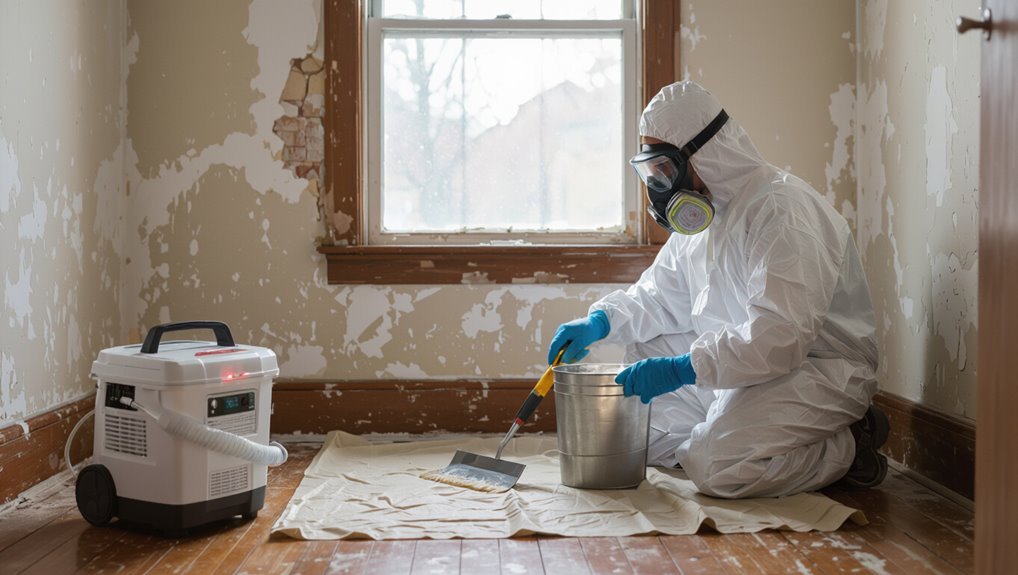
If your home was built before 1978, treat peeling or disturbed paint as potentially lead-contaminated and take precautions: assume contamination, don’t dry-sand or scrape without controls, and avoid household disposal of debris.
Hire certified renovators for major work, seal and double-bag small waste, label it, and contact your local health or hazardous-waste agency for testing, proper disposal, and guidance.
Large-scale contractor waste and commercial regulations
When renovations go beyond a few rooms or you’re working on commercial properties, disposal rules and risks change — you can’t treat large quantities of paint or contaminated debris the same way you’d household waste.
You’ll need hazardous waste manifests, licensed transporters, and approved disposal or recycling facilities.
Check local regulations, keep records, segregate contaminated materials, and hire certified contractors to avoid fines and liability.
Frequently Asked Questions
You probably have quick questions like whether you can toss latex paint in the regular trash or how long paint needs to dry before it’s safe to dispose of.
You’ll also want to know about free or shareable drop-off options for small cans, what to do with paint-soaked rags and brushes, and how to check if paint counts as hazardous waste where you live.
Below are concise answers to each of those common concerns.
Can I throw latex paint in the regular trash?
Wondering whether you can toss latex paint in the regular trash? You generally can if it’s completely dried and solidified—no liquid or semi-wet residues—because many haulers accept dry latex as municipal waste.
Check local rules first: some areas require disposal at a household hazardous waste site. For safety, remove lids, label cans, and avoid illegal dumping or mixing with solvents.
How long does it take for paint to dry/safe-to-dispose?
How long will paint need to dry before it’s safe to toss? It depends: water‑based (latex) thins and dries in hours to days; fully solidified to a non‑liquid state can take a few days.
Oil‑based paints take much longer—days to weeks.
To dispose, guarantee cans are completely dry and solidified, follow local rules, and never pour liquid paint into trash or drains.
Are there sharable or free resources to get rid of small cans?
Looking for free or shared options to get rid of small paint cans?
You can offer usable leftovers on community apps (Freecycle, Nextdoor), donate to local theaters, schools, or Habitat for Humanity ReStores, or check municipal hazardous-waste drop-off events that accept small cans.
Some paint retailers run take-back programs.
Always label contents and confirm acceptance rules before dropping items off.
What do I do with paint-soaked rags or brushes?
Paint-soaked rags and brushes can be a fire and environmental hazard if you handle them carelessly, so treat them differently than dry trash.
Air-dry oil- and solvent-soaked items outside on a noncombustible surface until crisp, then dispose per local rules.
Water-based residue can be rinsed and dried. For large quantities, contact hazardous waste collection; never burn or toss wet rags in regular trash.
How to tell if paint is considered hazardous waste in my area?
If you’re unsure whether your leftover paint counts as hazardous waste, check the label and local rules first: oil-based paints, products with solvents or heavy-metal pigments, and anything labeled “hazardous,” “flammable,” or “toxic” often qualify, while fully dried latex or water-based paint usually doesn’t.
Contact your municipal waste authority or household hazardous waste (HHW) program, compare labels to regional definitions, and follow disposal guidance.
