
How to Fix Peeling Door Paint and Restore a Smooth Finish
You can stop peeling door paint and restore a smooth finish by evaluating damage, removing loose flakes, sanding feathered edges, and cleaning with a degreaser so new material will stick. Fill holes or gouges with a compatible filler, sand smooth, then prime repaired areas. Apply two to three thin, even coats of suitable paint, sanding lightly between coats for a flawless result. Follow safety steps for ventilation and lead checks, and keep going for full guidance.
Who This Guide Is For and What You’ll Learn
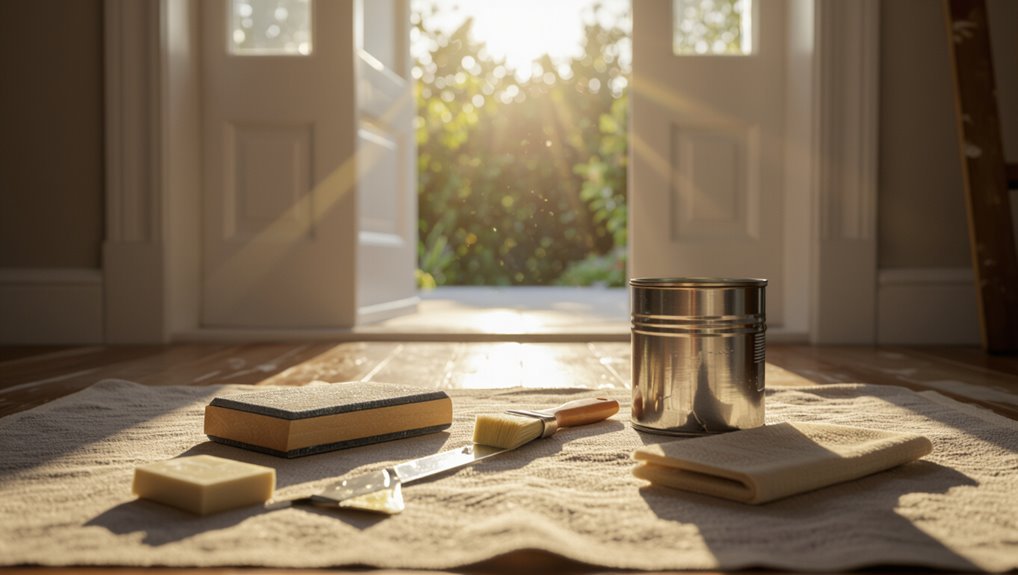
Who’s this guide for?
You’re a homeowner or renter tackling peeling door paint and wanting practical door maintenance tips.
You’ll learn how to assess surface damage, choose appropriate materials, and see a paint types comparison that clarifies finishes, durability, and prep needs.
Learn to assess damage, pick the right materials, and compare paint types for finish, durability, and prep.
You’ll get clear steps to restore smooth results without assuming advanced tools or professional help.
Quick Fix Checklist: How to Stop Peeling Paint Now
Start with these 7 quick actions to stop peeling paint fast:
- Remove loose flakes with a scraper.
- Sand feathered edges smooth.
- Wipe the surface clean of dust and grease.
- Apply a bonding primer to bare spots.
- Fill deep gouges with spackle.
- Sand again for an even finish.
- Repaint with a quality exterior/interior paint suited to your door.
Then troubleshoot peeling causes—moisture, poor adhesion, or wrong paint types—and retest adhesion.
How to Tell If a Door Needs Full Refinishing or Spot Repair?
Look at how much paint is peeling and whether the damage is isolated or covers most of the door.
Check for soft spots, warping, or rot that could mean structural problems beneath the finish.
If damage is widespread or the door’s core is compromised, you’ll need full refinishing rather than a quick spot repair.
Extent Of Damage
When you’re deciding whether to refinish an entire door or just spot-repair peeling paint, focus on the scope and depth of the damage: small, isolated flakes and surface blisters usually mean you can patch and repaint the affected areas, but widespread peeling, multiple layers lifting, or exposed bare wood indicates the finish has failed and a full refinishing is the safer, longer-lasting choice.
Do an extent of damage assessment, consider peeling paint causes, then choose patching for contained areas or full strip-and-refinish when damage is extensive.
Underlying Structural Issues
If your door’s paint is peeling, check for underlying structural issues before you decide on a quick spot repair or a full refinishing job. You’ll inspect hinges, warped panels, rot and moisture issues that compromise structural integrity. Small chips need spot repair; warped or rotten doors require refinishing or replacement.
| Visible problem | Action needed |
|---|---|
| Loose hinge | Tighten/replace |
| Soft wood | Replace/refinish |
Tools and Supplies for a Smooth, Lasting Finish
Before you start sanding and repainting, gather the right tools and quality supplies so the job goes faster and lasts longer.
You’ll want items that support proper sanding techniques and durable paint finishes. Pick quality brushes, sandpaper, and primers to avoid rework.
- Sandpaper (various grits)
- Prime and patch compound
- High-quality brush and roller
- Oil- or water-based paint
- Tack cloth and masking tape
Safety First: Ventilation, PPE, and Lead-Paint Checks
Safety matters: make sure you’ve got fresh air, the right protective gear, and a plan for testing old paint. You’ll use ventilation methods like fans and open windows, wear PPE essentials—respirator, gloves, goggles—and test for lead before work. Stay clear, follow local disposal rules, and stop if tests show hazards.
| Air | Gear | Test |
|---|---|---|
| Fans | Respirator | DIY kit |
| Windows | Gloves | Lab |
| Seal area | Goggles | Record results |
How to Remove Loose and Flaking Door Paint Safely
Start by evaluating the paint’s stability—tap and scrape lightly to find areas that’re loose or firmly bonded.
Use safe removal methods like a putty knife, wire brush, or chemical strippers rated for doors, and wear your PPE to control dust and debris.
Once the surface’s sound, clean and prime any bare spots so your new coat will adhere properly.
Assess Paint Stability
Anyone can quickly tell when paint’s failing: you’ll see curling edges, chips, or powdery residue when you run your fingers over the surface.
You should perform a thorough surface examination to test paint adhesion and map unstable areas before repair. Note moisture or multiple layers, then plan removal accordingly.
- scrape small area
- tap for hollow sound
- check for blistering
- inspect seams
- note substrate type
Use Safe Removal
Before you strip flaky paint, gear up and set up a contained work area: open windows, lay down drop cloths, and wear a respirator, safety goggles, and gloves to keep dust and chips off your skin and out of your lungs.
Use a scraper and sanding block to remove loose paint, vacuum frequently with HEPA filtration, and choose safe solvents or eco friendly options for stubborn areas.
Prepare For Recoating
Now that you’ve removed the loose paint and cleaned up dust, prepare the door surface for recoating by targeting any remaining flaky edges and rough spots.
Remove loose flakes, sand smooth, and clean residue so surface imperfections won’t betray the new coat. Improve paint adhesion by feathering connections and using primer where needed.
- Scrape remaining flakes
- Sand feathered edges
- Vacuum dust
- Wipe with solvent
- Apply bonding primer
Best Scrapers and Sanding Tools for Doors
Choosing the right scrapers and sanding tools makes stripping flaking paint faster and keeps the door’s surface smooth for repainting.
You’ll want to compare best scraper types—rigid metal for thick layers, flexible plastic for trim, and a multi-angle scraper for corners.
Pair them with trusted sanding tool brands: orbital sanders for panels and detail sanders for edges, plus assorted grit sheets for a consistent finish.
Chemical Stripper vs. Sanding: When to Choose Which
If the paint’s several layers thick or contains lead, a chemical stripper can speed things up and reduce dust.
You’ll prefer sanding when you’re working on small spots, bare wood, or want tighter control over the finish.
We’ll compare the benefits of strippers and the situations where sanding makes more sense so you can pick the right method.
Chemical Stripper Benefits
Reach for a chemical stripper when you need a fast, even way to remove multiple paint layers, intricate trim, or stubborn lead-based finishes that sanding can’t safely handle; strippers dissolve old paint without gouging softer wood or rounding sharp profile edges, letting you preserve detail and cut down on labor time.
- Faster layer removal
- Preserves moulding detail
- Safer for lead paint
- Works on hard-to-reach trim
- Offers chemical alternatives and eco friendly options
Sanding When Better
While chemical strippers excel at melting away thick, multiple coats and preserving carved profiles, sanding is often the smarter choice when you’re working with sound single-layer paint, need precise feathering at edges, or want to avoid the mess and fumes of solvents.
Choose sanding when you need control; use proper sanding techniques, dust collection, and PPE.
Prioritize sanding safety to protect yourself and the finish.
How to Clean a Door After Paint Removal
Scrape away loose debris and dust with a brush or vacuum, then wipe the door with a mild detergent solution to remove grease and residues left by paint removers.
You’ll rinse, dry, and inspect for remaining contaminants, using proper cleaning techniques to prep surfaces for primer; consistent door maintenance prevents future adhesion problems.
- Use tack cloths
- Rinse with clean water
- Dry thoroughly
- Degrease stubborn spots
- Wear gloves
How to Assess and Repair Gouges, Holes, and Deep Scratches
After cleaning the door and confirming the surface is dry and free of contaminants, inspect for gouges, holes, and deep scratches by running your hand over the surface and using good lighting to catch low spots.
Perform damage assessment and gouge evaluation, prioritize structural integrity, and plan surface preparation.
Choose filler selection and repair techniques for hole filling and scratch repair, then sand and recheck before finishing.
Choosing the Right Wood Filler and Putty for Doors
When you repair a door, pick a filler that matches the wood species and grain so the patch blends and holds up.
Check drying time and how well it sands—fast-setting fillers save time but may be harder to smooth.
And make sure the product is paintable if you plan to repaint, or choose a nonpaintable putty only for unfinished or invisible spots.
Match Filler To Wood
Pick a filler that matches the door’s species and the size of the damage so the repair blends and lasts.
Consider wood characteristics and filler types: choose solvent- or water-based putty for small nicks, epoxy for deep gouges, stainable fillers for visible grain, and flexible fillers for exterior doors.
Match color, texture, and hardness for a seamless finish.
- Identify grain pattern
- Test stainability
- Check hardness
- Match color
- Consider flexibility
Drying Time And Sandability
Matching the right filler is only half the job—you also need to contemplate how long it takes to dry and how well it sands.
You’ll check manufacturer drying techniques for temperature and humidity guidance, since faster cure means quicker recoats.
Once set, test with progressive sandpaper grades—start coarse to shape, finish fine for a smooth paintable surface.
Clean dust before priming.
Paintable Vs Nonpaintable
Although some fillers look similar at first glance, you’ll want to choose a truly paintable product whenever you plan to topcoat your door—nonpaintable putties can resist primers and cause finish failure.
You’ll match filler to paint selection and assess durability factors. Pick compatible, sandable, stain-blocking, low-shrink, quick-cure options to guarantee a lasting, smooth repair.
- Compatible with primer
- Sandable to 220 grit
- Stain-blocking
- Low shrinkage
- Fast cure
How to Apply and Sand Filler for an Invisible Repair
Start by preparing a smooth, clean surface so the filler bonds well and stays invisible once painted.
Choose a compatible filler, apply thin layers with proper filler application techniques, and feather edges to blend with surrounding wood.
Let each layer cure, then sand progressively finer grits until seamless.
Use invisible repair strategies: final wipe, primer, and spot-check under varied light before repainting.
Repairing Trim, Panels, and Glazed Door Areas
When repairing trim, panels, and glazed sections, work methodically so each component gets the right treatment without damaging adjacent areas.
You’ll remove loose paint, sand edges, fill gaps, and mask glass to preserve door maintenance and improve paint adhesion.
- Use small tools for trim
- Sand panel contours gently
- Use glazing compound sparingly
- Mask glass tightly
- Prime bare wood promptly
How to Handle Swollen or Water-Damaged Door Edges
If your door edges are swollen from moisture, act quickly to stop further damage and restore a proper fit: remove the door, dry edges with a fan or dehumidifier, sand swollen fibers, and trim where necessary for clearance.
Seal with exterior-grade primer and paint.
Use door maintenance tips and moisture prevention strategies like proper weatherstripping and ventilation to prevent recurrence.
Prepping Metal and Fiberglass Doors (vs. Wood)
Because metal and fiberglass react differently to adhesion and corrosion than wood does, you’ll need a different prep routine before priming and painting.
Focus on metal door preparation and fiberglass door treatment: remove rust, sand glossy finishes, clean with solvent, fill dents, and mask hardware.
Follow this checklist:
- Remove loose paint and rust
- Sand lightly for adhesion
- Clean with de-greaser
- Use compatible filler
- Mask and protect surrounding areas
Best Primers for Door Paint Repair and Stain Blocking
Although you might be keen to grab any primer off the shelf, choosing the right one makes the difference between a short-lived fix and a durable repair; pick a stain-blocking, adhesion-promoting primer formulated for your door material—oil-based or shellac for severe stains and tannin bleed, bonding primers for slick metal or fiberglass, and high-build acrylic primers for wood with minor imperfections.
You should compare primer types for stain resistance and compatibility, then buy the least toxic option that bonds well.
How to Prime a Door for Even Adhesion
When you’re ready to prime, start by confirming the door’s surface is clean, dry, and free of loose paint or dust so the primer can bond uniformly. Sand glossy areas lightly, wipe with a tack cloth, and mask hardware and surrounding trim.
Use appropriate primer types and follow adhesion techniques to confirm uniform coverage.
- Choose primer for substrate
- Thin for edges
- Apply even thin coats
- Sand between coats
- Check dry times
Choosing Paint for Doors: Enamel, Latex, or Oil
Now you’ll pick the right paint type for durability and finish.
Enamel gives a hard, washable surface while latex is easier to clean up and resists yellowing.
Oil-based paints offer superior adhesion and a smoother finish on high-traffic doors.
Consider the door material, drying time, and ventilation when choosing between them.
Enamel Vs. Latex
If you want a durable, smooth finish that resists chipping, pick enamel; if ease of use and quick drying matter more, choose latex.
You’ll weigh enamel durability against latex flexibility, surface sheen, and cleanup. Consider your door’s traffic and prep time, then pick accordingly.
- Toughness for high-traffic doors
- Easy soap cleanup
- Better leveling vs brush marks
- Faster repainting
- Low VOC options
Oil-Based Advantages
Because oil-based paints form a harder, more durable film, they’re often the best choice for doors that get heavy use—you’ll get superior chip resistance, smoother leveling that hides brush strokes, and a longer-lasting finish between repainting.
You’ll appreciate oil based paints’ durability benefits, though you should follow proper application techniques and heed environmental considerations like solvent fumes, disposal, and longer cure times.
Pick the Right Sheen and Color for Durability
Want your door paint to stand up to hands, weather, and daily wear? Choose higher-sheen finishes for easier cleaning and better abrasion resistance; pair that with proven color durability.
Consider these tips:
- Pick semi-gloss or satin for resilience
- Use darker shades to hide scuffs
- Test colorfastness in sun exposure
- Match sheen to trim for consistency
- Opt for quality pigments and binders
Brush, Roller, or Spray: Best Application Methods
How should you apply paint for the smoothest, most durable finish?
You’ll use brush techniques for edges and detail, roller advantages for flat panels and quick coverage, and spray application for the finest, uniform coat.
Consider coverage comparison: rollers minimize texture, brushes control trim, and sprayers deliver thin, consistent layers.
Choose based on door design, finish goals, and your comfort with equipment.
Paint a Door for a Factory-Smooth Finish
To get a factory-smooth finish, you’ll start with careful surface prep: clean, sand, fill any gouges, and prime where needed.
Use thin, even coats applied with the right tool and sand lightly between coats to remove dust nibs.
With patience and proper technique, you’ll achieve a flawless, durable result.
Surface Preparation Steps
Before you start painting, prep the door surface carefully—this is the step that determines how smooth and long-lasting your finish will be.
Use proper surface cleaning techniques and focus on prepping surfaces to guarantee adhesion. Remove loose paint, sand seams, degrease, and dry thoroughly.
- Scrape peeling areas
- Sand to feather edges
- Clean with degreaser
- Fill holes and sand
- Wipe with tack cloth
Achieving Flawless Finish
Start by choosing the right tools and method—brush, foam roller, or sprayer—so you can lay down smooth, even coats without runs or brush marks. With proper surface preparation, sand between coats and use thin layers for a flawless technique. Check edges and hardware, and cure fully before rehanging.
| Tool | Use | Tip |
|---|---|---|
| Brush | Detail | Light strokes |
| Roller | Panels | Foam, thin nap |
| Sprayer | Smooth | Overlap passes |
How Many Coats to Apply and Drying Times
How many coats you apply and how long you let each dry will determine the durability and finish of your repaired door.
Plan for two to three thin coats, checking recommended drying times between layers. Proper coats application prevents premature failure and uneven sheen.
Plan on two to three thin coats, allow recommended drying between layers to avoid failure and uneven sheen.
- Wait manufacturer drying times
- Sand lightly between coats
- Use thin, even strokes
- Avoid heavy buildup
- Inspect for smoothness
Avoiding and Fixing Drips, Brush Marks, and Sags
Tackle drips, brush marks, and sags by keeping your brush or roller loaded correctly and working in controlled, overlapping strokes so the finish lays down smoothly; if you spot a drip or sag while the paint’s still wet, gently lift it with a clean, slightly damp brush or a tipped-out roller before it skins over, then feather the edges to blend.
Use drip control techniques and brush application tips.
Weather and Seasonal Tips for Exterior Doors
Once you’ve smoothed out drips and brush marks, turn your attention to the weather—exterior doors face sun, rain, temperature swings, and humidity that all affect paint adhesion and longevity.
You’ll plan seasonal maintenance to protect finish and reduce weather impact.
- Inspect seals each season
- Recoat before extreme heat or cold
- Use breathable exterior paint
- Protect with awning or porch
- Monitor humidity during cure
How to Repaint Hardware, Hinges, and Glass Safely
After you’ve prepped the door, take time to mask and remove or protect hardware, hinges, and glass so you can repaint nearby surfaces without risking sticky drips or clogged mechanisms.
For hardware prep, clean surfaces and degrease, label parts, and remove screws.
Use low-tack tape for glass protection, and practice careful hinge painting with thin coats to avoid buildup.
Surface cleaning prevents adhesion issues.
Quick Touch-Up Methods for Future Peeling Spots
When you spot a small blister or flake, sand the area lightly to feather the edges and create a smooth surface for repair.
Match the paint by testing a tiny dab or comparing sheen and color under the same light so the touch-up blends.
Keep a small kit with sandpaper, a matched sample, and a fine brush so you can fix future spots fast.
Spot Sanding Prep
Start by clearing the immediate area around the peel so you can see the damage and work quickly.
You’ll use targeted sanding techniques to feather edges, remove loose paint, and prep for primer. Control dust with a damp cloth or vacuum and wear a mask.
- Use fine-grit sandpaper
- Sand with the grain
- Hold a vacuum nearby
- Wipe residue away
- Inspect edges for adhesion
Quick Paint Matching
Now that the surface is prepped and smooth, you’ll want a quick way to match paint for future touch-ups so small peels don’t become big repairs.
Keep a labeled sample of the original finish, note sheen and paint types, and store a small matched quart or sample pot.
For quick fixes, use a fine brush, blend edges, and keep records of brand and formula for accurate color matching.
Maintenance Tips to Extend the Finish
Because a little regular care stops small problems from becoming big ones, you’ll get far more life from your door’s finish by doing a few simple tasks:
A little regular care prevents small issues from becoming big ones—extend your door’s finish with simple upkeep.
- Inspect monthly for chips, dents, and moisture.
- Clean gently with mild soap; avoid harsh solvents.
- Touch up small chips with matched paint.
- Reapply protective coatings every few years.
- Keep weatherstripping and hardware tight to prevent wear.
How Much Time and Money to Expect
Expect to spend a bit up front on tools and materials—sandpaper, a scraper, primer, paint, and brushes or a small sander can add up.
I’ll break down typical costs and then walk you through a time estimate for each step, from prep and sanding to priming and final coats.
That way you’ll know both the budget and the hours to set aside before you start.
Tool And Materials Cost
A modest investment of time and money gets most door-paint repairs done: plan on 2–6 hours for a single door and $20–$150 for tools and materials depending on whether you buy basics or opt for pro-grade supplies.
Use cost comparison and budget planning to choose. You’ll need essentials; prioritize quality where it matters.
- Sandpaper (assorted grits)
- Putty and scraper
- Primer and paint
- Brushes/rollers
- Drop cloth and tape
Time Breakdown By Step
Plan on breaking the job into clear stages—prep, repair, priming, painting, and cleanup—so you can schedule 2–6 hours per door and budget accordingly for materials and tools.
For time estimation, allow 30–60 minutes prep, 30–90 minutes repairs, 30–60 minutes priming, 60–120 minutes painting (including drying), and 15–30 minutes cleanup.
Good project planning prevents overruns and hidden costs.
When to Call a Professional Instead of DIY
If the peeling is widespread, the door’s structural integrity is compromised, or you spot rot, you should call a professional rather than tackle it yourself.
You’ll want a professional assessment and to weigh cost considerations before proceeding. A pro helps guarantee safety, proper repair, and warranty.
- hidden rot detection
- structural repair
- lead paint testing
- complex refinishing
- time versus expense
Top Primers, Paints, and Fillers : Pros & Cons
Once you’ve decided whether to hire help, you’ll need to pick the right primers, paints, and fillers for the job.
Choose primer types suited to wood or previously painted surfaces; compare oil vs. latex for adhesion.
Pick primers for bare wood or old paint—weigh oil versus latex to ensure proper adhesion and longevity
Select paint finishes for durability and appearance.
Evaluate filler options for gaps and gouges.
Match application techniques—brush, roller, or spray—to material and finish for best results.
Troubleshooting: Stubborn Adhesion and Common Fails
1 clear sign of adhesion trouble is paint that blisters, flakes, or rubs off even after you thought you prepped correctly. Before redoing the whole door, check for common causes like trapped moisture, incompatible products, poor surface cleaning, or glossy old finishes that repel new paint.
You’ll diagnose adhesion issues and assess paint compatibility quickly.
- Check moisture with a meter
- Sand glossy surfaces
- Remove old loose paint
- Match primer to topcoat
- Clean and decontaminate thoroughly
Frequently Asked Questions
Can I Keep Decorative Moulding Intact When Stripping Paint From a Door?
Yes—you can keep moulding intact by using gentle moulding preservation techniques and targeted paint stripping methods: tape edges, apply chemical gel remover or careful heat, scrape with a flexible tool, then touch up and sand lightly.
How Do I Match Old Paint Colors That Have Faded Over Decades?
Like chasing a ghost, you’ll use color matching and paint samples to capture faded hues: take a small chip, photograph it in natural light, test matched samples, tweak mixes until the shade sings true.
Will Humidity in My House Cause Newly Painted Doors to Peel?
Yes — high humidity can cause newly painted doors to peel; you’ll see humidity effects reducing paint adhesion if surfaces stay damp, so dry thoroughly, use low-humidity conditions, and choose moisture-tolerant primers and paints.
Can I Refinish a Door While It’s Still Hung, Including Frame Touch-Ups?
Yes — you can refinish a hung door; studies show 70% of DIYers prefer working in-place. You’ll use door refinishing techniques and careful paint application methods, masking thoroughly, sanding edges, and using thin, even coats for best results.
What’s the Best Way to Transport a Heavy Door to a Workshop Safely?
You should recruit a helper, use proper door handling with lifting straps or a dolly, pad the door edges, secure it vertically, and follow workshop safety rules like PPE, clear paths, and slow controlled movements to avoid damage or injury.
Conclusion
You’ve learned how to stop peeling paint, decide between spot repairs or full refinishing, and choose the right tools, primers, and safety steps to get a door that looks like new. Tackle small jobs yourself but call a pro for extensive damage or lead concerns. With patience and the right prep, your door will finish as smooth as glass—give it proper sanding, priming, and topcoating, and you’ll avoid repeat peeling for years.
