
How to Fix Peeling Paint on Cabinets Without Stripping Everything
You can fix peeling cabinet paint without stripping everything by sanding loose areas, cleaning with a degreaser, spot-priming with a bonding or oil-based primer, and repainting with thin, feathered coats of durable cabinet paint. Remove hardware, fill gouges, and sand edges smooth so new paint blends. Let coats dry and cure fully before reassembly. This approach saves time on minor damage, and if you keep going you’ll find tips for diagnosis, tools, alternatives, and prevention.
Quick Answer Can you fix peeling paint on cabinets without stripping everything?
Yes — you can often repair peeling cabinet paint without stripping everything by sanding loose areas, cleaning, applying a bonding primer, and repainting the problem spots.
That fast approach works when paint is mostly adhered and damage is localized.
If paint is bubbling across large areas, showing multiple layers lifting, or there’s underlying wood damage, you’ll need full stripping and refinishing for a lasting fix.
Short, actionable summary of the fastest safe approach
Start by removing loose paint, lightly sanding glossy areas, and cleaning the surface with a degreaser; you can patch small chips with a primer-filled wood filler or a quick-dry bonding primer without fully stripping the cabinets.
Then sand feathered edges, apply a bonding primer, and topcoat with durable cabinet paint.
This practical method answers how to fix peeling paint on cabinets quickly and safely.
When full stripping is still necessary
Although you can often repair small areas without stripping everything, you’ll need to fully strip cabinets when paint is extensively blistered, flaking across large sections, or multiple layers are failing and lifting from the substrate.
You should also strip if moisture damage or old oil-based finishes prevent adhesion. Full stripping guarantees a stable surface for primers and paint, preventing rapid re-peeling and saving time long-term.
What Causes Paint to Peel on Cabinets
Paint peels on cabinets for a few common reasons: moisture exposure, poor surface preparation, using incompatible paint, or plain wear and tear.
You can usually diagnose the root cause by checking for swelling or mold (moisture), flaking only on topcoat (poor prep or incompatible paint), or damage at joints and edges (structural wear).
Those clues also tell you whether the peeling is superficial and easy to spot-sand and repaint, or structural and needs more repair.
Common causes (moisture, poor prep, incompatible paint, wear)
When paint peels from cabinets, it’s usually because one or more underlying problems—moisture, poor surface preparation, incompatible coatings, or simple wear—compromised the bond; knowing which factor is at work helps you choose the right fix.
Moisture from sinks or poor ventilation softens paint. Bad prep leaves grease or gloss that paint won’t adhere to. Wrong paint or heavy traffic also causes flaking.
How to diagnose the root cause
Before you start scraping or repainting, figure out what’s actually causing the peel so your repair will last: inspect for moisture (soft, swollen wood or staining near sinks).
Check adhesion by gently prying at peeled edges to see if the paint comes off in large sheets (bad prep or incompatible coats) or in flaky dust (wear).
Look for surface contaminants like grease or gloss that would’ve prevented bonding.
- Test edges and corners.
- Smell for old grease.
- Note areas near plumbing.
Signs that peeling is superficial vs. structural
A quick visual and tactile check will tell you whether peeling is superficial or points to a deeper problem: loose, powdery flakes and small chips usually mean surface wear or poor adhesion, while large sheets that lift off intact, soft substrate beneath the finish, or spreading around joints suggest structural issues like moisture damage, failed primer, or incompatible coatings.
You’ll probe edges, press suspect areas, and note blistering or soft spots.
Tools and Materials You’ll Need (non-stripping repair)
Before you start fixing peeling paint without stripping, you’ll want the right tools and safety gear—gloves, goggles, and a dust mask—plus sanding blocks, putty knives, and a good vacuum.
Pick reliable products like lightweight wood filler, a bonding primer, a durable cabinet paint, assorted sandpapers (120–220 grit), and quality brushes or a small foam roller.
Having these essentials on hand will make the repair faster and give you a long-lasting finish.
Essential tools and safety gear
Because you’ll be working with small parts, chemicals, and sandpaper, gather the right tools and safety gear up front so the job goes smoothly and safely.
You’ll need basic hand tools and protective equipment to prep, repair, and clean without stripping. Keep items organized and replace worn safety gear when needed.
- Nitrile gloves and safety glasses
- Mask or respirator (P100/NIOSH-rated)
- Sanding block and tack cloth
Recommended products (fillers, primers, brushes, sandpaper)
With your safety gear and basic tools laid out, pick the right repair products to get smooth, lasting results without stripping. Use wood filler, bonding primer, synthetic brushes, and 120–220 grit sandpaper. Match products to finish and substrate.
| Product | Purpose |
|---|---|
| Wood filler | Repair chips |
| Bonding primer | Promote adhesion |
| Synthetic brush | Smooth application |
Step-by-Step Repair Method (no full stripping)
Start by prepping your workspace and taking off all hardware so you can work safely and access every surface.
Clean the cabinets with a degreaser or TSP alternative, then remove loose paint by scraping and sanding the edges.
Finish by feather-sanding connections and filling gouges with wood filler or spot putty before priming.
Step 1 Prepare the workspace and remove hardware
1. Clear the area so dust and debris won’t spread. Lay drop cloths, open windows, and set good lighting.
Remove knobs, hinges, and magnetic catches carefully; keep fasteners labeled.
- Use labeled bags for screws
- Place hardware on a tray by door/panel
- Keep a small bin for damaged pieces
Work methodically so reassembly’s quick and accurate.
Step 2 Clean cabinets thoroughly (degreasers, TSP alternatives)
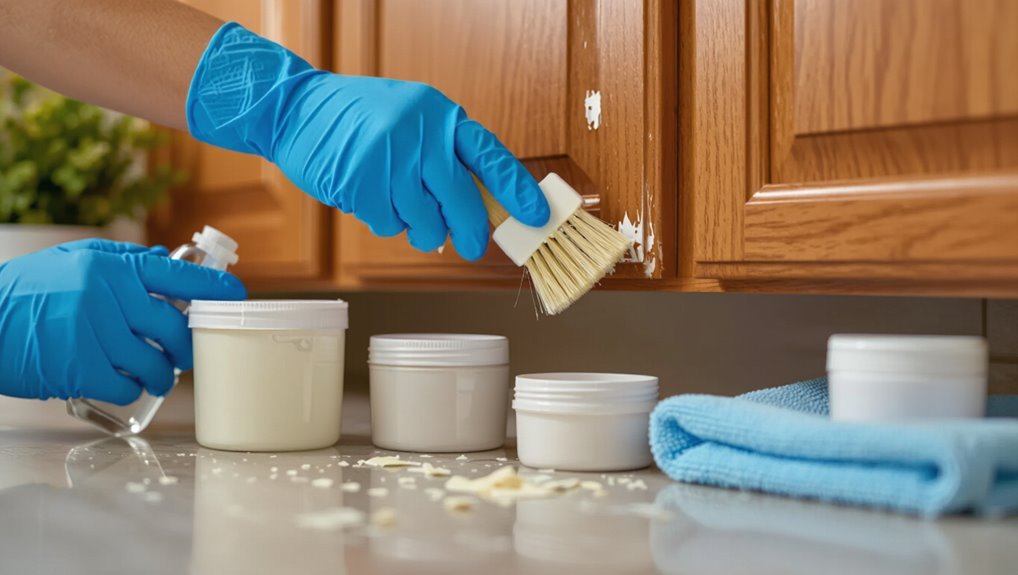
Wipe down each cabinet surface to remove grease, grime, and loose paint before you touch any repairs.
Use a degreaser or a TSP-free alternative (trisodium phosphate substitutes, citrus-based cleaners, or simple dish soap and hot water) to cut oily residue.
Rinse thoroughly, dry with a lint-free cloth, and let cabinets air-dry fully so primer and paint will adhere properly.
Step 3 Remove loose/peeling paint (techniques: scraping, sanding edges)
Now that the cabinets are clean and dry, remove any loose or peeling paint so repairs will hold.
Use a putty knife or paint scraper at a shallow angle to lift chips, working with the grain.
For stubborn edges, gently sand just the loose areas with a fine-grit sponge or block until firm.
Vacuum dust and wipe with a tack cloth before patching or priming.
Step 4 Feather sanding and smoothing transitions
Before you patch or prime, feather the edges of the remaining paint so repairs disappear into the surrounding finish.
Lightly sand with 120–220 grit, blending the hard edges into glossy and dull areas until shifts are smooth.
Work in the direction of the grain, wipe dust with a tack cloth, and check shifts by eye and touch before moving to priming.
Step 5 Fill gouges and imperfections with wood filler or spot putty
Patch the gouges and dents with a wood filler or spot putty that matches the cabinet material so repairs sit flush with the surrounding surface.
Press filler into voids, remove excess with a putty knife, and let it cure per product instructions. For deep damage, apply in layers.
Use minimal material to avoid shrinkage. Once set, you’ll be ready for the next smoothing step.
Step 6 Sand filled areas and clean dust
Grab a sanding block or orbital sander and smooth the filled areas until they blend with the surrounding surface, using 120–150 grit to shape and 220 grit to finish for a uniform feel.
Sand lightly across grain, check edges and contours, then wipe all dust with a tack cloth or vacuum with brush attachment.
Verify surface is clean and residue-free before moving on.
Step 7 Spot prime and seal repaired areas (how to choose primer)
With your filled spots sanded smooth and dust-free, you’re ready to seal and prime only the repaired areas so new paint will adhere and the finish stays even.
Choose a bonding primer for glossy surfaces or a stain-blocking, oil-based primer for tannin bleed or water stains.
Apply thin, feathered coats, let recommended dry time pass, and sand lightly before painting.
Step 8 Recoat with paint (best paint types, application tips)
Now you’re ready to recoat the repaired areas—choose a durable, low-VOC acrylic or water-based enamel for kitchen and bathroom cabinets, or a true oil-based enamel where extra hardness is needed.
Brush-grade or sprayable latex enamels work well for most surfaces and give a smooth, washable finish.
Apply thin, even coats, sanding lightly between coats with fine grit, and remove dust before each pass for perfect adhesion.
Step 9 Reassemble and cure time recommendations
After the paint’s fully tack-free, reattach hardware and doors carefully so you don’t dent the finish—use felt pads or a soft cloth under hinges and align doors before tightening screws to avoid stripping.
Let assembled cabinets cure undisturbed: wait 24–48 hours for light use, 7 days for full hardness, and 30 days for maximum durability.
Avoid slamming or heavy loads during curing.
Alternative Low-Impact Options (if step-by-step not ideal)
If the full step-by-step method feels like too much, you can target trouble spots with gel-based paint removers to lift flakes without stripping everything.
Chemical deglossers or liquid sanders will dull old finish for better adhesion without heavy sanding.
Or skip removal altogether and use cabinet paint kits or adhesive veneers to cover and refresh surfaces quickly.
Gel-based paint removers for targeted areas

1 simple tool for fixing small patches of peeling paint is a gel-based remover — it clings to vertical or detailed cabinet surfaces, works slowly to lift old finish, and keeps surrounding areas protected.
You apply a thin layer, wait per instructions, then scrape gently with a plastic scraper.
Neutralize residue, clean, and spot-prime before repainting to guarantee adhesion and a smooth repair.
Chemical deglossers / liquid sanders vs. sanding
Two main low-impact options let you refresh cabinet surfaces without aggressive sanding: chemical deglossers (liquid sanders) dissolve the existing sheen so new paint adheres, while light abrasive sanding actually scuffs the surface to the same end.
Use deglosser for detailed trim and quick jobs; sand lightly for heavily worn spots.
Always clean, test a small area, and wear gloves.
Covering with cabinet paint kits or adhesive veneers
When you want a low-mess, low-effort refresh, cabinet paint kits and adhesive veneers let you skip full stripping or sanding while still covering peeled surfaces.
You’ll clean and degloss, apply a bonding primer or the kit’s prep coat, then follow manufacturer instructions for paint or veneer placement.
These options’re fast, minimize dust, and work best for light peeling or cosmetic fixes.
Comparison: DIY Repair vs. Partial Strip vs. Full Strip
Although each method can restore your cabinets, they differ in prep, cost, time, and durability: you’ll choose based on budget, skill, and desired lifespan. DIY repair is quick and cheap but shorter-lived. Partial strip balances effort and finish. Full strip gives best durability but costs time and money.
| Method | Best for |
|---|---|
| DIY Repair | Quick fixes |
| Partial Strip | Better finish |
| Full Strip | Long-term durability |
Common Mistakes and How to Avoid Them
Don’t skip prep — you’ll regret painting over grease, loose edges, or mold.
Make sure you clean and degrease, feather and sand edges, and choose a primer and paint that suit the surface and conditions.
If you suspect moisture or mold, fix that first before repainting.
Mistake 1 Skipping cleaning or degreasing
Because grease, oils, and dust prevent primer and paint from bonding, skipping a proper clean will almost always lead to peeling later on.
You should degrease with a TSP substitute or trisodium phosphate, rinse, and dry thoroughly. Focus on hinges, corners, and crevices.
Don’t skip light sanding afterward to remove contaminants. A clean surface guarantees primer and paint adhere and last.
Mistake 2 Not feathering edges or under-sanding
If you skip feathering the edges or stop sanding too soon, paint will build up on junctions and chip away where old finish meets new.
You need to smooth gradations so the new coat blends into old surfaces. Sand progressively with finer grit, blend the edges, and remove dust.
Proper feathering prevents visible ridges and reduces future peeling, giving a seamless, durable finish.
Mistake 3 Using wrong primer or paint
When you pick the wrong primer or paint, your new finish won’t bond properly and peeling starts sooner than you’d expect.
Use a primer matched to substrate—oil-based for bare wood, bonding primer for slick surfaces.
Choose durable cabinet paint (acrylic enamel or conversion varnish). Avoid cheap wall paints and test adhesion with a small patch.
Proper products prevent repeat peeling.
Mistake 4 Repainting over active moisture or mold
Although it might seem faster to paint over stained or damp spots, repainting over active moisture or mold only locks the problem in and guarantees the new finish will fail.
You must locate and fix leaks, dry surfaces thoroughly, and treat mold with an appropriate cleaner or biocide.
Only repaint once substrates are dry and mold-free to guarantee adhesion and long-lasting results.
Prevention and Long-Term Care
To keep your cabinets from peeling again, follow best practices like proper surface prep, using quality primers and paints, and controlling kitchen humidity.
You’ll want a simple routine of gentle cleaning, prompt touch-ups, and checking hinges and seals to prevent moisture and wear.
When damage becomes frequent or extensive, consider refinishing or replacing the cabinets to avoid repeated repairs.
Best practices to prevent future peeling
If you want your cabinets to stay looking good, commit to a few simple habits: keep humidity stable, avoid harsh cleaners, and handle doors and drawers gently.
Seal exposed edges, use high-quality paint or topcoat, and fix chips promptly to stop peeling from spreading.
- Check hinges and hardware for tightness
- Apply breathable sealers on bare spots
- Use felt bumpers to reduce impact
Routine maintenance and cleaning tips
When you clean and maintain cabinets regularly, you stop small problems from turning into peeling or damage.
Wipe surfaces weekly with a mild, non-abrasive cleaner and a soft cloth. Dry immediately to prevent moisture damage.
Tighten loose hinges and knobs, touch up chips with matching paint, and avoid harsh chemicals.
Inspect seals and vents seasonally to keep cabinets stable and dry.
When to consider refinishing or replacing cabinets
Although small touch-ups can keep cabinets looking decent for a while, you’ll want to contemplate refinishing or replacing them once damage becomes widespread, functionality suffers, or the cost of repeated repairs exceeds the value of an upgrade.
If hinges, doors, or frames warp, or paint repeatedly peels, plan refinishing for cosmetic salvage; choose replacement when structural failure, outdated layout, or persistent moisture problems persist.
Project Timeline and Cost Estimates
Next, you’ll get a realistic timeline based on cabinet condition—minor touch-ups might take a few hours, moderate repair a day or two, and heavy restorations several days.
You’ll also see a clear cost breakdown for tools, materials, and the option to hire a pro.
Use these estimates to plan your weekend project or budget for contractor help.
Time estimate by cabinet condition (minor, moderate, heavy)
Estimate time by how much prep and repair the cabinets need:
Minor jobs (light sanding, spot priming) often take a weekend—6–10 hours of hands-on work plus drying time;
Moderate jobs (stripping loose paint, filling chips, full priming) usually run 2–3 days;
Heavy jobs (extensive stripping, multiple filler/prime coats, hardware removal) can take a week or more, especially if you wait for proper cure between coats.
Plan buffers.
Cost breakdown (tools, materials, optional professional help)
Now that you have a time estimate based on cabinet condition, let’s look at what you’ll spend. Expect basic tools $30–$80, materials $40–$150, and pro help $200–$800 per cabinet run. Choose DIY for savings; hire pros for speed.
| Item | Typical cost |
|---|---|
| Tools | $30–$80 |
| Materials/paint | $40–$150 |
FAQs
You probably have a few quick questions before you start, like whether you can paint over peeling paint without sanding or how to match new paint to your existing cabinets.
You’ll also want to know if using a heat gun is safe, how long to wait before using cabinets again, and whether this method works on laminate or thermofoil.
I’ll answer each of these so you can finish the job confidently.
Can I paint over peeling paint without sanding?
Can you paint over peeling cabinet paint without sanding? You can in limited cases: remove loose flakes, clean thoroughly, and use a high-adhesion primer designed for glossy or failing surfaces.
Expect shorter durability and possible future lifting.
For large peeled areas or stubborn adhesion issues, light sanding or using a liquid deglosser helps primer bond and yields longer-lasting results.
How do I match the new paint to existing cabinets?
If you repaired or primed peeled areas without full sanding, you’ll still want the new paint to blend with the rest of the cabinets; matching color and sheen keeps the repair from standing out.
Test small swatches with the same finish (flat, satin, semi-gloss). Dry samples under typical lighting, adjust tint if needed, and use the same brand and sheens.
Feather edges for a seamless blend.
Is it safe to use a heat gun to remove paint?
Wondering whether a heat gun’s a good way to strip paint? You can use one, but take precautions: work in well-ventilated space, wear heat-resistant gloves and eye protection, and keep the tip moving to avoid scorching wood or igniting finishes.
Test a small area first, and never use a heat gun on cabinets that may contain lead paint without proper testing and precautions.
How long should I wait before using cabinets after repainting?
How long you wait depends on the paint type, the number of coats, and room conditions: most latex paints feel dry to the touch in 1–2 hours but need 24–48 hours before normal use, while oil-based paints usually need 6–8 hours to dry to the touch and 48–72 hours to cure enough for regular handling.
After that, wait an additional 24 hours before heavy use or reinstalling hardware.
Will this method work on laminate or thermofoil cabinets?
After you let fresh paint cure, you’ll want to know whether the same repair steps work on laminate or thermofoil doors.
They can—but prep differs. Sand lightly, clean with a degreaser, and use a bonding primer designed for nonporous surfaces.
Avoid aggressive sanding that exposes substrate. Choose flexible, oil- or acrylic-based topcoats compatible with laminate/thermofoil to prevent future peeling.
