
How to Get Adhesive Off Wall Without Peeling Paint
You can get adhesive off painted walls without peeling paint by softening and lifting it gently: test any cleaner or heat on a hidden spot first, warm the residue with a hair dryer a few inches away, then peel or scrape lightly with a plastic tool. Try mild soap, rubbing alcohol, or a little cooking oil or WD‑40 for stubborn bits, blotting not rubbing. Stop if paint softens or bubbles; follow safe repair tips and more removal options ahead.
Quick Safe Method to Remove Fresh Adhesive From Painted Walls
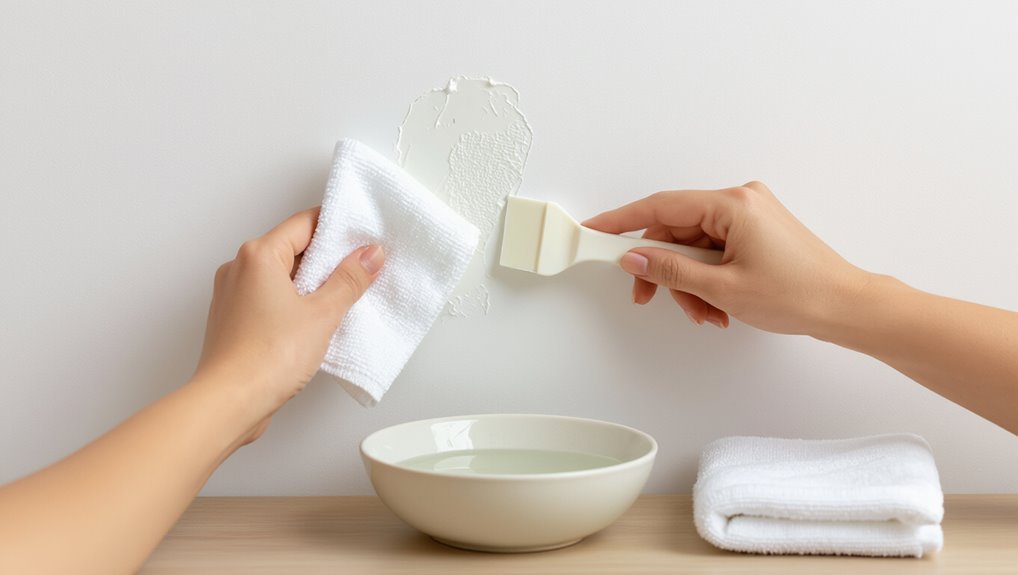
If the adhesive is still tacky, act quickly to avoid stains: gently peel off any loose pieces, then soften the residue with a damp cloth warmed slightly with water or a mixture of mild dish soap and water.
You’ll blot gently, working from edges inward, testing compatibility with adhesive types and wall finishes. Rinse and dry; repeat sparingly until residue lifts without scrubbing.
How to Test Paint Before Trying Cleaners or Solvents
Before you try any cleaner or solvent, test the paint in an inconspicuous spot so you don’t damage the finish.
Choose a hidden area, apply a tiny dab of the cleaner, let it sit a few minutes, then blot.
Note changes for different paint types (flat, eggshell, semi-gloss).
Repeat when evaluating solutions against various adhesive types to confirm compatibility before wider use.
Tools and Household Supplies for Removing Adhesive Residue
A handful of basic tools and common household solvents will handle most adhesive removal tasks, so gather a soft cloth, a plastic scraper or old credit card, cotton swabs, a spray bottle, mild dish soap, rubbing alcohol (isopropyl), and a gentle citrus-based adhesive remover or WD-40 as backup.
Match tools to adhesive types, test solvents, and use gentle removal techniques to avoid paint damage.
Heat Tips: Soften Adhesive With a Hair Dryer Safely
Before you turn the dryer on full blast, test the heat on a hidden patch of wall to make sure the paint or wallpaper won’t warp.
Hold the hair dryer a few inches away and move it in a controlled circular motion to warm the adhesive evenly.
Once it softens, you can peel or scrape gently without damaging the surface.
Test Heat On Hidden Area
When you plan to use heat to loosen adhesive, test a hidden patch first so you can avoid discoloration or damage. Aim the hair dryer at a small, inconspicuous spot for 20–30 seconds and check the paint or wall texture before continuing.
For hidden area testing, apply adhesive heat briefly, cool, then inspect. If paint holds, proceed cautiously; if it softens or bubbles, stop and try a gentler method.
Use Controlled Circular Motion
Move the hair dryer in small, controlled circles about 6–8 inches from the adhesive so heat spreads evenly and won’t concentrate in one spot.
You’ll soften adhesive safely, then peel gently, using adhesive removal techniques and surface protection methods to avoid damage.
- Keep motion steady and slow
- Test heat briefly on a hidden spot
- Use a plastic scraper and cloth
Use Cooking Oil or WD‑40 to Lift Sticky Residue
You can often lift stubborn adhesive with everyday household oils or a spray like WD‑40, which break down sticky polymers so they wipe away easily.
Apply a small amount of cooking oil or WD‑40, let it sit briefly, then gently rub with a soft cloth or plastic scraper.
Wipe residue with a clean cloth and mild solvent if needed; test first in an unseen spot.
When Mild Soap and Water Will Do the Job
Although tougher residues need solvents, mild soap and warm water will remove fresh, light adhesive from most painted walls with minimal risk.
You’ll test first, blot gently, and avoid scrubbing hard to protect paint. Soap effectiveness varies by adhesive types and age.
- Test a hidden spot first.
- Use a soft cloth and circular motions.
- Rinse, dry, repeat as needed.
Safely Use Rubbing Alcohol and Isopropyl Solutions
If paint is fully cured and a small test patch shows no damage, rubbing alcohol (isopropyl alcohol) is a reliable next step for softening adhesive without harsh chemicals. You’ll dab, wait, and gently rub until residue lifts. Use ventilation and gloves. Keep testing until safe.
| Step | Action | Note |
|---|---|---|
| 1 | Dab | Small area |
| 2 | Wait | 30–60s |
| 3 | Rub | Soft cloth |
| 4 | Rinse | Dry promptly |
Paint‑Safe Commercial Adhesive Removers That Work
When you need something stronger than rubbing alcohol, consider paint‑safe commercial removers that come in solvent‑based and water‑rinseable formulas.
Solvent‑based options work fast on stubborn adhesive but you’ll want to test a hidden spot first to protect your finish.
Water‑rinseable removers are gentler and easier to clean off, making them a safer choice for delicate or newer paint.
Solvent-Based Options
Solvent-based adhesive removers give you fast, reliable results on stubborn residues without scrubbing for hours.
You’ll match solvent types to adhesive properties, test a hidden spot, and work in ventilation. Use a soft cloth and minimal product to protect paint finish.
- Citrus or d-limonene for sticky labels
- Acetone blends for cured glues
- Petroleum-based for tape residue
Water‑Rinseable Removers
Solvent methods handle tough residues, but you’ll want a gentler, paint-safe option for finished walls and delicate surfaces. You’ll find water based solutions labeled “water‑rinseable” that loosen adhesive without stripping paint. Apply, wait, and rinse; repeat gently with a soft cloth. Ideal for light adhesive removal and quick cleanup.
| Product | Use |
|---|---|
| Gel | Spot clean |
| Spray | Broad areas |
Use a Plastic Scraper Without Peeling Paint
Grab a plastic scraper and work gently along the adhesive’s edge to lift it without gouging the paint. You’ll use plastic scraper techniques and quick adhesive removal tips to avoid damage, keeping the blade shallow and the angle low.
Move slowly, peel loosened bits by hand, and repeat until the surface is clean.
- Start at a corner
- Keep light pressure
- Wipe residue often
Remove Stubborn Glue With Goo Gone or Citrus Solvents
Soften the residue by applying a commercial adhesive remover like Goo Gone or a citrus-based solvent to the glue. Let it sit for a few minutes, then wipe or scrape it away; these products break down sticky residues without aggressive scraping.
Always test on an inconspicuous spot first and follow the manufacturer’s directions. You’ll notice Goo Gone effectiveness on tougher spots, and citrus solvent alternatives work for lighter buildup.
How to Apply Solvents Without Discoloring Paint
Before you apply any solvent, test it on a hidden patch of wall to make sure the paint won’t react.
Start with the mildest solvent and work up only if the glue won’t budge.
After treatment, rinse the area with a damp cloth and dry it to prevent lingering residue or damage.
Test On Hidden Area
When you’re about to use a solvent on painted walls, always test it on a hidden spot first to make sure the finish won’t discolor or peel. Apply a small dab, wait the manufacturer’s recommended dwell time, then blot with a clean cloth to check for color transfer.
Test multiple hidden spots and match adhesive types to results.
- Note surface texture
- Compare before/after
- Record safe solvents
Use Mild Solvents
If you want to remove adhesive without damaging paint, start with the mildest solvent possible and apply it sparingly with a soft cloth or cotton swab, working from the edge of the residue inward.
You should choose solvent types that match the adhesive’s adhesion properties, test briefly, blot rather than rub, and stop at any sign of discoloration to prevent paint damage.
Rinse And Dry
Once you’ve loosened the adhesive with a mild solvent, rinse the area promptly with a clean, damp cloth to remove any chemical residue that could strip or haze the paint.
You should use gentle rinsing techniques and quick drying methods to protect finish.
- Blot residue with microfiber
- Rinse with minimal moisture
- Air or pat dry gently
Repair Small Paint Flaws After Adhesive Removal
After you remove adhesive, you’ll often find tiny paint chips, streaks, or a thin residue that dulls the finish. Addressing these small flaws quickly keeps the wall looking uniform and prevents future peeling.
Inspect the area, clean residue by adhesive types, sand burrs lightly, and apply paint touch ups with matching color and thin coats.
Feather edges, let dry, then reassess.
Signs You’re Damaging Paint: When to Stop
If the paint starts to soften or bubble when you apply a remover, stop immediately because the finish is being compromised.
Also pause if you see new surface scratches forming or large flakes coming off, since that means you’ve gone too far.
Take a breath, switch to a gentler method, or patch the area before continuing.
Paint Softening Or Bubbling
When you start to see the paint soften, bubble, or wrinkle as you work, stop and reassess—those changes mean the solvent from the adhesive remover is breaking down the paint film.
You’ll notice altered paint texture depending on adhesive types and solvent strength. Act quickly to prevent permanent damage:
- Blot area, don’t rub.
- Ventilate and dilute solvent.
- Test small patch, wait.
Visible Surface Scratches
Though you’re trying to remove the adhesive, stop as soon as you see visible surface scratches—the tiny gouges mean the paint’s being abraded, not just cleaned. You’ll avoid worsening adhesive residue effects by switching to gentler methods or pausing to assess.
| Indicator | Action |
|---|---|
| Fine scratches | Stop and test |
| Dull streaks | Use soft cloth |
| Shallow gouges | Try solvent |
| Paint sheen loss | Rest and reevaluate |
Large Paint Flakes
Because large paint flakes are a clear sign the bond between paint and wall has failed, you should stop aggressive adhesive removal the moment you spot them and switch to non-abrasive options or consult a pro.
Don’t force off residue — different adhesive types need specific care. Consider:
- Test a softened adhesive method on a hidden spot.
- Use gentle solvent and a plastic scraper.
- Call a restoration specialist if unsure.
Prevent Future Problems: Best Tapes and Mounting Methods
If you want to avoid future headaches, choose tapes and mounting methods that match your wall surface and the item’s weight; using the wrong adhesive is the main cause of damage and residue.
Assess tape types, mounting options, and surface texture. Use low-tack removable tapes for light decor, foam pads for uneven walls, and picture hooks or anchors for heavier items to prevent peeling and residue.
Pick the Right Removal Method by Adhesive Type and Paint Finish
Start by identifying both the adhesive type and your paint finish, since the right removal method depends on that combination; a solvent that’s safe on glossy enamel can strip flat-lay paint, and a gentle adhesive remover that works on latex may not budge heavy-duty construction glue.
Choose method by adhesive types and paint finishes:
- Mild: soap, warm water, plastic scraper
- Medium: rubbing alcohol, oil
- Strong: commercial remover, test first
Frequently Asked Questions
Can Adhesive Removal Release Harmful Fumes in Small Rooms?
Yes — you can get harmful fumes in small spaces; you should prioritize ventilation importance, limit fume exposure, wear a respirator, open windows, use low-odor solvents, and follow removal safety to protect your health and lungs.
Will Adhesive Removal Methods Void My Home Insurance or Warranty?
About 60% of homeowners check policy details first — no, adhesive removal usually won’t void insurance policies or warranty coverage unless you cause damage or use prohibited methods, so document work, follow manufacturer instructions, and keep receipts.
Can I Remove Adhesive From Wallpaper Without Causing Damage?
Yes — you can remove adhesive from wallpaper without damage if you consider wallpaper types and adhesive properties. Test a hidden spot, use mild solvents or warm soapy water, work gently, and stop if the paper softens or lifts.
Are There Pet-Safe Adhesive Removers for Households With Animals?
Yes — you can: choose pet friendly options, choose natural alternatives. You’ll prefer citrus-based cleaners, enzyme sprays, or diluted vinegar solutions; you’ll avoid harsh solvents, test a spot first, and keep pets away until surfaces fully dry.
How Long Should I Wait After Painting Before Removing Stickers?
You should wait at least two weeks for most sticker types so paint curing progresses; for oil-based or high-gloss finishes wait 30 days. Test an inconspicuous sticker first, and remove slowly to avoid damage.
Conclusion
You’ve got safe, simple options to remove adhesive without peeling paint, so why risk scraping or harsh solvents? Test a hidden spot first, then try heat, oil, or a gentle adhesive remover depending on the residue and your paint finish. Work slowly, use soft cloths, and touch up tiny nicks if needed. Stop at the first sign of damage and switch methods. With the right tools and care, you’ll get sticky stuff off and keep your walls looking great.
