
How to Get Rid of Orange Peel Texture on Walls Easily
If your walls have orange peel texture, you can remove it quickly by choosing the right method: sand small, shallow bumps with medium grit, skim coat heavy texture with joint compound for a smooth wall, or repaint if texture is minimal. Prep thoroughly—mask furniture, wear a respirator, and control dust with a HEPA vacuum. Work in thin passes, prime after smoothing, and touch up paint for a seamless finish; keep going and you’ll find detailed steps and tips to follow.
What Is Orange Peel Texture?
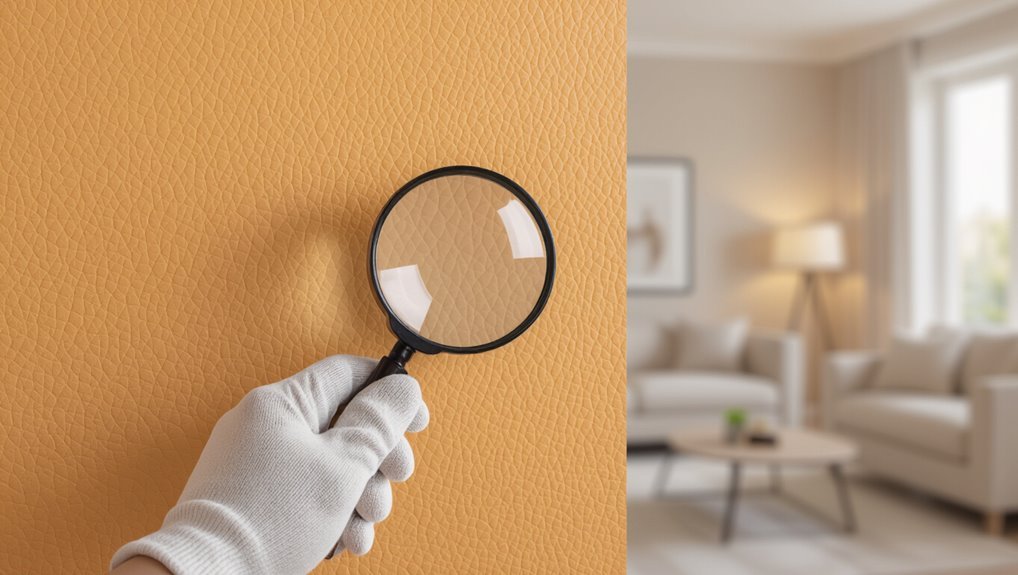
Orange peel texture is a drywall finish that leaves a subtle, bumpy surface resembling the skin of an orange.
You’ll recognize it among texture types for its fine, even pattern. Installers used spray application techniques to achieve it quickly.
You’ll find it hides minor flaws and accepts paint well, but you can also remove or smooth it if you prefer a flat, modern look.
How To Tell If Your Wall Has Orange Peel Texture?
If you’re trying to decide whether to keep or remove that finish, start by looking and feeling the wall up close.
Walk a hand over the surface—orange peel identification relies on small, consistent bumps rather than large knobs.
Shine a light at an angle to spot shadows and take photos for comparison.
This quick wall texture evaluation tells you if smoothing is needed.
Why Orange Peel Appears After Painting Or Repairs
When paint or joint compound dries with tiny, consistent bumps instead of a smooth film, it’s usually because the application or drying conditions weren’t right.
You’ll see orange peel when spray pressure, tip size, or paint viscosity are off, or when humidity and temperature speed or slow drying.
Poor surface preparation and improper painting techniques are common causes of orange peel that you can prevent with correct setup.
Quick Decision: Sand, Skim Coat, Or Repaint?
Look at the wall closely to assess surface condition and decide if the texture is just superficial or needs a full skim coat.
Consider how much time you can invest—sanding is quicker but messier, skim coating takes longer but gives the smoothest result, and repainting may be fastest if texture is minimal.
Finally, weigh cost versus outcome so you choose the option that fits your budget and desired finish.
Assess Surface Condition
Start by inspecting the wall closely to decide whether you should sand, skim coat, or repaint—this choice hinges on the texture depth, damage level, and your skill/time constraints.
Check for cracks, peel, and high spots. Use simple surface preparation techniques, perform a quick wall texture evaluation, and mark areas needing patching or full skim.
Decide based on repair extent and finish goals.
Compare Time Investment
Because your schedule and skill level will guide the fastest route, you’ll want to weigh how much time each option really takes: sanding’s quick for small spots but can eat hours with prep and cleanup; skim coating takes longer upfront yet speeds finishing and reduces rework; repainting is fastest for light texture hiding.
Prioritize time efficiency to match acceptable project duration and your available hours.
Evaluate Cost And Outcome
Anyone deciding between sanding, skim coating, or repainting should weigh upfront cost against the final look and durability: you’ll want a realistic cost estimation for materials, tools, and labor.
Sanding is cheapest but risks imperfect outcome expectations; skim coating costs more, yields smooth, durable results; repainting sits midrange with moderate improvement.
Choose based on budget, timeline, and desired finish.
Criteria To Choose Sanding Vs Skim Coat Vs Repaint
When deciding whether to sand, skim coat, or repaint, weigh the severity of the texture, the condition of the drywall, and how much time and money you want to spend.
For Choosing Methods, consider small, shallow orange peel for sanding; moderate damage for skim coat; minimal texture or color issues for repaint.
In Project Planning, factor labor, drying times, and finish expectations.
Tools To Gather Before You Start
Before you start, gather the right protective gear—respirator, safety glasses, gloves, and a dust mask—to keep dust and fumes off you.
You’ll also want essential tools like sanding blocks or a pole sander, joint compound and a hawk or mud pan, putty knives, and a good vacuum or shop vac.
Having these on hand will keep the job safer and faster.
Protective Gear
Grab these essential protective items before you start smoothing orange peel texture: a respirator with P100 or N95 cartridges, safety goggles, disposable coveralls or old clothes, nitrile or latex gloves, and a wide-brim hat or hair cover.
Choose protective gear options for dust and chemical exposure, and keep safety gear essentials handy to prevent inhalation, eye injury, skin contact, and contamination of clothing.
Essential Tools
Tools make the job smoother and faster, so gather them now: a sanding pole with 100–150 grit sandpaper, a hand sander or sanding block for detail work, a drywall rasp for heavy texture, a shop vacuum with a HEPA or high-efficiency filter, wide drywall knives (6–12 inches), a corner trowel, joint compound and a hawk or mud pan, clean sponges for finishing, and drop cloths to protect floors.
Choose tool selection wisely; pack essential supplies like extra sandpaper, mixing buckets, tape, and safety gear so you won’t stop mid-project.
Safety Gear And Dust‑Control Essentials
1 essential rule: protect yourself and contain the dust.
You’ll wear N95 or P100 respirators, safety goggles, and disposable coveralls as basic safety precautions.
Set up plastic sheeting and a zipper door, and use a HEPA vacuum and wet wiping for dust management.
Run a box fan with a HEPA filter to exhaust fine particles outside while you sand and skim.
Protect Floors, Furniture, And Fixtures
Before you sand or skim coat, cover floors completely with drop cloths or plastic to catch dust and debris.
Move small furniture out of the room and either wrap larger pieces or push them to the center and protect them with sheets.
Remove or tape over switches, outlet covers, and light fixtures so they stay clean and functional.
Cover Floors Thoroughly
When you’re prepping to sand, prime, or skim-coat walls, cover floors, furniture, and fixtures completely to prevent dust, paint splatter, and debris from causing damage.
Lay a durable floor covering—drop cloths, rosin paper, or plastic—taped at seams for surface protection.
Extend protection to baseboards and vents, secure edges with low-tack tape, and remove coverings carefully to avoid redistributing dust.
Move Or Shield Furniture
Protecting the floor is only part of the job—next, move furniture out of the room or group pieces in the center and cover them with fitted drop cloths or plastic sheeting to keep dust and primer off upholstery and finishes.
Plan your furniture arrangement for easy access, label items, and secure protective sheeting with tape. This prevents damage and speeds cleanup.
Protect Switches And Fixtures
Someone should cover outlets, switches, light fixtures, and ceiling fans so dust and primer don’t gunk up electrical parts or finishes.
You’ll turn power off, remove plates, and tape edges with painter’s tape for switch safety.
Drape plastic or drop cloths over fixtures and secure with clips for fixture protection.
After sanding or spraying, clean and reinstall covers to finish.
When Sanding Is The Right Fix
Sanding works best when the orange peel texture is shallow and consistent across the surface; if the bumps are minor and the drywall or plaster underneath is sound, you can smooth them without retexturing or skim-coating.
You’ll assess damage, choose appropriate sanding techniques, and do careful wall preparation to avoid damage.
Sanding’s efficient for small, uniform imperfections but isn’t right for deep texture or widespread cracking.
Step‑By‑Step: Sanding With A Sanding Block
Start with the right grit—usually 120 to 150—to knock down texture without gouging the drywall.
Use a sanding block and move in even, overlapping strokes until the surface looks uniform.
Wipe the dust away and inspect closely before deciding if you need a finer grit or a skim coat.
Choose The Right Grit
Before you press the block to the wall, pick a grit that matches how aggressive the orange peel is: coarser paper (80–120) removes heavy texture fast, while medium (150–180) smooths without gouging, and fine (220–320) readies the surface for primer.
Use grit selection and proper sanding techniques to avoid damage.
- 80–120 for heavy
- 150–180 for moderate
- 220–320 for final
Sand With Even Strokes
Grip the sanding block firmly and move it in long, even strokes across the wall, keeping consistent pressure so you remove texture without creating low spots.
Work methodically, overlapping passes slightly and checking angle to maintain flatness.
Use proper sanding techniques for consistent results, replacing grit as needed.
This surface preparation step sets you up for priming and finishing.
Clean And Inspect Surface
Now that you’ve sanded, wipe the wall with a damp microfiber cloth to lift dust.
Then let it dry completely before inspecting for low spots, residual texture, or sanding scratches.
You’ll perform wall cleaning and a careful surface inspection to prepare for skim coat or primer.
- Remove dust
- Flag imperfections
- Re-sand or patch as needed
Using An Orbital Sander Safely
If you’re smoothing orange peel with an orbital sander, wear a dust mask, eye protection, and hearing protection and secure drop cloths to catch the mess.
Follow safety precautions: check the sander, use correct grit, and test on scrap.
Hold the sander flat, move in slow overlapping passes, don’t press hard.
Keep control, rest frequently, and inspect progress to avoid gouges.
How To Prevent Dust While Sanding?
Before you sand, seal off the work area with plastic sheeting and tape so dust doesn’t spread through the house.
Hook your orbital sander to a dust-extraction vacuum or use a sander with a built-in collector to capture particles as you work.
For final smoothing, consider light wet sanding to keep dust down while still refining the surface.
Seal Off Work Area
Start by blocking off the room where you’ll be sanding to keep dust from spreading to the rest of the house. Seal doors and vents, create a dedicated work area, and post signs.
Follow safety measures: wear goggles and masks, cover floors and furniture, and use plastic sheeting taped tightly.
- Tape plastic sheeting
- Close HVAC vents
- Limit access to workspace
Use Dust Extraction
While you sand, use a dust-extraction system to capture particles at the source and keep the room clean. You’ll reduce airborne grit by choosing proper dust extraction methods and effective vacuum systems, connecting sanders directly and using HEPA filters so cleanup’s faster and repainting stays dust-free.
| Benefit | Action |
|---|---|
| Less dust | Connect tool |
| Cleaner air | HEPA filter |
| Faster finish | Vacuum assist |
| Easier cleanup | Disposable bags |
| Better paint | Less contamination |
Wet Sand Lightly
If you want to cut down airborne grit even more, wet-sanding lightly keeps dust to a minimum by trapping particles in water as you work.
You’ll use gentle sanding techniques during surface preparation to avoid over-sanding.
Steps:
- Lightly mist the wall and use fine-grit wet sandpaper.
- Wipe residue frequently with a damp sponge.
- Dry and inspect before priming.
When Sanding Alone Won’t Smooth Orange Peel
Even with patience and elbow grease, sanding alone won’t always erase heavy orange peel—you’ll often end up chasing bumps and gouging the joint compound. You’ll need to assess sanding techniques and do a texture comparison to decide next steps.
| Issue | Result |
|---|---|
| Light texture | Sanding helps |
| Heavy texture | Sanding inadequate |
| Gouged drywall | Requires repair |
| Uneven finish | Alternate methods needed |
What A Skim Coat Is And Why It Works
When sanding can’t give you a smooth wall, a skim coat becomes your go-to fix: it’s a thin, even layer of joint compound or plaster you spread over the surface to fill texture and minor defects, then sand smooth.
You’ll use skimming techniques to level surfaces and gain texture benefits:
- Fill depressions
- Hide orange peel
- Create uniform finish
Choosing The Right Joint Compound
Pick a joint compound based on the job: pre-mixed all-purpose for small repairs, setting-type for faster build and harder finish, or topping for the final skim.
You’ll usually use a setting compound to fill and level quickly, then a topping or lightweight finish coat for sanding smooth.
Mix to a creamy, lump-free consistency—thicker for filling, thinner for feathering edges—and follow the manufacturer’s water ratios.
Type Of Joint Compound
Because the compound you choose affects drying time, shrinkage, and ease of sanding, it’s important to match the joint compound to the job: lightweight all-purpose works for most skim coats and repairs.
Setting-type (powder) dries faster and resists shrinkage for deeper fills, and topping or ready-mix formulas give the smoothest finish for final passes.
You’ll consider joint compound types and joint compound applications:
- Lightweight all-purpose
- Setting-type powder
- Topping/ready-mix
Setting Vs. Topping
Although both are used to level walls, setting and topping compounds serve different purposes and perform differently, so you’ll want to choose based on the job: use setting (powder) for fast, deep fills and low-shrinkage work, and topping or ready-mix for smooth final passes that sand easily.
For texture comparison, consider hardness and sanding; match application techniques to depth, cure time, and finish expectations.
Mixing Consistency Tips
When you’re choosing a joint compound, think about consistency first: thinner mixes level and feather easier for skim coats, while stiffer mixes hold shape for filling gouges and matching heavy orange-peel texture.
You’ll aim for an ideal consistency based on mixing ratios and task:
- Skim coat — thin, milky.
- Repair — medium, creamy.
- Texture match — stiff, tacky.
Tools & Materials For A Successful Skim Coat
You’ll need a few specific tools and quality materials to get a smooth, professional skim coat: focus on tools overview and careful material selection. Gather a hawk, 12″ and 24″ taping knives, mixing drill with paddle, flexible corner trowel, joint compound (premixed or powder), and sanding block.
| Tool | Size | Purpose |
|---|---|---|
| Hawk | Medium | Hold compound |
| Knife | 12″,24″ | Spread compound |
| Drill | 1″ paddle | Mix compound |
| Sand block | Medium | Smooth finish |
How To Apply A Thin Skim Coat Over Orange Peel
Start by prepping the wall and your tools so the skim coat goes on smoothly: remove dust and loose texture with a vacuum or brush, wipe down with a damp cloth, and tape off trim and outlets.
Use these steps to apply thin skim coat techniques for texture smoothing:
- Mix joint compound to creamy consistency.
- Apply thin passes with a broad knife.
- Sand lightly after drying and prime.
Feathering Skim Coats Over Orange Peel Texture
When you feather skim coats over orange peel texture, you’ll start by understanding the basic technique: thin, overlapping strokes that blend the new mud into the existing wall.
Gather the right tools—wide drywall knives, corner trowels, good-quality joint compound, and sanding supplies—so you can work efficiently.
Finish smooth by keeping coats thin, feathering edges outward, and sanding lightly between layers for a seamless surface.
Feathering Basics Explained
Although feathering a skim coat over orange peel texture takes patience, it’s a straightforward way to blend the new compound into the surrounding wall so the changeover disappears.
You’ll use simple feathering techniques and plan feathering applications to match edges.
Steps:
- Thinly spread compound outward.
- Lightly drag to taper edge.
- Sand and repeat until seamless.
Tools And Materials
Now that you’ve covered feathering basics and know the motion and patience it takes, gather the right tools and materials to make those techniques work.
Focus on tool selection: quality taping knives, hawk, sanding blocks, and a mud pan.
Choose joint compound or setting-type mud for material durability.
Keep grit variations and clean tools handy so your skim coats adhere and feather predictably.
Smooth Finish Techniques
Start by applying thin, even skim coats that feather the joint compound out past the high points of the orange peel so each pass blends seamlessly into the surrounding wall.
You’ll follow proper wall preparation and use proven smoothing techniques.
- Sand and clean surface
- Apply thin coat with wide knife
- Sand, repeat as needed for feathered, smooth finish
Drying Times And When To Sand A Skim Coat
Once the skim coat’s smooth and even, you’ll need to let it dry thoroughly—patience here prevents cracking, adhesion problems, and uneven sanding.
Use drying techniques like increased ventilation, low heat, and dehumidifiers to speed curing without forcing it.
Check skim coat timing by touch and firmness; sand only when fully dry and hard to avoid gouging or tearing the finish.
How Many Skim Coats You’ll Likely Need
After your first skim coat has fully dried and you’ve sanded it smooth, you’ll be ready to judge how many more coats the wall needs.
Inspect for low spots, texture, and feathered edges.
Typical guidance:
- Minor imperfections: one more coat.
- Moderate flaws: two coats using refined skim coat techniques.
- Deep valleys or heavy orange peel: three coats for ideal applications.
Primer After Skim Coating: What To Use
Once your skim coat is fully sanded and dust-free, you’ll want to follow a few surface-prep steps to guarantee primer bonds properly.
Choose a high-build, water-based primer or a shellac-based sealer depending on the skim coat’s porosity and any stains.
Apply according to manufacturer directions, watching recommended drying times before sanding or topcoating.
Surface Preparation Steps
Skim-coated walls need the right primer to bond and hide variations, so pick one formulated for high-build or drywall repair—ideally a water-based acrylic primer or a bonding primer if the skim coat is porous or chalky.
Prepare the surface with these steps:
- Do a wall inspection and mark imperfections.
- Perform surface cleaning, remove dust and grease.
- Sand or spot-prime glossy areas.
Primer Type Selection
While choosing a primer, focus on adhesion and build so the skim coat stays sealed and smooth; pick a high-build acrylic or a bonding primer if the skim coat feels porous or chalky.
You’ll choose formulas that offer primer benefits like stain blocking and surface leveling.
Consider PVA for drywall, acrylic for durability, and follow manufacturer primer application guidance for best results.
Application And Drying
1. You’ll choose a high-quality primer after skim coating and focus on correct application techniques and drying times.
Follow this quick checklist:
- Roll thin, even coats to avoid drips.
- Sand lightly between coats for adhesion.
- Allow full drying times per label before topcoat.
You’ll avoid trapping moisture and guarantee a smooth, durable finish by respecting cure and recoat intervals.
When Plaster Beats Joint Compound (And Why)
Because plaster bonds to the substrate and cures rigidly, it often outperforms joint compound for hiding orange-peel texture on older walls and ceilings.
You’ll choose plaster when you need durability, thin strong coverage, and reduced shrinkage — plaster advantages that matter on brittle lath or multiple repaint layers.
Understand joint compound differences: it’s easier to sand and repair but shrinks and flexes more, so it isn’t always ideal.
Spray Texture Removal: Knockdown And Knockdown Tools
If you’re dealing with orange peel, knockdown spray offers a simpler, flatter finish you can control.
You’ll want the right tools—a hopper gun or aerosol texture can and a knockdown knife—and the technique is mostly about timing the skim and the pressure.
I’ll walk you through setup, spraying tips, and how to feather the knockdown for a smooth result.
Knockdown Texture Overview
Knockdown texture, a popular drywall finish that creates a mottled, flattened look, can be tougher to remove than simple orange peel because the material is thicker and intentionally irregular.
When you tackle spray-applied knockdown, you’ll need the right tools and a patient approach to flatten and blend the surface without damaging the underlying drywall.
- Understand knockdown texture benefits.
- Note knockdown texture applications.
- Plan surface prep and repair.
Tools And Technique Tips
Now that you’ve assessed the knockdown finish and prepped the surface, you’ll need the right tools and a careful technique to remove spray-applied texture without gouging the drywall.
Use a wide drywall knife, pole sander, and vacuum sander; practice gentle sanding techniques to avoid damage.
After scraping, apply thin skim coating, feather edges, sand lightly, and finish with primer for a smooth, paint-ready wall.
How To Re‑Texture Instead Of Removing Orange Peel
Instead of stripping away orange peel texture, you can blend or replace it with a new finish that suits your room and skill level.
Focus on retexturing techniques and careful wall preparation before applying any new coat.
Consider:
- Skim and prime problem areas.
- Match texture style and spray or hand-apply.
- Feather edges and sand lightly for seamless blending.
Step‑By‑Step: Creating A Smoother Texture With A Sprayer
If you’ve prepped and matched the texture around problem spots, the next step is using a sprayer to create a smoother, more uniform finish across the whole wall. You’ll learn sprayer techniques: thin coats, consistent overlap, and distance control. Do a texture comparison test panel first.
| Step | Setting | Tip |
|---|---|---|
| 1 | Low | Feather edges |
| 2 | Medium | Blend seams |
| 3 | High | Light passes |
When To Hire A Pro Vs DIY For Texture Work
Wondering whether you should tackle wall texture repair yourself or call in a pro? You’ll weigh skill, time, and risk. Consider:
- If you lack DIY confidence or face complex damage, get a professional evaluation.
- For small, cosmetic fixes, you can handle it.
- Hire a pro for large areas, matching existing texture, or tight timelines.
Budget Comparison: DIY Sanding Vs Skim Coat Vs Contractor
While you can often save money by tackling orange-peel texture yourself, you’ll want to weigh material costs, time, and the skill required: sanding eats time and creates dust but uses inexpensive supplies; a skim coat needs joint compound and tools plus practice; hiring a contractor costs more upfront but guarantees speed and finish quality.
| Option | Cost | Skill |
|---|---|---|
| Sanding | Low | Moderate |
| Skim coat | Medium | High |
| Contractor | High | Professional |
Use DIY Techniques and a clear Cost Analysis to pick what fits your budget and timeline.
Tools Worth Renting For One Job
Renting a few specialty tools can save you time and hassle when removing orange-peel texture—especially for a one-off job where buying gear isn’t worth it.
Check rental options and tool availability before you go. Consider:
- Orbital sander with dust bag
- Drywall pole sander
- Banjo texture sprayer (for touch-up)
You’ll cut labor and avoid long-term storage.
Estimating Time For A DIY Smoothing Project
Estimating how long a DIY smoothing project will take depends on the room size, the texture removal method you choose, and how much prep and finishing work you’ll do yourself.
For accurate time estimation, break tasks into prep, removal, sanding, priming, and painting. Use project planning to set realistic daily goals, factor in drying times, and allow extra time for unexpected repairs.
Fixing Small Patches Without Redoing The Whole Wall
Start by locating the damaged area and evaluating how much needs repair.
Feather and blend the patch edges into the surrounding wall so the change is smooth.
Once it’s dry, prime the spot and match the original texture before painting.
Locate The Damaged Area
Begin by surveying the wall in good light—natural daylight or a bright work light helps—so you can spot where the orange peel texture is nicked, sanded smooth, or patched unevenly; run your hand lightly over suspect areas to feel differences you might miss with your eyes alone.
Use these steps for Locating damage and Identifying texture:
- Visually scan for sheen/contour changes.
- Feel for dips or hard edges.
- Mark spots for repair.
Feather And Blend Edges
Once you’ve sanded the patch smooth, feather the edges into the surrounding texture so the repair disappears; use a light touch and a fine-grit sanding block to taper the patch until the change feels seamless under your hand. Use feather techniques and blending strategies to match contours, then inspect by touch.
| Tool | Motion | Outcome |
|---|---|---|
| Sandblock | Light strokes | Smooth change |
| Sponge | Dampen & rub | Blend edges |
| Brush | Soft feathering | Even texture |
Prime And Texture Match
After you’ve feathered and blended the patch so its edges disappear, prime the repaired area to seal joint compound and guarantee the texture adheres and paints evenly.
Then match texture and finish by testing sprays or knives until seamless. Use proper primer application and let it dry fully before painting.
- Test texture matching
- Apply primer application carefully
- Paint when dry
Repairing Large Patched Areas Before Smoothing
Large patched areas need careful prep before you try to smooth orange peel texture—otherwise the patch will telegraph through the finish. You’ll use patching techniques and careful texture blending: feather edges, sand, apply bonding primer, and test spray. Confirm level changes and cure times before final skim.
| Step | Action |
|---|---|
| 1 | Feather edges |
| 2 | Sand smooth |
| 3 | Prime |
| 4 | Test spray |
| 5 | Skim coat |
Dealing With Textured Ceilings Vs Walls
Wondering if ceilings and walls need different approaches? Yes — you’ll treat them differently.
Ceilings often demand lighter pressure and ladder safety; textured ceilings are trickier to skim.
Walls accept more aggressive smooth wall techniques and sanding.
- Use lighter passes on ceilings.
- Apply full skim on walls.
- Sand walls more; ceilings gently.
Handling Trim, Outlets, And Fixtures During Smoothing
When you prep walls for smoothing, protect and work around trim, outlets, and fixtures so they don’t get damaged or gummed up with joint compound or sanded dust.
Use trim techniques like taping and masking; apply outlet protection with covers and foam; practice careful fixture handling and edge blending.
Follow smoothing strategies and detailing tips to keep lines crisp and prevent damage during sanding.
Primer And Paint Choices For A Smooth Final Finish
You’ll want a high-build primer to fill minor imperfections and create a uniform base.
Pick a smooth, low- or satin-sheen paint to minimize light-catching texture.
Match the primer type to your surface (drywall, plaster, or previously painted walls) for best adhesion and finish.
Choose High-Build Primer
A high-build primer lays a thicker, more forgiving base coat that fills minor orange-peel dimples and creates a smoother surface for your topcoat.
Use high build benefits and smart application techniques to level texture before painting.
Steps to follow:
- Clean and sand the wall.
- Roll on high-build primer evenly.
- Lightly scuff between coats for best adhesion.
Pick Smooth Finish Paint
Now that you’ve laid a smoother base with high-build primer, pick a paint with a true smooth or flat finish to minimize any remaining orange-peel appearance.
Choose a low-sheen formula and use proper rollers or sprayers for a smooth paint application.
Match technique to wall texture types, work in consistent strokes, and thin coats—each layer improves surface uniformity without emphasizing residual texture.
Match Primer To Surface
Primers set the stage for a smooth final finish, so match the primer to your wall’s condition and material before you paint.
Choose primer qualities that improve adhesion and hide imperfections; confirm surface compatibility for drywall, plaster, or previously painted surfaces.
Follow this checklist:
- High-adhesion primer for porous drywall
- Stain-blocking primer for repairs
- Bonding primer for glossy surfaces
Best Paints To Hide Minor Imperfections
Choose paints that have build and subtle sheen to mask orange peel without calling attention to flaws. You’ll pick a durable latex with mid-level paint sheen and pair it with the best primer for adhesion. Satin or eggshell hides small bumps; flat shows flaws. Test samples on your wall to confirm coverage and appearance before committing.
| Finish | Coverage | Use |
|---|---|---|
| Eggshell | Good | Living rooms |
| Satin | Better | Halls |
| Flat | Fair | Ceilings |
How To Paint After Skim Coating For An Even Finish
After skim coating, let the surface cure fully and sand it smooth so your paint will lay down evenly; then wipe away dust with a damp cloth before you begin.
Use proper Skim Coating Techniques and follow Painting Tips for a flawless coat.
Do this:
- Prime repaired areas with a bonding primer.
- Sand between coats for smoothness.
- Apply thin, even paint coats, drying fully between layers.
Roller Vs Sprayer: Pick The Right Repaint Method
Whether you’re covering a whole room or touching up a single wall, deciding between a roller and a sprayer comes down to the size of the job, the texture you’re working with, and how much prep you’re willing to do.
Use roller benefits for small areas and to control coverage on slightly textured surfaces; choose sprayer advantages for speed and smooth, even coats over large, intricate walls.
How Humidity And Temperature Affect Drying And Sanding
Because temperature and humidity control how fast paint and joint compound cure, you’ll want to monitor them closely before you sand or apply another coat.
You’ll avoid sanding gumminess or rework by understanding humidity effects and temperature impact.
- Slow cure: high humidity — wait longer.
- Fast cure: high temp — sand sooner, but risk cracking.
- Ideal: moderate temp and low-moderate humidity.
Quick Fixes For Renters To Reduce Texture Visibility
If you’re renting and want a low-commitment way to reduce orange peel, start with reversible, non-permanent fixes you can remove before moving out.
Try removable fabric wall panels, peel-and-stick wallpaper, or thin foam panels to mask bumps.
Use light-reflecting paint or strategic furniture placement for texture hiding.
These renter options won’t damage walls and stay easy to undo.
Common Mistakes That Make Orange Peel Worse
Don’t over-sand dry orange peel — you’ll sand through high spots and make the texture look patchy.
Don’t slather on thick primer to hide it, because heavy coats can fill and trap texture unevenly.
Instead, follow targeted sanding and thin, even primer layers so you don’t make the problem worse.
Over-Sanding Dry Texture
One common mistake that actually makes orange peel worse is over-sanding the dry texture; when you sand too aggressively you remove peaks unevenly, create low spots, and expose coarse grit that shows through new paint.
You should use careful over sanding techniques focused on gradual texture improvement.
Steps to avoid damage:
- Sand lightly
- Check progress often
- Feather edges gently
Applying Thick Primer
Although primer’s meant to smooth and seal, applying it too thickly can actually exaggerate orange peel by filling valleys unevenly and creating visible ridges once it dries.
You might think thick primer benefits justify heavy coats, but they trap texture.
Use thin, even coats for ideal application, allow full drying, and sand lightly between coats.
That prevents ridge formation and preserves a flat finish.
Troubleshooting Ridges, Lap Marks, And Reappearance
Notice any raised ridges, lap marks, or the texture coming back after you thought the job was done?
You’ll want quick ridges troubleshooting and lap marks solutions to fix them.
Try these steps:
Try these steps to quickly fix ridges, lap marks, and texture return on your walls.
- Sand raised ridges smooth, then dust thoroughly.
- Feather primer thinly, overlap wet edges slightly.
- Re-skim problem areas with thin joint compound, sand, prime, and repaint.
How To Test A Small Area Before You Commit
After you’ve smoothed ridges and re-skimmed problem spots, don’t commit to the whole wall—test a small area first to make sure your fix blends and holds up.
You’ll use test techniques on sample areas and practice patches to evaluate material selection, paint application, and texture comparison.
Do a quick wall assessment and finish evaluation, note results, then proceed or adjust.
Matching Texture Between Patched And Existing Areas
When you patch orange peel, make sure the texture depth matches the surrounding wall so the repair doesn’t stand out.
Feather the patch edges into the existing texture to create a smooth progression.
Finally, match paint color and finish so the repaired area blends in under different lighting.
Texture Depth Matching
If your patch sits higher or lower than the surrounding orange peel, it’ll catch light differently and stand out, so you need to match the texture depth precisely.
You’ll use texture depth assessment and finishing techniques to blend.
Steps:
- Measure depth with a straightedge and shadow.
- Build or remove skim coats to equalize.
- Test spray, dry, then fine-tune.
Feathering Patch Edges
Blend the repair into the surrounding finish by feathering the patch edges so the texture shifts gradually instead of ending in a hard line. You’ll use feathering techniques and gentle edge blending with a damp sponge or trowel, working outward until the texture matches. Practice on scrap drywall first.
| Tool | Action |
|---|---|
| Sponge | Soften edges |
| Trowel | Smooth shift |
| Brush | Light stipple |
| Practice | Refine touch |
Color And Finish Blend
Because lighting and sheen can make a patch stand out even when the texture matches, you’ll need to match both color and finish to make repairs invisible; choose paint that respects color psychology and finish durability.
Follow these steps:
- Test small swatches under room lighting.
- Match sheen and drying behavior.
- Blend edges with thin glaze for seamless integration.
Eco‑Friendly Compounds And Paints To Consider
When you want to smooth walls without harming indoor air quality or the planet, choose low‑VOC joint compounds and paints formulated with natural binders and recycled content.
You’ll find eco friendly paints, plant‑based primers, and skim coats made from sustainable materials that reduce odors and off‑gassing.
Read labels for certification (GreenGuard, EU Ecolabel), test a small patch, and ventilate during application.
Working With Vaulted Ceilings And High Walls Safely
Tackle vaulted ceilings and tall walls with a plan: assess the height, pick suitable access (extension poles, sturdy ladders, or scaffolding), and gather fall-protection gear before you start.
Use vaulted ceiling safety and proven high wall techniques:
Use vaulted ceiling safety and proven high wall techniques: secure access, use extension tools, and wear proper protective gear.
- Secure ladder/scaffold setup.
- Use extension tools for sanding/painting.
- Wear harnesses, non-slip shoes, and eye protection.
Seasonal Timing: Best Months To Tackle Smoothing Projects
If you want smooth, durable results, plan your smoothing project for late spring through early fall when temperatures and humidity are most favorable.
You’ll follow seasonal trends that favor quick drying, better adhesion, and fewer finish problems. Ideal timing reduces sanding dust issues and paint recoat delays.
Aim for stable forecasts, work on interior rooms when humidity stays moderate, and avoid damp or freezing periods.
Cost‑Saving Tips Without Sacrificing Finish Quality
Stretch your budget by prioritizing prep and picking a few high-impact upgrades—do the sanding and patching yourself, rent a quality sander for a day instead of buying one, and spend a bit more on a premium primer so your skim coats and paint adhere better and last longer.
Use cost effective solutions that preserve finish quality:
- Buy quality primer
- Rent tools
- DIY prep and touch-ups
How To Maintain Smooth Walls And Prevent Orange Peel
Once you’ve smoothed your walls, keep them that way by controlling humidity, using the right paint tools, and doing quick repairs at the first sign of wear. Use wall maintenance tips like regular cleaning, touch-ups, and proper primer. Follow texture prevention methods: correct roller nap, even spray, and consistent technique.
| Task | Frequency | Tool |
|---|---|---|
| Clean | Monthly | Microfiber |
| Inspect | Quarterly | Light |
| Touch-up | As needed | Brush |
| Repaint | 5–7 yrs | Roller/Pad |
Signs You Should Call A Drywall Professional
Wondering whether a job is beyond your DIY skills? Call a pro when damage is extensive, finishes fail, or you need structural fixes.
They’ll handle drywall installation, complex repairs, and advanced texture techniques safely and quickly.
- Large cracks, sagging, or water damage
- Uneven repairs after attempts
- Need seamless match for finish and paint
Quick Recap: Choose The Right Method For Your Skill & Budget
If you’re weighing fixes, match the method to your skill level, time, and budget so you don’t end up redoing the job.
Choose simple DIY Techniques like sanding or skim-coating if you’re comfortable, or hire pros for spray-to-match Texture Options.
Prioritize tools, time, and finish quality; low cost can mean more labor, while higher budget buys speed and consistency.
Frequently Asked Questions
Can Orange Peel Texture Contain Lead or Asbestos in Older Homes?
Yes—older orange peel finishes can contain lead or asbestos, so you should get lead testing and an asbestos inspection before disturbing them; contractors can’t assume safety, and you’ll want certified professionals to handle removal.
Will Removing Texture Impact Wall Insulation or Thermal Performance?
Removing texture rarely changes insulation considerably; you’ll maintain thermal performance if you avoid cutting into cavities. Use proper texture removal techniques, seal gaps, and repair drywall joints to prevent insulation effects from reducing overall efficiency.
Can I Match New Drywall Paint Sheen to Surrounding Walls Exactly?
Yes — you can match new drywall paint sheen to surrounding walls exactly if you test samples, use the same sheen and paint line, and guarantee texture matching before painting so light reflects consistently across repairs and blends seamlessly.
How Do I Repair Orange Peel on Plaster Walls vs. Drywall?
You’ll want different fixes — plaster repair demands patching, bonding, and skim coats, while drywall techniques use joint compound, sanding, and texture matching; you’ll conquer it like thunder, and you’ll follow proper drying, sanding, and primer steps.
Is There a Fast Temporary Cover-Up Until I Can Skim Coat?
Yes — you can use quick fixes like heavy primer plus sandable spackling or textured spray paint as temporary texture alternatives; they’ll mask orange peel until you can skim coat, and you’ll be able to sand or paint over later.
Conclusion
You’ve learned what orange peel is, how to spot it, and why it shows up after painting or repairs. You’ve weighed sanding, skim coating, and repainting, and you’ve compared cost, time, and skill. You’ve picked tips to save money, steps to prevent recurrence, and signs that mean you should call a pro. Now choose the method that fits your skill, match the effort to your budget, and enjoy walls that feel renewed, calm, and confident.
