
How to Get Paint Off Jeans: Quick and Effective Stain Removal
You can usually get paint off jeans quickly by blotting excess, identifying whether the paint is water‑ or oil‑based, and treating it right away: rinse fresh water‑based paint, dab with mild detergent or rubbing alcohol for dried spots, and use mineral spirits or paint thinner for oil‑based stains (test first). Scrape dried globs gently, launder in cool water, and air‑dry to check results. Follow these steps and you’ll find more tips and options if the stain won’t budge.
Who This Guide Helps and How to Use It
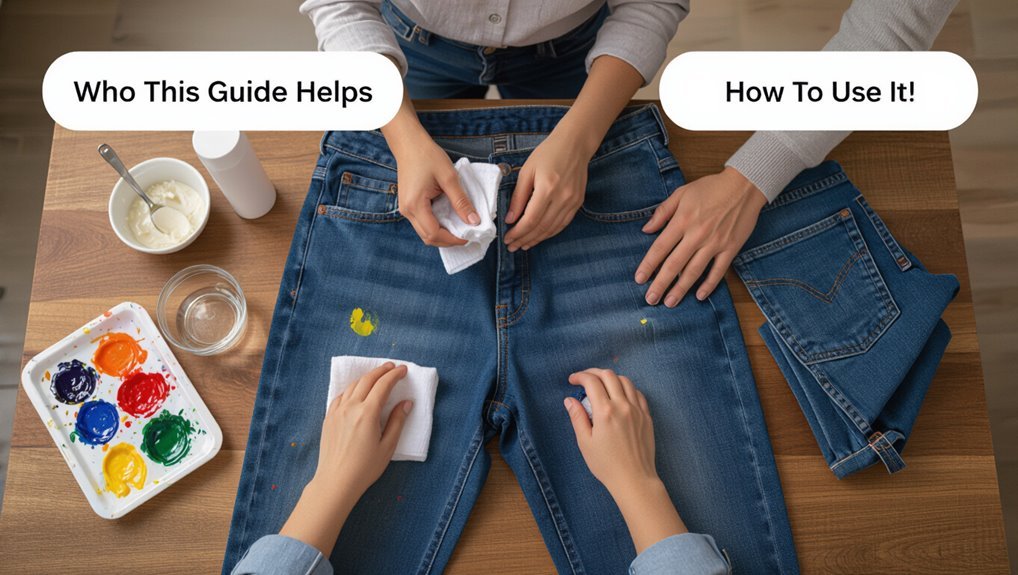
Who’s this guide for and how should you use it?
You’ll find clear, practical guidance if you’ve got fresh or dried paint on jeans.
You’ll learn stain prevention tips and straightforward fabric care advice so you avoid damage while treating spots.
Follow step-by-step methods, choose appropriate cleaners, and act promptly to improve removal success and preserve denim quality.
Quick Fix: First Step to Remove Paint From Jeans
If you get paint on your jeans, act fast and treat the stain right away.
Grab a clean cloth and gently blot the spot to lift wet paint—don’t rub, which will spread it.
Blotting preserves the fabric and gives you a better shot at full removal.
Act Fast Immediately
Act fast: the sooner you tackle a paint stain, the better your chances of removing it.
You should take immediate action—assess whether the paint is wet or dry, scrape off excess gently, and protect unaffected fabric.
Treating stain urgency means acting now before it sets; gather supplies, isolate the spot, and follow the right solvent steps to improve removal success.
Blot, Don’t Rub
When paint’s still wet, dab at the spot with a clean cloth or paper towel instead of rubbing—rubbing spreads the stain and pushes pigment deeper into the fibers.
Use gentle blotting techniques and avoid common rubbing mistakes.
Steps:
- Place paper towel underneath.
- Dab from edges inward.
- Switch to a clean area often.
- Blot until transfer slows, then treat.
How to Tell Water-Based vs. Oil-Based Paint on Jeans
How can you tell whether the paint on your jeans is water- or oil-based?
Check paint characteristics: water-based looks matte, feels tacky then softens with water; oil-based stays glossy and resists water.
For stain identification, dab a damp cloth—if pigment lifts, it’s likely water-based; if it beads or smudges oily residue, it’s probably oil-based.
Why Act Fast: How Drying Time Affects Removal Success
If the paint is still fresh, you can usually lift it with minimal effort; once it sets, removal becomes much harder.
You should act quickly because prompt treatment prevents the pigment from bonding deeply with the fibers.
Heat speeds curing and makes stains permanent, so avoid drying or ironing until the paint’s gone.
Fresh Vs. Set Stains
Because paint soaks in and bonds as it dries, you’ll have a much easier time removing fresh spots than set stains.
You should prioritize action and choose methods accordingly:
- Blot fresh stains gently to lift wet paint.
- Rinse with cold water for water-based paint.
- Scrape dried paint carefully to avoid fabric damage.
- Pre-treat set stains with solvent before laundering.
Speed Of Treatment
Acting fast makes paint removal far easier: wet paint sits on the surface and rinses or lifts cleanly, while drying lets pigments and binders bond with fabric fibers and bake in.
You should prioritize removal timing—start blotting and pre-treating immediately. That treatment urgency improves success, reduces scrubbing, and preserves fabric.
Delays force harsher solvents and lower chances of full recovery.
Heat And Fiber Bond
When paint dries, heat and time let its binders harden and lock pigment into the tiny threads of your jeans.
So the longer you wait, the harder it’s to lift out the stain. Act fast—heat application speeds curing and worsens the fiber reaction.
Follow steps:
- Blot excess.
- Cold rinse.
- Pretreat solvent.
- Air dry, then launder.
Tools to Gather Before You Start Removing Paint From Jeans
Before you start, gather a few basic tools so you won’t have to stop mid-cleaning: clean cloths or paper towels, a dull knife or spoon for scraping, rubbing alcohol or acetone (nail polish remover) for solvent-based paints, dish soap and laundry detergent for water-based paints, a soft-bristled brush, and a small bowl of warm water.
| Tool | Use | Tip |
|---|---|---|
| Cloths | Blot | Don’t rub |
| Scraper | Remove bulk | Work gently |
| Solvents | Break paint | Test first |
| Soap | Lift water-based | Apply sparingly |
| Brush | Agitate fibers | Soft strokes |
Gather these to streamline paint solvents and cleaning techniques.
Safety Tips: Ventilation, Gloves, and Surface Protection
Before you start, make sure the area is well-ventilated so fumes from removers or solvents don’t build up.
Put on chemical-resistant gloves to protect your skin from irritation or stains.
Lay down drop cloths or old towels to keep your work surface and floors safe.
Ensure Adequate Ventilation
Although it might seem like a small step, you should always work in a well-ventilated area to avoid breathing fumes from paint removers and solvents.
You’ll protect your health by prioritizing ventilation importance and promoting steady air circulation.
Tips:
- Open windows and doors.
- Use a fan to push fumes outward.
- Work outdoors if possible.
- Take breaks for fresh air.
Wear Protective Gloves
If you’re dealing with paint on jeans, put on protective gloves to keep your skin safe from harsh solvents and paint pigments — they can irritate or absorb through your skin.
Choose suitable glove types: nitrile for chemical resistance, latex for light tasks, or heavy-duty rubber for scrub sessions.
Treat gloves as essential protective gear, replace torn pairs, and wash hands after removing them.
Protect Work Surfaces
Start by clearing and covering the area where you’ll work so paint and solvents don’t ruin floors, furniture, or carpets.
You should use proper surface coverings and maintain workspace organization to limit mess and hazards.
Follow these steps:
- Lay down drop cloths.
- Tape edges securely.
- Keep solvents in a tray.
- Arrange tools neatly and ventilate the room.
How to Test a Cleaning Method on a Hidden Seam
Before treating the visible stain, test your chosen cleaner on an inside seam or hem where the fabric won’t show damage; this lets you confirm colorfastness and fabric reaction without risking visible discoloration.
Dab a small amount, wait 10–15 minutes, then blot. Note any dye transfer or weakening.
This stain testing checks fabric sensitivity and prevents bigger mistakes before full treatment.
If Testing Succeeds: Step-by-Step Solvent Use
If your hidden-seam test didn’t damage the fabric, you can move on to using a solvent on the stained area.
Start by blotting a small amount of solvent onto a clean cloth and gently working from the paint edge toward the center to lift it.
Keep solvents away from heat and vents, wear gloves, and ventilate the room to stay safe.
Spot Test First
Wondering whether that solvent will harm your jeans? Do a quick spot testing on an inconspicuous seam to confirm fabric compatibility before proceeding.
If it passes, follow these steps:
- Blot a hidden area with solvent.
- Wait one minute.
- Check for color loss or texture change.
- Rinse test area and let it dry.
Apply Solvent Safely
Since your spot test showed no damage, you can begin applying solvent to the paint stain while protecting the rest of the fabric; work in a well-ventilated area, wear gloves, and keep a clean cloth or paper towels nearby to absorb dissolved paint. Use appropriate solvent types, follow safety precautions, dab gently, and rinse promptly.
| Step | Action | Tip |
|---|---|---|
| 1 | Protect area | Tape edges |
| 2 | Apply solvent | Small amount |
| 3 | Blot | Use cloth |
| 4 | Repeat | Limit exposure |
| 5 | Rinse | Cold water |
Remove Fresh Water-Based Paint From Denim
Fresh water-based paint is the easiest to tackle on denim because it hasn’t bonded to the fibers yet, so you can act quickly to blot and lift most of it before it dries.
Follow these steps for fast paint removal:
- Scrape excess gently.
- Blot with damp cloth.
- Use mild detergent.
- Rinse and air dry, repeating if needed.
Remove Dried Water-Based Paint From Jeans
When water-based paint has dried on your jeans, it’s tougher to remove but still doable if you act methodically: scrape gently with a plastic scraper.
Then pre-treat remaining flakes with a paste of dish soap and warm water.
Blot, launder on warm per care label, and air-dry.
Repeat if needed.
These steps prioritize dried paint removal while protecting fabric care and denim integrity.
Remove Fresh Oil-Based Paint From Jeans
If the oil-based paint is still wet, act fast to prevent it from soaking into the denim: Use targeted cleaning techniques with mild paint solvents, blotting—don’t rub—while wearing gloves.
Follow this 4-step list:
- Scrape excess gently with removal tools.
- Apply solvent or eco friendly options sparingly.
- Blot with cloth; repeat.
- Rinse, launder per fabric care.
Observe safety precautions and DIY remedies for different paint types.
Remove Dried Oil-Based Paint Safely
First check the paint can or test a hidden spot to confirm it’s oil-based so you pick the right cleaner.
For dried oil-based paint, you’ll need stronger, solvent-based removers rather than water-based soaps.
Always use those solvents in a well-ventilated area, wear gloves, and spot-test to avoid damaging the fabric.
Identify Paint Type
Because dried oil-based paint bonds into the fabric, you’ll need to identify it correctly before trying to remove it so you don’t ruin the jeans.
Check paint types and paint characteristics quickly:
- Smell test: solvent odor implies oil-based.
- Texture: glossy, hard film = oil.
- Water test: beads indicate oil.
- Label/residue: flakes that crack suggest oil-based paint.
Use Safe Solvents
1. Use solvents carefully: test an inconspicuous spot, work in a ventilated area, and wear gloves to prioritize solvent safety.
For dried oil-based paint, gently blot with mineral spirits or paint thinner, then launder.
If you prefer eco-friendly options, try citrus-based removers or bio-solvents, following product instructions and disposing of waste responsibly to avoid fabric damage or environmental harm.
Use Dish Soap and Warm Water for Latex Paint Stains
Start by mixing a few drops of dish soap into warm water to loosen fresh latex paint from the fabric.
Use dish soap benefits and warm water effectiveness to break paint’s grip.
Then follow these steps:
- Blot excess paint gently.
- Apply solution and rub lightly.
- Rinse with warm water.
- Repeat until stain fades, then launder as usual.
How White Vinegar Breaks Down Water-Based Paint
White vinegar breaks down water-based paint by softening the dried film and loosening pigment binders so you can lift the stain more easily; its acetic acid penetrates the paint’s polymer matrix and weakens the bonds that hold the pigment to the fabric. You’ll see vinegar effectiveness tied to basic paint chemistry as you blot and rinse.
| Action | Effect | Tip |
|---|---|---|
| Soak | Softens film | Use warm vinegar |
| Blot | Lifts pigment | Don’t rub |
| Rinse | Removes residue | Repeat if needed |
Use Rubbing Alcohol for Small Paint Stains
First, make sure the spot is a small, solvent-safe paint—rubbing alcohol works best on water-based and some acrylics, not oil-based finishes.
Test the alcohol on a hidden seam to be sure it won’t affect the dye or fabric. If it’s safe, dab the stain with a cotton ball soaked in rubbing alcohol, working from the outside in.
Identify Paint Type
Wondering whether that tiny splash on your jeans is water-based or something tougher?
Check paint characteristics and paint adhesion to decide treatment.
Try these quick checks:
- Dab with water — beads mean likely oil-based.
- Scrape gently — flaky paint often water-based.
- Rub with rubbing alcohol on a cloth.
- Note drying time — fast drying suggests acrylic.
Test On Hidden Seam
Before you treat the visible stain, test rubbing alcohol on a hidden seam or inside hem to make sure it won’t fade or weaken the denim; dampen a cotton swab with isopropyl alcohol and rub a small inconspicuous area for 10–15 seconds, then blot and check for color transfer or fabric damage.
If safe, proceed carefully—this quick check protects dye, aids stain prevention, and preserves fabric care.
Dab With Cotton Ball
Once you’ve confirmed the alcohol won’t harm the denim, dampen a cotton ball with isopropyl alcohol and gently dab at the paint stain—don’t rub, which can spread or push pigment deeper into the fibers.
- Blot excess paint with a scrap.
- Use dab technique with cotton ball.
- Work outward from center.
- Rinse and repeat until paint lifts, then launder.
When and How to Use Acetone or Nail Polish Remover
If the paint on your jeans is oil-based or stubborn latex and other methods haven’t worked, reach for acetone or an acetone-based nail polish remover—but test a hidden seam first to check for colorfastness and finish damage.
Work in a ventilated area, wear gloves, blot gently with a cloth, don’t rub, rinse promptly, and launder.
Follow acetone safety and avoid mixing with other chemicals.
Paint Thinner and Mineral Spirits: Precautions and Steps
Before you touch paint thinner or mineral spirits, put on gloves and work somewhere with good ventilation so you don’t inhale fumes.
You’ll apply a small amount to a cloth, blot the stain from the outside in, and avoid soaking the fabric.
After the paint lifts, wipe with a clean damp cloth and let the jeans air out to remove residue.
Safety Gear First
While paint thinner and mineral spirits can remove stubborn stains, they’re strong chemicals and you’ll need proper safety gear before you start.
Follow safety precautions and wear protective equipment to limit exposure. Do these four things:
- Use chemical-resistant gloves.
- Wear safety goggles.
- Work in a ventilated area or outdoors.
- Keep a fire extinguisher nearby and avoid open flames.
Application And Removal
When you’re ready to tackle stubborn paint with thinner or mineral spirits, apply them carefully and work in short, controlled steps to protect your jeans and yourself.
Test an inconspicuous area first, blot gently with a clean cloth, and avoid soaking.
Rinse promptly, launder per fabric care instructions, and dry only after the stain prevention check confirms removal to prevent setting.
Best Commercial Paint Removers and Stain Lifters for Denim
You’ve got several reliable commercial options that can tackle paint on denim without destroying the fabric.
Choose products labeled safe for fabrics and test a hidden seam.
Consider commercial options alongside natural alternatives for gentler care.
- Enzymatic stain remover
- Paint-specific solvent (fabric-safe)
- Oxygen bleach paste
- Commercial stain lifter designed for clothes
How to Scrape Paint Safely With a Plastic Scraper or Card
If the paint has dried and flaked, grab a plastic scraper or an old credit card and work from the fabric’s surface inward, using short, controlled strokes to lift chips without stretching or tearing the denim.
Keep the angle shallow, test a hidden seam, and dispose of lifted flakes.
These paint removal techniques rely on safe scraping to protect denim fibers and prevent spreading the stain.
Lift Paint With a Toothbrush or Soft Brush (Technique)
Gently scrub the paint with a soft toothbrush or small brush to lift loosened flakes and residue without damaging the denim fibers.
- Use gentle strokes with a toothbrush technique to avoid fraying.
- Work outward from the stain to prevent spreading.
- Rinse bristles frequently to remove loosened paint.
- Repeat cycles of paint lifting and rinsing until no more transfers, then launder as directed.
Blotting vs. Rubbing: Which to Do When
When paint lands on your jeans, deciding whether to blot or rub comes down to the paint type and how fresh the stain is: You’ll use blotting techniques for wet, water-based paint to lift without spreading, and rubbing techniques for dried or stubborn spots after softening.
| Situation | Action | Result |
|---|---|---|
| Wet | Blot | Lifted surface |
| Dry | Rub | Breaks residue |
| Greasy | Rub after pre-treat | Better removal |
Use Heat Safely (Dryer or Iron) to Aid Removal
After blotting or rubbing has loosened paint, you can use controlled heat to help lift remaining residue or set stain treatments before washing.
Use heat application with safe techniques to avoid fabric damage.
Steps:
- Test a hidden seam.
- Use low dryer or iron setting.
- Place a cloth between iron and denim.
- Check progress frequently and stop when stain loosens.
Pretreat Paint Stains Before Machine Washing
First, figure out whether the paint is water-based or oil-based so you can pick the right treatment.
Scrape or blot off any excess paint gently to avoid spreading it.
Then apply a suitable pretreater—like dish soap or a solvent recommended for that paint type—before tossing the jeans in the machine.
Identify Paint Type
How can you tell what kind of paint you’re dealing with before you pretreat your jeans?
Identify paint types by observing paint characteristics and testing small spots. Check these clues:
- Smell: strong solvent indicates oil/alkyd.
- Texture: flexible, plastic-like hints at acrylic/latex.
- Dry time: fast suggests water-based.
- Label or peel test: confirms composition.
Remove Excess Paint
Start by scraping or picking off as much paint as you can with a dull knife or credit card—get down to the fabric without digging into the fibers.
Then blot loose residue with a paper towel so you’re not spreading it when you pretreat.
Check paint types to choose appropriate cleaning solutions, test on an inconspicuous area, and gently scrape away remaining flakes before laundering.
Apply Suitable Pretreater
Once you’ve removed loose paint and blotted away residue, treat the stain before tossing the jeans into the washer.
Use proven pre treating methods and effective solutions to loosen paint fibers.
Try:
- Rubbing alcohol for water-based spots.
- Acetone for stubborn enamel (test first).
- Liquid detergent rubbed in.
- Commercial stain remover applied per directions.
Let sit, then wash.
Washing Tips: Cycle, Temperature, and Detergent for Paint Stains
1 clear rule will save you time: treat paint-stained jeans differently from regular laundry.
Use gentle washing techniques—cold or warm water, not hot—to avoid setting paint. Choose a heavy-duty liquid detergent or enzymatic formula; pre-work the area with detergent before washing.
Select a normal-to-gentle cycle, avoid fabric softener, and air-dry so you can inspect stains before any heat exposure.
How to Repeat Treatment Without Setting the Stain Further
If the stain doesn’t come out at once, wait a bit between attempts so you don’t set it further.
When you re-treat, blot gently instead of rubbing and test any solvent on a hidden seam first. Those small precautions help you avoid spreading the paint or damaging the fabric.
Wait Between Treatments
While you’ll want to act quickly, don’t keep reapplying solvents or scrubbing nonstop—give the fabric time to dry and the treatment time to work so you don’t push paint deeper or spread it.
Consider stain longevity and set treatment intervals.
- Wait 15–20 minutes after first application.
- Check dryness before repeating.
- Repeat up to three cycles.
- Rest overnight if unsure.
Blot, Don’t Rub
When you treat the spot again, blot gently with a clean cloth or paper towel rather than rubbing, because rubbing can push pigment deeper into the fibers and widen the stain.
Use controlled blotting techniques—dab from edges toward the center, replace soiled cloths, and lift rather than spread.
Avoid rubbing risks by staying gentle and patient; repeat blot-and-check cycles until paint lightens.
Test Hidden Area First
Because some cleaners can darken, fade, or set paint, test any solvent or detergent on a hidden seam or inside hem before treating the visible stain.
You’ll verify fabric compatibility with a quick hidden seam test. Then follow these steps:
- Apply cleaner to seam.
- Wait five minutes.
- Rinse and inspect.
- Proceed only if color and texture match.
Removing Multi-Color or Layered Paint Stains
If multiple paint colors have layered on your jeans, treat the area as a series of separate stains rather than one big blotch; you’ll remove the top layers first and work down to the older paint.
Use multi color techniques: gently lift fresh layers with a solvent-safe cloth, scrape dried ridges, then apply targeted stain remover for layered paint removal.
Rinse and repeat until clean.
Paint on Seams, Pockets, or Embroidery: Special Care
When paint lands on seams, pockets, or embroidery, you’ll need to work more gently and with extra precision.
Use a small brush or cotton swab and a mild solvent to target the spot without saturating surrounding threads.
Go slow and test an inconspicuous area first so you don’t ruin stitching or fabric.
Gentle Workaround For Embroidery
While seams, pockets, and embroidered areas can trap paint and complicate cleaning, you can still remove stains without damaging delicate stitching by working slowly and using gentle techniques.
Use these steps for embroidery techniques and fabric preservation:
- Blot excess paint gently.
- Test solvent on hidden area.
- Dab with cotton swab, moving outward.
- Rinse and air dry flat, avoiding agitation.
Seam And Pocket Precision
Because seams, pockets, and embroidered areas hide paint in tight folds and stitching, you’ll need to work with precision and patience to avoid loosening threads or distorting the garment.
Use a blunt tool and solvent sparingly, dab from the reverse to protect surface embroidery, and support seams to preserve seam integrity.
For pocket care, turn pockets inside out and treat edges gently to avoid gaps or puckering.
Salvage Paint-Splattered Denim as a Distressed Look
A few well-placed paint splatters can turn ruined jeans into a wearable, on-trend distressed piece you actually want to keep.
Use distressed fashion cues and simple paint techniques to style them. Try:
Use distressed fashion cues and simple paint techniques to transform ruined jeans into stylish, intentional pieces.
- Trim frayed edges
- Thinly sand high-wear areas
- Add controlled splatters for balance
- Seal with fabric medium
You’ll create intentional, wearable distress without overdoing it.
When to Accept Permanent Marks and Repurpose the Jeans
If the paint won’t come out or removing it would wreck the fabric, accept that the marks are permanent and look for ways to repurpose the jeans instead.
You can trim them into shorts, add patches or embroidery, or embrace a deliberate Distressed Fashion look.
Think Creative Upcycling: turn legs into tote bags, cuffs into pot holders, or combine panels for a denim apron.
Use Enzyme Cleaners on Older Paint Stains (How and When)
When stains have set and solvent tricks haven’t worked, try enzyme cleaners designed to break down organic binders in older paints; they’ll often soften dried latex and acrylic residues so you can lift them without harsh scraping.
- Test fabric for colorfastness.
- Apply enzyme application per label.
- Let dwell for recommended time.
- Rinse and reassess stain effectiveness; repeat if needed.
Remove Acrylic Paint From Jeans: Specific Steps
Start by scraping off any excess wet or dried acrylic with a blunt edge—like a spoon or the dull side of a butter knife—so you’re only treating thin residue; work gently to avoid damaging the denim fibers.
Blot with rubbing alcohol, rinse, apply liquid detergent, gently rub, then launder warm.
Repeat if needed. Treat stains promptly and follow denim care labels to preserve color and fabric.
Remove Enamel and Alkyd Paints From Denim
Acrylic responds well to rubbing alcohol and detergent, but enamel and alkyd paints are oil-based and need stronger, oil-solvent approaches.
You’ll want to act quickly, test solvents, and protect fabric.
- Scrape excess gently.
- Blot with mineral spirits on a cloth.
- Apply dish soap and warm water, rub gently.
- Launder per care label, air-dry to check stain.
Remove Spray Paint From Jeans Without Ruining Texture
Before you start, check what kind of spray paint bonded to your jeans—water-based sprays wipe differently than solvent-based ones.
You’ll want to pick a removal method that targets the paint but won’t roughen or fade the denim’s texture.
Work gently and test any solvent on an inconspicuous area to preserve the fabric’s look and feel.
Assess Paint Type
How can you tell whether that spray paint on your jeans is solvable without damaging the fabric? Assess paint type quickly: look at paint characteristics and paint adhesion to denim.
- Fresh vs cured: fresh lifts easier.
- Glossy vs matte: glossy may be solvent-responsive.
- Flexible vs brittle: brittle often flakes.
- Test a hidden spot with solvent to check colorfastness and adhesion.
Preserve Fabric Texture
Start by treating the denim gently—harsh scrubbing and aggressive solvents can strip dyes and flatten the weave, leaving your jeans stiff and rough.
Work from edges inward with a soft brush, test cleaners on a hidden seam, and choose mild detergents or rubbing alcohol sparingly.
Rinse thoroughly, air-dry flat, and follow fabric care labels to guarantee texture preservation and long-term comfort.
Use Baking Soda or Toothpaste for Gentle Abrasion
If the paint’s still wet or only lightly set, sprinkle baking soda or apply a non-gel toothpaste on the stain and gently rub with a damp cloth or soft brush to lift pigment without damaging the denim.
- Test a hidden area for baking soda benefits.
- Work outward from the stain.
- Rinse and blot frequently.
- Repeat toothpaste effectiveness steps until paint loosens.
Removing Paint From Dark vs. Light-Colored Jeans
Because dye and fabric treatments differ, you’ll approach dark and light jeans differently when removing paint.
For dark jeans, test cleaning techniques to prevent color bleeding and assess damage risk; for light jeans, exploit higher stain visibility and quicker solubility differences.
Choose solvents based on paint types, monitor drying times, and balance fabric considerations to avoid fading or weakening fibers while lifting paint.
How Fabric Type (Stretch vs. Raw Denim) Affects Removal
When tackling paint stains you’ll find stretch denim and raw (rigid) denim respond very differently: stretch blends have elastic fibers and finishes that can trap paint and react to solvents, while raw denim’s tighter, unwashed weave holds paint on the surface but resists distortion.
- Identify fabric characteristics.
- Test solvents on a seam.
- Use gentle stain removal techniques first.
- Rinse and repeat cautiously.
Preserve Dye and Finish While Removing Paint
Before you start, test a hidden seam to make sure the solvent won’t strip the dye or harm the finish.
Use the mildest solvent that works and apply it sparingly so you target the paint, not the fabric.
Rinse thoroughly and let the jeans air dry to preserve color and texture.
Test Fabric First
Although you’re enthusiastic to plunge into it, test a hidden seam or hem first to make sure your cleaning method won’t strip dye or damage the fabric finish.
Use fabric compatibility checks and simple testing techniques before treating the stain.
- Blot a tiny area.
- Wait five minutes.
- Inspect for color loss.
- Proceed only if safe.
Use Gentle Solvents
1. Use gentle solvents to lift paint without stripping dye or finish. You’ll select based on paint types: water-based responds to rubbing alcohol or dish soap; oil-based may need mineral spirits or a commercial remover applied sparingly.
Dab, don’t rub, test an inconspicuous seam first, and work from the stain’s edge inward to prevent spreading while protecting fabric color and texture.
Rinse And Air Dry
When the stain’s lift is complete, rinse the area thoroughly with cool water to flush away solvent residue and loosened paint without fading the dye. Hold the fabric under a gentle stream and let water run from the outside of the stain toward the center so you don’t spread any remaining pigment.
- Blot excess moisture gently.
- Use targeted rinse techniques.
- Avoid heat or tumble drying.
- Air drying flat preserves shape and finish.
Stain-Setting Mistakes That Make Paint Permanent
If you scrub, heat, or let paint dry without treating it first, you can lock the stain into the fabric and make removal much harder.
You should follow stain prevention steps based on paint types, match cleaning methods to fabric compatibility, and mind treatment timing.
Use DIY tips and emergency solutions safely, prioritizing solvent safety, color preservation, and proper fabric care to avoid permanent damage.
How Professional Cleaners Handle Tough Paint Stains
Because professionals see every kind of paint disaster, they’ll start by evaluating the paint type, fabric, and how long the stain’s been set so they can pick the right solvent and technique.
Because pros see every paint mishap, they first assess paint type, fabric, and stain age to choose the right solvent.
You’ll notice professionals use targeted, safe professional techniques and assess stain persistence before proceeding:
- Pre-test solvent
- Mechanical agitation
- Enzymatic/chemical treatment
- Controlled laundering and inspection
When to Take Jeans to a Dry Cleaner vs. DIY
Wondering whether you can fix paint on your jeans at home or should hand them to a pro? You’ll weigh dry cleaner benefits against DIY limitations: go pro for stubborn, large, or delicate-fabric stains; DIY for small, fresh spots.
| When to Choose | Why |
|---|---|
| Dry cleaner | Tough stains, color care |
| DIY | Small spots, quick fixes |
Eco-Friendly Home Remedies to Remove Paint From Jeans
Looking for greener ways to lift paint from your jeans? Try eco friendly solutions using simple natural ingredients you already have.
Test a seam first, then:
- Vinegar soak + gentle scrub.
- Baking soda paste to lift dried spots.
- Citrus juice with salt for small stains.
- Rubbing alcohol from rubbing alcohol-free cleaners? Use minimal amounts, rinse well.
Protect Jeans During Future DIY Projects
When you plan to tackle a paint project, take a few simple precautions to keep your jeans stain-free: wear an apron or dedicated work pants, tape plastic drop cloths, and use painter’s tape for edges.
Prioritize paint protection and fabric care by testing barriers, following DIY precautions, and considering creative alternatives like disposable coveralls or old sheets so your favorite jeans stay clean.
Quick Touch-Up Fixes for Small Paint Spots
If you spot a tiny drop of paint on your jeans, act quickly: dab away fresh water-based paint with a damp cloth, or gently scrape dried specks with a dull knife before treating the spot.
If a tiny paint drop lands on your jeans, act fast: dab fresh water-based paint, scrape dried specks gently.
For quick touch-up spot cleaning, follow:
- Blot—don’t rub.
- Test cleaner on seam for fabric types.
- Use rubbing alcohol for small oil-based spots.
- Rinse and air-dry.
Record What You Tried and the Results (Quick Log)
Keep a quick log of what you tried and what happened so you can track what works and avoid repeating mistakes.
Note paint identification methods used, fabrics tested, products, contact time, and results.
Record successful stain removal techniques and failed attempts, plus photos or timestamps.
That lets you repeat successes, avoid harmful combos, and communicate clear info if you consult a professional.
Cost-Effective Supplies List for Long-Term Stain Care
A small, well-chosen kit will save you time and money over years of stain battles; assemble versatile, inexpensive items you’ll actually use repeatedly.
You’ll focus on stain prevention and basic fabric care tools you reuse.
- Mild detergent
- Isopropyl alcohol
- Soft-bristled brush
- Reusable absorbent cloths
Keep items together, label bottles, and restock as needed.
Common Reader Scenarios and the Recommended Method
When you’re facing a paint spot, the best approach depends on the paint type, how long it’s been there, and where it sits on the jeans; below are typical scenarios and the quickest recommended method for each so you can choose the right steps fast.
Fresh water-based: blot, rinse, soap.
Dried acrylic: scrape, solvent, launder.
Oil-based: solvent first, then detergent.
Heavy stain persistence may need repeat treatments or pros.
Quick Decision Flowchart: Pick the Right Removal Method
If you’re unsure which method to use, follow a quick flow: identify the paint type (water-based, acrylic, or oil-based), check how long it’s been on the fabric, and note whether the spot is fresh or dried — then pick the matching treatment steps.
- Classify stain types.
- Use decision criteria (fresh vs. set).
- Apply solvent or detergent.
- Test, launder, repeat.
Frequently Asked Questions
Can Paint Transfer to Skin or Furniture After Treatment?
Yes—you can transfer paint to skin or furniture after treatment if paint properties and residue remain; you’ll want to neutralize and fully remove residues because skin sensitivity varies, and lingering tackiness increases transfer risk.
Will Paint Fumes Linger in Washed Jeans?
Yes — you might still smell fumes, and you might still face fume exposure, but you’ll usually remove most odor with washing, you’ll protect fabric safety by airing, and you’ll reduce risks by repeating cleaning.
Can Paint Removal Weaken Jean Stitching or Rivets?
Yes — aggressive solvents or prolonged scrubbing can weaken stitching and loosen rivets, especially with oil-based paint types; you should test treatments, use gentler fabric care methods, and reinforce or repair seams if needed.
How to Remove Paint From Jean Labels or Care Tags?
Think of labels as tiny canvases you’ll gently erase: you’ll dab rubbing alcohol or nonacetone remover, test first, blot not rub, then launder per fabric care. Follow stain prevention tips and treat promptly to avoid damage.
Do Paint-Removal Chemicals Affect Stretch/Spandex Recovery?
Yes — harsh paint removers can weaken stretch impact, and solvents may reduce spandex elasticity over time. You’ll want to test a hidden spot, use gentler solvents, and avoid prolonged soaking to preserve fabric recovery.
Conclusion
Act fast and don’t panic — you can usually rescue your jeans if you act like a detective: identify paint type, pick the right remover, and work gently from the outside in. Keep a simple kit, log what you try, and test solutions on a hidden seam first. Even stubborn spots often yield to patience and the right method, so follow the steps, stay steady, and you’ll wear those jeans again with pride.
