
How to Hang Pictures Without Nails on Textured Walls
You can hang pictures on textured walls without nails by choosing heavy-duty adhesive hooks, picture strips rated for texture, or a rail/tension system and matching the method to your frame’s weight. Clean and dry the wall, test adhesive compatibility on a small patch, and press firmly while following cure times. Use multiple anchors for large pieces, felt pads to protect frames, and foam to stabilize gaps. Keep going and you’ll get tips on prep, placement, and removal.
Quick No-Nail Solutions for Textured Walls
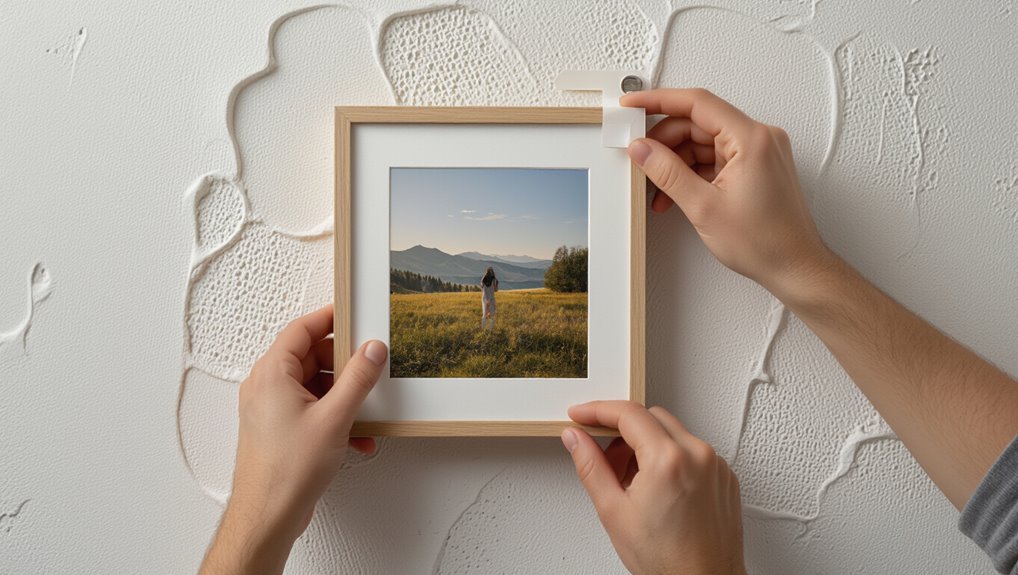
If you’ve got textured walls, don’t assume nails are your only option — several adhesive and tension-based systems will hold frames securely without damaging the surface.
You can use heavy-duty removable strips, adhesive hooks rated for picture weight, and tension rods or rail systems.
These alternative hanging methods keep wall decor damage-free, let you reposition art easily, and suit varied frame sizes and weights.
Which Wall Textures Make Hanging Hard
If your walls have a heavy orange peel finish, adhesive strips and hooks can struggle to grip the uneven surface.
Deep knockdown texture creates large peaks and valleys that make it hard to get a flat, secure contact for no-nail hangers.
You’ll need to pick attachment methods rated for textured surfaces or prep small flat spots before mounting.
Heavy Orange Peel
Because heavy orange peel creates a rough, uneven surface, it makes getting adhesives and hangers to sit flush against the wall difficult.
You’ll find heavy textures resist strips and mounts, so focus on wall preparation: clean, dry, and press firmly.
Test small adhesive patches first, choose products rated for textured surfaces, and consider lightweight frames or removable hooks designed to bridge gaps without damaging paint.
Deep Knockdown Texture
When you’re facing deep knockdown texture, expect big peaks and shallow valleys that prevent adhesive strips and flat-backed hooks from making full contact with the wall. You’ll test texture compatibility, choose stronger adhesive selection, and prep by cleaning and pressing firmly. Consider lightweight frames, wired hangers, or rail systems for secure display.
| Issue | Solution | Risk |
|---|---|---|
| Peaks | Stronger adhesives | Slip |
| Valleys | Surface prep | Poor bond |
| Weight | Alternative hangers | Damage |
Match Method to Frame Weight (Cheat Sheet)
Start by weighing your frame and choosing a hanging method rated for at least that much load—plus a 20–30% safety margin.
Consider weight distribution: use multiple anchors for heavy or wide pieces and match anchor type to frame materials and wall texture.
Consider weight distribution: use multiple anchors for heavy or wide pieces and match anchor type to frame and wall.
For lightweight frames, single adhesive hangers often suffice; medium weights need toggle or molly anchors.
Check manufacturer weight ratings before installation.
Use Heavy-Duty Adhesive Hooks Correctly on Texture
If your walls have texture, don’t assume any heavy-duty adhesive hook will stick—pick hooks rated for textured surfaces and prepare the area so they can bond properly.
Clean and dry the spot, press firmly per instructions, and allow full cure time.
Match adhesive hook types to weight and wall surface compatibility.
Test with gradual loading before hanging valuable frames to avoid falls.
Use Removable Picture Hanging Strips on Textured Walls
Although textured walls can be tricky, you can often use removable picture-hanging strips successfully by choosing the right type and prepping the surface carefully. You’ll clean, test adhesion, and press firmly for the recommended time. Removable strips work best on low-to-medium textured surfaces; avoid heavy textures.
| Step | Action | Tip |
|---|---|---|
| 1 | Clean wall | Use isopropyl |
| 2 | Test strip | Wait 1 hour |
| 3 | Press firmly | Hold 30s |
| 4 | Weight check | Check label |
Apply Mounting Putty and Museum Gel to Uneven Surfaces
1 simple trick for keeping frames steady on bumpy walls is to combine mounting putty with museum gel, letting each product fill gaps and lock corners so your picture sits flush.
You press putty into low spots, then apply small gel dabs at corners for extra hold.
These mounting techniques and gel applications stabilize frames without nails, are reversible, and prevent shifting.
Removable Strips vs. Permanent Adhesives: When to Choose
Decide based on the weight of the frame and how long you want the fix to last.
Use removable strips for lightweight pieces you might reposition or rent, and choose permanent adhesives for heavy frames or long-term installs on sturdy surfaces.
Always check the product’s weight rating and the wall material before you stick anything up.
When To Use Removables
If you want a clean, damage-free option for lightweight frames or temporary displays, removable strips are your best bet; choose permanent adhesives when you’re hanging heavier pieces or anything you plan to keep in place long-term.
You’ll prefer removable options when renting, rotating art, or avoiding wall repair. Use proper application techniques and follow weight limits.
- Rentals
- Rotations
- Temporary decor
- Delicate surfaces
When To Use Permanents
When you need a long-lasting, secure hold for heavier frames or pieces you don’t plan to move, choose permanent adhesives—they’re designed to support more weight and resist shifting over time. You’ll pick permanent solutions when strength matters; learn adhesive types and surface prep. Compare options below.
| Strength | Best for |
|---|---|
| High | Heavy frames |
| Medium | Medium art |
| Low | Small decor |
Picture Ledges, Shelves, and Freestanding Displays
Although you might think wall studs or heavy hardware are required, picture ledges, narrow shelves, and freestanding displays let you arrange art without nails in minutes.
You’ll use picture ledge designs and smart shelf styling to layer frames and swap art easily. Consider stability, depth, and balance when arranging freestanding pieces.
- Layer for depth
- Vary frame sizes
- Anchor bases
- Rotate displays
Tension Poles & Floor-to-Ceiling Hanging Systems
Tension poles and floor-to-ceiling systems let you hang art without drilling, but you’ll want to place poles where they’ll transfer load to solid floor and ceiling areas.
Check each system’s weight capacity and distribute heavier pieces across multiple hang points so nothing gets overstressed.
Many models install without tools—twist to expand, lock the fittings, and attach hooks or wires to start hanging.
Pole Placement Tips
Start by measuring the ceiling height and the wall span you want to cover so you can pick poles that fit snugly without stretching the system.
Choose pole height and plan pole spacing for even load and sightlines.
Then:
- Place poles near studs if possible.
- Align poles with artwork groupings.
- Keep spacing consistent.
- Check vertical plumb before tightening.
Weight Capacity Limits
Most systems list a per-pole and per-hook weight limit, and you should match those numbers to your artwork before installation.
Check manufacturer specs for total weight capacity and distribute pieces to avoid overload.
Use tension poles or floor-to-ceiling systems rated above your combined load.
Note adhesive types only as supplemental for light items; don’t rely on them for primary support.
Installation Without Tools
While you won’t be grabbing a drill, you can still create a secure, adjustable hanging setup using tension poles or floor-to-ceiling systems—these press-fit and track-based solutions let you mount artwork without damaging walls.
- Use tension poles for renter-friendly, tool-free installs.
- Try track systems for flexible, modular layouts.
- Combine shelves and hooks for alternative hanging methods.
- Explore creative display options with adjustable heights and groupings.
Prep Textured Surfaces for Better Adhesion
Because textured walls give adhesive less contact area, you’ll need to smooth and clean the hanging spot before applying strips or hooks. Do surface preparation: wipe with alcohol, sand lightly, and dust. Use proven adhesion techniques and press firmly for full contact. Check weight limits and cure time.
| Step | Action |
|---|---|
| Clean | Alcohol wipe |
| Smooth | Light sanding |
Measure, Mark, and Level Frames Without Nails
Measure twice so your artwork lands exactly where you want it, then mark once to set a precise spot for your adhesive.
Use removable adhesive levels or small bubble levels to get perfect alignment without nails.
Align and tape guide lines with painter’s tape to position frames safely before you stick them up.
Measure Twice, Mark Once
Precision matters when you’re hanging pictures without nails, so take a moment to plan placement carefully.
You’ll use precise hanging techniques and proper wall preparation to avoid mistakes. Measure twice, mark once, and check alignment before committing.
- Measure spacing and frame centers.
- Mark lightly with pencil.
- Recheck heights from fixed reference.
- Confirm symmetry and sightlines.
Use Removable Adhesive Levels
Once you’ve marked centers and checked heights, grab removable adhesive levels to make hanging foolproof without nails. You’ll pick removable adhesive options suited to texture, press firmly, and use simple adhesion enhancement techniques like cleaning and warming strips. Place the level, adjust frame until bubble centers, then let adhesive set.
| Tool | Tip | Time |
|---|---|---|
| Strip level | Clean surface | 30s |
| Adhesive pad | Warm first | 10s |
| Mini bubble | Recheck | 5s |
Align With Painter’s Tape
If you want straight, evenly spaced pictures without nails, use painter’s tape to mark frame edges and hanging points on the wall—it’s quick, visible, and easy to adjust.
You’ll apply tape alignment techniques to measure, level, and preview layouts. Painter’s tape benefits include no damage, easy repositioning, and clear guides.
- Measure
- Level
- Mark
- Adjust
Protect Frames and Walls During Installation
Lay down a soft barrier between the frame and the wall before you start—felt pads, foam strips, or a thin sheet of craft paper will stop scratches and scuffs during placement. You’ll focus on frame protection, wall safety, installation tips, adhesive options, surface preparation, damage prevention, frame materials, and texture considerations.
| Item | Purpose | Quick Tip |
|---|---|---|
| Felt pads | Cushion | Match size |
| Foam strip | Seal gap | Compressible |
| Craft paper | Scratch guard | Replace often |
Fix Loose Frames: Troubleshooting Common Failures
Even with pads and foam in place, frames can still shift or sag over time—so you’ll want to troubleshoot common causes when a picture won’t sit tight against the wall.
- Check frame stability: tighten hangers, replace bent hardware.
- Verify surface contact: add foam pads to level.
- Reassess adhesive types: match load rating to frame weight.
- Redistribute weight: use dual anchors or a wire for balance.
Remove Adhesives Safely and Clean Residue
When a strip or pad starts to fail, remove it carefully to avoid damaging paint or frame backs; peel slowly at a low angle and pull steadily rather than yanking.
Use adhesive removal techniques like applying heat with a hair dryer, then stretch remaining pieces off.
For residue cleaning methods, rub gently with isopropyl alcohol or a mild citrus remover, then rinse and dry before rehanging.
Best Hooks, Strips, and Buying Tips for Textured Walls
Textured walls can be tricky, but you can still hang pictures without nails by choosing the right hooks or strips and matching them to your wall’s profile and the picture’s weight.
Textured walls are manageable—select hooks or strips suited to the texture and picture weight for secure, nail-free hanging
Pick products rated for textured surfaces, compare adhesive types, and follow weight considerations.
- Heavy-duty adhesive hooks
- Foam-backed strips for gaps
- Velcro systems with anchors
- Specialty textured-wall clips
Frequently Asked Questions
Can I Hang Mirrors Without Nails on Textured Walls?
Yes—you can hang mirrors without nails on textured walls using mirror hanging techniques like heavy-duty adhesive strips, French cleats, or adhesive hooks; textured wall solutions may require surface prep, testing weight limits, and choosing compatible adhesives for secure mounting.
Will Temperature Changes Affect Adhesive Performance on Textured Surfaces?
Yes — temperature swings can weaken adhesives. Like a breath on a candle, heat and cold stress adhesive types differently; you’ll improve hold by prioritizing surface preparation, cleaning, and choosing temperature-rated adhesives for textured surfaces.
How Long Should I Wait Before Rehanging After Removing Adhesive?
Wait at least 24 hours after removing adhesive so adhesive drying completes and you can assess residue; clean and sand lightly for proper wall preparation, then wait another 24 hours if you used cleaner before rehanging for best adhesion.
Can I Hang Art Outdoors on Textured Siding Without Nails?
Yes — you can, but it’s like trying to glue a mural to a windblown cliff: choose heavy-duty outdoor decor solutions rated for your siding materials, secure with exterior-rated adhesive hooks, straps, or stainless hardware for reliable hold.
Are There Weight Limits for Reusable Picture-Hanging Solutions?
Yes — weight limits vary by adhesive types and product; you’ll need to check labels. You should do proper surface preparation, clean and dry the siding, and test small loads before trusting heavier frames or repeats.
Conclusion
You’ve learned ways to hang art without nails, so don’t let textured walls feel like a closed door — think of them as a canvas that just needs the right touch. Match the method to the weight, prep the surface, and use heavy-duty hooks or strips correctly to keep frames steady and walls unmarked. If something slips, troubleshoot, remove adhesives safely, and try a stronger option. With care, your walls will showcase your story.
