
How to Match Ceiling Paint White Perfectly Without Mismatch
To match ceiling white perfectly, first identify the existing sheen and undertone, then test several small samples under your room’s lighting. Use the same finish and application method, prep and prime any patched areas, and apply thin even coats, letting each fully dry before evaluating. For touch-ups, feather edges and match sheen precisely; for widespread fading, opt for a full repaint. Keep humidity and cleaning in check for long-term uniformity — keep going to get step-by-step tips and tools.
Quick Answer: How to Match Ceiling White
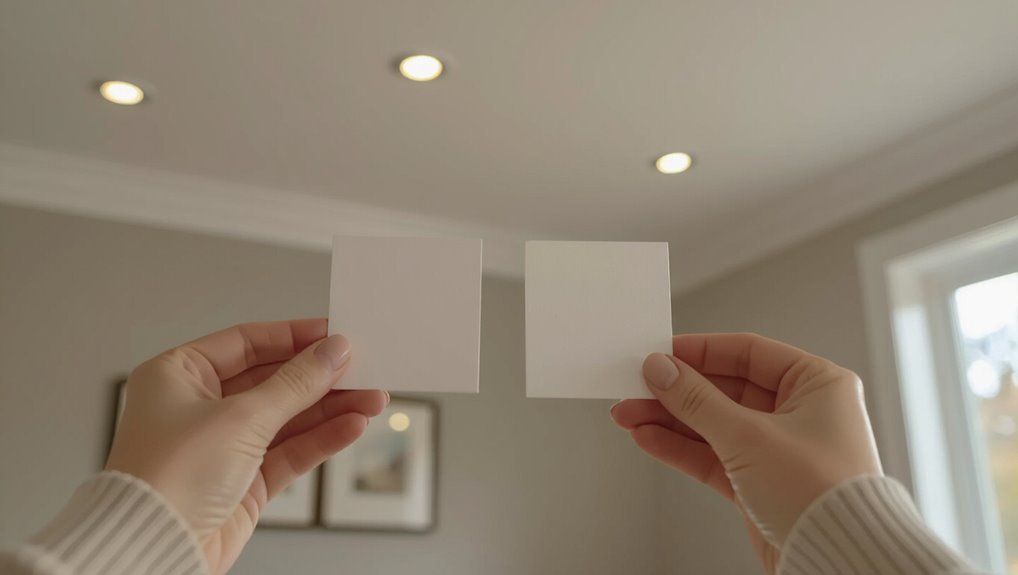
Matching ceiling white is straightforward if you start with the right steps: you’ll pick a white that matches existing undertones, test samples under room lighting, and choose paint finishes that mimic the original sheen.
Follow current ceiling trends—matte for hideaway, slight egg-shell for durability—apply thin, even coats, and let each dry fully before deciding. This prevents obvious mismatches.
Why Ceilings Look Mismatched: Sheen, Age, Undertones, and Lighting
Because ceilings reflect more than just paint, they can look off when sheen, age, undertones, or lighting don’t align with the rest of the room.
You’ll notice sheen variations change color perception, and lighting effects exaggerate undertone influence.
Age differences and paint degradation alter finish and hue over time, so matching requires checking sheen, aged surface condition, and the room’s light before deciding.
Touch-Up vs. Full Repaint: Which Matches Ceiling White Best?
Wondering whether to touch up a few spots or repaint the whole ceiling? You’ll weigh speed against uniformity.
Consider:
- Small stains: use precise touch up techniques for quick fixes.
- Patchy fading: test color matching across areas before committing.
- Widespread discoloration: full repaint guarantees consistent white and avoids repeat touch-ups.
Choose based on visible variation, time, and desire for perfect uniformity.
How to Identify Your Existing Ceiling Paint Sheen
If you decide to repaint or just touch up, the next step is figuring out the sheen of your existing ceiling paint so new work blends in.
Check gloss by angling a flashlight across the surface; higher reflection means glossier paint finish.
Test a hidden scrap with water—matte repels, eggshell or satin shows slight sheen.
Note results for accurate sheen identification.
How to Determine If Paint Color Has Yellowed or Faded
Check the ceiling under natural light and with room lights on to see if the white looks warmer or duller in different conditions.
Hold an untouched paint sample or a scrap of fresh white next to the ceiling to spot yellowing or fading.
If the ceiling consistently looks more yellow or less vibrant than the sample, you’re seeing discoloration rather than just lighting effects.
Inspect Under Different Lighting
How does the ceiling really look once lights change—daylight, warm bulbs, and shadows all reveal different faults?
You’ll check lighting variations and paint reflectivity across conditions.
Try this:
- Inspect under noon daylight for true hue.
- Switch to warm bulbs; note yellowing or warmth.
- Dim lights and view from angles to spot fading or sheen shifts.
Compare To Untouched Sample
When you want to know whether your ceiling paint has yellowed or faded, compare a small untouched sample—like inside a closet or an unused can lid—to the painted surface under the same lighting; this direct side-by-side lets you spot subtle shifts in hue, warmth, and sheen that photos or memory can’t reliably reveal. Do a focused sample comparison:
| Check | What to look for | Action |
|---|---|---|
| color consistency | faded vs original | note aging factors |
| lighting effects | warm vs cool cast | test at different times |
| sheen variations | gloss change | evaluate texture differences |
| undertone analysis | subtle tints | compare paint brands |
How to Check for Undertones and Cross-Compare Whites
Want to know if a white ceiling will read warm or cool in your room? Use undertone analysis and color comparisons by testing samples in real light.
Try this:
- View each white at different times of day.
- Hold samples next to trim and walls to spot shifts.
- Photograph samples under your fixtures to confirm the final appearance.
What Tools and Materials You Need for a Seamless Match
Preparation starts with the right kit: gather sample chips, a good-quality ceiling paint matched or labeled for ceilings, painter’s tape, a roller with a 3/8″–1/2″ nap, an angled sash brush for edges, a light-weight extension pole, a drop cloth, a paint tray, and a small test pot for mixing tints or adjustments.
You’ll also want a swatch card, neutral lighting, stir sticks, mixing tools, and microfiber cloths.
Understand paint types and basic color theory to choose sheen and tint adjustments accurately.
How to Take Accurate Paint Samples From Your Ceiling
Start by picking a discreet, well-lit spot that’s representative of the ceiling’s color and finish.
Use a sharp utility knife or paint scraper to cut clean sample pieces about 1–2 inches wide, keeping edges neat so the lab can get a true match.
Label each sample with its location before you pack them for testing.
Choose The Right Spot
When you’re picking a spot to sample ceiling paint, choose an area that represents the whole surface—preferably away from vents, corners, and direct sunlight where finish and color can differ.
You should choose location and analyze texture before sampling.
- Find central, typical area.
- Avoid stained or repaired patches.
- Check for texture consistency under light.
Cut Clean Sample Pieces
Cut a few small, neat sections of the ceiling paint—about 2–3 inches square—so you can bring true samples to match. Carefully cut, label, and protect each piece for accurate sample collection. Use clean cuts to avoid texture changes and note painting techniques used nearby. Take photos and store samples flat.
| Piece | Location | Notes |
|---|---|---|
| 1 | Center | Matte |
| 2 | Corner | Slight texture |
| 3 | Vent area | Thinner coat |
| 4 | Edge | Brush marks |
| 5 | Fixture | Touch-ups only |
How to Test Swatches Under Real Room Lighting
Curious how that swatch will actually read in your room? You’ll test swatch placement and observe lighting variations throughout the day. Do this:
Curious how paint reads in your space? Test swatches at different heights, times, and angles before deciding.
- Tape swatches near the ceiling and opposite walls at morning, noon, and evening.
- View from different spots and angles, including beneath fixtures.
- Photograph each session and compare on-screen to spot subtle shifts before choosing.
Reading Paint Can Labels: Base, Tint, and Formula
After you’ve evaluated swatches in real room light, you’ll need to read the paint can label carefully to confirm the match. Check base, tint code, and formula notes; they affect paint consistency and color perception. Verify sheen and batch number.
| Item | Where to find | Why it matters |
|---|---|---|
| Tint code | Label | Repeatable match |
| Sheen | Front | Light reflection |
| Batch | Back | Minor variance |
How to Match the Paint Base (Oil vs. Water) and Primer
Because the base determines how paint behaves and bonds, you’ll want to confirm whether your ceiling paint is oil-based (alkyd) or water-based (latex) before buying more or repainting.
You should check paint compatibility and choose appropriate primer selection.
Steps:
- Test small area for solvent response.
- Match new paint base to existing.
- Use primer designed for that base before topcoat.
How to Match Sheen Exactly for a Uniform Finish
Start by identifying the existing sheen on your ceiling—flat, matte, eggshell, or satin—since sheen affects how light reflects and how visible repairs will be.
Use sheen test strips or small painted swatches to compare finishes under the room’s lighting so you can see how each level reads in place.
Once you’ve matched the visual sheen, get the paint store to adjust the formula to that exact sheen for a uniform finish.
Identify Existing Sheen
Sheen determines how light plays on your ceiling, so you’ll need to identify it before matching paint for a uniform finish.
You’ll check sheen types and observe sheen effects to match gloss and light reflection precisely.
- Inspect surface under natural light.
- Compare with photos or samples.
- Note gloss level (matte, eggshell, semi-gloss).
Use Sheen Test Strips
A simple set of sheen test strips lets you compare finishes side-by-side so you can match the ceiling’s gloss exactly.
Apply each strip with the paint you’re considering, let them dry, and view under consistent light.
Use sample comparison to spot sheen variation across strips, pick the one that blends invisibly, and note its label for purchase.
Match With Formula
Once you’ve pinpointed the right gloss with test strips, match the exact factory formula to replicate that sheen across the whole ceiling.
Use precise color consistency and mixing techniques to avoid visible seams.
- Record the factory sheen code.
- Request or recreate the formula at the store.
- Test a small patched area, adjust mixing ratios until the sheen matches perfectly.
How to Choose the Right White Shade If You Must Repaint
Wondering which white to pick for your ceiling? Consider paint types first—matte hides flaws, eggshell reflects more light.
Match the undertone (warm, cool, neutral) to existing trim and room lighting. Check current color trends but prioritize timeless neutrals.
Test samples on a large poster, view them at different times, and stick with the shade that reads consistently across natural and artificial light.
Get a Professional Color Match at the Store
When you head to the paint store, bring a paint chip or a small scrap of the ceiling so they can match it accurately.
Ask them to scan it with a spectrophotometer for the most precise reading.
Before you buy a full can, test a small sample on the ceiling to confirm the match in your lighting.
Bring A Paint Chip
Bring a small sample of your ceiling paint—about the size of a quarter or a clean chip from an unobtrusive spot—and take it to a paint store for a professional color match.
You’ll show them paint types and point out subtle color variations. Ask for a matched sample and follow these steps:
- Hand over the chip
- Review swatches
- Request a small test can
Ask For A Spectrophotometer
If the paint chip and swatches aren’t giving you a perfect match, ask the store to scan your sample with a spectrophotometer.
You’ll get precise color data and spectrophotometer benefits like repeatable readings under controlled light.
Explain your ceiling’s finish and lighting; the technician will apply advanced color matching techniques to mix a formula that minimizes visible mismatch and speeds a confident purchase.
Test A Small Sample
Because small differences show up once paint dries, test a 12×12-inch sample on your ceiling before buying gallons; have the store mix a professional color-match for that sample so you can see the actual finish and how it looks in your room’s lighting over a few days.
- Note sample size and lighting.
- Do color comparison at different times.
- Try application technique and blending methods.
Mixing Small Batches for Touch-Ups: Thin, Mix, and Stir
Thin your touch-up batch slightly to match the flow of the original ceiling paint: add no more than 5–10% water (for water-based paints) or the manufacturer’s reducer for alkyds, then mix thoroughly.
You’ll monitor color mixing and paint consistency, use proper application techniques and blending methods, consider paint additives, humidity effects, and drying times, and follow storage tips for small sealed containers.
How to Feather New Paint Into Old to Blend Edges
When you feather new ceiling paint into the old, work from the center of the patch outward with a slightly loaded brush or roller so the edge tapers and the sheen evens out.
Use this feathering technique to avoid hard lines and aid blending edges:
- Light pressure outward strokes.
- Thin the paint slightly.
- Mist with water, then touch lightly.
Use Glaze Tricks to Blend Subtle Color Differences
After feathering your edges, switch to glazing to mask tiny color shifts without repainting the whole ceiling.
You’ll mix a translucent glaze with a small amount of ceiling paint, test in an inconspicuous spot, then use soft brushes or a damp sponge.
Focus on subtle glaze application and blending techniques, working quickly to feather wet edges until the tone reads uniform from below.
How to Prep the Ceiling Surface for Best Adhesion
Before you paint, scrape away any loose material and sand rough spots so the new coat can grip properly.
Patch cracks and holes with joint compound or spackle, then sand smooth once it’s dry.
Finally, clean the ceiling with a degreasing cleaner or TSP substitute so dust and oils won’t prevent adhesion.
Remove Loose Material
Start by knocking down any loose plaster, flaking paint, or popcorn texture that could keep new paint from sticking—use a stiff brush, putty knife, or scraper and work in manageable sections so you don’t overdo the ceiling.
For surface preparation, remove debris and dust, then:
- Sweep away loose paint.
- Vacuum dust.
- Wipe with a damp cloth.
Repair Surface Imperfections
Patch cracks and dents so the new paint lays down smoothly and sticks properly.
You’ll perform damage evaluation and texture assessment, choosing repair techniques that restore uniformity.
Match paint compatibility and primer selection to substrate and existing finish for color consistency.
After repairs, sand and feather edges, then spot-prime.
Regular ceiling maintenance prevents recurrence and preserves adhesion and an even white match.
Clean And Degrease
When countertops, light fixtures, or cooking fumes have left a film on your ceiling, you’ll need to clean and degrease thoroughly so new paint bonds and the white looks uniform.
Inspect surface, choose cleaning techniques and degreasing solutions, mind chemical safety, and prefer eco friendly options when possible. Use proper cleaning tools matched to ceiling materials.
- Surface inspection
- Surface preparation
- Paint adhesion maintenance tips
How to Avoid Brush and Roller Marks on Ceilings
Keep your strokes consistent and work in manageable sections to prevent brush and roller marks from showing up on the ceiling.
Use proper brush techniques—light pressure, feathered edges—and choose the right nap for roller selection to match sheen and surface.
Maintain a wet edge, overlap slightly, and avoid reloading too often.
Inspect under good light and smooth out laps immediately.
How to Paint Around Fixtures and Textured Ceilings
Start by turning off power to any ceiling fixtures and removing or protecting them so you can work safely and cleanly; for textured ceilings, plan your approach around the texture type since it affects tool choice and paint application.
Follow these steps:
- Tape and cut in around fixtures, minding fixture proximity.
- Use brush or small roller for edges.
- Use stippling or thicker nap for textured challenges.
Fix Problems: Streaks, Patchiness, and Visible Seams
Because ceiling surfaces and paint types vary, you’ll need to diagnose the cause of streaks, patchiness, or visible seams before you fix them.
Inspect lighting effects to reveal issues, then do surface preparation. Use patch repair for holes, seam blending for joints, and texture matching for finish.
Apply proper streak removal techniques, guarantee sheen uniformity and color consistency, and recoat carefully for an invisible result.
Routine Ceiling Care to Prevent Color Shifts
Maintain your ceiling’s color by adopting a few simple, regular habits: dust or vacuum with a soft-brush attachment every few months, spot-clean stains promptly with a mild detergent, and control humidity to prevent yellowing or mildew.
- Inspect for stains and clean quickly to preserve finish.
- Use dehumidifiers and ventilation as color preservation techniques.
- Schedule ceiling maintenance routines to catch issues early.
Cost and Time Estimates for Touch-Up vs. Full Ceiling Repaint
When deciding whether to touch up spots or repaint the whole ceiling, weigh the size of the damage and your budget: small stains and chips usually cost very little and can be done in an hour or two, while a full ceiling repaint typically takes a day for professionals (or a weekend DIY) and costs several times more once materials and labor are factored in.
Do a cost analysis and estimate time commitment; touch-ups suit minor issues, full repaints restore uniformity.
Checklist: Step-by-Step Quick Guide to Match Ceiling White
Start by evaluating your existing ceiling paint for sheen, discoloration, and damage so you know what you’re matching.
Collect small paint samples or swatches from the ceiling and any leftover cans to compare.
Test the best matches under natural light to confirm the closest white before you buy more paint.
Assess Existing Ceiling Paint
Before you pick a new paint, take a careful look at the ceiling’s current color, sheen, and condition so you know exactly what you’re matching.
You’ll assess color consistency and paint durability to avoid surprises.
- Note sheen: flat, eggshell, satin.
- Check for stains, peeling, texture differences.
- Test small area for adhesion and fading.
Collect Paint Samples
Gather at least three small paint samples you can test on the ceiling—original paint chips, a store-matched chip from a scrap, and a close commercial white—to compare color and sheen under your room’s light.
Label each sample, note its brand and paint finish, and apply small swatches.
Inspect for color consistency across samples and record which matches best before buying full cans.
Test Under Natural Light
Want to see how each swatch truly looks in your room? Test under natural light to check true color perception.
- Place samples on the ceiling and near walls at midday.
- Observe from different angles and distances, noting shifts.
- Compare samples in morning, noon, and late afternoon light to pick the best match.
Frequently Asked Questions
Will Ceiling Paint From Different Brands Ever Be Exactly Identical?
No — you won’t get exact matches because brand differences affect pigment, base, and formulation. You’ll notice subtle color consistency issues, so you’ll need tinting, sample patches, or mixing to achieve a unified ceiling white.
Can Textured Popcorn Ceilings Be Perfectly Color-Matched?
Coincidentally, yes — you can closely match textured popcorn ceilings, but you won’t always achieve perfect color consistency. You’ll need sampled paint, lighting checks, matching texture, and feathered blending to minimize visible seams and shade shifts.
How Long After Painting Can I Judge Final Color Match?
You can judge the final color match after 72 hours once the paint’s dried and off-gassing stops; you’ll notice shifts as color perception settles, so check under different lighting conditions and at various times of day.
Do Humidity and Temperature Affect Ceiling Paint Color Long-Term?
Yes — you’re right to suspect effects: humidity and temperature can alter drying and sheen, so they’ll influence color perception and lighting conditions over time, but they rarely change pigment permanently unless extreme moisture or heat recurs.
Can Aged Ceiling Stains Be Completely Matched Without Re-Priming?
No, you probably can’t completely match aged ceiling stains without re-priming; you’ll notice color fading and residual tones. If stain removal doesn’t restore uniformity, you’ll want to prime and repaint to guarantee consistent coverage and color.
Conclusion
You’ll get a flawless ceiling by treating small touch-ups like careful stitches and full repaints like fresh, clean sheets: one hides a flaw, the other resets the look. Match sheen, check for yellowing, and test a small swatch in the room’s light—then choose repair or redo. With routine cleaning and timely fixes, your ceiling will read as a single, uninterrupted plane of white instead of a patchwork of tries and tired spots.
