
How to Paint a Curved Line on a Wall Cleanly
You can paint a clean curved line by prepping the wall, transferring a precise guideline, and using flexible painter’s tape or a sturdy template for the curve. Clean, sand, and prime the surface, then seal tape edges with caulk or base paint to prevent bleed. Apply multiple thin coats, work away from the tape, and remove tape while paint is tacky for crisp edges; touch up small flaws with a fine brush. Keep going to learn pro tips and fixes.
Who This Guide Is For and What You’ll Do
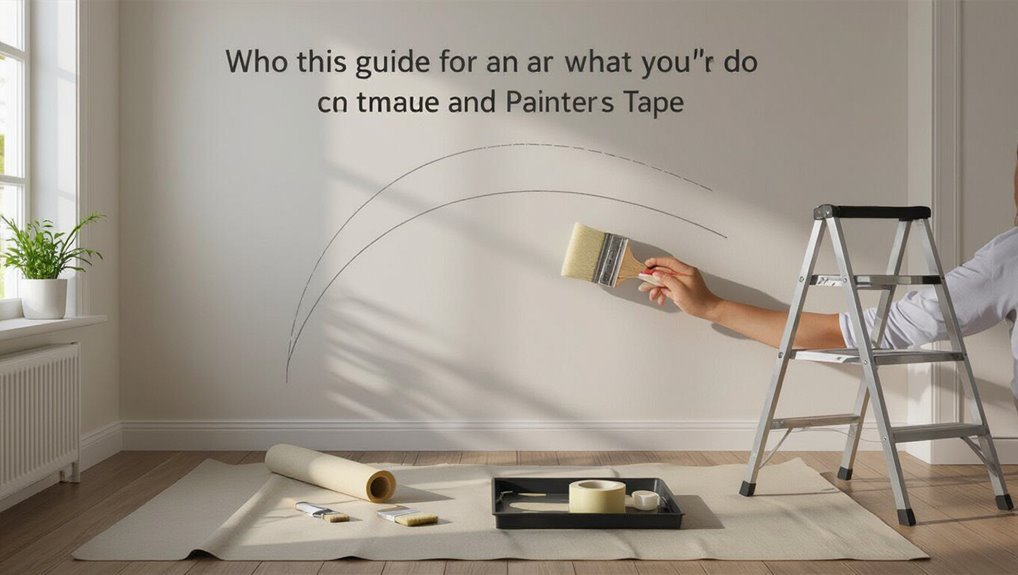
If you’re tackling a curved accent line—whether on a nursery, hallway, or feature wall—this guide is for you; it walks you through materials, layout, and techniques so you’ll get a smooth, professional-looking curve without needing advanced skills or specialty tools.
You’ll learn who benefits most, how to plan for curve aesthetics and wall dynamics, and what basic steps guarantee neat, consistent results.
Quick: Paint a Clean Curved Line in 5 Steps
Start by prepping the surface so paint sticks and edges stay sharp.
Apply flexible painter’s tape along the curve, smoothing it to follow the line.
Paint carefully, then peel the tape while the paint’s tacky for a clean edge.
Prep The Surface
1 minute of prep will save you time and give you a crisp curve: clean the wall, fix any dents or flaking paint, and sand smooth so your guide tape and paint adhere evenly.
Next, focus on surface cleaning—wipe with mild detergent, rinse, and dry.
Match sandpaper grit to wall texture, fill imperfections, and dust off before you lay out your curve.
Use Flexible Painter’s Tape
Grab a roll of flexible painter’s tape and you’ll make laying out a smooth curve quick and reliable.
Press the tape gently, following a pencil guideline, so tape application stays flush against the wall. Use short overlapping pieces for tight bends to preserve curve flexibility.
Smooth edges with your finger to prevent bleed-through and check alignment before painting.
Paint And Peel Carefully
With the tape snug and smoothed, you’re ready to paint and peel carefully to keep that curve crisp.
Apply thin coats for even paint application, working away from the tape. Don’t overload the brush or roller; multiple light passes beat one heavy one.
Remove tape while paint’s tacky, pulling back at a low angle to preserve edge control and prevent lifting.
Choose the Right Curve Style for Your Room
When you pick a curve style, think about how it will change the room’s energy: a gentle, wide arc creates calm and flow, while a sharp, swooping curve adds drama and movement. You’ll match curve style to room ambiance, furniture lines, and traffic paths so the design feels intentional and balanced.
| Style | Effect |
|---|---|
| Gentle arc | Calming |
| Swoop | Dramatic |
| Wave | Playful |
| Partial circle | Focal |
Choose Paints and Finishes for Crisp Edges
Pick a high-quality latex or acrylic paint that gives you good coverage and easy touch-ups.
Choose a sheen that highlights clean edges—eggshell or satin for subtle texture, semi-gloss for washability and sharper lines.
Prime with an edge-ready primer to seal the surface and help your tape or mask lift cleanly for crisp curves.
Paint Type Selection
Although the right paint won’t guarantee a perfect curve by itself, choosing the proper type and finish makes clean edges much easier to achieve. You’ll pick paints based on adhesion, opacity, and drying time; consider color selection and paint finishes for contrast and coverage. Use flexible acrylics for durability and low-splatter formulas for control.
| Type | Benefit | Use |
|---|---|---|
| Acrylic | Flexible | Curves |
| Latex | Fast-dry | Walls |
| Enamel | Durable | Trim |
Finish And Sheen
One key decision is the paint’s finish and sheen, since they affect how sharply your curved edge reads and how forgiving it’s to touch-ups.
Choose finish types like matte for hiding imperfections or eggshell/satin for slight reflection. Higher sheen levels make edges pop but reveal flaws.
Match sheen levels between colors and use consistent finish types to keep the curve crisp and uniform.
Edge-Ready Primer
After choosing the right sheen, you’ll want an edge-ready primer to make your curved line hold up and look sharp.
Use edge preparation techniques like sanding and cleaning to guarantee adhesion.
Apply thin, even coats and feather the primer across the curve; follow primer application tips for drying times and tack-free checks.
This preps the surface for crisp, durable paint edges.
Tools and Materials You’ll Need
You’ll need a few specific tools and materials to paint a clean, consistent curved line: quality painter’s tape (or flexible curve tape), a level or laser, a pencil, a long flexible ruler or French curve, fine-grit sandpaper, primer and matching wall paint, a small angled brush or foam brush, and a roller for surrounding areas.
Choose tape types and curve tools suited to your wall’s texture and radius.
Mark Your Curve on Paper or Cardboard
Pick a sturdy paper or thin cardboard so your template won’t warp while you work.
Trace the curve precisely using a compass, flexible ruler, or a full-size layout to make sure it matches the wall measurement.
Cut the template cleanly and test-fit it against the wall, adjusting until the curve transfers accurately.
Choose Durable Template Material
Start with a sturdy sheet of paper or thin cardboard and mark your curve clearly so the template holds its shape while you transfer it to the wall.
Choose by template durability and appropriate material thickness so edges won’t warp. Cut cleanly and reinforce if needed.
- Use heavy cardstock
- Try thin craft board
- Reinforce with tape
- Avoid floppy paper
Transfer Curve Accurately
With your reinforced template ready, lay it flat and align key reference points—top edge, bottom mark, or a nearby corner—against the wall so the curve matches the desired height and position.
Trace firmly with a pencil, check alignment using curve measurement techniques, and transfer marks at regular intervals.
Use paper or cardboard for adjustments, testing creative curve inspirations before final painting.
Transfer the Curve to the Wall With a Template
Now you’ll transfer the curve from your paper pattern to the wall using the template you made; this guarantees the arc stays consistent across the surface.
Trace the template, mark reference points, and check measurements for template design and curve accuracy before taping.
- Align template to marks
- Hold template flat and steady
- Trace with a sharp pencil
- Recheck spacing and symmetry
Alternative Layout: Laser, String, or Freehand Methods
If you prefer not to use a paper template, you can lay out the curve with a laser level, a taut string, or freehand sketching—each method gives different speed and precision so pick the one that suits your comfort and the wall’s size.
Use laser alignment for accuracy, a string guide for smooth arcs, or freehand techniques for organic curve design; mark reference points before painting.
Prepare the Wall for Painting a Curved Line
Before you paint, make sure the wall’s surface is clean, smooth, and fully dry so the curve will look crisp and the paint will adhere properly.
Before painting, ensure the wall is clean, smooth, and completely dry for a crisp, well-adhering curve.
You’ll focus on wall surface preparation and basic curved line techniques: remove dust, fill holes, sand edges, and wipe clean so your paint lays evenly and your guide holds true.
- Dust and vacuum
- Patch imperfections
- Sand gently
- Wipe with tack cloth
Tape Techniques for Tight, Curved Edges
A thin, flexible painter’s tape is your best friend when you’re tackling tight, curved edges.
Press tape in short, overlapping lengths, smoothing each piece to maintain tape alignment and prevent gaps.
Use a flexible shim or your fingertip to follow the arc, checking curve consistency as you go.
Trim or reposition small sections for exact fit before painting the exposed line.
Seal Tape Edges With Base Paint or Caulk
After you’ve applied your tape, seal the edges with a coat of base paint to block bleed-through and create a uniform surface.
If you need an even crisper line on textured walls, run a thin bead of paintable caulk along the tape and smooth it with your finger.
Let the seal cure fully before painting your curved line.
Seal With Base Paint
Now seal the tape edges with the base paint or caulk so you get a crisp, bleed-free line—press the tape firmly, run a thin bead of base-color paint or paintable caulk along the edge, and smooth it into the seam with a brush or your finger.
Use base paint benefits and sealing techniques to block bleed before topcoat.
- Press tape firmly
- Run thin bead
- Smooth into seam
- Let dry fully
Caulk For Smooth Edges
If you want truly crisp, clean curves, caulking the tape edges gives a smoother, more forgiving seal than paint alone—press the tape firmly, run a thin bead of paintable caulk along the tape line, then smooth it into the seam with a wet finger or flexible tool so the caulk fills gaps and prevents bleed before you topcoat.
After curing, sand lightly for precise caulk application and edge smoothing.
Pick Brushes and Rollers for Curves
Brush choice matters when you’re painting a curved line—pick tools that give you control without slowing you down.
For tight arcs use angled sash brushes; for broader sweeps pick small foam rollers.
Focus on brush selection and roller choice to match curve radius and paint type so you work efficiently and cleanly.
- Angled sash brush
- Round-tipped brush
- Small foam roller
- Detail artist brush
Cutting In and Feathering Along a Curve
With your tool choices settled, start cutting in by anchoring the brush tip against the curve and working from the unpainted side toward the painted area so you maintain a clean edge.
Use steady, small strokes and varied cutting techniques for tight turns.
Soften shifts with light feathering methods, brushing outward from the curve to blend and control paint build-up while keeping the line crisp and even.
Avoid Drips, Waves, and Roller Marks on Curves
Because paint tends to pool and show texture on curved surfaces, you’ll need to control load and pressure to prevent drips, waves, and roller marks.
Use steady strokes, thin coats, and light pressure so the curve stays smooth. Focus on drip prevention and curve techniques.
- Load roller sparingly
- Work wet edge
- Smooth with tip of brush
- Light, consistent pressure
When and How to Apply a Second Coat
You’ll want to wait until the first coat is fully dry to the touch and looks even before recoating.
Make sure the room is well-ventilated and at the manufacturer’s recommended temperature and humidity so the paint cures properly.
When you apply the second coat, use the same brush or roller technique and light, steady strokes to maintain a smooth, crisp curve.
When To Recoat
If the first coat looks uneven, thin, or shows the wall’s old color through the new paint, plan to apply a second coat—most walls need it for full, durable coverage.
Check how curtain colors and wall textures alter appearance before recoating. Apply the second coat when the first feels set but not tacky.
- Inspect in natural light
- Match sheen and hue
- Use even brush strokes
- Feather edges carefully
Proper Drying Conditions
When the first coat feels dry to the touch and no longer tacky, plan your second coat for hours later—usually 2 to 4 hours for latex and up to 24 hours for oil-based paints—while considering temperature, humidity, and ventilation to secure proper curing.
Check drying time on the can, monitor humidity levels, and avoid rushing.
Maintain steady airflow and moderate temperature for consistent cure before recoating.
Techniques For Smooth Finish
Start by inspecting the first coat under good light—run your hand lightly over the surface and look for brush marks, drips, or thin spots so you know exactly where the second coat must even things out.
Wait full dry time, sand lightly, and use curved templates to guide edges for smooth brushwork.
- Sand high spots
- Clean dust
- Thin second coat
- Feather edges
Remove Tape and Finish the Curve
Peel the tape off carefully while the paint is still slightly tacky to prevent peeling the new edge; pull it back on itself at a low angle for the cleanest line. Use tape removal techniques and curve finishing tips: score edges lightly, wipe residue, and inspect. Visualize progress:
| Step | Action |
|---|---|
| 1 | Peel low |
| 2 | Score then wipe |
| 3 | Inspect edge |
Touch-Ups for Chips, Bleeds, and Uneven Lines
After you’ve removed the tape and checked the edge, address any chips, bleeds, or uneven spots right away so they don’t stand out once the paint fully dries.
Use precise touch up techniques and simple tools to fix edges and employ bleed prevention for future runs.
- Feather thin coats with a fine brush
- Sand tiny chips smooth
- Reapply edge paint sparingly
- Seal with clear matte varnish
Alternatives to Painting: Stencils, Decals, Wallpaper
If you’re looking for quicker or less permanent options than freehand painting, stencils, decals, and wallpaper give you clean, repeatable curves with minimal skill.
You can use stencil designs to trace crisp arcs, choose peel-and-stick decal choices for instant application, or install wallpaper options that repeat curved patterns.
These temporary solutions save time, reduce skill demands, and let you change looks without repainting.
Top Mistakes When Painting Curves (And How to Fix Them)
When your curve looks wavy, jagged, or uneven, it’s usually because you rushed prep, used the wrong tools, or didn’t control the brush—fortunately, most mistakes are fixable with the right technique.
Use curve measurement tips, fix common tool errors, and practice steady strokes.
- Poor masking: re-tape and trim edges.
- Wrong brush: switch to angled.
- Uneven tension: re-measure.
- Paint bleed: thin coats and seal.
How Long It Takes and Ways to Save Money
Because curved lines demand more careful prep and slower brushwork than straight edges, expect the job to take longer than a simple stripe—you’ll typically spend a few hours for a single wall, or a day for multiple rooms including drying time.
Plan time management: break work into stages, allow drying, and practice on scrap.
Use budget tips: borrow tools, buy sample paint, and reuse masking materials.
Frequently Asked Questions
Can I Paint a Curved Line on Textured or Popcorn Ceilings?
Yes — you can, but textured or popcorn ceilings complicate curved line techniques; you’ll need ceiling painting tips like flexible masking, a stiff brush or foam roller, lighter paint, and patience to maintain an even, clean curve.
How Do I Match a New Curved Line to Existing Weathered Paint?
Match the tone, match the sheen, match the texture: you’ll use color matching tools, feathering, and paint blending to replicate weathered paint; you’ll scuff, scuff again, thin edges, thin edges, and blend until seamless.
Can I Create a Glowing or Backlit Curved Stripe?
Yes — you can create a glowing or backlit curved stripe: use LED strips behind routed channels, diffuser panels, or translucent stripe materials, plan power and mounting, hide wiring, and test glow effects to guarantee even, controllable illumination.
What’s the Best Way to Protect a Curved Line in a High-Traffic Area?
You should use durable clear coat and protective trim; combine tape techniques with flexible line tools to mask and seal edges, let layers cure fully, then add a washable scuff-resistant topcoat so the curve withstands traffic.
Are There Eco-Friendly Paints Suited for Crisp Curved Lines?
Yes — you’ll find eco friendly options like low-VOC acrylics and plant-based paints that hold crisp edges; use careful application techniques such as thin coats, quality brushes, and slow tape removal to preserve clean, lasting curves.
Conclusion
You’ve got the skills now: pick the curve style, prep well, use the right tape and brush, and paint slowly for a crisp edge. Picture Sarah, who turned a plain bedroom into a cozy nook by taping a soft, low arc, using satin trim paint, then removing tape at a 45° angle—her line looked factory-clean. With patience and the right tools, your curved line will look intentional, professional, and exactly like you imagined.
