
How to Paint a High Wall: Safe Tools and Pro Techniques
You can safely paint a high wall by choosing the right access—scaffold, certified ladder, or rolling tower—and wearing PPE like a harness, gloves, and eye protection; use telescoping poles, compact sprayers, and angled brushes for cut-ins, and prep surfaces with cleaning, patching, sanding, and a suitable primer. Work top-down, section the wall, and apply paint in overlapping “W” patterns for even coverage; follow monthly maintenance checks, and keep tools organized for fewer hazards—continue for pro techniques and detailed checklists.
Quick Plan: DIY vs Hire a Pro
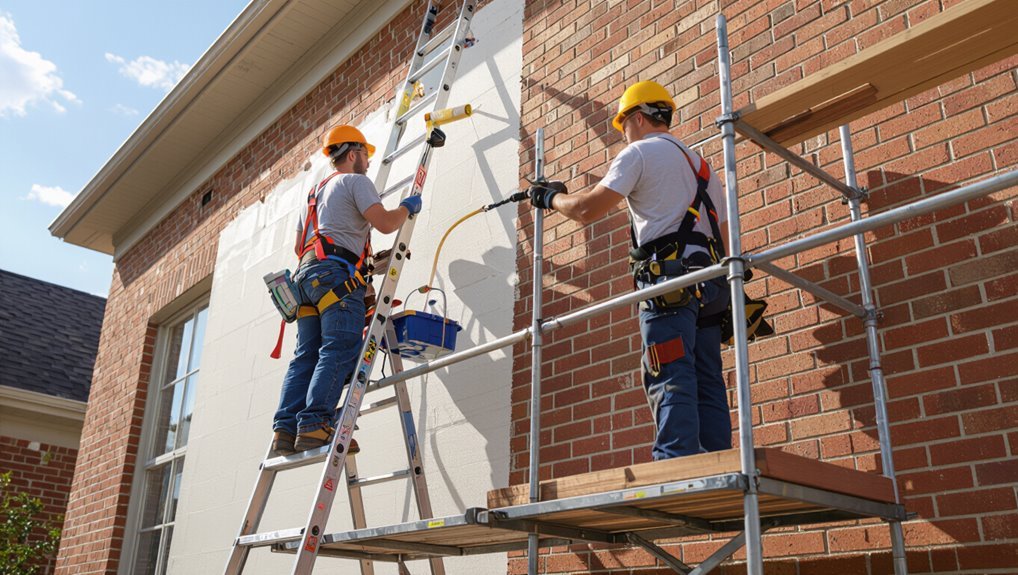
Deciding whether to tackle a high wall yourself or hire a pro comes down to your comfort with heights, the tools you have, and the time you can commit.
If you’re uneasy on ladders, lack scaffolding or a boom lift, or need a fast, flawless finish, calling a professional makes sense.
Weigh DIY considerations like time, safety, and skill against Professional benefits: speed, guarantee, and proper equipment.
When to Hire a Pro for High-Wall Painting
Wondering whether to call in a pro for that high wall? You should hire painting professionals when risk assessment shows safety issues, your skill level isn’t enough, cost considerations favor efficiency, or the project timeline’s tight. Below’s a quick comparison to guide you.
| Factor | When to Hire |
|---|---|
| Safety | High risk |
| Skill | Advanced |
| Cost | Favorable |
| Time | Urgent |
| Outcome | Guaranteed |
Evaluate Your Wall: Height, Access, Obstacles
Before you pick up a ladder, measure the wall’s height, note how you’ll reach the top, and map any obstacles that could slow you down or create hazards.
You’ll assess wall characteristics and choose access options that fit. Consider surface texture, nearby fixtures, ground stability, weather exposure, and clearance.
- Surface texture
- Fixtures and wiring
- Ground stability
- Weather exposure
- Clearance and debris
Essential Safety Rules Before You Start
Now that you’ve measured the wall and scoped obstacles, make safety your first action before you paint.
Inspect ladders, scaffolding, anchors, and weather; secure loose surfaces and clear the work area.
Plan escape routes and buddy checks, post a spotter, and set time limits to avoid fatigue.
Choose appropriate safety gear for a high wall and brief helpers on emergency steps.
Personal Protective Equipment (PPE) Checklist
A simple PPE checklist will keep you safe and focused while working on a high wall: hard hat, safety glasses or goggles, a respirator or dust mask rated for the paint type, hearing protection, cut- and slip-resistant gloves, non-slip steel-toe boots, and a full-body harness with a shock-absorbing lanyard when you’re on ladders or scaffolding.
Follow PPE types and Safety standards; inspect gear before use.
- Inspect harness and lanyard
- Check respirator fit and filter
- Verify eye and hearing protection
- Confirm glove and boot condition
- Review certification and expiry dates
Choose: Ladder, Scaffold, or Aerial Lift
Choosing the right access method—ladder, scaffold, or aerial lift—depends on the wall height, duration of the job, surface access, and how much equipment or crew you need to manage safely.
You’ll weigh ladder safety for quick tasks, scaffold advantages for stable, extended work, and aerial lift considerations when you need reach and mobility.
Match tool selection to task, risk, and crew skill.
Pick the Right Ladder Type and Height
When you’re working on a high wall, pick a ladder type and height that keep your feet level with the work and your hands free for tools—don’t rely on an improvised setup.
When working on a high wall, use the right ladder height so your feet stay level and hands stay free.
You’ll choose by task, weight capacity, and ladder materials, always prioritizing ladder safety.
Consider:
- Aluminum extension for height
- Fiberglass near electricity
- Step ladder for mid-reach
- Platform for comfort
- Duty rating match
Set Up and Stabilize Ladders on Uneven Floors
If your floor isn’t level, stabilize the ladder before you climb so it won’t shift under you; small adjustments up front prevent big accidents.
Position feet on solid spots, use adjustable leg levelers or a ladder leveling device, and place a non-slip mat under feet.
For irregular terrain, shim with approved wedges.
Follow ladder stabilization techniques and uneven surface solutions to secure footing before work.
Safe Ladder Climbing and Movement Tips
Before you climb, make sure the ladder’s feet are firmly set and the top is resting against a stable surface.
Move deliberately—face the ladder, keep three points of contact, and avoid sudden reaches.
If you need to reposition, climb down and reset the ladder rather than leaning or overextending.
Secure Ladder Placement
Place your ladder on firm, level ground and check that its feet are secure and slip-resistant before you climb.
You’ll use ladder safety and a clear placement strategy to angle, anchor, and avoid hazards. Follow these checks:
- Confirm 4-to-1 angle and stable footing
- Extend above contact point
- Lock spreaders and hinges
- Avoid slippery surfaces
- Keep base clear of traffic
Controlled Climbing Movements
With your ladder firmly set, move into controlled climbing movements to keep yourself steady and prevent falls.
Keep three points of contact, face the ladder, and use a slow, deliberate controlled ascent.
Shift your weight only when secure, avoid overreaching, and maintain balance by spacing movements evenly.
Practice basic climbing techniques to build muscle memory and confidence before painting.
When to Use a Mobile Scaffold for High Walls
If the wall’s height pushes you beyond safe ladder limits, you should switch to a mobile scaffold for secure access.
You’ll also want a scaffold when the job will take many hours or multiple days so you’re not climbing up and down constantly.
A scaffold gives you a stable, roomy platform to work efficiently and reduce fatigue.
Height Exceeds Ladder Safety
When the wall soars beyond the safe reach of a ladder, you should switch to a mobile scaffold—it’s steadier, gives you continuous workspace, and cuts the fall risk that ladders can’t eliminate.
For high wall safety choose scaffold use when height, stability, or access demands exceed ladder alternatives.
- secure base
- guardrails
- level platform
- trained setup
- weight limits
Extended Work Duration
Plan for long sessions on high walls by choosing a mobile scaffold whenever your painting job will keep you aloft for several hours or require frequent movement along the surface. Use extended work duration strategies to rotate tasks, take scheduled breaks, and adjust scaffold height. Focus on managing fatigue and ergonomic positioning to maintain safety and steady results.
| Task | Action |
|---|---|
| Breaks | Schedule |
| Rotation | Alternate tasks |
| Adjustment | Set height |
| Safety | Check stability |
Assemble, Brace, and Inspect Scaffold Frames
Start by laying out all scaffold components on level ground so you can quickly verify parts and spot damage before assembly.
You’ll follow scaffold assembly steps, brace securely, and perform thorough frame inspection before using the platform.
Check pins, welds, planks, base plates, and guardrail fittings.
- pins and connectors
- weld and tube condition
- deck boards
- base leveling
- guardrail hardware
Prevent Falls: Harnesses, Anchors, and Tethers
Because a fall can happen in a moment, you’ll wear a certified full-body harness, attach it to a rated anchor, and keep your tether short enough to prevent a ground strike—while inspecting all components before each use.
You’ll follow harness safety guidelines, choose compatible anchor systems, and practice tether techniques for controlled movement.
Commit to regular checks, proper fittings, and conservative placement to guarantee fall prevention.
Tools That Make High-Wall Work Easier
When you’re working on a high wall, the right tools save time and reduce risk: extendable rollers and pole-mounted brushes let you reach without overextending, a quality paint sprayer speeds coverage and minimizes ladders, and lightweight scaffold platforms or rolling towers give stable, adjustable footing.
You’ll choose high reach tools and extension equipment with ergonomic designs and pair them with lightweight ladders.
- Telescoping paint poles
- Compact paint sprayer
- Rolling scaffold tower
- Platform levelers
- Grip-enhanced gloves
Choosing Brushes, Rollers, and Nap Lengths
With your high-reach gear in place, pick brushes and rollers that match both the paint and the wall texture so you’ll get smooth coverage without extra passes. Focus on brush selection for edges and roller types for expanses; choose nap length by surface roughness to avoid drips and rework.
| Tool | Best Use |
|---|---|
| Angled brush | Cutting in |
| 3/8″ nap | Smooth walls |
| 3/4″ nap | Semi-rough walls |
| 1″ nap | Rough/textured walls |
Best Primers and Paints for High Walls
Before you start rolling, pick a primer that bonds well to your wall material and blocks stains so your topcoat looks even.
Choose a paint finish—flat for hiding imperfections, eggshell or satin for easy cleaning—that suits the room’s traffic and light.
Match primer to paint type (latex with latex, oil with oil) to guarantee durable adhesion.
Primer Selection Tips
If you’re tackling a high wall, choosing the right primer matters as much as picking the paint—you’ll want one that bonds well, blocks stains, and handles the wall’s height and surface type.
Pick primer types based on substrate; plan application techniques for safe, even coverage.
- Oil-based for stains
- Latex for drywall
- Bonding for slick surfaces
- Shellac for odor sealing
- Mildew-resistant for damp areas
Paint Finish Choices
Choosing the right finish will affect durability, washability, and how light plays across your high wall, so pick one that matches the room’s use and surface condition. You’ll decide matte vs. gloss or opt for satin finishes for balance. Use a durable primer, stain-blocking coat, then finish with high-quality paint suited to traffic and cleaning.
| Finish | Best Use | Cleanability |
|---|---|---|
| Matte | Ceilings, low light | Low |
| Satin | High walls, living areas | Medium |
| Gloss | Trim, accents | High |
Estimating Paint Quantity for High Walls
Estimating how much paint you’ll need for a high wall starts with accurate measurements: calculate wall height and length, subtract the area of doors and windows, then account for the paint’s coverage per gallon and the number of coats you plan to apply.
Use paint coverage calculations and consider wall height considerations to refine totals.
- Measure wall dimensions
- Subtract openings
- Check coverage per gallon
- Factor coats
- Add 10% waste
Surface Prep at Height: Cleaning and Sanding
Before you start painting, clean and sand the high wall thoroughly so the finish will stick and look smooth.
Inspect surface types and assess wall conditions to choose appropriate cleaning methods—degreasers for grime, mild detergent for dust.
Use gentle sanding techniques for fragile surfaces, coarser grits where old paint remains, and work systematically from top down.
Wear PPE and remove debris before priming.
Fix Cracks, Holes, and Texture Inconsistencies
Start by evaluating each crack and hole to determine whether it’s superficial or needs a deeper repair.
You’ll remove loose material, widen hairline cracks slightly if necessary, and clean the area before patching.
Smooth the patch to match the surrounding texture so paint will blend seamlessly.
Assess Crack Severity
When you inspect the wall, look closely at each crack to judge how deep and wide it is, because that determines whether you’ll patch, fill, or call a pro.
Use crack assessment to spot severity indicators and decide urgency. Note movement, length, width, location, and moisture:
- hairline length
- widening over time
- stair-step pattern
- near windows/doors
- damp or efflorescence
Smooth And Patch
Tackle cracks, holes, and uneven texture by removing loose material, cleaning the area, and selecting the right patching compound for the substrate and crack size.
You’ll apply patching methods—fill, press, and level—then sand once dry.
Use appropriate smoothing techniques to match surrounding texture, feather edges, and prime patched spots before painting so repairs blend seamlessly and hold up on tall walls.
Protect Floors, Furniture, and Fixtures
Before you roll a single stroke on the wall, cover floors with drop cloths or rosin paper and move or wrap furniture and fixtures so paint can’t splatter or drip on them.
Before you roll paint, cover floors and wrap or move furniture to prevent splatters and drips.
You’ll guarantee floor protection, use furniture covers, and secure fixture safety around switches and lights.
- Tape edges tightly
- Overlap drop cloths
- Elevate small items
- Wrap light fixtures
- Protect baseboards
Plan Your Sequence to Minimize Ladder Moves
Start by mapping the wall into manageable sections so you know exactly where you’ll paint.
Work from the top down and plan your sequence to avoid climbing up and down the ladder more than necessary.
That way you’ll maintain a wet edge and finish each area with fewer moves.
Map Painting Sections
When you map the wall into logical sections before you climb, you’ll cut down on ladder moves and keep your workflow steady.
Use a clear wall layout and simple section marking so you know each panel’s start and end.
Plan access points, paint order, supplies staging, touch-up zones, and safety clearances.
- Access points
- Paint order
- Supplies staging
- Touch-up zones
- Safety clearances
Sequence Work From Top
If you work from the top down, you’ll cut ladder climbs and keep wet edges under control—so begin each section at the highest reachable point and move methodically downward, finishing with trim and touch-ups only after panels below are set.
Use a top down approach to plan passes, sequence work to reduce repositioning, and apply proven wall painting techniques so you paint efficiently, safely, and with consistent coverage.
Cutting In at Height: Straight-Line Tips
Although reaching a high edge can feel awkward, you can cut a clean, straight line by bracing your arm, using the right brush angle, and moving steadily along the wall.
Bracing your arm, angling the brush, and steady motion make cutting a high edge clean and confident every time.
Use steady wrist motion and minimal paint on the tip; practice cutting techniques and pick appropriate brush types for trim.
- Firm elbow brace
- Light paint load
- 45° brush angle
- Short, controlled strokes
- Feather the edge
Use Extension Poles for Cutting In and Rolling
Grab an extension pole and you’ll instantly gain reach and control for both cutting in and rolling high walls. Use extension pole techniques to steady the brush for precise cutting in, then switch to a roller head for broad coverage. Keep joints loose, work slowly, and sight along the pole for straight lines.
| Brush head | Roller head |
|---|---|
| Precision | Coverage |
| Control | Speed |
Rolling Technique for Streak-Free Coverage
Start by loading your roller evenly and working in overlapping “W” or “M” patterns to maintain a wet edge; this helps you avoid lap marks and keeps coverage consistent as you move across the wall.
You’ll use tried rolling techniques for smooth, streak-free paint application and feather edges before drying.
- Maintain steady pressure
- Reload before dry patches appear
- Use quality nap
- Blend seams promptly
- Check in good light
Working Around Trim, Cornices, and Windows
How do you keep clean lines when painting around trim, cornices, and windows? Use precise trim techniques: cut in with angled brush, tape edges, and work outward.
Address cornice challenges by backing up with steady brushes and small rollers.
For tricky cornices, back up your cut-in with steady brushes and small rollers for crisp, even coverage.
For window considerations, protect glass and frames, remove hardware, and feather paint application for seamless edges.
Check for drips and smooth immediately.
Handling Ceilings and Wall Transitions Safely
When you reach the ceiling line, use proper tape and masking to protect surfaces and create a crisp edge.
Make sure your ladder or platform is secure and positioned so you can work steadily without overreaching.
Use feathered cut-in techniques to blend the paint smoothly between ceiling and wall for a professional finish.
Proper Tape And Masking
Because clean lines depend on careful preparation, you’ll want to tape and mask the ceiling-to-wall junctions and changes before you load the brush or roller.
Use proper tape types and masking techniques to protect trim, fixtures, and adjacent finishes. Apply tape firmly, press edges, and remove while paint’s tacky.
Follow these steps:
- Choose low-residue painter’s tape
- Clean and dry surfaces
- Use paper or plastic masking
- Press edges with a putty knife
- Remove tape at a 45° angle
Secure Ladder And Platform
After you’ve masked the edges, secure your ladder or platform before you start cutting in along ceilings and high corners.
Check ladder stability by setting feet on firm ground, locking braces, and angling properly.
For platform safety, verify planks are rated, fastened, and free of paint spills.
Keep tools in a belt, move the ladder rather than overreaching, and work methodically for steady, safe changes.
Feathered Cut-In Techniques
Start by loading just enough paint on your brush to lay down a thin, controllable line where the ceiling meets the wall; feathering means you’ll blend that edge with light, overlapping strokes so the cut-in disappears into the field coat.
Use steady cutting techniques and aim for feathered edges.
- Maintain a loaded-but-not-saturated brush
- Work in short, controlled strokes
- Keep a consistent angle
- Wipe excess on the tray
- Blend into wet paint only
Preventing Drips, Runs, and Sagging
Keep your brush or roller loaded correctly and work in controlled, overlapping strokes to prevent drips, runs, and sagging on a high wall.
You’ll pause to smooth edges, remove excess paint, and maintain consistent pressure for drip control and run prevention.
Use thin coats, tip out roller nap, and inspect vertically as you go so gravity won’t pull imperfections into view.
How Temperature and Humidity Affect Drying
When you paint a high wall, temperature and humidity control how fast the paint sets and whether it levels out smoothly; too cold slows curing and traps moisture, while excessive heat or low humidity can make the surface skin over before it self-levels.
You’ll monitor drying time and humidity effects, adjust ventilation, and pick appropriate conditions.
- Check temperature range
- Control ventilation
- Use fans cautiously
- Avoid direct sun
- Time recoats accordingly
Two-Coat Strategies and Stain-Blocking Primers
Although a single coat covers some surfaces, two-coat systems give you consistent color, better durability, and reliable coverage over stains—especially when you pair a stain-blocking primer with a topcoat.
You’ll start with targeted stain blocking options, spot-prime problem areas, then apply even two coat techniques: a full primer layer, light sanding, and a final topcoat for uniform finish and long-lasting protection.
Night Lighting and Visibility Tips
After you’ve sealed stains and laid down your final coat, consider how night lighting will affect both visibility and the long-term look of that finish.
You’ll want practical lighting solutions to preserve color and guarantee night visibility while avoiding glare.
- Use soft, angled floodlights
- Choose color-accurate bulbs
- Shield lights to cut glare
- Test from typical viewpoints
- Maintain fixtures regularly
Staging Tools and Paint Safely on Scaffold
If you’ll be working from scaffold, plan your staging and tool layout before you climb so you can work efficiently and stay safe.
Position tools, brushes, rollers, and paint cans to minimize reach and trip hazards. Use guardrails, toe boards, and a tether for heavy items.
Keep a waste bin handy and maintain scaffold safety by checking planks and load limits before each shift.
Common Mistakes That Cause Falls or Poor Finishes
When you rush setup or ignore basic precautions, you make falls and shabby finishes much more likely; you compromise fall prevention and finish quality.
Check common mistakes and correct them quickly:
- Unstable scaffold or uneven footing
- Overreaching instead of repositioning
- Sloppy tool organization causing trips
- Skipping proper surface cleaning
- Using wrong brushes or low-quality paint
Patching Imperfections After Paint Dries
Once the paint’s fully dry, you’ll spot-sand any rough patches with fine-grit paper to feather the edges.
Wipe away dust, then apply a spot primer to bare or repaired areas so the finish blends.
Let the primer dry and repaint those small sections for a seamless look.
Small Area Sanding
Small dings, drips, and raised brush marks are normal after paint dries, but you can fix them quickly with light sanding and spot touch-ups.
Use fine-grit sandpaper, blend edges, control dust, and prep for finish. Follow safe sanding techniques and dust control to keep the area clean.
- Sand lightly
- Feather edges
- Vacuum residue
- Wipe with tack cloth
- Repaint sparingly
Spot Primer Touch-Ups
After sanding and wiping the area clean, you’ll often find spots that need more than a touch of paint—bare patches, thin coverage, or exposed undercoat should get a spot primer before you repaint.
You’ll select compatible primer, apply thin coats with a brush or small roller, feather edges, sand lightly between coats, then repaint.
These spot primer techniques guarantee effective application and uniform finish.
When to Call a Pro: Structural or Access Risks
If you’re unsure whether the wall or the access route is safe to work on, call a pro—risks like crumbling mortar, hidden structural cracks, unstable footing, or limited access that forces long overreaching demand specialized assessment and equipment.
You should hire experts when concerns about structural integrity or severe access challenges arise; they’ll assess load, fall risk, and safe anchoring.
- Load-bearing doubts
- Hidden cracks
- Uneven footing
- Narrow access
- High wind exposure
Maintenance Tips for Newly Painted High Walls
1 simple routine will keep a newly painted high wall looking great: inspect it monthly for chips, mildew, or water stains and address issues immediately so small problems don’t become costly repairs.
Use a checklist for wall inspection, clean gently with mild detergent, touch up chips promptly, and protect trim.
For color maintenance, store leftover paint and note batch numbers for accurate future matching.
Cost, Time Estimates, and Starter Checklist
Keeping up with monthly inspections will save you money and time when it’s finally time to paint.
So let’s look at what costs, schedules, and tools you’ll need to plan the job efficiently.
Do a cost analysis, set realistic time management targets, and prepare gear before you start.
- Paint and primer
- Lift or scaffold rental
- Safety harness and PPE
- Brushes, rollers, tape
- Cleanup and disposal supplies
Frequently Asked Questions
Can I Paint a High Wall Alone Without Anyone Spotting Me?
You can, but you shouldn’t: solo painting high walls increases risk. Prioritize ladder safety, use a sturdy extension ladder with proper footing, secure tools, take breaks, and tell someone your plan so help’s available if needed.
How Do I Protect Light Fixtures and Wiring at Height?
Use fixture covers and tape to seal bulbs and sockets, and turn off power to the circuit for wiring safety before working. You’ll remove detachable parts, shield switches, and keep ladders clear of cables while you paint.
What’s the Best Way to Reach Corners Behind Crown Molding?
You’ll use a slim angled corner brush, extend with a pole or flexible handle, and employ steady corner brush techniques; follow crown molding tips like masking tape, small strokes, and feathering to avoid drips and guarantee clean lines.
Can Condensation or Leaks Ruin Fresh Paint on High Walls?
Yes — leaks and condensation can wreck fresh paint. Like a thief in the night, humidity effects lift and blister finishes unless you tackle surface preparation: fix leaks, dry thoroughly, prime, and use moisture-resistant paints.
How Long Before I Can Hang Pictures on a High Wall?
You can hang pictures once the painting timeline shows full cure—usually 2–4 weeks depending on paint and wall drying—though tacky-free surface often occurs after 24–48 hours; use anchors for safety on high walls.
Conclusion
You’ve got the plan — now choose it. If your wall’s a simple climb, DIY can save cash; if it’s a towering challenge, call a pro. Respect safety rules, use the right PPE, and patch imperfections for a lasting finish. Remember: time and cost rise with height and complexity, so don’t gamble with risky access. Like a steady scaffold supporting a bold mural, good preparation holds up great results — so start smart, stay safe.
