
How to Paint a Textured Wall – Tools, Techniques & Professional Finishing Tips
You’ll get a durable, professional-looking finish if you prepare well, pick the right primer and roller nap, and apply paint in controlled, overlapping passes. Start by deciding whether to repair, refresh, or remove texture, then clean and map the surface, fix chips, and prime high-porosity areas. Use a thick-nap roller for heavy textures, back-roll for even coverage, cut edges with an angled sash brush, and avoid thick runs; keep tools clean for best results — keep going to learn specific tools, techniques, and troubleshooting.
Quick Answer: Best Methods for Painting Textured Walls
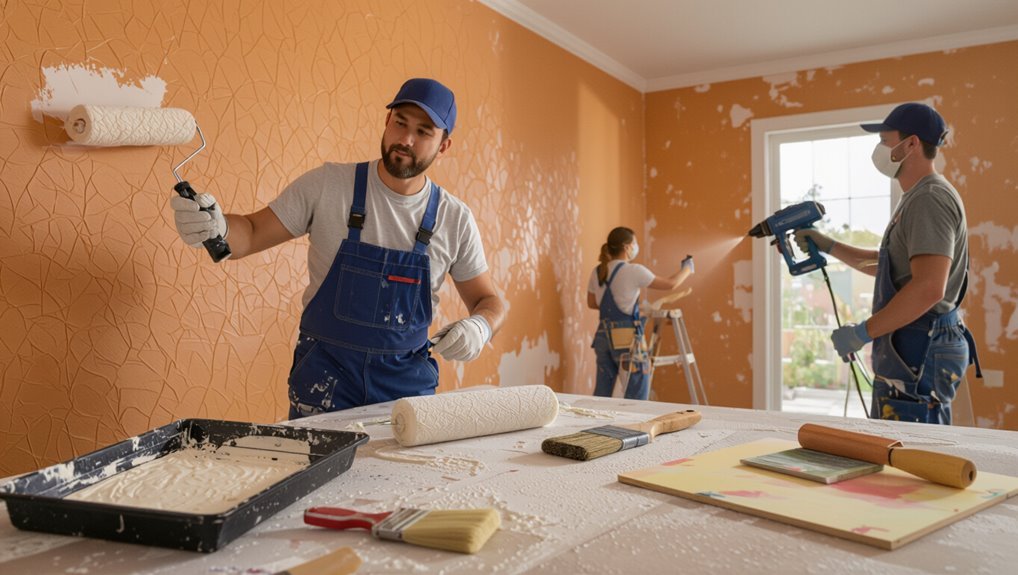
If you want fast, reliable results, roll with a thick-nap roller and use a high-quality acrylic primer and paint designed for textured surfaces.
You’ll back-roll for even coverage, cut edges with a brush, and use light, overlapping passes to avoid pooling.
For textured finishes, keep tools clean and follow a simple wall maintenance routine to prolong finish and spot-treat wear promptly.
Define Your Goal: Repair, Refresh, or Remove Texture
Wondering whether you should repair, refresh, or remove the texture? Decide by goal setting: consider durability, time, budget, and how long you’ll keep the space.
If texture preferences favor the look, refresh or repair; if you want smooth walls, remove it.
Choose a clear outcome before buying supplies so every step aligns with your texture preferences and overall plan.
Inspect and Map Texture Before You Start
Before you open a paint can, walk the room and identify the texture type so you know whether you’re dealing with knockdown, orange peel, or heavy stipple.
Note high and low areas and mark spots that’ll need leveling or extra coats.
Map where repairs and primer are required so you can plan materials and timing.
Identify Texture Type
Since textured walls vary widely in pattern and depth, take a close look and map the surface before you open any paint cans.
Use texture identification methods: touch, magnified inspection, and test patches to determine material and adhesion.
Note common texture types—stomp, orange peel, knockdown, popcorn—and record locations so you choose appropriate primers, tools, and techniques for consistent coverage.
Note High And Low Areas
After you’ve identified the texture types and their locations, walk the wall and mark high and low areas so you know where paint will collect or thin out. Do a quick texture assessment during wall preparation to note drips, shadows, and tool access; flag spots for extra coats or careful brushing.
| Area | High/Low | Notes |
|---|---|---|
| Corner | High | Visible ridge |
| Center | Low | Paint pools |
| Outlet | Low | Recessed |
| Trim | High | Needs careful cut-in |
| Ceiling line | High | Feather edges |
Map Repair And Primer Needs
Survey the wall systematically and mark every spot that needs repair or priming so you know exactly what to tackle first.
Use a map assessment to note cracks, loose texture, and stains.
Prioritize patching and sanding, then plan primer application for repaired and porous areas.
Label sections on your sketch so you apply primer efficiently and avoid missed spots.
Clean Textured Walls So Paint Will Adhere
Before you paint, thoroughly clean the textured wall so the new paint will stick and look even.
Use mild detergent, trisodium phosphate if needed, and a soft brush or microfiber to remove dust, grease, and cobwebs.
Use a mild detergent (or trisodium phosphate if needed) and a soft brush or microfiber to remove dust, grease, and cobwebs.
Rinse with clean water and let dry fully.
These cleaning techniques are essential for proper wall preparation and ensuring long-lasting adhesion without trapping contaminants.
Repair Cracks, Chips, and Loose Texture
Start by inspecting the wall to identify cracks, chips, and any loose or flaking texture.
You’ll remove loose material, fill gaps with an appropriate patching compound, and sand smooth once it’s dry.
For consistency, re-texture patched areas to match the surrounding surface before priming and painting.
Assess Damage Areas
Take a close look at the wall to identify cracks, chips, and any areas where the texture is loose or flaking so you can plan repairs and gather the right tools.
You’ll perform a quick damage assessment, noting size, depth, and location.
Record the wall condition, prioritize areas needing immediate attention, and mark spots for cleaning or removal before you proceed with repairs.
Patch And Re-Texture
Repair the damage by removing loose texture and filling cracks and chips so the patched area will blend smoothly with the rest of the wall.
Sand, vacuum, and apply a compatible patching compound.
Match the original finish using texture repair products or retexturing methods like spray, stomp, or trowel.
Feather edges, let dry, then prime before repainting for a seamless result.
Removing Texture: Risks, Costs, and Alternatives
Although smoothing out a textured wall can give a cleaner look, removing texture is often messy, costly, and risky—you could damage drywall, uncover multiple paint layers, or trigger asbestos in older homes.
Weigh texture removal implications and long term effects carefully. Get professional assistance advice for asbestos or extensive skim-coating; perform a DIY risks assessment if you attempt it.
Consider cost effective alternatives like skim coats or painting techniques.
Choosing Primer for High‑Texture Surfaces
If you decide to keep the texture rather than remove it, picking the right primer will make painting faster and improve the final look.
You’ll choose primer options that offer high texture compatibility, good adhesion, and stain sealing.
Use thicker, high-build primers or aerosol primers for crevices; test adhesion on a small area.
Allow proper drying before topcoat application.
How to Prime Porous vs Nonporous Textures
First, you’ll assess whether the texture soaks up liquid or beads it, because porosity dictates primer choice.
For porous surfaces, pick a penetrating primer or sealer, and for nonporous ones use a bonding primer formulated for slick substrates.
Apply evenly with the right tool, follow the manufacturer’s dry times, and don’t paint until the primer’s fully cured.
Assess Surface Porosity
Porosity determines how paint and primer behave, so you’ll want to know whether your textured wall soaks up liquids or repels them before you start.
Perform simple surface testing: dab a few drops of water in inconspicuous spots. Fast absorption signals high porosity; beading indicates low porosity.
Record results for porosity assessment and plan prep steps accordingly, noting any uneven areas.
Choose Appropriate Primer
Now that you’ve gauged how much the wall soaks up moisture, pick a primer that matches the surface: high-absorption textures need a penetrating, high-build primer to seal and level, while low-absorption surfaces require a bonding or adhesion primer to help paint stick.
Choose Primer types by Surface compatibility and Texture considerations; use proper Application techniques.
- Match primer to porosity
- Use penetrating vs bonding
- Check VOCs
- Test adhesion
- Note texture depth
Application And Dry Time
Start by applying primer in consistent, even strokes so it soaks into porous textures and forms a continuous film on nonporous surfaces.
For highly absorbent walls you’ll need a heavier coat or a second pass while the primer is still tacky, whereas smooth, nonporous surfaces often require a thinner, full-coverage coat with extra attention to edges and corners.
Use proper application techniques and monitor drying considerations: temperature, humidity, and manufacturer times.
Pro Tools for Painting Textured Walls
The right tools make textured-wall painting faster and give you a more professional finish, so you’ll want to gather them before you open a can of paint.
Gather the right tools first—textured-wall painting becomes faster and yields a more professional finish.
Use tools suited to textured wall materials and advanced painting techniques to speed work and improve coverage.
Consider these essentials:
- High-quality angled brushes
- Sturdy extension pole
- Paint tray and liners
- Flexible putty knife
- Professional-grade sprayer
Selecting the Correct Roller Nap by Texture
Start by matching the roller nap to your wall’s texture—smooth walls need short naps, while heavy textures call for long naps to reach crevices.
Also consider your paint type, since thicker paints and primers work better with longer naps to guarantee even coverage.
Choosing the right combo of nap and paint saves time and gives a cleaner finish.
Match Nap To Texture
Because the roller nap determines how much paint reaches crevices, match its thickness to your wall’s texture so you don’t get patchy coverage or clogged detail.
You’ll improve texture matching and roller selection by choosing nap length that fits profile, testing on a scrap, and adjusting pressure.
- Use 1/4″ for smooth
- 3/8″ for light orange peel
- 1/2″ for medium texture
- 3/4″ for heavy texture
Test before full application.
Consider Paint Type
1 key factor when you choose paint is its viscosity—thicker paints need a plusher nap to reach crevices, while thinner paints work well with shorter naps; match paint body to roller pile so you get even coverage without excess splatter or clogged texture.
Pick high-quality paints to boost paint durability and minimize color fading, and choose nap length that maintains finish and eases application.
Roller Technique: Maintaining Nap and Overlap
Lay a smooth, even roller path and keep the nap charged so your textured wall gets consistent coverage without streaks or thin spots.
You’ll practice good roller maintenance, monitor paint consistency, and overlap each pass by 30–50% to blend seams and avoid lap marks.
- Reload evenly
- Maintain even pressure
- Check for clumps
- Work wet edges
- Clean between sessions
Best Brushes for Cutting In on Texture
When you’re cutting in on a textured wall, pick brushes that hold paint well and flex enough to follow the surface contours; a 2½–3 inch angled sash brush with synthetic filaments is usually ideal because it gives control on edges while resisting splay from rough textures.
Choose quality cutting brushes and texture brushes with tapered tips, sturdy ferrules, and comfortable handles so you work cleanly and efficiently.
Brush Technique: Get Paint Into Crevices Without Marks
After you’ve cut in cleanly, switch to a steady brushing technique that pushes paint into every groove without leaving visible strokes.
You’ll work with light pressure, dabbing and rolling to guarantee even crevice coverage while minimizing obvious brush strokes. Focus on angle, short passes, and feathering to blend edges seamlessly.
- Use a stiff-bristle brush
- Load less paint
- Work in small sections
- Keep a wet edge
- Inspect under light
When to Use a Paint Sprayer for Texture
If you’re covering large areas or want to finish fast, a paint sprayer can save you significant time compared with brushes or rollers.
It’s best for open, consistent textures like knockdown or orange peel, but trickier textures may need touch-ups afterward.
Remember sprayers need more masking and careful cleanup, so factor prep and maintenance into your decision.
When Sprayers Save Time
A paint sprayer really speeds things up on large, uninterrupted surfaces, so you should reach for one when you’re covering whole rooms, exterior walls, or ceilings with consistent texture.
It boosts sprayer efficiency and handles texture adaptation quickly, but you’ll still control overspray, masking, and drying times.
- Large surface coverage
- Tight schedules
- Multiple coats fast
- Hard-to-reach areas
- Consistent finish maintenance
Suitable Texture Types
You’ll want to match the sprayer to the wall’s texture before you start coating large areas; sprayers shine on certain textures but struggle with others. Use sprayers for stippling methods, texture blending, and layered painting. Reserve brushes and sponge techniques for faux finishes, brush strokes, and color washing. Prioritize surface preparation.
| Texture | Best Tool | Notes |
|---|---|---|
| Smooth | Sprayer | Even finish |
| Light knockdown | Sprayer | Fast |
| Heavy popcorn | Brush | Avoid clogging |
| Venetian plaster | Brush | Controlled layers |
Prep And Cleanup Needs
Because paint sprayers atomize material over a wide area, you’ll need thorough prep and a solid cleanup plan before you start—cover floors and furniture with drop cloths, seal off vents and doorways with plastic, and mask trim and outlets tightly so overspray doesn’t settle where you don’t want it.
Plan cleaning supplies, protective gear, surface preparation, workspace organization, drying equipment, and waste disposal.
- Gather cleaning supplies and rags
- Wear protective gear and respirator
- Complete surface preparation first
- Organize workspace and ventilation
- Stage drying equipment and plan waste disposal
Airless vs HVLP Sprayers: Which to Choose?
Wondering which sprayer will give you the best finish on a textured wall?
You’ll weigh Airless advantages like high sprayer efficiency and faster coverage against HVLP benefits such as finer control and less overspray.
Consider texture compatibility, cost comparison, and project scale: choose airless for large, heavy textures and speed, HVLP for small, detailed jobs where control and finish matter more than raw output.
Sprayer Technique: Gun Settings and Pass Patterns
When you set up your sprayer, dial in the correct pressure and tip size for the texture you’re covering so each pass lays down an even coat without runs or dry spots.
You’ll adjust overlap, speed, and angle, monitor paint compatibility, and follow sprayer maintenance.
- Use 50% overlap
- Keep nozzle 12–18 inches away
- Maintain steady pace
- Spray perpendicular then crosscoat
- Flush after use
Mixing and Thinning Paint for Textured Coverage
Start by checking the paint’s label for recommended thinning ratios.
You’ll measure and record mixing ratios, then add solvent or water incrementally while stirring.
Test spray or roll on a scrap to confirm penetration into recesses and adjust.
Use gentle thinning techniques to maintain body and hide; avoid over-thinning, which reduces coverage and causes runs on textured surfaces.
Choosing Finish and Paint Type for Texture
Now you’ll pick a sheen and paint type that suit both the texture and the room’s use.
Matte or eggshell hides imperfections better, while satin or semi-gloss is easier to clean on high-traffic or moisture-prone surfaces.
Also match your paint base—water- or oil-based—to the existing finish to guarantee proper adhesion and durability.
Paint Sheen Selection
Although texture hides minor imperfections, the paint finish you pick will change how pronounced that texture looks and how easy it’s to maintain.
You’ll weigh sheen impact against sheen durability and room use; higher sheen highlights peaks and wipes clean, lower sheen softens shadows. Choose based on traffic and desired contrast.
- Low sheen for subtle depth
- Eggshell for balance
- Satin for durability
- Semi-gloss for trims
- Matte for minimal reflection
Paint Type Compatibility
Which paint chemistry will give you the best look and longevity on textured surfaces?
You’ll prefer acrylic latex for most textured walls—flexible, breathable, and durable. Oil-based can add sheen but may trap moisture and isn’t ideal over flexible textures.
Match primer and finish for proper paint type compatibility, and don’t skip surface preparation: clean, repair, and prime to guarantee adhesion and even coverage.
How Many Coats Do Common Textures Need?
Different textures usually need different numbers of coats, so check the surface before you start painting.
Different textures need different coat counts—inspect the surface first to plan coverage without losing texture.
You’ll use Layering Techniques to build coverage without losing Texture Variation. Match coat count to profile: light knockdown often needs one to two, heavy popcorn three.
- Smooth drywall: 1–2 coats
- Light orange peel: 1–2 coats
- Knockdown: 2 coats
- Popcorn/stipple: 3 coats
- Deep combed: 2–3 coats
Drying Times and Recoat Windows for Texture
Drying times and recoat windows vary with texture, paint type, and conditions, so check both the paint can and the surface before you schedule another coat.
You’ll wait longer on rough or porous textures because they absorb and hold moisture.
Monitor humidity and temperature, gently test a small area for tackiness, and follow manufacturer recoat windows to avoid lifting or uneven finish while ensuring proper adhesion.
Avoiding Drips and Sags on Heavy Textures
1 simple rule cuts most drips and sags on heavy textures: apply thinner, controlled coats and let each one set before adding more.
You’ll focus on drip prevention and sag reduction by working methodically, watching edges, and correcting runs immediately.
- Use a high-quality, angled brush
- Load less paint on rollers
- Work in small sections
- Tip runs with a damp brush
- Allow proper tack time
Managing Sheen Variation Across Peaks and Valleys
When paint hits peaks and sinks into valleys, light reflects unevenly and you’ll notice sheen differences unless you plan ahead; use consistent application techniques, choose the right sheen level, and adjust your approach for texture to minimize visible contrast.
To maintain sheen balance and texture harmony, test samples, apply thin even coats, and inspect in varied light so highlights and shadows stay subtle and uniform.
Back‑Rolling, Stippling, and Feathering for Pro Finish
Keeping sheen and texture even is part technique and part timing. So after you’ve checked samples and evened out your coats, use back-rolling, stippling, and feathering to finish like a pro.
You’ll learn back rolling benefits, stippling techniques, feathering methods, texture effects, paint application and texture contrast for a seamless look.
- Use consistent pressure
- Work wet edges
- Vary strokes
- Blend overlaps
- Inspect light angles
Masking and Protecting Trim, Fixtures, and Floors
Before you start rolling or stippling, protect trim, fixtures, and floors so accidental drips and spray won’t undo your work.
Use painter’s masking tape for crisp lines and edge sealing around trim coverage.
Apply drop cloths or adhesive floor protection, secure light fixtures and vents for fixture safety, and seal gaps to prevent dust.
Check tape adhesion before painting begins.
Setting Up a Spraying Station and Safety
Set up a dedicated spraying station at least several feet from walls and traffic areas.
Arrange your sprayer, paint, thinners, and cleaning supplies on a stable table so you can work without bending or stretching.
Set up your sprayer, paints, thinners, and cleaning supplies on a stable table to avoid bending or stretching
You’ll follow spraying safety, wear protective gear, respect ventilation requirements, maintain equipment, and monitor air quality.
- workspace organization
- station setup checklist
- spray patterns control
- equipment maintenance tips
- protective gear essentials
Painting Around Outlets, Lights, and Fixtures
Before you start painting, turn off the power at the breaker and confirm outlets and switches are dead with a tester.
Remove faceplates and loosely mask exposed wiring, then cover fixtures and bulbs with painter’s tape and plastic to keep paint out.
Take your time cutting in around masked areas for a clean finish without risking damage or shock.
Turn Off Power
1 important safety step is to cut power to any outlets, switches, and fixtures you’ll be working around so you don’t risk shocks while removing covers or painting near live parts.
Follow safety precautions, label breakers, and use proper electrical tools. Verify with a tester before touching anything.
- Turn off breaker
- Lock or tag panel
- Use voltage tester
- Remove covers after power off
- Keep tools insulated
Protect And Mask
Protecting fixtures and masking edges will keep your textured wall job clean and prevent paint from getting into outlets, switches, and light fittings.
Shut power, remove covers, and use precise tape application around plates and trim. Cover fixtures and floors with drop cloths for surface protection.
Use painter’s tape folded for tight seams, press edges firmly, and peel slowly after paint dries for crisp lines.
Painting Textured Ceilings: Tips and Ergonomics
When you’re tackling a textured ceiling, smart setup and body mechanics matter as much as paint choice: position your ladder or scaffold so you can reach comfortably, keep tools within easy arm’s reach, and work in short bursts to avoid neck and shoulder strain.
Use proper paint application techniques and ergonomic tools for consistent coverage.
- Use extension poles for rollers
- Wear supportive footwear
- Alternate sides frequently
- Keep light layers of paint
- Rest and stretch between sessions
Color Selection to Highlight or Hide Texture
If you want to make texture pop, choose colors with enough contrast and shadow depth; if you’d rather disguise it, pick flatter, mid-tone hues that minimize light-and-shadow variation. Use color psychology to set mood and control texture contrast. Test samples under room lighting.
| Goal | Finish | Tip |
|---|---|---|
| Highlight | Satin | Accent lighting |
| Hide | Matte | Neutral mid-tones |
| Subtle drama | Eggshell | Warm neutrals |
When to Use Dark vs Light Colors on Texture
Use dark colors when you want the texture to read as depth and shadow, since they make valleys and ridges more pronounced.
Choose light colors when you want the room to feel brighter and the texture to be softer and less dominant.
Each choice changes how the surface and space are perceived, so pick based on the mood you want.
When Dark Enhances Depth
Dark colors can deepen a textured wall because they absorb light and emphasize shadows, so pick them when you want pronounced relief and a cozy, dramatic feel.
You’ll use dark color benefits to boost shadow effects and improve depth perception; color psychology helps set mood.
Consider:
- Accent focal points
- Hide imperfections
- Create warmth
- Emphasize pattern
- Balance with lighting
When Light Brightens Texture
While darker hues can make texture pop by deepening shadows, lighter colors do the opposite: they lift surfaces, reflect more light, and soften relief so your texture reads as airy and open. You’ll use light reflection to minimize contrast and achieve subtle texture enhancement. Choose pale neutrals for balance, or warm lights to keep rooms inviting.
| Effect | Choice |
|---|---|
| Minimize shadows | Pale neutrals |
| Soften relief | Warm lights |
Spot Painting vs Full Repaint: When to Patch
Decide whether to patch or repaint by evaluating the damage, paint age, and color match. Small scuffs, nail holes, or isolated stains usually call for spot painting, but widespread fading, multiple repairs, or a poor color match mean you should plan a full repaint.
Decide to patch or repaint by assessing damage, paint age, and color match—spot paint small flaws; repaint when fading or mismatched.
You’ll weigh spot painting benefits against full repaint considerations and choose the most efficient fix.
- Assess extent of damage
- Check paint fade
- Test color match
- Consider wall texture
- Estimate time and cost
Touch‑Up Strategies That Blend Into Texture
Match texture first, then color: when you spot‑repair a textured wall, getting the surface pattern right matters more than perfect color because texture casts shadows and hides small tonal differences. Use blending techniques, careful color matching, and tested repair methods. Focus on texture considerations and gentle paint application to avoid seams.
| Tool | Tip | Time |
|---|---|---|
| Sponge | Tap | 5 min |
| Brush | Feather | 10 min |
| Roller | Light | 8 min |
| Knife | Skim | 7 min |
| Spray | Mist | 6 min |
Cost and Time Estimates by Method and Texture
You’ll see that cost varies with texture—smooth or lightly textured walls usually cost less to paint than heavy popcorn or stippled finishes.
Time estimates depend on method: brushing and rolling take longer than spraying, while prep and drying times grow with deeper textures.
Keep these factors in mind when choosing your approach so you can budget both money and time accurately.
Cost By Texture
Costs vary widely by texture because the material, prep, and application time change with each finish; expect smoother textures to cost less per square foot than heavy knockdown or intricate Venetian plaster.
You’ll want a clear cost breakdown and texture comparison to plan budgets and materials.
- Smooth walls: lowest material and labor
- Orange peel: moderate cost
- Knockdown: higher labor
- Venetian plaster: premium
- Repairs/priming: add-on costs
Time By Method
When planning your project, factor in both the method and the wall texture: smoother finishes take less time, while heavy textures and specialty techniques add significant labor.
Estimate roller or sprayer times, prep and drying cycles, and cleanup.
Use time saving techniques like larger rollers or spray rigs and plan efficient scheduling around drying and touch-ups so you meet deadlines without rushing quality.
Common Mistakes That Ruin Textured Paint Jobs
Many DIYers make a few predictable mistakes that turn a textured paint job into a mess: skipping prep, using the wrong tools, and rushing drying times are the biggest offenders.
You should focus on proper texture application techniques and avoid paint adhesion challenges by prepping, choosing correct tools, and pacing coats.
- Poor surface cleaning
- Wrong roller/brush
- Overthinning paint
- Ignoring humidity
- Skipping primer
Quick Troubleshooting: Flaking, Orange Peel, Seam Lines
Even with careful prep and the right tools, texture problems can still pop up—here’s how to spot and fix the three most common issues fast.
For flaking issues, scrape loose paint, sand, prime for paint adhesion, then texture repair.
Scrape loose paint, sand, prime for adhesion, then repair the texture for a seamless finish.
For orange peel, sand smooth, adjust spray/roller technique.
For seam lines, feather joint compound, sand, inspect surface, and use precise finishing techniques after thorough wall preparation.
Cleaning and Maintaining Painted Textured Walls
Keeping textured walls looking fresh takes regular, gentle care and the right products. You’ll perform routine texture maintenance and spot wall cleaning to prevent buildup, using soft brushes and mild detergent.
Test cleaners in hidden areas, blot stains, and avoid abrasive tools to protect paint texture.
- Dust with a microfiber duster
- Vacuum with brush attachment
- Spot-clean with diluted soap
- Blot, don’t rub stains
- Repaint small areas when needed
When to Hire a Pro: Signs You Need a Contractor
Routine cleaning handles most wear, but some issues go beyond what you can fix with a sponge and touch-up paint.
Hire a pro when extensive damage, stubborn stains, structural cracks, or complex textures overwhelm you.
Check contractor qualifications, reviews, insurance, and warranties.
If your schedule or project timelines are tight, or you want guaranteed finish quality, bring in a contractor.
Final Checklist: Prep, Tools, Technique, and Finish
Before you start rolling, run through a short, focused checklist so you don’t get halted mid-job:
Inspect surface for dust, repairs, and primer to guarantee paint adhesion.
Gather rollers, brushes, extension poles, drop cloths, and ladder.
Plan technique for even coverage and texture enhancement.
Confirm dry times and ventilation.
Start from top, work in sections, finish edges neatly.
Frequently Asked Questions
Can Textured Walls Hide Mold or Moisture Damage Long‑Term?
No — textured walls can’t hide mold or moisture damage long-term; you’ll still need mold prevention and moisture control measures, inspect underlying surfaces, fix leaks, and remediate affected areas to prevent recurrence and protect your home’s health.
How Do Pets or Kids Affect Textured Wall Durability?
You’ll be amazed—textured walls resist wear, but pets and kids still cause damage: pet scratches gouge surfaces and kid messes stain or abrade texture. You’ll need repairs, tougher finishes, or frequent touch-ups to maintain durability.
Will Textured Exterior Walls Require Different Paint Than Interiors?
Yes — you’ll need exterior paint suited to weather and substrate; different texture types (stucco, rough plaster, fiber cement) affect finish choice and application. Choose durable, flexible coatings and thicker-nap tools for proper coverage and protection.
Can Wallpaper Be Applied Over Existing Texture Safely?
Yes — but you’ll need heroic wall preparation: massively smooth, fill and sand to the point the texture’s disappeared, or use heavy-duty lining paper so wallpaper adhesion sticks reliably and won’t bubble or peel later.
How Does Humidity in Storage Affect Leftover Textured Paint?
Humidity in storage can ruin leftover textured paint: you’ll see skinning, mold, and separation. To preserve it, control storage conditions—cool, dry, airtight—label and stir before reuse so paint preservation stays effective.
Conclusion
You’ve got this: prep, clean, repair, and pick the right tools for the finish you want. Remember that textured walls hold dirt—studies show homeowners spend about 2.5 hours monthly cleaning textured surfaces versus 1.7 hours for smooth ones—so choose durable paint and finishes that resist grime. If repairs or removal feel overwhelming, call a pro. Follow the checklist, work methodically, and your textured wall will look refreshed and last longer.
