
How to Paint Cracks in Walls for a Smooth Finish
You can get a smooth finish by evaluating each crack, widening and cleaning it, then filling with spackle, joint compound, or caulk as appropriate, embedding mesh tape for wider gaps, sanding smooth, priming with a compatible primer, and repainting with thin, feathered coats using a high-density roller. Wear safety gear, wait for full dry times, and match textures carefully to blend repairs. Keep going to learn tools, tips, and pro tricks that prevent re-cracking.
Who This Guide Is For and How to Use It
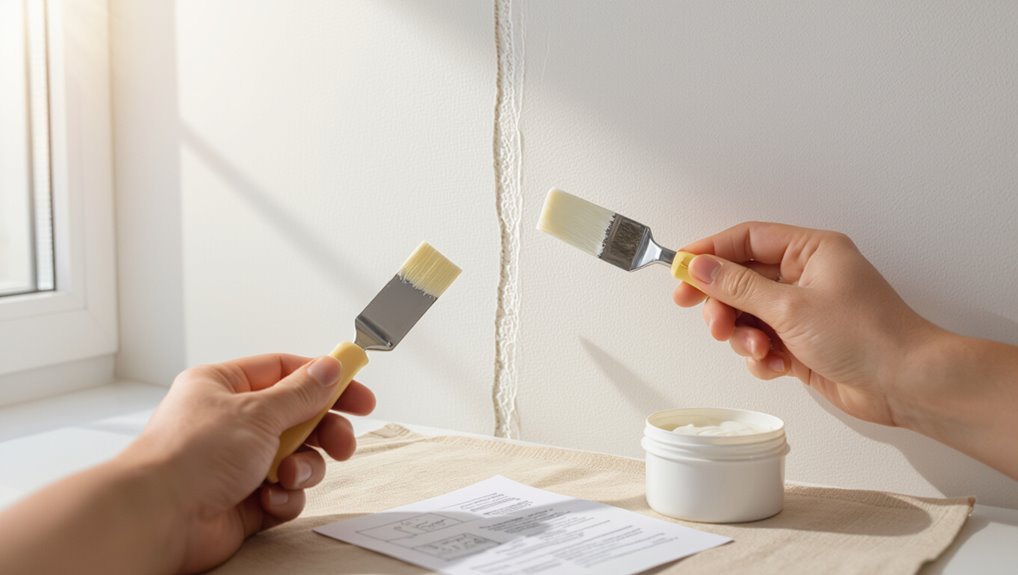
Whether you’re a first-time DIYer or a seasoned homeowner, this guide will show you straightforward steps to repair and paint wall cracks so the results look professional.
You’ll learn simple wall inspection tips, surface preparation, repair techniques, and paint selection to boost wall aesthetics and wall maintenance.
Use DIY strategies but know when to seek professional help for lasting crack prevention and home improvement.
Quick Starter: Paint Cracks Smoothly in 5 Steps
Start with a simple, five-step routine that gets cracks ready for paint and leaves a smooth, professional finish.
You’ll clean, widen tiny gaps, apply filler, sand flush, and prime.
Follow repair techniques deliberately, choose appropriate paint selection, and finish smoothly.
This quick starter helps with crack prevention and ongoing wall maintenance so repairs last and surfaces stay neat.
Why Cracks Form in Drywall and Plaster Walls
Because walls shift with changes in moisture, temperature, and load, cracks often show up even in well-built drywall and plaster.
You’ll notice crack causes include settling, framing movement, and drywall moisture changes that swell or shrink paper and joint compound.
Plaster can delaminate or craze as lath and substrates move.
Recognizing these causes helps you address repairs promptly and prevent recurrence.
Telling Hairline vs Structural Cracks
When you inspect a crack, focus on its width, length, location, and whether it changes over time to tell a harmless hairline apart from a structural problem.
You’ll note hairline characteristics: very thin, short, often on plaster seams or paint.
Structural implications include widening, stair-step patterns, uneven floors, or cracks through masonry.
Track changes; document size and direction for clear assessment.
When to Call a Pro for Crack Repair
If a crack is shifting, wider than about 1/8 inch, follows a stair-step through brick or block, or shows nearby signs like sagging floors or doors that stick, call a professional — these are red flags that indicate more than cosmetic damage.
You should seek professional advice to assess causes and long-term repair techniques; don’t gamble with structural issues—get an expert inspection.
Essential Tools for Crack Repair and Painting
Before you start, gather the essential repair tools—putty knives, filler, sandpaper, and a utility knife—to fix the crack properly.
You’ll also need painting applicators like brushes, rollers, and a small trim brush for tidy edges.
Don’t forget safety and prep gear: drop cloths, gloves, goggles, and a respirator if you’re working with sanding dust or strong fumes.
Essential Repair Tools
Tools make the job faster and the finish neater, so gather a few essentials before you start repairing cracks.
You’ll use these for repair techniques and proper wall preparation to guarantee seams stay closed and smooth.
- Putty knife or scraper
- Sanding block or paper
- Joint compound or spackle
- Utility knife and vacuum for dust removal
Painting Applicators Needed
Brushes, rollers, and a few specialty applicators will give you the control you need to blend repairs into the surrounding wall.
Choose paint roller types based on texture: smooth for flat surfaces, nap rollers for orange-peel.
Match brush selection to trim and edges—angled sash brushes for crisp lines, synthetic bristles for waterborne paints.
Use small foam pads and touch-up brushes for feathering.
Safety And Prep Gear
1 simple checklist of safety and prep gear will keep your crack repair work safe and effective: gloves, safety glasses, a dust mask or respirator rated for painting, drop cloths, and proper lighting.
You’ll use safety equipment and practical prep techniques to minimize dust and hazards. Gather what follows before you start:
- Nitrile gloves
- Respirator or dust mask
- Eye protection
- Drop cloths and lights
Best Fillers for Hairline Cracks: Spackle vs Caulk
When you’re tackling hairline cracks, choosing the right filler makes the repair invisible and long-lasting; spackle and caulk each have strengths depending on the crack’s location and movement.
You’ll prefer spackle for quick drying, easy sanding, and paintability — spackle advantages for static hairlines.
Use flexible caulk where slight movement occurs; caulk benefits include adhesion and elasticity, preventing future re-cracking.
Fillers for Wider Cracks: Joint Compound and Patch Kits
For wider cracks you’ll want to choose joint compound when the gap is shallow and the wall surface is intact, and a patch kit when there’s a deep void or damaged drywall to rebuild.
Apply patch kits in thin layers, letting each cure before adding the next so you avoid sinking and cracking.
Finish by sanding smooth and feathering the edges so the repair blends seamlessly with the surrounding wall.
When To Use Joint Compound
Although small hairline cracks can usually be fixed with filler or caulk, you’ll want joint compound for wider or deeper cracks that need structural leveling and a smooth finish.
You’ll appreciate joint compound benefits and learn simple application techniques so repairs stay invisible.
- Use for gaps over 1/8″
- Backer before deep fills
- Sand between coats
- Prime before painting
Applying Patch Kit Layers
Start by layering your patch kit or joint compound in thin, controlled passes so each coat bonds and dries properly.
Apply successive thin layers, letting drying time follow manufacturer recommendations.
Use proper patch kit techniques and layering methods to build strength without overfilling.
Press compound into the crack, smooth with a flexible knife, and repeat until the repair sits slightly proud of the wall for finishing.
Sanding And Feathering Edges
Once the patch has fully cured, sand the repair with a fine-grit block or sanding sponge to blend the compound into the surrounding wall, working from the center outward to feather the edges smoothly.
You’ll use proper sanding techniques to avoid gouges and achieve invisible changes.
- Sand lightly in even strokes
- Check progress often
- Finish with a soft brush
- Wipe dust before priming
When to Use Mesh Tape or Backing Strips
Choose mesh tape when a crack is hairline to moderately wide and the surrounding drywall is stable; use backing strips when the gap is wide, the joint has no backing, or the plaster has failed and needs structural support.
You’ll prefer mesh tape advantages for quick application and bond over thin cracks, while backing strip benefits give strength for wider gaps and prevent future movement before you mud and finish.
Preparing the Room: Temperature, Humidity, Lighting
After you’ve decided between mesh tape and backing strips and taped the crack, make the room conditions right before you mud and paint: keep temperature between 60–75°F (15–24°C), relative humidity around 40–50%, and bright, even lighting so you can see surface texture and drying progress.
You’ll control room temperature, humidity levels, and lighting conditions for ideal painting; note temperature effects and humidity impact.
- Check room temperature and ventilation
- Use a dehumidifier or humidifier as needed
- Position even, shadow-free lights
- Avoid extreme drafts or heat sources
How to Clean and Dust Cracks Before Repair
Start by removing loose dust and debris from the crack so the filler can bond properly: use a stiff brush, a vacuum with a crevice attachment, or compressed air to clear out dirt, cobwebs, and paint flakes, then wipe the surrounding area with a slightly damp cloth to pick up remaining residue and let it dry before you apply any mud or tape. Clean, then inspect.
| Tool | Purpose |
|---|---|
| Stiff brush | Dust removal |
| Vacuum | Crack preparation |
Widen and Undercut Cracks for Better Adhesion
Before you fill a crack, widen it slightly with a utility knife or crack opener so the patching compound can key in.
Then undercut the edges by angling the tool inward to create a firmer anchor for the filler.
Finally, remove all dust and debris with a brush or vacuum so the repair bonds properly.
Widen Crack Properly
Widen the crack slightly and undercut its edges so your patching compound can key into the wall; shaving the crack into a consistent V- or U-shape gives the filler a solid surface to grip and prevents the repair from popping out later.
You’ll perform a quick crack assessment, choose repair techniques, and act carefully.
- Use a utility knife
- Remove loose debris
- Keep edges even
- Wear eye protection
Undercut For Adhesion
If you want your patch to last, undercut the crack so the filler has something to grip. Shaving the edges into a slight V- or U-shape creates a mechanical key that prevents the repair from pulling free as the wall settles.
You’ll use basic adhesion techniques during surface preparation, then apply filler firmly into the undercut so it bonds mechanically and resists future movement.
Clean Dust And Debris
- You’ll clean dust and debris after widening and undercutting so filler bonds well. Use effective cleaning techniques for dust removal, work deliberately, and don’t skip steps.
- Vacuum loose dust from the crack
- Brush edges with a stiff brush
- Blow out remaining grit with compressed air
- Wipe with a damp cloth and let dry before filling
Step-by-Step: Filling Hairline Cracks With Spackle
Start by cleaning the crack and surrounding area so the spackle adheres properly; remove loose paint and dust with a putty knife or stiff brush, then wipe with a damp cloth and let it dry.
Do a quick crack assessment, choose spackle techniques, apply thin coats with a putty knife, feather edges, let dry, sand smooth, and wipe before priming and painting.
Step-by-Step: Repairing Wider Cracks With Joint Compound
Widen the crack slightly with a utility knife or screwdriver to create a V-shaped groove that helps the joint compound bond.
Clean out dust and loose material, then dampen the area lightly so the compound adheres better.
You’ll assess the crack, choose joint compound, and follow repair techniques for layering and sanding to a smooth finish.
- Mix compound to consistency
- Apply thin first coat
- Let dry fully
- Sand smooth
How to Apply Mesh Tape and Embed Compound Properly
Before you embed compound, cut a length of self-adhesive mesh tape slightly longer than the crack and press it centered over the groove so the fibers lie flat; this gives the compound a stable base and helps prevent future cracking.
Smooth a thin layer of compound over the tape, embedding it fully. For proper mesh tape application and compound embedding, work outward from the crack and remove air pockets.
Sanding Techniques for a Feathered, Smooth Surface
Now that the compound’s set, grab a fine-grit sanding block and work lightly from the center of the repair outward, feathering the edges so the patch blends with the surrounding wall; keep the block flat and use even, overlapping strokes to avoid creating low spots or sharp ridges.
Use these sanding techniques and tips:
- Sand with light pressure and consistent angle
- Switch to finer grit for final blending
- Wipe dust between passes for visibility
- Inspect under angled light for any imperfections
How to Apply a Skim Coat for an Invisible Repair
A thin, even skim coat is what makes a repaired area disappear, so mix a smooth joint compound to the consistency of heavy cream and apply it with a clean, wide drywall knife, pulling the material across the surface in one continuous stroke to fill low spots and feather the edges into the surrounding wall.
Let it dry, sand lightly, repeat if needed—use precise skimming techniques to preserve repair aesthetics.
Choosing the Right Primer for Repaired Areas
Now that your skim coat is smooth, you’ll want to pick a primer that matches the repair material—latex primers work for most drywall, while bonded or acrylic primers suit tougher patches.
Choose a product with good adhesion to keep the repair from peeling and one with strong coverage so you don’t need multiple coats. The right primer saves time and guarantees your final paint looks seamless.
Primer Type Selection
When you’ve repaired a crack, pick a primer that bonds well to both the filler and the surrounding wall so your paint won’t peel or show texture differences.
You’ll choose between latex, oil-based, shellac, and bonding primers; know primer types and primer benefits to match substrate and stain-blocking needs.
- Latex: fast-drying, low odor
- Oil-based: durable, blocks tannins
- Shellac: seals stubborn stains
- Bonding: adheres to slick surfaces
Bonding And Coverage
Because repaired spots often sit on different textures and materials than the rest of your wall, pick a primer that both bonds tightly to the repair and provides even coverage so the final paint won’t show seams or peel.
Choose primers with appropriate bonding agents for plaster, drywall, or patch compounds, and match coverage types—stain-blocking, sealing, or high-build—so you get uniform adhesion and finish.
Tips for Priming Repaired Areas Without Bleed-Through
Although the repair might look smooth, you’ll still need to seal it properly to stop old stains, filler compounds, or rust from bleeding through your new paint. Use a stain-blocking primer and apply it evenly over the patched area, feathering the edges to blend with surrounding wall surfaces.
- Use quality stain-blocking primers for priming techniques.
- Sand between coats.
- Spot-test for bleed through prevention.
- Allow full cure before topcoating.
Selecting Paint to Hide Repaired Cracks Effectively
If you want repaired cracks to disappear instead of peek through, choose paint with the right sheen and pigment load for the job; flat or matte finishes hide surface imperfections best, while higher-quality, higher-pigment paints provide better coverage so you’ll need fewer coats.
Consider paint types suited to the room’s use, factor in color selection to mask shadows, and test samples under real lighting.
Best Rolling and Brushing Technique for Repaired Walls
A good rolling and brushing technique starts with the right tools and a steady hand: choose a high-density roller cover for smooth walls or a short-nap roller for slight texture, and pair it with a quality angled sash brush for cutting in.
You’ll use consistent pressure, overlap passes, and feather edges to blend repaired areas using rolling techniques and brushing techniques.
- Work top to bottom
- Light, even pressure
- Overlap 50%
- Feather edges
Blending Paint So Repaired Cracks Disappear
When you want repaired cracks to vanish, blend the new paint into the surrounding area using thin, overlapping strokes and feathered edges so the patch reads as part of the wall. Use precise blending techniques and careful color matching to hide seams; feather outward and soften brush marks.
| Tool | Stroke | Tip |
|---|---|---|
| Brush | Thin | Feather |
| Roller | Overlap | Blend |
| Sponge | Light | Soften |
When to Apply Multiple Coats and Drying Times
You’ll want to apply additional coats only after the previous layer is fully dry and any texture has been smoothed.
Follow the paint and filler labels for drying times—usually 1–4 hours for touch-dry and up to 24 hours for recoat, longer in high humidity or low temperatures.
If filling deep cracks, plan on multiple thin coats rather than one thick layer to guarantee proper adhesion and even drying.
When To Apply
Since paint needs time to cure between layers, plan your coats so each one fully dries before you paint again.
You’ll judge readiness by touch, feel, and tack, keeping timing considerations and environmental factors in mind. Wait longer in humidity or cold.
Follow this checklist:
- Test a small patch for dryness
- Allow recommended recoat interval
- Improve ventilation if slow
- Avoid rushing coats
Drying Time Guidelines
If your goal is a smooth, durable finish, plan coats around the paint’s recommended recoat times and the room’s temperature and humidity; that’ll keep layers from trapping solvents or failing to adhere.
Check manufacturer drying times, wait fully between coats, and use thin layers.
Monitor climate impact—cold or humid conditions extend cure time. Accelerate with ventilation or controlled heat, but avoid rushing.
Dealing With Textured Walls: Match or Retexture
When you’re working on a textured wall, decide early whether to match the existing texture or retexture the whole area—matching preserves the original look but can be tricky, while retexturing gives a uniform finish and might be easier for larger repairs.
Decide early: match the existing texture for authenticity or retexture for a simpler, uniform repair.
Use textured wall techniques and focus on matching finishes.
- Assess texture depth
- Test on scrap
- Blend feathered edges
- Sand and prime before paint
Moisture Cracks : Diagnosis and Prevention
Although moisture-related cracks can look like ordinary hairlines, they signal excess water activity that you need to diagnose promptly to prevent ongoing damage.
You’ll inspect moisture sources—leaks, condensation, rising damp—using diagnosis techniques like moisture meters and visual checks.
Fix plumbing, improve ventilation, and apply appropriate wall treatments.
Follow prevention methods: seal exterior, repair flashing, and control humidity to stop recurrence.
How Temperature and Movement Cause Recurring Cracks
Because building materials expand and contract as temperatures shift, you’ll often see recurring cracks where stress concentrates—along joints, over doors and windows, and at changes in material.
You’ll notice temperature effects and seasonal changes combine with movement causes and environmental factors. Monitor material flexibility to protect structural integrity.
- Track seasonal movement
- Inspect joints
- Note material mismatch
- Record temperature swings
Quick Reversible Fixes for Rental Walls
Cracks from seasonal movement don’t have to mean permanent repairs, especially if you’re renting and need fixes that are friendly to landlords.
You can use spackling compound, paintable caulk, and removable filler strips as temporary solutions that stay neat and reversible.
Check rental guidelines before starting, document the wall condition, and test small areas so you can restore walls to their original state when you move.
Time-Saving Tools for Large Crack Repairs
When you’re tackling large cracks, choosing the right power tools—like oscillating multi-tools and drywall routers—will cut prep time dramatically.
Use batch sanding techniques to smooth multiple repairs at once instead of sanding each spot individually.
Finish faster by applying rapid-drying compounds so you can sand and prime the same day.
Power Tools Overview
Although you can patch small hairline splits with hand tools, tackling long or wide cracks fast calls for power tools that save time and deliver consistent results.
You’ll choose power tool types for cutting, routing, and mixing; follow tool maintenance to prolong life.
Use these:
- Angle grinder for widening and cleaning cracks
- Rotary hammer for deep gaps
- Mud mixer for joint compound
- Oscillating tool for precision edges
Batch Sanding Techniques
Tackle multiple repaired seams at once by using batch sanding techniques and the right time-saving tools, so you can finish large-area repairs faster and with more consistent results.
You’ll set up multiple sanding stations, use pole sanders or multi-head sanders, and sequence grit progression.
Embrace batch sanding benefits and effective sanding techniques to save time, guarantee uniform profiles, and reduce rework across the wall.
Rapid Drying Compounds
If you’re working on large crack repairs and need to speed up progress without sacrificing strength, rapid-drying compounds are the go-to option.
You’ll get rapid drying benefits, reduced downtime, and reliable adhesion when you use correct application techniques. Follow these tips:
- Choose a fast-setting compound rated for your substrate
- Mix per manufacturer directions
- Apply in thin layers, feathering edges
- Sand lightly between coats
Top Mistakes That Make Patching Visible (And Fixes)
When you patch a crack but skip the prep or rush the finish, the repair will stand out no matter how good the paint is. You’ll avoid common misconceptions by focusing on surface preparation, correct repair materials, and repair timing. Match patching techniques, repair methods, paint selection, and application tips to minimize visual differences and improve finish quality.
| Mistake | Fix | Tip |
|---|---|---|
| Poor prep | Clean/sand | Blend edges |
| Wrong material | Match compound | Test small area |
| Bad paint match | Prime | Feather coat |
| Rushed drying | Wait fully | Check light angle |
How to Spot a Failing Repair and What to Do Next
If the crack starts to reappear through your new patch, you’re seeing a failing repair that needs attention.
Check for bubbling, peeling, or discoloration in the paint surrounding the crack, since those signs mean the issue has spread beneath the surface.
If you spot either problem, stop painting and address the underlying cause before redoing the patch.
Visible Crack Reappearance
A hairline that comes back across a freshly painted wall is the quickest sign your repair’s failing, and you should assess it right away.
Check visible crack causes, then apply prevention strategies to stop recurrence. Act promptly to reopen and reinforce the joint, reseal, and repaint.
- Inspect substrate movement
- Test filler adhesion
- Reinforce with mesh
- Use flexible sealant
Surrounding Paint Damage
Check the paint around a repaired crack for curling, flaking, discoloration, or a soft, powdery surface—these signs mean the repair’s failing and you need to act.
Scrape damaged paint, inspect substrate for moisture or movement, and reseal or replaster as needed.
Address underlying causes to guarantee crack prevention and include regular wall maintenance to keep repairs lasting and surfaces smooth.
Cost: DIY vs Contractor for Crack Repairs
While small hairline cracks can be a cheap weekend fix when you do them yourself, larger or structural cracks usually call for a pro whose expertise can prevent costly mistakes.
Small hairline cracks are a weekend DIY; larger or structural cracks need a pro to avoid costly mistakes.
You’ll weigh cost comparison and repair techniques: DIY saves labor but risks missed issues; contractors charge more but offer warranties and thorough fixes.
- Materials vs labor
- Time investment
- Long-term value
- Hidden damage checks
Safety: Dust Control, Masks, and Lead Paint Checks
Because sanding and scraping kick up fine dust that’s easy to inhale, you’ll want to control particles before you start—seal the room, set up a fan or HEPA air scrubber, and lay down plastic to contain debris.
Use proper dust management and Safety equipment: N95/respirator Mask types, goggles, and gloves.
Do Lead testing first, practice Hazard awareness, and follow Repair precautions to avoid contamination.
Maintenance Tips to Keep Walls Crack-Free Longer
Once you’ve controlled dust and ruled out lead risks, keep cracks from coming back by addressing the causes and staying on a simple upkeep schedule.
After dust and lead risks are managed, prevent crack recurrence with simple, consistent upkeep and prompt repairs.
You’ll practice preventative maintenance, watch structural integrity, and monitor wall movement tied to environmental factors and interior climate.
- Do regular inspections quarterly.
- Track humidity control indoors.
- Perform seasonal checks for shifts.
- Repair minor movement promptly.
How to Touch Up Repaired Areas Months Later
A small touch-up can make repaired spots blend seamlessly with the rest of the wall, and you’ll get the best result by matching texture, color, and sheen before you paint.
When working months later, clean the area, feather edges, and use compatible primer.
Try subtle touch up techniques like stippling or thin coats for paint blending, testing in a hidden spot until it disappears.
Product Picks: Beginner and Pro Recommendations
When you’re just starting, pick a few reliable beginner tools — a flexible putty knife, a small sanding block, and a quality acrylic filler will get most cracks smooth and paint-ready.
If you want pro results, upgrade to high-performance materials like epoxy fillers, nickel-plated taping knives, and stain-blocking primers.
I’ll recommend specific brands and explain when to choose each so you can match tools to the job.
Best Beginner Tools
You don’t need a pro shop to get started—just a few reliable, easy-to-use tools will let you prep and paint cracks cleanly.
Avoid beginner mistakes by learning essential techniques: clean, fill, sand, and paint with confidence. Use compact, budget-friendly gear that teaches proper form.
- Putty knife (flexible)
- Sanding sponge (fine grit)
- Small angled brush
- Lightweight filler tub and spreader
Pro-Grade Materials
1 clear step up from basic gear is choosing pro-grade materials that cut prep time and improve finish durability; pick items that match your skill level so you don’t overpay or underperform.
Choose pro grade sealants with good adhesion, flexible caulk for hairline cracks, and quality primers that hide stains and boost topcoat performance.
I’ll list beginner and pro product picks next.
Checklist: Step-by-Step Workflow for a Flawless Finish
Start with a clear plan and gather every tool and material you’ll need—patching compound, sandpaper, primer, paint, putty knife, brushes, rollers, drop cloths, and masking tape—so you won’t interrupt the workflow once you begin.
Follow this checklist for surface preparation, repair timing, texture matching, paint selection, crack prevention, and ongoing wall maintenance:
- Clean and prep
- Fill and sand
- Prime and match texture
- Paint and inspect
Frequently Asked Questions
Can Painted Cracks Reappear After Repainting Due to House Settling?
Yes — cracks can reappear after repainting because settling continues; you’ll need crack prevention measures like flexible fillers, proper priming, and ongoing wall maintenance to reduce recurrence and keep finishes looking smooth and durable.
How Long Should I Wait Before Moving Furniture Back Against Repaired Walls?
About 24–48 hours is typical; studies show 70% of paint cures within two days, so you can cautiously move furniture placement back after 48 hours, ensuring full wall drying and avoiding scuffs or pressure on repairs.
Will Repaired Wall Patches Accept Wallpaper or Decals Without Issue?
Yes — once you’ve completed proper wall preparation and allowed compounds to cure, you’ll find repaired patches accept wallpaper or decals. You’ll check adhesive compatibility with the patch surface and prime if needed to guarantee bonding.
Can I Use Leftover Interior Paint From Years Ago on Repaired Spots?
You can sometimes use leftover interior paint, but check paint longevity and smell, stir thoroughly, and test color matching on a patch. If it’s thick, separated, or faded, you’ll want fresh paint for reliable results.
Are There Eco-Friendly or Low-Voc Fillers for Crack Repair?
About 70% of consumers prefer greener products, and yes—you can use eco friendly options like lime putty, natural hydraulic lime, or clay fillers; these low VOC alternatives work well, cure breathable, and reduce indoor toxins.
Conclusion
You’ve now got the know-how to smooth cracks like a pro, and practice makes perfect—Rome wasn’t built in a day. Tackle hairline flaws yourself; use the right filler, sand gently, prime, and repaint for a seamless finish. Save the big structural jobs for a contractor. Keep up with humidity control and quick touch-ups to prevent repeat damage. With these habits, your walls will stay crisp and crack-free for years.
