
How to Paint High Areas Exterior Safely Without Professional Tools
You can safely paint high exterior areas without pro gear by planning, using the right ladder or a long extension pole, and prioritizing fall protection. Inspect ladders, wear non‑slip shoes, goggles and a mask, and secure a helper to hold the base. Prep surfaces, use proper primer and weather‑appropriate paint, and work in calm, dry conditions. Cover landscaping and contain drips. Keep within your skill limits—scroll down to learn practical step‑by‑step tips and safety checks.
Quick Start: 5-Step Plan to Paint High Exterior Areas
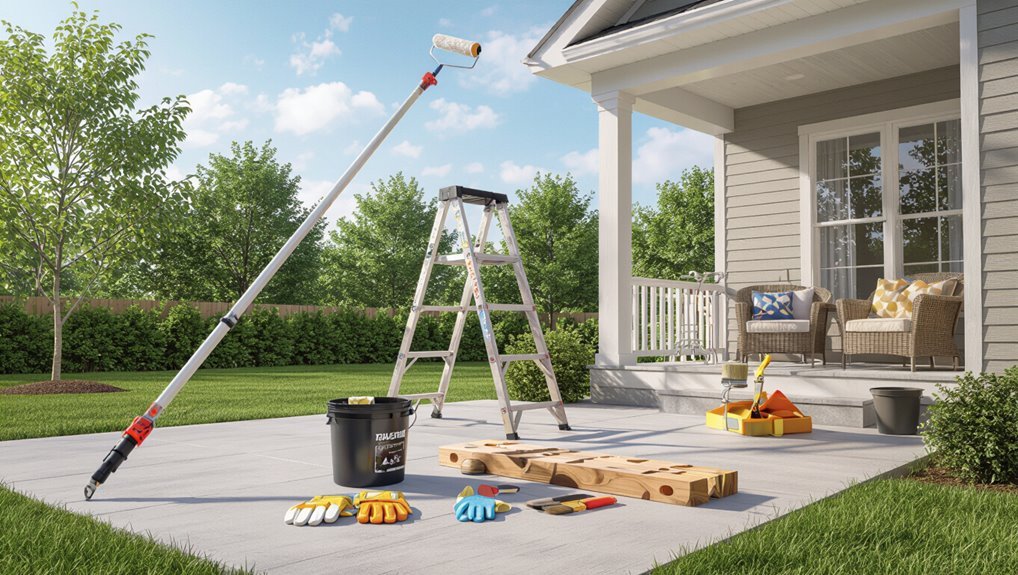
Start by evaluating the job and gathering the right gear so you don’t stop mid-job: pick the correct ladder or scaffolding, the proper paint and primer for exterior use, extension poles, brushes and rollers, drop cloths, and safety equipment like a harness, hard hat, and non-slip shoes.
Next, assess surfaces, prep them, choose high altitude techniques, plan paint application, work systematically, and inspect results.
When to DIY vs. Hire a Pro
Decide whether you’ve got the skill level required for safe, even work on high areas or if the job will push you beyond your comfort zone.
Consider the scope and complexity—small touch-ups and simple walls are DIY-friendly, but multi-story facades, intricate trim, or extensive prep usually call for a pro.
If you’re unsure, get a contractor estimate to compare cost, time, and risk before you start.
Skill Level Required
Tackling high-area painting yourself makes sense when you’re comfortable with ladders, can safely use scaffolding or a proper lift, and have steady hands for cutting in overhead lines; if any of those feel risky or unfamiliar, hire a pro.
Do a honest skill assessment and experience evaluation: list relevant past jobs, safety comfort, and tool familiarity.
If gaps exist, get help.
Scope And Complexity
If your skill assessment flagged gaps, next weigh the scope and complexity of the job to decide whether to DIY or hire a pro.
Assess project complexity, risks, and time. Use scope management: list tasks, tools, safety steps. Then choose.
- Small, low-risk touchups — DIY.
- Multi-story, tricky access — hire.
- Structural or coating concerns — definitely hire.
Safety-First Mindset Before You Start
Confidence comes from preparation, so before you set up ladders or scaffolding, check your equipment, review the work plan, and identify potential hazards like power lines, loose footing, or weather changes.
You’ll prioritize safety gear, confirm ladder angles, and brief helpers on signals and escape routes.
Pause if conditions change, and never rush—staying alert prevents accidents and keeps the job efficient.
Checklist: Required Permits and Local Rules
Before you set up ladders or scaffolding, check your local building codes so you know what’s legally required.
Find out which permits apply to working at height and how to apply for them.
Also confirm any neighborhood or HOA restrictions that could limit your schedule or equipment.
Check Local Building Codes
When you’re planning to paint high areas, check local building codes and permit requirements early so you don’t hit unexpected delays or fines; many municipalities require permits for scaffolding, fall protection, or exterior work above a certain height.
Follow these steps:
- Review building regulations and safety protocols with your municipality.
- Confirm community guidelines and neighbor notifications.
- Note zoning restrictions that affect access or equipment.
Permit Types Needed
Permits vary by job and location, so start by listing what your project will actually require—scaffolding, ladder work, exterior access, or street/sidewalk closures—and then check which specific permits each action triggers. You’ll file a permit application per local regulations, note fees and timelines, and confirm inspection needs.
| Permit Type | Trigger | Notes |
|---|---|---|
| Right-of-way | Street closure | Apply early |
| Scaffolding | Façade access | May need inspection |
Neighborhood Restrictions
Because neighborhoods set different rules for work hours, noise, signage, and exterior changes, check your local covenants and municipal codes before you book equipment or post notices.
You’ll need to follow community guidelines and noise restrictions, plus confirm permits.
Consider:
- HOA approval for color or signage.
- Municipal noise curfews and allowable work hours.
- Permit display and inspection requirements.
Prep High Exterior Surfaces (Step-by-Step)
Start by evaluating and securing the work area so you can prep high exterior surfaces efficiently and safely. You’ll begin preparing surfaces with a thorough surface inspection, remove loose paint, sand rough spots, fill cracks, and mask trim. Use ladders or stable platforms, wear protection, and work methodically from top down.
| Task | Tool |
|---|---|
| Surface inspection | Flashlight |
| Remove loose paint | Scraper |
| Sand spots | Sandpaper |
| Fill cracks | Caulk |
Cleaning Siding and Trim Without a Pressure Washer
With prep done and loose paint removed, it’s time to clean siding and trim without a pressure washer so your finish will stick and look uniform.
With loose paint gone, gently clean siding and trim so your finish adheres and looks even.
You’ll use gentle tools and eco-friendly cleaning solutions to support siding maintenance.
Follow these steps:
- Brush loose dirt, spider webs, and dust.
- Wash with a mild soap solution and soft brush.
- Rinse with a garden hose and let fully dry.
Scraping, Sanding, and Feathering Old Paint at Height
Before you start scraping or sanding up high, make sure your ladder is set on firm, level ground and properly angled so you can work without overreaching.
Use hand tools—scrapers, sanding blocks, and putty knives—so you stay balanced and control pressure as you remove loose paint and feather edges.
Keep movements deliberate and switch hands or reposition the ladder to avoid strain and maintain a safe working posture.
Safe Ladder Setup
Set your ladder on firm, level ground and lock its spreaders or rung locks so it won’t shift while you scrape, sand, or feather old paint at height.
Use ladder stability techniques and follow ladder safety practices:
- Angle ladder 1:4 and tie off top.
- Use non-slip feet and a stabilizer.
- Keep three points of contact and avoid overreaching.
Hand Tool Techniques
Start by choosing the right hand tools and positioning yourself so you can work safely and efficiently at height.
Use scrapers, sanding blocks, and wire brushes to remove loose paint, keeping tools close in a belt. Feather edges smoothly, wipe dust, then apply primer.
Pair precise brush techniques for trim with compatible roller methods for flats to guarantee even adhesion and finish.
Patching Cracks and Gaps on High Areas
When you find cracks or gaps in high areas, patching them promptly keeps water, pests, and drafts from causing bigger damage.
Patching high-up cracks and gaps quickly prevents water, pests, and drafts from causing bigger damage.
You’ll do basic crack repair and gap sealing with safe access and proper materials.
- Clean area and remove loose debris.
- Apply exterior caulk or patching compound.
- Smooth, dry, then prime before painting.
Choosing Paint for Eaves, Trim, and Siding
Pick paints that match each surface’s needs: eaves and trim benefit from durable, mildew-resistant acrylics that tolerate temperature swings and frequent cleaning, while siding may require a specific exterior latex or oil-based formula depending on material (wood, fiber cement, or metal). Choose eco friendly options, test paint finishes, and match sheen to exposure.
| Surface | Recommended | Notes |
|---|---|---|
| Eaves | Acrylic | Mildew-resistant |
| Trim | Acrylic | Durable, cleanable |
| Siding | Latex/Oil | Match material |
Selecting Primers and Bonding Products
Because primers bridge paint and surface, choose products that suit the substrate and the existing finish: pick primer types and bonding agents matching surface compatibility, consider application techniques and drying times, and note weather considerations for curing.
Prioritize color selection and finish options to minimize coats.
- Masonry/wood/metal primers
- Universal bonding agents
- Tintable primers for coverage
Tools You Can Skip and Low-Cost Alternatives
You don’t always need bulky scaffolding for smaller jobs — a sturdy extension ladder with proper stabilizers can save time and money.
Instead of renting an expensive boom lift, consider a lightweight telescoping pole brush or a rented push-around lift for occasional high work.
Always match the tool to the task and never compromise on safety gear.
Skip The Scaffolding
1 simple way to save time and money is to skip full scaffolding when you don’t need it. Use safer, lighter options and smart height techniques. Consider:
- Secure ladder stability with levelers and tie-offs.
- Use adjustable extension poles for paint reach.
- Employ platform ladders or temporary work platforms for wider access.
You’ll stay efficient and safer without renting bulky scaffolding.
Replace The Boom Lift
While a boom lift can make high work easy, it’s often overkill for residential or small commercial painting—so consider cheaper, lower-risk options that still get you safely to the job.
You can choose ladders vs scaffolding based on height and stability: use extension ladders with stabilizers for quick jobs, or portable scaffold towers for longer tasks.
Practice safe painting techniques and secure footing.
When to Rent Tools vs. Buy
Decide whether to rent or buy based on frequency, budget, and storage: rent specialty lifts, scaffolds, or heavy-duty sprayers for one-off or infrequent jobs to save money and avoid long-term upkeep, but buy ladders, paint rollers, and basic safety gear if you’ll use them regularly or need reliable availability.
- Compare rental costs vs. buying benefits.
- Weigh tool longevity, tool maintenance, investment potential.
- Consider rental convenience, project flexibility, equipment availability.
Choosing the Right Ladder for Exterior Eaves & Trim
After you decide whether to rent or buy specialized equipment, pick a ladder that matches the height, stability, and access needs of your exterior eaves and trim. Choose ladder materials for weight and durability, confirm ladder height for safe reach, and guarantee footprint fits ground. Use this quick comparison:
| Type | Best for | Notes |
|---|---|---|
| Extension | High eaves | Adjustable ladder height |
| A-frame | Mid-height | Self-supporting |
| Telescoping | Tight storage | Lightweight materials |
| Multi-position | Versatile | Flexible configurations |
Inspecting Ladders: What to Look For
Before you start painting, inspect the ladder for any structural damage like bent rails, cracked rungs, or loose rivets.
Check that locking mechanisms engage securely and move smoothly so the ladder won’t collapse while you’re on it.
Finally, verify the ladder’s load capacity to make sure it safely supports you plus your tools and paint.
Check For Structural Damage
Start by giving the ladder a close, systematic inspection so you can spot structural problems before you climb.
Check for visible cracks, bent rails, and loose rungs as part of your damage assessment. Evaluate overall structural integrity and signs of corrosion.
Follow this quick checklist:
- Cracks or splits
- Bent or warped components
- Missing or loose fasteners
Inspect Locking Mechanisms
During equipment inspection, look for bent parts, worn pins, rust, or loose fasteners that compromise ladder safety.
Operate each lock several times; if anything sticks, slips, or feels flimsy, don’t use the ladder until repaired or replaced to prevent collapse.
Verify Load Capacity
While you’re checking a ladder, verify its load capacity so you don’t overload it mid-use: confirm the rating plate, note any damage, and consider user plus gear weight.
Perform basic load testing before work and check for even weight distribution on rungs and feet.
- Read capacity label.
- Do light load testing.
- Ascertain stable weight distribution.
Stabilizing Ladders Safely on Uneven Ground
Because uneven ground can shift beneath your feet, you need to take deliberate steps to stabilize a ladder before climbing.
Use ladder stability techniques: clear debris, set feet on firm spots, and position base against a solid anchor.
Adjust rung placement so the ladder leans at a 75° angle.
Consider a spotter to hold the base and test stability before each ascent.
Ladder Accessories: Levelers, Standoffs, Boots
When you’re painting high areas, the right ladder accessories can make the job safer and easier.
Learn how levelers keep your ladder steady on uneven ground, how standoffs give you clearance from walls and gutters, and which boot types offer the best grip for different surfaces.
We’ll compare pros and cons so you can pick the right combo for your setup.
Ladder Levelers Explained
1 clear accessory can make uneven ground safe to work on: ladder levelers. You’ll use leveling ladder accessories as simple ladder stability techniques to keep rungs horizontal.
Adjust legs, lock securely, and test before climbing.
- Extend leveler on low side
- Tighten locks firmly
- Recheck stability and ground contact
Standoff Benefits Overview
If you need to work around gutters, windows, or trim without damaging them, a standoff is one of the simplest ladder accessories to add. You’ll get extra clearance, stability, and reduced ladder rocking.
Learn standoff types for different tasks—fixed, adjustable, and spring-loaded—and follow standoff safety: secure attachment, correct angle, and periodic checks to prevent slips or structural stress while you paint.
Boot Types Comparison
Boots play a small but essential role in ladder safety, so you’ll want to pick the right type for your surface and job.
Choose based on boot material comparison and boot height options to match grip and clearance.
- Rubber: best for slick surfaces, low profile.
- Metal-reinforced: durable for rough ground, taller.
- Adjustable: versatile boot height options, flexible fit.
Climb and Work From a Ladder Without Risking a Fall
Because ladders can shift or slip in a heartbeat, you need to approach climbing and working from them with deliberate planning and steady technique.
Check ladder stability on firm ground, angle it properly, and secure the base.
Wear non-slip boots, keep three points of contact, move the ladder instead of overreaching, use a tool belt, and pause if conditions or balance feel unsafe for fall prevention.
Scaffolding Alternatives: Platforms and Ladder Jacks
Several compact alternatives to full scaffolding can give you a safer, more stable work surface when ladders aren’t enough: portable platforms and ladder jacks let you stand and move along a wall with both feet on a flat deck, reduce fatigue, and cut fall risk compared with standing on ladder rungs.
Portable platforms and ladder jacks provide a safer, more stable alternative to standing on ladder rungs.
- Check platform safety, weight limits, and guardrails.
- Verify ladder stability and proper tie-offs.
- Move platforms incrementally; avoid overreaching.
Building a Simple Scaffold Platform Safely
If platforms and ladder jacks aren’t giving you the reach or stability you need, building a simple scaffold platform can be a practical step up.
Use sturdy scaffold materials like graded lumber and galvanized brackets, secure planks to level supports, and add guardrails.
Check platform stability before each use, distribute weight evenly, and never exceed load limits.
Work with a partner for setup and inspection.
Using a Telescoping Platform for Narrow Jobs
A telescoping platform gives you reach and maneuverability in tight spaces where a full scaffold won’t fit; you can extend it to the exact height you need and collapse it for storage or transport.
Use telescoping platform advantages and narrow job techniques to stay safe:
- Lock sections and test stability.
- Keep tools tethered.
- Work with a spotter and clear ground.
Extension Poles: Types and How to Pick One
Choosing the right extension pole makes overhead painting faster, safer, and less tiring.
You’ll compare pole materials—aluminum for affordability, fiberglass for reduced vibration, carbon fiber for lightest weight—and pick pole length based on reach needed and storage.
Consider grip comfort, locking mechanisms, and compatibility with your tools.
Don’t forget grip comfort, secure locks, and tool compatibility for safer, more efficient overhead painting.
Balance weight, stiffness, and budget so you can work confidently at height.
Attach Brush and Roller Heads to Extension Poles
Once you’ve picked the right pole for the job—considering length, weight, and compatibility—you’ll need to attach the brush or roller head securely.
Line up the threads or quick-connect, twist or click until it locks, and give a firm tug to confirm it’s tight.
Proper attachment prevents wobble and keeps you safe while working at height.
Choosing The Right Pole
Pick a pole that fits the job and your tools, then make sure the brush or roller head locks on securely before you start painting.
Choose pole length for reach without losing control and pick pole materials for weight and durability.
Consider:
- Telescoping for adjustable reach.
- Aluminum for lightness.
- Fiberglass for strength and reduced vibration.
Securing Brush And Roller
After you’ve selected a pole that feels balanced and locks firmly, attach your brush or roller head so it won’t wobble or detach while you’re working.
Tighten threaded connections, use locking clips if available, and guarantee bristles align for brush stabilization.
For roller attachment, slide fully onto the end and twist or clamp per the pole’s design.
Test with gentle strokes before painting.
Choosing Rollers and Brushes for High Exterior Work
When you’re working high off the ground, choose rollers and brushes that maximize reach, control, and safety without adding unnecessary weight.
Choose lightweight rollers and brushes that extend reach, improve control, and keep you safe without extra weight
Blend roller selection with extension pole use, consider brush types for trim, and match paint finish to surfaces.
Prioritize ladder stability, surface preparation, paint application technique, and safety measures.
- Lightweight rollers
- Angled sash brushes
- Short-nap sleeves
Secure Tool Attachment and Quick-Release Tips
1 simple, reliable connection between your tool and its pole can prevent drops, speed work, and keep you steady on ladders or lifts.
You’ll use secure tool attachment methods—tight fittings, safety pins, and wrist tethers—and practice quick release techniques for fast tool changes.
Inspect connections before climbing, clean threads, and replace worn parts so attachments hold firm and release smoothly when needed.
Reaching Soffits and Eaves With Pole Techniques
Use a telescoping pole with the right-length extension and a secure angled adapter to reach soffits and eaves without overbalancing or overreaching.
You’ll apply pole techniques and safe practices by keeping feet stable, working from level ground, and testing attachments.
- Check adapter tightness.
- Maintain a low stance.
- Move the pole slowly to control paint flow and balance.
Painting Gutters and High Trim Safely
After you’ve mastered soffits and eaves with a telescoping pole, shift focus to gutters and high trim where balance and control matter even more.
Use a stable ladder with a partner, wear non-slip shoes, and secure paint containers.
Clean gutters first for proper gutter maintenance, choose brushes suited to your home’s trim styles, and work in short sessions to maintain steady, safe movements.
Brush vs. Roller vs. Sprayer for Elevated Work
When you’re working high off the ground, pick the tool that gives you the best control and safety for the surface: a brush for precise trim and tight corners, a roller on an extension pole for even coverage on flat areas, or a sprayer when speed and uniformity matter but only if you can mask and protect surrounding surfaces.
- Brush: brush effectiveness, finish quality, technique preference.
- Roller: roller efficiency, coverage issues, surface compatibility.
- Sprayer: sprayer versatility, paint application, speed factors, tool comparison.
Use an HVLP Sprayer Safely From the Ground
If you stick to ground-level spraying with an HVLP unit, you’ll get precise, low-drift coverage without climbing ladders—provided you set up properly and maintain good stance and sweep technique.
Use sprayer techniques that suit paint types and adjust for weather conditions.
Rely on extension rods for safe high access, follow safety tips, monitor paint application, and perform regular equipment maintenance to prevent clogs and uneven finish.
Efficient Paint Loading and Drip Control With Poles
One simple trick lets you load poles faster and cut drips: use a deep, narrow paint cup or pour spout that clips to the pole head so you can refill without tipping or overfilling.
You’ll improve paint loading and drip control by:
- Securing the cup firmly.
- Pouring slowly to avoid splashes.
- Wiping the rim before storage.
Setting Up Paint Stations and Safe Paint Handling
Set up a stable mixing station at waist height so you can stir and strain without bending or spilling.
Keep paint cans sealed, labeled, and stored on a level surface away from heat or direct sunlight to prevent accidents and degradation.
When you transfer paint, use funnels, pour spouts, or pump systems to control flow and minimize drips.
Stable Paint Mixing Station
A stable paint mixing station keeps your cans, tools, and pigments organized and prevents spills or wobbling when you’re working on high areas.
You’ll set a stable surface preparation, secure trays, and follow mixing technique tips to avoid splashes.
- Clamp a board to scaffold
- Use non-slip matting
- Keep stirrers upright and covered
Safe Paint Storage
Three simple rules will keep your paint station safe and efficient: store cans off the ground, seal lids tightly, and separate flammables from water-based products.
You’ll label containers, use sturdy shelving, and keep spills contained with trays.
Adopt clear paint storage solutions, ventilate the area, wear gloves, and follow paint safety tips to prevent contamination, fire risks, and accidental exposure.
Controlled Paint Transfer
Think of your paint station as a controlled workflow: you’ll arrange containers, tools, and mixing areas so paint moves predictably from can to surface with minimal spills or exposure.
Use controlled paint transfer techniques and prioritize effective paint application.
- Seal cans, use pour spouts.
- Station drop cloths and buckets for drips.
- Keep brushes/rolls in designated trays to avoid contamination.
Weather and Timing: Best Conditions for High Work
When you’re planning high work, pick days with mild temperatures, low wind, and dry conditions so paint adheres properly and you’re not battling gusts on a ladder or lift.
Check local weather patterns and forecasts, aim for ideal temperatures listed on paint cans, and schedule during stable stretches.
Start mid-morning to allow dew to evaporate and stop a few hours before sunset for proper curing.
Working Around Wind and Sun on Ladders and Poles
If wind picks up or the sun beats down, adjust your setup and timing so you stay steady and comfortable on ladders or poles. Secure ladders with footings or a partner, use pole-mounted tools when possible, and take shade breaks to avoid glare and heat stress.
- Apply wind resistance techniques: face wind, lower profile.
- Use sun protection strategies: hat, sunscreen.
- Pause often, hydrate.
Creating a Secure Work Zone on Uneven Ground
After adjusting for wind and sun, shift focus to stabilizing your work area on uneven ground so ladders and poles won’t wobble or sink.
Use wide base ladder feet, levelers, and anti-slip pads. Pack plywood or rubber mats to spread load on soft soil.
Clear debris, mark the perimeter, and keep a tidy zone to maintain secure footing across uneven terrain while you paint.
Solo Work Tactics and How to Work With a Helper
Because working alone changes how you plan and move, prioritize simple, repeatable routines that keep you safe and efficient: Use solo strategies for pre-checks, secure setup, and tool layout so you stay steady.
When working solo, stick to simple, repeatable pre-checks, secure setups, and tidy tool layouts to stay safe and steady.
When a helper’s available, apply teamwork techniques for communication, spot checks, and handoffs.
- Clear signals
- Defined roles
- Fail-safe checks
Training a Helper for Ladder and Pole Work
Before you start, make sure your helper knows ladder safety basics like proper setup, three-point contact, and how to spot you.
Teach them pole handling techniques for steady control, safe extension and retraction, and where to stand to avoid pinch points.
Run a quick practice session so they can demonstrate the skills before you both begin.
Ladder Safety Basics
When you’re working with ladders or extension poles, a well-trained helper can prevent falls, stabilize equipment, and spot hazards you might miss—so take time to teach them how to brace, communicate, and position themselves safely.
Teach basics: ladder types, ladder stability checks, ladder maintenance, and correct ladder positioning.
- Footing and angle
- Tie and brace points
- Clear communication signals
Pole Handling Techniques
After you’ve trained your helper on ladder basics and safe positioning, focus on proper pole handling so both of you stay balanced and in control.
Teach a firm pole grip, hand placement changes during lifts, and smooth extension techniques to avoid jerks.
Practice passing, communication cues, and rests.
Emphasize keeping feet stable, watching overhead hazards, and moving deliberately together.
Personal Protective Equipment for Elevated Painting
Safety gear matters most when you’re working above ground level: the right personal protective equipment (PPE) reduces fall and inhalation risks, protects your eyes and skin from splatter, and helps you stay steady on ladders or scaffolds.
Use personal protective gear:
- safety goggles, respiratory masks, hard hats
- durable gloves, slip resistant footwear
- fall protection, harness systems.
Fall Prevention Strategies Without a Harness
Although you won’t be using a harness, you can still prevent falls by controlling your work environment and your movements: pick stable ladders or platforms, secure them on level ground, maintain three points of contact, and keep your tools and paint within easy reach so you don’t overreach or twist.
Use ladder stability checks, non-slip feet, buddy spotting, and compact tool alternatives like tool belts or magnetic trays to stay steady.
Managing Spills and Cleanup at Height
If a drip starts, stop it at the source and catch runs with a rag or drop cloth so it doesn’t reach the ground.
Tie off or lower tools and cans before you move to avoid more spills.
Once you’re down, clean up ground drips promptly and dispose of contaminated materials safely.
Contain Drips Quickly
When a drip starts while you’re working overhead, stop it fast to prevent streaks, slipping hazards, and costly cleanup down below—catch fresh drops with a disposable cloth or paint-safe absorbent, and use painter’s tape and plastic sheeting to isolate the area until you can finish wiping and properly dispose of waste.
- Use drip prevention techniques: roller guards.
- Apply paint containment solutions: small cups.
- Replace soiled rags immediately.
Safe Ground Cleanup
Secure the work area below before you finish above: clear pathways, cover floors with sturdy drop cloths or plastic sheeting, and mark the perimeter so people don’t walk through fresh paint or wet debris.
Use ground protection like weighted mats or taped edges. Keep absorbents and a small broom or scraper handy.
Choose cleanup methods for wet spills (blot, rinse) and dried drips (soften, scrape, sand) promptly.
Protecting Landscaping and Surfaces Below Your Work
Before you start painting up high, plan how you’ll protect plants, grass, walkways and outdoor furniture beneath your work.
Use landscaping barriers and surface protection to prevent stains and compaction. Secure covers so wind won’t expose areas.
Consider:
- Drop cloths weighted at edges.
- Temporary mulch or plywood over grass.
- Plastic sheeting taped to protect walkways and furniture.
Troubleshoot Common Elevation Problems: Drips, Runs, Missed Spots
When you work up high, drips and runs can form quickly if you overload the brush or roller, so keep your tools light and steady.
Check for missed coverage by scanning from different angles and touching up thin spots before the paint dries.
If you spot a run, smooth it out immediately with a clean brush or roller to blend and prevent a noticeable bump.
Drips And Runs
If paint starts to drip or run while you’re working at height, act quickly to catch it before it sets—small runs are far easier to fix than dried drips.
Keep calm, blot excess with a lint-free rag, then smooth.
- Check paint application—thin coats prevent runs.
- Re-sand any dried drip after proper surface preparation.
- Touch up with matching thin coats.
Missed Coverage Areas
Because high spots and awkward angles can hide thinly coated areas, you’ll want to scan freshly painted sections from multiple viewpoints and light angles to catch missed coverage early. Do a careful visual inspection, correct missed coverage with touch up techniques, maintain edge control, check paint adhesion and color matching, adjust ladder angles, and use drip prevention.
| Task | Tip |
|---|---|
| Inspect | Multiple angles |
| Touch-up | Small brush |
Quick Fixes for Runs and Missed Spots
Although runs and missed spots can be frustrating, you can fix them quickly with the right tools and a steady hand.
Use precise paint application techniques and gentle sanding to level runs, then employ targeted touch up methods for missed spots.
Follow this quick list:
- Sand and wipe.
- Thin coat with brush or roller.
- Feather edges and blend color seamlessly.
Inspecting Finished High-Area Paintwork
Once you’ve smoothed runs and touched up missed spots, take a systematic look at the finished high-area paintwork to confirm uniform coverage and a clean edge.
Move around the area, view from different angles and lighting, and note any gloss inconsistencies.
Record a concise finished work assessment and perform a paint quality evaluation for adhesion, texture, and color match before declaring the job complete.
Touch-Up Strategies and Future Maintenance Plan
After you finish inspecting, plan targeted touch-ups and a simple maintenance schedule to keep high areas looking their best.
Use precise touch up techniques and routine checks so small flaws don’t worsen. Create a maintenance schedule and follow it.
- Clean surfaces before touching up.
- Match paint and feather edges.
- Inspect seasonally, note needed repairs.
Cost-Saving Tips for DIY High Exterior Painting
Saving money on high exterior painting doesn’t mean cutting corners; it means planning smartly so you spend less time and materials while keeping safety and quality intact.
Use cost effective materials and budget friendly alternatives, apply DIY techniques and creative solutions, adopt painting strategies and safety innovations, try simple tool hacks, and choose environmentally safe options to reduce expenses while keeping results professional and secure.
Rental Tools Worth Considering and When to Rent
If you’re tackling high areas, consider renting an aerial lift for safe, stable access to tall walls and eaves.
You can borrow a pressure washer to prep surfaces quickly without buying one, and rent scaffolding when you need longer, more secure work platforms.
Choosing the right rental for the job and duration will save time and reduce risk.
Rent Aerial Lifts
When you’re tackling tall walls, eaves, or multi-story trim, renting an aerial lift lets you work faster and safer than ladders or scaffolds.
Choose the right aerial lift options based on height, terrain, and platform size. Compare rental costs, insurance, and training.
- Boom lifts
- Scissor lifts
- Towable lifts
Borrow Pressure Washers
After you’ve chosen the right lift for working at height, consider borrowing a pressure washer to prep surfaces quickly and safely before painting.
You’ll gain pressure washer benefits: faster removal of dirt, mildew, and loose paint, reducing sanding.
Rent when large areas need cleaning; for delicate siding, weigh pressure washer alternatives like soft wash systems or garden hoses with high-quality brushes to avoid surface damage.
Consider Scaffold Rental
Because scaffolds give you a stable, roomy platform for extended work at height, you’ll want to contemplate renting one whenever ladders or lifts feel cramped, unsafe for the task, or impractical for moving along long walls.
Consider scaffold benefits and a quick cost comparison before committing.
- Safer, steadier workspace.
- Faster coverage on long walls.
- Rent by day or week to save.
Step-by-Step Weekend Plan for a High-Area Paint Job
Pick a weekend and clear your schedule: this plan breaks the job into manageable steps so you can paint high areas safely and finish in two days.
Day one: prep, wash surfaces, mask edges, address high area challenges, and set up ladders or platforms.
Day two: prime, paint in sections, touch up, and clean tools.
Follow DIY paint tips for efficient workflow.
Safety Checklist to Use Before Each Elevated Session
You’ve prepped the area and set up your ladder or platform—now make a quick safety checklist before each time you go up.
Check these three essentials:
Check these three essentials before you climb: stability, safety gear, and a clear, prepared workspace.
- Verify ladder stability, workspace organization, and weather conditions.
- Inspect safety gear, confirm fall prevention measures, and review tool selection.
- Confirm surface preparation, safe paint application plan, and clear escape routes.
How to Document Progress and Warranty Issues
When you document progress and warranty issues, keep entries concise and factual so they’ll hold up later; note dates, specific locations, the materials and products used, and any deviations from the plan.
You should photograph stages, timestamp images, and log crew actions for progress tracking. Retain receipts, product labels, and written warranty documentation.
Share copies with contractors and store originals safely for claims.
When Weather or Complexity Should Stop the DIY Attempt
If rain, high winds, extreme heat, or ice threaten safety or the paint’s adhesion, stop and call a pro—working in those conditions raises fall risks and ruins finishes.
You should weigh weather conditions, environmental factors, painting techniques, surface preparation, project duration, and safety protocols against your personal experience.
Do a clear risk assessment; hire pros when complexity exceeds skills.
- Unsafe weather
- Complex surfaces
- Time constraints
Frequently Asked Questions
Can I Legally Paint Someone Else’s Upper-Story Siding Without Their Permission?
No, you shouldn’t; you’d likely violate property rights and could breach local safety regulations. Get the owner’s permission, follow permits and safety rules, and avoid liability or fines by coordinating with property owners and authorities.
How Long After Painting Can Birds Safely Nest on Eaves?
I once watched sparrows avoid a wet gutter for three days; you should wait at least 48–72 hours before birds resume nesting behavior, since drying reduces paint toxicity and odors that can harm or repel them.
Will Exterior Paint Hide Active Wood Rot or Insect Damage?
No — paint won’t hide active wood rot or insect damage; you’ll miss wood rot signs and insect damage detection if you just coat it. You should remove damaged wood, treat infestations, and repair before priming and painting.
Can Window Warranties Be Voided by Painting Frames From Outside?
Once, a neighbor painted over a sticker and lost a free replacement; yes, painting frames from outside can void warranties. You should follow window frame care instructions, check warranty considerations, and document any authorized work.
How Do Solar Panels or Antennas Affect Access and Painting Plans?
Solar panel placement and antenna positioning can restrict access, so you’ll plan around them, avoid shading or contact, use ladders or scaffolds positioned safely, and temporarily remove or protect fixtures to reach and paint affected areas.
Conclusion
You’ve just learned to paint high areas without fancy gear, so naturally you’ll slap on a ladder and wing it, right? Don’t. You’ve also learned the safer, smarter route—planning, prepping, and knowing when to call a pro. Ironically, taking a little extra caution won’t make the job harder; it makes it last. So be bold, but not reckless: protect yourself, your home, and your weekend—and then enjoy the view from solid ground.
