
How to Paint Over Dark Painted Walls: Pro Tips for Coverage
You can get smooth, full coverage over dark walls by prepping well, using a high-hide primer (tinted mid-gray if possible), and applying high-pigment paint in thin, even coats. Scuff glossy finishes, clean and spot-prime stains, and fill holes before sanding. Use the right roller nap and brushes, ventilate and wear protection, and expect one to three days for a room. Follow these pro steps and you’ll see why extra prep saves time and coats if you keep going.
Quick Decision: Full Repaint or Same-Shade Refresh?
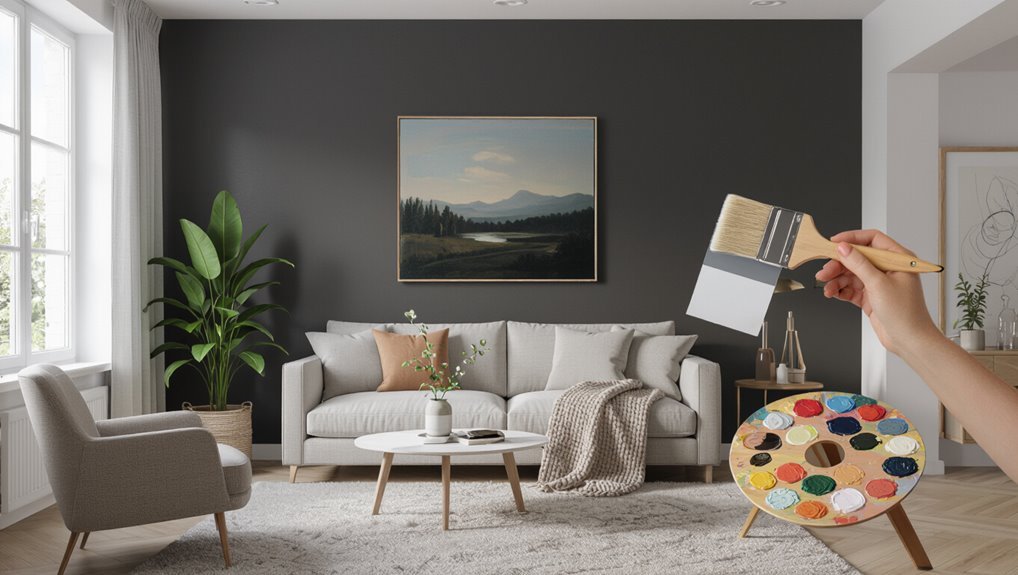
Wondering whether you need a full repaint or just a refresh in the same shade? You’ll weigh surface condition, finish wear, and color consistency.
Choose a full repaint if stains, patchwork, or uneven fading show; pick a same shade refresh for minor scuffs or slight dulling.
Plan prep, match sheen, and test a patch to confirm coverage before committing.
What to Expect When Painting Over Dark Painted Walls
If you decide to repaint—especially when moving from a dark shade to a lighter one—expect more prep, coats, and patience than you did for a same-shade refresh.
You’ll address uneven wall textures, prime to block bleed-through, and apply multiple thin coats.
Colors shift under different lighting, so consider color psychology when choosing hues.
Plan extra time for drying and touch-ups.
What Tools and Supplies You Need for Dark-Wall Repainting
Before you start, gather the essential painting tools—rollers, brushes, drop cloths, painter’s tape, and a good sanding block—so you won’t interrupt your workflow.
You’ll also need to choose the right primer and paint: a high-hide primer or stain-blocking primer followed by a quality topcoat designed for coverage.
Having the proper supplies ready makes covering a dark wall faster and reduces the number of coats you’ll need.
Essential Painting Tools
Tackle a dark-wall repaint with the right gear: you’ll need high-quality primer and paint, rollers and brushes suited to your chosen finish, drop cloths and painter’s tape to protect surfaces, sandpaper and a scraper for prepping, plus a sturdy ladder and trays for easy application.
Choose brush types for trim, roller choices for texture, and tools that streamline surface preparation and tidy edges for clean paint finishes.
Paint And Primer Choices
Now that you’ve gathered the right tools, focus on selecting paint and primer that can reliably cover deep, dark hues.
Choose high-quality paint types with high pigmentation and hide—typically acrylic latex or full‑bodied eggshell for interiors.
Match them with primer formulations labeled “high‑hide” or stain‑blocking; an oil‑based or shellac primer works for severe stains, while acrylic primers suit most repainting jobs.
How to Prepare Glossy or Enamel-Finish Dark Walls
If your dark walls have a glossy or enamel finish, you’ll need to scuff and clean them thoroughly so the new paint will grip; glossy surfaces repel paint and chips or peeling are likely if you skip this step.
Use fine-grit sandpaper or a liquid abrasive, wipe with degreaser, and rinse.
Follow glossy wall preparation and enamel finish techniques: prime with bonding primer before topcoat application.
How to Repair Dents, Holes, and Uneven Texture First
Before you start painting, check the wall for dents, holes, and uneven texture so you know what needs fixing.
Fill holes and dents with spackling or joint compound, let it dry, and sand it smooth.
Finally, even out any texture issues and apply a primer to guarantee the new paint adheres and covers evenly.
Assess Surface Damage
Start by doing a close inspection of the walls to identify dents, holes, cracks, and areas with uneven texture—these flaws will telegraph through new paint if you don’t fix them first.
Conduct a surface evaluation and damage assessment so you know what tools and materials you’ll need. Check for moisture, loose drywall paper, and existing patchwork quality.
- Note dent locations
- Mark cracks
- Inspect texture variance
- Test paint adhesion
- Photograph issues
Fill Holes And Dents
Gather your tools and tackle dents, holes, and texture issues systematically so the new paint lays down smoothly and hides nothing. Use proper filling techniques and select patching materials for each defect. Clean, apply, sand, and repeat until flush. Quick checklist:
| Step | Tool | Result |
|---|---|---|
| Clean | Cloth | Debris gone |
| Fill | Putty knife | Gap closed |
| Sand | Sandpaper | Smooth |
| Inspect | Light | Even |
| Reapply | Compound | Ready to paint |
Smooth And Prime Texture
With holes filled and surfaces sanded, focus now on evening out remaining texture so primer and paint sit uniformly.
You’ll use simple texture techniques, feathering compound into low spots, sanding light ridges, and cleaning dust before primer application.
Follow these steps to guarantee smooth coverage:
- Apply lightweight joint compound thinly
- Feather edges with a putty knife
- Sand with fine grit
- Clean thoroughly
- Roll on primer evenly
How to Clean Greasy or Nicotine-Stained Dark Surfaces
Grease and nicotine leave stubborn, oily films on dark paint that show every streak and smudge, so you’ll want to remove them before priming or repainting. Use degreasing cleaning solutions (TSP alternatives or detergent), rinse, and dry thoroughly for proper surface preparation. Test a small area, repeat if needed, and wear gloves.
| Task | Product |
|---|---|
| Degrease | TSP substitute |
| Rinse/dry | Clean water |
Sanding Strategy for Adhesion Without Over-Sanding
After you’ve removed grease and nicotine, lightly sanding the surface will help new primer and paint stick without harming the existing finish.
Use gentle sanding techniques to scuff gloss or semi-gloss; don’t strip paint. Focus on adhesion tips: clean dust, use 120–220 grit, sand in even strokes, and spot-check smoothness.
- Scuff evenly
- Use light pressure
- Change grit as needed
- Wipe dust away
- Test a small area
Taping, Protecting Trim, and Masking Adjacent Areas
Start by outlining the room and protecting every surface you don’t want painted: tape along trim, window and door edges, baseboards, and between walls and ceilings.
Cover floors and furniture with drop cloths or plastic sheeting. Use precise tape application and masking techniques for clean lines.
Prioritize trim protection and adjacent masking, seal edges to prevent bleed, follow paint safety, and note cleanup tips for surface preparation.
Which Primer Type Blocks Dark Colors Best
When you’re covering dark colors, choose a high-hide, stain-blocking primer—usually an oil-based or shellac-based formula—or a high-quality, tinted latex primer designed for tinting to a mid-tone gray. These options give you the best coverage with fewer coats and less bleed-through.
For dark colors, use a high-hide, stain-blocking primer—oil, shellac, or tinted mid-gray—for best coverage and fewer coats.
You’ll maximize primer effectiveness and color blocking with smart application and proper prep.
- Stir thoroughly
- Apply thin, even coats
- Tint toward mid-gray
- Sand between coats
- Check for bleed-through
When to Use an Oil-Based vs. a Water-Based Primer
When you’re choosing a primer for covering dark walls, think about the strengths of each type.
Oil-based primers are great for sealing stains and providing strong adhesion on tricky surfaces, while water-based primers dry faster, have less odor, and clean up with soap and water.
Consider the surface, stain level, and ventilation to pick the one that fits your project.
Oil Primer Advantages
Although oil-based primers take longer to dry, they’re worth choosing for dark walls that have stains, tannin bleed, or heavy color to block, because their sealing power and adhesion reduce the number of topcoats you’ll need.
You’ll appreciate oil primer benefits and oil primer durability when tackling tough surfaces.
- Blocks stains effectively
- Bonds to glossy finishes
- Smooths uneven tones
- Resists tannin bleed
- Reduces topcoat needs
Water Primer Benefits
Sometimes you’ll find a water-based primer is the smarter choice—especially on drywall, previously painted surfaces, or in rooms where you want lower odor and quicker recoat times—because it dries fast, cleans up with soap and water, and adheres well to porous substrates while minimizing VOC exposure.
You’ll choose between water primer types for stain blocking, adhesion, or fast turnaround; know water primer advantages versus oil for specific repairs.
Do You Need a Stain-Blocking Primer for Bleed-Through?
Worried about stains bleeding through fresh paint? You’ll want to assess stain blocking importance and choose primer application carefully to prevent tannin, water, or smoke bleed-through before topcoating.
- Identify stain type
- Clean and dry surface
- Spot-prime problem areas
- Use a solvent-based or shellac primer for severe stains
- Test with a sample coat and wait to confirm coverage
Tinted Primer: When It Speeds Coverage on Dark Walls
If your dark walls are giving you trouble, tinting the primer toward your new paint color can cut the number of topcoats you need.
You’ll want to match the primer’s undertone and depth to the finished color so the topcoat hides faster and more evenly.
Ask your paint supplier to tint the primer to a close shade of your chosen paint for the best results.
When To Tint Primer
When you’re covering a dark wall, tinting the primer can drastically cut the number of paint coats you’ll need by bringing the primer closer to your final color.
You should tint when the wall is deeply saturated, switching colors, or aiming for fewer topcoats. Tinted primer benefits appear with correct primer application.
- High-contrast walls
- Bold color changes
- Stained surfaces
- Time-sensitive projects
- Budget-conscious jobs
Matching Primer To Paint
Tinting your primer to match the paint color speeds coverage by reducing the color gap the topcoat has to hide.
So after deciding you need a tinted primer, pick a shade that leans toward your final paint rather than a neutral base.
You’ll test primer formulas for opacity and adjust tint strength for accurate color matching, ensuring fewer coats and even coverage on dark walls.
How to Choose Primer Sheen and Tint for Coverage
Because primer sets the foundation for your topcoat, choosing the right sheen and tint matters more than you might think.
Use primer color theory and consider sheen impact to neutralize dark tones and optimize hiding. Pick a tinted primer toward your final shade when possible.
- Match tint to final color family
- Use flat primer for texture
- Satin aids scrubbability
- Avoid glossy primers
- Test small area
How Many Primer Coats Do Dark Walls Usually Need?
You’ll usually need one to two coats of primer on dark walls, but the exact number depends on the darkness and pigment of the old paint.
Heavy stains, glossy finishes, or deeply saturated colors may require extra coats or a high-hide primer to block through.
Check after the first coat and add another only if the old color still shows or coverage feels uneven.
Number Of Primer Coats
If your dark walls are heavily pigmented or stained, plan on at least two coats of primer to get full coverage and proper color blocking. One coat might work for mildly tinted surfaces but won’t reliably hide deep colors or bleed-through.
Choose primer types based on finish and condition, and don’t skip surface preparation.
- Use stain-blocking primer
- Try high-hide formulations
- Spot-prime stains
- Sand glossy areas
- Allow full dry time
Factors Affecting Coverage
When covering dark walls, how many primer coats you’ll need depends on several clear factors: the depth of the existing color, the type and condition of the surface, the primer’s hide rating, and whether stains or tannin bleed are present. You’ll factor color contrast, lighting impact, and surface porosity; heavy pigment or poor lighting usually means two+ coats.
| Factor | Low Need | High Need |
|---|---|---|
| Color contrast | One | Two+ |
| Surface condition | One | Two |
| Stains/tannin | Spot prime | Two+ |
How to Test Coverage With a Paint Swatch and Sample
Wondering how much coverage a new color will give over your dark walls? Test with a swatch and sample can: check paint color accuracy and how sealers alter sheen, reveal how wall texture affects adhesion, and show true drying tone.
- Apply a large swatch
- Try different sheens
- Note texture visibility
- Evaluate in varied light
- Photograph results
How Many Paint Coats Do You Really Need When Painting Over Dark Walls?
Curious how many coats you’ll actually need to cover dark walls? Generally, plan for two to three coats: the first seals and addresses uneven paint absorption, the second builds opacity, and a third corrects any remaining color contrast or streaks.
Use proper priming if coverage lags. Dry time between coats and good technique often cut down on extra layers and rework.
Choosing Paint Quality and Pigment Concentration That Matter
When painting over dark walls, you’ll want to pick a paint with a high pigment load so coverage improves and you need fewer coats.
Check the binder quality too, since a stronger binder helps the paint adhere and resist flashing or peeling.
Also consider tinting strength—paints with stronger tints hide dark colors better and reduce the chance you’ll need extra primer or coats.
Pigment Load Matters
Pigment load—the amount and quality of pigment suspended in paint—directly affects how well a new coat will cover a dark wall.
So choose formulas with higher pigment concentration for fewer coats and truer color payoff. You’ll get better pigment intensity and color depth, saving time and revealing accurate hues.
- Use high-pigment paints
- Compare opacity ratings
- Test samples on wall
- Prefer single-coat labels
- Avoid watered-down batches
Binder Quality Difference
The binder in paint—the resin that holds pigments and film together—determines durability, adhesion, and how evenly color lays down.
Tinting Strength Choices
One key choice you’ll make is tinting strength—how much colorant a paint manufacturer adds to its base—because higher pigment concentration lets darker shades hide faster and stay truer over time.
You should pick higher-quality bases, use precise tinting techniques, and verify color matching. Consider:
- Premium pigment-rich base
- Test samples
- Accurate color matching
- Multiple thin coats
- Professional tinting services
How to Choose a Paint Finish for Hiding Imperfections
When you want to downplay dents, bumps, or uneven drywall, your paint finish matters more than color alone. Choose a low-sheen paint finish for hiding imperfections; sheen selection affects light reflection. You’ll prefer matte or eggshell for forgiving walls, and focus on smooth application to avoid highlighting flaws. Test swatches under room light before committing.
| Feeling | Choice |
|---|---|
| Calm | Matte |
| Warmth | Eggshell |
| Confidence | Low-sheen |
| Relief | Smooth application |
Best Roller Nap and Brush Types for Even Coverage
Choose the right roller nap length for your wall texture—short naps (1/4″–3/8″) for smooth surfaces and 3/8″–1/2″ for slight texture—to get even coverage without stipple.
Pick synthetic bristles for water-based paint and natural-hair for oil-based formulas so your brush lays down paint smoothly.
Also, use a brush with a comfortable handle grip to reduce hand fatigue and keep your strokes steady.
Roller Nap Length
Although the paint type and wall texture matter most, picking the right roller nap length will make or break how evenly your new color lays down. You’ll choose nap by texture and desired texture effects to avoid streaks.
Use these quick guidelines:
- 1/4″ nap: very smooth surfaces
- 3/8″ nap: slight orange peel
- 1/2″ nap: standard walls
- 3/4″ nap: rough surfaces
- 1″ nap: heavy texture
Brush Bristle Type
After picking the right roller nap, turn your attention to brush bristles—matching bristle type to paint and surface helps you cut bleeding, visible strokes, and uneven edges.
Use natural bristles for oil or enamel, synthetic for latex. Choose angled sash brushes for trim and flats for broad areas.
Maintain brush care: clean promptly, reshape bristles, and store flat to preserve bristle types and performance.
Handle Grip Comfort
Feel the difference a comfortable handle makes: if your roller or brush fits your grip, you’ll paint longer with steadier strokes and fewer touch-ups.
Choose tools that match your hand size and reduce fatigue; evaluate handle grip and overall comfort level before buying.
- Ergonomic roller with cushioned handle
- Slim brush for detailed edges
- Thick paddle for broad strokes
- Non-slip rubber grip
- Adjustable extension pole
Spraying vs. Rolling: When to Use Each on Dark Walls
Choose your method based on the wall’s condition and the finish you want: spraying gives fast, even coverage that hides texture and reduces lap marks, while rolling is cheaper, easier to control indoors, and wastes less paint.
You’ll weigh spraying advantages for large, smooth areas against rolling techniques for trim, touch-ups, and rooms where overspray or setup isn’t practical.
Wet-Edge Technique to Avoid Lap Marks and Sheen Differences
Work in manageable sections so each pass stays wet and blends seamlessly.
Keep a true wet-edge by overlapping only into paint that’s still glossy and damp.
If you move too far ahead, you’ll risk lap marks and uneven sheen.
Work In Manageable Sections
If you break the wall into 4–6 foot sections and keep each one wet while you roll, you’ll avoid lap marks and uneven sheen.
Work methodically so color contrast reads consistent; tailor your application technique to each section’s edges. Roll fast enough to maintain wet edges and overlap slightly.
- Plan sections
- Cut in first
- Roll center
- Feather seams
- Inspect light reflections
Maintain A True Wet-Edge
After cutting in and rolling each 4–6 foot section, keep a true wet edge so seams blend invisibly; that means overlapping fresh paint into the still-wet area of the previous pass rather than letting it dry first.
Use the wet edge technique by working steadily, keeping roller and brush loaded, and avoiding pauses.
Focus on maintaining moisture at the junction to prevent lap marks and sheen differences.
How to Maintain Consistent Sheen Between Coats
Maintaining an even sheen between coats starts with using the same product line and sheen level throughout—you can’t mix a satin with a semi-gloss and expect a uniform finish.
You should focus on sheen consistency and careful coat matching to avoid patchy reflections. Follow these practical steps:
- Stir each can thoroughly
- Use the same applicator type
- Keep coat thickness uniform
- Label mixed batches
- Test a small area first
Drying Time and Temperature Tips to Prevent Flash Drying
Because paint dries from the surface inward, you want to control temperature and airflow so the finish cures evenly and doesn’t flash dry, which can trap solvents below a skin and cause poor adhesion or visible texture differences.
Use mild temperature control, avoid high heat or strong fans, and stagger coats.
Employ slow drying techniques—lower heat, moderate humidity, gentle airflow—to guarantee adhesion and uniform texture.
Fixing Show-Through After the First Paint Coat
If you can still see the old color or stains through the first coat, don’t panic—you’ve got several effective fixes before adding more paint.
Use targeted show through solutions and proven coverage techniques to fix visibility quickly:
- Apply a thin second coat evenly
- Use a thicker nap roller
- Back-roll cut-in areas
- Wait full drying time
- Switch to high-hide paint
Spot-Priming Stubborn Areas Without Over-Priming the Whole Wall
Once you’ve fixed visible show-through with a second coat or better tools, you can address the few stubborn spots without priming the entire wall.
Identify bleed-through or stains, feather edges, and use spot priming techniques—brush or small roller with stain-blocking primer.
Let it dry fully, then repaint that area for effective coverage.
Blend edges gently to avoid texture differences.
How to Handle Murals, Trim, and Multiple Dark Tones
When you’re dealing with murals, trim, and walls painted in multiple dark tones, plan each surface separately so you don’t compromise detail or finish. Mask precisely, pick appropriate primers for each area, and tackle complex sections before rolling the main field.
Plan each surface separately: mask precisely, prime appropriately, and paint details before rolling the main field.
You’ll handle murals removal carefully, prioritize trim painting, and manage dark tones with smart color layering.
- Assess mural salvage vs. removal
- Use stain-blocking primer
- Tape trim edges tightly
- Test color layering on samples
- Work from detail to field
Quick Fixes for Streaks, Roller Lines, and Brush Marks
After you finish detailed areas like murals and trim, you’ll likely spot streaks, roller lines, or brush marks in the main field—these are fixable without redoing the whole wall.
Lightly sand shiny ridges, dust thoroughly, then feather in thin touch-up coats with a loaded roller or soft-bristle brush.
Use consistent brush techniques, maintain a wet edge, and try targeted streak solutions like glazing or thin cross-coats.
When Color-Correction (Undercoating) Beats Adding More Coats
Because dark paint can hide beneath thin touch-ups, you’ll often reach a point where adding more top coats won’t fix uneven color or bleed-through; instead, undercoating with a proper primer or tint is faster and more reliable.
Use color theory and targeted coverage techniques to neutralize undertones before finishing.
- Pick a high-hide primer
- Tint primer toward target color
- Spot-prime stains first
- Sand glossy spots
- Test small areas
Budget-Friendly Strategies to Cut Paint Waste and Cost
Stopping excessive coats with a proper undercoat already saves paint, and you can cut costs even more by planning and working efficiently.
Buy quality primer to reduce recoat, measure areas to avoid overbuying, and use sample pots for testing.
Share leftover cans, practice paint recycling of stirred, sealed tins, and choose cost effective techniques like rolling large areas and cutting in precisely to minimize waste.
Safety, Ventilation, and Odor Control for Heavy Primers
Heavy primers can release strong fumes and contain solvents that require you to take deliberate safety steps before you paint.
You should prioritize primer safety: use proper safety equipment, open windows, and run fans. Consider odor neutralizers and low-VOC alternatives.
- Wear respirator and gloves
- Use cross-ventilation methods
- Run exhaust fans
- Isolate the room
- Keep odor neutralizers handy
Timeline: Single Room vs. Whole-House Repainting
Now that you’ve handled ventilation and fumes, it’s time to plan how long the job will take—single-room projects and whole-house repaints follow very different timelines.
For a single room, expect prepping, priming, two coats, and drying over 1–3 days.
Whole-house repainting needs staged project planning, crew coordination, longer curing, and possible weekend closures—plan weeks, not days, for timing considerations.
Final Inspection Checklist: What to Check Before Declaring the Job Done
Before you call the job finished, walk the space with a checklist so nothing gets missed:
- Inspect for drips, streaks, or missed spots — final inspection.
- Check edge lines and trim for crispness.
- Verify even sheen and coverage under different light.
- Confirm no paint on hardware or floors.
- Perform a quick quality assessment with touch and sight to sign off.
Frequently Asked Questions
Can I Paint Over Dark Wallpaper Instead of Removing It First?
Yes — you can paint over dark wallpaper if you prep properly. You’ll need thorough wallpaper preparation, sealing seams and priming, and smart paint selection (high-quality primer and paint) to guarantee adhesion and hide patterns.
Will Dark-Painted Ceilings Need Different Prep Than Walls?
Absolutely — you’ll need different ceiling preparation than walls; start by cleaning and sanding, patching imperfections, then choose primer and paint selection with high-opacity ceiling formula. Don’t overdo it; less is more when cutting in.
How Do I Prevent Baseboards From Showing Dark Bleed-Through?
You’ll seal stains with a shellac or stain-blocking primer, then use painter’s tape and drop cloths for baseboard protection; caulk gaps, sand lightly, and apply two finish coats to guarantee reliable bleed through prevention and clean edges.
Can I Switch to Low-Voc Products Without Sacrificing Coverage?
Yes — studies show 70% of consumers report satisfaction switching to low‑emission paints. You’ll enjoy low VOC benefits like less odor, and if you prime correctly you won’t sacrifice coverage; address coverage concerns with a quality primer.
How Long Should Furniture Stay Away From Freshly Painted Dark Walls?
You should wait at least 48–72 hours before furniture placement, respecting paint drying time; for full cure keep pieces off walls and avoid heavy contact for 7 days, protecting finishes and preventing scuffs or sticking.
Conclusion
You’ve got this — painting over dark walls is mostly about prep, primer, and realistic expectations. For instance, a homeowner I know primed a navy living room with a high-hide primer, skimped on sanding glossy trim, then used two coats of mid-tinted paint and saved a coat while getting full coverage. Follow the steps, ventilate during heavy primers, and inspect edges and sheen; a careful approach saves time, money, and frustration.
