
How to Paint Stained Furniture Without Sanding Mistakes
You can paint stained furniture without sanding if the finish is intact, low‑sheen, and grease‑free; start by thoroughly cleaning, degreasing, and using a liquid deglosser, then apply a quality bonding or shellac‑based primer before your topcoat. Test adhesion in an inconspicuous spot and scuff veneer or laminate lightly. Skip sanding only on smooth, non‑peeling surfaces; sand or strip when finishes lift or are glossy. Keep going to learn specific primers, tools, and fixes.
Quick Answer : When You Can (And Can’t) Paint Stained Furniture Without Sanding
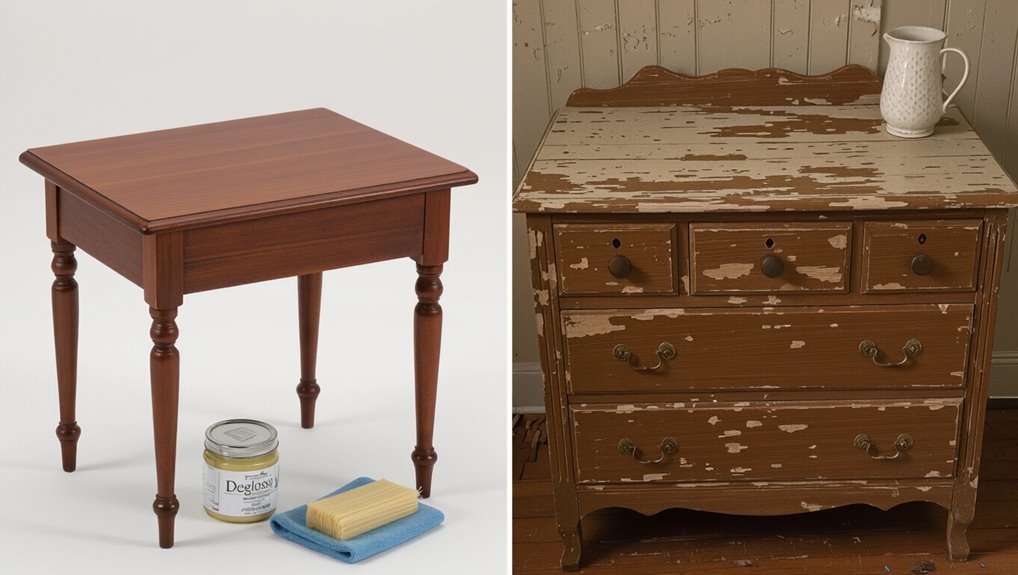
If the finish is worn, peeling, or glossy, you’ll usually need to sand first; but if the stain is intact, smooth, and sealed with a flat or satin topcoat, you can often paint without sanding after cleaning and scuffing with a deglosser.
You’ll weigh paint adhesion, material compatibility, and finish durability during project planning, pick paint types and colors, and apply proper surface preparation and painting techniques following furniture trends.
Quick Decision Checklist Before You Start
Now that you know when sanding can be skipped, run through a quick decision checklist before you start painting: confirm the wood type and existing finish, check for damage or active peeling, decide whether you’ll strip, sand lightly, or just degloss, pick a compatible primer and paint, and set realistic durability expectations based on use.
Then weigh decision making factors: furniture types, surface conditions, paint compatibility, project scope, and time constraints.
When Skipping Sanding Makes Sense
You can skip sanding when the finish is glossy, the wood is sound, and you’ll use a paint formulated to bond to slick surfaces.
Look for bonding primers or paints labeled for use on laminate, varnish, or previously finished wood.
Test a small hidden area first to make sure adhesion is solid before you paint the whole piece.
When To Skip Sanding
Wondering whether you can skip sanding? You can when finish inspection shows sound, nonflaking stain and your project planning favors quick turnaround.
Use sanding alternatives and deglossing techniques, proper cleaning methods, and surface treatments to guarantee paint adhesion.
Consider material selection and bonding strategies during furniture preparation so coatings stick.
Skip sanding only after confirming condition and compatibility.
Paints That Bond Well
If the finish checks out and you decide to skip sanding, pick paints designed to stick to slick or stained surfaces so you’re not guessing about adhesion.
Choose products with built-in bonding agents, confirm paint compatibility with the existing layer, and follow surface preparation and application techniques carefully.
Consider paint durability, finish types, furniture styles, color choices, environmental factors, and include these in project planning.
When You Must Sand: Warning Signs
If the finish is peeling or flaking, you’ve got to sand it away so new paint can adhere.
Likewise, a heavy gloss or thick varnish will repel paint and should be dulled or removed with sanding.
Skipping this step risks uneven coverage and future chipping.
Peeling Or Flaking Finish
Scrape a fingernail across the surface and you’ll know right away when a finish is peeling or flaking.
If you spot lifting, bubbling, or powdery bits, those peeling finish causes mean paint won’t adhere. You’ll need to remove loose material, sand to solid edges, then clean and prime.
Consider flaking finish solutions like solvent stripping or a chemical remover before repainting for lasting results.
Heavy Gloss Or Varnish
When a stained piece has a thick glossy or varnished surface, you’ll need to sand before painting because smooth, shiny finishes repel primer and paint. Look for telltale signs like a mirror-like sheen, noticeable brush marks under light, or lingering tackiness after cleaning.
- Use gloss removal techniques and surface preparation methods.
- Consider varnish alternatives and furniture paint types.
- Follow paint selection tips and application techniques.
- Mind drying time considerations, finish compatibility issues, surface cleaning strategies, adhesion improvement tips.
How to Inspect Finish Adhesion Before You Commit
Before you commit to sanding or priming, check how well the existing finish sticks by testing a few discreet spots—lift a corner, tap with a fingernail, and press a strip of painter’s tape to see if the topcoat flakes or peels away. Use quick adhesion testing and finish inspection for surface evaluation, paint compatibility, and bonding assessment to prevent adhesion failure.
| Spot | Method | Result |
|---|---|---|
| Edge | Lift | Sticks/peels |
| Flat | Tape | Sticks/peels |
| Detail | Tap | Sticks/peels |
| Note | Record | Action needed |
How to Test a Small Area for Paint Adhesion
Pick an inconspicuous spot like the underside of a drawer and clean it so the test mirrors real conditions.
Lightly sand or degloss the area, wipe away dust, then apply the paint or primer you plan to use.
After it dries, perform a simple adhesion test (cross-hatch or tape pull) to confirm the finish will stick.
Choose An Inconspicuous Spot
Find a hidden corner—like the underside of a drawer or the back leg—where you can test adhesion without marring the piece; you’ll get a quick read on how the stain, finish, and wood react to primer and paint without risking visible damage.
- Pick an inconspicuous location
- Clean a tiny test spot
- Apply primer and paint sparingly
- Check for peeling, tackiness, or bleed-through before committing
Prepare The Surface Properly
Now that you’ve located an out-of-the-way spot to test, you’ll want to prepare that small area so the results are accurate.
Perform surface cleaning and furniture inspection, use cleaning techniques for proper degreasing and stain removal, and complete a finish assessment before adhesion testing.
Prioritize workspace organization, dust elimination, and other prep essentials to guarantee your test reflects real adhesion performance.
Perform A Adhesion Test
Before you commit to painting the whole piece, test a small, inconspicuous patch to confirm the paint will adhere—clean the spot, sand lightly if required, apply primer and paint exactly as you plan to for the full job, and let it cure so you can assess bonding and finish.
Use these adhesion test methods and paint bonding techniques:
- Clean and degrease
- Light scuff sand
- Apply primer/test paint
- Cure and check for lift
Preparing the Workspace for a No‑Sanding Project
When you plan to paint stained furniture without sanding, set up a clean, well-ventilated workspace that lets you move freely and keep dust off wet surfaces. Organize your workspace setup and essential tools, clear floors, lay drop cloths, and arrange lighting for even coverage.
| Task | Item |
|---|---|
| Protect floor | Drop cloth |
| Organize tools | Tray |
| Clear area | Move furniture |
| Improve light | Lamp |
Essential Safety Gear and Ventilation Tips
You’ll want to protect your lungs with a proper respirator rated for paint fumes and particulates.
Open windows, use fans to create cross-ventilation, and keep doors ajar to flush vapors as you work.
With the right mask and airflow, you’ll cut exposure and paint more safely.
Proper Respiratory Protection
A good respirator and proper ventilation are essential for keeping you safe while sanding, stripping, or painting stained furniture, since fumes and fine dust can damage your lungs even at low exposures.
Use proper fitting gear and follow DIY safety to limit respiratory hazards.
- Choose mask types with appropriate filter ratings
- Wear safety goggles and protective gloves
- Minimize fume exposure
- Maintain workspace ventilation
Room Ventilation Strategies
Good ventilation can make the difference between a safe project and exposure to harmful fumes and dust, so set up airflow before you sand, strip, or paint.
Use ventilation techniques that prioritize air circulation: open windows for strategic window placement, position exhaust fans to pull fumes out, and arrange your workspace layout to avoid dead zones.
Follow safety guidelines for odor control and monitor air quality.
How to Clean Stained Furniture for Best Paint Bonding
Before you sand or prime, make sure the surface is spotless so paint can grab and stay.
Use targeted cleaning techniques for different furniture types, choosing cleaning products and prep tools that respect stain removal and paint compatibility.
Consider bonding agents and adhesion factors. Follow degreasing methods as needed.
- Vacuum and wipe
- Test cleaners
- Use tack cloth
- Apply bonding primer
Removing Grease, Wax, and Old Polish Properly
Before you prime, you’ll want to degrease the surface with a mild detergent or a dedicated degreaser, rinsing and drying thoroughly so paint will stick.
If there’s old wax, scrape or use a solvent-based wax remover and wipe until residue is gone.
Finish with a tack cloth to pick up any remaining dust or particles before priming.
Surface Degreasing Steps
Start by stripping away any surface contaminants—grease, wax, and old polish trap dirt and stop new paint from adhering.
Use these surface preparation techniques during furniture cleaning, focusing on degreasing solutions and degreasing agents. Perform finish inspection and adhesion testing afterward.
- Choose appropriate degreasing solutions
- Wipe using recommended cleaning methods
- Rinse and dry thoroughly
- Recheck for surface contaminants
Removing Old Wax
Once you’ve removed loose dirt and tested adhesion, tackle old wax and polish with a solvent-based degreaser or a dedicated wax remover that’s safe for your finish. You’ll apply, agitate gently with a microfiber, and wipe residue thoroughly. These wax removal techniques fit into common furniture cleaning methods to guarantee paint bonds well and avoids sticky failures.
| Step | Product | Time |
|---|---|---|
| 1 | Degreaser | 5 min |
| 2 | Wax remover | 5–10 min |
| 3 | Microfiber | 2 min |
| 4 | Rinse | 1–2 min |
| 5 | Dry | 10–20 min |
Tack Cloth Final Wipe
One quick final wipe with a tack cloth removes the last traces of grease, wax, and polish so paint adheres evenly; work in overlapping strokes, changing cloths as they clog, and don’t press hard—let the tack pick up residue rather than smearing it.
- Use clean, lint-free cloths
- Note tack cloth benefits: dust capture
- Avoid solvent contamination
- Tips for choosing tack cloths: tack level suitable for finish
Deglossing: What It Is and When to Use It
Deglossing is a chemical shortcut that dulls the shiny finish on stained furniture so new paint will stick without heavy sanding.
You’ll learn deglossing techniques and chemical options as effective solutions for surface preparation and finish removal.
Follow product recommendations, consider paint compatibility and furniture types, use primers when needed, and employ adhesion strategies to guarantee lasting results.
Choosing the Right Liquid Deglosser for Wood
When you’re prepping stained wood for paint, choosing the right liquid deglosser makes the job faster and prevents adhesion problems down the line.
You’ll pick based on finish, odor tolerance, and drying time. Consider liquid deglosser types and follow proper application techniques:
- solvent-based for tough finishes
- water-based for low odor
- citrus for mild jobs
- wipe-on for small areas
When Chemical Strippers Are Still Preferable
If you’re facing stubborn, century-old varnishes or shellac that won’t budge, chemical strippers can be the fastest option.
They’re also your best bet for getting into tight moldings and carved details where sanding won’t reach.
And when testing shows lead-based paint, a proper stripper used with safety precautions is often required to remove it completely.
Tough Old Finishes
Even with good sanding and modern liquid abrasives, some old finishes just won’t come off cleanly, and that’s when chemical strippers still make the most sense.
You’ll use strippers for tough finishes to guarantee paint adhesion and finish durability during furniture restoration.
Consider surface preparation, preparation techniques, project planning, paint types, color choices, and appropriate furniture styles.
- Safety gear
- Test areas
- Neutralize residue
- Proper disposal
Intricate Detail Work
Because sandpaper and power tools can’t reach every groove, you’ll still want a chemical stripper for finely carved or fluted pieces where paint adhesion and a smooth finish depend on fully removing old coatings.
You’ll use gentle brushes and dental tools to lift residue, employ intricate techniques for crevices, and protect decorative elements.
Rinse thoroughly, neutralize the surface, and proceed with primer for consistent coverage.
Lead Paint Removal
When dealing with older stained furniture, treat suspected lead paint as a hazardous material and use chemical strippers rather than aggressive sanding, since sanding can release toxic dust into the air.
You should work outdoors or in a well-ventilated area, wear an appropriate respirator, gloves, and eye protection, and follow local regulations for testing and disposal.
- Use tested, labeled strippers
- Contain and collect residue
- Follow lead paint safety procedures
- Comply with lead paint regulations
How to Repair Dents and Gouges Without Full Sanding
Repair dents and gouges without sanding down the whole piece by using targeted fixes that preserve the original finish. Use dent repair and gouge filling with repair products, spot surface preparation, and quick fixes. Check finish inspection for paint adhesion. Apply repair techniques suited for furniture restoration; no sanding methods save time and keep character.
| Step | Tool |
|---|---|
| 1 | Filler |
| 2 | Clamp |
| 3 | Seal |
Filling Cracks and Gaps for a Smooth Painted Surface
Fill cracks and gaps with the right products so your paint lays down smoothly and hides every seam.
You’ll improve surface preparation and paint adhesion using crack fillers and gap sealants as sanding alternatives for furniture repair. Apply, let cure, then feather. Choose flexible fillers for joints.
Quick checklist:
- Clean and dry the crack
- Pick compatible filler
- Smooth before drying
- Prime for finishing techniques
Tack Cloths, Tack Rags, and Microfiber: Which to Use
Next you’ll decide between a tack cloth and a tack rag—tack cloths grab stubborn particles but can leave residue, while tack rags are less sticky and cleaner for paint-ready surfaces.
For the finest dust after sanding, you’ll want a microfiber cloth to lift particles without streaking or lint.
I’ll compare pros and cons so you can pick the best option for your project.
Tack Cloth Vs. Tack Rag
When you’re prepping stained furniture for paint, choosing between a tack cloth, a tack rag, or a microfiber cloth matters because each grabs dust and debris differently and can affect your finish.
You’ll weigh tack cloth advantages against tack rag differences for cleaning effectiveness and surface preparation. Consider dust removal, painting techniques, product comparisons, and application methods:
- Tack cloth: sticky, fast dust removal
- Tack rag: reusable, lint concerns
- Microfiber: gentle alternative
- Choose per surface and finish
Microfiber For Fine Dust
If you want the cleanest surface before paint, microfiber tackles the fine dust that tack cloths can miss and tack rags can sometimes leave behind. You’ll love microfiber benefits: it lifts particles without residue, works reusable, and reduces re-sanding. Use it last, after vacuuming and tack rags, to catch lingering fine dust and guarantee smooth paint adhesion.
| Tool | Best use |
|---|---|
| Microfiber | Final wipe |
| Tack cloth/rag | Quick pickup |
Why Primer Matters on Stained Wood: Adhesion and Stain‑Blocking
Because stained wood can bleed tannins and the old finish can repel new paint, you need a primer that both adheres well and blocks stains to guarantee a durable, even topcoat.
Stained wood can bleed tannins and resist new paint, so use a primer that seals stains and ensures adhesion.
You’ll value primer benefits for stain adhesion and longevity.
Use a primer that:
- Seals tannins
- Promotes paint bonding
- Prevents bleed-through
- Evens out surface texture
Which Primers Actually Bond to Stained Wood?
Which primers actually stick to stained wood? You’ll choose primer types with proven bonding agents and check stain compatibility.
Focus on surface preparation and deglossing methods before primer application. Use adhesion techniques like scuffing and tack cloths.
Consider chemical alternatives when needed. Match primer to paint selection and planned finish types to guarantee lasting bond without unnecessary sanding.
Oil, Shellac, or Bonding Primer : Which to Choose?
Wondering whether to reach for an oil, shellac, or bonding primer for your stained piece? You’ll choose based on adhesion quality, paint compatibility, and surface preparation needs.
Consider finish types, drying times and stain blocking properties.
- Oil finishes: durable, slow drying, good stain blocking
- Shellac benefits: fast drying, excellent sealant
- Bonding primer: superior adhesion
- application techniques: brush or spray
How to Apply Primer Without Sanding First
Before you prime, clean and degrease the stained surface thoroughly so the primer can stick.
Use a quality bonding primer designed for glossy or stained wood, and follow the manufacturer’s directions.
Apply thin, even coats, letting each dry fully before adding the next.
Clean And Degrease
Start by thoroughly cleaning and degreasing the surface so primer will stick without sanding. Use proper cleaning techniques and degreasing agents for surface preparation and furniture maintenance.
Focus on cleaning solutions that aid paint adhesion and stain removal during furniture restoration.
- Remove dust with a microfiber cloth
- Apply degreasing agent per instructions
- Rinse and dry fully
- Inspect for residues or damage
Use Bonding Primer
Now that the surface is clean and dry, apply a high-quality bonding primer so paint will stick without sanding.
Choose primer types by substrate and stain blocking needs, study bonding techniques, and follow application methods for even coverage.
Consider paint compatibility and adhesion improvement to guarantee durable finishes.
Factor surface preparation into project timelines and note maintenance tips to prolong results.
Apply Thin Even Coats
One thin, even coat of bonding primer will give you better adhesion and fewer drips than a heavy application, so load your brush or roller sparingly and work in smooth, overlapping strokes to maintain a uniform film.
Use thin layer application and aim for even paint distribution.
- Tip: thin coats dry faster
- Use a quality brush
- Roll small panels
- Inspect for holidays
How Many Primer Coats Do You Really Need?
How many primer coats you really need depends on the condition of the stain, the primer type, and the finish you want; typically one good-quality coat is enough to seal and promote adhesion, but very dark stains, tannin bleed, or porous woods may need a second coat.
Choose primer types and consider primer selection for compatibility, primer coverage, primer texture, primer drying, primer application, primer benefits, primer durability, primer finish.
Choosing Paints That Stick to Stained Furniture
Before you pick paint, make certain you clean the surface thoroughly so dirt and oils won’t block adhesion.
Use a bonding primer formulated for stained surfaces to create a reliable base.
Finish with a durable topcoat—like a high-quality acrylic or enamel—to protect your work and guarantee long-lasting stick.
Clean Surface First
Start by giving the stained piece a thorough cleaning so paint will grip instead of sliding off; grease, wax, and dirt are the usual culprits that prevent adhesion.
You’ll focus on surface preparation and proven cleaning techniques to improve stain adhesion.
- Use degreasing methods (dish soap or trisodium)
- Remove wax with mineral spirits
- Wipe tacky residues
- Let dry fully before painting
Choose Bonding Primer
Once the surface’s clean and dry, pick a bonding primer designed to adhere to slick, stained wood so your paint won’t lift or peel.
Choose bonding primer types—latex-based for easy cleanup, shellac or oil for tough stains.
Test a small area, then follow primer application techniques: thin, even coats, brush or foam roller, light sanding between coats for a smooth, consistent base.
Select Durable Topcoat
Because a durable topcoat locks in your work and protects against chips, stains, and daily wear, choose a paint or finish that bonds well to primed, previously stained wood.
Pick durable options and suitable topcoat types for your use. Consider:
- Waterborne polyurethane for clarity and durability
- Oil-based varnish for toughness
- Polycrylic for quick drying
- Conversion varnish for heavy use
Water‑Based Acrylic vs. Latex vs. Chalk Paint: Pros and Cons
When you’re choosing between water-based acrylic, latex, and chalk paint for stained furniture, think about durability, finish, and ease of use—acrylic offers a tough, flexible film and color retention; latex is affordable and easy to clean; and chalk paint gives matte, vintage texture with minimal prep.
You’ll weigh acrylic advantages like finish durability and color retention, latex drawbacks (less adhesion on slick stains), chalk paint benefits, application techniques, drying times, and surface compatibility.
How Milk Paint Behaves on Stained Surfaces
If you liked the matte, lived-in look of chalk paint, milk paint offers a different, more authentic aged effect on stained wood.
You’ll need careful stained surface preparation to improve milk paint adhesion. Expect chipping, blending, and natural crazing; control it with bonding primer if needed.
Consider:
- Test a small panel first
- Thin for smoother coats
- Allow longer cure time
- Seal for durability
Using Specialty Bonding Paints and Spray Enamels
If you’re working with a slick or heavily stained piece, choose a bonding primer formulated for adhesion to glossy or oily surfaces so your topcoat doesn’t peel.
For spray enamels, practice even, light passes and keep the can moving to avoid runs and orange peel.
Let primers cure fully before spraying and always sand lightly between coats for the best finish.
Choosing Bonding Primers
Because stained furniture can resist regular paint, you’ll want a bonding primer or specialty paint that actually grabs onto slick surfaces.
Choose based on bonding primer types and recommended surface preparation techniques. Consider:
- Oil-based bonding primer for durability
- Shellac-based for quick adhesion
- Acrylic bonding for easy cleanup
Test a small area first to confirm adhesion before full application.
Spray Enamel Techniques
Spray enamels and specialty bonding paints give you a fast, smooth finish on stained furniture when you prep properly and apply them with steady, overlapping passes.
Use proper surface preparation, choose spray equipment for consistent spray patterns, and follow application tips for even paint layering.
Monitor drying times, maintain coverage consistency, and test enamel finishes to verify finish durability with correct spray techniques.
Paint Sheens That Hide Flaws and Resist Chips
Sheens matter when you want paint that both conceals imperfections and stands up to daily wear—choose satin or semi-gloss for the best balance.
You’ll pair paint finishes with proper surface preparation, color selection that masks flaws, and adhesion techniques to boost durability factors across furniture styles.
- application methods influence coverage
- pick paint types for aesthetic choices
- follow maintenance tips
- prioritize adhesion techniques
Brush, Roller, or Sprayer: Best Application Method
You’ll choose between a brush, roller, or sprayer based on the piece’s size, detail, and the finish you want.
Brushes give control for edges and grooves, rollers speed up flat surfaces, and sprayers deliver the smoothest coat but need masking and practice.
We’ll compare brush versus roller advantages and cover sprayer pros and cons so you can pick the right method.
Brush Versus Roller
Choosing between a brush, roller, or sprayer comes down to the piece’s size, detail, and the finish you want, so pick the tool that matches those needs.
You’ll weigh brush techniques versus roller efficiency: foam rollers give texture consistency and fast coverage areas; bristle brushes handle edge detailing and paint absorption.
Consider application speed, paint thickness, finish durability, and drying methods.
- brush techniques
- foam rollers
- edge detailing
- finish durability
Sprayer Pros Cons
A paint sprayer can cut your application time dramatically and deliver an ultra-smooth, factory-like finish, but it also demands more prep, masking, and technique than brushes or rollers.
When you weigh sprayer advantages versus sprayer disadvantages, consider sprayer types, sprayer efficiency, sprayer settings and sprayer techniques.
Follow sprayer tips for sprayer maintenance and sprayer cleanup to get consistent results in our sprayer comparison.
How to Avoid Brush Marks on Non‑Sanded Furniture
Starting with clean, dry surfaces, take your time applying thin, even coats so the brush can’t leave ridges in the finish.
Use proper brush techniques and application tools, choose compatible paint types and adhesion methods, and mind surface preparation and drying times.
Use the right brushes and tools, match paints and adhesives, and prep and dry surfaces properly.
Balance color choices and layering effects, then add careful final touches.
- Light, long strokes
- Tip excess paint
- Work wet edges
- Sand between coats
Spraying Tips for Even Coverage Without Sanding
If brushing proves tricky on that sealed, stained surface, spraying gives you smooth, even coverage without aggressive sanding.
Use proper spray technique: maintain consistent paint distance, make gradual nozzle adjustment, and test for paint consistency.
Consider surface texture and humidity effects to control drying time.
Plan project planning for color matching and overlap patterns so you achieve an even application without rework.
How to Build Up Thin Paint Without Drips
Three thin coats beat one heavy one when you want smooth coverage without drips: apply light, even layers, let each tack up per the paint’s instructions, and only add more once the previous coat’s surface is dull to the touch.
Three light, even coats beat one heavy one—let each layer tack up until dull before adding more.
- Use thin paint application for control
- Maintain consistent brush or spray strokes
- Catch runs early with a soft brush
- Employ drip prevention techniques like light overload checks
Drying Times and How They Affect Adhesion
You’ll want to respect the recommended drying times between coats so each layer bonds properly.
If paint or primer isn’t fully dry, the next coat can wrinkle, lift, or peel instead of forming a strong film.
Follow manufacturer times and check touch-dry versus cure times to guarantee good adhesion.
Proper Drying Times
When paint feels dry to the touch doesn’t always mean it’s ready for the next coat or for heavy use; you should follow the manufacturer’s recommended drying times and consider temperature, humidity, and film thickness because they directly affect adhesion and curing.
- Check paint types and finish types for specified curing times.
- Adjust drying techniques to suit environmental factors.
- Monitor humidity impact and temperature effects closely.
- Allow extra time under poor drying conditions.
Effects On Paint Adhesion
Having the right drying time doesn’t just prevent smudges—it directly controls how well paint bonds to stained wood.
You’ll choose paint types and bonding agents based on surface preparation and paint compatibility, use proper application methods and adhesion techniques, and monitor environmental factors to boost paint durability and stain resistance.
Do a finish inspection to confirm cure before heavy use.
When and How to Lightly Sand Between Coats
Lightly sanding between coats helps the finish bond evenly and removes tiny imperfections, so do it after each coat has fully dried.
You’ll use fine-grit paper and gentle pressure to avoid cutting through paint. Follow basic sanding techniques and finishing methods to maintain smoothness.
- Use 220–320 grit
- Sand with the grain
- Wipe dust before recoating
- Light, consistent strokes
How to Troubleshoot Paint Peeling or Flaking Later
Even with proper sanding and careful recoating, paint can lift or flake later on, and you’ll want to spot the cause before you fix it. Do a finish inspection for adhesion problems, identify peeling paint sources, and use repair techniques. Troubleshooting tips: avoid common mistakes in surface preparation.
| Issue | Fix |
|---|---|
| Adhesion problems | Clean, prime |
| Moisture | Dry, seal |
| Contamination | Degrease, sand |
| Old finish | Strip, bond coat |
Dealing With Glossy or Lacquer Finishes Without Sanding
When you’re working with glossy or lacquered pieces and want to skip sanding, focus on creating a tooth for paint by using a chemical deglosser or etching solution and by thoroughly cleaning the surface so the new coat can bond.
- Use deglossing techniques and chemical strippers for lacquer removal
- Choose bonding agents and primer options for paint adhesion
- Match paint types to repair methods
- Prioritize surface preparation
Veneer and Laminate: Special Prep When Painting Stained Furniture
If your piece is covered in veneer or laminate, you’ll need specific prep steps because these surfaces resist paint differently than solid wood — they’re thin, often factory-sealed, and can delaminate if treated roughly. You’ll clean, scuff lightly, and use a bonding primer for veneer preparation and laminate painting. Check edges for lifting and repair before priming.
| Step | Purpose |
|---|---|
| Clean | Remove oils |
| Scuff | Improve adhesion |
| Prime | Bond paint |
Updating Stained Furniture With Color and Style Choices
One smart way to refresh stained furniture is to pick a color and finish that match your room’s mood and the piece’s style; you’ll want bold hues for a modern pop, muted tones for a Scandinavian look, and rich, deep shades to keep a traditional feel.
- Use color selection and paint types for style upgrades.
- Consult furniture trends and style inspiration.
- Match finish options to surface textures.
- Balance color combinations with design themes for furniture restoration.
Faux Finishes and Distressing That Work Without Sanding
Because you don’t always have time or tools to strip and sand, several faux finishes and distressing tricks let you transform stained furniture quickly and with minimal mess.
You’ll use faux techniques and distressing methods like paint layering, color blending, and varied texture options to achieve creative finishes.
Mix vintage aesthetics with modern styles, employ artistic approaches, and explore finish variations for bold, tailored results.
Sealing Painted Furniture for Durability
When you finish painting, sealing is the step that protects your work from chips, stains, and everyday wear, so choose a clear topcoat that matches the look and use of the piece.
When painting is complete, seal with a clear topcoat to guard against chips, stains, and everyday wear
You’ll apply sealing techniques and simple durability methods to extend life.
Tips:
- Clean surface before sealing
- Use thin, even coats
- Sand between coats lightly
- Cure fully before use
Best Topcoats for Tables, Drawers, and High‑Wear Pieces
Durability matters most for tables, drawers, and any high‑traffic piece, so pick a topcoat that matches the surface, finish, and expected wear.
Consider topcoat options like polyurethane, water‑based clear coats, or conversion varnish for durable finishes across furniture types.
Match paint compatibility, application methods, and surface textures to maximize wear resistance, finish durability, manage drying times, and preserve color choices.
How to Avoid Yellowing and Cloudy Topcoats
If you want your freshly painted furniture to stay clear and true-looking, pick topcoats and application techniques that resist yellowing and cloudiness over time.
You’ll focus on yellowing prevention and avoiding cloudy topcoats by choosing proper products and methods:
Focus on preventing yellowing and cloudy topcoats by choosing the right products and methods.
- Use non-yellowing waterborne clear coats
- Apply thin, even layers
- Keep temps and humidity stable
- Use fresh, compatible brushes or sprayers
Fixing Common Amateur Finishes: Streaks, Orange Peel, and Bubbles
Although it’s frustrating to see brush marks, orange peel, or pinholes ruin a fresh finish, you can usually correct these flaws with the right sanding, thinning, and recoating steps.
Use streak removal techniques, orange peel solutions and bubble prevention tips after finish inspection methods.
Focus on surface preparation essentials, primer selection advice, paint application methods, drying time considerations, adhesion enhancement strategies and topcoat durability tips.
How to Maintain Painted Furniture Long‑Term
Once you’ve corrected streaks, orange peel, and bubbles, keep the painted piece looking fresh by following a few simple maintenance habits.
Use furniture care and cleaning techniques that protect protective finishes. Schedule routine inspections and seasonal upkeep to monitor environmental factors and wear resistance.
Protect finishes with proper care and cleaning; inspect seasonally to monitor environmental effects and wear resistance.
Follow these maintenance tips for damage prevention and longevity strategies:
- Dust gently weekly
- Wipe spills immediately
- Reapply topcoat as needed
- Avoid direct sun
Cost & Time: Sanding vs. No‑Sanding
When you’re deciding whether to sand before painting, weigh upfront time and tool costs against long-term durability and finish quality; sanding adds prep time and may require sandpaper, a block, or a power sander, while a no-sand approach saves labor but often needs more primer or specialty paint to adhere properly.
| Option | Cost | Time |
|---|---|---|
| Sanding | Higher | Longer |
| No‑sand | Lower | Faster |
Do a cost analysis and prioritize time efficiency for your project.
When to Hire a Pro Instead of DIYing
Cost and time considerations will get you most of the way, but some projects call for a professional instead of a DIY approach—especially if the piece has structural damage, complicated trim, or a high-value finish you don’t want to risk.
Get a professional assessment when project complexity, repair needs, unique finishes, furniture value, skill level, budget constraints, or time limitations exceed your capacity.
When complexity, repairs, finishes, value, or time outstrip your capacity, seek a professional assessment.
- Project complexity
- Repair needs
- Unique finishes
- Time limitations
Quick Project Checklist Before You Start Painting
Before you pick up a brush, run through a quick checklist so you don’t discover missing supplies, hidden damage, or wrong paint mid-project. Confirm surface prep, ventilation, and timeline. Gather essential tools and backup materials. Inspect for chips, loose veneer, and old finish.
| Item | Check | Action |
|---|---|---|
| Paint type | Ready | Buy/confirm |
| Brushes | Clean | Replace |
| Repair kit | On hand | Use as needed |
Troubleshooting Guide: One‑Line Fixes for Common Problems
If a drip, brush mark, or tacky finish pops up, you’ll usually fix it fast with a single, targeted step—sand the drip, recoat thinly, or wipe with mineral spirits—so you can get back to finishing without a long delay.
- Match product selection to stain types for finish compatibility.
- Improve paint adhesion with proper surface preparation.
- Account for furniture age and environmental factors.
- Use maintenance tips to prevent repeat issues.
Real‑World Case Studies: Three No‑Sanding Success Examples
You can transform stained furniture without sanding—these three real-world cases show when and how that works.
You’ll read case study insights: a mid-century dresser refreshed with deglosser and bonding primer; a kitchen island renewed using direct-to-wood paint and sealing; a bedside table revived after stripping gloss and spot-priming.
Each furniture transformation highlights prep choices, adhesion checks, and finishing steps that prevented sanding.
Quick Reference: Product Recommendations and Materials List
When you’re ready to skip sanding, this quick reference lists reliable products and the exact materials you’ll need for each approach—deglossers and bonding primers for slick finishes, direct-to-wood paints for bare or lightly sanded surfaces, and sealers or topcoats to protect the work.
Use this product recommendations and materials overview to pick tools and supplies:
- Deglosser, tack cloths
- Bonding primer, synthetic brush
- Direct-to-wood paint, mini roller
- Sealer/topcoat, fine sandpaper
Next Steps: How to Practice on Scrap Pieces Before Your Main Project
Start with a few scrap boards or an inconspicuous drawer to test your full process—cleaning, deglossing or sanding, priming, painting, and sealing—so you can dial in techniques, tools, and drying times without risking the main piece.
Use scrap materials to practice techniques: run color testing, try brush types, compare finish samples and texture variations, experiment layering methods, and record application timing for consistent results.
Frequently Asked Questions
Can I Paint Over Water Stains or Nicotine Discoloration Without Sanding?
Yes, you can: use water stain solutions and nicotine treatment options like bleach-based cleaners, TSP, or specialized primers; you’ll clean, spot-treat, then prime and paint to block stains without sanding for best results.
Will Painting Change the Furniture’s Original Smell or Off‑Gassing?
Like opening a closet and smelling rain, painting can mask furniture odors but won’t stop some off gassing effects; you’ll reduce surface smells temporarily, yet VOCs from finishes may still emit until they fully cure.
How Long Should I Wait After Cleaning Before Priming and Painting?
Wait about 24 hours after cleaning before priming and painting; depending on cleaning methods and humidity, drying time can range 1–48 hours. You’ll guarantee the surface’s fully dry so primer bonds and paint won’t peel.
Can I Paint Stained Furniture Outdoors in Humid or Cold Conditions?
Like painting through fog, you shouldn’t paint outdoors in humid or cold conditions. You’ll face humidity effects and temperature considerations: paint may not dry, bond, or cure properly, so wait for warm, low-humidity weather before starting.
How Do I Handle Metal Hardware or Inlays When Avoiding Sanding?
You’ll remove or mask hardware protection with painter’s tape and plastic, sealing edges; for inlay preparation you’ll clean delicate surfaces, use liquid deglosser nearby, and apply thin primer coats to join paint without sanding or damaging metals.
Conclusion
Picture your finished piece: smooth, painted grain catching the light like a calm pond at dawn. You’ll know when to skip sanding—sturdy finish, clean surface—and when to sand—peeling, gummy, or glossy trouble spots. Use the checklist, test adhesion, and patch with the recommended products until your touch feels confident. With a little practice on scraps, you’ll transform stained furniture into fresh, durable beauty without surprises—one careful stroke at a time.
