
How to Paint Walls With a Brush for Smooth Coverage
Start by prepping and priming the wall, patching and sanding imperfections so you’ve got a smooth surface. Tape trim and protect floors, then load a high-quality synthetic brush one-third deep for latex (natural bristles for oil). Use steady, short strokes, hold the brush at about 45°, feather edges, and keep a wet edge to avoid laps. Sand lightly between coats with fine grit and spot-check for drips; follow these basics and you’ll get pro results — keep going to pick up more tips.
Quick Brush-Painting Steps (Start Here)
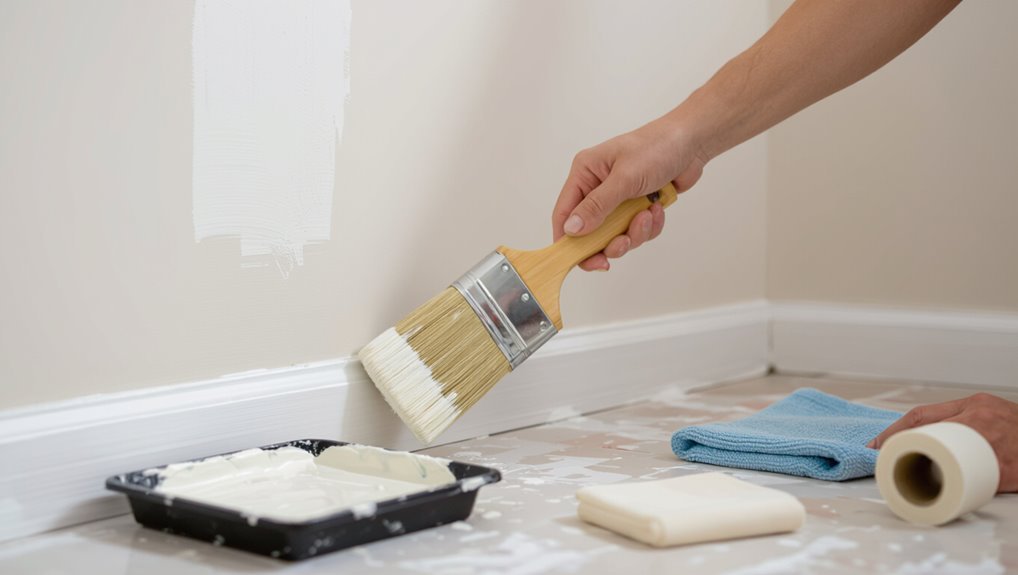
Start by preparing a small, clean section of wall and gather your brush, paint, tray, and a rag.
You’ll tape edges, sand rough spots, and apply primer where needed as part of wall preparation.
Load the brush correctly, use short, controlled strokes, feather edges, and maintain a wet edge.
These brush techniques help you achieve even, smooth coverage without lap marks.
When to Choose a Brush vs a Roller or Sprayer
After you’ve practiced the brush techniques on a small patch, decide which tool fits the job: weigh brush advantages for edges and control against roller limitations on texture and corners.
Consider sprayer efficiency for large, even paint application. Factor surface compatibility, finish quality, time considerations, and your user experience—choose brush, roller, or sprayer based on needed precision, speed, and the wall’s condition.
Which Brushes Give the Smoothest Wall Finish
When you want the smoothest wall finish, pick a high-quality brush with soft, tightly packed bristles that lay paint evenly without leaving streaks or brush marks. You’ll consider brush types, bristle density, paint compatibility, application technique, and maintenance tips to maximize finish quality.
| Brush Type | Bristle Density | Best Use |
|---|---|---|
| Natural | High | Water-based enamels |
| Synthetic | Medium | Latex paints |
| Blended | High | Versatile surfaces |
Best Brush Sizes for Trim, Corners, and Walls
When you pick brushes, size matters depending on the job—use a 1–2 inch angled sash brush for trim and molding to keep lines crisp.
For corners and edges, a 2–2.5 inch angled brush or a 1-inch angled brush for tight spots will give you control.
Use a 3–4 inch wide brush or a roller for the larger wall areas to cover quickly and smoothly.
Trim And Molding
Because trim and molding sit where walls meet floors, ceilings, and windows, you’ll want brushes that give you precise control without slowing you down.
Use a 1–2″ angled sash brush for detailed trim techniques and narrow molding styles, and a 2.5–3″ angled brush for wider casings.
Choose synthetic bristles for latex paint, keep strokes smooth, and load sparingly to avoid drips.
Corners And Edges
Corners and edges demand the right brush size to keep lines crisp and cut in quickly without bleeding onto adjacent surfaces.
You’ll focus on brush selection: 1–2.5″ angled brushes for trim, 2.5–3″ for walls near corners.
Use brush techniques that guarantee corner coverage and edge precision, feathering for smooth changes.
Control paint application, load less paint, and steady your wrist for clean, sharp results.
Natural vs Synthetic Bristles: Match to Paint Type
Choose your brush based on the paint: natural bristles work best with oil-based paints, while synthetic bristles hold up better with water-based formulas.
If you want one tool for multiple jobs, consider a blended brush that gives you the control of natural hair and the durability of synthetics.
Pick the right bristle for the paint and you’ll get smoother coverage with less shedding.
Natural Bristles For Oils
Natural hog bristle brushes excel with oil-based paints because their split, flexible tips hold and release thicker formulas smoothly, giving you better control and a more even finish. You’ll notice natural bristle benefits and clear oil paint compatibility when cutting in and laying off. Use a quality brush and maintain it with proper cleaning.
| Feature | Benefit |
|---|---|
| Hold | Smooth layoff |
| Flex | Better control |
Synthetic Bristles For Water
Synthetic-bristle brushes are designed to work with water-based paints like acrylics and latex, because their smooth, non-absorbent fibers don’t swell and keep the paint flowing evenly across the surface.
You’ll get cleaner edges and fewer brush marks. Use synthetic bristles for water based paints when you want control.
- Smooth finish
- Easy cleaning
- Durable fibers
- Consistent release
Blended Brushes For Versatility
If you want a brush that handles both water- and oil-based paints without swapping tools mid-job, blended brushes are a smart pick. You’ll use blended bristles to combine control and paint release, so you can apply versatile techniques for smooth coverage. Choose quality for durability, clean properly, and match brush size to task for best results.
| Feature | Benefit | Tip |
|---|---|---|
| Blended bristles | Versatility | Clean thoroughly |
| Shape | Control | Match size |
| Stiffness | Finish | Test first |
Pick the Right Paint Sheen for Brush Work
Sheen affects how brush marks show up and how forgiving your finish will be, so choose one that matches the room and your technique.
You’ll pick a paint finish based on durability and appearance; understand common sheen types before starting.
- Flat: hides flaws, low reflection
- Eggshell: subtle sheen, forgiving
- Satin: durable, easy to clean
- Semi-gloss: highlights brushwork, durable
How Paint Thickness (Viscosity) Changes Brush Marks
If you use thicker paint, you’ll notice it fills and hides brush strokes so the finish looks smoother.
Thinner paint tends to show the direction and individual bristle marks, especially with a worn brush.
Adjusting viscosity lets you control how visible those brush marks will be.
Thicker Paint Hides Strokes
Choose a thicker paint when you want to minimize visible brush or roller strokes, because higher viscosity fills and levels surface texture more effectively than thin, runny paint.
Use these tips to hide brush strokes and get smooth coverage:
- Load your brush evenly with thicker paint.
- Work in consistent, overlapping strokes.
- Avoid overworking drying edges.
- Lightly tip off for uniform sheen.
Thin Paint Shows Bristles
While thicker paint masks brush marks, thinner, low-viscosity paint will make individual bristles stand out on the surface.
You’ll notice bristle marks appear when paint consistency is too thin; they dry quickly and accentuate strokes.
Adjust by slightly thickening the mix, dipping less, and using a higher-quality brush to reduce visible bristles and achieve a smoother, more even finish.
Essential Brushes, Tools, and Extras to Have Ready
You’ll want a handful of reliable brushes and tools before you start so you can work cleanly and efficiently.
Choose brush types matched to paint selection and surfaces; focus on surface preparation and painting techniques that suit your wall.
Keep brush maintenance and cleanup strategies in mind.
Application tips: use quality rollers sparingly, edging tools, drop cloths, painter’s tape, and a brush comb.
- 2 angled sash brushes
- 1 trim brush
- 1 brush comb
Prep New Drywall for Brush Painting
Now that your brushes and tools are ready, get the drywall ready for paint by inspecting seams, fasteners, and any imperfections. Patch gaps, sand seams lightly (drywall sanding), and remove dust. Wipe surfaces, then apply primer (primer application) for uniform absorption. Let dry fully before brushing.
| Task | Purpose |
|---|---|
| Patch | Fill gaps |
| Sand | Smooth seams |
| Clean | Remove dust |
| Prime | Seal surface |
| Dry | Ready for paint |
Prep Previously Painted or Glossy Walls for Brushing
Because glossy or previously painted surfaces resist new coats, start by inspecting the finish for peeling, gloss level, and surface contaminants so you can decide whether to sand, degloss, or spot-prime.
Glossy or painted surfaces need inspection for peeling, shine, and contaminants to determine sanding, deglossing, or spot-priming.
Check finish assessment, paint compatibility, and environmental conditions.
Then follow:
- Surface cleaning and adhesive removal
- Gloss reduction and light sanding
- Primer application for adhesion
- Texture smoothing and color matching
Repair Cracks, Holes, and Unwanted Texture First
After cleaning, sanding, and priming the sheen, focus on repairing cracks, holes, and any unwanted texture so your finish goes on smooth and looks professional. You’ll do quick crack repair with spackle, sand flat, and use skim coat or a scraper for texture removal. Inspect, fill, sand, and wipe before brushing for consistent paint adhesion.
| Task | Tool |
|---|---|
| Fill cracks | Spackle |
| Remove texture | Scraper/skimmer |
Mask Trim, Floors, and Fixtures Cleanly and Fast
Before you paint, mask trim to keep crisp lines and avoid bleed.
Lay down drop cloths or rosin paper to cover floors quickly and tape edges so they won’t shift.
Protect fixtures with painter’s tape and lightweight plastic for a neat, fast setup.
Protect Trim Lines
When you’re ready to paint, mask trim, floors, and fixtures precisely so paint goes only where you want it and cleanup stays quick.
Use sharp-edged painter’s tape for crisp trim protection, press edges firmly, and peel slowly.
Try these masking techniques:
- Tape narrow trim first
- Use craft knife for gaps
- Shield fixtures with plastic
- Overlap tape for full coverage
Cover Floors Quickly
Masking trim is only part of the prep — you’ll also want to cover floors and fixtures so paint never reaches them. Use plastic sheeting or drop cloths for floor protection, secure edges with tape, and employ quick coverings for high-traffic areas. Move furniture minimally and keep pathways clear.
| Material | Use | Tip |
|---|---|---|
| Drop cloth | Floors | Anchor edges |
| Plastic | Temporary | Tape seams |
| Cardboard | High-traffic | Replace often |
Shield Fixtures Neatly
How will you keep paint off trim, floors, and fixtures without slowing down the job? You’ll do surface preparation, use edge masking, and apply fixture protection for a neat finish.
Use a paint shield or fixture cover to stop paint drips and get clean edges.
- Mask trim tightly
- Lay protective floor sheeting
- Cover switches and lights
- Use a handheld paint shield
Cut In Clean Lines Around Trim and Ceilings
Start by steadying your hand and outlining a crisp edge where the wall meets trim and ceiling. Use slow cutting techniques, a quality angled brush, and painter’s tape for trim protection. Work in short strokes, feathering paint toward the wall.
| Brush | Angle | Stroke |
|---|---|---|
| Steady | 45° | Short |
How to Load a Brush for Even Coverage
Once your edges are neat, move on to loading the brush so you get even coverage without drips. Dip about a third of the bristles, tap off excess on the can rim, and use steady brush techniques for consistent paint application.
Once edges are neat, dip a third of the bristles, tap off excess, and brush steadily for even coverage.
- Dip only shallowly
- Tap, don’t wipe
- Load opposite side for balance
- Check bristle saturation before cutting in
Best Hand Positions and Grips for Steady Strokes
Grip the brush like a tool you control, not something that controls you: hold the handle between your thumb and first two fingers with the heel of your hand lightly resting on the brush ferrule for guidance, and use your elbow and shoulder to drive long, steady strokes rather than relying on wrist flicks.
Practice varied grip techniques—pencil, fulcrum, and palm support—to maintain steady strokes and reduce fatigue.
Ideal Brush Angle and Pressure to Avoid Streaks
After you’ve settled into a steady hand, the angle and pressure of the brush determine whether your strokes lay down smooth, even paint or leave visible streaks.
Once steady, your brush angle and pressure decide whether your strokes flow smoothly or show streaks.
You’ll use precise brush technique and pressure control to avoid marks.
Tips:
- Hold brush at 45° for even load
- Use light, steady pressure
- Release at stroke end
- Reload before drag becomes dry
Stroke Patterns for a Flat, Uniform Finish
Start each section with a consistent stroke pattern so the wet edges overlap and blend into a flat, uniform finish; keep strokes long and slightly overlapping in a “W” or vertical back-and-forth motion.
Then smooth with light, even passes in the same direction to eliminate brush lines.
You’ll use brush techniques focused on smooth strokes, maintaining rhythm and paint load to prevent ridges and guarantee an even, flat surface.
How to Blend New Brush Paint Into Existing Areas
When touching up, feather the edges of fresh brush strokes so they thin out into the old paint.
Make sure the sheen of your new paint matches the existing finish to avoid noticeable patches.
Use light, overlapping strokes to blend the wet edges seamlessly.
Feathering The Edges
Feathering the edges lets you blend fresh brushstrokes into existing paint so the repair disappears into the wall; you’ll use light, sweeping strokes and progressively thinner paint to soften the shift until it matches the surrounding finish.
Use these feathering techniques and edge blending tips:
- Load brush sparingly
- Work outward from the repair
- Use parallel, light strokes
- Thin paint near edges for smooth changeover
Match Paint Sheen
Sheen matters as much as color, so match the finish—flat, eggshell, satin, semi-gloss, or gloss—before you touch the wall to avoid obvious patches; test a small swatch and compare it in different light.
If your new paint’s sheen is higher than the existing surface, dull it with a scuffing pad or add the proper medium to reduce gloss until the repaired area visually disappears.
Use matching paint finish and consider sheen types, gloss levels, texture effects, light reflection, color impact, durability factors, and application techniques to guarantee a seamless repair.
Blend With Light Strokes
After you’ve matched sheen and prepared the surface, blend new brush strokes into the existing paint with light, deliberate motions to hide edges and keep the texture consistent.
Use a careful stroke technique and simple blending methods to feather seams.
- Light outward strokes
- Feather toward wet edges
- Match pressure and angle
- Work small sections, rewet edges
Painting Corners and Tight Edges Without Overlap
Start by taping and prepping the corners so you can work cleanly: run painter’s tape along the trim and use a putty knife to press it down for a tight seal.
Then cut in with a loaded angled brush held like a pencil to paint a crisp line without overlapping onto adjacent surfaces.
Use corner techniques, edge precision, brush control, surface preparation, steady application, clean lines, finishing touches.
Prevent Lap Marks on Large Brushed Areas
When you’re working on large brushed areas, work in small sections so each stroke stays manageable.
Keep a wet edge by overlapping into the previous section before it starts to dry. That way you won’t get noticeable lap marks as the paint levels out.
Work In Small Sections
Work in small sections so the paint stays wet while you blend, preventing visible lap marks across large brushed areas.
You’ll control section timing and use proper lighting to spot inconsistencies. Work methodically:
- Paint 2–3 foot areas
- Finish one section before moving on
- Check edges under good light
- Keep brush strokes consistent
This minimizes overlap and visible seams.
Maintain A Wet Edge
Keeping a wet edge lets you blend each small section seamlessly so lap marks never form.
Work quickly along the wall, overlap each new stroke into the still-wet paint, and use wet edge techniques like feathering and light cross-brush strokes.
Keep a damp roller or mist bottle nearby for maintaining moisture, and stop before paint skins over so all joins stay invisible.
Should You Thin Paint? How to Do It Right
Wondering whether you should thin your paint? You’ll base that on paint viscosity and desired paint consistency.
Use proper mixing and gentle thinning techniques to avoid over‑dilution. Keep brush maintenance in mind to prevent gumming.
- Test small area first
- Add solvent sparingly
- Stir thoroughly for proper mixing
- Wipe brush after each coat
Drying Time After Brush Application: How Long to Wait
Drying time after you brush on paint depends on the paint type, temperature, humidity, and film thickness.
So plan on waiting anywhere from 1–6 hours for touch-dry and up to 24–48 hours for full recoat with common latex and oil-based paints.
Check manufacturer guidance, adjust drying conditions with ventilation or dehumidifiers, and remember humidity effects slow cure.
Thicker coats extend wait times.
Sanding Between Coats When Brush-Painting Walls
Once the previous coat is fully dry, you’ll want to sand to knock down imperfections and improve adhesion before the next coat.
Choose a fine grit (220–320) for smoothing without cutting through the film, and use a light, even cross-hatch motion with a sanding block or fine abrasive pad.
Keep the surface clean of dust before recoating so your next brush coat lays down smoothly.
When To Sand
How long should you wait before sanding between brush coats? Wait until the paint’s dry to the touch and firm—usually a few hours to overnight—so sanding techniques won’t clog.
Sand lightly for smoothness; sanding benefits include better adhesion and fewer visible brush marks.
- Check manufacturer dry times
- Test a hidden spot
- Use gentle pressure
- Wipe dust before recoating
Grit Selection Guide
After the paint’s firm and you’ve wiped away dust, pick the right sandpaper grit for the job—using too coarse a grit will leave scratches, while too fine won’t remove brush marks.
For most coats choose 220–320 grit to smooth without scuffing.
Understand grit types so you can match them to finish and paint sheen, and use gentle sanding techniques to preserve edges and detail.
Sanding Technique Tips
Lightly sand between coats to knock down brush ribs and create a key for the next layer; use a gentle, even pressure and follow the grain of the brush strokes so you don’t create new scratches.
You’ll improve adhesion and achieve a smooth finish by using proper sanding techniques:
- Use 220–320 grit for latex
- Sand when dry to the touch
- Wipe dust with a tack cloth
- Light, consistent strokes
Remove Brush Hairs and Wet-Paint Imperfections
When you spot stray brush hairs or wet-paint flaws, deal with them right away so the finish stays smooth and even.
Gently lift any hair with tweezers, don’t drag it through wet paint. For small bumps, smooth with a clean, slightly damp brush tip.
Good brush maintenance before and during paint application prevents most issues; wipe tools and check bristles often.
Troubleshooting Streaks, Drips, and Uneven Sheen
If streaks, drips, or patches of uneven sheen show up while you’re painting, stop and address them immediately to keep the finish consistent.
Check surface preparation, adjust brush technique, and thin or reload for proper paint application. Monitor drying time to avoid lap marks.
- streak prevention: feather edges
- drip control: wipe excess
- sheen consistency: blend wet edges
- finish quality: inspect and touch up
Tips for Painting Textured or Uneven Walls With a Brush
Start by prepping the surface—clean, repair cracks, and prime any bare patches so the paint adheres evenly.
Pick a brush with firm, tapered bristles and a size that fits the texture and trim you’re tackling.
Use layered, overlapping strokes from different angles to work paint into crevices and build consistent coverage.
Prep The Surface
1 simple step before you pick up the brush is to clear and clean the wall so paint can cling to an even, dust-free surface.
You’ll focus on surface cleaning and wall repair to smooth texture and fill gaps. Do these:
- Wash with mild detergent and rinse
- Scrape loose paint and sand rough spots
- Patch holes with spackle
- Prime repaired areas before painting
Choose The Right Brush
Choose a brush that matches your wall’s texture and the paint you’re using so you get even coverage without overworking the surface.
For textured or uneven walls, pick appropriate brush types—stiff nylon for rough areas, soft for lightly textured.
Focus on brush techniques that reach crevices, monitor brush performance, and practice simple brush maintenance to keep bristles clean and shaped for consistent results.
Use Layered Strokes
Work in thin, overlapping passes so each layer fills crevices without clogging texture—apply paint with light pressure, let it tack, then add a second stroke at a slightly different angle to even out coverage.
Use layered techniques and maintain stroke consistency to avoid drips.
Tips:
- Feather edges
- Vary angle slightly
- Keep light pressure
- Recheck for missed spots
Paint Around Outlets, Switches, and Fixtures Cleanly
Before you start rolling, remove switch plates and outlet covers and tape around any remaining fixtures so paint won’t creep into sockets or hardware.
Work with a small angled brush for edge precision along fixture edges, using paint tape for straight, clean lines.
Reinstall outlet cover and switch plate after drying, and use a careful touch up technique for any stray marks to maintain fixture protection.
Speed Techniques for Small Rooms and Touch-Ups
Once your outlets and switches are protected and your edges are crisp, shift focus to speed techniques for small rooms and touch-ups so you finish quickly without sacrificing quality.
Use efficient speed strategies and precise touch up techniques to stay neat.
Use smart speed techniques and careful touch-ups to stay neat and finish small rooms fast.
- Start with a loaded brush for longer strokes
- Work top-to-bottom per wall
- Blend overlapping strokes immediately
- Keep a damp rag for quick fixes
Clean and Store Brushes to Preserve Performance
1 simple routine will keep your brushes performing like new: rinse out excess paint, use the manufacturer-recommended solvent (water for latex, mineral spirits for oil-based), comb the bristles with a brush comb or an old fork, reshape the head, and let them dry bristles-down or flat to prevent splaying.
After cleaning, label and store brushes in sealed sleeves or hung by handles to support brush maintenance, cleaning techniques, storage solutions, and performance preservation.
When to Replace a Brush: Signs It’s Worn Out
Even with careful cleaning and proper storage, brushes wear out over time and won’t give you the crisp lines or smooth finish you expect.
Watch for reduced brush lifespan and visible bristle wear. Replace when you notice:
- Split, splayed bristles that snag
- Loose or missing bristles in the paint
- Uneven coverage despite proper technique
- Handle wobble or ferrule corrosion affecting control
Low-VOC Paints That Work Well With Brushes
Many modern low-VOC paints are formulated to work smoothly with quality brushes, so you can get crisp edges and even coverage without strong odors.
You’ll find eco friendly options from major paint brands and specialty makers; test samples to check leveling and drying.
Use a high-quality synthetic brush, follow manufacturer instructions, and sand lightly between coats for the smoothest, professional-looking finish.
Cost-Saving Tips Without Sacrificing Finish Quality
If you plan and shop smart, you can cut costs without compromising a smooth, professional finish.
Use cost effective materials and budget friendly techniques to save:
- Buy quality brushes on sale and clean them well
- Choose multipurpose primer/paint combos
- Patch small areas instead of replastering
- Work in efficient sections to reduce wasted paint and time
Final Checklist Before You Call the Job Done
Saving money is great, but before you call the job done you should walk the room with a checklist to catch small issues that can hurt the final look.
Check for missed spots, drips, uneven texture, and paint on trim.
Test touch-ups under real light, confirm clean edges, and perform a final inspection as part of quality assurance before removing drop cloths and hardware.
Frequently Asked Questions
Can I Use a Brush to Apply Wallpaper Paste or Adhesive?
Yes — you can use a brush to apply wallpaper paste; you’ll improve results by choosing proper brush types and mastering application techniques. You’ll use a paste brush for even spread and a roller or smoother to remove bubbles.
How Do I Paint Where Walls Meet Glass (Windows) Cleanly With a Brush?
A decorator I know masked a Victorian sash; you’ll start the same: use tape techniques for crisp lines, press tape firmly, paint towards the glass for edge precision, remove tape while wet, and touch up with a small brush.
Can Brushes Be Used for Exterior Walls and Weatherproof Coatings?
Yes — you can. You’ll use exterior brush techniques for weatherproof coating application, choosing synthetic bristles, angling strokes, overlapping passes, and working quickly in thin coats so the finish seals evenly and resists moisture and UV damage.
How Does Humidity or Room Temperature Affect Brush-Applied Paint Drying?
Like a slow-setting jelly, humidity effects slow drying and can cause runs or tackiness, while temperature impact speeds or stalls curing. You’ll notice longer open time in humid, cool rooms and faster skinning in hot, dry conditions.
Are There Eco-Friendly Brush-Cleaning Alternatives to Solvents?
Yes — you can use biodegradable cleaners and a vinegar solution to clean brushes. You’ll soak, agitate, rinse thoroughly, and reshape bristles, and you’ll avoid harsh solvents while protecting the environment and brush longevity.
Conclusion
You’ve got the tools and the know-how — now get to it. Start with clean, primed walls, pick the right brush, and work in steady, overlapping strokes so you won’t need a time‑traveling wizard to fix streaks later. Keep a wet edge, feather out brush marks, and replace worn brushes. Choose low‑VOC paint for comfort, and use the sizes recommended for trim and corners. Inspect for drips, let it cure, and admire your smooth finish.
