
How to Remove Dried Paint From Roller Blinds Easily
You can remove dried paint from roller blinds by first identifying the blind material and paint type, testing a hidden spot, then using the gentlest effective method: warm soapy water and a microfiber for water‑based paint, rubbing alcohol or mineral spirits for tougher oil‑based spots, and a plastic scraper for flakes. Protect surrounding areas, wear gloves, and work in a ventilated space. Blot, not rub, to avoid spreading; follow with spot treatment and careful drying — keep going to learn full step‑by‑step methods.
What This Guide Covers and Who It’s For
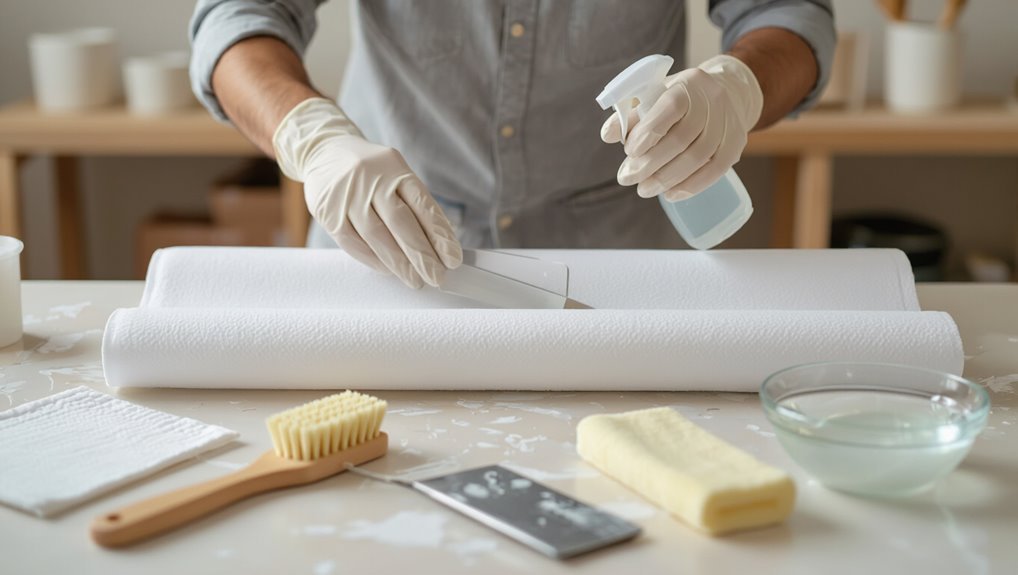
Before you start, know exactly what this guide covers and whether it fits your situation: it walks you through safe, practical methods for removing dried paint from fabric and PVC roller blinds.
It explains which tools and cleaners to use and tells you when a blind is better replaced than repaired.
You’ll get clear cleaning techniques, maintenance tips, target readership, skill level, and expected results so you can decide quickly.
Quick Removal Checklist: Immediate Steps Before Anything Else
If you spot dried paint on your roller blind, act quickly to prevent stains from setting further.
First assess the damage to decide whether a spot-clean or a deeper treatment is needed.
Then protect the floor and nearby surfaces so cleaning won’t make a bigger mess.
Act Quickly, Assess Damage
When you spot wet paint on your roller blind, act fast and don’t let it dry—your chances of full removal drop sharply once it sets.
You’ll need quick action and an immediate damage assessment: identify paint type, check fabric, blot excess, and decide if cleaning or pro-level help’s needed.
- Note paint type
- Inspect fabric
- Blot excess
- Choose next step
Protect Surrounding Areas
1. Before you start, clear the area and lay drop cloths or plastic sheeting to catch flakes and drips. Tape edges and remove nearby objects.
Use painter’s tape to protect trim and flooring. These simple cleaning techniques focus on damage prevention—keeping paint off surfaces and preventing stains.
You’ll work faster and cleaner with the perimeter secured and tools within reach.
Identify Blind Material and Hardware (Fabric, Vinyl, Tube, End‑Caps)
First check whether your blind is fabric or vinyl, since each needs different cleaners and techniques.
Then inspect the roller tube and end‑caps for paint buildup or damage that could affect removal. Knowing these materials and hardware tells you which tools and solvents you can safely use.
Determine Fabric Versus Vinyl
Wondering whether your roller blind is fabric or vinyl? You can tell by touch, appearance, and response to water. Check these quick clues:
- Smooth, slightly glossy surface — often vinyl, showing vinyl durability.
- Woven texture, softer hand — fabric, matching common fabric characteristics.
- Bend and feel: vinyl stays rigid.
- Water bead test: beads on vinyl, absorbs on fabric.
Inspect Tube And End‑Caps
Before you start cleaning, take a close look at the roller tube and end‑caps to identify what you’re working with; the tube’s material and the style of end‑caps affect how stubborn paint should be removed and what solvents or tools are safe to use. Check for metal, plastic, or cardboard cores and removable caps to plan roller blind maintenance and match solvents to paint types.
| Tube | End‑cap | Tip |
|---|---|---|
| Metal | Removable | Use mild solvent |
| Plastic | Snap‑fit | Test a patch |
| Cardboard | Glued | Avoid saturation |
How to Tell What Type of Dried Paint You’re Dealing With
How can you tell what kind of dried paint is on your roller blind? Inspect texture, sheen, and scent; that helps match paint types to removal techniques.
Check texture, sheen, and scent to identify dried paint—flaky, glossy, powdery, or sticky clues guide removal.
- Flaky, chalky surface — likely water-based.
- Hard, glossy film — likely oil-based or enamel.
- Powdery residue — maybe latex or chalk paint.
- Sticky tackiness — unfinished or acrylic blend; test a hidden area.
Safety and Prep for Cleaning Blinds: Tools and Workspace
Before you start, put on gloves, goggles, and a mask so you’re protected from chemicals and dust.
Clear a well-ventilated workspace, lay down drop cloths, and position the blind on a stable surface for easy access.
Gather safe cleaning supplies—mild detergent, rubbing alcohol, and a plastic scraper—and avoid harsh solvents unless you know the paint type.
Protective Gear Essentials
When you’re about to tackle dried paint on roller blinds, gear up with the right protective equipment to keep yourself and the workspace safe—gloves, eye protection, and a respirator are nonnegotiable if solvents or scraping are involved.
Use protective gloves and proper eye protection, and verify fit.
- Nitrile gloves
- Safety goggles
- Respirator mask
- Protective clothing
Workspace Setup Steps
1. Set up a clean, ventilated area for workspace organization and clear floor space. Lay drop cloths, open windows, and keep kids/pets away. Use careful tool selection and arrange items within reach.
| Item | Purpose |
|---|---|
| Drop cloth | Protect floor |
| Tools tray | Contain scrapers |
Safe Cleaning Supplies
Since you’ll be handling dried paint and delicate blind fabric, gather only the safest, purpose-built supplies: a soft-bristle brush, plastic scrapers, mild detergent, rubbing alcohol or a commercial paint remover rated for fabrics, microfiber cloths, and a pair of chemical-resistant gloves.
Use eco-friendly options or non-toxic solutions when possible; test on a hidden patch first.
- Soft brush
- Plastic scraper
- Microfiber cloth
- Gloves
Test a Hidden Spot First (Quick First‑Aid and Compatibility Check)
Before you tackle the visible stain, pick a hidden edge or the back of the blind and try your chosen cleaner there first; this quick test lets you confirm compatibility and avoid damaging the fabric or finish.
Use a cotton swab, wait a few minutes, and blot gently. If color, texture, or sheen change, stop — that hidden spot compatibility check just saved you from bigger damage.
Soften Water‑Based (Latex) Paint Safely
If the hidden-spot test showed no adverse effects, you can start loosening dried water-based (latex) paint using gentle solvents and warm water.
Use mild cleaning solutions and soft cloths; avoid harsh scrubbing.
Use gentle cleaners and soft cloths—skip harsh scrubbing to protect the surface.
Try these paint removal techniques in order:
- Warm soapy water and a microfiber cloth.
- Damp sponge with gentle solvent.
- Soft-bristled brush with repeat rinses.
- Blot dry and air-dry fully.
Dissolve Oil‑Based/Alkyd Paint Safely
When tackling dried oil‑based or alkyd paint on roller blinds, you’ll need stronger solvents than for latex but still proceed cautiously to avoid fabric damage and fumes; always work in a well‑ventilated area and wear gloves.
Test a solvent spot‑wise, use mineral spirits or citrus solvent, blot gently, and rinse.
Understand paint properties to choose safe cleaning techniques and protect blind backing.
Remove Flakes and Crusts From Fabric Blinds
Scrape gently to lift loose flakes and crusts from fabric blinds without spreading debris or damaging fibers.
Afterward, vacuum with a brush attachment and spot‑clean remaining residue using mild detergent and water. Follow fabric care and maintenance tips to prevent abrasion or color loss.
- Test hidden area first
- Use a soft scraper
- Blot, don’t rub
- Air dry flat
Remove Paint From Vinyl and PVC Blinds
First check whether the paint is water-based or oil-based, since that determines which cleaners will work.
If it’s water-based, you can usually loosen spots with warm soapy water; for oil-based paint, reach for a gentle solvent like isopropyl alcohol or a commercial PVC cleaner.
Always test your chosen solvent on an inconspicuous spot first to make sure it won’t damage the vinyl.
Assess Paint Type
Which kind of paint are you dealing with—latex, oil-based, or acrylic?
You’ll check paint properties to choose safe cleaning methods for vinyl and PVC blinds.
Identify finish, flexibility, and adhesion before acting.
Consider testing a hidden spot first.
- Latex — water-based, softer.
- Oil — solvent-based, tougher.
- Acrylic — durable, flexible.
- Unknown — test small area.
Use Gentle Solvents
Once you’ve identified the paint type and tested a hidden spot, move on to gentle solvents that’ll lift dried paint from vinyl and PVC without damaging the material.
Apply isopropyl alcohol or a mild citrus-based remover with a soft cloth, work small areas, and blot rather than rub.
Rinse thoroughly and repeat as needed, using gentle solvents and effective techniques to preserve the blind.
Remove Paint From Polyester and Fabric‑Blend Blinds
Treat polyester and fabric‑blend blinds gently: these materials can absorb water‑based paints and resist solvents, so you’ll need a careful, low‑moisture approach to lift dried paint without damaging fibers or color.
Treat polyester and fabric‑blend blinds gently; use low‑moisture, non‑alkaline methods to lift dried paint without harming fibers.
- Blot excess with a damp microfiber; test fabric care first.
- Gently coax flakes with a soft brush.
- Use mild detergent diluted for stubborn spots.
- Rinse minimally, air dry flat; match methods to paint types.
Safe Commercial Removers for Blinds: Which to Use and When
Wondering which commercial remover will clean your blinds without causing damage? You’ll want to consult commercial product reviews to pick low-odor, fabric-safe solvents (water-based paint strippers, enzyme cleaners).
Test a hidden spot first, use gloves, and ventilate.
For sensitive fabrics consider eco friendly alternatives like citrus or biodegradable cleaners that lift paint gently—use sparingly and follow manufacturer care labels.
Cleaning the Blind Mechanism, Tube, and End Caps
After you’ve handled the fabric and chosen a safe remover, turn your attention to the blind’s mechanism, tube, and end caps—paint and cleaner residue can gum up moving parts and shorten the blind’s life.
Use gentle cleaning techniques and simple maintenance tips to restore function.
- Remove end caps.
- Wipe tube with isopropyl.
- Clear gears with soft brush.
- Lubricate sparingly.
Fixing Paint Near Seams, Hems, and Printed Patterns
When paint sits on seams, hems, or printed patterns, you’ll need a careful, targeted approach to avoid pulling stitches or fading designs.
When paint lands on seams or patterns, treat gently—work from the edge outward to protect stitches and prints.
Work from the painted edge outward with a soft cloth and mild solvent, testing invisibly.
Use tiny spatulas and precision swabs for seam repair areas, and dab gently to protect threads.
For pattern preservation, avoid bleaching and excessive rubbing.
Stain Treatment and Color Restoration After Removal
Once you’ve carefully lifted paint from seams, hems, and printed areas, you’ll often find faint stains or slight color loss that need attention; treating these spots promptly improves the blind’s appearance and prevents permanent discoloration.
- Test mild detergent on a hidden area for stain prevention tips.
- Use diluted alcohol or stain remover sparingly.
- Apply fabric-safe touch-up paint, following color matching techniques.
- Blend edges gently with a soft cloth and let cures set.
Drying, Re‑Rolling, and Rehanging Without Warps or Creases
1. Use gentle drying techniques: lay the blind flat or hang it slightly tilted to air-dry, avoiding direct heat that warps fabric.
Once dry, use re rolling methods that keep the blind taut and aligned—roll slowly from one end, smoothing with your hand to prevent creases.
Rehang carefully, checking tension and straightness before securing.
Prevent Splatters Next Time: And When to Replace or Call a Pro
Having dried and re-rolled your blind carefully, take steps to prevent future paint splatters by creating simple barriers and using better application techniques.
You’ll cut cleaning time and protect fabric; consider professional replacement options if damage’s extensive.
Tips:
- Use drop cloths and masking tape.
- Use a paint guard.
- Spray farther from blinds.
- Test roller load first.
Frequently Asked Questions
Can I Use a Hairdryer to Soften Paint on Blinds?
Yes, you can use a hairdryer to soften paint on blinds, but you’ll need to adjust heat application based on paint types; low heat and patience work for water-based paints, while solvent-based paints may resist or release fumes.
Will Vinegar Remove Dried Paint From Blinds?
Yes — but don’t expect vinegar to perform miracles; it’s gentler, so it’ll work better on water-based paint types with patient cleaning techniques. You’ll soften flakes, scrub lightly, and repeat until the stain yields.
Can Paint Removal Damage Blind Warranty or Finish?
Yes, it can—using harsh solvents or abrasive methods may void paint warranty and harm blind materials like vinyl, fabric, or wood. You should check manufacturer guidelines and test cleaners on an inconspicuous spot first.
How Long Should I Wait After Paint Removal to Operate Blinds?
Wait at least 24–48 hours after paint drying before operating blinds; shorter waits risk smudging or tackiness. For blind maintenance, gently test a corner at 24 hours, then resume normal use if finish feels fully dry.
Are There Eco-Friendly Removers Safe for Indoor Use?
Like a gentle breeze, you can use eco-friendly, natural solutions like vinegar, baking soda paste, or citrus-based cleaners; they’re formulated for indoor safety, so you’ll protect blinds and breathe easier while removing dried paint effectively.
Conclusion
You’ve got the know‑how now: identify the blind material, tackle dried paint with the right solvent, and treat seams and prints gently so the fabric looks whole again. Prep, patience, and careful drying will stop warps or creases. If paint’s stubborn or you’re nervous, call a pro. Keep a drop cloth and a trusty stein‑sized sense of caution on hand to prevent future splatters and prolong your blinds’ life.
