
How to Remove Dried Paint From Metal Like a Pro
You’ll start by matching method to metal and paint: test a hidden spot, use gentle solvents or citrus-based gel for aluminum and delicate finishes, and employ scrapers, brass brushes or grinders for steel and thicker coatings. Identify oil vs water-based paint with alcohol and smell tests, wear PPE, ventilate, and clamp parts. Neutralize and clean after stripping, then prime quickly to prevent flash rust. Keep going and you’ll get step‑by‑step techniques, tools, and safety tips.
Quick Guide: Pick a Method (Metal, Paint, Delicacy)
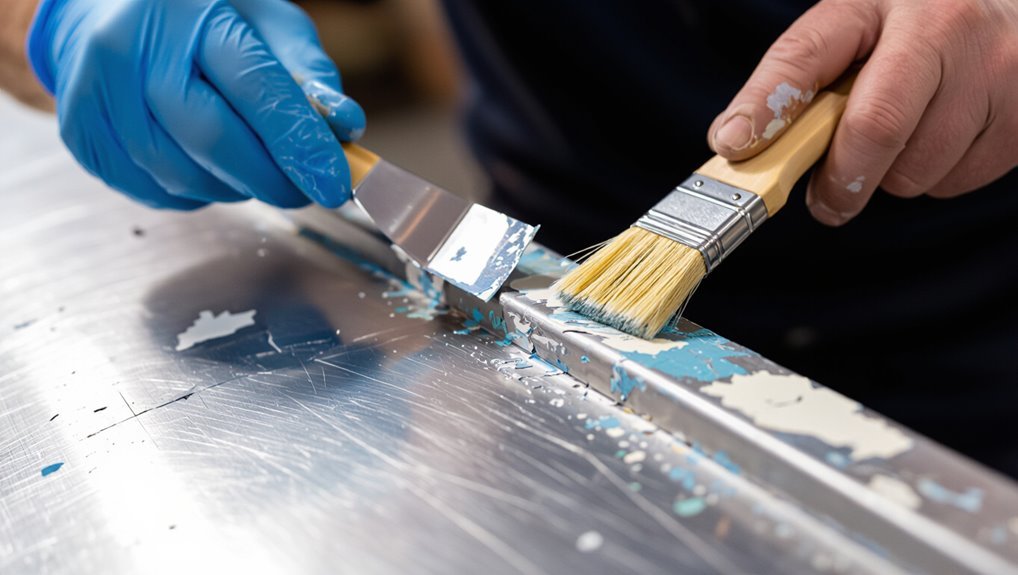
Before you start, pick the right method based on the metal type, the paint kind, and how delicate the surface is—you’ll save time and avoid damage.
You assess paint types, test a small area, and choose safe removal techniques—mechanical scraping for hardy finishes, chemical strippers for stubborn layers, or gentle solvents for fragile coatings.
Work patiently and protect surrounding areas.
What Kind of Metal Are You Working With?
Which metal are you dealing with—steel, aluminum, brass, or something plated? You’ll inspect surface hardness, coatings, and corrosion. Match technique to aluminum types, steel grades, copper finishes, or other metal alloys to avoid damage.
| Metal | Sensitivity | Recommended caution |
|---|---|---|
| Aluminum | High | Gentle abrasives |
| Steel | Medium | Moderate grit |
| Brass/Copper | Low | Test solvent first |
How to Tell Oil‑Based vs Water‑Based Paint
Want to know whether a paint is oil‑based or water‑based? Check labels first—manufacturers list paint types.
If unknown, try a solvent test: rub a small hidden spot with rubbing alcohol; water‑based softens, oil‑based won’t.
Another method: smell—oil paints smell stronger and take longer to cure.
Smell can help: oil paints often have a stronger odor and take longer to fully cure.
These identification methods guide your choice of remover and safe technique.
Strip the Whole Surface or Spot‑Treat? How to Decide
Look over the metal closely to judge how much paint is flaking, rusted, or uneven—this condition determines whether a full strip is necessary.
If the damage is localized, spot‑treating saves you time and money, but a full strip gives a uniform surface that’s easier to repaint.
Balance the labor and material costs against the quality you want and how long you need the repair to last.
Surface Condition Assessment
Assess the paint’s adhesion, extent of damage, and the metal’s condition before choosing whether to strip the whole surface or spot‑treat. If large areas show flaking, rust, or multiple old coatings, you’ll save time and get better results by stripping completely.
However, if the paint is mostly sound with isolated failures, targeted spot repairs are usually faster and less invasive.
- Use surface inspection techniques: scrape, tap, solvent test
- Note metal surface types: steel, aluminum, cast iron
- Mark zones for full strip or localized repair
Time And Cost Tradeoff
When deciding whether to strip the whole surface or spot‑treat, weigh how much time you have, what your budget is, and the long‑term results you want; conduct a cost analysis, consider time efficiency, and factor in budget considerations and labor investment to choose full stripping for uniform finish or spot treatment for quick fixes.
| Option | Time | Cost |
|---|---|---|
| Full strip | High | Higher |
| Spot treat | Low | Lower |
Safety Gear You Must Wear Before You Start
Before you start removing dried paint from metal, put on proper safety gear to protect your lungs, eyes, and skin. You’ll need items that block fumes, splatter, and abrasions.
- Protective eyewear and a respirator mask
- Disposable gloves and coveralls
- Sturdy work boots and use ventilation fans nearby
Stay cautious, replace gear if damaged, and prioritize breathing safety.
Prepare and Protect the Workspace
Once you’ve geared up, set up a dedicated work area that keeps paint chips and fumes away from the rest of your space.
Lay down protective coverings like drop cloths or plastic sheeting, tape edges, and position a fan for ventilation.
Use simple workspace organization: designate bins for debris, tools, and solvents, label them, and keep pathways clear to prevent accidents.
Hand Tools: Scrapers, Putty Knives, and Steel Wool
You’ll want to pick a scraper or putty knife with a blade that’s sturdy but not so sharp it gouges the metal.
For stubborn spots, use fine-grade steel wool and work with the grain to avoid scratches, and always wear gloves to protect your hands.
I’ll cover blade types, proper angles, and safe steel wool techniques next.
Choosing The Right Scraper
When the paint’s clinging stubbornly, pick a scraper that matches the metal’s hardness and the paint’s thickness so you don’t gouge the surface.
You’ll assess scraper types and material considerations to protect finishes and speed removal. Choose blade angle, handle grip, and replaceability.
- Thin flexible blades for delicate trim
- Stiff metal blades for heavy buildup
- Angled putty knives for edges
Safe Steel Wool Techniques
After you’ve selected the right scraper, add steel wool to your toolkit for stubborn spots and fine finishing—it’s softer than most metal blades but abrasive enough to remove paint without gouging if you use it correctly. Use safe steel wool practices: wear gloves, test a hidden area, work with grain, and clean residue. Practice effective techniques for even, scratch-free results.
| Tip | Action |
|---|---|
| Gloves | Protect hands |
| Test | Hidden area first |
| Grain | Rub with grain |
| Pressure | Light, controlled |
| Clean | Wipe residue away |
Chemical Strippers: Choose, Apply, Neutralize Safely
If you need to remove stubborn, dried paint from metal, chemical strippers can be the fastest option—but you must choose and use them with care.
You’ll weigh chemical stripper types and effectiveness comparison, follow application techniques, and honor safety precautions and environmental considerations.
Neutralize and manage residue disposal properly.
- Pick gel, solvent, or Ca(OH)2-friendly formulas.
- Test small area.
- Ventilate, gloves, eye protection.
Use a Heat Gun to Lift Paint: Technique and Cautions
Aim the heat gun steadily and let controlled heat soften the dried paint so you can lift it with a scraper or wire brush.
Adjust heat settings for paint types, maintain correct application distance to avoid surface damage, and balance removal speed with care.
Follow safety precautions, inspect tool maintenance regularly, and weigh an effectiveness comparison against chemical or mechanical methods before proceeding.
Sanding and Wire‑Brushing: Grit, Pressure, and Patterns
Once you’ve softened and lifted as much paint as heat will allow, move on to sanding and wire‑brushing to remove remaining flakes and feather edges.
You’ll use sanding techniques and pick brush types deliberately, balancing grit selection with pressure application to avoid gouging metal.
- Start coarse, finish fine.
- Prefer stainless or brass brushes.
- Light, consistent strokes win.
Power Tools: Grinders, Rotary Brushes, and Oscillating Tools
Before you fire up any power tool, make sure you’ve got the right PPE, wheel guards, and a secure workpiece to prevent kickback and sparks.
Pick rotary brushes that match the metal and paint hardness—brass or nylon for delicate finishes, steel for heavy buildup—and check rpm ratings.
Use an oscillating tool for tight spots and edges, applying light pressure and short passes to avoid gouging the metal.
Grinder Safety Essentials
Grinders, rotary brushes, and oscillating tools can remove dried paint fast, but they can also kick up sparks, shards, and dust—so you need the right PPE, secure guards, and stable workpieces before you start.
You’ll follow grinder safety and use protective equipment, inspect wheels, and clamp parts.
- Wear eye, ear, and respiratory protection
- Check guards and wheel condition
- Secure the workpiece tightly
Rotary Brush Selection
Choose the right rotary brush and you’ll cut paint-removal time while protecting the metal surface from gouges and heat.
Inspect rotary brush types: wire cup for heavy build-up, twisted knot for stubborn spots, and nylon for delicate finishes.
Match brush size and speed to the grinder.
For safe rotary brush usage, clamp work, wear PPE, and test on a hidden area before full removal.
Oscillating Tool Techniques
Having picked the right rotary brush, you can now bring an oscillating tool into the workflow to tackle paint in tight corners, along edges, and on contours where grinders and brushes can’t reach.
You’ll appreciate oscillating tool benefits for precision and minimal surface damage. Choose appropriate oscillating tool attachments and:
- Use a rigid scraper for thick flakes
- Try a carbide blade for stubborn spots
- Finish with a sanding pad
Media Blasting Options for Home and Shop (Sand, Soda, Shells)
When you need to strip paint from metal, media blasting gives you several effective options—sand for heavy-duty removal, sodium bicarbonate (soda) for delicate or detailed parts, and crushed shells for a middle ground that’s gentle on surfaces but still aggressive enough for thicker coatings. Use sandblasting techniques, soda blasting, and shell media responsibly; choose pressure, nozzle, and distance for results.
| Toughness | Texture | Emotion |
|---|---|---|
| Sand | Gritty | Fearless |
| Soda | Soft | Careful |
| Shell | Balanced | Confident |
Removing Paint From Delicate or Decorative Metalwork
First identify the metal type and finish so you know what it can tolerate.
Test any solvent or method in an inconspicuous spot before treating visible areas.
Use gentle techniques—soft brushes, mild solvents, and careful scraping—to protect delicate or decorative details.
Assess Metal Type
Because decorative and delicate metals react differently to cleaners and tools, you need to identify the metal before choosing a removal method.
Know metal properties and paint compatibility to prevent damage. Check finish, ferrous content, and patina; then match cleaner strength.
- Brass, bronze: softer, avoid harsh abrasives
- Iron, steel: tougher, watch rust
- Silver, plated: very delicate, use mild methods
Test Inconspicuous Area
Before doing any full-scale removal, pick a hidden spot—like the underside of a base or inside a hinge—and try your chosen solvent and tool there to see how the metal and finish react.
You’ll run simple test techniques, note test results, and adjust concentration, dwell time, or tool pressure.
Record what works and what damages, so you avoid harming decorative or delicate metalwork.
Gentle Removal Techniques
With your test spot confirming what the metal can tolerate, move on to gentler methods tailored for delicate or decorative pieces.
You’ll protect finishes by choosing mild options:
- Use soft pads and gentle abrasives like 0000 steel wool for light scuffs.
- Apply natural solvents (citrus or soy-based) in small amounts.
- Work slowly with plastic scrapers and a soft brush to lift paint without damage.
Remove Rust and Paint From Metal at Once
If you want to strip both rust and old paint at once, choose a method that tackles corrosion and coating together so you save time and avoid redoing work.
Assess paint compatibility assessment and select a combined chemical stripper or abrasive blasting suitable for the metal.
Follow rust removal techniques like wire brushing, sanding, or media blasting, then neutralize residues, rinse, and dry before priming.
Low‑Odor and Eco‑Friendly Paint Removal Methods
You can tackle dried paint with low-odor citrus-based solvents that soften finish without harsh fumes.
Pair those solvents with mechanical softening—scraping, scuffing, or using a soft rotary brush—to lift paint more easily.
These methods cut odor and environmental impact while keeping the metal intact.
Citrus-Based Solvent Options
Although citrus-based solvents come from natural plant oils, they pack enough solvency to loosen many types of dried paint without the harsh fumes of mineral spirits.
You’ll appreciate citrus benefits and solvent effectiveness for sensitive jobs.
Try these options:
- Pure d-limonene cleaner — low odor, biodegradable.
- Citrus gel — clings to vertical metal.
- Citrus paste — concentrated for stubborn spots.
Mechanical Softening Techniques
Reach for simple tools and gentle abrasion to soften dried paint on metal without harsh fumes—think plastic scrapers, fine-grit sanding pads, brass brushes, and rubber erasers.
You’ll use mechanical methods to lift flakes, alternating light sanding and scraping. Work with softening tools to avoid gouges, keep surfaces cool, and finish with a microfiber wipe.
Repeat gently until the paint yields.
Neutralize and Dispose of Paint and Stripper Residue
When you’ve stripped or scraped paint from metal, neutralize any remaining chemicals before disposal to prevent reactions or environmental harm.
You should follow local guidelines for paint disposal and residue neutralization, contain waste, and avoid drains.
Use PPE, label containers, and contact hazardous-waste services if needed.
- Test and neutralize solvents safely
- Seal and label residue containers
- Use certified disposal facilities
Clean and Degloss Metal After Paint Removal
Scrub the metal with a deglosser or solvent-soaked cloth to remove oils, residual paint film, and loose particles so the surface will accept new coatings.
After wiping, rinse and dry thoroughly.
Use fine abrasives, buffing pads, and metal polishing techniques to smooth imperfections.
Follow surface restoration tips: clean crevices, remove dust with tack cloths, and inspect for corrosion before proceeding.
Choose the Right Primer and Paint for Treated Metal
1 clear primer choice sets the foundation for durable paint on treated metal, so pick one formulated for metal and compatible with your topcoat.
You’ll choose based on substrate and exposure, matching primer types to desired paint finishes.
Consider:
- Epoxy primers for corrosion resistance
- Zinc-rich primers for bare steel
- Acrylic primers for easy topcoat adhesion and varied paint finishes
Prevent Flash Rust and Ensure Long‑Lasting Adhesion
Because metal begins to oxidize the moment it’s exposed to moisture and oxygen, you’ll need to act quickly after cleaning to prevent flash rust and secure lasting adhesion.
Wipe surfaces dry, use a corrosion inhibitor if delays occur, and apply compatible primer within recommended time.
Follow adhesion tips: scuff lightly, remove dust, and avoid contaminating treated areas before topcoat application.
Common Problems, Quick Fixes, and Cost/Time Tradeoffs
When dried paint won’t come off or the metal shows streaks and rust, pick a fix that matches the problem severity and the time or money you can spend.
You’ll face paint removal challenges; choose efficiency strategies that fit. Quick options vary by cost and effort:
- Chemical stripper: fast, pricier, wear PPE
- Mechanical sanding: cheap, labor‑intensive
- Heat gun: moderate speed, risk of damage
Frequently Asked Questions
Can Old Primer Be Removed the Same Way as Topcoat Paint?
Yes — you can often remove old primer like topcoat paint, but you’ll adjust old primer techniques and choose appropriate paint removal products based on primer type, adhesion, and metal condition, so test a small area first.
Will Heat Guns Damage Thin Sheet Metal or Cause Warping?
Yes — if you blast thin sheet metal with a heat gun too long you’ll warp it; imagine paper curling under a flame. Use heat gun safety, keep distance, low settings, and move constantly while monitoring metal thickness.
How Do I Remove Paint From Metal With Embedded Decals or Labels?
You’ll remove paint around decals carefully, using gentle solvents and a soft scraper so decals removal’s controlled while ensuring label preservation; mask edges, test solvents off-piece, work slowly, and finish with mild detergent to protect adhesives and print.
Can I Strip Painted Metal That’s Been Previously Powder Coated?
About 70% of DIYers underestimate prep time; yes, you can strip painted metal previously powder coated, but you’ll need proper metal stripping methods, abrasive or chemical processes, and safety gear to avoid substrate damage and health risks.
Will Paint Removal Methods Affect Underlying Metal Plating (Zinc, Chrome)?
Yes — chemical solvents and abrasive methods can harm zinc or chrome plating if you’re not careful; solvents may etch finishes, abrasives can remove plating, so you’ll want gentler solvents, mild abrasives, and testing before full treatment.
Conclusion
You’ve stripped, scraped, and sanded until the metal shines like a ship’s hull at dawn; now trust the prep you’ve done. Picture a smooth, clean surface as a blank sail—prime it right, paint it firmly, and you’ll keep rust from hitching a ride. You’ll protect the metal and prolong the finish, so each brushstroke or spray pays off. Stay cautious, take your time, and enjoy the durable result you built.
