
How to Paint Inside Camper Walls: Simple RV Interior Makeover
You can give your camper a fresh interior by prepping thoroughly, repairing gaps, and choosing the right primer and low‑VOC satin or eggshell paint for plywood or thin paneling. Sand, clean, and seal seams, then use a high‑adhesion, stain‑blocking primer. Roll large areas and brush trim, ventilate well, and allow proper cure times. Focus on mold prevention and touch‑ups for longevity. Keep tools, tape, and patience handy — continue and you’ll find step‑by‑step tips and timing guidance.
What to Expect When Painting Camper Walls
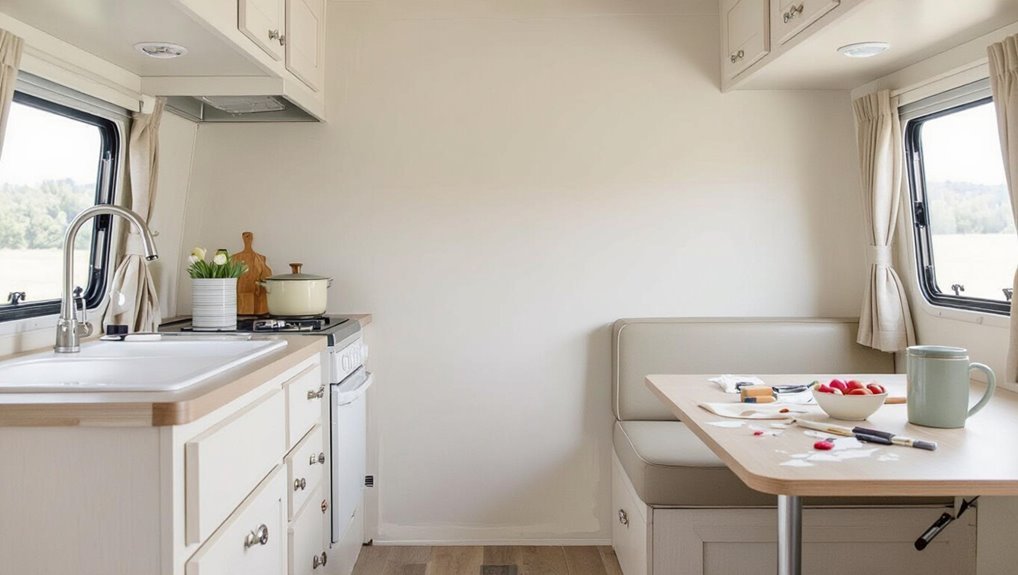
Expect to spend more time on prep than on actual painting: you’ll clean, sand, and mask surfaces, patch holes, and remove fixtures so paint adheres and looks professional.
You’ll assess camper wall textures to choose sanding and priming methods, plan ventilation, and test small swatches.
Consider paint color psychology for mood and light; pick tones that brighten tight spaces and match functional needs.
RV Interior Painting: Best Paint Types
After you finish prep and swatch testing, choose paint formulated for RV interiors so it holds up to movement, moisture, and limited ventilation.
Pick low-VOC, mildew-resistant latex or acrylic with satin or eggshell sheen for easy cleaning and paint durability.
Consider color psychology: lighter tones expand space, warm hues add coziness, and muted accents hide scuffs while keeping a calm, practical cabin feel.
Choosing Primer for Thin Paneling and Plywood
Before you prime thin paneling or plywood, you’ll want to clean, sand, and fill any gaps so the surface will accept coating evenly.
Choose a primer formulated for porous woods or thin laminates—stain-blocking and adhesion-promoting options work best—and consider oil-based, shellac, or high-build acrylic primers depending on stains and finish.
Apply according to label directions—thin, even coats with proper drying times between layers—to avoid bleed-through and guarantee a smooth topcoat.
Surface Preparation Needs
When you’re working with thin paneling or plywood in a camper, choosing the right primer matters because these substrates absorb paint unevenly and can show knots, seams, or tannin bleed-through.
Pick a high-adhesion, stain-blocking primer formulated for wood or paneling—preferably a thin-surface or shellac-based sealer for heavy tannins, or a good-quality acrylic bonding primer if you want lower odor and easier cleanup.
- Do surface cleaning first.
- Perform a thorough wall inspection.
- Sand glossy or rough spots lightly.
- Fill gaps and seal seams before priming.
Primer Type Options
Primer choice makes a big difference on thin paneling and plywood because these materials soak up coatings unevenly and can reveal knots, seams, or stains; pick a primer that matches the board’s condition and your finish goals.
You’ll weigh oil based vs water based options: oil blocks stains, water dries faster.
Check adhesion properties comparison for bonding to varnished or raw surfaces before you buy.
Application And Drying
Start by laying out a clean, dry workspace and plan your coat schedule so you can control drying times and avoid re-coating too soon.
You’ll choose primers suited for thin paneling and plywood, use gentle application methods, and employ proper drying techniques to prevent warping.
- Sand lightly
- Wipe dust
- Thin coats
- Airflow and patience
Tools and Supplies for a Weekend RV Makeover
Before you start painting, gather the essential painting tools—brushes, rollers, trays, and a good angled brush for trim.
Prep supplies like sandpaper, tack cloths, patching compound, and painter’s tape will make surfaces smooth and paint-ready.
Don’t forget safety gear—respirator or mask, gloves, and eye protection—so you can work confidently all weekend.
Essential Painting Tools
Getting the right tools makes a weekend RV wall makeover fast and stress-free, and you’ll want a compact selection that covers prep, painting, and cleanup.
You’ll need essential tools and simple painting techniques to get smooth results. Choose quality brushes and rollers, a mini roller frame, painter’s tape, and a small angled brush.
- Brushes
- Rollers
- Tape
- Tray
Prep And Surface Supplies
Preparation makes the difference between a sloppy job and a lasting finish, so gather the right surface supplies before you roll a single coat.
You’ll need mild cleaner, tack cloths, gentle scrub pads, filler for dents, fine-grit sandpaper, primer suited to wall textures, painter’s tape, and quality rollers.
Prioritize surface cleaning and correct primer to guarantee adhesion and smooth results.
Safety Gear And Materials
While you’ll want speed and neat edges, safety always comes first—so kit up with the right protective gear and materials before you touch a brush.
Gear to grab:
- Safety goggles to shield your eyes.
- Respirator mask for paint fumes and dust.
- Nitrile gloves to protect skin.
- Drop cloths and painter’s tape for neat, safe work.
Realistic Weekend Timeline for an RV Interior Refresh
Plan to tackle your RV interior refresh over a focused weekend by breaking the work into clear stages—prep, paint, and finish—so you’ll stay on schedule and avoid costly rework. Consider color psychology and current design trends when choosing paint. Stick to timed blocks: clean, sand, prime; two coats; dries and trim; hardware; final touches.
| Task | Time |
|---|---|
| Clean & sand | 2h |
| Prime | 1h |
| Paint coat 1 | 2h |
| Paint coat 2 | 2h |
| Trim & inspect | 2h |
Inspecting Walls for Damage, Mold, and Loose Panels
Start by giving every wall a close once-over, checking for soft spots, cracks, stains, and panels that shift when you press them.
Start each wall with a close inspection—check for soft spots, cracks, stains, and panels that move when pressed
Perform a thorough wall inspection and damage assessment, noting moldy areas and loose edges.
Then:
- Mark soft or sagging spots.
- Photograph stains and mold patterns.
- Probe seams for movement.
- List repairs before painting.
Safely Removing Fixtures, Trim, and Switch Plates
Before you touch anything, shut off the power at the breaker so you won’t risk a shock while working around outlets and switches.
Remove switch plates and light fixtures carefully with the right screwdriver, supporting fixtures as you loosen them so nothing drops.
Label and bag each screw and piece of hardware, then store them together so reassembly is fast and foolproof.
Turn Off Power
1 simple but essential step: shut off the circuit that powers the area you’ll be working on. For power safety and electrical precautions, verify power’s off before touching anything.
- Switch breaker off
- Test with noncontact tester
- Remove fixtures only when dead
- Keep screws and parts labeled
Don’t rely on switches alone; confirm zero voltage every time.
Remove Plates Carefully
With the power confirmed off, you can remove switch plates, outlet covers, light fixtures, and trim without risking a shock.
Use a screwdriver and steady hands when removing fixtures, practicing careful handling to avoid scratching surfaces.
Cover exposed wires with protective coverings temporarily, tuck fragile pieces into a box, and guarantee safe storage nearby so parts stay protected and accessible during painting.
Label And Store Hardware
After you’ve loosened and removed fixtures, label each piece immediately and drop matching screws into clearly marked bags or small containers so nothing gets lost.
Keep a tight system for hardware organization and simple storage solutions.
- Label parts
- Bag screws by location
- Use a small tackle box
- Tape diagrams to bags
Cleaning Camper Walls Before Painting
Before you paint, clean the walls thoroughly so the new finish will stick and look even. You’ll remove grease, mildew, and dirt with gentle cleaning solutions matched to your wall materials. Wipe, rinse, and let dry fully before priming.
| Task | Tip |
|---|---|
| Degrease | Use dish soap mix |
| Mildew | Use diluted bleach |
| Rinse | Fresh water rinse |
| Dry | Air or towel dry |
Sanding Plywood and Thin Paneling Quickly
Now that the walls are clean and dry, you can move on to sanding plywood and thin paneling to create a smooth, paint-ready surface.
Now that walls are clean and dry, sand plywood and thin paneling to a smooth, paint-ready finish.
Use quick sanding techniques and aim for consistent plywood finishes. Follow steps below:
- Start with 80–120 grit for old finish removal.
- Switch to 150–220 grit for smoothing.
- Sand along the grain.
- Vacuum and tack before priming.
Repairing Gaps, Cracks, and Using Wood Filler
Start by cleaning and widening cracks and seams so filler will bond well.
Push wood filler into gaps, let it cure, then sand smooth to the surrounding surface.
You’ll get a seamless base that takes paint evenly.
Prep Cracks And Seams
Patch cracks and seams carefully so your camper walls look smooth and hold paint well. You’ll focus on crack sealing and seam filling before painting.
- Clean area and remove loose material.
- Use appropriate caulk for gaps.
- Apply wood filler to small holes.
- Let repair product cure fully, then proceed to final prep.
Apply And Sand Filler
Mix and apply the right wood filler or putty to fill gaps and cracks, pressing it firmly into voids so it bonds to the substrate; you’ll want to overfill slightly to allow for sanding back to a smooth, flush surface once it cures.
After curing, use progressive sanding techniques—start coarse, finish fine—keeping dust controlled.
Inspect, touch up filler application as needed, then prime before painting.
Treating and Preventing Mold and Mildew on Walls
If you’ve spotted dark spots or a musty smell in your camper, act quickly to treat and prevent mold and mildew before they spread and damage surfaces.
You should:
- Ventilate and dry the area thoroughly.
- Use a mild bleach or vinegar solution for mildew treatment.
- Fix leaks and insulate to prevent moisture.
- Apply mold prevention primer and monitor regularly.
Calculate Paint and Primer Quantities for Your RV
Before you buy anything, measure the interior surface area of the walls so you can calculate how much primer and paint you’ll need; multiply wall height by length for each panel.
Add doors and cabinets if you plan to paint them, subtract windows and open storage, then total the square footage.
Use a paint calculator or quantity estimator, account for primer coats and paint coverage per gallon, and round up.
Choosing Colors That Brighten Small RV Spaces
You’ll want to favor light-reflective neutrals like warm whites, pale grays, and soft beiges to bounce natural light and make the space feel larger.
Pair those base shades with a few strategic accent colors—think a muted teal or sunny mustard—to add personality without overwhelming the small footprint.
Keep finishes matte or low-sheen to minimize glare and maintain a cozy, airy feel.
Light Reflective Neutrals
Use light tones to enhance space perception and keep finishes matte to reduce glare.
Consider these steps:
- Choose warm or cool neutrals.
- Test samples in daylight.
- Paint ceilings slightly lighter.
- Keep trim subtle for continuity.
Strategic Accent Colors
When you add a few well-chosen accent colors, small RV interiors instantly feel more lively and intentional without overwhelming the space. You’ll use color psychology to pick hues that lift mood and create focal points. Stick to bold contrasts sparingly—trim, cushions, or a single wall—to brighten, guide sightlines, and make compact areas feel purposeful.
| Emotion | Example |
|---|---|
| Calm | Soft blue |
| Energy | Sunny yellow |
| Cozy | Warm terracotta |
| Fresh | Mint green |
| Dramatic | Navy accent |
Which Sheen to Use to Hide Imperfections and Resist Moisture
Because camper walls get bumped, steamed, and often show every seam, choosing the right sheen matters: satin or semi-gloss hides imperfections better than flat and stands up to moisture and wipe-downs without shouting flaws.
Camper walls get bumped and steamed—pick satin or semi-gloss for moisture resistance and to hide seams.
Use sheen selection for moisture resistance and easy cleaning. Consider:
- Satin — balanced hide
- Semi-gloss — durable
- Low-luster — subtle
- Flat — avoid in wet areas
Masking Windows, Cabinets, and Fixtures Like a Pro
Before you load the brush, protect every window, cabinet, and fixture with careful masking so paint stays where you want it and cleanup stays quick.
Use low-tack painter’s tape, plastic sheeting, and craft paper to cover large surfaces. Press edges firmly, remove tape while paint’s tacky, and label pieces.
These masking techniques and professional tips save time and prevent costly touch-ups.
Painting Around Trim, Vents, and Tight Corners
Before you start rolling, prep around trim by cleaning edges and taping where paint shouldn’t go.
When painting near vents, remove or mask covers and use a brush to control paint flow.
For tight corners, work with a small angled brush and steady, short strokes to get crisp lines.
Prep Around Trim
Prepping trim, vents, and tight corners gets you clean lines and prevents accidental paint on hardware or seals, so tape and small tools are your best friends.
Use trim protection and plan for adhesive removal.
- Clean surfaces.
- Apply painter’s tape snugly.
- Use angled brush for edges.
- Remove tape slowly for crisp lines.
Paint Near Vents
Work carefully around vents to keep airflow clear and seals intact.
Remove vent covers when possible, label screws, and use painter’s tape to mask edges.
Apply thin coats with a small brush, employing vent painting techniques to reach slats.
Wipe drips immediately and keep a drop cloth under work to prevent avoiding paint spills.
Reattach covers after full drying.
Tackle Tight Corners
Now that vents are handled, tackle the tight corners around trim, outlets, and other obstacles with steady, deliberate strokes.
Use small brushes and patience as you work, mastering corner techniques and tackling textures carefully.
- Cut in with a 1–2″ angled brush.
- Feather paint toward edges.
- Blot excess with a damp cloth.
- Touch up after drying for clean lines.
Brush vs Roller vs Sprayer: Where to Use Each
Although each tool can get the job done, choosing between a brush, roller, or sprayer comes down to the surface, finish, and how much control you want; brushes give precision for corners and trim, rollers speed up flat walls, and sprayers cover large or textured areas quickly.
Use brush techniques for edges, roller advantages on smooth panels, and sprayer benefits for textured surface types.
Priming Camper Walls for Strong Adhesion
1 essential step before painting is applying a primer that matches your camper’s wall material — it helps paint stick, evens out porous surfaces, and prevents stains from bleeding through.
- Clean surfaces for best adhesion techniques.
- Sand glossy areas lightly.
- Choose primer benefits suited to metal, wood, or laminate.
- Apply thin, even coats and let dry fully before painting.
Applying Smooth, Drip-Free Paint Coats
With the primer fully cured, you’re ready to lay down paint that stays smooth and drip-free; proper technique and the right tools make all the difference. Use short, even strokes, load the roller lightly, and watch edges for runs—drip free techniques keep surfaces clean while ensuring smooth application.
| Calm | Pride | Comfort |
|---|---|---|
| Warm | Fresh | Safe |
| Bright | Peace | Cozy |
| Crisp | Joy | Home |
| Light | Hope | Rest |
How Long to Wait Between Coats and Cure Times?
Before you apply a second coat, check the paint manufacturer’s recommended recoat window and make sure the surface feels dry to the touch; waiting the proper interval prevents lifting, trapping solvents, or causing visible seams.
Follow these quick tips on drying intervals and cure times:
- Note recoat window on can.
- Touch-test multiple spots.
- Wait full cure before heavy use.
- Temperature affects timing.
Painting Textured or Grooved Paneling Efficiently
Once your coats have dried properly, you’ll face textured or grooved paneling differently than flat walls; these surfaces need tools and techniques that get paint into recesses without clogging detail. Use narrow brushes for grooves, stippling brushes for texture, and thin, even coats. Focus on Textured Techniques and Grooved Solutions to avoid buildup.
| Tool | Use | Tip |
|---|---|---|
| Narrow brush | Grooves | Thin strokes |
| Stippling brush | Texture | Light taps |
| Roller | Flats | Short nap |
How to Paint Over Dark or Patterned Surfaces
If you’re covering dark or busy patterned walls, plan on using primer and multiple thin coats so the old color doesn’t show through; a high-hide primer or a tinted primer toward your new shade will cut the number of finish coats and give more consistent coverage.
- Sand and clean surface.
- Apply high-hide or tinted primer.
- Use thin, even finish coats.
- Inspect for bleed-through and touch up.
Use dark surface techniques and pattern coverage strategies to guarantee uniform results.
Painting Cabinet Doors and Interior Storage Areas
You’ll want to start by thoroughly cleaning and scuffing cabinet surfaces so paint will stick and last.
Choose a durable, washable paint and plan how you’ll remove or protect hinges, hardware, and exposed edges for a clean finish.
I’ll walk you through prepping, paint selection, and handling doors and storage areas without damaging fittings.
Surface Prep And Cleaning
Cabinet doors and interior storage areas take more abuse than you think, so prep and cleaning are essential before you paint.
You’ll assess surface types, remove hardware, and degrease with appropriate cleaning solutions. Sand glossy finishes, vacuum dust, and wipe with tack cloth.
Follow these steps:
- Remove hardware
- Degrease
- Sand/light scuff
- Clean/tack cloth
Choosing Durable Paint
Because cabinet doors and storage areas get constant use, you need a paint that stands up to scuffs, moisture, and frequent cleaning.
Choose semi-gloss or satin acrylic enamel for durable finishes and easy wiping.
Prime properly, use thin multiple coats, and cure fully to maximize paint longevity.
Avoid porous, flat paints and prioritize products labeled for cabinets or high-traffic surfaces.
Hinges, Hardware, And Edges
When you remove doors and hardware, label each hinge and keep screws together so reassembly is fast and foolproof; if you prefer not to remove everything, mask hinges and pulls carefully to prevent paint build-up.
Follow these steps:
- Choose hardware selection that matches style and weight.
- Clean for hinge maintenance and lubricate moving parts.
- Sand edges for precise edge detailing.
- Consider trim upgrades for a finished look.
Refreshing Trim, Window Frames, and Door Edges
Revitalizing the trim, window frames, and door edges gives the camper a crisp, finished look and protects vulnerable seams from moisture and wear. You’ll choose trim styles and simple window treatments, sand, prime, and paint with durable enamel. Seal edges lightly and reinstall hardware for a clean result.
| Task | Tip |
|---|---|
| Sand | Use fine grit |
| Prime | Tack-free primer |
| Paint | Thin coats |
| Seal | Rubber-friendly caulk |
Dealing With Flexible Seams and Moving Joints
When you paint around expansion gaps and moving joints, you’ll need materials that flex with the camper’s shifting.
Choose a high-quality, paintable flexible sealant that stays elastic and bonds well to your surfaces.
Apply it neatly and let it cure fully before painting so the finish won’t crack.
Addressing Expansion Gaps
Because camper walls flex and shift as temperatures and road conditions change, you’ll need to treat seams and joints differently than rigid interior walls.
Use expansion materials and flexible gap fillers to prevent cracks.
Steps:
- Clean and measure gaps.
- Insert backer rod for wide spaces.
- Apply flexible gap filler flush.
- Smooth and allow full cure before priming and painting.
Flexible Sealant Choices
Selecting the right flexible sealant is essential for seams and joints that move with your camper; you’ll want a product that bonds well to common RV materials, stays elastic through temperature swings, and resists UV, oil, and mildew.
Choose sealant options like silicone, polyurethane, or specialized RV sealants compatible with flexible materials.
You’ll prep surfaces, apply smoothly, and tool joints for lasting flexibility.
Ventilation and Safety Tips While Painting an RV Interior
Although the confined space in an RV makes painting feel convenient, you’ll need to prioritize ventilation and safety to avoid fumes, fire hazards, and poor finish results.
Use these ventilation methods and safety practices while you paint:
- Open windows and vents for cross-flow.
- Run a window fan exhausting outward.
- Use low-VOC paints and respirator masks.
- Keep flammables sealed and a fire extinguisher handy.
Fixes for Runs, Drips, and Fish Eyes
If paint starts running, beading, or forming fish eyes, act quickly to salvage the finish: blot excess with a brush or cloth, then lightly sand and feather the area once dry.
Use proper run prevention by applying thinner coats, maintain drip control with angled brush strokes, and use recommended fish eye solutions or additives.
Finish with paint smoothing passes and recoat when surface is uniform.
Achieve Crisp Lines Without Tape Bleed
To get sharp lines, you’ll start by cleaning and sanding the surface so tape can stick properly.
Choose a high-quality painter’s tape and press it down firmly along the edge.
Then seal the tape edge with a thin swipe of the base color before you paint the new color.
Prep Surface Properly
Start by cleaning and drying the wall thoroughly so paint and tape both stick exactly where you want them.
Do surface cleaning and a quick wall inspection before you begin.
Then:
- Remove loose paint and grime.
- Sand glossy spots smooth.
- Fill holes and let patch dry.
- Wipe dust away with a tack cloth.
These steps prevent bleed and guarantee crisp lines.
Use Quality Painter’s Tape
When you want crisp, professional-looking lines, choose a high-quality painter’s tape made for the surface you’re working on and press it down firmly along the edges so paint can’t seep underneath.
Use tape techniques like running a putty knife along the edge and working in short sections.
Remove tape while paint is tacky for clean tape removal and avoid peeling fresh paint.
Seal Tape Edge
Although good tape helps, you’ll still get bleed unless you seal the edge—press a thin bead of clear caulk or paintable acrylic sealant along the tape line and smooth it with your finger or a damp tool so paint can’t wick under the tape.
You’ll control tape application and edge sealing with these steps:
- Clean surface.
- Apply tape firmly.
- Seal edge with caulk.
- Paint then remove.
Accent Walls and Two-Tone Schemes for Small Spaces
If you want to make your camper feel larger and more stylish without crowding the space, an accent wall or two-tone scheme delivers maximum impact with minimal effort.
You’ll pick accent wall designs to highlight a focal area—behind a bed or dinette—and use two tone palettes to balance light and depth.
Keep contrast modest, align trims, and use horizontal lines to widen the room.
Save Money on Materials: Budget-Friendly Choices
Because every dollar counts on a camper project, you can cut costs dramatically by choosing smart, budget-friendly materials and doing a few key tasks yourself.
Use budget material options and cost effective strategies to stretch your dollar:
- Buy sample or discounted paint.
- Use foam rollers, not expensive brushes.
- Patch with filler instead of replacing panels.
- Reuse trim and hardware where possible.
Repaint or Replace: When Painting Won’t Fix It
When surface damage runs deep—warped panels, rotted substrate, or persistent water stains—you’re better off replacing parts rather than repainting them; paint hides flaws but won’t fix structural or moisture problems and can lead to more costly repairs down the road.
Inspect framing and substrate, prioritize replacement for compromised sections, and consider long-term camper maintenance to restore wall durability and prevent recurrent damage.
Timing and Weather Considerations for RV Painting
Although you can paint at many times of year, picking days with steady temperatures and low humidity gives the most reliable finish; aim for conditions the paint manufacturer recommends (usually 50–85°F and humidity under 70%).
Avoid direct sun that dries the surface too fast, and schedule work when overnight temps won’t drop below the product’s minimum cure temperature.
- Check local weather conditions.
- Plan timing factors.
- Avoid rain and high humidity.
- Allow proper cure time.
Eco-Friendly Paint Options for Camper Interiors
If you want a healthier, lower-impact interior, choose paints labeled low-VOC, zero-VOC, or natural—these cut down on fumes and off-gassing that can linger in a small camper.
You’ll prefer eco friendly brands that match your finish needs.
Pair paint with sustainable materials like recycled trim or natural primers, test samples for adhesion, and ventilate during application for best results.
Maintain Painted Surfaces While on the Road
Keep a simple cleaning routine while you’re on the road by wiping walls with a soft cloth and mild cleaner to prevent grime build-up.
Pay extra attention to high-contact areas like around switches, doorways, and the kitchen to stop wear from spreading.
Small protective measures—like washable rugs, clear corner guards, or removable chair rail tape—can extend your paint’s life without changing the look.
Regular Cleaning Routine
A simple, consistent cleaning routine will protect your camper’s paint from road grime, bugs, and UV damage while you’re on the move.
You’ll gather basic cleaning supplies, follow a routine schedule, and quickly address spots to prolong finish.
Do this checklist each trip:
- Rinse loose dirt
- Use mild soap solution
- Spot-clean stains promptly
- Dry and inspect for chips
Protecting High-Contact Areas
High-traffic spots like entry steps, cabinet edges, and door frames take the brunt of wear, so you should inspect and reinforce them regularly while traveling.
Use high contact protection like clear corner guards, adhesive bumper strips, and felt pads.
Touch up chips promptly with matching paint and a small brush.
Choose durable finishes—semi-gloss or satin—for easy cleaning and long-lasting resistance.
Portable Paint Kit for Touch-Ups on the Go
If you’re traveling in your camper, a compact portable paint kit makes quick touch-ups simple and keeps small dings from turning into bigger problems.
You’ll carry essentials in portable storage and use practical touch up techniques for neat results.
Pack:
- Small color-matched tubes
- Mini brushes
- Sanding pads
- Fast-dry sealer
Troubleshooting Common RV Painting Problems
Those portable touch-up kits will keep small scrapes from getting worse, but you’ll still run into common painting problems that need more than a quick dab.
If you get drips, sand and recoat; for uneven coverage, add thin extra coats.
Test color selection in different light and try sample swatches.
Choose proper paint finishes for durability and easy cleaning.
When to Hire a Pro for Complex Interior Work
When a paint job goes beyond simple touch-ups—like stripping wallpaper, repairing water-damaged paneling, or matching complex trim profiles—you’ll save time and avoid costly mistakes by hiring a pro who’s got the right tools and experience.
When painting demands more than touch-ups—wallpaper removal, water-damage repair, or complex trim matching—hire a pro.
Consider a professional painter for:
- Structural repairs
- Mold or rot remediation
- Custom trim matching
- Large-scale refinishing for complex projects
Quick Checklist to Finish and Inspect Your Painted Interior
1 quick walkthrough will help you catch missed spots and guarantee a durable finish: inspect seams, test adhesion, and review color psychology impact in lighting; feel wall textures for smoothness, touch up edges, and verify ventilation.
| Task | Tool | Pass/Fail |
|---|---|---|
| Seams | Caulk | ✅/❌ |
| Adhesion | Tape test | ✅/❌ |
| Texture | Sanding block | ✅/❌ |
| Trim | Brush | ✅/❌ |
Before-and-After Styling Tips to Showcase New Walls
Although fresh paint can transform your camper instantly, styling it right is what makes the change sing.
Fresh paint revives your camper—but smart styling is what turns a makeover into a standout space.
Use before and after inspiration to guide choices and apply simple styling techniques.
Try these steps to showcase new walls:
- Add coordinated textiles for color contrast.
- Mount lightweight shelves for decor.
- Introduce plants or faux greenery.
- Use strategic lighting to highlight textures.
Final Wrap: Keep Your RV Interior Fresh Longer
Because a little maintenance goes a long way, you can keep your camper’s refreshed look longer by adopting a few simple habits: wipe surfaces weekly, fix chips, rotate decorative accents, and refresh wall decals as needed.
| Task | Frequency |
|---|---|
| Dust & wipe | Weekly |
| Touch-up paint | Monthly |
| Swap accents/decals | Seasonal |
Frequently Asked Questions
Can I Paint Over Wallpapered Camper Walls Without Removing It First?
Yes — you can paint over wallpapered camper walls, but you’ll need thorough wallpaper preparation so paint adhesion holds. Sand glossy paper, repair seams, apply a quality primer-sealer, and use paint designed for flexible, RV interior surfaces.
Will RV Insurance Be Affected by DIY Painting or Modifications?
Yes — DIY modifications can affect coverage. You’ll need to check insurance considerations, notify your insurer about significant changes, and document work; otherwise claims could be reduced or denied if modifications increase risk or cause damage.
How Do I Prevent Paint Fumes From Triggering Onboard Propane Detectors?
Like a quiet guardian, you’ll seal and shield: disable detectors per manufacturer, use fume ventilation, ventilate with fans and open windows, choose low-VOC paint, and monitor propane safety—don’t leave fumes unattended or block sensor airflow.
Can I Use Spray Paint Inside for Small Metal Fixtures Safely?
You can use spray paint inside for small metal fixtures safely if you guarantee spray paint safety: ventilate thoroughly, wear a respirator, and keep propane detectors off during application; focus on metal fixture preparation like cleaning and sanding first.
What Maintenance Schedule Keeps Painted RV Interiors Looking New?
You should clean weekly, dust and wipe surfaces, and deep-clean quarterly; inspect for chips, touch up paint, reseal trim yearly, control humidity, avoid harsh cleaners, and follow interior upkeep routines to maximize paint longevity and appearance.
Conclusion
You’ve got this — with the right paint, primer, and tools, your camper walls can look brand-new by the weekend. Stick to lightweight, durable products for thin paneling, follow the checklist, and know when to call in a pro for structural or electrical issues. Style the space with simple accents to let the fresh walls shine. Keep up routine touch-ups and ventilation, and your RV interior will stay easy on the eyes for miles and miles.
