
How to Remove Mold From Painted Wood Safely and Effectively
You can remove mold from painted wood safely by wearing an N95 or respirator, gloves and goggles, ventilating the area, and using a gentle cleaner like diluted white vinegar, hydrogen peroxide, or an oxygen-bleach solution tested on a hidden spot first. Scrub softly with a nonabrasive brush, rinse and dry thoroughly, then control humidity and fix leaks to prevent return. Follow-up with touch-up paint or mold-resistant coatings for long-term protection, and farther guidance explains each step.
Tell Mold From Dirt on Painted Wood
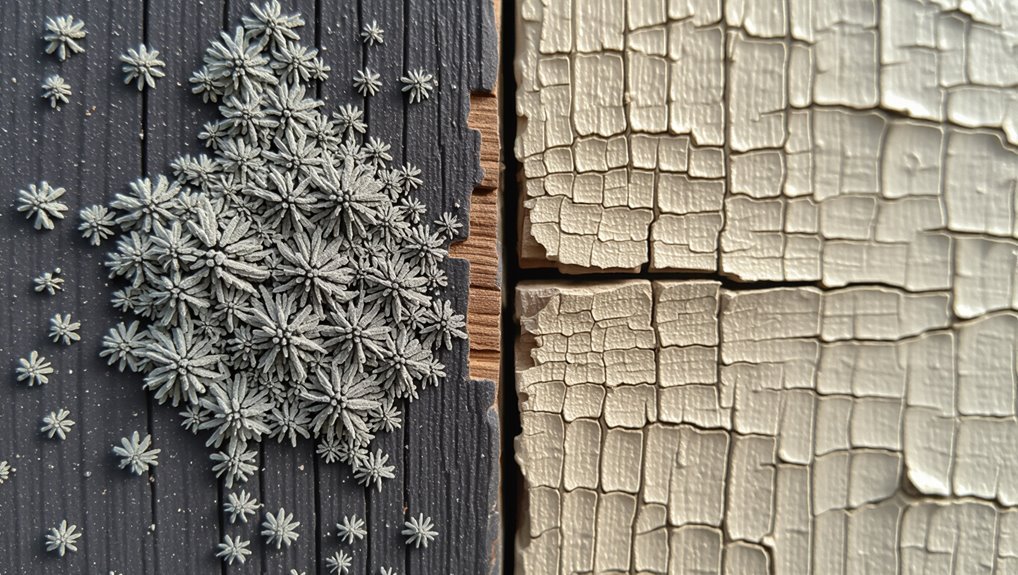
How can you tell mold from dirt on painted wood? You’ll use simple mold identification techniques: look for fuzzy texture, spreading patterns, and musty odor.
Apply dirt comparison methods like rubbing with a damp cloth—dirt usually wipes away, mold stains resist and may smear.
If growth returns after cleaning, treat it as mold and address moisture sources promptly.
DIY or Hire a Pro: When to Choose Which
Deciding whether to tackle mold removal yourself or hire a pro comes down to the size of the problem, the underlying cause, and your comfort with safety and repairs. You can use DIY Strategies for small, surface stains; call for Professional Expertise when mold spreads, recurs, or links to leaks.
| Situation | Choice |
|---|---|
| Small stain | DIY |
| Recurrent mold | Pro |
| Visible spread | Pro |
| Cosmetic only | DIY |
Safety Gear and Ventilation Checklist
Because mold spores can irritate your lungs and spread easily, put on proper protection and set up ventilation before you touch any painted wood.
Wear an N95 or respirator, goggles, gloves, and disposable coveralls. Open windows, run fans to exhaust air outdoors, and seal off the area.
Follow basic safety precautions and review mold removal techniques so you work efficiently and minimize exposure.
Quick Step-by-Step Mold Removal for Painted Wood
Start by containing the area and keeping your gear on; then follow a clear, practical sequence so you remove mold without damaging the paint. Use mold identification techniques, vacuum, test small area, apply eco friendly solutions, gently scrub, rinse, dry, and monitor.
| Fear | Relief | Pride |
|---|---|---|
| Shock | Hope | Calm |
| Panic | Action | Clean |
| Worry | Safety | Trust |
| Doubt | Care | Victory |
Safer Cleaners That Won’t Strip Paint : Pros & Cons
1 smart approach is to choose cleaners that remove mold without eating into paint or leaving residue that ruins finish.
You can try eco friendly options like diluted vinegar or hydrogen peroxide blends—gentle, inexpensive, and effective on surface mold.
Natural alternatives reduce fumes but may need repeated use.
Test a hidden spot first to verify paint color and sheen stay intact before full treatment.
Commercial Cleaners Safe for Painted Wood
Several commercial cleaners are formulated to remove mold from painted wood without stripping finish, and you’ll want to pick products labeled safe for painted or sealed surfaces. You can choose eco friendly options or stronger commercial alternatives; test a small area first and follow label directions.
| Product | Strength | Note |
|---|---|---|
| Vinegar-based | Mild | Eco friendly option |
| Oxygen bleach | Moderate | Paint-safe when rinsed |
| Enzyme spray | Mild | Good for repeat use |
| Commercial mold remover | Strong | Use cautiously |
Protect Paint and Wood: Tools & Techniques
After choosing a cleaner that’s safe for painted wood, protect the surface and your work area with the right tools and techniques to prevent damage and lingering mold spores.
Wear gloves and an N95 mask, use soft brushes and lint-free cloths, and cover floors with plastic.
Rinse gently, dry fully, and consider breathable protective coatings to aid mold prevention without sealing moisture.
Fix Stubborn Mold Spots: No Sanding or Repainting
When a few persistent mold spots refuse to lift with routine cleaning, you can remove them without sanding or repainting by targeting the growth with gentle, targeted treatments that preserve the paint layer.
Use safe mold removal techniques and eco friendly solutions to spot-treat, then blot and repeat until gone.
- dab with vinegar solution
- scrub with soft brush
- rinse and pat dry
How to Dry and Disinfect Painted Wood After Cleaning
After you’ve removed the mold, make sure the painted wood is completely air-dry by increasing ventilation and using fans or a dehumidifier if needed.
Then apply a safe disinfectant according to the product instructions to kill any lingering spores without damaging the paint.
Finally, stop future moisture by fixing leaks, improving airflow, and keeping humidity low.
Thorough Air Drying
A fan or open window will speed drying and cut the chance of mold returning, so set up good airflow and keep the room ventilated until the paint feels dry to the touch.
Monitor humidity impact and interrupt the mold lifecycle by keeping surfaces dry.
Visualize airflow tactics:
- Fan blowing across the painted boards
- Dehumidifier beside the window
- Sunlight warming the surface and evaporating moisture
Safe Disinfectant Application
Since you’ve dried the surface thoroughly, apply a safe disinfectant to kill remaining spores and prevent regrowth; pick a product labeled for mold on painted surfaces or mix a mild solution of 1 cup household bleach to 1 gallon of water if the paint is nonporous and the finish is intact.
Wear gloves, ventilate, rinse, and dry.
Consider natural alternatives and eco friendly solutions like vinegar for light cases.
Preventing Future Moisture
Once you’ve disinfected and rinsed the painted wood, focus on removing remaining dampness and stopping moisture from returning. Mold thrives in lingering wetness, so prompt, thorough drying plus continued moisture control will keep spores from coming back.
Use fans, consider dehumidifier installation, and seal with a moisture barrier.
Visualize:
- Airflow pushing damp air out
- A running dehumidifier hum
- A sealed edge blocking seepage
Prevent Mold on Painted Wood: Humidity & Maintenance
To stop mold from coming back, you’ll want to control indoor humidity and keep air moving with proper ventilation.
Use dehumidifiers or air exchangers in damp areas and run exhaust fans in bathrooms and kitchens.
Also inspect and clean painted surfaces regularly so small spots don’t turn into bigger problems.
Control Indoor Humidity
Because mold thrives in damp, poorly ventilated spaces, keeping indoor humidity between 30% and 50% is one of the most effective steps you can take to protect painted wood.
You’ll use humidity control and simple moisture management:
- A dehumidifier humming in a basement
- A dry towel on damp trim after showers
- A hygrometer on the wall to monitor levels
Ensure Proper Ventilation
Controlling humidity helps, but good airflow stops moist air from settling on painted wood in the first place.
You should open windows, run exhaust fans during cooking and showering, and use window or inline fans to create cross-breeze.
These simple ventilation techniques support mold prevention by reducing stagnant moisture around painted surfaces, lowering the chance that spores will settle and grow on your wood.
Regular Surface Maintenance
Regular surface maintenance is a simple habit that keeps painted wood dry and mold-free: wipe spills immediately, dust and vacuum nearby areas weekly, and inspect trim and corners for early signs of discoloration or soft spots.
You should use basic surface cleaning techniques and perform regular inspections. Visualize routine care:
- Damp microfiber cloth for spills
- Soft brush for crevices
- Small fan to speed drying
Spot-Repair and Touch-Up Tips for Painted Wood
When you find small mold stains or paint damage after cleaning, spot-repair lets you fix those areas quickly without repainting the whole surface.
You’ll sand lightly, clean residue, apply primer where needed, then use touch up techniques with matching paint.
Use appropriate repair materials — filler for gouges, fine brush for edges — and feather edges so repairs blend seamlessly with surrounding finish.
Common Problems and Quick Fixes (Bleeding, Odors, Recurrence)
Noticing stubborn stains, musty smells, or mold that keeps returning?
You’ll identify mold types, trace odor sources, and tackle recurrence factors with quick solutions.
Try these visuals to guide repairs:
- Dark paint bleeding from tannin-rich wood after moisture exposure
- Damp basements releasing stale, microbial odors
- Repeated spots near vents or leaks signaling hidden moisture
Act fast, dry, clean, and seal.
Frequently Asked Questions
Can Mold on Painted Wood Cause Structural Damage Over Time?
Yes — untreated mold can eventually weaken painted wood’s surface and underlying structure; you should use mold prevention techniques and regular painted wood maintenance, because stopping moisture and cleaning promptly prevents decay and costly repairs.
Are DIY Mold Test Kits Accurate for Painted Surfaces?
Think of a fogged mirror: DIY mold testing kits can give hints but aren’t foolproof on painted surfaces; they’ll catch spores but can miss hidden growth, so you’ll want professional sampling for definitive results.
Will Mold Spores Spread Through HVAC From Cleaned Painted Wood?
Yes — if mold spores remain after cleaning, they can spread through HVAC systems and reach other rooms. You should seal off vents, use HEPA filtration, and guarantee thorough cleaning to prevent spores recirculating.
Is It Safe to Keep Antique Painted Furniture After Mold Removal?
Yes — you can keep it, but you’ll want professional cleaning first to protect antique preservation and guarantee mold prevention. You’ll reclaim appearance and safety, and you won’t risk spores spreading if remediation’s done thoroughly and documented.
Do Homeowners Insurance Policies Cover Mold Remediation on Painted Wood?
Typically, you won’t get full mold coverage for painted wood unless sudden, covered damage caused it; you’ll need to file insurance claims promptly, document damage, and expect denied or limited payouts for long-term or maintenance-related mold.
Conclusion
You’ve got this: gentle gear, good gloves, and grab the right grout of cleaners to go after grimy green growth without gouging your gorgeous paint. Stay steady—scrub, swab, and seal—so surfaces stay safe, strong, and spotlessly sound. Keep humidity handled, check corners consistently, and consider a pro for persistent problems. With careful cleaning and consistent care, you’ll curb recurrence, control odors, and confidently keep painted wood pristine.
