
How to Remove Paint Stain From Concrete Easily
Match the cleaner to the paint: water-based comes off with soap, warm water, and scrubbing; oil- or enamel-based needs mineral spirits or a commercial stripper. Start by blotting fresh drips and scraping loose flakes with a plastic scraper, then test a small area with your solvent. Use a stiff brush and low-pressure washing, wear gloves and eye protection, and protect plants. For stubborn stains, stronger strippers or a pro may be needed — keep going to learn specific step-by-step tips.
Quick Answer: Best Method by Paint Type
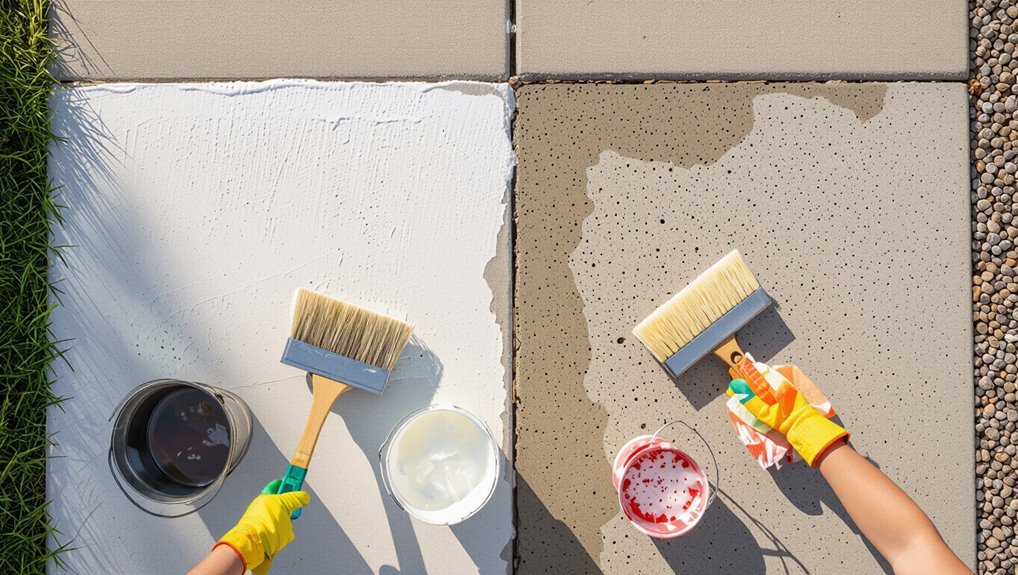
1 clear rule: match the remover to the paint.
You’ll choose solvents for oil-based paint and milder detergents or alkaline cleaners for water-based jobs. For latex, pressure washing plus detergent often works; for enamel, use strong chemical strippers.
Follow safe cleaning techniques, test a small area, and wear protective gear. Adjust method to paint types for best results.
Identify the Paint Type on Concrete
How can you tell what kind of paint’s on your concrete? You’ll inspect paint characteristics—sheen, hardness, solvent reaction—to guide stain identification. Test a small spot with water, acetone, and scraping. Match results to likely types and note whether it’s oil-based, latex, or enamel before proceeding.
| Test | Indicator |
|---|---|
| Water | Dissolves latex |
| Acetone | Affects oil/enamel |
| Scrape | Hardness check |
| Smell | Solvent clues |
Tools and Supplies You’ll Need
Before you start, make sure you’ve got the right protective gear—gloves, eye protection, and a mask—to keep yourself safe from fumes and splashes.
Gather cleaning supplies like a stiff brush, scraper, suitable solvents or paint remover for the paint type, and absorbent rags or pads. Having these items ready will make the removal process faster and safer.
Protective Gear
You’ll want the right protective gear before you tackle paint removal on concrete: gloves, eye protection, and a respirator keep you safe from chemicals, dust, and paint particles.
Choose protective gear options and safety equipment that fit well and are rated for solvents.
Use:
- Nitrile gloves
- Safety goggles
- Half-face respirator
- Knee pads
- Durable work clothes
Cleaning Supplies
Gather a few key tools and supplies so you can remove paint efficiently and safely from concrete: a stiff-bristle brush or push broom, a plastic or metal scraper, disposable rags, a bucket, and coarse sandpaper or a wire brush for stubborn spots.
| Item | Purpose |
|---|---|
| Cleaning agents | Break down paint |
| Eco friendly options | Safer for surfaces and runoff |
You’ll also want gloves, a mask, and a paint remover.
Safety First: Protect Yourself and the Surface
When you start removing paint from concrete, protect yourself with gloves, eye protection, and a respirator rated for solvents or dust, since sanding or using chemicals can release harmful particles and fumes.
Use proper safety equipment and surface protection to avoid damage.
Follow these quick tips:
- Wear chemical-resistant gloves
- Use safety goggles
- Fit a respirator
- Cover nearby plants
- Mask off surrounding concrete
Remove Fresh Paint Drips From Concrete
Now that you’re protected and the area is masked, tackle fresh paint drips while they’re still wet for best results.
Blot excess with disposable rags, then gently scrape with a plastic putty knife.
Use a solvent recommended for the paint type sparingly, testing first.
Rinse and scrub with a stiff brush.
These paint removal techniques help prevent staining and are practical concrete maintenance tips.
Remove Water‑Based Paint From Concrete With Soap and Water
Before you start, clear debris and wet the spill so the paint doesn’t spread.
Use a mild dish soap mixed with warm water and scrub the spot with a stiff brush.
Rinse thoroughly and repeat until the stain fades.
Prepare The Area
Since you’ll be working on a spill that can spread, clear the area of people, pets, and loose items so you have unobstructed access to the stained concrete.
Good surface preparation and thorough area cleanup prevent tracking and make cleanup easier.
Gather supplies and protect surroundings:
- sweep debris
- lay down drop cloths
- ventilate space
- wear gloves
- keep a bucket nearby
Use Mild Soap
With the area prepped, you can tackle water‑based paint using a mild soap and warm water.
Mix a few drops of dish soap in a bucket, scrub gently with a stiff brush, and let the suds lift paint.
You’ll see mild soap benefits: it loosens residue without harming the surface.
This approach suits routine concrete cleaning and prevents aggressive treatments prematurely.
Rinse And Repeat
Start by rinsing the area with clean water to wash away loosened paint and soap suds. Then scrub again where stubborn spots remain. You’ll repeat rinse-scrub cycles until the stain fades, combining basic paint removal techniques with proper concrete surface preparation.
- Use a stiff brush
- Move in circular motions
- Apply mild soap
- Rinse thoroughly
- Dry and inspect
Remove Oil‑Based Paint From Concrete With Mineral Spirits
Grab a pair of gloves and some mineral spirits to break down oil-based paint from concrete.
Apply mineral spirits application with a stiff brush, working small sections. Let it soak briefly, scrub firmly, and wipe with clean rags.
Repeat as needed until paint lifts. Dispose rags safely, ventilate the area, and test a hidden spot first to confirm no surface damage from these paint removal techniques.
Remove Latex Paint With Rubbing Alcohol or Ammonia
First, make sure the stain is latex paint by checking the label or testing a small area with water — latex will soften, oil‑based won’t.
If it’s latex, try rubbing alcohol on a rag to break up the paint, working from the edges inward.
If alcohol doesn’t do the job, mix a mild ammonia solution and test it on a hidden spot before treating the stain.
Identify Paint Type
Wondering whether the spill is latex or oil-based? You’ll check paint properties and stain characteristics to choose a remover.
Look for gloss, drying time, and odor; water resistance and rubbery feel suggest oil.
- water bead test
- smell (solvent vs faint)
- edge hardness
- scrape test
- color saturation
These clues help you identify type before treatment.
Use Rubbing Alcohol
Break down the paint residue with rubbing alcohol or a diluted ammonia solution when you’ve confirmed the stain is latex-based; these solvents soften water-based paint so you can lift it without harsh chemicals. You’ll test rubbing alcohol effectiveness on a hidden spot, scrub gently, and rinse. Consider alternative solvents only if alcohol fails; always ventilate and wear gloves.
| Step | Action |
|---|---|
| 1 | Test |
| 2 | Apply |
| 3 | Scrub |
| 4 | Rinse |
Try Ammonia Solution
If rubbing alcohol didn’t fully lift the latex paint, try a diluted household ammonia solution to soften stubborn residue; mix one part clear ammonia to three parts water.
Keep the area well ventilated, and wear rubber gloves and eye protection.
You’ll test a small spot first to assess ammonia effectiveness and follow ammonia safety guidelines.
- Test patch
- Apply with brush
- Let sit briefly
- Scrub gently
- Rinse thoroughly
Use Paint Stripper for Stubborn or Large Concrete Stains
When scraping and washing haven’t budged the paint, try a chemical paint stripper designed for concrete; it’ll dissolve stubborn or large-area stains so you can remove them more easily.
You’ll follow label instructions, test a small area, and wear PPE. Choose products suited to stain types and combine with mechanical removal techniques like scrubbing or scraping.
Rinse thoroughly and neutralize per instructions.
Use a Pressure Washer Safely on Concrete
When you use a pressure washer on concrete, pick the right nozzle to avoid gouging the surface.
Keep a safe distance and test a small area so you don’t strip or etch the concrete.
Start with lower pressure and increase only as needed while maintaining control.
Choose Proper Nozzle
Because the nozzle controls spray angle and pressure, choosing the right one is the quickest way to avoid etching or spreading paint instead of removing it.
You’ll match nozzle types to surface and pressure settings. Pick a gentler fan for delicate areas and a tighter jet for stubborn spots.
- 0° for deep stains
- 15° for tough areas
- 25° general use
- 40° gentle clean
- soap nozzle for detergents
Maintain Safe Distance
Although you can crank up the pressure, keep a safe distance between the nozzle and the concrete to prevent etching or chipping. Start at least 2–3 feet away and move closer gradually until you find the sweet spot that removes paint without damaging the surface.
You’ll wear eye protection, test a small area, and follow paint precautions so you don’t overdo it or create surface damage.
Control Pressure Settings
If you’re using a pressure washer on concrete, dial in the pressure so you remove paint without etching the slab; start around 1,500–2,000 psi for most exterior concrete and only increase in small increments while watching the surface for damage.
Adjust pressure settings based on paint thickness and concrete age, and remember to test a small area first.
- Start low
- Increase slowly
- Use wide nozzle
- Keep moving
- Inspect often
Best Scrubbing Tools and Techniques for Concrete
When you tackle paint on concrete, picking the right scrubbing tools and using the proper technique makes the job faster and prevents surface damage. Use stiff scrubbing pads for spot work and pressure brushes for larger areas; scrub with the grain of the concrete, keep motions steady, and rinse frequently.
| Tool | Use | Tip |
|---|---|---|
| Scrubbing pads | Spots | Replace when worn |
| Pressure brushes | Large areas | Moderate pressure |
| Nylon brush | Edges | Soft motion |
Remove Dried Paint Flakes Without Damaging Concrete
When dried paint flakes cling to concrete, you’ll first try gentle mechanical removal like a plastic scraper or stiff nylon brush to lift flakes without gouging the surface.
If flakes resist, you can soften them with a suitable chemical stripper or a citrus-based solvent applied briefly and wiped away.
Always test your method on a small inconspicuous spot and rinse thoroughly to protect the concrete.
Gentle Mechanical Removal
Start by loosening dried paint flakes with a soft, non-metal tool—like a plastic scraper, putty knife with a rounded edge, or stiff nylon brush—so you lift paint without scratching the concrete.
Use mechanical tools gently and prioritize surface protection.
Then try these steps:
- Work along the grain of the concrete
- Apply steady, light pressure
- Use a hand vacuum for debris
- Rinse periodically
- Inspect for damage
Chemical Softening Methods
If gentle scraping doesn’t remove all the flakes, chemical softeners can help loosen dried paint without harming the concrete.
You’ll apply a commercial paint stripper or biodegradable citrus solvent, follow label directions, and wait as chemical reactions break binders.
Test a small area first, rinse thoroughly, and use protective gear.
Prioritize solvent safety to avoid etching, inhalation, or skin contact.
Remove Paint From Sealed or Painted Concrete
Because sealed or previously painted concrete has a protective layer, you’ll need different tactics than for bare concrete—soft removers and gentle abrasion work best to lift paint without damaging the finish.
Sealed or painted concrete needs gentler tactics—soft removers and light abrasion to lift paint without harming the finish.
Use proper paint removal techniques and focus on concrete surface preparation.
Try these steps:
- Test a mild stripper first
- Use plastic scrapers
- Microfiber pads only
- Low-pressure washing
- Rinse and dry thoroughly
Match Repair Patches on Colored or Stained Concrete
Matching repair patches on colored or stained concrete takes a careful eye and the right materials to blend new patchwork with the existing finish.
You’ll test small samples, adjust pigments, and use sealers to match sheen.
Employ proven patch techniques: feather edges, thin layers, and cure fully before sealing.
Keep records of mixes for consistent color matching on future repairs.
Remove Paint From Garage Floor Seams and Joints
When paint gets into garage floor seams and joints, it can trap moisture and prevent sealers from bonding properly.
So you’ll need a focused approach to remove it without damaging the concrete. Use targeted paint removal techniques and joint cleaning methods:
- Scrape with a stiff putty knife
- Use a wire brush in the seam
- Apply solvent sparingly
- Rinse thoroughly
- Dry before sealing
Eco‑Friendly Paint Removal Methods Safe for Concrete
After you’ve cleared seams and joints, you’ll probably want a gentler approach for larger areas that won’t harm the concrete or the environment.
You can use eco friendly solutions like citrus or soy-based strippers, biodegradable cleaners, and steam cleaning.
Try natural alternatives such as baking soda paste or vinegar with hot water; test a small spot, scrub gently with a nylon brush, then rinse thoroughly.
Prevent Paint Stains When Painting Nearby Surfaces
If you’ll be painting near concrete, take a few simple precautions to keep splatters and drips off the surface:
Use basic paint prevention techniques and reliable surface protection methods to avoid stains.
- Lay heavy-duty drop cloths
- Tape edges tightly
- Use roller guards
- Carry a small scraper for drips
- Keep a damp rag handy
When to Call a Professional Concrete Cleaner or Contractor
1 clear sign that you should call a professional is persistent staining or damage that home remedies can’t remove without risking the concrete’s surface; professionals have the right equipment, chemicals, and expertise to restore the area safely and efficiently.
If stains resist DIY methods, or the surface needs heavy-duty paint removal, hire professional services.
They’ll assess, use proper techniques, and prevent further harm.
Repair and Blend Concrete After Paint Removal
Once you’ve removed the paint, you’ll often need to patch chips, fill small pits, and texture the surface so repairs don’t stand out; doing this promptly prevents water intrusion and makes blending much easier.
You should:
- Clean and dry the area
- Choose patch mix for concrete color matching
- Apply thin layers, feather edges
- Match surface texture blending
- Cure and reseal to protect repairs
Typical Cost and Time Estimates for Common Scenarios
Because projects vary by paint type, concrete condition, and method used, you’ll want realistic cost and time ranges before you start.
For small spots with solvent or scrapers expect low labor and materials — cost comparison favors DIY: $10–$50, one to three hours.
For large or stubborn jobs needing media blasting or pro service, plan $200–$800 and several hours to a full day; time estimation guides scheduling.
Frequently Asked Questions
Can I Use Bleach to Remove Paint From Concrete?
You can, but bleach rarely removes paint effectively; it works only on mildew-stained latex. Consider paint types and removal techniques first: use solvent strippers, pressure washing, or mechanical grinding for oil or stubborn acrylic paints instead.
Will Paint Removal Damage Decorative Stamped Concrete?
Yes — it can scar like lightning on glass; you’ll need to match paint types and use gentle methods, because aggressive removers can damage decorative stamped concrete, so prioritize surface protection and test a small area first.
Can Sunlight or Heat Accelerate Paint Removal Safely?
Yes — sunlight effectiveness and careful heat application can speed paint softening, but you’ll want controlled, low heat and protective gear to avoid surface damage; test a small area first and don’t overheat stamped concrete.
Are There Pet-Safe Paint Removers for Outdoor Concrete?
Yes — you can use pet friendly options like enzyme cleaners and eco friendly solutions such as soy- or citrus-based removers and biodegradable degreasers; you’ll test a small area, rinse thoroughly, and keep pets away until fully dry.
How to Dispose of Paint Waste and Contaminated Rags Legally?
Like burying treasure, you’ll follow local hazardous-waste rules: use approved paint disposal methods, seal cans and wring contaminated rags into metal containers, never dump them, and check recycling paint programs or drop-off centers for safe, legal handling.
Conclusion
You’ve got this—like a painter restoring the Sistine Chapel, you can fix those concrete paint mistakes with the right plan. Identify the paint, grab proper tools, suit up, and tackle fresh drips quickly; use solvents or mechanical methods for stubborn spots. Take precautions to avoid bigger messes, and call a pro when damage or scale is beyond DIY. With care, you’ll remove stains and blend repairs so the surface looks whole again.
