
How to Texture a Bathroom Wall That Holds Up Against Moisture
You can create a moisture-resistant textured bathroom wall by starting with cement board or moisture-resistant drywall, sealing seams with a waterproof membrane, and priming with a moisture-blocking primer. Apply a skim coat, light orange-peel, or knockdown texture using a trowel or spray, let it cure, sand lightly, then finish with a satin or semi-gloss exterior-grade paint and proper venting. Follow maintenance and sealing tips below to guarantee longevity if you want more detailed steps.
How to Texture a Bathroom Wall That Holds Up Against Moisture
You’ll want a moisture-resistant primer plus a semi-gloss or satin paint as a quick, reliable approach for textured bathroom walls.
Texture is worth doing when you need to hide imperfections or add durability, but skip it in steam-heavy areas unless you can guarantee proper venting and waterproofing.
If you’re unsure, prioritize sealing and ventilation first, then choose a texture that’s compatible with those protections.
Quick Answer Best Approach in Brief
Because bathrooms get wet, choose a non-porous, water-resistant system: use cement board or moisture-resistant drywall, apply a thinset or waterproofing membrane, and finish with a vapor-resistant paint or tile-friendly texture like sanded acrylic.
This combo gives a textured look that stands up to steam and splash without trapping moisture. You’ll prep surfaces, use appropriate primers, apply texture sparingly, and seal edges.
When to Texture vs. When Not To
Now that you’ve picked water-resistant substrates and finishes, decide where texture makes sense and where it won’t.
You want texture for visual interest and to hide minor imperfections, but avoid it near showers or high-splash zones where cleaning and mold resistance matter most.
- Accent walls
- Low-splash areas
- Shower surrounds — avoid
- Trim and ceilings — smooth
Basic Understanding Why Moisture-Resistant Texture Matters
You’ll notice moisture can soften paint, promote mold, and ruin textured finishes if you don’t plan for it.
Consider whether your bathroom is low-, moderate-, or high-moisture (a half bath vs. a steamy master bath) because that determines how tough your texture and coatings need to be.
Choose moisture-resistant substrates, mildew-resistant paints, and proper sealants to keep the texture looking good and lasting longer.
How moisture affects wall finishes in bathrooms
When steam and humidity linger after showers, they pull at paints and textures, causing peeling, blistering, and mold growth if the finish can’t breathe.
You’ll notice softened drywall, compromised adhesion, and staining where moisture repeatedly contacts surfaces.
Properly chosen textures resist absorption, shed condensation, and limit microbial growth.
Addressing ventilation, sealants, and substrate prep prevents long-term deterioration and costly repairs.
Types of bathroom environments and moisture levels (low, moderate, high)
Having covered how moisture undermines finishes, it’s helpful to categorize bathrooms by their typical humidity so you can match texture and materials to actual conditions. You’ll assess use and ventilation: powder rooms stay low, family baths moderate, and steam showers high. Choose textures that tolerate expected condensation and cleaning frequency.
| Environment | Typical moisture |
|---|---|
| Powder room | Low |
| Family bath | Moderate |
| Master bath | High |
| Steam shower | Very high |
Materials and finishes that resist moisture (paints, substrates, sealants)
Because moisture dictates how long a textured finish will hold up, pick paints, substrates, and sealants designed for wet conditions so you won’t be repainting or repairing prematurely.
Use mildew-resistant semi-gloss or satin acrylic paints, cement backer board or moisture-resistant drywall, and silicone or polyurethane sealants at seams.
Prime with a moisture-blocking primer and allow full curing before applying texture for durable results.
Overview of Texture Options Suitable for Moisture-Prone Bathrooms
When choosing textures for a moisture-prone bathroom, you’ll weigh popular styles—smooth skim coats, knockdown, orange peel, and heavier patterned finishes—against their water resistance and cleanability.
You’ll compare skim coat textures, which shed moisture and sanitize easily, with patterned textures that hide imperfections but can trap grime and require more maintenance.
Finally, you’ll match each texture to the right substrate—cement board or moisture-resistant drywall for heavier patterns, and properly primed drywall or skim-coated surfaces for smooth finishes.
Popular texture styles and their moisture performance
Choosing the right wall texture for a moisture-prone bathroom means balancing style with durability, and knowing how each finish handles steam, splashes, and cleaning.
You’ll consider textures that resist mold, hide imperfections, and clean easily.
- Smooth skim coat — easy to seal and wipe.
- Light orange peel — hides flaws, tolerates moisture.
- Knockdown — textured but cleanable.
- Venetian plaster — water-resistant when sealed.
Pros and cons of skim coat textures vs. patterned textures
If you want a bathroom wall that’s both practical and stylish, weigh skim coat textures against patterned finishes based on maintenance, moisture resistance, and appearance.
Skim coats give smooth, easy-to-clean surfaces with fewer crevices for mold but need impeccable prep.
Patterned textures hide imperfections and add grip, yet trap moisture and require more frequent cleaning or sealed coatings to stay durable.
Best substrate pairings for each texture type
Because bathroom walls face constant moisture and cleaning, match each texture to a substrate that boosts durability and prevents mold. You’ll choose cement board for heavy or tiled textures, moisture-resistant drywall for smooth skim coats, and fiberglass or PVC panels for patterned or high-traffic areas. Seal joints and use mildew-resistant primer.
| Texture | Substrate | Best use |
|---|---|---|
| Skim coat | Moisture-resistant drywall | Smooth walls |
| Patterned | Fiberglass/PVC panels | High-cleaning zones |
| Heavy/tile | Cement board | Shower surrounds |
Preparation Surface and Moisture Management
Before you texture, check the walls and moisture levels with a moisture meter and by looking for signs like staining, efflorescence, or soft drywall.
Remove mold, flake, or contaminated coatings and repair or replace damaged sections—consider cement board, green board, or moisture-resistant drywall where needed.
Finally, confirm proper ventilation, fans or heaters, and any necessary waterproofing are in place to prevent future problems.
Assessing wall condition and moisture levels (tools and signs)
When you’re prepping a bathroom wall, start by checking for visible damage and moisture so you know exactly what repairs and treatments are needed; inspect for stains, soft spots, peeling, and odor.
Use a moisture meter, flashlight, and screwdriver to probe. Record findings and prioritize drying.
- Visual stains
- Soft or spongy areas
- Elevated moisture readings
- Musty smell
Repairing damage: mold, efflorescence, soft drywall, and previous coatings
Start by tackling the worst problems first: kill mold, remove efflorescence, replace soft drywall, and strip any loose or incompatible coatings so the surface can accept repairs and moisture barriers.
Clean affected areas with appropriate cleaners, dry thoroughly, and treat metal for corrosion.
Patch or replace damaged sections, sand smooth, and prime with a compatible, mold-resistant primer before applying texture and final moisture protection.
Choosing the right substrate: cement board, green board, moisture-resistant drywall
Pick the substrate that matches the room’s moisture risk and the finish you plan to apply: cement board for wet zones and tile, greenboard only for occasional dampness, and moisture-resistant drywall for low-moisture areas where you’ll use paint or light textures.
You’ll install boards level, seal joints with appropriate tape and thinset or moisture-rated compound, and fasten per manufacturer specs to prevent movement and future failure.
Ventilation and moisture control prerequisites (fans, heaters, waterproofing)
Having chosen the right substrate, you’ll also want to control moisture and airflow before applying any texture—poor ventilation or inadequate waterproofing will ruin even the best substrate and finish.
Install a properly sized exhaust fan vented outside, add a timer or humidity sensor, seal seams with waterproof membrane, and consider underfloor or wall heaters to reduce drying time.
Test ventilation before finishing.
Materials and Tools You’ll Need
You’ll need a short list of materials—joint compound or texture premix, mold-resistant primer and sealant, plus bathroom-grade paint—to get a durable finish.
Gather the right tools too: trowel and hawk for hand textures, rollers or sprayers for larger areas, and a sander for smoothing.
Choose low-VOC products with mold inhibitors and check compatibility between compound, primer, and paint.
List of essential materials (compound types, primers, sealants, paints)
Before you start, gather the right compounds, primers, sealants, and paints so the texture bonds well and resists moisture; this list focuses on products suited for bathrooms and the roles they play.
You’ll need durable, mold-resistant options and proper primers to guarantee adhesion.
- Setting-type joint compound (fast-setting)
- Lightweight topping compound
- High-adhesion, moisture-blocking primer
- Waterproof bathroom-grade epoxy or acrylic paint
List of essential tools (trowels, hawk, rollers, sprayers, sanders)
Tools matter as much as materials when you texture a bathroom wall, so gather the right ones before you begin: a variety of trowels and a hawk for applying compound, rollers and nap covers for priming, a texture sprayer or hopper gun for spray finishes, and sanders—preferably a pole sander or random-orbit with dust collection—for smoothing.
- Trowels/hawk
- Rollers/nap covers
- Sprayer/hopper gun
- Sanders/dust control
Product selection tips (VOC, mold inhibitors, compatibility)
Since bathrooms stay humid, pick products that resist moisture and undesirable fumes: choose low-VOC joint compounds and primers to keep air quality safe, and look for mold- and mildew-inhibiting formulations specifically rated for high-humidity rooms.
Also verify compatibility between texture compound, primer, and paint; test adhesion on small area; favor mildew-resistant paints and corrosion-resistant fasteners for long-term durability.
Step-by-Step Texture Application Process
Before you start texturing, you’ll prime and seal the surface with a compatible product to guarantee adhesion and prevent moisture issues.
Next you’ll apply a base or skim coat, mix to the right consistency, then use brushes, rollers, trowels, or a sprayer to create your chosen texture, allowing proper drying between passes.
Finish by curing and lightly sanding as needed, then protect the wall with a moisture-resistant primer and topcoat.
Step 1 Surface priming and sealing (product choices and application tips)
1. You’ll start by cleaning and sanding, then choose a high-quality primer/sealer designed for bathrooms—mildew-resistant acrylic or epoxy primer works well.
Apply evenly with a roller, back-rolling to guarantee adhesion, and seal joints with a compatible waterproofing membrane or caulk.
Let the primer fully cure per label directions before texturing to assure moisture protection and strong bond.
Step 2 Applying the base coat or skim coat (mixing, thickness, drying times)
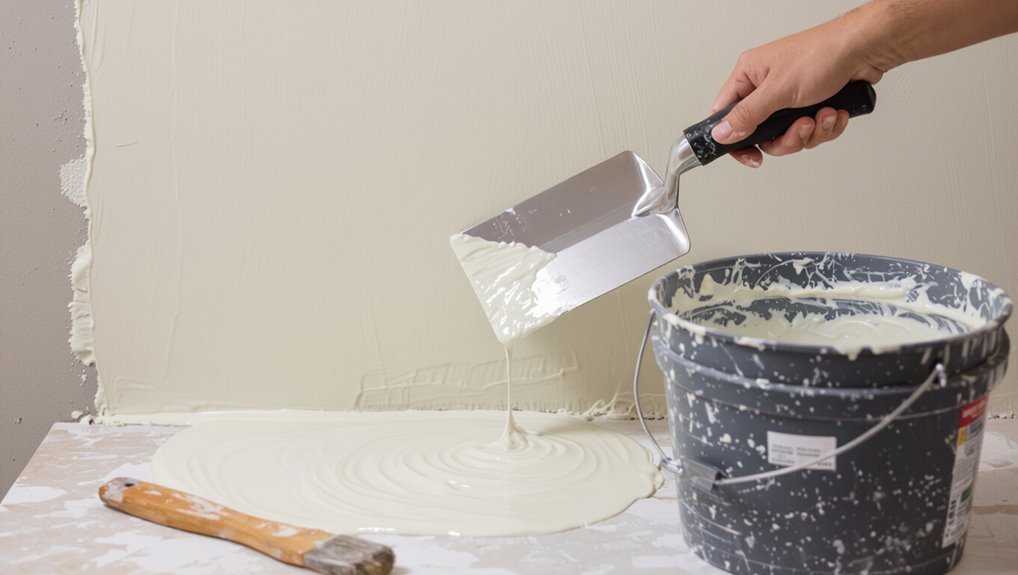
Start by mixing your chosen base or skim coat to a lump-free, workable consistency—follow the manufacturer’s water-to-powder ratio and use a drill-mounted paddle at low speed to avoid over-aeration.
Apply a uniform 1/16″–1/8″ layer for skim coats or up to 3/16″ for base coats. Smooth with a trowel, check for pinholes, and allow 24–48 hours to fully cure before proceeding.
Step 3 Creating the texture (brush, roller, trowel, spray methods)
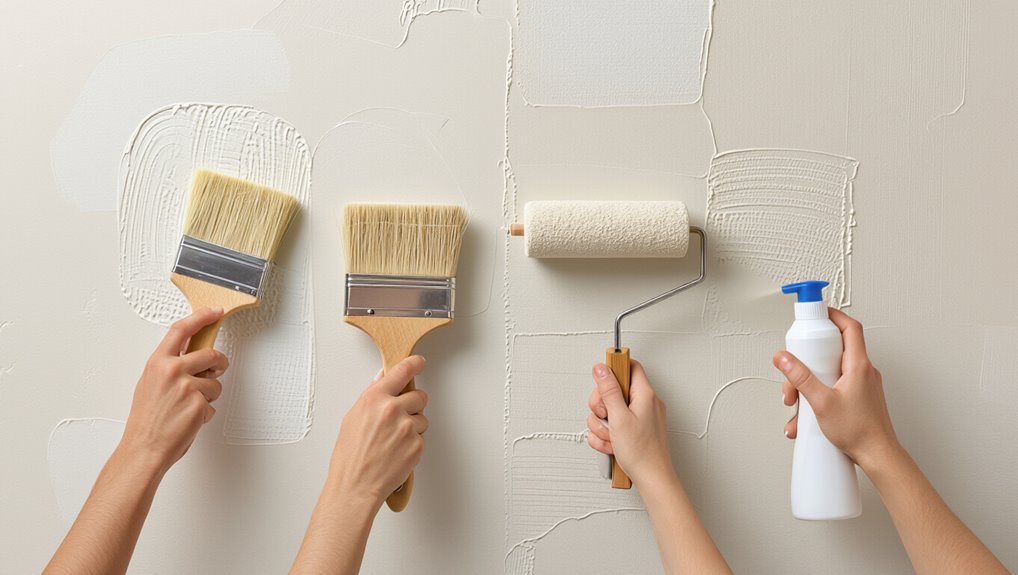
Choose the method that matches your skill level and the look you want—brush, roller, trowel, or spray—and work in small, manageable sections so the texture stays wet and workable.
For brush, use consistent strokes; for roller, pick nap length and roll evenly; for trowel, apply thin passes and feather edges; for spray, practice pressure and distance on scrap until patterns match.
Step 4 Curing and sanding between coats (timing and techniques)
Once your first texture pass looks right, let it cure until it’s firm but not rock-hard—usually 24 hours in normal conditions—then lightly sand to knock down high spots and blend edges before you apply the next coat.
Check for tackiness, use 120–220 grit sandpaper or a sanding sponge, remove dust with a vacuum and tack cloth, then repeat curing and sanding between subsequent thin coats.
Step 5 Applying moisture-resistant primer and paint or topcoat
After sanding and wiping away dust, you’ll prepare the surface for moisture-resistant primer and topcoat to protect the texture and bathroom walls from humidity.
Tape edges and cover fixtures.
Apply a high-quality, mold-resistant primer in even strokes, let it dry per label, then roll or brush a compatible satin or semi-gloss topcoat for durability.
Allow full cure before light use.
Step 6 Sealing joints, trim, and fixtures with caulk or waterproof sealant
Seal the gaps around joints, trim, and fixtures with a high-quality caulk or waterproof sealant to keep moisture from creeping behind your texture and causing mold or peeling.
Smooth beads with a wet finger or tool for neat lines. Allow proper cure time per manufacturer instructions.
Check corners, around faucets, and light fixtures periodically and recaulk any cracked or failing seals to maintain protection.
Comparison: Best Finishes for High-Moisture Bathrooms
When choosing a finish for a high-moisture bathroom, you’ll weigh paint-only, textured-plus-paint, and tile wainscot for cost, durability, maintenance, and looks.
Paint-only is cheapest and easiest to refresh but won’t hold up as well in damp areas; textured paint adds hiding power and style at moderate cost.
Tile wainscot costs more up front but gives the best moisture resistance and lowest upkeep, so you’ll need to balance budget against long-term performance and aesthetic preference.
Paint-only vs. textured + paint vs. tile wainscot
Anyone can refresh a bathroom with just paint, but in high-moisture rooms you’ll want to weigh durability, maintenance, and style: plain paint is cheapest and quickest, textured paint adds hide-and-seal benefits and visual interest, while a tile wainscot gives the best water resistance and cleanability at higher cost and installation effort.
| Choice | Feeling |
|---|---|
| Paint-only | Simple relief |
| Textured+paint | Confident warmth |
| Tile wainscot | Secure pride |
Cost, durability, maintenance, and aesthetic trade-offs
Because moisture changes how finishes perform, you’ll want to balance upfront cost against long-term durability and upkeep. You’ll weigh tile’s longevity and cleaning ease, textured paint’s budget and touch-ups, and full waterproof systems’ higher price but low maintenance.
| Finish | Cost | Maintenance |
|---|---|---|
| Tile | High | Low |
| Textured paint | Low | Medium |
| Waterproof system | Highest | Very low |
Common Mistakes and How to Avoid Them
Don’t skip the right substrate or a moisture barrier, because that’s the quickest way to invite mold and peeling.
Don’t apply texture too thick or too thin, use proper drying time and ventilation, and match primers, paints, and sealants to the substrate.
Follow these simple checks and you’ll avoid most common failures.
Mistake 1 Using the wrong substrate or skipping moisture barrier
If you install texture over the wrong substrate or skip a moisture barrier, the finish won’t last and you’ll invite mold and delamination.
Use cement backer board or mold-resistant drywall in wet zones, seal seams with waterproof tape and thinset, and apply a proper vapor or liquid-applied barrier.
Test adhesion, allow full curing, and never assume ordinary drywall will suffice.
Mistake 2 Applying texture too thick or too thin
A texture that’s too thick will crack and look heavy, while one that’s too thin won’t hide imperfections or wear evenly—get the mix and application right to avoid both problems.
Test a small area to confirm consistency, follow manufacturer ratios, and apply with steady pressure.
Feather edges, build thin layers, and sand lightly between coats so the finish stays durable and attractive.
Mistake 3 Inadequate ventilation and drying time
Though it might seem tempting to skip extra airflow, inadequate ventilation and rushing the drying time will ruin your texture—causing tackiness, uneven curing, and potential mold growth—so make drying a deliberate step.
You should run exhaust fans, open windows, and use a dehumidifier if needed.
Wait manufacturer-recommended cure times before recoating or exposing the wall to shower steam.
Mistake 4 Using incompatible primers, paints, or sealants
Primers, paints, and sealants all have chemistry, and using products that don’t play well together will wreck your finish.
Check compatibility—latex over oil, solvent-based sealants with waterborne paints, and VOC ratings.
Follow manufacturer recommendations, buy coordinated systems when possible, and test a small area.
Using mismatched products causes peeling, bubbling, and failed moisture barriers, so don’t skip this step.
Maintenance and Long-Term Care
Keep a gentle cleaning routine—soft brushes or a microfiber cloth and mild cleaner—to protect the texture without stripping sealers.
Check regularly for cracks, peeling, mold, or soft spots so you can repair small issues before they spread.
Re-seal, touch up paint, or refinish when water beading stops or wear becomes visible to maintain protection and appearance.
Cleaning routines that protect textured walls
When you establish a simple, regular cleaning routine, you’ll protect the texture and finish of your bathroom walls while preventing grime buildup that becomes harder to remove.
Use gentle cleaners, soft brushes, and quick drying. Follow a weekly rinse and monthly deep clean.
- Mild detergent
- Soft-bristled brush
- Squeegee after showers
- Ventilate to dry
Inspecting and repairing damage early (what to look for)
Because small issues often lead to bigger problems, inspect textured bathroom walls regularly so you catch damage early.
Look for hairline cracks, flaking or bubbling paint, concentrated stains, soft or spongy spots from moisture, and any signs of mold or mildew along seams and behind fixtures.
Note loose texture, gaps at trim or around fixtures, and peeling caulk; mark problems, dry areas thoroughly, and repair promptly.
When to re-seal, repaint, or refinish
Sealing, repainting, or refinishing your bathroom walls is something you’ll schedule based on visible wear, moisture exposure, and how well current finishes are holding up; check annually and after any plumbing work or leaks.
Re-seal when caulk cracks or grout dulls, repaint if paint peels or stains persist, and refinish textured surfaces when moisture has softened or damaged the substrate to prevent mold and further decay.
Tips, Shortcuts, and Pro Installer Tricks
You’ll learn quick techniques that shave hours off the job without compromising moisture resistance, like using premixed, mold-resistant compounds and efficient tool setups.
I’ll show budget-friendly material swaps that hold up in wet spaces, plus where you shouldn’t cut corners.
And I’ll point out clear signs—hidden water damage, uneven substrate, or persistent leaks—when it’s smarter to call a pro.
Time-saving techniques without sacrificing moisture resistance
When time’s tight, you can still get a moisture-proof finish by choosing faster methods that don’t cut corners—pick moisture-rated skim coats or premixed waterproofing compounds, use high-quality water-resistant primers, and rely on quick-setting joint compounds in wet-zone formulations so you can move to tile or paint sooner without risking mold or delamination.
Combine with proper ventilation, rapid-curing sealants, and efficient tooling to save hours.
Budget-friendly material swaps that still perform
Saving time on materials often means finding smarter, cheaper alternatives that still stand up to bathroom conditions.
Choose moisture-resistant drywall or cement board where needed, use acrylic-based joint compounds and primers, and swap pricey trim for PVC or composite.
You’ll save on labor by picking pre-mixed, quick-drying products and durable paint that resists mold, keeping performance without overspending.
When to call a pro signs the job is beyond DIY
If walls show widespread mold, structural damage, or persistent moisture even after sealing, call a pro—these issues can hide rot, compromised studs, or plumbing failures that need specialist tools and expertise.
You should also hire help if electrical or plumbing work is required, damage spans behind tiles, or inspection reveals unstable framing.
Pros diagnose, repair hidden problems, and guarantee long-term moisture control.
FAQ Common Questions About Texturing Moisture-Prone Bathroom Walls
You’ll want clear answers to common concerns like whether you can texture inside a shower or only outside it, how long to wait between coats in a humid bathroom, and whether textured paint offers real moisture resistance.
You’ll also want to know if you can tile over textured drywall later and the safest way to remove mold from textured surfaces.
Below are concise, practical FAQs to help you make the right choices and avoid costly mistakes.
Can I texture walls in a shower or only outside the shower area?
Wondering whether you can texture inside a shower? You can, but choose moisture-resistant substrates, waterproof membranes, and cement board rather than drywall.
Use vapor-tolerant textures and tile or solid surface finishes where water contacts directly. Seal textures with appropriate waterproof coatings and high-quality caulk at junctions.
For less risk, keep decorative texture outside the wet zone and tile shower walls.
How long should I wait between coats in a humid bathroom?
When working in a humid bathroom, wait longer between texture coats than you’d in dry conditions—typically 24 to 48 hours—so each layer fully sets before the next goes on.
Use a moisture-tolerant primer and guarantee good ventilation or a dehumidifier to speed drying.
Test by touch; if the surface feels cool or tacky, delay the next coat until it’s dry and firm.
Is textured paint alone sufficient for moisture resistance?
Long drying times in humid bathrooms remind you that moisture is the enemy of any finish. Textured paint by itself won’t give you reliable water resistance.
You should treat textured paint as decorative and mildly protective only. For true moisture resistance, use a moisture-rated primer, proper sealants, or waterproof membranes on substrate.
Then finish with mildew-resistant paint suited for high-humidity rooms.
Can I tile over textured drywall later?
Can you tile over textured drywall later? Yes, but you’ll need to assess texture depth and adhesion.
Light textures can stay if sanded and primed; heavy or loose texture should be removed or skim-coated for a flat, stable substrate.
Use a suitable bonding primer or thinset and backerboard where required. Proper preparation prevents tile failure and moisture intrusion.
How do I remove mold from textured surfaces safely?
How do you safely remove mold from textured bathroom walls without damaging the finish or risking your health?
Wear gloves, goggles and an N95 mask. Ventilate the room.
Test a hidden area, then scrub gently with a soft brush and a solution of water and mild detergent or diluted white vinegar (1:1).
Rinse, dry thoroughly, and repair leaks to prevent recurrence.
