
Is Satin Paint Shiny: Understanding Sheen Levels in Paint
Satin paint isn’t glossy, but it isn’t flat either—you’ll get a low‑to‑mid sheen that gently reflects light without glaring. You’ll find it’s more washable and durable than eggshell or flat, so it’s great for kitchens, bathrooms, trim, and high‑traffic areas. It hides imperfections better than high gloss yet shows more texture than mattes, so surface prep matters. Try samples under your room’s lighting to confirm the look; keep going to learn practical testing and application tips.
Quick Answer: Is Satin Paint Shiny or Subtle?
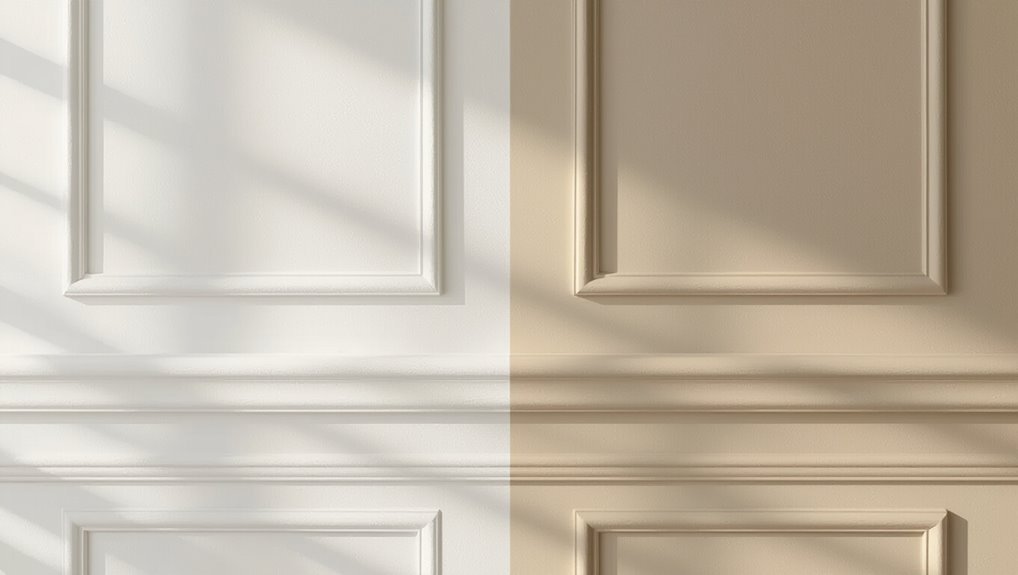
Wondering whether satin paint looks shiny or subtle? You’ll find satin paint characteristics sit between matte and semi-gloss, offering a soft luster that reflects light without glaring.
You’ll appreciate its balance: durable enough for trim and high-traffic walls, yet gentle in appearance.
Your sheen perception will vary with lighting and color, so test samples in situ before committing.
What “Sheen” Means for Paint
When you choose a paint, sheen refers to how much light the dried surface reflects—ranging from flat (very little reflection) to high-gloss (very reflective)—and it affects appearance, durability, and how imperfections show.
You’ll learn basic sheen terminology and compare sheen variations so you can pick finishes that balance washability, scratch resistance, and visual depth for walls, trim, or cabinetry.
How Manufacturers Measure Satin Sheen Levels
Because satin sits between matte and gloss, manufacturers measure its sheen with precise instruments and repeatable methods so you get consistent results. You’ll see glossmeters, standardized panels, and statistical sampling used to record sheen measurement and control satin variations across batches.
| Tool | Purpose | Outcome |
|---|---|---|
| Glossmeter | Quantify reflectance | Numeric sheen |
| Panels | Reference standard | Consistency |
| Sampling | QC checks | Uniform batches |
Where Satin Sits on the Sheen Scale
You’ll find satin sits between eggshell and semi-gloss on the sheen scale, offering a noticeable but not overpowering glow.
Compare it to flat, which masks imperfections, and high gloss, which highlights them and reflects more light.
That middle ground makes satin a versatile choice for trim and high-traffic areas.
Where Satin Falls
Curious where satin lands on the sheen spectrum? You’ll find satin between matte and semi-gloss: it balances subtle luster with muted reflection.
Focus on satin finish characteristics like soft glow and moderate durability.
When you evaluate rooms, note sheen perception differences based on light, color, and surface texture—satin hides flaws better than gloss yet cleans up easier than flat paints.
Comparing Sheen Levels
Think of the sheen scale as a spectrum from flat to high-gloss, with satin sitting comfortably closer to the middle: it gives a gentle glow without the mirror-like reflection of semi-gloss or gloss. You’ll use a satin finish comparison to balance durability and subtle shine. Here’s a quick sheen level overview:
| Sheen | Typical use |
|---|---|
| Flat | Ceilings |
| Eggshell | Living rooms |
| Satin | Trim, doors |
| Semi-gloss | Kitchens |
| Gloss | Cabinets |
Visual Traits of a Satin Finish
You’ll notice a satin finish feels smooth to the touch and shows a soft sheen that’s more subtle than gloss.
It controls light reflection so surfaces don’t glare but still catch highlights. That balance makes satin forgiving of minor imperfections while keeping rooms lively.
Smooth, Soft Sheen
When light grazes a satin finish, it produces a gentle, velvety glow that hides minor imperfections while still reflecting enough sheen to feel lively and refined.
You’ll notice a smooth application that enhances color depth and unifies soft textures. It keeps surfaces inviting without glare, making walls feel warm and maintained while tolerating everyday wear and subtle cleaning without shouting for attention.
Light Reflection Control
Because satin sits between matte and semi-gloss, it gives you controlled light reflection that flatters surfaces without creating glare.
You’ll notice how satin balances highlights and shadows, guiding sheen perception so imperfections aren’t shouted at you.
It lets you manage room brightness and focal points, reflecting enough light for depth while keeping surfaces soft and visually appealing under varied lighting.
Satin vs Flat and Matte Finishes
Although satin and flat (or matte) finishes may look similar from across a room, they perform very differently—and choosing between them comes down to how much sheen, durability, and washability you need.
You’ll prefer satin advantages when you want tougher, easier-to-clean walls; satin applications include kitchens, bathrooms, and trim.
Choose flat or matte for hiding imperfections and low-reflective, subtle surfaces.
Satin vs Eggshell: Key Differences
When you compare satin and eggshell, pay attention to sheen and reflectivity since satin shows more gloss and bounces light differently.
You’ll also notice satin is generally more durable and easier to wash, making it better for high-traffic areas.
Finally, consider texture and application—eggshell hides imperfections better while satin lays smoother and highlights brush or roller marks.
Sheen And Reflectivity
Sheen affects how light plays off your walls, and the difference between satin and eggshell is more than a label—it’s about reflectivity and practical performance.
You’ll notice sheen characteristics influence light dynamics and color perception. Consider these points:
- reflectivity factors between finishes
- visual impact in different rooms
- finish comparison for surface interaction
- application techniques that alter aesthetic appeal
- maintenance considerations for long-term look
Durability And Washability
Because you’ll clean high-traffic areas often, finish choice matters: satin resists scuffs and wipes clean more easily than eggshell, which offers a softer look but less durability under frequent scrubbing.
You should weigh durability factors like abrasion resistance and coating thickness against appearance.
Check manufacturer washability standards and test a sample so you get the balance of maintenance and aesthetic you need.
Texture And Application
After weighing durability and washability, you’ll want to reflect on how texture and application affect both look and handling.
You’ll notice satin offers smoother texture application and better sheen consistency, while eggshell hides imperfections more.
Consider:
- Satin spreads evenly
- Eggshell masks flaws
- Satin reflects light subtly
- Eggshell appears matte
- Prep changes final finish
Satin vs Semi-Gloss: What Changes
Think of satin as the middle ground between flat and glossy finishes: it gives you a soft, low-reflective glow, while semi-gloss kicks up the shine and durability noticeably.
In a satin sheen comparison, you’ll find satin hides imperfections better and suits bedrooms and living rooms, while semi-gloss handles trim, kitchens, and bathrooms.
Match sheen usage scenarios to traffic and cleaning needs.
Satin vs High-Gloss: Pros and Cons
When choosing between satin and high-gloss, you’ll weigh durability and how easy each finish is to clean.
You’ll also notice big differences in appearance and sheen—high-gloss reflects more light and highlights imperfections, while satin gives a softer look.
Finally, think about application and surface: high-gloss needs smoother prep and steadier technique to look its best.
Durability And Maintenance
Durability matters a lot when choosing between satin and high-gloss finishes, because each handles wear, cleaning, and impact differently.
You’ll weigh satin longevity against high-gloss toughness and choose based on traffic and cleaning needs.
Follow these maintenance tips and considerations:
- Wipe marks with mild detergent
- Use soft cloths to avoid scratches
- Touch up chips easily
- Recoat high-traffic areas sooner
- Test stain resistance first
Appearance And Sheen
Although both satin and high-gloss finishes protect surfaces, their visual impact differs sharply: satin gives a soft, velvety look that hides imperfections and adds subtle depth, while high-gloss delivers a mirror-like shine that amplifies color and highlights flaws.
You’ll choose satin color for muted elegance and subtle sheen variations when you want warmth; pick high-gloss to emphasize trim and dramatic contrast.
Application And Surface
If you’re deciding between satin and high-gloss for a project, think about how each finish behaves during application and on different surfaces:
satin goes on forgivingly, helps hide minor imperfections, and’s easier to touch up, while high-gloss demands smoother prep, shows every brushstroke and bump, and highlights surface texture once cured.
- Satin: forgiving application techniques
- High-gloss: precise application techniques
- Satin: tolerates minor surface preparation
- High-gloss: needs meticulous surface preparation
Choose based on texture, durability, and maintenance.
How Sheen Changes Perceived Color and Depth
When you change a paint’s sheen, you also change how light interacts with its surface, and that alters both the color you see and the sense of depth in the space.
You’ll notice glossier sheens boost color perception and highlight texture, making hues appear richer, while flatter sheens soften contrasts and create a subtle depth illusion.
How Lighting Affects Satin’s Look
You’ll notice satin looks different under natural versus artificial light, with daylight bringing out truer color and warm bulbs shifting tones.
Pay attention to the angle of the light and its intensity, since side lighting and stronger beams will emphasize satin’s subtle sheen.
Keep this in mind when choosing paint and placing fixtures so the finish appears as you expect.
Natural vs Artificial Light
How does the type of light change satin’s appearance? You’ll notice different tones depending on lighting: natural light effects create soft, true color, while artificial lighting considerations can warm or cool the sheen.
Consider these factors:
- Time of day impacts color richness
- Window direction alters brightness
- Bulb color temperature shifts hue
- Light layering changes perceived gloss
- Room function guides lighting choice
Angle And Intensity
Lighting direction and strength can change satin’s look as much as the light source itself, so pay attention to both angle and intensity.
You’ll notice angle considerations: grazing light emphasizes sheen and texture, while diffuse angles soften it.
Intensity effects matter too—brighter light increases visible gloss, dimmer light mutes it.
Test paint under typical angles and intensities before deciding.
How Surface Texture Alters Satin Reflectivity
Because satin sits between matte and semi-gloss on the sheen scale, the texture of a surface has a big influence on how it looks.
Smoother walls make the finish appear glossier, while rougher textures scatter light and mute reflectivity.
You’ll control surface treatment and see texture impact through:
- Sanding level
- Base coat smoothness
- Wall material
- Light angle
- Application method
How Satin Hides (or Reveals) Wall Flaws
Satin will hide minor imperfections better than flat finishes, so you’ll get a smoother look from a distance.
At the same time, its subtle sheen can emphasize texture irregularities, making bumps and trowel marks more noticeable up close.
Pay attention to lighting, because angled light will reveal flaws while diffused light will minimize them.
Hides Minor Imperfections
Want a finish that masks small bumps and brush marks without looking flat? You’ll get satin advantages like subtle shine perception and color enhancement while reducing visible flaws.
Use correct application techniques for flaw reduction and surface compatibility.
Consider maintenance tips to preserve finish longevity and aesthetic appeal.
- satin advantages
- application techniques
- shine perception
- color enhancement
- maintenance tips
Emphasizes Texture Irregularities
You’ll still notice that mid-level sheen highlights surface texture more than flat finishes do, so if your walls have uneven drywall, popcorn, or heavy skim-coat strokes, those irregularities can become more apparent under satin.
You should weigh texture enhancement against desired visual depth: satin can add dimensionality but also reveal flaws, so prep or choose flatter sheens for imperfect surfaces.
Lighting Reveals Flaws
How does light change what you see on a wall? You notice satin’s subtle sheen alters flaw visibility depending on angle and light source.
Consider lighting impact factors:
- Directional light highlights bumps
- Diffuse light softens imperfections
- Glossy spots reflect brighter
- Shadows accentuate texture
- Multiple sources reduce contrast
Choose lighting and finish to minimize visible flaws and control room appearance.
Prep to Minimize Visible Flaws With Satin
Satin’s soft glow highlights surface details, so you’ll want to prep carefully to keep imperfections from standing out. For satin application and flaw minimization, follow prep techniques: wall inspection, texture assessment, surface preparation, paint priming, finish smoothing, lighting consideration, and choose roller choice wisely.
| Step | Focus | Outcome |
|---|---|---|
| 1 | Inspect walls | Identify flaws |
| 2 | Assess texture | Plan repairs |
| 3 | Prime | Even base |
| 4 | Smooth finish | Reduced sheen flaws |
Application Tips to Avoid Brush and Roller Marks
Pick a roller nap that matches your surface to get smooth coverage without texture.
Keep a wet edge as you work and use light, even brushstrokes to blend into the roller finish.
These simple habits will cut down on visible brush and roller marks.
Choose The Right Roller
Texture matters: choosing the right roller will help you get an even finish and avoid visible brush or roller marks.
You’ll focus on roller selection and roller texture to match surface and paint. Pick a nap length that fits wall texture, and use quality covers to reduce lint.
- Smooth surfaces: 1/4″ nap
- Light texture: 3/8″
- Semi-rough: 1/2″
- Rough: 3/4″
- Trim: foam
Maintain Wet Edges
When you keep a wet edge while painting, you prevent lap marks and get a seamless finish; work in small, overlapping sections and blend each new stroke into the still-wet paint to avoid visible seams.
Use wet edge techniques during surface preparation, practice brush application and roller technique for edge control, focus on maintaining consistency and blending edges to avoid paint drying lines and guarantee a smooth finish.
Light, Even Brushstrokes
Light, even brushstrokes keep your finish smooth and free of ridges or roller lines; hold the brush or roller lightly and move with steady, continuous strokes, overlapping each pass slightly to blend wet paint into wet paint.
- Use long, confident strokes
- Load bristles moderately
- Keep a wet edge
- Maintain consistent pressure
- Feather ends for even application
Practice the proper brushstroke technique.
How Many Satin Coats You’ll Need
Though satin sits between flat and semi-gloss in reflectivity, you’ll usually need only one to two coats for most interior walls to achieve even coverage and a soft sheen; high-traffic areas or bare wood may require an extra coat for durability and uniformity.
For satin coat application, prep and primer matter. Apply thin, even layers, inspect for streaks, and stop when you reach ideal satin coverage.
Durability and Wear Resistance of Satin
Because satin balances sheen with resilience, you’ll get a finish that stands up better to scuffs and cleaning than flat paints do.
You’ll notice improved satin durability and clear wear resistance in active spaces.
Consider these practical benefits:
- Improved scuff resistance
- Better abrasion tolerance
- Longer-lasting appearance
- Touch-up friendly surface
- Suitable for moderate-traffic areas
How Easy Is Satin to Clean?
Anyone can keep satin finishes looking fresh with a little regular care, since their slight sheen resists dirt and wipes clean more easily than flat paints.
You’ll find satin maintenance tips focus on gentle dusting, spot-cleaning with mild detergent, and avoiding abrasive scrubbers.
Use proper cleaning techniques: soft cloths, warm water, quick blotting for stains, and test cleaners in an inconspicuous spot first.
Satin in Kitchens, Bathrooms, and High-Traffic Rooms
If you follow those gentle cleaning habits, satin becomes a smart choice for kitchens, bathrooms, and other high-traffic rooms where durability and appearance matter.
You’ll enjoy satin aesthetics and moisture resistance; consider sheen preferences and color compatibility.
Use proper application techniques to boost finish longevity.
Maintenance tips and design trends guide room suitability and visual appeal.
- durable surface
- easy wipe-down
- mold resistance
- coordinated colors
- modern sheen
When to Use Satin for Trim and Doors
When you’re deciding whether to use satin for trim and doors, think about durability and how much you want the finish to stand out.
Satin resists scuffs and wipes clean easily, so it’s a smart choice where hands and furniture make contact.
It also offers a subtle sheen that highlights profiles without drawing too much attention.
When To Choose Satin
Pick satin for trim and doors when you want a durable, slightly glossy finish that highlights detail without shouting for attention.
You’ll get satin advantages in common ideal applications. Choose it if you want easy cleaning, subtle reflection, contrast with matte walls, wear resistance, and crisp lines.
- Easy cleaning
- Subtle sheen
- Contrast with matte
- Wear resistant
- Crisp edges
Benefits For Trim
Satin works particularly well on trim and doors because it balances durability with a low-key shine that highlights profiles without drawing too much attention.
You’ll enjoy trim benefits like maintenance ease and durability factors that resist scuffs. Satin offers color enhancement and aesthetic balance, boosting visual appeal while keeping subtlety.
Use simple application tips to exploit design versatility and achieve crisp, lasting edges.
Satin on Cabinets: Benefits and Drawbacks
A semi-gloss cousin to flat finishes, satin offers a soft sheen that hides minor imperfections while still being durable enough for cabinets you use every day.
You’ll weigh durability factors, color compatibility, finish selection, and cabinet materials during cabinet refinishing.
Prep matters: surface preparation and application techniques affect results.
Prep is everything — careful surface work and precise application are what make a refinish truly last.
Consider paint brands, maintenance strategies, and style trends.
- Pros: everyday wear
- Cons: shows grime
- Easy to clean
- Suits modern styles
- Works on wood and MDF
Exterior Uses: Satin and Weather Resistance
When you pick satin for exterior surfaces, you’ll notice it stands up well to wear and weather compared with flatter sheens.
It sheds moisture more effectively and is less likely to trap water that leads to rot. That moisture resistance also helps prevent mildew growth, making satin a practical choice for siding and trim.
Durability Against Elements
You’ll find that satin finishes strike a practical balance for exterior use, offering enough sheen to resist dirt and moisture while staying low-profile compared with glossier paints.
You’ll rely on satin longevity and weather resistance for longer-lasting trim and siding. Consider these durability factors:
- UV fade reduction
- Flexible film to handle expansion
- Impact resistance
- Dirt-shedding surface
- Ease of cleaning
Moisture And Mildew Resistance
Because satin finishes form a tighter, slightly glossy film than flat paints, they help limit water absorption on exterior surfaces and cut down on the conditions that promote mildew growth.
You’ll gain moisture resistance and mildew prevention by choosing satin, following proper application techniques, and considering humidity impact and other environmental factors.
Surface protection and finish longevity improve when you verify performance testing and maintain cleaned, well-ventilated areas.
Satin Performance in High-Moisture Areas
Satin often strikes the best balance for high-moisture areas, giving you a gentle sheen that resists moisture without shouting glossiness.
Satin offers the ideal sheen for moist rooms—subtle, moisture-resistant, and less glossy for a refined finish
You’ll appreciate satin moisture resistance and easy satin application techniques for bathrooms and laundry rooms.
- Improved wipeability
- Moderate gloss for damp spaces
- Mildew-inhibiting formulations
- Durable finish under steam
- Easy to clean with mild detergent
Touch-Ups and Ongoing Maintenance for Satin
After installation and regular cleaning, you’ll still need occasional touch-ups to keep satin surfaces looking their best, especially in high-moisture rooms where scuffs and mildew can reappear.
For effective touch-up techniques, clean and sand small areas, use the same finish and tinted paint, feather edges, and apply thin coats.
Follow simple maintenance tips: prompt spot cleaning, proper ventilation, and periodic inspections.
How to Match Satin Sheen Across Brands
When you need to match a satin sheen from one brand to another, focus on gloss level and surface preparation rather than relying on labels alone.
You’ll guarantee satin compatibility by testing swatches and adjusting technique for brand variations.
Ensure satin finishes match by testing swatches and tweaking application to account for each brand’s nuances.
- compare gloss readings
- paint sample panels
- match tint bases
- replicate surface prep
- view under real light
When to Choose Eggshell Instead of Satin
If you want a softer, more forgiving finish that still hides surface flaws better than flat paint, choose eggshell.
You’ll prefer eggshell when subtle sheen and warmth suit living rooms, bedrooms, or low-traffic hallways.
Consider eggshell finish benefits like gentle reflectivity and easier cleaning than flat.
Check eggshell durability comparison to satin for maintenance needs; pick eggshell for a cozy, less glossy look.
When to Choose Semi-Gloss Instead of Satin
While eggshell works well where you want softness and warmth, semi-gloss is the better pick for areas that need tougher, shinier protection.
You’ll choose semi-gloss when durability and cleanability matter, weighing semi-gloss benefits against satin drawbacks.
- High-traffic zones
- Moisture-prone rooms
- Trim and doors
- Kitchens and bathrooms
- Spaces needing frequent cleaning
Common Mistakes When Choosing Satin Paint
Because satin sits between flat and semi-gloss, you can easily pick it for the wrong reasons—like thinking its subtle sheen hides flaws as well as flat or that it’s tough enough for heavy cleaning—so pay attention to finish properties and room needs before you buy.
You might commit satin paint misapplication by using it on heavily textured walls or high-traffic trim.
Avoid common satin misconceptions; test samples first.
Cost and Availability by Sheen
Picking the right sheen also affects your budget and sourcing options, so don’t overlook cost and availability when you choose a finish.
Pick a finish that fits your budget and availability — sheen affects cost and sourcing, so compare options.
You’ll want a clear cost comparison and to check availability options before buying. Consider:
- Satin often costs moderately more than flat.
- Semi-gloss is pricier.
- Specialty sheens may be limited.
- Local stock varies.
- Online choices expand availability.
Tools and Products That Work Best With Satin
When you’re working with satin, choose tools and products that enhance its soft sheen and hide brush marks—high-quality synthetic brushes, short-nap rollers, and tack cloths will give you the smooth, even finish satin shows best.
Use satin application tools from trusted satin paint brands, select roller texture options for even coverage, follow surface preparation steps, keep cleaning supplies handy, and practice touch up techniques for consistent paint finish types.
Eco-Friendly and Low-VOC Satin Options
If you’re after a satin finish that’s kinder to indoor air and the environment, look for low‑VOC or zero‑VOC formulations and certifications like Green Seal or GREENGUARD.
These options give you the same soft sheen and durability as conventional satins but emit far fewer harmful fumes, making them better for homes, schools, and occupied spaces.
- Choose low voc formulations
- Prefer eco friendly pigments
- Check product certifications
- Compare durability claims
- Verify odor and curing time
How to Test a Satin Sample in Your Room
Start by painting a few 4–6 inch patches of the satin sample on different walls and at varying heights so you can see how light and room use change the finish.
Observe patches at different times—natural and artificial room lighting—note sheen, flaws, and washability.
Use consistent paint application, dry fully, then view from various angles to judge true satin effect before committing.
Real Examples: Rooms That Benefit From Satin
Although satin isn’t the go-to for every space, you’ll find it shines in areas that need durability without a glossy look.
You can use it in living rooms, dining areas, home offices, and bedroom aesthetics for easy cleaning and subtle sheen.
Ideal spots include:
- entryways
- staircases
- hallway decor
- children’s rooms
- laundry rooms and accent walls
10-Point Checklist to Choose the Right Satin Finish
Use this quick checklist to decide if satin’s the right finish for your space: consider traffic and cleaning needs, evaluate light levels and color depth (satin shows highlights more than eggshell), check surface imperfections (satin can reveal flaws), confirm compatibility with your trim or cabinetry choices, and factor in long-term maintenance and repainting frequency.
When choosing paint, weigh satin finish benefits like durability, washability, and subtle sheen against visible flaws.
Where to Find Trusted Resources on Paint Sheens
Now that you’ve weighed satin’s pros and cons, you’ll want reliable sources to confirm choices and compare other sheens.
Use trusted sources for product comparisons and consult online guides, expert reviews, paint calculators, paint forums, and instructional videos.
Use trusted sources—manufacturer guides, expert reviews, calculators, forums, videos, and local retailers—to compare products confidently.
Check local retailers for samples and advice.
- Manufacturer online guides
- Independent expert reviews
- Paint calculators and comparisons
- Active paint forums
- Instructional videos and local retailers
Frequently Asked Questions
Does Satin Show Fingerprints on Painted Doors or Cabinets?
Yes — satin can show fingerprints on doors or cabinets, though its satin durability helps resist marks; you’ll still see some fingerprint visibility in high-traffic areas, so clean regularly and consider higher-gloss for easier wiping.
Can I Glaze Over Satin Paint for Decorative Effects?
Like adding a veil, you can glaze over satin paint for decorative finishes; glazing techniques adhere best to cured, cleaned surfaces, and you’ll work in thin layers, blending and sealing to achieve depth without lifting the base.
Will Satin Paint Yellow Over Time in Low-Light Rooms?
Yes — satin paint can yellow over time in low-light rooms; you’ll see yellowing factors like oil-based binders, humidity, and nicotine buildup accelerate it, while low light impact slows visible fading but won’t prevent discoloration.
Are There Primer Types Required Specifically for Satin Finishes?
Anecdote: like prepping a cake, you’ll pick the right base. Yes — you don’t need a special satin-only primer; satin primer options include bonding, stain-blocking, and high-build primers, and proper application techniques guarantee smooth, durable sheen.
How Long Should I Wait Before Washing Newly Painted Satin Walls?
Wait about two weeks before washing newly painted satin walls; full drying time and cure take that long. Use gentle washing techniques: mild detergent, soft sponge, circular motions, avoid scrubbing hard so the finish won’t dull or damage.
Conclusion
Satin paint gives you a soft, low-luster glow that’s more reflective than eggshell but not as shiny as semi-gloss — like moonlight on satin sheets. It hides minor wall flaws better than glossier finishes, cleans easier than flatter paints, and works well in high-traffic rooms like kitchens, bathrooms, and kids’ spaces. Test samples under your room’s lighting, weigh durability versus subtlety, and pick satin when you want gentle sheen with practical performance.
