
What Color Exterior Paint Lasts Longest? Guide
Choose neutral, mid-tone exterior paints—warm grays, tans, muted blues and greiges—for the longest-lasting finish, since they hide dirt, resist visible fading and match trends that cut repaint frequency. Pick inorganic, lightfast pigments (iron oxides, rutile-modified whites) and a satin-to-semi-gloss sheen for better UV, moisture and abrasion resistance. Prep with the right primer and clean regularly. Invest in premium pigments or pro application for real lifespan gains, and keep going to learn practical testing and climate tips.
Quick Decision Guide: Which Exterior Paint Colors Last Longest
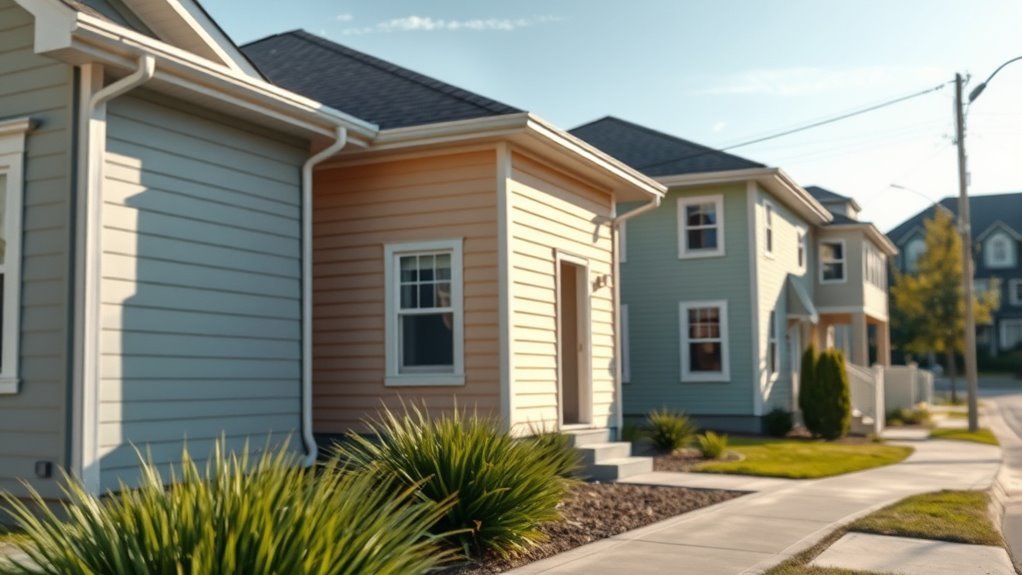
If you want a quick, reliable answer: choose neutral, mid-tone colors like warm grays, tans, or muted blues—they hide dirt, resist visible fading, and make touch-ups less obvious.
You’ll make a practical choice that aligns with current color trends without chasing bold shades that show wear faster.
Consider the environmental impact of pigments and finishes: low-VOC, durable formulations cut repaint frequency and reduce emissions.
Pick finishes that shed grime and resist UV, and test samples in sunlight.
That way you’ll save time, money, and the planet while keeping your exterior looking consistently well-maintained.
Quick Answer: Colors That Typically Last Longest
Because sunlight and grime reveal wear differently across pigments, some colors simply hold up better outdoors than others. You’ll usually find neutrals and muted tones last longest because they hide dirt and fading; selection should consider color trends, environmental factors, regional preferences, and color psychology.
Pair choices with proper application techniques and paint technology, and follow maintenance tips to extend lifespan. Seasonal colors and bold color combinations can work if you accept more upkeep. Beware longevity myths; surface types matter.
Quick picks that balance aesthetic appeal and durability include:
- Warm greys
- Soft tans
- Muted greens
- Deep navy
- Earthy taupe
How Pigment Type Affects Exterior Paint Longevity
You should pay attention to pigment lightfastness because some colors fade much faster in sun and weather.
Organic pigments often offer brighter hues but can be less UV-stable than inorganic pigments like iron oxides, which resist fading longer.
Knowing that trade-off helps you choose a color that keeps its look over time.
Pigment Lightfastness Differences
While sunlight and weather wear on the whole paint film, the pigments inside determine how quickly colors fade. So choosing fade-resistant pigments is essential for long-lasting exteriors.
You should evaluate pigment stability against UV, heat, moisture, and pollution; environmental factors accelerate breakdown. Pick pigments rated for lightfastness and tested in exterior conditions to keep hues truer longer.
Consider coatings and binders too, since they protect pigments.
- Look for ASTM or Blue Wool lightfastness ratings
- Favor pigments with documented UV resistance
- Ask manufacturers for exterior test data
- Consider pigment concentration and dispersion
- Inspect painted samples over time
Organic vs Inorganic Pigments
Having picked pigments rated for lightfastness, you’ll next want to compare organic and inorganic pigments themselves, since their chemistry drives how they respond to UV, heat, and moisture. You’ll notice organic pigments offer superior color vibrancy but often lower pigment stability and color retention under intense sun per lightfastness standards. Inorganic pigments tend to resist fading, reduce pigment toxicity concerns, and lower environmental impact despite duller hues. Consider pigment sourcing and application techniques to balance vibrancy and longevity.
| Type | Strength | Trade-off |
|---|---|---|
| Organic pigments | Vibrancy | Less stable |
| Inorganic pigments | Stability | Less vivid |
Most Fade‑Resistant Pigments: What Outperforms DIY Tints
Which pigments really stand up to sun and time? You want paints with proven color stability and advanced pigment technology, not DIY tints that fade fast.
Professionals use inorganic, heat‑stable, and lightfast pigments that resist chalking and loss of hue. Choose tried materials rather than mixing household colorants.
- Titanium dioxide whites for opacity and UV defense
- Iron oxides for durable earth tones
- Ultramarine blue alternatives designed for exterior use
- Chromium oxides for stable greens
- Rutile‑modified pigments combining opacity and longevity
These options outperform DIY blends, giving longer‑lasting exterior color and less frequent repainting.
How UV Light Fades Pigments : What Breaks Down First?
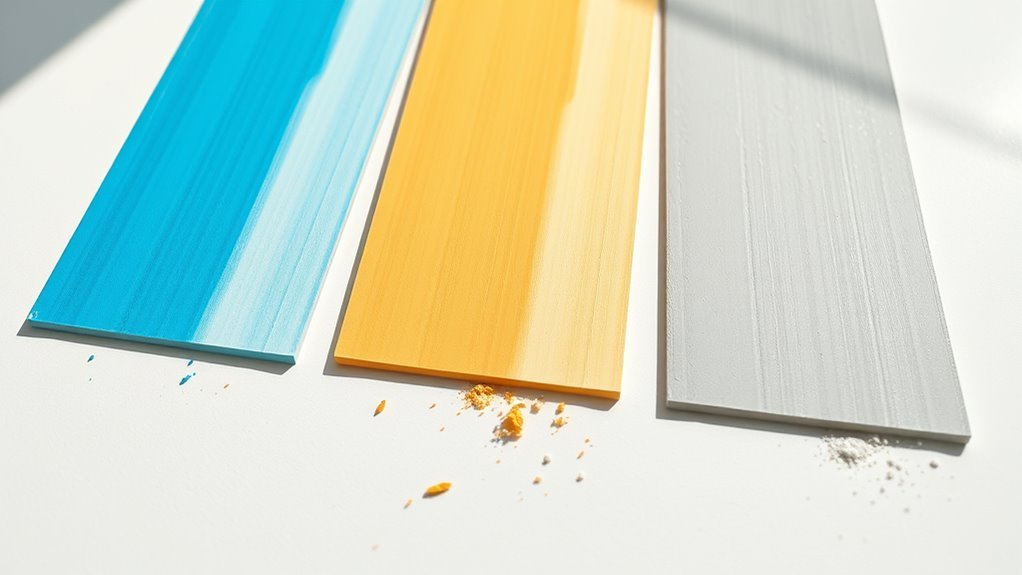
You’ll first notice that pigments with weaker chemical bonds break down faster under UV, so the molecular structure directly affects colorfastness.
At the same time, UV attacks the binder and resin that lock pigments in place, causing chalking and loss of adhesion.
Understanding both pigment chemistry and binder stability explains why some paints fade sooner than others.
Pigment Chemical Structure
When sunlight hits paint, its UV photons attack pigment molecules and the bonds that hold them together, so you’ll see some colors fade faster than others.
You should understand pigment chemical structure because conjugated systems, aromatic rings, and metal centers determine pigment stability and chemical durability. More delocalized electrons often absorb UV without breaking, while weaker bonds break first.
- Conjugated double bonds: absorb UV, risk cleavage
- Aromatic stabilization: improves pigment stability
- Metal-ligand complexes: vary in chemical durability
- Organic vs inorganic: inorganic often resists photodegradation
- Substituents: electron-withdrawing/donating groups alter vulnerability
Binder And Resin Breakdown
Although pigments take the blame for fading, the binder and resin that hold them on the surface usually break down first under UV exposure, and that breakdown determines how long the color actually lasts.
You’ll want to understand binder types—acrylic, alkyd, and epoxy—because each resists UV differently.
Resin properties like crosslink density, molecular weight, and UV stabilizer compatibility control film integrity.
As UV degrades the resin, chalking, cracking, and pigment loss follow, regardless of pigment chemistry.
Choose coatings with proven resin properties and added UV absorbers; proper formulation and maintenance extend color life far more than pigment choice alone.
Why Light‑Reflective Colors Resist Heat and Fading
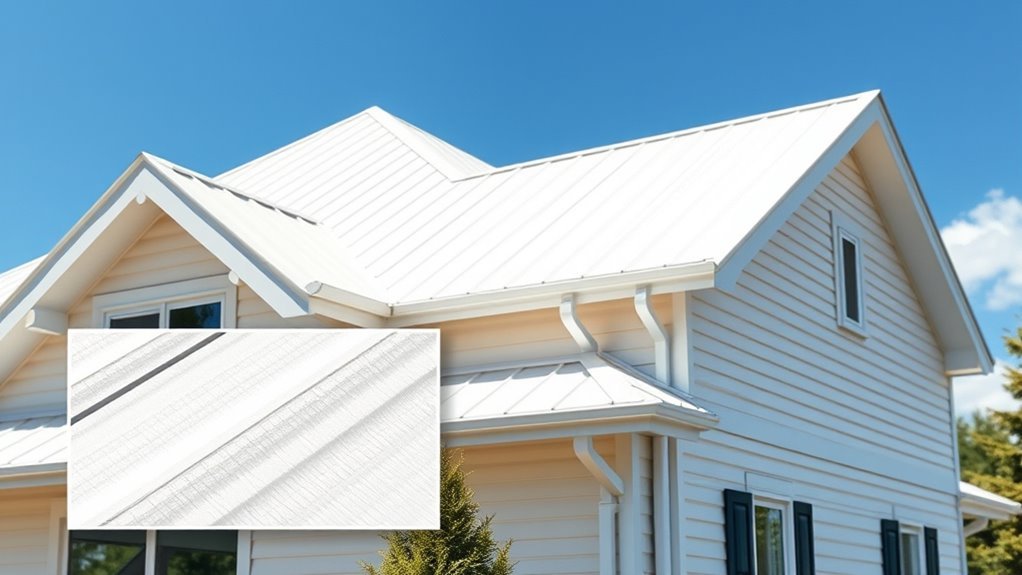
Because light-reflective colors bounce more of the sun’s energy away, they keep surfaces cooler and reduce the thermal stress that accelerates paint breakdown.
You’ll notice improved heat reflection that lowers surface temperature, slowing binder degradation and preserving pigments for better color retention.
Choosing pale, reflective finishes means less cycle expansion and contraction, so cracks and chalking happen more slowly.
You’ll also cut UV-driven chemical changes that fade hues.
Consider these practical benefits:
- Lower surface temperatures
- Reduced binder stress
- Slower pigment oxidation
- Less chalking and cracking
- Extended maintenance intervals
Why Deep, Saturated Colors Fade Faster in Sun
If you pick deep, saturated hues for your exterior, expect them to lose their vibrancy faster in direct sun.
You’ll see pigments break down because intense dyes absorb more UV and heat; color chemistry explains how molecules degrade, fading toward duller tones.
Environmental factors — like ozone, humidity, and airborne pollutants — accelerate that breakdown by oxidizing pigments and weakening binders.
You can slow fading by choosing high-quality UV-resistant formulations and proper priming, but rich colors inherently demand more maintenance than light, reflective shades.
Plan for more frequent touch-ups and accept that deep colors won’t hold peak intensity as long.
The Role Of Paint Sheen In Color Longevity
You’ll want to understand basic sheen levels—flat, eggshell, satin, semi-gloss, and gloss—because each reflects light differently.
Sheen also affects durability: higher sheens resist dirt and moisture better and can withstand cleaning, while flatter sheens hide imperfections but wear faster.
That interaction between sheen and color means some shades will fade or show wear sooner depending on the finish you pick.
Sheen Levels Explained
While paint color matters, sheen often determines how long that color looks fresh—because gloss levels affect durability, dirt resistance, and how light highlights imperfections.
You’ll want to know common sheen types and the sheen impact on appearance so you can choose wisely. Balance aesthetics with maintenance needs; higher sheens reflect more light and show flaws, lower sheens hide texture but clean less easily.
Consider surface prep and exposure when picking gloss.
- Flat: hides flaws, low reflectivity, subtle finish.
- Eggshell: slight sheen, versatile for siding.
- Satin: moderate sheen, easier to clean.
- Semi-gloss: noticeable shine, highlights trim.
- Gloss: high reflectivity, very durable.
Sheen Affects Durability
Because sheen changes how a paint film handles wear and the elements, it directly influences how long a color will look fresh on your exterior, not just how it looks at first glance.
You’ll choose between matte, satin, semi-gloss, and gloss based on durability needs; different sheen types resist dirt, abrasion, and moisture differently.
In a quick sheen comparison, higher sheens shed water and grime better and stand up to scrubbing, while lower sheens hide surface flaws but may wear faster.
Match sheen to exposure: trim and high-traffic areas benefit from tougher sheens, while sheltered walls can use lower sheens.
Sheen And Color Fade
Sheen doesn’t just change how paint resists dirt and scrubbing; it also affects how pigments hold up to sunlight and weather over time.
You’ll pick a sheen type based on finish, exposure, and desired color longevity. Higher sheens reflect UV and shed moisture, slowing fade on trim and doors. Lower sheens hide imperfections but can absorb light and fade faster on large surfaces.
Balance aesthetic, maintenance, and exposure when choosing.
- Flat: minimizes glare but may reduce color longevity on sunlit walls
- Eggshell: moderate durability, hides flaws
- Satin: good compromise for siding
- Semi-gloss: resists fading well
- Gloss: highest reflectivity and fade resistance
How Substrate Color Influences Topcoat Performance
If you’re painting over a dark or vivid substrate, expect the underlying color to affect coverage, final hue, and the number of coats you’ll need; a deep base can bleed through lighter topcoats and dull high-chroma finishes, while pale substrates usually let you achieve true color with fewer coats. You’ll notice substrate impact on wet appearance and long-term color durability because undertones shift with thin film thickness. Choose stronger pigments or more coats for contrasty substrates, and test small areas. Below’s a quick reference:
| Substrate | Effect |
|---|---|
| Dark | Requires more coats |
| Light | Fewer coats, truer color |
Why Primer Matters For Color Retention
When you prime properly, you create a stable barrier that locks pigments in place, evens out porosity, and prevents staining or tannin bleed-through that would otherwise force extra coats or premature repainting.
You’ll see primer benefits immediately: improved surface adhesion, consistent primer colors to influence final hue, and moisture resistance that protects pigment.
Choose primer formulation and primer types based on substrate and paint compatibility.
Mind primer thickness and application techniques—thin even coats beat globby coverage. Proper selection boosts primer longevity and reduces fading, chalking, and peeling, so your chosen exterior color keeps looking true much longer.
Thin, even primer coats outperform globby coverage—proper application extends primer life and keeps exterior color truer, longer.
- Check compatibility before starting
- Match primer type to substrate
- Apply thin even coats
- Account for moisture resistance
- Allow full cure for longevity
Comparing Latex, Acrylic, and Oil‑Based Paints For Colorfastness
Now that you’ve locked in a good primer, picking the right paint chemistry is the next step for long‑lasting color.
You’ll find latex dries fast, resists cracking, and offers solid paint durability in varied climates, though bright pigments can fade faster.
Acrylic combines flexibility and UV resistance, boosting color retention and resisting chalking—it’s often the best balance for exterior colorfastness.
Traditional oil‑based formulas level well and resist dirt, but yellowing and slower drying can hurt long‑term hue.
Match substrate and climate: choose acrylic for UV-heavy exposure, latex for cost and ease, and oil where hardness and adhesion are critical.
Why Premium Formulas Hold Color Longer Than Economy Paints
Because you want your exterior color to endure, investing in a premium formula pays off: higher-quality paints use more and better-grade pigments, denser binders, and superior resins that lock color in and resist UV breakdown, chalking, and washout.
Invest in premium exterior paint — richer pigments, denser binders, and superior resins lock in color and resist UV fade.
You’ll notice premium paint benefits in longer-lasting hues, fewer touch-ups, and improved substrate protection. Use proven color retention techniques like proper surface prep and correct application thickness to maximize lifespan.
Consider these practical advantages:
- Stronger pigment load for deeper, truer color
- Tougher binders that hold pigment in place
- Better adhesion to varied surfaces
- Enhanced dirt and moisture resistance
- Fewer fades over time
How Paint Additives and UV Blockers Extend Color Life
Although pigments and binders form the backbone of paint durability, additives and UV blockers play the essential role of slowing color breakdown by absorbing or reflecting harmful ultraviolet radiation and stabilizing the paint film.
You’ll see longer-lasting hues, reduced chalking, and fewer surface failures when manufacturers include light stabilizers, UV absorbers, and hindered amine light stabilizers (HALS) in the formula.
You’ll benefit because modern paint formulation uses UV absorbers to protect pigments and HALS to prevent polymer degradation, while antioxidants and dispersants maintain film integrity.
Choosing products with these ingredients improves color stability and reduces fading, so your finish stays truer longer.
How Climate Zones Change Which Colors Last Longer
When you pick exterior paint, think about your climate zone because cool colors reflect heat and can reduce thermal stress on the finish.
Sunny areas will speed UV fading, so you’ll want pigments and additives that resist breakdown.
In humid regions, moisture accelerates wear and can dull colors faster, so choose formulations rated for high humidity.
Cool Colors Reflect Heat
If you live in a hot or sunny climate, choosing cool exterior colors like pale blues, soft greens, or light grays can help your paint last longer by reflecting more solar heat and reducing thermal stress on siding and trim.
You’ll notice less expansion and contraction, which slows cracking and peeling. Your color choice affects maintenance frequency and energy load on cooling systems.
Consider these practical points:
- Pick light cool tones for maximum heat reflection
- Test samples in direct sun before committing
- Match trim to reduce contrast-related heat spots
- Use high-quality exterior formulas with reflective pigments
- Factor climate when selecting palettes
UV Fading And Humidity
Because sunlight intensity and moisture vary so much across regions, UV fading and humidity play a big role in how long exterior paint holds up. You should pick pigments and finishes that resist UV exposure effects and handle humidity impact. Bright, light-reflective colors fare better in intense sun; satin or semi-gloss helps shed moisture in humid zones. In dry, high-UV areas, choose UV-stable pigments and frequent maintenance. In coastal or rainy climates, prioritize mildew-resistant formulas.
| Climate Type | Best Color Choice | Maintenance Tip |
|---|---|---|
| High UV | Light reflective | UV-stable coats |
| Humid | Mid-tone gloss | Anti-mildew care |
Best Exterior Paint Colors For Hot, Sunny Climates
Although bright, dark tones can make a house absorb heat and fade faster, choosing the right exterior colors for hot, sunny climates helps your paint last longer and keeps your home cooler.
You’ll favor hues that boost sunlight reflection and lower perceived color temperature. Pick durable, light-fast formulas and consider finishes that resist UV.
Cool neutrals, pale pastels, and muted earth tones reduce heat gain while hiding fading. Use accents sparingly to avoid concentrated heat spots.
- Soft white or off-white
- Pale gray-blue
- Light sandy beige
- Muted sage green
- Warm pastel terracotta
Best Exterior Paint Colors For Cold, Wet Climates
In cold, wet climates you’ll want colors that help manage moisture and retain heat. Darker neutrals like charcoal or deep taupe absorb more warmth and can reduce freeze–thaw stress on siding.
Pair those with mold-resistant cool tones—muted blues or greens with mildew-resistant finishes—to keep the exterior looking good longer.
Darker Neutrals For Heat Absorption
When you want to keep a cold, wet house warmer without cranking the heat, choosing darker neutral exterior paint can help by absorbing and retaining solar warmth.
You’ll gain dark color benefits like improved heat retention and reduced energy demand during sunny winter days. Choose durable, low-porosity finishes to avoid moisture issues and maintain longevity.
Pick tones that suit your style while maximizing passive warming.
- Deep charcoal for modern curb appeal
- Warm taupe for subtle warmth
- Rich greige for versatility
- Slate brown for rustic charm
- Espresso for classic contrast
Mold-Resistant Cool Tones
Choose cool, mold-resistant exterior tones that both repel visible mildew and help your home look fresh longer in cold, wet climates.
You’ll pick colors like slate blue, soft gray-green, and muted teal with mildew-resistant formulations and high-quality primers. These shades offer cool tone benefits by hiding moisture streaks and reflecting indirect light, slowing fungal growth.
Combine paint choice with mold prevention strategies: improve drainage, trim vegetation, seal gaps, and guarantee proper ventilation.
Regular cleaning and breathable finishes extend life further. By pairing appropriate colors with proactive maintenance, you’ll keep siding durable, attractive, and less prone to mold in damp regions.
Best Exterior Paint Colors For Humid, Coastal Environments
Because salty air and constant humidity can fade and chalk paints faster, you’ll want colors that both reflect heat and mask weathering for coastal homes.
You should pick hues aligned with coastal color trends and choose humidity resistant shades with durable, low-sheen finishes. Lighter tones cut heat while mid-tones hide salt stains; avoid high-gloss that highlights imperfections.
Maintenance-friendly palettes extend life and curb appeal.
- Soft nautical blues
- Warm sandy beiges
- Muted seafoam greens
- Stormy gray-blues
- Sun-bleached coral accents
Select mildew-resistant primers and quality topcoats for best longevity.
How Air Pollution and Wildfire Smoke Affect Paint Colors
If you live in an area with heavy air pollution or frequent wildfire smoke, expect faster fading, staining, and a duller finish on exterior paint. You’ll notice reduced color retention because pollution effects and wildfire impact deposit particulates and acidic residues that degrade binders. Monitor air quality, choose coatings rated for UV and chemical resistance, and clean surfaces more often to preserve paint durability. Consider darker, forgiving hues where soot shows less, but prioritize protective finish and maintenance over color alone.
| Environmental factors | Effect on paint |
|---|---|
| Air quality | Accelerates wear |
| Wildfire impact | Causes staining |
| Pollution effects | Reduces retention |
Factory Pigments vs DIY Tints: Which Last Longer?
While both factory-mixed pigments and DIY tints can look great, factory pigments generally hold up better over time because they’re professionally formulated for consistency, UV stability, and proper dispersion.
Factory-made pigments usually outlast DIY tints, offering better consistency, UV protection, and pigment dispersion over time
You’ll usually get superior factory durability, more predictable color retention, and fewer surprises when weather ages the finish.
DIY tints can work for touch-ups or budget jobs, but tint stability varies by brand and mixing accuracy.
- Consistent color batches
- Formulated UV inhibitors
- Professional dispersion of pigments
- DIY mix variability
- Risk of uneven fading due to poor tint stability
How Surface Preparation Prevents Premature Fading
Before you pick a color, make sure the surface is clean, deglossed, and repaired so dirt, chalk, or peeling paint won’t cause uneven fading.
Next, apply a suitable primer to seal the substrate and promote adhesion.
Finally, use a high-quality exterior paint with UV-resistant pigments to keep the color stable longer.
Clean, Degloss, And Repair
Start by thoroughly cleaning the surface—dirt, mildew, and chalky residue all accelerate fading and keep new paint from bonding properly.
You’ll use cleaning techniques that remove contaminants, then degloss glossy spots so coating adheres evenly.
Repair cracks, loose caulk, and rotten siding to prevent moisture intrusion that undermines pigment stability.
Follow these focused steps:
- Pressure wash or scrub mildew with appropriate cleaners.
- Sand glossy areas until dull for proper adhesion.
- Replace or patch rotten wood and stucco.
- Rake out and recaulk joints to seal against water.
- Prime bare or patched areas before painting to guarantee longevity.
Prime And Use Quality Paint
Now that the surface is clean, deglossed, and repaired, prime and choose high-quality paint to lock in color and resist premature fading.
You’ll pick primer types based on substrate: oil-based for raw wood, shellac for stain blocking, and acrylic for masonry. Apply primer evenly, let it cure, then inspect for missed spots.
Use quality topcoat with UV inhibitors and stable pigments; thinner, cheaper paint won’t hold up. Maintain consistent paint application—proper spread rate, overlap, and drying conditions—to form a durable film.
Proper priming and meticulous paint application reduce chalking and UV penetration, preserving color longer.
Cleaning and Maintenance Routines That Preserve Color
When you stick to a simple, regular cleaning and maintenance routine, your exterior paint will hold its color much longer.
You’ll extend life by using proven color preservation techniques and straightforward paint maintenance tips. Inspect seasonally, wash gently, and address stains promptly to avoid long-term fading or mildew.
- Rinse siding with a soft hose and mild detergent every 6–12 months.
- Remove mildew with a diluted bleach solution, then rinse thoroughly.
- Trim plants to prevent rubbing and moisture buildup.
- Touch up chips and scratches immediately with matching paint.
- Reapply a UV-protective clear coat where appropriate to slow fading.
Match Architectural Style While Maximizing Color Life
Although your top priority might be preserving color, you’ll also want paint choices that honor your home’s architectural style; pick hues and sheens that complement period details while using pigments and coatings known for UV and weather resistance.
You’ll balance architectural harmony with practical selection: choose subdued, historically appropriate palettes for traditional homes and bolder, fade-resistant formulas for modern façades.
Prioritize high-quality, lightfast pigments and mildew-resistant binders to extend color longevity without compromising style.
Prioritize lightfast pigments and mildew-resistant binders to preserve color and extend exterior paint longevity without sacrificing style.
Test small areas in sunlight, match trim sheen to detail scale, and consult preservation guidelines for heritage properties so your choices respect form while lasting longer.
Choosing Long‑Lasting Colors For Brick, Stucco, and Wood
Because different materials absorb and reflect light differently, you’ll want to pick colors that suit each surface’s texture and porosity to keep finishes looking fresh longer.
For brick, choose muted, earth-toned hues that hide soot and require less frequent repainting.
For stucco, lighter, warm neutrals reflect UV and reduce fading.
For wood, pick mid-tones that balance natural grain and allow for easier touch-ups.
Consider color psychology to match mood and curb appeal, and follow maintenance tips like regular cleaning and sealing to extend life.
- Brick: deep taupes, terra cotta
- Stucco: cream, pale sage
- Wood: warm grays
- Test samples first
- Schedule annual inspections
How Textures and Trims Hide Wear and Fading
You can use textured finishes to mask small cracks, dirt, and uneven fading so wear shows up less.
Contrasting trim colors draw the eye away from weathered surfaces and make any fading look intentional.
Together, texture and trim keep your exterior looking fresh longer.
Texture Masks Imperfections
When paint starts to thin or fade, textured surfaces and trim give your home a built-in disguise, scattering light and breaking up visible wear so chips and uneven color are less obvious.
You can use texture enhancement to hide minor flaws and make color application look consistent longer. Textures catch shadows and diffuse glare, so small inconsistencies don’t draw the eye.
Choose finishes that suit your climate and maintenance habits. Apply paint in thin, even coats over properly prepared textures to maximize longevity.
- Assess existing texture before repainting
- Match paint sheen to surface roughness
- Use flexible exterior primers
- Repair deep gouges first
- Maintain gutters to limit runoff
Trim Contrast Minimizes Fading
Textured surfaces and careful trim choices work together to mask wear, and contrasting trim colors can further minimize the appearance of fading by directing the eye.
You’ll use contrast techniques to frame windows, doors, and eaves so weathered paint on large planes becomes less noticeable.
Choose trim durability first—select rot-resistant materials and high-quality trim paints to reduce maintenance.
Pair subtle body colors with sharper trim hues to create intentional visual breaks that hide uneven fading.
When repainting, touch up trim before large surfaces so edges stay crisp; you’ll extend curb appeal while making wear less obvious.
Use Lighter Trim Or Accents To Reduce Repaint Frequency
Although bold body colors can show wear faster, choosing lighter trim and accent shades will cut down how often you need to repaint. You’ll use lighter colors around windows, eaves, and doors to hide minor chalking and dirt while preserving the stronger body tone.
Trim contrast directs eyes away from small defects, so you can delay full repainting. Focus accents where touching up is easy, and pick durable trim finishes.
- Place lighter trim on high-exposure areas
- Use accents to camouflage small blemishes
- Prioritize trim contrast for visual balance
- Choose semi-gloss for easier cleaning
- Touch up accents before full repainting
Which Color Families Resist Fading Best: Whites, Tans, Grays
Because pigments with less tint absorb less UV, whites, tans, and grays generally hold their color longer than heavily saturated hues. So you’ll get more time between repaints with these families.
You’ll find whites reflect sunlight, tans mask dust, and grays hide minor dirt while all show slower fading. Choose high-quality formulations with UV stabilizers and check manufacturer data for lightfastness.
Stay aware of color trends but prioritize longevity if maintenance matters. New pigment innovations and acrylic blends improve durability, so test samples in sun-exposed spots.
That way you’ll balance aesthetic preference and practical lifespan without frequent repainting.
Evaluating Deep Blues, Greens, and Reds For Longevity
When you consider deep blues, greens, and reds, focus on how each hue’s fade resistance and pigment lightfastness determine longevity.
Remember that darker pigments often absorb more heat, which can accelerate breakdown on sunny façades.
We’ll compare specific pigments and how heat absorption affects their performance over time.
Hue Fade Resistance
Curious which deep hues hold up best over time? You’ll assess hue stability and plan color maintenance to keep blues, greens, and reds vibrant.
Focus on surface prep, protective coatings, and exposure patterns rather than pigment science. Expect variations: navy may hide fading, forest green shows wear unevenly, and burgundy can shift more noticeably.
Choose finishes that resist UV and clean easily, and schedule inspections.
- Inspect facing walls yearly
- Clean gently to remove pollutants
- Recoat high-exposure areas sooner
- Use quality primers and sealers
- Monitor gloss loss as a cue to act
Pigment Lightfastness
A few pigments weather sunlight better than others, so you’ll want to prioritize lightfastness when choosing deep blues, greens, and reds for exterior paint.
You should check manufacturer ratings and ASTM lightfastness tests to compare pigment stability across formulations. Organic pigments often offer vivid hues but can lose color faster than inorganic options like iron oxides or certain phthalocyanines.
For deep blues and greens, select high-grade phthalocyanine or ultramarine variants; for deep reds, choose cadmium alternatives or stable iron-based pigments labeled for exterior use.
Prioritizing pigment stability boosts long-term color retention and reduces repainting frequency.
Heat Absorption Effects
Pigment stability helps your color resist fading, but you also need to contemplate how much heat that color will absorb.
You’ll find deep blues, greens, and reds soak up more solar energy, which can accelerate binder breakdown and reduce color retention over time. Choose formulations with UV stabilizers and heat-resistant binders to offset this.
Consider placement, roof overhangs, and reflective additives to lower surface temperatures.
- Deep sapphire and navy: high heat absorption, monitor for chalking
- Forest green: moderate absorption, needs UV protection
- Crimson and maroon: strong absorption, risk of faster fading
- Add reflective pigments
- Prioritize coatings with proven color retention
Best Dark Colors When You Want Durability And Drama
When you want durability with drama, deep hues like charcoal, navy, and forest green stand up to weather and still give your home a bold presence. You’ll follow dark color trends that favor depth and low-maintenance appeal, and you’ll create dramatic contrasts with trim and stone. Choose high-quality exterior formulas with UV blockers and mildew resistance to preserve appearance. Balance heat absorption by using lighter accents and reflective finishes where needed.
| Color | Mood | Maintenance |
|---|---|---|
| Charcoal | Modern | Low |
| Navy | Classic | Moderate |
| Forest Green | Timeless | Low |
Test Paint Fade Resistance Before You Buy
Before you commit, test paint samples in direct sunlight on a small board to see how the color and sheen hold up over days and weeks.
If you want faster results, ask manufacturers about accelerated fade testing or look for published lab data on UV resistance.
That hands-on and technical combo will give you a clearer picture of long-term performance.
Test Samples In Sunlight
Sunlight is the best real-world test for fade resistance, so try painting several small panels of each color you’re considering and mounting them where they’ll get full exposure for a few weeks.
You’ll track sunlight exposure and compare paint samples side by side to spot subtle shifts. Check gloss, flaking, and color change weekly, photographing from the same angle. Record conditions like direct sun hours and nearby reflective surfaces.
Remove samples after a month to judge total change before deciding.
- Choose identical substrate panels
- Apply same primer and number of coats
- Label each sample clearly
- Photograph with date stamps
- Note weather and shade changes
Use Accelerated Fade Testing
Outdoor exposure tests give you real answers, but they take weeks. Use accelerated testing to simulate sun, humidity, and heat in hours. You can compare formulas and predict color durability before buying. Send samples to labs or use commercial testers at home; record fading, chalking, and gloss loss. Trust measurable results over marketing claims.
| What to test | Why it matters |
|---|---|
| UV exposure | Drives fading |
| Heat cycling | Reveals breakdown |
| Humidity | Promotes chalking |
| Color shift | Shows durability |
Use the data to pick paints that keep color longer.
How To Read Technical Specs For Colorfastness And Warranty
When you compare paint labels and data sheets, focus on measurable terms like Delta E (color shift), lightfastness ratings, and the specific conditions used in testing so you can judge how a color will actually hold up.
Read colorfastness standards cited, note exposure cycles, and check warranty details for coverage limits and exclusions.
Verify laboratory methods (QUV, Xenon), sample size, and climate relevance. Watch for subjective claims without data.
- Delta E thresholds and acceptable limits
- Test duration and UV intensity
- Substrate and prep conditions
- Transferable versus prorated warranty
- Required maintenance to keep warranty valid
Balancing Curb Appeal And Maintenance When Choosing Color
Although a striking color can boost curb appeal and resale value, you’ll want to weigh that against long-term maintenance needs so you’re not repainting every few years.
Choose hues that flatter architectural details but also hide dirt and fading; mids to darker neutrals and muted tones usually offer the best maintenance balance.
Test samples in sun and shade, then inspect after rain to see staining or chalking.
Consider trim contrast that’s low-maintenance and easy to touch up.
Factor local climate, landscaping stains, and homeowner association rules.
That way you get curb appeal without constant upkeep or surprises.
Cost Vs Lifespan: When To Invest In Premium Pigments
If you plan to keep your paint for the long haul, investing in premium pigments can cut replacement frequency and lower lifetime cost. You’ll weigh pigment quality against upfront price: premium pigments boost paint durability and exterior longevity, reduce color maintenance, and often prove cost effectiveness as a long term investment.
Consider your climate, exposure, and resale goals when making financial considerations.
- Higher pigment quality resists fading longer
- Fewer repaints improve long term investment returns
- Better UV resistance lowers color maintenance needs
- Upfront cost spikes, future savings balance out
- Compare warranties for paint durability
Hiring Pros Vs DIY: Impact On How Long Your Color Lasts
Because proper prep and application make all the difference, hiring pros can meaningfully extend how long your exterior color lasts compared with a DIY job. You’ll get professional techniques—surface repair, correct primer, consistent film thickness—that reduce fading, peeling, and moisture damage. DIY pitfalls like poor prep, wrong primer choice, and uneven coats shorten color life. If you want longevity, weigh labor cost against future repainting frequency.
| Pros advantage | DIY risk |
|---|---|
| Controlled conditions | Weather mistakes |
| Quality materials | Wrong product choice |
| Consistent technique | Inconsistent coverage |
| Warranty/cleanup | Time constraints |
Seasonal Timing: When To Paint For Maximum Color Life
After pros or a careful DIY job get your siding prepped and primed, pick the right season to lock in color longevity. You’ll extend color life by matching paint choice and timing to seasonal trends and local weather conditions. Aim for stable temperatures and low humidity so paint cures properly and resists fading, chalking, and peeling.
- Paint in late spring or early fall for moderate temps.
- Avoid hot, direct sun that speeds drying and causes uneven film.
- Skip rainy, humid weeks that hinder adhesion and promote mildew.
- Use products rated for your climate when conditions are extreme.
- Plan touchups during calm, dry stretches.
Quick Checklist: Pick A Color That Lasts With Minimal Upkeep
Pick colors that hide dirt, resist fading, and suit your home’s material to minimize maintenance over time. Use this quick checklist for smart color selection and maintenance tips: pick mid-tone neutrals, test samples in sun, match trim to material, and choose quality, UV-resistant paint. Keep a sample log and schedule gentle washes annually.
| Feature | Best Choice | Why |
|---|---|---|
| Tone | Mid-tone neutral | Hides dirt, reduces contrast |
| Finish | Satin/eggshell | Easy to clean |
| Pigment | UV-stable | Slows fading |
| Sample | Live test | Reveals real-world wear |
Frequently Asked Questions
Can Colored Sealers Overpaint Extend Exterior Color Life?
Yes — colored sealers can extend exterior color life by adding UV protection, water resistance, and a refreshed pigment layer. You’ll boost paint longevity, slow fading, and reduce maintenance when you apply quality colored sealers correctly and regularly.
Do Darker Roof Colors Accelerate Siding Paint Fading?
Yes — darker roofs can speed siding fade; like a sunlamp’s glare beating down, roof color effects increase heat absorption, heating nearby walls, stressing pigments, and making your exterior paint break down and dull faster.
How Do Landscaping Choices Affect Exterior Paint Longevity?
Your landscaping choices affect paint longevity by choosing plant selection wisely and improving soil quality; you’ll avoid constant moisture, shade, and abrasive branches, reducing mildew and rubbing while promoting airflow, sun exposure balance, and less frequent repainting.
Is Color Fading Covered by Standard Paint Warranties?
Usually not fully—warranties vary, and they’ll cover color retention only per warranty specifics like time limits, exclusions, and required maintenance. Check your manufacturer’s terms so you know what fading they’ll and won’t replace or repair.
Can Interior Color Choices Influence Exterior Temperature and Fading?
Yes — your interior color choices can influence exterior temperature and fading. Dark interiors retain heat, raising interior temperature and increasing paint absorption through walls, so you’ll want lighter tones and ventilation to reduce thermal transfer and fading.
Conclusion
You’ve got the know-how to pick a color that keeps looking sharp longer. Choose pigments rated for UV resistance, favor lighter tones in sun‑baked spots, and invest in premium formulas or pros when longevity matters—cheap tints bite the dust sooner. Time your paint job for mild, dry weather, and keep up simple maintenance. With those steps, your house will stand out for years—no smoke and mirrors, just smart choices that pay off.
