
How to Paint Exterior Vinyl Windows Without Peeling Paint
You can paint exterior vinyl windows without peeling paint if you prepare and use the right products. Clean and de-grease frames, scuff with fine sandpaper, then apply a plastic-bonding primer made for vinyl. Use flexible, UV-resistant 100% acrylic exterior paint in thin, even coats, allowing full cure between layers and avoiding extreme temperature or humidity. Mask glass and hardware, follow manufacturer drying times, and check compatibility on a small patch—keep going to learn tips and troubleshooting.
Quick Answer: Can You Paint Vinyl Windows Successfully?
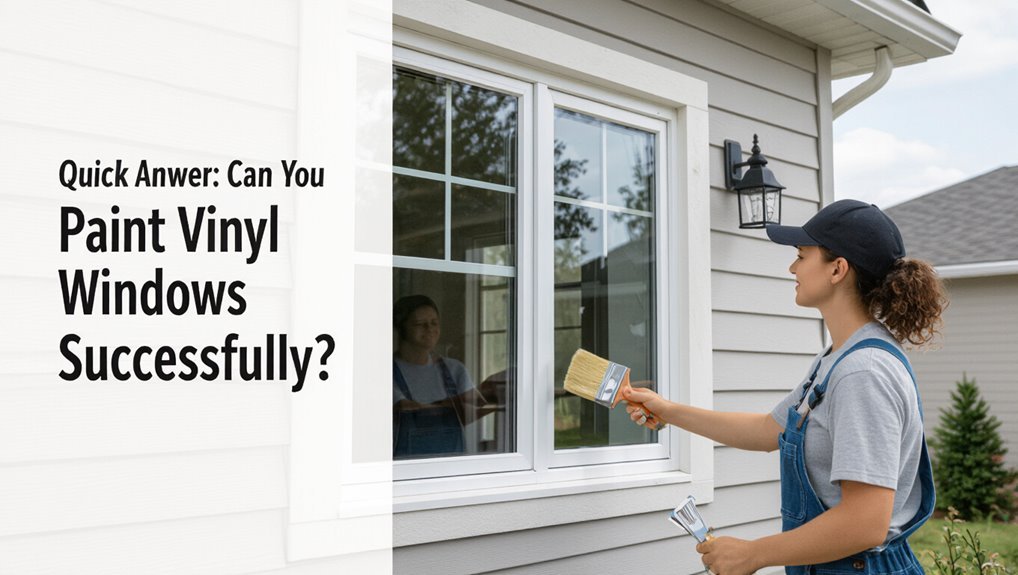
Yes—you can successfully paint vinyl windows if you prepare and use the right products.
You’ll extend vinyl window longevity by choosing flexible, UV-resistant paint and following surface prep steps.
Extend vinyl window life: use flexible, UV-resistant paint and thorough surface prep for lasting adhesion.
Pay attention to paint adhesion factors: clean, scuff, prime with a vinyl-compatible primer, and apply thin coats.
Done correctly, your finish will resist peeling and last longer than rushed attempts.
What Problem Painting Vinyl Windows Solves
Revitalizing your vinyl window frames solves more than an aesthetic issue—it protects aging or faded surfaces from UV damage and weathering while letting you update your home’s look without costly frame replacement.
You get vinyl window benefits like renewed curb appeal, improved surface resilience, and minor scratch concealment.
Proper preparation and coating extend paint longevity, reducing maintenance and delaying the need for full replacement.
Who Should Paint Exterior Vinyl Windows
Who should consider painting exterior vinyl windows?
You should if you weigh Window Condition, Color Preferences, Cost Considerations, Time Commitment and Skill Level.
Consider painting vinyl windows only after weighing window condition, color goals, costs, time, and your skill level.
DIY Enthusiasts can handle simpler jobs but must follow Safety Precautions.
Consider hiring Professional Painters for complex frames or poor condition.
Decide based on your skills, budget, and how much time you’ll invest before committing to the project.
When to Repaint Vinyl Windows vs Replace Them
If your vinyl windows are sound structurally and you mainly want a new look, repainting can be a smart, cost-effective choice; but if frames are cracked, warped, extensively faded, or failing to seal, replacement is usually the better long-term solution. You should repaint vinyl for aesthetic appeal and lower upfront cost; replace windows for energy efficiency and longevity assessment.
| Option | Focus |
|---|---|
| Repaint | cost comparison, aesthetic appeal |
| Replace | longevity assessment, energy efficiency |
Which Vinyl Window Types Accept Paint Best
You’ll get the best results on factory-primed vinyl and smooth PVC surfaces because the paint adheres evenly and lasts longer.
Textured or wood-grain vinyl can be painted, but it needs extra sanding and a bonding primer to prevent flaking.
Check the manufacturer’s recommendations first to avoid voiding warranties.
Factory-Primed Vinyl
Because manufacturers sometimes prime vinyl frames at the factory, these factory-primed units are the easiest type to paint and give you the best chance of a durable finish.
You’ll enjoy factory primed benefits like better adhesion and improved vinyl durability. Prepare and use recommended exterior paint.
Consider:
- Light sanding for tooth
- Compatible primer if needed
- Quality exterior acrylic paint
Smooth PVC Surfaces
Smooth PVC window frames are the best candidates for painting because their uniform surface accepts primer and paint more consistently than textured or heavily coated vinyl.
You’ll find smooth PVC needs straightforward vinyl surface preparation: clean, scuff lightly, and degrease.
Use compatible primer and proven paint adhesion techniques so coatings bond reliably, minimizing peeling and ensuring a durable, even finish on these window types.
Textured/Wood-Grain Vinyl
If your window frames have a textured or wood-grain finish, they’ll behave differently under paint than flat PVC. These surfaces often have heavier factory coatings and deeper grooves that make adhesion and coverage more challenging.
You’ll need proper prep, primers, and specific application techniques.
- Sand gently for paint adhesion and to control wood grain effects
- Choose color selection and primers for surface durability
- Follow vinyl painting maintenance tips
How Vinyl Frames Differ From Wood or Metal
While vinyl looks similar to painted wood at a glance, it behaves very differently when you prepare, prime, and paint it—so you’ll need different materials and techniques than you’d use for wood or metal.
You’ll compare Vinyl vs Wood and Vinyl vs Metal for Durability Comparison, Aesthetic Differences, Thermal Performance, Maintenance Needs, and Cost Factors to pick appropriate prep, primer, and paint.
How Paint Color Affects Vinyl Heat Absorption
Curious how color choice changes a vinyl window’s temperature? You should consider heat absorption when choosing paint.
Your color selection affects how much solar energy the frame soaks up, altering expansion and longevity.
- Dark colors increase heat absorption and surface warmth.
- Light colors reflect more sunlight, keeping vinyl cooler.
- Midtones offer balance for aesthetics and thermal control.
How Paint Color Affects Manufacturer Warranties
Because paint choices can alter a vinyl window’s performance, manufacturers often include specific color and finish restrictions in their warranties to prevent premature failure.
You should check those terms before changing a factory color. You’ll need to confirm warranty implications, acceptable pigments, and reflectance limits.
Choosing high color durability coatings and documenting approvals helps preserve coverage and avoids denied claims for heat- or adhesion-related damage.
Tools to Paint Exterior Vinyl Windows
Before you paint, you’ll want to prepare the vinyl by cleaning, sanding lightly, and wiping away dust so the paint adheres properly.
Gather the right tools—quality brushes or a small roller, a good primer made for vinyl, painter’s tape, and nitrile gloves.
With proper prep and the right tools, your finish will look professional and last longer.
Proper Surface Preparation
You’ll need a handful of reliable tools to prepare vinyl windows properly: a mild cleaner and degreaser, a soft-bristle brush or non-abrasive pad, a clean lint-free cloth, 220–400 grit sandpaper or a scuff pad, painter’s tape, drop cloths, and a high-quality solvent-based or alcohol wipe for final wiping.
- Follow a preparation checklist: surface cleaning, surface inspection, cleaning solutions.
- Use adhesion techniques and primer selection for paint compatibility.
- Apply vinyl care, detailing tips, and a maintenance routine.
Right Painting Tools
Gather the right tools to make painting exterior vinyl windows efficient and long-lasting: quality exterior acrylic-latex or polyurethane paint formulated for vinyl, a bonding primer rated for non-porous surfaces, a set of synthetic-bristle brushes (angled sash brush for trim, small round brush for tight spots), a high-density foam or short-nap roller for smooth coverage, solvent-safe trays and liners, painter’s tape, drop cloths, a utility knife for removing caulk or tape, tack cloths and rubbing alcohol wipes for final cleaning, and safety gear (gloves, goggles, and a respirator if using solvent-based products).
Use appropriate paint types, primer application, roller brushes or spray equipment, and adhesion methods; control paint consistency, follow surface preparation, consider weather considerations, and pick tools that guarantee proper painting techniques and high finish quality.
Essential Consumables for Vinyl Window Painting
Painting vinyl windows well starts with having the right consumables on hand so you won’t stop mid-job. You’ll need quality supplies that match vinyl paint types and follow surface preparation tips for adhesion.
Painting vinyl windows requires the right supplies—cleaners, sandpaper, primer, and compatible paint—to ensure smooth adhesion and finish.
Gather essentials:
- Cleaners and degreasers
- High-grit sandpaper, tack cloths, and primer
- Brushes, small rollers, and compatible paints
Keep extras so you can finish neatly and efficiently.
Safety Gear and Ideal Work Setup
Now that you’ve got your consumables lined up, make sure you’ve also prepared proper safety gear and a comfortable workspace before you touch paint.
Wear gloves, eye protection, and a respirator rated for vapors; set up drop cloths and ventilation.
Prioritize safety equipment placement, clear tools, and workspace organization so you can move steadily, avoid contamination, and clean up efficiently.
Best Months and Weather to Paint Vinyl Windows
Pick a season when daytime temperatures sit between about 50–85°F (10–29°C) so the paint will bond and cure properly.
You’ll want dry, low-humidity days to avoid long drying times and tacky finishes.
Check the forecast and plan your project on a stretch of clear weather to get the best results.
Ideal Temperature Range
Most people find late spring through early fall offers the best window for painting vinyl, because temperatures between about 50°F and 90°F (10°C–32°C) let primers and paints cure properly without blistering or poor adhesion.
You’ll need to take into account temperature impact and ideal weather when scheduling.
Check these guidelines:
- Paint when temps stay steady in that range.
- Avoid rapid drops or spikes.
- Follow product temperature recommendations.
Dry, Low-Humidity Days
Along with steady temperatures, you’ll want days with low humidity—moisture slows curing and can cause milky, uneven finishes or poor adhesion.
Choose seasonal timing with ideal temperatures and clear weather conditions for best painting practices.
Monitor humidity effects, use proper surface treatments, and employ drying techniques to boost paint adhesion.
Follow application strategies and maintenance tips to prevent peeling and guarantee lasting results.
How Temperature and Humidity Affect Adhesion
When you paint vinyl windows, temperature and humidity directly determine how well the paint bonds and cures: too cold or too humid and the paint won’t adhere or will dry slowly, too hot or too dry and it can skin over or blister.
You must consider temperature effects, humidity impact, adhesion challenges, paint failures, weather conditions, and seasonal considerations.
- Aim for moderate temps.
- Avoid high humidity.
- Prevent rapid temperature swings.
How to Check Weather and Timing for Exterior Painting
Check the forecast before you start so you can pick a stretch of days with steady, moderate temperatures—typically between 50°F and 85°F—for best paint adhesion.
Don’t paint if rain is expected within 24–48 hours or if humidity will stay high, since moisture ruins finish and bonding.
You’ll save time and get a better result by scheduling work during a clear, dry window.
Ideal Temperature Window
Pick a clear, mild day with temperatures in the range recommended by your paint manufacturer—typically 50–85°F (10–29°C)—so the paint can cure evenly without trapping moisture or becoming too tacky.
Consider temperature effects and seasonal considerations when planning your painting schedule. Check forecasts, then:
- Verify daytime and nighttime temps
- Schedule during ideal conditions window
- Avoid quick temp swings
Avoid Rain And Humidity
Temperature is only part of the equation—rain and high humidity can ruin a fresh paint job by preventing proper adhesion and lengthening cure times.
You should monitor weather impacts daily, use timing strategies to pick dry windows, and apply rain precautions like tarps if forecasts shift.
Consider seasonal considerations for prolonged dry spells, understand humidity effects on cure rates, and prioritize moisture management before painting.
How to Test Paint Compatibility on a Small Area
Before painting the whole frame, pick an inconspicuous spot and apply a small swatch of your chosen paint so you can confirm adhesion, coverage, and color match.
Test for paint adhesion on the vinyl surface, then wait full cure. Check for cracking or lifting.
Try these checks:
- Scratch gently with a fingernail
- Observe after 24–48 hours
- Note any color shift or poor coverage
How to Clean Vinyl Frames Before Painting
Before you paint, you’ll need to remove dirt and grime from the vinyl frames so the paint can stick properly.
Use a mild detergent or a dedicated vinyl cleaner to de-grease any oily spots, scrub with a soft brush, then rinse thoroughly.
Let the frames dry completely before moving on to priming or test patches.
Remove Dirt And Grime
Dirt and grime can prevent paint from sticking, so you’ll want to clean vinyl frames thoroughly before you start.
Use proper cleaning techniques and vinyl care as part of pre painting maintenance; focus on surface treatments and grime removal without harsh solvents.
- Try efficient scrubbing with eco friendly cleaners.
- Consider gentle pressure washing at low settings.
- Test a small area first.
De-Grease And Rinse
Scrub the frames with a degreasing cleaner to break down oils, silicone residues, and film that ordinary soap won’t remove.
Use safe degreasing techniques—brush corners and seams, let dwell time dissolve buildup, then agitate stubborn spots.
Follow with thorough rinsing methods: low-pressure hose or bucket rinses until suds and residue clear.
Dry completely with lint-free cloths before priming and painting.
Removing Dirt, Grease, and Chalking From Vinyl
When prepping vinyl for paint, you’ll need to remove grease, grime, and chalking so the primer will stick properly; a clean surface is non-negotiable for a durable finish.
Use focused cleaning techniques and preparation methods for vinyl maintenance, addressing chalking issues with appropriate cleaners and grease removers.
Target stains and chalking with purpose: use the right cleaners, degreasers, and prep methods for lasting vinyl paint adhesion.
Follow surface care steps:
- Wash with mild detergent and soft brush
- Rinse thoroughly, dry completely
- Use deglosser for stubborn residue
When and How to Remove Old Caulk and Sealant
Before painting, you should remove caulk and sealant that’s cracked, detached, or contaminated so your new paint and seals will bond properly.
Use a sharp utility knife, a caulk remover tool, and a stiff brush or solvent to clean joints without gouging the vinyl.
After painting and curing, reseal joints with a paintable, exterior-grade silicone or polyurethane caulk to restore weatherproofing.
When To Remove
If the old caulk is cracked, peeling, moldy, or no longer sticking to the window frame, you should remove it before painting so the new sealant can bond properly and the finish looks clean.
Consider removing caulk when leaks, drafts, or visible gaps appear. Factors include removal techniques and vinyl window lifespan.
- Remove failing caulk before repainting
- Replace moldy or hardened seals
- Check for adhesion failures
Proper Removal Tools
Gather the right tools so you can remove old caulk and sealant cleanly and without damaging the vinyl.
Choose tool selection carefully: razor scrapers, utility knives, silicone caulk removal tools, plastic scrapers, and solvent-safe rags.
Use gentle removal techniques—score, lift, and peel slowly.
Warm stubborn sealant with a heat gun on low, avoid gouging, and keep surfaces clean for painting.
Resealing After Painting
Once the old caulk’s been cleaned away, you’ll decide whether to remove remaining sealant now or wait until paint’s fully cured.
If cured, remove loose sealant; if not, keep it. Replace with compatible sealant to protect joints and guarantee paint adhesion during sealant application.
Follow these steps:
- Cut and pry old sealant gently
- Clean residue with solvent
- Apply new sealant smoothly
Masking Glass and Hardware the Right Way
Before you start painting, cover the glass and hardware carefully so overspray and brush marks don’t ruin the finish—use painter’s tape for tight seams, low-tack plastic or paper for large panes, and thin foam pads for delicate handles and locks.
Use masking techniques that press tape edges firmly and remove tape while paint is tacky.
Choose effective tape rated for exterior surfaces to prevent residue.
Working Around Weatherstripping and Seals
You’ll want to protect the edges of weatherstripping so paint doesn’t gum up the seal or prevent a tight fit.
Use thin painter’s tape or removable masking to cover the rubber edges and press it firmly into the gap.
When painting near seals, cut in carefully with a small brush and avoid getting paint on the contact surfaces.
Protecting Weatherstripping Edges
Carefully mask and keep paint off the weatherstripping edges so seals stay flexible and effective; paint buildup can prevent proper closure and cause leaks or drafts.
Use weatherstripping protection and precise edge sealing to preserve function.
Tips:
- Run a thin masking tape line along the seal
- Use a small brush for tight corners
- Remove tape before full cure to avoid pulling paint
Painting Around Window Seals
Now that you’ve kept paint off the weatherstripping edges, focus on working around the seals themselves so they stay functional and watertight.
Use fine brushes and low-viscosity acrylics, avoid filling gaps, and mask snugly to protect rubber.
Prioritize window seal maintenance by cleaning and inspecting for cracks before painting.
Employ paint adhesion techniques only on rigid vinyl, not on flexible seal surfaces.
How to Sand Vinyl Frames Without Damage
Before you start sanding, gather soft- and medium-grit sandpaper, a sanding block, and a tack cloth so you can work evenly and avoid gouging the vinyl.
You’ll use careful sanding techniques and light sanding pressure to protect frame durability and surface finishes.
Prioritize sanding safety and vinyl maintenance with the right sanding tools and frame protection.
- Light, even strokes
- Test in hidden area
- Clean dust thoroughly
When to Sand and When to Skip Sanding
You should sand when the vinyl has chalking, gloss, or old paint that won’t adhere, since light abrasion improves primer and paint grip.
If the frame is clean, smooth, and the manufacturer-approved paint calls for no sanding, you can skip it to avoid scratching.
Always test a small area first so you’re sure the surface will take the coating.
When Sanding Helps
If the vinyl’s finish is glossy, peeling, or has loose chalky residue, sanding helps create a key for primer and paint to grip; but if the surface is smooth, intact, and only slightly weathered, you can often skip aggressive sanding and just clean and prime.
Use these tips:
- Choose gentle sanding techniques and proper grit.
- Sand only affected areas; avoid excessive sanding frequency.
- Remove dust, then prime immediately.
When Sanding Is Unnecessary
Sometimes sanding isn’t necessary at all—when the vinyl is smooth, the original finish is intact, and there’s no peeling, bubbling, or heavy chalking, you can skip sanding and move straight to cleaning and priming.
You’ll save time by using sanding alternatives like scuff pads or chemical cleaners. Confirm scrubbing and a quality primer to promote vinyl paint adhesion and a long-lasting finish.
How to Choose the Correct Primer for Vinyl
Because vinyl has a slick, nonporous surface, you’ll need a primer formulated to bond specifically to plastic rather than a generic latex primer.
Choose by primer types and follow simple adhesion tests before painting. Pick a high-quality plastic primer, confirm compatibility with your topcoat, and test small areas.
- Plastic-bonding primer
- Solvent-based options
- Test patch for adhesion
Why Use Adhesion Promoters on Vinyl Windows
When you’re painting vinyl windows, adhesion promoters bridge the gap between slick plastic and paint so your finish sticks and lasts; they chemically etch or prime the surface where regular primers can’t.
You’ll get clear adhesion benefits: improved surface bonding, reduced peeling, and longer-lasting paint.
Apply per manufacturer directions, clean first, and use compatible products to guarantee proper bond without compromising window function or warranty.
Which Exterior Paints Bond Well to Vinyl
Now that you’ve prepped the vinyl and used an adhesion promoter, pick a paint formulated to flex with the material and bond well: 100% acrylic latex exterior paints are your best bet because they offer strong adhesion, UV resistance, and elasticity that accommodates vinyl’s thermal movement.
- Choose high-quality 100% acrylic for lasting finish.
- Consider specialty vinyl paint options for color retention.
- Use compatible bonding agents as directed for best adhesion.
Eco‑Friendly Primer and Paint Options for Vinyl
You’ll want to choose a low‑VOC primer made for plastics to reduce fumes while promoting adhesion.
Consider plant‑based or waterborne exterior paints that are rated for durability and UV resistance on vinyl.
Don’t skip proper surface preparation—cleaning, sanding, and using a compatible primer are what make eco options perform well.
Low‑VOC Primer Choices
Choosing a low‑VOC primer is one of the smartest steps you can take before painting vinyl windows, because it reduces fumes, helps paint adhere, and protects the substrate without harsh chemicals.
You’ll balance primer benefits, adhesion importance, surface preparation, paint compatibility, VOC regulations, application techniques, eco friendly options, and environmental impact.
- Read labels for VOC limits and adhesion claims
- Test patch for compatibility
- Use recommended drying times
Plant‑Based Paint Options
Having selected a low‑VOC primer, you can consider plant‑based paint systems that further cut chemical exposure and waste without sacrificing durability on vinyl.
You’ll find eco friendly options using natural pigments and sustainable materials, low impact paint and biodegradable formulas sourced from renewable resources.
Choose non toxic finishes with green certifications so your painted vinyl stays durable, safer for you and the environment.
Proper Surface Preparation
Before you paint, prep the vinyl so eco-friendly primers and plant-based paints will stick and last: clean surfaces thoroughly for surface cleaning and assess vinyl types.
Consider primer selection, adhesion testing, and color choices. Note weather conditions for application techniques and paint durability. Follow maintenance tips to extend life and minimize environmental impact.
- Use mild cleaner and degreaser
- Test primer on hidden area
- Apply thin, even coats
Preparing Primer and Paint for Application
Once you’ve cleaned and sanded the vinyl, set up a clean work area and gather the right primer and paint so you can mix and apply them without interruptions.
Choose primer types labeled for vinyl to maximize paint adhesion, and pick a high-quality exterior acrylic paint.
Use a primer labeled for vinyl to ensure adhesion, and finish with high-quality exterior acrylic paint.
Follow manufacturer mixing ratios, strain paint, and stir thoroughly.
Keep containers covered and work quickly in mild temperatures.
Brush vs Roller vs Spray for Vinyl Window Frames
Choosing the right application method — brush, roller, or spray — depends on the window frame’s profile, the finish you want, and how much prep you’re willing to do; each tool gives different coverage, speed, and control.
Use these application methods to balance brush techniques, roller application, or spray tips for vinyl paint, frame finishes, surface textures, paint adhesion, color choices, and tool selection:
- Brush: control, detail, improved paint adhesion
- Roller: even coverage on flat surfaces, quicker roller application
- Spray: fastest, smoothest frame finishes, watch surface textures
How to Apply Primer Evenly to Vinyl Frames
After you’ve picked your application method and finished cleaning and sanding the frame, apply a high-quality bonding primer formulated for vinyl to guarantee paint sticks and lays out smoothly. Use steady strokes, thin coats, and cross-hatch passes so primer application techniques create uniform coverage. Focus on vinyl frame preparation: mask edges, avoid drips, and inspect for missed spots.
| Tool | Tip |
|---|---|
| Brush | Cut in edges |
| Roller | Use foam |
| Spray | Keep distance |
| Cloth | Wipe excess |
Proper Drying Times Between Coats on Vinyl
Because vinyl can trap heat and moisture, you’ll want to respect the paint and primer manufacturers’ recommended dry times and add extra caution on humid or cool days; wait until the surface feels dry to the touch and is no longer tacky before applying the next thin coat to prevent lifting or sanding issues.
- Check tackiness before next coat.
- Use gentle drying techniques like airflow.
- Space coat intervals longer in cool/humid conditions.
How Many Coats You Really Need on Vinyl
One or two coats usually do the job on vinyl: a single coat of high-quality bonding primer plus one topcoat is sufficient for most jobs, while some lighter-colored primers or high-coverage paints may let you get away with just one combined primer/topcoat.
You’ll assess vinyl paint durability by testing adhesion and finish; follow ideal coating methods—clean, scuff, and apply even, thin coats for long-lasting results.
How to Apply Topcoat Paint Without Drips
To avoid drips on your vinyl topcoat, make sure your paint has the right consistency—thin enough to flow but not so thin it runs.
Use steady, even strokes and the correct tool for the job so you lay down a uniform film.
Also control temperature, humidity, and wind so the paint levels properly before it skins over.
Choose Proper Paint Consistency
When you thin your paint just enough, it levels smoothly and resists runs, so you’ll get a clean topcoat without drips; too thin and it’ll sag, too thick and it won’t spread evenly.
You control paint selection and paint application by testing consistency on scrap and adjusting with small solvent or conditioner additions.
- Test on scrap
- Aim for heavy cream flow
- Stir slowly, retest
Use Correct Application Technique
Start with a light, steady touch and work in small sections so you can lay the topcoat evenly without overloading the surface. Use brushing, rolling, or spraying application methods suited to profiles; keep strokes consistent to prevent drips and promote paint adhesion. Check edges for runs and smooth immediately with a light stroke.
| Method | Tip | Result |
|---|---|---|
| Brush | Thin coats | Smooth edge |
| Roll | Short nap | Uniform finish |
| Spray | Light passes | No drips |
Control Environmental Conditions
Although paint behaves differently in changing weather, you can prevent drips by managing temperature, humidity, and airflow before you lay down the topcoat.
Use temperature control and humidity management as part of preparation techniques; consider weather conditions and seasonal timing to guarantee ideal painting and proper surface conditions.
- Paint when environmental factors are stable
- Avoid high humidity or wind
- Keep temperatures consistent
Achieving a Smooth Finish on Vinyl Window Edges
Because the edges are the most visible part of a painted vinyl window, you’ll want to prep and paint them carefully to avoid drips, rough lines, or paint buildup.
Use gentle sanding techniques to scuff edges for better paint adhesion, clean thoroughly, and apply thin, even coats with a small brush.
Feather each pass, let layers dry fully, and inspect for smoothness before finishing.
Painting Window Sills and Narrow Profiles Neatly
1 simple trick for neat work on sills and narrow profiles is to slow down and use the right tools: a small, angled sash brush, foam brushes for touch-ups, and a thin artist’s brush for crevices.
You’ll control drips and crisp lines, enhancing window accent techniques and considering color choice impact.
- Tape edges precisely
- Work wet-on-wet for blends
- Remove excess with a damp cloth
How to Paint Multi‑Pane Grids and Muntins Cleanly
When you’re tackling multi‑pane grids and muntins, move deliberately and use small, steady strokes so paint stays on the narrow strips instead of pooling on the glass; keep a steady wrist, load the brush sparingly, and work from muntin edge toward glass.
Use multi pane techniques like a fine sash brush, steady pressure, and patience for clean grid painting results without drips or glazing.
Tips for Painting Frames Installed vs Removed
If you can remove the vinyl frames without disturbing the siding or trim, do it—painting off the house gives cleaner edges, easier access to all surfaces, and less masking; but if removal risks damage or isn’t feasible, painting installed frames carefully can still yield professional results with the right prep, tools, and technique.
- frames removed: full cleaning, primer, controlled drying times
- frames installed: careful masking, tack cloths, shorter runs
Preparation differences, painting techniques, weather considerations matter for adhesion and cure.
Common Application Mistakes That Cause Peeling
You’ll get peeling if you skip proper surface prep, like cleaning and sanding before priming.
Using the wrong paint or a non-compatible primer will also make the finish fail.
And painting in extreme heat, cold, or high humidity often prevents proper adhesion.
Skipping Surface Preparation
- Clean with a degreaser
- Lightly sand and wipe
- Apply a compatible primer
Using Wrong Paint Type
Picking the wrong paint for vinyl windows is the quickest way to end up with bubbling, cracking, or peeling within seasons.
You must prioritize paint selection that guarantees paint adhesion and surface compatibility with vinyl. Choose formulas boosting paint flexibility to preserve vinyl durability, limit color fading, and reduce environmental impact.
Follow maintenance tips to inspect and touch up finishes before small failures spread.
Painting In Improper Conditions
If you paint vinyl windows in hot sun, high humidity, or when the surface is dirty, the coating won’t bond properly and will likely peel sooner than you expect.
You must control environmental factors and use proper painting techniques. Watch application timing and seasonal considerations to guarantee paint adhesion.
- Avoid improper temperature and extreme weather conditions
- Eliminate surface moisture before painting
- Monitor humidity levels and plan accordingly
How to Prevent Bubbling and Blistering on Vinyl
When paint bubbles or blisters on vinyl, moisture or heat has broken the bond between the coating and the substrate.
So you’ll need to address both surface prep and environmental factors before you paint.
You’ll control bubbling causes by cleaning, repairing surface imperfections, choosing compatible materials, timing paint application for suitable weather conditions, using proper preparation techniques, and maintaining vinyl to guarantee paint adhesion and blistering prevention.
How to Fix Drips, Runs, and Uneven Spots
Smooth out runs and drips quickly to prevent them from drying into permanent blemishes.
You’ll act fast for drip management and run correction: gently lift excess with a clean brush, feather edges, and sand once dry to fix uneven application.
Focus on paint smoothing, not heavy rework.
Concentrate on smoothing paint imperfections—avoid major fixes; subtle touch-ups preserve the finish and speed the job.
- Dab excess with brush
- Feather toward thin areas
- Lightly sand and recoat
How to Repair Peeled Paint and Reattach Edges
Start by evaluating the peeled areas to determine how extensive the damage is and whether the substrate is sound.
You’ll then prep the surfaces by removing loose paint, sanding edges smooth, and cleaning away dust and oils.
Finally, reattach lifted edges with a compatible adhesive or primer-sealer and finish with caulk or paint to seal and protect.
Assess Damage Areas
Before you grab a brush, walk the perimeter of each vinyl window and inspect for peeling paint, raised edges, cracks, or areas where paint’s lost adhesion.
You’ll perform a damage assessment and vinyl inspection to guide repair techniques and surface evaluation. Note paint durability, weather effects, maintenance tips, and preparation steps.
- Mark loose edges
- Photograph defects
- Prioritize repairs by severity
Prep Surfaces Properly
Now that you’ve mapped and photographed problem spots, it’s time to repair peeled paint and reattach loose edges so new coatings will stick.
You’ll do surface cleaning, use proper sanding techniques, and remove loose fragments.
Do adhesion testing and choose primer selection matched for paint compatibility.
Consider weather considerations, pick color choices wisely, and follow precise application methods for durable, even results.
Reattach And Seal Edges
Peel back loose paint and gently lift any flapping vinyl edges so you can see where the substrate’s been exposed; clean, sand, and dry the area.
Then focus on reattaching edges and sealing gaps before painting:
- Use vinyl-safe adhesive to bond lifted edges.
- Smooth excess and hold with painter’s tape until set.
- Apply exterior-grade caulk to seal gaps and prevent moisture.
When to Sand and Recoat Versus Strip and Restart
When the old finish still sticks firmly and shows only minor cracking or chalking, you can usually sand and recoat rather than strip everything down; this saves time and preserves the window’s original profiles so you don’t risk damaging edges or seals.
Choose sanding techniques that roughen gloss, evaluate priming options for plastic, address adhesion challenges, and confirm paint compatibility before recoating.
When to Re‑Caulk After Painting Windows
If the caulk shows gaps, cracking, or has been sanded away during prep, you’ll need to re‑caulk before—or immediately after—painting to guarantee a watertight seal and clean lines; otherwise paint can bridge deteriorated joints and hide leaks until damage occurs.
Re‑caulk when joints move, bead fails, or paint chips.
Use proper caulking techniques and regular caulk maintenance:
- Replace weathered beads.
- Tool joints smooth.
- Choose compatible paintable sealant.
Long‑Term Maintenance to Prevent Future Peeling
Because proper upkeep stops small problems from becoming big ones, you’ll want a simple, regular maintenance routine to keep paint bonded and vinyl protected.
Do routine inspections for cracks, lifting, or dirt, and apply preventative measures like gentle washing and touch-ups.
Consider climate considerations when scheduling work, prioritize paint quality, and follow seasonal maintenance to maintain surface protection and prevent future peeling.
Best Cleaners and Products to Use on Painted Vinyl
Maintaining paint adhesion starts with the right cleaning products, so pick cleaners that remove dirt and mildew without harming the finish or vinyl substrate.
Maintaining paint adhesion begins with gentle, vinyl-safe cleaners that remove dirt and mildew without damaging the finish.
You should use gentle, pH-neutral cleaning solutions and products designed for vinyl maintenance. Avoid harsh solvents.
Recommended options:
- Mild detergent mixed with water
- Commercial vinyl cleaner labeled safe for painted surfaces
- Oxygen bleach for stubborn mildew, rinsed thoroughly
Troubleshooting Checklist for Peeling Paint on Vinyl
When paint starts to peel from your vinyl windows, act quickly to diagnose the cause so you can fix it before damage spreads; common culprits include poor surface prep, incompatible paint, moisture intrusion, or thermal expansion.
Check peeling causes systematically: inspect surface conditions, review preparation techniques and cleaning methods, assess adhesion issues, consider environmental factors and weather effects, and prioritize maintenance tips to boost paint durability and extend paint lifespan.
Quick Maintenance Schedule After Painting Vinyl Windows
After you’ve fixed any peeling issues and confirmed the paint’s adhesion, set a simple post-paint maintenance schedule to keep your vinyl windows looking good and prevent problems from returning.
Follow concise maintenance tips and preventive measures:
Follow simple maintenance tips and preventive checks to keep painted vinyl windows looking great and problem-free.
- Monthly cleaning routine and minor dust removal to aid paint longevity and weather considerations.
- Quarterly inspection schedule and seasonal checks for cracks.
- Keep a touch up guide and materials ready.
Cost Breakdown: DIY vs Professional Painting Service
Although tackling the job yourself can save money upfront, you’ll want to weigh tool costs, specialty primers, and the time you’ll invest against hiring a pro who brings labor, warranty, and efficiency.
Do a clear cost comparison: factor labor expenses, material costs, and your time investment. Match those to your skill level and the project scope to decide the smartest, most economical route.
Signs You Should Hire a Professional Painter
If your windows show extensive cracking, warping, or persistent peeling after cleaning and priming, call a pro—these issues often mean underlying damage or old coatings that need specialist repair and application techniques you likely don’t have time for.
If windows show heavy cracking, warping, or persistent peeling after prep, call a pro — it signals deeper damage.
You should hire a pro when:
- you need verified professional qualifications for warranty work
- the job risks structural or weatherproofing failure
- cost considerations favor expertise over repeated DIY fixes
Frequently Asked Questions
Can Painted Vinyl Be Repainted Later Without Stripping Existing Paint?
Yes — you can repaint painted vinyl later without fully stripping it, but you’ll need proper vinyl preparation to guarantee paint adhesion: clean, scuff, prime compatible surfaces, and use flexible, vinyl-compatible paint so the new coat bonds and lasts.
Will Painting Void My Home’s Insurance Coverage for Heat Damage?
Like walking a tightrope, you’ll usually be fine—painting typically won’t void coverage. Check your insurance policies for exclusions about heat damage or altered materials, and tell your insurer to avoid surprises and keep claims valid.
Can I Paint Vinyl Windows on Historic or Landmarked Homes?
You can, but you’ll need to follow historic guidelines and prioritize vinyl window preservation; consult your local preservation board, use approved colors and techniques, and document changes to guarantee compliance with landmark regulations and maintain historic integrity.
How Long Must New Vinyl Cure Before Painting After Installation?
Picture fresh vinyl installation like paint drying in sun—you’ll wait. You should let the curing process run 2–4 weeks before painting, ensuring solvents evaporate and coatings adhere so paint won’t lift or peel prematurely.
Are There Colorfastness Tests to Predict Long‑Term Fading on Vinyl?
Yes — you can run colorfastness testing, like accelerated weathering and QUV exposure, to predict long‑term fading on vinyl; these tests help you assess vinyl paint durability and choose formulations resistant to UV breakdown.
Conclusion
You can paint exterior vinyl windows successfully, but you’ll only get lasting results if you test, prep, and use the right paint. If you’ve believed vinyl won’t take paint, investigate that theory: try a small patch, sand, and use a vinyl-safe primer and acrylic latex—seeing it hold will relieve doubt and feel empowering. Follow maintenance tips, and if peeling starts, act fast or call a pro so your windows stay beautiful and worry-free.
