
What Finish for Bathroom Paint: Best Options for Humid Spaces
Pick a moisture-tolerant sheen like satin or semi-gloss for bathroom paint since they resist humidity, wipe clean easily, and cut down mildew buildup. Use semi-gloss for trim, doors, and splash zones where scrubbing is common; satin works well on walls for a softer look with good durability. Avoid flat in wet areas and use waterproof materials in showers. Prep surfaces and guarantee ventilation to prevent peeling — keep going to get specific tips and product pointers.
Best Finishes for Humid Bathrooms (Quick Answer)
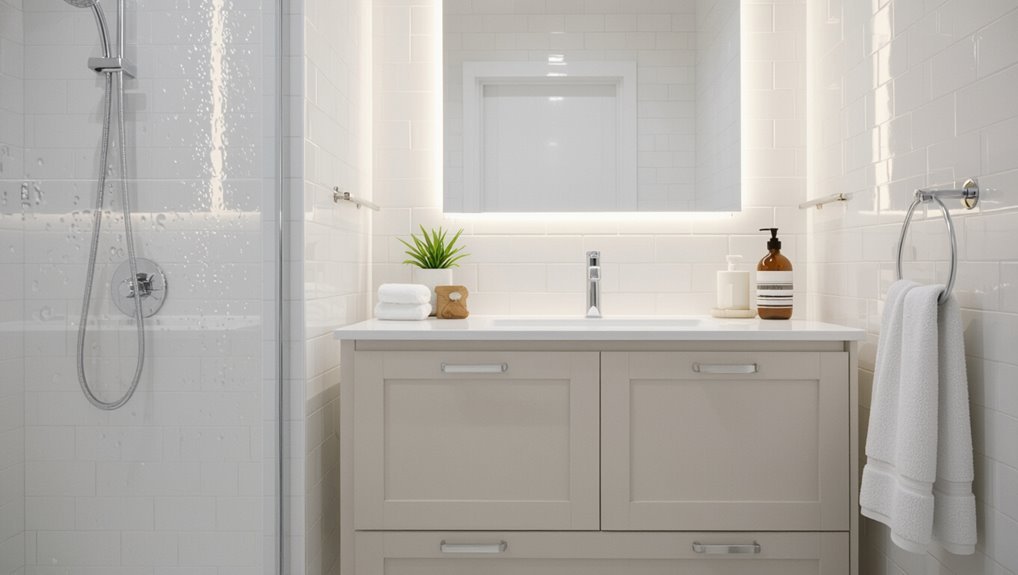
Because humid bathrooms trap moisture, you’ll want a paint that resists water and mildew while staying durable under frequent cleaning.
Choose semi-gloss or satin for moisture resistance and wipeability; eggshell’s softer sheen works in lower-moisture zones.
Consider color psychology to set mood—calming blues or crisp whites—and texture options like scrubbable finishes or subtle eggshell to balance practicality and style.
How Humidity Affects Paint Choice
When humidity rises, it changes how paint dries, bonds, and resists mold.
So you need to pick formulas that cope with moisture and allow proper ventilation.
You’ll consider humidity impact on adhesion and drying time, choose moisture-tolerant binders, and favor breathable systems that reduce trapped vapor.
These choices directly affect paint longevity and reduce peeling, blistering, and premature failure in damp bathroom environments.
Sheen and Mildew Resistance
You’ll want to understand how sheen levels—from flat to high-gloss—affect durability and how easy surfaces are to clean.
In bathrooms, higher sheens resist moisture and scuffs better, but you’ll trade off some ability to hide wall flaws.
Also look for paints labeled mildew-resistant or containing antimicrobial additives to keep mold growth down.
Sheen Levels Explained
Sheen affects both appearance and mildew resistance, so picking the right level matters in a bathroom.
You’ll weigh sheen variations: flat hides flaws but won’t wipe clean, eggshell balances subtle sheen and washability, satin resists moisture and cleans easily, semi-gloss offers maximum durability for trim.
Use a finish comparison to match durability, cleaning needs, and aesthetic preference for humid spaces.
Mildew-Resistant Coatings
Because bathrooms stay humid, choosing a mildew-resistant coating is essential to keep walls and trim both healthy and easy to clean.
You’ll want semi-gloss or satin sheens with antimicrobial additives, follow surface preparation techniques to remove existing mildew, and seal porous areas.
Combine product choice with ventilation and routine cleaning as part of mildew prevention strategies so coatings perform long-term.
Decision Framework: How to Pick a Finish
Wondering which paint finish will stand up to steam, scrubbing, and everyday wear in your bathroom? Use a simple decision framework: weigh durability, cleanability, and aesthetics in a finish comparison while considering moisture impact and maintenance. Pick higher-sheen where scrubbing is frequent; lower-sheen where you prefer subtlety.
| Factor | Priority |
|---|---|
| Durability | High |
| Cleanability | High |
| Appearance | Medium |
Satin Finish: Pros, Cons, Best Uses
Satin finish works well in bathrooms because it resists moisture and stands up to frequent cleaning.
You’ll find it more durable than flat paints and easier to wipe down after soap scum or splashes.
Use satin on walls and trim in high-traffic or damp areas, but avoid it on ceilings where shine and imperfections show.
Moisture Resistance Benefits
If you’re after a finish that stands up to humidity without feeling shiny, a satin paint offers a reliable balance of moisture resistance and subtle luster. You’ll gain improved paint longevity when you pair it with proper ventilation importance; it resists damp-related issues and keeps surfaces looking fresh in wet rooms.
| Feature | Benefit | Note |
|---|---|---|
| Sheen | Low-gloss | Subtle |
| Moisture | Resists | Good |
| Touch-up | Easy | Fast |
| Lifespan | Longer | With vent |
| Look | Smooth | Modern |
Cleaning And Durability
Because it combines a low-gloss look with durable resilience, satin finish is a practical choice for bathrooms where cleaning and wear matter; you’ll appreciate its balance of style and practicality.
Use gentle cleaning tips to protect sheen and consider durability factors like moisture and scrubbing frequency.
- Relief — stains wipe away.
- Pride — walls stay fresh.
- Calm — low glare comforts.
- Confidence — finish endures.
Best Placement Areas
Now that you know how satin holds up to cleaning and wear, you can pick where it makes the most sense in your bathroom.
Use satin on walls outside direct shower spray, vanity areas, and trim for its wipeability and subtle sheen.
Pair placement with best ventilation practices and humidity control methods to prevent mildew.
Avoid ceilings and constantly wet zones for longer finish life.
Semi-Gloss Finish: Pros, Cons, Best Uses
Semi-gloss paint gives bathroom walls a durable, slightly shiny surface that resists moisture and scrubbing, so you can clean splashes and steam without worrying about wear.
You’ll notice semi gloss advantages in easy maintenance and mildew resistance, but semi gloss drawbacks include highlighting imperfections and higher sheen.
Choose it for trim, doors, and wet zones.
Eggshell: When to Use It (And When Not To)
Eggshell finish gives you a low-sheen, velvety look that hides minor wall imperfections while still standing up better to light cleaning than flat paint. You’ll choose it for bedrooms or low-moisture bathrooms when egg shell durability and subtle sheen matter, but avoid high-splash zones. Focus on careful paint application to maximize longevity.
| Use | Pros | Cons |
|---|---|---|
| Low-moisture baths | Subtle sheen | Not waterproof |
| Hallways | Hides flaws | Less durable |
| Bedrooms | Easy cleaning | Shows scuffs |
Flat/Matte: Acceptable Spots in Bathrooms
Flat or matte finishes work best in parts of your bathroom that stay dry and see little traffic—think ceilings, closet interiors, and powder-room walls away from the sink and tub.
You’ll appreciate the subdued finish aesthetics and subtle warmth.
Consider these acceptable areas to keep beauty without moisture issues:
- Ceiling — peaceful, low-maintenance
- Closet interior — soft, calm
- Hall-adjacent wall — understated charm
- Guest powder room — cozy, elegant
High-Gloss: Trim and Hardware Only
Save high-gloss for trim and hardware where its shine highlights details and withstands scuffs.
You shouldn’t use it on walls because it shows every imperfection and creates glare.
Stick to trims, doors, and cabinets for a crisp, durable finish.
Use For Trim Only
If you want a crisp, durable look for baseboards, window casings, and hardware, choose high-gloss trim paint — it cleans easily and stands up to frequent touch-ups.
You’ll highlight trim colors and trim styles while keeping walls matte. Use high-gloss only on trim and hardware to avoid glare.
Avoid On Walls
Although high-gloss makes trim pop, you shouldn’t use it on full walls because the finish will amplify imperfections and create harsh glare.
You should keep high-gloss for trim and hardware only; on walls it highlights flaws and reflects steam, risking visible streaks.
Choose satin or semi-gloss for better mold prevention and paint longevity while keeping the room bright without overwhelming shine.
Choose Finishes by Zone: Overview
When you break a bathroom into functional zones—wet areas like the shower, splash zones around sinks, and dry zones near storage—you can pick paint sheens that match each area’s durability and appearance needs.
Consider moisture retention and ventilation strategies to protect surfaces and finishes.
Factor in moisture control and good ventilation to preserve finishes and keep surfaces looking their best.
- Feel safer with durable satin in splash zones.
- Relax with semi-gloss near tubs.
- Trust matte in dry areas.
- Breathe easy using proper vents.
Which Finish to Use Inside the Shower?
Want durability and easy cleaning inside the shower? You should avoid regular paint and choose waterproof materials like tile, acrylic panels, or specialized waterproof wallboard for the shower enclosure.
These surfaces resist moisture, prevent mold, and clean easily.
If you must paint adjacent walls, use high-quality, mold-resistant semi-gloss or satin formulated for wet areas, but keep paint out of direct water streams.
Finish for Tub and Wet Enclosures
If your tub or wet enclosure sees regular splashes and steam, choose finishes that stand up to constant moisture and scrubbin’—think nonporous tiles, solid-surface panels, or acrylic surrounds rather than standard wall paint.
You want durable tub materials and sealed seams to prevent mold and peeling.
Choose easy-clean surfaces and professional installation for long-term peace of mind.
- Relief
- Confidence
- Safety
- Pride
Finish for Vanity and Splash Areas
When you pick finishes for the vanity and splash areas, choose durable high-gloss enamel where wear and cleaning are frequent.
Use semi-gloss on trim to highlight details and resist moisture.
For the broader walls, a moisture-resistant acrylic gives a balance of protection and easy touch-ups.
Durable High-Gloss Enamel
Because you’ll be working around sinks and counters, choose a durable high-gloss enamel for vanity faces and splash zones; its hard, moisture-resistant surface stands up to frequent cleaning, water exposure, and daily wear.
You’ll get high gloss durability and clear enamel benefits that resist stains and scuffs, making maintenance quick and satisfying.
- Pride
- Relief
- Confidence
- Calm
Semi-Gloss For Trim
Alongside the high-gloss enamel on vanity faces, semi-gloss makes an excellent choice for trim and splash areas where you want durability without the mirror-like sheen.
You’ll find semi-gloss cleans easily, resists scuffs, and suits trim alternatives like beadboard or window casings.
Use it for consistent color coordination with walls and fixtures, balancing practical protection and a subtle, polished look.
Moisture-Resistant Acrylic
Moisture-resistant acrylic gives your vanity and splash areas a durable, water-shedding finish that stands up to daily splashes and humidity without yellowing or peeling.
You’ll get easy cleaning, strong moisture barriers, and improved paint longevity when you choose it for problem spots.
- Relief — quick wipe-downs
- Confidence — lasting protection
- Pride — crisp appearance
- Comfort — low-maintenance care
Best Finish for Bathroom Ceilings
Wondering which paint finish works best on a bathroom ceiling? You’ll usually choose flat or matte for low ceilings to hide imperfections, while eggshell or satin works for higher ceiling heights needing durability.
Focus on proper paint application—thin, even coats and good ventilation—to resist moisture and occasional cleaning.
Avoid glossy finishes that highlight flaws and can trap condensation.
Trim, Doors, and Cabinet Finish Recommendations
Ceiling choices set the room’s tone, but your trim, doors, and cabinets shape the bathroom’s finished look and durability.
So pick paints that balance appearance with cleanability. Choose semi-gloss for trim, durable enamel for doors, and moisture-resistant finishes for cabinets.
Consider cabinet materials and door styles to match mood and function.
- Crisp white trim comforts.
- Gloss doors energize.
- Soft-tone cabinets soothe.
- Contrasts delight.
Balancing Durability and Style in Small Bathrooms
In a small bathroom you’ll want moisture-resistant paint finishes that stand up to steam and frequent cleaning without peeling.
Pick colors that brighten the space—pale neutrals and soft pastels open a room, while strategic darker accents add depth.
You’ll balance practicality and style by matching durable sheens with a color scheme that reflects how you use the space.
Moisture-Resistant Paint Finishes
When you pick a paint finish for a small bathroom, you’ll need to balance moisture resistance with the look you want so surfaces stay durable without feeling clinical.
You’ll want finishes that limit mildew growth and boost paint longevity while keeping texture pleasant. Choose confidently:
- Satin—warm, forgiving, easy to clean.
- Semi-gloss—durable, bright, moisture-proof.
- Eggshell—subtle, modestly resistant.
- High-gloss—bold, ultra-cleanable.
Color Choices For Space
Now that you’ve picked a moisture-resistant finish, think about color and how it will make the room feel and perform.
Choose light, warm hues to expand tight spaces and use color psychology to set mood—calming blues or energizing yellows.
Reserve bolder accent colors on trim or a single wall for contrast.
Prioritize easy-clean paints that resist humidity and fading.
How Finish Hides or Shows Surface Flaws
Light reflects differently off glossy and matte paints, so the finish you pick directly affects how much the wall’s bumps and brush strokes stand out.
You’ll choose matte to hide surface imperfections or satin for balance, but remember paint application matters.
Pick what soothes you.
Choose the finish that calms you — matte for quiet, satin for balance, gloss only if it brings joy.
- Relief — imperfections soften.
- Pride — smooth, careful application shows.
- Frustration — glossy exposes flaws.
- Confidence — right finish comforts.
Cleaning and Maintenance by Finish
Because bathroom surfaces see soap, steam, and splashes daily, the paint finish you choose determines how you’ll clean and how often, so pick with maintenance in mind. You’ll balance finish compatibility with cleaning ease to protect paint longevity.
| Finish | Cleaning Ease | Notes |
|---|---|---|
| Flat | Low | Absorbs stains |
| Eggshell | Medium | Moderate care |
| Satin | High | Wipes well |
| Semi-gloss | Very High | Most durable |
Prep High-Moisture Surfaces Before Painting
Before you paint, treat high-moisture areas so the finish will stick and last: remove mildew with a mildew-specific cleaner, repair or replace any soft or blistered drywall, sand glossy spots, and wipe surfaces with a solvent or degreaser to remove soap scum and oils.
Proper surface preparation boosts paint adhesion and prevents future failure. Do this to feel confident and proud:
- Inspect thoroughly
- Remove mildew
- Repair damage
- Degrease surfaces
Primers for Humid Environments
When you’re painting a bathroom, choose a primer made for humid environments so the topcoat bonds and mildew doesn’t take hold. These primers seal porous surfaces, block stains, and provide a moisture-resistant base that helps paint last longer in steam-prone areas.
You’ll pick primer types like shellac, oil, or high-quality acrylic depending on surface and ventilation. Prioritize mold prevention and proper drying before topcoat.
Mildewcide Additives & Mold-Resistant Paints
You’ll want to contemplate mildewcide additives and mold-resistant paints because they help prevent staining, odor, and material breakdown in humid bathrooms.
Additives work by inhibiting fungal growth at the paint film level, while factory-formulated mold-resistant paints combine biocides with low-permeability binders for longer protection.
Choose a product rated for bathrooms, match it to your finish, and follow the manufacturer’s application and recoat guidelines for best results.
Benefits Of Mildewcide
Although bathrooms are naturally humid, using paints with mildewcide additives helps keep surfaces cleaner and healthier by inhibiting mold and mildew growth, so you spend less time scrubbing and reduce the risk of allergy- or asthma-triggering spores.
You’ll notice mildewcide benefits and effective mold prevention.
- Relief — fewer scrubbing sessions.
- Safety — lower allergen exposure.
- Pride — fresher appearance.
- Savings — less maintenance cost.
How Additives Work
Because mold and mildew need moisture and organic matter to grow, mildewcide additives and mold-resistant paints interrupt that process at the surface: they either release biocides that disrupt fungal cell membranes or create an inhospitable, non-nutritive film so spores can’t establish.
Many formulations also include fungistatic agents that prevent regrowth without harming surrounding materials. You’ll choose additive types for targeted performance enhancement and longevity.
Choosing Mold-Resistant Paint
Choosing mold-resistant paint starts with matching the formulation to the room’s humidity and surface type, since not every “mildew-resistant” label delivers the same protection.
You’ll want mildewcide additives for raw surfaces and factory-treated paints for finished walls; proper paint application guarantees longevity and mold prevention.
- Relief: breathe easier
- Confidence: lasting freshness
- Control: simple upkeep
- Pride: clean, healthy space
Water-Based vs Oil-Based: Bathroom Performance
When you’re weighing options for bathroom paint, the key difference comes down to how water- and oil-based formulas handle moisture, drying time, and durability.
You’ll find water-based paints dry fast, resist mildew, and simplify color selection with less yellowing.
Oil-based options offer tougher surfaces and longer paint longevity in high-wear areas but need longer curing, stronger fumes, and tougher cleanup.
Color and Finish: Dark vs Light Shades
You can use dark shades to mask minor wall imperfections and create a cozy, dramatic look.
Lighter tones will open the room and reflect more light, making small bathrooms feel bigger.
Thoughtful contrast between dark and light areas will change how spacious the room appears.
Dark Shades Hide Imperfections
Although darker paint can make a small bathroom feel cozier, it also masks surface flaws better than lighter hues, so you’ll see fewer scuffs, patchy roller marks, or minor unevenness from a short viewing distance.
You’ll appreciate dark color advantages when surface texture hides imperfections.
Consider these emotional reactions:
- Comforted
- Confident
- Calm
- Proud
Light Shades Open Space
Because lighter paints reflect more light, they make a small bathroom feel airier and visually expand its dimensions. You’ll notice ceilings look higher and corners recede.
Choose soft neutrals or pale blues to leverage light color psychology; they calm and uplift.
With satin or eggshell finishes, you’ll boost spatial perception while keeping surfaces washable and resistant to humidity.
Contrast Affects Perceived Size
When you pair dark trim or an accent wall with lighter surrounding surfaces, the contrast sharpens edges and can make the darker area recede.
This can make the room feel deeper or more layered than it actually is. You can use contrast effects to tweak perceived dimensions, making small bathrooms feel intimate or expansive depending on finish sheen and placement.
- Surprise
- Calm
- Drama
- Balance
Budget Guide: Cheapest to Premium Options
Start by matching your budget to the level of durability and sheen you need: cheap options like flat or matte paints save money upfront but can stain and wear faster in humid bathrooms, mid-range choices such as satin or eggshell offer better moisture resistance and easier cleaning, and premium semi-gloss or specially formulated bathroom paints provide the best protection and longevity for higher upfront cost.
| Feeling | Cost | Result |
|---|---|---|
| Relief | Low | affordable options |
| Confidence | Mid | practical choice |
| Pride | High | premium choices |
When to Repaint: Signs of Failure
Choosing a paint based on budget and sheen helps, but you’ll still need to watch for failure signs that mean it’s time to repaint.
You’ll assess paint lifespan versus actual wear, and consider if poor surface preparation shortened it.
Look for these emotional cues:
- Flaking that makes you sigh.
- Discoloration that frustrates.
- Mildew that worries.
- Soft or bubbly areas that upset.
Common Mistakes That Cause Peeling or Blistering
If surfaces weren’t cleaned, dried, or primed properly, paint won’t bond and you’ll get peeling or blisters much sooner than expected. You’ll see peeling paint and blistering issues from improper prep, bad paint application, wrong surface selection, or uncontrolled humidity effects. Address environmental factors and ventilation importance to prevent failure.
| Cause | Effect | Fix |
|---|---|---|
| Improper prep | Peeling paint | Clean/prime |
| Poor application | Blistering issues | Reapply right |
| High humidity | Failure | Ventilate/reduce humidity |
DIY vs Pro Painting for Moisture-Prone Bathrooms
When you’re weighing whether to tackle a moisture-prone bathroom yourself or call a pro, consider the room’s ventilation, the extent of prep work, and your comfort with specialized products.
Weigh ventilation, prep needs, and comfort with specialized products before DIYing a moisture-prone bathroom.
DIY can save money on small, well-ventilated jobs, but pros bring experience with moisture-resistant primers, coatings, and techniques that prevent costly failures.
- Pride using diy techniques.
- Relief avoiding mistakes.
- Confidence from professional tips.
- Peace knowing moisture’s managed.
Product Checklist & Troubleshooting for Humid Bathrooms
Because humid bathrooms demand specific products and a clear troubleshooting plan, start with a concise checklist that covers moisture-resistant paints, mildew-killing primers, high-RPM exhaust fans, quality caulk, and ventilation accessories so you can prevent and fix common failures quickly.
You’ll prioritize ventilation systems, humidity control, surface preparation, paint longevity, color psychology, and simple maintenance routines to spot leaks, peel, or mold fast.
Frequently Asked Questions
Can Wallpaper Be Used in a High-Humidity Bathroom?
Yes — you can use wallpaper in a high-humidity bathroom if you choose appropriate wallpaper types like vinyl or moisture-resistant varieties, install proper moisture barriers, seal edges, and avoid direct water exposure to prevent peeling and mold.
How Long Should Paint Cure Before Using the Bathroom?
You should wait at least 24–48 hours for paint drying before light use, but allow 7–30 days of curing time for full hardness and moisture resistance; shorter if product specifies faster cure, longer for high humidity.
Are Voc-Free Paints Suitable for Bathrooms With Poor Ventilation?
Yes — you can use VOC-free paints in poorly ventilated bathrooms, but they’re not a cure-all; you’ll need moisture resistant materials elsewhere and active air circulation solutions like fans or dehumidifiers to prevent mold and guarantee longevity.
Can Painted Grout Resist Mold and Staining?
Like a shielded garden, painted grout can resist mold and staining but won’t be invincible; you’ll need regular grout maintenance, proper mold prevention, and high-quality epoxy or sealant coatings to keep it looking fresh and protected.
Do Color-Changing Paints Work in Humid Environments?
They can, but you’ll need formulations with proven color durability and moisture resistance; many thermochromic coatings lose effect in constant humidity, so choose waterproof, sealed systems and test samples in your bathroom before trusting performance.
Conclusion
You’ve got options, and satin usually hits the sweet spot for most humid bathrooms — it resists moisture and wipes clean without shouting for attention. Pick mildew-resistant, quality paint, prep surfaces well, and vent the room; a little elbow grease now saves headaches later. If you’re unsure, call a pro. Keep an eye out for peeling or bubbles — nip problems in the bud so your bathroom stays shipshape.
