
What Makes Acrylic Paint Dry Faster? Speed Up Drying
You can make acrylic paint dry faster by using thin, even layers, increasing airflow with fans, and warming the room slightly while keeping humidity low. Choose faster‑drying pigments or paints, and thin with acrylic mediums rather than too much water to preserve film strength. Gentle heat from a hairdryer at a distance helps, as do porous grounds that absorb moisture. Be careful with accelerators—use sparingly—and continue for tips on safe thinning, layering, and fixing fast‑dry issues.
Quick Ways to Dry Acrylic Paint Faster
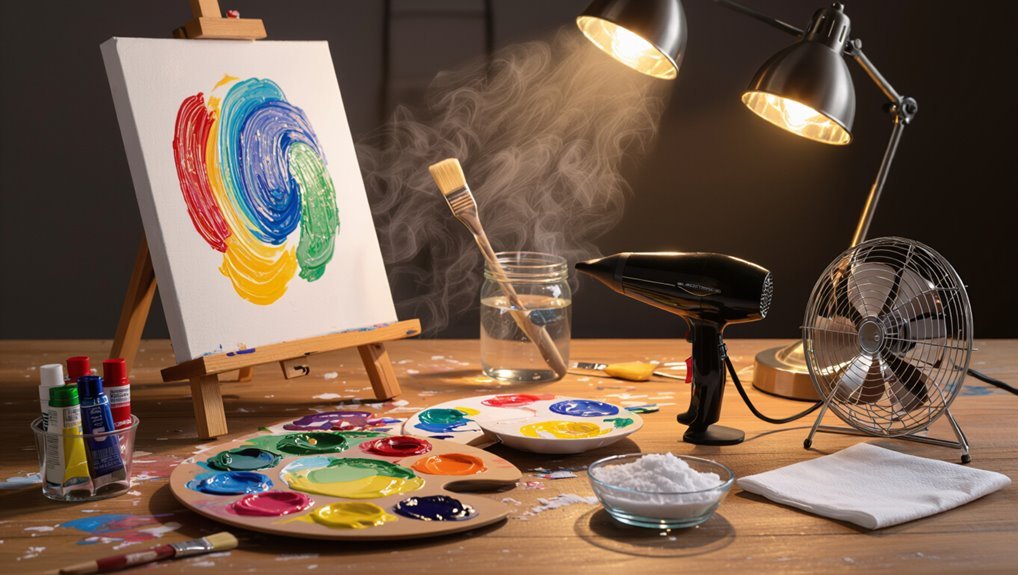
If you want acrylic paint to dry faster, use heat, airflow, and thinner layers—each speeds evaporation and curing without altering the paint’s finish if you’re careful.
You can point a fan, use a hairdryer on low heat while keeping distance, and apply thin coats with a brush or palette knife.
These practical drying techniques save time and preserve color and texture.
How Acrylics Dry : Why Drying Time Varies
Because acrylics dry by both evaporation and polymer film formation, their drying time can change a lot depending on surface, humidity, temperature, and layer thickness.
Because acrylics dry by evaporation and film formation, drying time varies widely with surface, humidity, temperature, and layer thickness.
You should understand acrylic chemistry: water-based binders form films as solvents evaporate.
Environmental factors like airflow, heat, and hygroscopic substrates speed or slow curing.
Knowing these variables helps you predict working time and plan layers effectively.
Use Thinner Layers and Thinning Techniques Safely
Keep your layers thin and even so each stratum dries quickly and bonds well to the one beneath it.
You can thin acrylics with water for small adjustments, but rely on acrylic mediums for larger reductions to avoid weakening the film.
Always follow manufacturer instructions and test mixtures on a scrap surface before committing to a painting.
Thin Paint Consistently
Work in thinner, even layers to speed drying and maintain control over color and texture.
You’ll thin paint slightly and apply consistent, translucent coats so each layer dries quickly.
Practice brush techniques to lay smooth films and improve color blending without muddying.
Let each layer dry fully before adding the next; that disciplined pacing prevents tacky buildup and preserves vibrancy.
Use Safe Thinning Mediums
After you’ve mastered thin, even layers, the next step is learning how to thin acrylics without harming their binder or finish.
You’ll use approved safe mediums and controlled thinning techniques—like acrylic retarders, flow improvers, or water sparingly—to keep film integrity.
Test mixes on scrap, apply thin coats, and allow full cure between layers so paint dries faster without cracking or weakening the finish.
Choose Fast-Drying Pigments and Paint Formulas
Pigment choice and paint formulation have a big impact on drying time, so pick brands and colors known for fast skinning and film formation.
You’ll favor fast drying pigments like certain earths and inorganic whites, and select paint formulas labeled “quick-dry” or acrylic gesso blends.
Test swatches to confirm, layer thinly, and store lids tight to maintain consistent performance from batch to batch.
Increase Airflow Safely to Speed Acrylic Drying
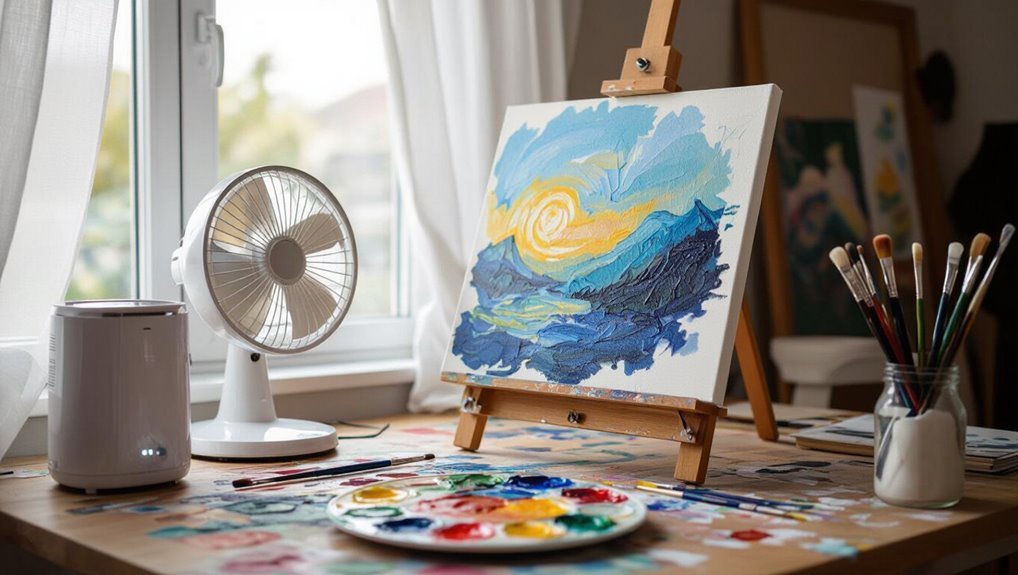
You can speed drying by positioning fans to create a gentle, even airflow across your work without blasting the surface.
Place fans to move air around the room and open a window if possible to keep fresh air circulating.
Always avoid direct, high-velocity blasts and guarantee good ventilation to limit fumes and dust.
Position Fans Strategically
One or two small fans placed thoughtfully will speed acrylic drying without disturbing your brushwork.
Position fans so air circulation flows across the painting, not directly onto wet areas to avoid texture loss. Angle fans low and distant for gentle movement, and rotate placement between pieces to guarantee even drying.
Monitor paint surface to prevent dust buildup and uneven curing.
Use Ventilation Safely
While increasing airflow can speed acrylic drying, do it with care to avoid dust, uneven curing, or off-gassing buildup in your workspace.
You should use targeted ventilation techniques and gentle air circulation: open windows briefly, run a filtered fan, or use a vent hood. Balance fresh air with dust control so your layers dry evenly and your health stays protected.
- Relief: breathe easier knowing paint fumes are reduced.
- Confidence: your layers cure without silt or grit.
- Pride: finished work looks clean and intentional.
Raise Room Temperature Without Harming Paint
Because acrylic cures faster in warm air, gently raising room temperature can speed drying without damaging your work.
Use indirect heat sources—space heaters set at low, even output or warm lamps placed safely away—to avoid hot spots.
Monitor paint safety by keeping distance, rotating pieces, and avoiding rapid, uneven heating that can crack or tack films.
Stay attentive and gradual.
Cut Humidity: Practical Steps for Faster Drying
If you want acrylic paint to dry faster, lower the room’s humidity so water evaporates more quickly from the film.
You can use dehumidifiers, improve ventilation, or run an exhaust fan; each helps humidity control and speeds up drying techniques without overheating or altering pigment.
Take care with airflow direction to avoid dust settling on tacky surfaces.
- Relief: watch layers stiffen sooner
- Control: feel mastery over timing
- Confidence: finish pieces faster
Thin Paint Safely: Water vs. Acrylic Mediums
You can thin acrylics with water for quick flow but too much weakens film strength and slows curing.
Acrylic mediums preserve binder and offer gloss, matte, retarders, or flow enhancers—each affects drying differently.
I’ll show safe ratios and practical tips so you get the consistency you want without compromising drying time.
Water: Pros And Cons
Though water’s the easiest and cheapest thinner, it’s not always the safest way to dilute acrylics. You’ll speed drying by lowering water retention, but over-thinning weakens binder and alters evaporation rates, risking tacky films and color loss.
Use sparingly, layer thoughtfully, and test surfaces to avoid failure.
- Frustration when layers fail
- Relief with quick drying
- Anxiety over weakened paint
Acrylic Mediums Compared
When you need to thin acrylics without compromising film strength, acrylic mediums are a smarter choice than plain water; they let you loosen paint while keeping binders intact and drying behavior more predictable.
You’ll control paint consistency and texture variations, tailor application methods, and anticipate drying effects for fast drying techniques.
Good surface preparation plus suitable mediums improves layering strategies and final durability.
Best Ratios And Tips
A few simple rules will keep your thinned acrylics reliable and fast-drying: stick to modest water additions (generally under 20% by volume) for small viscosity tweaks, and use acrylic mediums for larger reductions so the polymer binder and film strength stay intact.
Keep color mixing consistent and label jars for proper paint storage.
- Delight in controlled flow.
- Trust predictable drying.
- Protect your palette’s life.
Use Drying Accelerators Without Ruining Finish
If you want paint to dry faster without sacrificing gloss or texture, choose accelerators and use them sparingly—follow manufacturer ratios, test on scraps, and avoid additives that alter film formation.
You’ll learn drying techniques that pair well with accelerator options like alcohol-based retarders or commercial fast-dry mediums.
Mix small batches, apply thin layers, and monitor for surface skinning or matte shifts before committing to final pieces.
Choose Surfaces and Grounds That Speed Drying
Although the paint’s formulation matters, choosing the right surface and ground has the biggest impact on how quickly acrylics dry: porous, absorbent supports like unprimed canvas or paper will draw moisture out faster, while slick, sealed surfaces slow film formation.
You’ll speed drying with proper surface preparation to maximize paint absorption and control texture.
- Excitement: brisk progress
- Relief: fewer waits
- Confidence: predictable results
Trouble When Paint Dries Too Fast and How to Fix It
When acrylics set up too quickly, you’ll lose working time, struggle to blend edges, and risk visible brushstrokes or lap marks that ruin smooth shifts.
To fix this, slow drying by misting, using retarders, or working in cooler, humid conditions. Reapply thin layers to avoid paint cracking.
If you need longer blending, mix in glazing medium and keep a stay-wet palette nearby.
Frequently Asked Questions
Can I Speed Drying With a Hairdryer Without Causing Texture Issues?
Yes — you can use a hairdryer, but use gentle hairdryer techniques and low heat, keep it moving, and hold it farther away so you’ll speed drying while preserving texture preservation and avoiding cracking or lifting.
Will Adding Baking Soda to Acrylic Paint Make It Dry Faster?
No — adding baking soda won’t reliably speed drying; it alters baking soda effects and can thicken or grain paint consistency, causing texture issues and adhesion problems. You’ll get unpredictable finish and reduced paint performance.
Do Acrylic Varnishes Affect Drying Time of Underlying Paint?
“Too many cooks spoil the broth”: you’ll find varnish types and application techniques can speed or slow drying; with proper drying conditions and thin paint layers, gloss or spray varnishes generally dry faster than thick, brush-applied coats.
Can Sunlight Cause Color Fading While Speeding Drying?
Yes — sunlight speeds drying but can harm color stability over time; you should balance drying techniques by using indirect light, UV-resistant varnish, or filtered windows so you’ll dry faster without accelerating fading.
Is Alcohol a Safe Thinner to Accelerate Acrylic Drying?
About 60% of painters report faster tack times—yes, you can use alcohol types like isopropyl sparingly, but you’ll alter sheen and adhesion; combine with safe drying methods and test first to avoid cracking or color loss.
Conclusion
Think of your painting like a garden at dawn: you can coax blooms faster with careful sun, light watering, and the right soil, but rush it with heat or harsh chemicals and blossoms can shrivel. Use thinner layers, airflow, suitable pigments, and gentle mediums to nudge drying without harming the bloom. If things dry too quick, soothe them back with slow glazes or misted rests—tend your canvas, and it’ll repay you with a healthier harvest.
