
The Best Paint Brush for a Smooth Finish Every Time
You’ll want a high-quality synthetic or synthetic-blend brush matched to your paint type—nylon‑poly for latex, natural bristle or blended for oil—so you’ll get even pickup, smooth laydown, and minimal brush marks. Pick the right size and shape for trim, walls, or cabinetry, check ferrule and filament density, and use tapered or flagged tips for a soft edge. Clean and store brushes properly to keep performance, and keep going to learn the exact picks and techniques.
Quick Answer Best Paint Brush for a Smooth Finish
For a quick answer, pick a nylon-poly brush for latex, natural-bristle for oil and enamel, a thin-bristle brush for stain, and a soft-bristle varnish brush for clear coats.
Your best overall pick is a high-quality synthetic blend that handles most paints smoothly, while the best budget pick is a well-reviewed economy synthetic brush that still lays down a consistent finish.
Keep these go-to choices in mind and you’ll save time picking the right brush for the job.
One-line recommendation by paint type (latex, oil, enamel, stain, varnish)
When you want quick guidance, pick these one-line brush recommendations: a high-quality nylon or polyester blend for latex, natural-bristle for oil, a flagged synthetic for enamel, a tapered natural-bristle or foam sash brush for stain, and a fine, soft natural or sable-style synthetic for varnish.
For what paint brush to use for smooth finish, match bristle type to paint and use proper size and technique.
Best overall pick and best budget pick
Although price isn’t the only factor, you’ll get the smoothest, most consistent finish with a high-quality, flagged synthetic blend as the best overall pick, and a well-made synthetic or nylon brush as the best budget pick when you need reliable results without spending much. Choose the overall for trim and cabinets; pick the budget brush for walls and quick touch-ups.
| Pick | Best use |
|---|---|
| Overall | Trim, cabinets |
| Budget | Walls, touch-ups |
| Both | Latex & acrylic |
| Tip | Clean after use |
Why the Right Paint Brush Matters for a Smooth Finish
Choosing the right brush changes how your paint goes on, how much surface you cover, and how fast the job gets done.
You’ll notice that bristle type, density, and shape—plus a solid ferrule and comfortable handle—directly affect smoothness and control.
Pick a brush that matches your paint and surface and you’ll cut touch-ups and streaks dramatically.
How brush choice affects finish, coverage, and speed
Because the right brush matches the paint and surface, you’ll get a smoother finish, better coverage, and faster work with less effort.
Choose a brush suited to your paint type and surface porosity so strokes lay evenly and you avoid rework.
Proper brush selection reduces drips, minimizes visible brush marks, and lets you cover more area per pass, saving time and improving results.
Key brush characteristics that determine smoothness (bristle type, density, shape, ferrule, handle)
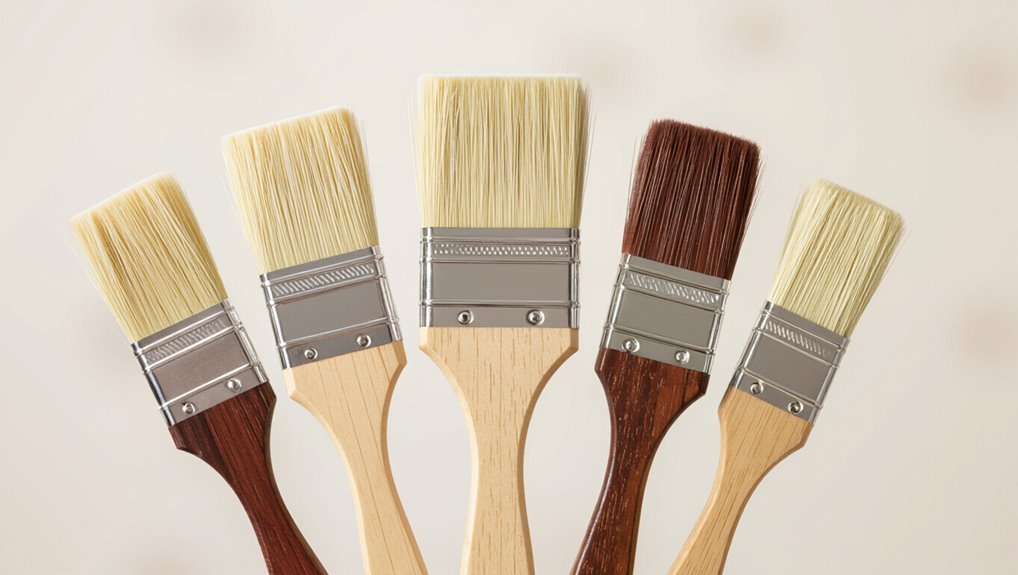
You already know that matching brush to paint and surface improves results; now look at the brush itself—its bristle type, density, shape, ferrule, and handle all shape how smoothly paint lays down.
Natural bristles suit oil, synthetics suit latex; denser filaments hold and release evenly. Tapered shapes cut edges cleanly.
A secure ferrule prevents wobble; a comfortable handle gives control for steady, streak-free strokes.
Brush Basics Materials and Terminology
Now you’ll learn how bristle materials—natural, synthetic, or a blend—affect paint load, durability, and finish.
We’ll also cover flagged tips and split-end tech that improve smoothness, plus how sizes, shapes, and cut types (flat, angled, sash, round) suit different jobs.
Knowing these basics helps you pick the right brush for a flawless result.
Natural vs synthetic bristles: pros and cons
When choosing between natural and synthetic bristles, think about the paint you’ll use and the finish you want, since each type behaves differently with different coatings.
You’ll pick based on solvent, surface, and budget. Consider:
- Natural: holds oil enamel, leaves smooth finish
- Synthetic: excels with water-based paints
- Durability: synthetics resist wear
- Cost: naturals pricier
- Care: dry synthetics faster
Blend, flagged tips, and split-end technology
After weighing bristle types, you’ll want to look at how brushes are finished—blend, flagged tips, and split-end technology each change how paint lays down and levels.
You’ll prefer blended brushes for even loading, flagged tips for soft edges and reduced brush marks, and split-end (crimped) fibers for superior paint pickup and smoother feathering.
Choose finishes to match your project and finish goals.
Brush sizes, shapes, and cut types (flat, angled, sash, round)
Because the shape and cut of a brush determine how paint moves and where it goes, choosing the right size and profile is as important as picking bristle type.
You’ll match brush form to task: larger flats cover, angled trim cuts clean lines, sash fits windows, rounds reach corners, and small filberts soften edges.
- Flat
- Angled
- Sash
- Round
- Filbert
How to Choose the Best Brush Step-by-Step Selection Guide
Start by identifying your paint type and the finish you want so you can match the right brush.
Next, choose bristle material—synthetic for water-based paints, natural for oil—and pick the shape and size suited to trim, cutting-in, or broad walls.
Finally, inspect construction (ferrule, bristle hold, taper) and weigh budget versus pro-grade tradeoffs.
Step 1: Identify your paint type and finish goal
Choosing the right brush begins with knowing what paint you’ll use and the finish you want—latex and oil require different bristles, and a high-gloss surface needs a different approach than eggshell or satin.
Decide your goal, then consider surface and technique:
- Room type and lighting
- Surface texture (smooth vs. rough)
- Desired sheen level
- Coverage needs
- Trim versus large areas
Step 2: Match bristle material to paint (synthetic for water-based, natural for oil-based)
When you match bristle material to paint, you’ll get smoother coverage and fewer brush marks.
Choose synthetic (nylon/polyester) for water-based paints — they resist swelling, hold shape, and release paint evenly.
Use natural (hog or badger) for oil-based finishes — they carry and smooth oil-rich formulas.
Match stiffness to surface: softer for smooth panels, stiffer for textured areas.
Step 3: Select shape and size for the job (trim, cutting-in, broad walls)
With the right bristles sorted, pick the brush shape and size that match the task — narrower, angled sash brushes for trim and cutting-in, and wide, flat or wall brushes for large surfaces.
- 1–2″ angled sash for precise trim
- 2.5–3″ for cutting-in edges
- 3.5–4″ or wider for broad walls
- Narrow radiator or sash for tight spots
- Mini brushes for touch-ups and detail work
Step 4: Inspect brush construction quality (ferrule, bristle hold, taper)
A solid brush feels as sturdy as it looks, so check the ferrule, bristle hold, and taper before you buy: the ferrule should be tight and rust-resistant, the bristles firmly anchored with minimal shed, and the taper should form a fine, even tip for smooth lines and consistent paint laydown.
Test for flex, look for crimped or glued ferrules, and inspect tip symmetry.
Step 5: Budget vs pro-grade tradeoffs
Now that you know how to spot solid construction, weigh whether you need a pro-grade brush or a budget-friendly option.
Decide based on project scope, finish expectations, and frequency of use.
Consider tradeoffs:
- Longevity vs upfront cost
- Bristle retention
- Edge crispness
- Cleanability
- Frequency of replacement
Choose what saves time and delivers the finish you want.
Top Brush Recommendations by Use Case
Now you’ll get practical recommendations for specific jobs: which brushes work best with latex/acrylic on smooth walls, which handle oil-based paints and varnishes, and which are ideal for cutting-in and trim.
You’ll also see the top choices for ultra-smooth cabinetry and furniture finishes, plus one budget-friendly pick and a professional-grade option.
Use these picks to match brush type to task and get a consistently smooth result.
Best for latex/acrylic (smooth walls)
When you’re painting smooth latex or acrylic walls, pick a brush that lays down paint evenly without leaving brush marks or shedding bristles.
You want soft, fine-synthetics that hold paint and cut crisp edges. Consider:
- 2–3″ angled sash brush
- High-density nylon/polyester blend
- Tapered filaments for a smooth laydown
- Comfortable handle for control
- Easy-clean, rust-resistant ferrule
Best for oil-based paints and varnishes
If you’ve been working with latex or acrylic, you’ll notice oil-based paints and varnishes behave differently and need a stiffer, more resilient brush to get a smooth, even finish.
Choose natural bristle (bristle-filled) or high-quality synthetic blends rated for solvents; they hold and release thicker coatings evenly.
Look for a tapered, firm tip and a chrome- or nickel-plated ferrule for durability against solvents.
Best for cutting-in and trim work
Because cutting-in and trim work demand control and crisp edges, you’ll want a brush that’s narrow, firm, and holds a fine point.
Choose one that balances stiffness with smooth flow so you can paint precise lines without dragging.
Consider these options:
- 1–2 inch angled sash brush
- Polyester-nylon blend
- Tapered filaments
- Comfortable handle for grip
- Rust-proof ferrule
Best for cabinetry and furniture (ultra-smooth finish)
Moving from the precise edges of trim, cabinetry and furniture demand a brush that delivers an ultra-smooth, brushstroke-free finish across flat and contoured surfaces.
Choose a high-density, soft nylon or polyester blend with a tapered flag end for even laydown. You’ll want a comfortable handle for control, a rust-proof ferrule, and sizes from 1–3 inches to tackle panels, drawers, and moulding cleanly.
Best budget and best professional-grade options
Whether you’re shopping on a tight budget or outfitting a pro kit, pick brushes that match the job: budget-friendly options should offer decent filament density, a tapered flag or chisel edge, and corrosion-resistant ferrules, while professional-grade brushes prioritize hair quality, perfect tapering, and durable construction for consistent, brushstroke-free laydown.
| Use | Budget Pick | Pro Pick |
|---|---|---|
| Walls | Polyester 2.5″ | China bristle 3″ |
| Trim | Nylon blend 1.5″ | Sable blend 1.5″ |
| Finish | Angular 2″ | Pure sable 2″ |
Application Technique to Achieve a Smooth Finish
Before you paint, make sure the surface is sanded, cleaned, and the paint thinned to the recommended consistency so the brush can lay down an even film.
Load the brush properly and wipe off excess on the can rim, then use long, directional strokes with back-brushing and feathering at the edges to blend each pass.
Work steadily and overlap wet edges to avoid brush marks and achieve a smooth, uniform finish.
Preparing the surface and paint (sanding, cleaning, thinning)
1 essential step to a truly smooth finish is prepping both the surface and the paint—sand to remove imperfections, clean away dust and oils, and thin the paint only when the manufacturer’s instructions or your spray method call for it—so your brush lays down an even, level coat without dragging or bubbling.
- Sand progressively finer grits
- Remove all sanding dust
- Degrease with appropriate cleaner
- Stir, strain paint
- Thin sparingly, per guidelines
Proper loading and removing excess paint from the brush
If you want an even, drip-free coat, load your brush deliberately and remove the excess before it touches the surface.
Dip only one-third of the bristles into paint, tap the ferrule gently on the can rim, and wipe the heel on the inner lip.
Check for splayed bristles, reshape if needed, and keep a rag handy to blot drips as you work.
Brush strokes and directionality for even laydown
When you lay paint, move the brush in long, confident strokes that follow the surface’s natural direction—horizontally on walls, vertically on trim, and along grain on wood—so each stroke overlaps the last by about a third to blend edges without reworking.
- Keep steady pressure
- Maintain a wet edge
- Use full-length strokes
- Minimize lift-and-restart
- Let bristles do the work
Back-brushing, feathering, and blending edges

A clean, deliberate back-brush can save you from visible ridges and lap marks: use a slightly damp, high-quality brush to gently work wet paint into the substrate, reducing buildup.
Feather edges by light, tapering strokes so the paint thins toward shifts.
Blend adjoining sections while wet, matching pressure and angle to hide seams and guarantee a seamless, uniform finish.
Common Mistakes That Ruin a Smooth Finish
Don’t pick the wrong bristle for your paint — it’ll refuse to lay out smoothly.
If you overload or underload the brush, stroke too hard, or leave brush maintenance and storage to chance, you’ll end up with visible marks and uneven coverage.
I’ll walk you through how to avoid each of these common mistakes.
Using the wrong bristle for the paint type
Although it’s tempting to grab whatever brush is handy, using the wrong bristle for your paint type will wreck the finish: pick bristles to match paint and surface, or you’ll get streaks, shedding, and poor coverage.
- Natural for oil and varnish
- Synthetic for water-based paints
- Soft for smooth trim
- Stiffer for textured surfaces
- Match quality to the project
Overloading or underloading the brush
Anyone who loads the brush too heavily or too lightly will see the problem fast: runs, drips, visible brush marks, or uneven coverage.
You should dip only a third of the bristle length, tap off excess, and keep a modest paint reservoir.
If you underload, you’ll need extra passes that leave streaks; if you overload, you’ll struggle to control flow and leveling.
Poor technique: visible brush marks, stroking too hard
If you press too hard or drag the brush back and forth, you’ll leave raised ridges and visible strokes that a light sanding or another coat can’t completely hide.
You should use gentle, even pressure and long, confident strokes.
Tips:
- Load brush evenly
- Use the right brush for paint
- Finish with light tip strokes
- Maintain a wet edge
- Slow, steady motion
Neglecting brush maintenance and storage
Even with perfect technique, a poor finish can still follow when you ignore brush care and storage.
If you leave paint to dry in bristles, fibers stiffen and leave streaks. Clean thoroughly after each use, reshape the bristles, and store brushes hanging or flat to prevent bent tips.
Regularly condition natural bristles and replace worn brushes to keep finishes consistently smooth.
Brush Care and Maintenance for Consistent Smooth Results
To keep your finish consistently smooth, you’ll need simple, correct care for both water- and oil-based paints—proper cleaning prevents dried bristles from ruining strokes.
After washing, dry and reshape the bristles, store brushes flat or hanging with the bristles down, and avoid letting them sit on their tips.
Replace brushes when bristles splay or lose snap, and you can extend life by cleaning promptly, using the right solvent, and protecting bristles between uses.
Cleaning methods for water-based and oil-based paints
Because water- and oil-based paints break down differently, you’ll need distinct cleaning routines to keep brushes performing and deliver a smooth finish.
Follow these steps:
- Rinse water-based paint immediately with warm water and mild soap.
- Use mineral spirits or brush cleaner for oil-based paints.
- Work cleaner through bristles, removing residue.
- Repeat until water/solvent runs clear.
- Dry briefly before reshaping and storing.
Drying, reshaping, and storage best practices
Once your brush runs clear, handle drying and reshaping promptly to keep bristles aligned and prevent mildew.
Shake excess water, blot with a lint-free cloth, then reshape the tip with your fingers.
Hang brushes bristles-down or lay flat with airflow, avoiding heat or sunlight.
Store protected in a sleeve or upright with ferrule exposed to retain shape and prevent contamination.
When to replace a brush and how to extend brush life
1 simple rule will help you decide when a brush has reached the end of its useful life: if it no longer lays paint smoothly or the bristles splay, shed, or won’t return to a fine tip after cleaning and reshaping, replace it.
You can extend brush life by:
- Cleaning thoroughly after each use
- Using proper solvent per paint type
- Reshaping while damp
- Storing upright or hanging
- Rotating brushes for tasks
Comparison Checklist Choosing Between Popular Brushes
Now you’ll use a quick decision matrix to match project type, paint, budget, and desired finish to the right brush.
Compare synthetic, natural, and blended options side-by-side for their pros and cons with the paint you’re using.
That checklist will help you pick the most efficient brush for a smooth result.
Quick decision matrix: project type, paint, budget, expected finish
If you’re choosing a brush for a particular job, this quick decision matrix helps you match project type, paint, budget, and desired finish so you pick the best tool fast. Use the table to narrow choices: match surface, paint type, cost range, finish goal, and recommended width.
| Factor | Recommendation |
|---|---|
| Surface | Smooth vs rough |
| Paint | Latex vs oil |
| Budget | Low/Medium/High |
| Finish | Satin vs gloss |
| Width | Narrow/Medium/Wide |
Side-by-side pros and cons of synthetic vs natural vs blended brushes
When you’re weighing brush options, synthetic, natural, and blended bristles each bring distinct strengths and trade-offs, so matching them to your paint type and finish goal makes the choice simple.
You’ll pick based on paint compatibility, durability, finish smoothness, and budget. Consider:
- Synthetic: best for water-based, durable, easy clean
- Natural: excels with oils, superior finish
- Blended: balance of both
- Cost vs performance trade-off
Additional Tips and Pro Strategies
Keep a quality brush soap or conditioner on hand to prolong bristle life and keep performance consistent.
Pair your brush with the right roller or sprayer to get an even, professional-looking finish where each tool’s strengths complement the others.
Also prioritize ventilation, proper solvent disposal, and protective gear to protect your health and the environment.
Using a quality brush conditioner or soap
One quick habit that dramatically extends brush life is conditioning them with a quality brush soap after every use.
You’ll remove paint, restore natural oils, and keep bristles aligned. Rinse thoroughly and reshape before drying. Follow with a conditioner for stiff or natural-hair brushes.
- remove paint residue
- restore bristle oils
- maintain tip alignment
- prevent stiffening
- extend brush life
Pairing brushes with rollers and sprayers for optimal finish
Pairing the right brush with your roller or sprayer lets you control edges, texture, and overall uniformity for a truly professional finish.
Match nap length to surface: short for smooth, medium for light texture, long for rough.
Use a high-quality angled brush for cutting in, a soft-bristle sash brush for trim, and feather strokes to blend brushwork into roller or spray passes for seamless results.
Environmental and safety tips (ventilation, disposal)
Because paint fumes and waste can harm both your health and the environment, you should prioritize ventilation, proper cleanup, and responsible disposal from the start.
Follow these concise steps to stay safe and eco‑friendly:
- Open windows and run fans for cross‑ventilation.
- Use low‑VOC paints and respirators when needed.
- Wipe brushes into rags, not drains.
- Store leftovers sealed and labeled.
- Take waste to hazardous disposal sites.
Frequently Asked Questions (FAQ)
You probably have a few quick questions about brushes and finishing techniques, so let’s cover the essentials.
I’ll explain which brushes cut in cleanly, whether natural bristles work with acrylics, how to fix dried brush strokes, whether high-end brushes pay off for DIYers, and how long to break in a new brush.
Read on for concise, practical answers you can use right away.
Which brush is best for cutting-in without leaving brush marks?
Want a crisp edge without visible strokes? Use a high-quality angled synthetic brush and steady technique.
Pick a 2–2.5 inch sash or angled trim brush. Light pressure and a dampened brush help. Work in short, smooth strokes and feather the edge toward wet paint.
- Angled synthetic bristles
- 2–2.5 inch size
- Firm but flexible
- Light pressure
- Feathering technique
Can I use a natural-bristle brush with acrylic paint?
While angled synthetic brushes are best for clean cutting-in, questions often come up about using natural-bristle brushes with acrylics.
You shouldn’t — natural bristles absorb water, swell and lose shape with acrylics, causing rough strokes and shedding.
Reserve natural-bristle brushes for oil or alkyd paints.
For acrylics, choose high-quality synthetic or hybrid brushes to maintain edge, control and a smooth finish.
How do I get rid of visible brush strokes after the paint dries?
How can you remove visible brush strokes after the paint dries? You can fix them without stripping the job: sand, recoat, or blend for a seamless surface.
- Lightly sand with fine grit
- Wipe dust with a tack cloth
- Apply a thin glaze or scumble
- Use a high-quality roller for touch-ups
- Finish with a satin or semi-gloss topcoat
Are expensive brushes worth the cost for DIY projects?
Fixing brush marks showed how much your tools matter, so you might wonder if premium brushes are worth the extra cash for DIY jobs.
They often deliver better edge control, fewer bristles shed, and smoother laydown, saving time and frustration.
For occasional small projects, mid-range brushes usually suffice; invest in high-quality ones for larger jobs or finishes where appearance and durability really matter.
How long should I let a new brush “break in” before use?
If you want your new brush to perform reliably, give it a short break‑in—usually a few strokes and a quick rinse—before tackling a full job.
You’ll prep the bristles, remove loose fibers, and check flex. Follow these steps:
- Rinse in warm water (or solvent)
- Gently reshape bristles
- Test with scrap paint
- Repeat if needed
- Store properly between uses
