
What Paint Goes on Walls? Choosing the Right Type for Every Room
Pick finishes based on use: eggshell or satin work well in most living spaces for a soft sheen and washability, semi-gloss for kitchens, bathrooms, trim and cabinets where moisture and wipeability matter, and matte for low-traffic bedrooms to hide flaws. Choose latex for walls for easy cleanup, oil for trim and cabinets for toughness, or hybrid for high-traffic durability. Test swatches and prioritize low‑VOC options; keep going to get room‑by‑room picks and prep steps.
Quick Answer Which Paint Goes on Walls?
For a quick guide, you’ll get one clear sentence for each common room explaining the best paint type and finish.
You’ll see practical picks like washable eggshell for living rooms, moisture-resistant satin for bathrooms, and durable semi-gloss for trim and kitchens.
Use these short notes to choose paint that fits each room’s needs.
One-sentence summary for each common room
When you’re picking paint for each room, think about how you use the space and choose finishes that balance durability, cleanability, and the look you want; here’s a one-sentence guide to what paint goes on walls in common rooms.
| Room | Quick pick |
|---|---|
| Kitchen | Semi-gloss for splashes and easy wipes |
| Bathroom | Satin or semi-gloss for moisture resistance |
| Living room | Eggshell for subtle sheen |
| Bedroom | Matte for cozy, low-reflective finish |
| Hallway | Durable satin for traffic and scuffs |
Basic Understanding Paint Types and Key Terms
When you pick paint, you’re choosing a finish (flat to gloss), a base (water, oil, or hybrid), and a formulation that together determine look and performance.
Know that finishes affect sheen and washability, bases affect drying and cleanup, and formulations influence VOCs, durability, and coverage.
Keep those trade-offs in mind so you can match paint to the room’s needs.
What ‘œpaint type’ means: finish, base, and formulation
Although the phrase “paint type” might sound simple, it actually covers three distinct things you’ll want to contemplate: finish, base, and formulation.
The finish refers to surface sheen and durability. The base means solvent—water or oil—affecting cleanup and odor.
Formulation covers additives, pigments, and binders that determine coverage, stain resistance, VOC level, and suitability for specific rooms.
Common paint finishes explained (flat, eggshell, satin, semi-gloss, gloss)
Paint finish affects both how a wall looks and how it wears, so you’ll want to pick the right sheen for each room and surface.
Choose based on durability and appearance:
- Flat — hides flaws, low durability.
- Eggshell — subtle sheen, light washability.
- Satin — soft shine, good for family rooms.
- Semi-gloss/gloss — high sheen, durable, best for trim and moisture-prone areas.
Paint bases: water-based (latex) vs oil-based vs hybrid (alkyd in water)
Because the base binds pigments and determines drying, cleanup, and durability, choosing between water-based (latex), oil-based, and hybrid (waterborne alkyd) paints matters for every project. You’ll pick latex for easy cleanup, oil for tough finishes, or hybrid for balance. Compare quickly:
| Base | Strength | Best use |
|---|---|---|
| Latex | Fast dry, easy cleanup | Walls, ceilings |
| Oil | Hard, smooth finish | Trim, cabinets |
| Hybrid | Durable yet water-clean | High-traffic areas |
VOCs, durability, and coverage: what to watch for
Having picked a base, you’ll next weigh VOC levels, durability, and coverage since they directly affect performance, health, and how much paint you’ll need.
Low-VOC or zero-VOC options reduce fumes, especially in occupied spaces.
Choose durable finishes for high-traffic rooms.
Consider coverage (spread rate) to estimate coats and cost. Better quality often means fewer coats, less maintenance, and longer-lasting results.
Room-by-Room Recommendations (Direct, Actionable Choices)
Start by matching finishes to each room’s use: you’ll want soft-sheen or eggshell in living rooms and bedrooms for a cozy look with easy touch-ups.
Use durable, semi-gloss or satin on kitchen walls and trim, and pick moisture-resistant, mold-inhibiting paints for bathrooms.
For hallways and entryways choose high-traffic, scrubbable finishes, and pick low-VOC, washable paints for children’s rooms and nurseries.
Living rooms and bedrooms recommended finishes and why
When you want a cozy, lived-in feel in living rooms and bedrooms, choose an eggshell or satin finish for walls—both hide minor imperfections while offering a soft, low-sheen look that’s easy to clean; reserve flat for adult-only bedrooms where touch-ups matter less and use semi-gloss only on trim and doors for durability.
| Area | Finish | Why |
|---|---|---|
| Living room | Eggshell/Satin | Soft sheen, washable |
| Bedroom | Flat/Eggshell | Low sheen, cozy |
| Trim/Doors | Semi-gloss | Durable, easy clean |
Kitchens ideal paint type for walls and trim
Because kitchens handle grease, steam, and frequent wiping, choose paints that resist stains and stand up to scrubbing: use a satin or semi-gloss finish on walls for moisture resistance and easy cleaning, and go with semi-gloss for trim and cabinets so edges take knocks and wipe-downs without showing wear.
| Surface | Finish | Benefit |
|---|---|---|
| Walls | Satin | Easy clean |
| Trim | Semi-gloss | Durable |
| Cabinets | Semi-gloss | Resists marks |
| Backsplash area | Semi-gloss | Wipeable |
Bathrooms moisture-resistant options and mold inhibitors
You handled kitchens with finishes that tolerate grease and frequent wiping; bathrooms demand a different focus: moisture resistance and mold prevention. Use semi-gloss or satin mildew-resistant paints, apply a primer designed for damp areas, and consider paints labeled “mold-inhibiting.” Guarantee ventilation and quick drying.
| Paint Type | Best Use | Note |
|---|---|---|
| Semi-gloss | Showers, trim | Easy clean |
| Satin | Walls | Slight sheen |
| Mold-inhibiting | Whole bathroom | Added protection |
Hallways and entryways high-traffic considerations
Since hallways and entryways take the brunt of daily traffic, pick paints that balance durability and cleanability without looking flat or institutional.
Use a satin or semi-gloss finish for scuff resistance and easy wiping. Choose mid-tone colors to hide marks, and select high-quality, washable formulations with stain-release technology.
Prioritize touch-up-friendly sheens and test samples under your lighting before buying.
Children’s rooms and nurseries low-VOC and washable paints
When creating a safe, easy-to-maintain nursery or kid’s room, pick low-VOC, washable paints that stand up to spills and frequent cleaning without off-gassing strong odors.
Look for water-based acrylic or latex formulas labeled “low-VOC” or “zero-VOC” and with a stain-release or scrubbable rating.
Choose eggshell or satin finishes for durability, test for color under natural light, and prioritize certified low-emission brands.
Home office and study color impact and finish suggestions
After choosing low-VOC, washable paints for kids’ rooms, turn attention to home offices and studies where color and finish directly affect focus, mood, and glare.
Choose muted blues or warm neutrals to boost concentration; add an accent wall for creativity.
Use eggshell or satin to minimize glare while allowing easy cleaning.
Match sheen to lighting and furniture for a calm, productive space.
Basements and laundry rooms damp-proofing and specialty paints
Because basements and laundry rooms face moisture and wear, pick paints and prep methods that block dampness and stand up to scrubbing.
Prime with a masonry or stain-blocking sealer on concrete or plaster. Use mildew-resistant, high-build waterproofing paint or epoxy for floors and lower walls.
Choose semi-gloss or satin for easy cleaning, and address leaks, ventilation, and dehumidification before painting.
Exterior adjacent walls and sunroom considerations
Move from moisture-prone areas to walls that face the outdoors and sunrooms, where temperature swings, UV exposure, and air leaks create different challenges.
Choose exterior-grade acrylic latex with UV inhibitors and mildew resistance for durability.
Prime bare masonry or stucco with a breathable masonry primer. Seal gaps, insulate, and use satin or semi-gloss for easy cleaning.
Repaint with UV-stable colors every 5–7 years.
How to Choose Paint: Step-by-Step Decision Guide
Start by evaluating how the room is used and how much traffic it gets so you can match durability to function.
Then factor in moisture and light, choose a finish that balances toughness with the look you want, and pick a base—latex or oil—based on the surface and how often you’ll repaint.
Finally, select color and sheen to achieve the visual effect you want while keeping maintenance practical.
Step 1 Assess the room’s function and traffic level
How will the room be used and how much traffic will it see? Think daily routines: kids’ play, entertaining, or occasional guest use.
High-traffic rooms need durable, washable finishes like satin or semi-gloss to resist scuffs.
Low-traffic spaces can handle matte for concealment and a softer look.
Match finish to function to minimize maintenance and keep walls looking good longer.
Step 2 Consider moisture and light exposure
2 factors—moisture and light—dramatically affect paint performance, so evaluate both before picking a product.
If a room sees high humidity (bathroom, laundry), choose mildew-resistant, washable paints and guarantee proper ventilation.
For sunlit rooms, pick pigments and binders that resist fading and chalking.
Low-light spaces can hide imperfections, so prioritize coverage and true color rendering for the aimed ambience.
Step 3 Pick the right finish for durability vs aesthetics
Because finish affects both wear and appearance, you’ll want to match sheen to each room’s use and look.
Choose flat or matte for low-traffic ceilings and adult bedrooms where you hide flaws.
Use eggshell or satin for living rooms and hallways—easier to clean with subtle sheen.
Pick semi-gloss or gloss for trim, doors, and high-moisture areas needing frequent wiping.
Step 4 Choose base (latex vs oil) based on surface and repaint frequency
Now that you’ve matched sheen to each room, pick the paint base to suit the substrate and how often you’ll repaint.
Choose water-based latex for most walls: it’s easy to clean, dries fast, and flexes with drywall.
Use oil or alkyd for trim, metal, or stained wood where durability and leveling matter.
For high-traffic areas, prefer latex for easier recoats.
Step 5 Select color and sheen for visual effect and maintenance
When you pick color and sheen, think both about the look you want and how the finish will hold up over time; lighter colors and higher sheens reflect more light and hide fewer imperfections, while eggshell or satin in a mid-to-low sheen balances appearance with easier cleaning.
Choose warm or cool tones to set mood, use higher sheen for trim or high-traffic areas, and prefer flatter for hiding flaws.
Step 6 Calculate quantity and buy samples for testing
Before you buy, calculate how much paint you’ll actually need and pick up several small samples to test on your walls.
Measure wall area, subtract doors/windows, and factor coats. Test samples in different light, note drying color, then decide finish and quantity.
- Measure area
- Subtract openings
- Test samples
- Add 10% for waste
Comparison of Popular Paint Lines and Formulations
You’ll weigh trade-offs between interior latex, premium acrylic, and oil-based paints—each has different durability, finish, and clean-up needs.
Consider whether a stain-blocking or primer-paint blend will save time or if a separate primer gives better adhesion and coverage.
Also decide if low-VOC or zero-VOC options meet your air-quality goals while accepting potential performance differences versus standard formulations.
Interior latex vs premium acrylic vs oil-based: pros and cons
Choosing the right wall paint comes down to balancing durability, finish, ease of use, and cleanup, and knowing how interior latex, premium acrylic, and oil-based formulations differ will save you time and money. You’ll pick latex for easy cleanup, acrylic for durability and color retention, and oil for smooth finish and adhesion where needed.
| Type | Strength | Drawback |
|---|---|---|
| Interior latex | Easy cleanup | Less durable |
| Premium acrylic | Durable, colorfast | Costlier |
| Oil-based | Smooth, adhesive | Strong odor |
Stain-blocking and primer-paint blends vs separate primer
When you’re covering stains or sealing new drywall, decide whether a stain-blocking primer-paint blend or a separate primer plus paint gives you the best mix of convenience and performance. You’ll save time with blends on light stains, but choose separate primers for heavy tannin, water damage, or drastic color shifts to guarantee adhesion and coverage.
| Option | Best for | Notes |
|---|---|---|
| Blend | Minor stains | Faster, fewer coats |
| Separate | Heavy stains | Stronger sealing |
| Separate | Color changes | Better coverage |
Low-VOC/zero-VOC brands vs standard: performance trade-offs
Although low‑VOC and zero‑VOC paints have come a long way, they still trade some wet‑edge workability and hide for much lower odors and fewer fumes.
So you should weigh indoor air quality benefits against potential needs for extra coats or more careful application.
Choose premium low‑VOC lines for living spaces; use standard formulas where maximum coverage, durability, or color depth matters, especially high‑traffic rooms.
Common Mistakes and Problems When Choosing Wall Paint
When you pick paint, watch the finish—flat paints won’t hold up in high-traffic or damp areas.
Don’t skip proper surface prep and primer, and pay attention to VOC levels for health reasons.
Always test color samples under the room’s lighting before committing so you don’t get an unexpected shade.
Choosing wrong finish for traffic or moisture
A few homeowners underestimate how much finish matters in high-traffic or damp areas, and that choice can quickly wreck both appearance and durability.
If you pick flat paint for hallways, kitchens, or bathrooms, scuffs, stains, and moisture will show and shorten lifespan.
Choose washable, semi-gloss, or satin finishes where you need wipeability and moisture resistance to keep walls looking good and lasting longer.
Ignoring surface preparation and primer needs
If you skip proper surface prep and primer, even the best paint won’t look or hold up long. You’ll see peeling, uneven sheen, and poor adhesion.
Clean, repair, sand, and remove loose material before painting. Use primer to seal stains, unify porous surfaces, and improve coverage—saving time and coats.
Skipping these steps costs durability and finish quality you can’t easily fix later.
Overlooking VOCs and health considerations
Because paint releases volatile organic compounds (VOCs) that can linger indoors, overlooking their levels and other health factors can turn a fresh coat into a long-term indoor air problem.
You should check VOC ratings, choose low- or zero-VOC formulas, and consider occupants’ sensitivities—children, elderly, and chemically sensitive people.
Ventilate during and after painting to minimize exposure and off-gassing.
Misjudging color due to lighting (sample test mistakes)

After checking VOCs and airing out the room, don’t assume paint chips will look the same once they’re on your walls; lighting can radically change a shade.
Test full-size swatches on different walls, at different times of day, and under artificial lights you’ll use.
Evaluate from typical viewing spots, note undertones, and live with samples for a few days before committing.
Prevention, Maintenance, and Best Practices
Before you paint, follow a simple surface-prep checklist—clean, patch, sand, and prime where needed—to guarantee a durable finish.
Keep walls clean with gentle cleaners, know quick touch-up techniques, and decide whether a separate primer or a primer-paint combo suits each job.
Store leftover paint in airtight containers, label them with color, date, and room, and keep them for future repairs.
Surface prep checklist before painting
1 essential step you can’t skip is a thorough surface inspection and prep—this keeps paint adhering properly and prevents premature peeling or staining.
- Clean walls: remove grease, dust, mildew.
- Repair: fill holes, sand rough spots.
- Prime: use stain-blocking or adhesion primer where needed.
- Mask: tape trim, cover floors and furniture.
Do each step methodically so finish coats go on smoothly and last.
Best practices for keeping walls clean and touch-up tips
Because regular care keeps paint looking fresh and prevents bigger repairs, make cleaning and quick touch-ups part of your routine: dust and spot-clean weekly, address stains promptly with the right cleaners (mild detergent or a diluted TSP substitute), and keep a small touch-up kit—matching paint, a brush or small roller, and sandpaper—handy so you can fix scuffs and chips before they spread.
Wipe marks gently, sand edges, and feather paint for seamless repairs.
When to use primer and when a primer-paint combo is OK
Keeping a touch-up kit handy and tending stains right away will cut down on repairs—and choosing the right primer strategy keeps those fixes from reappearing.
Use separate primer for raw drywall, staining wood, drastic color changes, or glossy surfaces to seal and improve adhesion. A paint-and-primer combo works for fresh, similar-toned walls or minor repainting.
Always follow manufacturer’s guidance for best coverage.
Storing leftover paint and labeling for future touch-ups
If you plan to touch up walls later, store leftover paint properly and label the can so you’ll save time—and avoid mismatched patches.
Seal the lid tightly, wipe the rim, and place the can upside down to create an airtight seal.
Label with room, wall, date, brand, sheen, and tint formula.
Keep cans in a cool, dry place away from freezing temperatures.
Cost and Environmental Considerations
You’ll weigh upfront cost against longevity to decide if a pricier, durable finish is worth the investment.
Look for low-VOC or certified eco-friendly paints (Green Seal, GREENGUARD) to reduce indoor pollution and environmental impact.
Plan for proper disposal or recycling of leftover paint so you don’t contaminate landfills or stormwater.
Budgeting: cost vs longevity trade-offs
When planning your paint project, weigh upfront cost against how long the finish will last and the environmental impact of the product; cheaper paints save money now but may need more frequent re-coating and can contain higher levels of VOCs, while higher-quality or low-VOC options cost more up front but reduce maintenance, waste, and indoor air pollution over time.
Prioritize durable finishes in high-traffic rooms to cut repainting frequency and overall expense.
Eco-friendly paint choices and certifications to look for
Curious which paints actually reduce indoor pollution and long-term impact?
Look for low- or zero-VOC formulas, water-based acrylics, and natural paints made from clay, lime, or casein.
Check certifications like GreenGuard, EU Ecolabel, and Green Seal to verify emissions and ingredient limits.
You’ll also want paints free of heavy metals, phthalates, and formaldehyde to protect indoor air and health.
Disposal and recycling of unused paint
If you’ve got leftover paint, don’t toss it in the trash or down the drain; proper disposal and recycling cut both costs and environmental harm.
Store sealed cans in a cool, dry place and label them. Donate usable paint to community programs or reuse for touch-ups.
Harden small amounts for curbside disposal, and take leftovers to hazardous-waste or paint-recycling centers to avoid contamination.
Quick Decision Cheat Sheet
Want a printable one-row guide for each room that lists finish, base, and any special notes?
Use it to compare options quickly and mark your final choice as you walk the space.
Keep it handy while you shop or hire pros so decisions stay fast and consistent.
One-row per room: finishing, base, special notes (printable)
When you’re prepping a printable one-row cheat sheet, keep each room’s entry tight: list the recommended finish, the ideal base (primer or stain-blocker), and one clear special note—no extra phrases or qualifiers—so you can glance and decide fast.
| Room | Entry |
|---|---|
| Kitchen | Satin, stain-blocker, washable |
| Bathroom | Semi-gloss, mildew primer, moisture-resistant |
| Living | Eggshell, primer, touch-up friendly |
| Bedroom | Matte, primer, low-VOC |
FAQ
Got questions about finishes, primers, VOCs, or using exterior paint indoors?
I’ll cover which sheens clean best, when primer is needed, how sheen shifts color, and whether low‑VOC options trade durability.
Read on for quick, practical answers.
What finish is easiest to clean for high-traffic walls?
Which paint finish cleans up easiest in high-traffic areas? You’ll want a semi-gloss or satin finish—both resist stains and handle frequent washing.
Semi-gloss is toughest for scrubbing and moisture-prone spots; satin hides imperfections better while still cleaning well.
Use high-quality, washable paint and let coats cure fully. Spot-test first to verify cleaners won’t dull the sheen.
Can I use exterior paint inside or vice versa?
Curious whether you can swap exterior and interior paint? You can in a pinch, but it’s not ideal.
Exterior formulas resist moisture and UV, often contain stronger solvents and mildewcides that can smell or off-gas indoors.
Interior paint has lower VOCs and better finish options for living spaces.
Use each type for its designated purpose for safety, durability, and appearance.
Do I always need primer before painting walls?
If you’re thinking about swapping interior and exterior paints, you’ll also want to contemplate whether to use a primer—primer helps paint adhere, hides stains, and evens out porous or patched surfaces so your topcoat performs and looks its best.
You don’t always need primer: use it for raw drywall, drastic color changes, tannin bleed, or glossy surfaces; otherwise, many paints are self-priming.
How much does sheen affect color perception?
Because sheen changes how light reflects off a surface, it can noticeably alter how a color reads in a room.
This makes the same paint look richer and brighter in a satin or semi-gloss and softer or more muted in a flat finish.
You should test samples in different sheens on your wall, view them in varied light, and pick the sheen that matches your mood and traffic needs.
Are low-VOC paints less durable?
Do low‑VOC paints hold up as well as traditional ones?
You’ll find many modern low‑VOC formulas match durability of standard paints, especially premium brands. They resist scuffs, fading, and mildew when applied correctly and on prepared surfaces.
For high‑traffic areas, choose higher quality low‑VOC options labeled for durability or scrub resistance; maintenance and proper application matter more than VOC level.
Visual Guides and Sample Tests
Start by making test swatches on poster board and taping them to different walls so you can view the color in morning, midday, and evening light.
Try sample combinations in typical room scenarios—like a sunny living room or a north-facing bedroom—to see how hues react to furniture and flooring.
Use those observations to pick the paint pairings that keep the mood and contrast you want throughout the day.
How to create test swatches and view them at different times
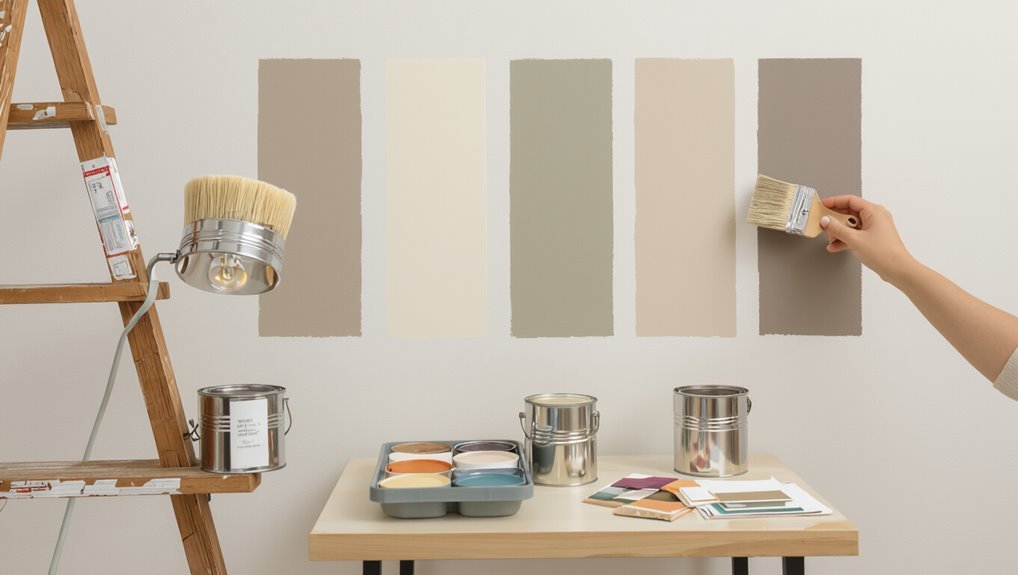
Before you paint the whole room, make several test swatches on different walls and view them at multiple times of day to see how light and shadow change the color.
Apply 12×12-inch patches with both primer and final coat. Label each swatch, note north/south exposure, and photograph them morning, midday, and evening.
Compare dried finish under artificial lighting too.
Example room scenarios and recommended paint combos
Now that you’ve tested swatches and seen how light affects each hue, let’s apply those observations to concrete room scenarios.
Pick combos that match function and mood: durable satin in kitchens, washable eggshell in kids’ rooms, calming matte in bedrooms, and semi-gloss trim for hallways.
Consider undertones and natural light before committing.
- Kitchen: durable satin
- Kids: washable eggshell
- Bedroom: calming matte
- Hallway: semi-gloss trim
