
Why Do Florida Homes Have Textured Walls? The Surprising Reason
You’ll see textured walls across Florida because they hide drywall imperfections, resist humidity better, and speed up installation on fast coastal builds. You’ll get a durable finish that masks minor damage and reduces repainting needs, which saves you money over time. Textures like orange peel or knockdown also soften light and improve acoustics, while fitting regional architectural styles so homes sell easier. Keep going and you’ll uncover practical tips, costs, and repair tricks.
Quick Answer Why Florida Homes Often Have Textured Walls
You’ll find Florida homes often have textured walls because texture hides imperfections and holds up better in humid, sandy environments.
In short, it’s a practical finish that masks drywall flaws, resists moisture-related issues, and’s easier to maintain than a perfectly smooth surface.
Below we’ll expand on the climate, construction, and cost reasons that make texture common in the state.
One-sentence direct explanation
Because builders and homeowners in Florida want to hide drywall imperfections, improve durability in humid conditions, and speed up finishing, they commonly apply textured wall finishes like knockdown or orange peel.
You’ll find textured walls because they mask flaws, resist moisture-related wear better than smooth plaster, and cut labor time and costs.
For these practical, cost-effective reasons, contractors and owners favor texture.
Two-sentence expanded summary
When moisture, minor drywall flaws, and tight budgets are factors, contractors often apply textures like knockdown or orange peel to Florida walls so they hide imperfections and hold up better in humid conditions.
You’ll find these finishes speed up installation, reduce repainting needs, and mask uneven seams, saving time and money while offering a slightly more durable surface against humidity and routine wear.
Basic Understanding What Are Textured Walls?
Textured walls are finishes you apply to plaster or drywall using joint compound, spray-on stucco, or other materials to add visual and tactile interest.
You’ll commonly see orange peel, knockdown, popcorn, and skip trowel patterns in Florida, each created with specific tools like sprayers, knockdown knives, trowels, or hopper guns.
Knowing the materials and tools helps you pick the right texture for durability, moisture resistance, and ease of repair.
Definition of textured wall finishes commonly used in Florida
Think of textured wall finishes as decorative and functional coatings that give interior and exterior surfaces a tactile look instead of a smooth one.
You’ll find finishes that hide imperfections, add depth, and improve durability against humidity and wear. They’re applied with plaster, joint compound, or synthetic mixes, then sealed or painted to resist mold, fading, and coastal moisture common in Florida.
Common texture types (orange peel, knockdown, popcorn, skip trowel)
Four common textures you’ll see in Florida homes are orange peel, knockdown, popcorn, and skip trowel, and each offers a distinct look and practical benefit.
You’ll pick textures based on style, maintenance, and light reflection. Consider:
- Orange peel: subtle, hides minor flaws.
- Knockdown: decorative, softer shadows.
- Popcorn/skip trowel: heavier texture or artisan swirls for character.
Materials and tools used for texturing
When you’re preparing to add texture to a wall, you’ll work with a few basic materials—drywall compound (joint compound or “mud”), texture premixes, and sometimes plaster—plus tools like trowels, hawks, rollers, spray guns, and knockdown knives.
You’ll also need sandpaper, mixing paddles, and masks. Choose materials based on finish, durability, and moisture resistance for Florida’s humid climate.
Historical and Regional Reasons for Texture in Florida Homes
You’ll see textured walls in Florida partly because post-war building booms and the popularity of stucco set stylistic and practical precedents.
Contractors adapted finishes to handle the state’s humidity and corrosive salt air, choosing textures that hide imperfections and resist moisture better than smooth paint.
Local building practices and contractor preferences then cemented those choices into the region’s common look.
Post-war construction trends and stucco influence
Because a building boom followed World War II, Florida saw a rapid shift toward affordable, quickly built homes—and textured finishes fit that need.
You’ll notice stucco’s influence: it covered imperfect masonry and concrete block, masked joints, and sped exterior and interior finishing.
Builders favored simple dash and orange-peel textures that hid flaws, reduced labor, and gave houses a cohesive, low-cost Mediterranean-inspired look.
Climate-driven factors (humidity, salt air) affecting wall finish choices
Stucco’s practicality didn’t just suit post-war budgets; it also answered environmental demands you couldn’t ignore in Florida.
High humidity and salt-laden air accelerate corrosion and mold, so you favor dense, breathable finishes that resist moisture.
Textured surfaces hide minor cracking and salt stains, shed water better than smooth paint, and lengthen maintenance intervals—practical choices driven by the climate you live with.
Local building practices and contractor preferences
When builders reworked Florida neighborhoods after WWII, they didn’t just pick textures for looks—they chose methods that fit local labor skills, materials, and code interpretations.
You’ll notice contractors favored textured finishes because crews could apply them quickly, hide imperfections from mass construction, and meet regional codes.
Over time those practical preferences became aesthetic norms you still see across communities today.
Functional Benefits of Textured Walls in Florida (Primary Explanation)
You’ll notice textured walls do a lot of practical work in Florida homes, quietly concealing imperfections from rapid construction or repair.
They’re tougher against minor dings and hide drywall seams and nail pops, so surfaces stay looking cleaner longer.
Texture also softens echoes and scatters light, improving interior acoustics and diffuse illumination.
Concealing imperfections from rapid construction or repair
Because Florida’s building boom and frequent repairs often happen on tight schedules, contractors lean on textured wall finishes to hide uneven drywall seams, fastener marks, and patchwork.
You’ll notice textures mask quick spackle jobs and imperfect sand jobs, letting crews finish faster without meticulous skim coats.
That saves time and keeps interiors looking uniform until a full renovation’s practical.
Durability and resistance to minor surface damage
Although textured finishes add visual character, they also make walls tougher against everyday dings and scuffs. This means you don’t have to worry as much about minor knocks from furniture, toys, or moving boxes.
The rough surface spreads impact, reducing visible chips and scrapes. You’ll spend less time patching small blemishes, and routine wear blends in, keeping rooms looking cleaner longer.
Hiding drywall seams and nail pops
In many Florida homes, textured finishes mask drywall seams and nail pops so you don’t have to see every imperfection.
When framing shifts or fasteners back out, texture hides uneven joints and tiny bulges without immediate repairs. You can skim-coat or repaint later, but texture buys time, keeps walls looking uniform, and reduces the urgency of patching minor drywall defects in humid, settling environments.
Contribution to interior acoustics and light diffusion
When you run your hand across a textured wall or glance around a room, you’ll notice the surface breaks up sound and scatters light in subtle but useful ways; the irregularities reduce echoes by disrupting direct reflections and soften harsh glare from windows or fixtures.
You’ll hear conversations clearer and enjoy gentler, more even illumination, making living spaces feel calmer without adding treatments or changing fixtures.
Aesthetic and Market Reasons
You’ll notice textured walls often match regional tastes and can signal perceived value to buyers.
Different eras and neighborhoods favor specific textures, so understanding those trends helps when staging or updating a home.
Choosing the right finish can improve resale appeal and make your property feel more market-ready.
Perceived value and popular regional aesthetics
Although textured walls started as practical solutions for hiding imperfections and resisting humidity, they’ve become a regional style cue that many buyers expect in Florida homes.
You’ll find texture signals authenticity and coastal charm, often boosting perceived value during viewings.
When you sell or stage, keeping tasteful, well-maintained texture can make your property feel familiar, market-ready, and aligned with local aesthetic preferences.
Texture trends across different Florida eras and neighborhoods
Because Florida’s development unfolded in waves tied to climate, building tech, and lifestyle trends, the textures you see map neatly onto eras and neighborhoods: rough, heavy orange peel or knockdown marks many mid-century and 1970s homes where contractors prioritized fast, forgiving finishes; finer, subtler textures show up in 1990s–2000s suburban tracts that favored cleaner lines for resale appeal; and contemporary coastal builds lean toward smooth or custom Venetian and plaster-like finishes that read as high-end and low-maintenance.
- Mid-century/1970s: orange peel, knockdown
- 1990s–2000s suburbs: light, uniform textures
- Contemporary/coastal: smooth, Venetian, plaster-like
Impact on resale and staging
How should texture factor into your staging and pricing decisions?
You’ll highlight or downplay texture based on buyer expectations: smooth surfaces feel modern, while subtle texture suits Florida’s coastal charm.
Repaint or skim-coat obvious popcorn or heavy orange-peel to widen appeal.
Disclose and price honestly if texture reflects original character; staged lighting and neutral decor will help buyers envision updates and value.
Installation and Maintenance How Textured Walls Are Applied and Cared For
When you’re ready to install textured walls, you’ll start with proper prep, apply the texture with the chosen technique, then finish and seal for durability.
You can tackle small projects yourself to save money, but professionals bring speed and a more consistent finish for complex patterns.
For repairs and repainting, you’ll match texture and use compatible paint to keep the surface looking seamless.
Typical installation steps (prep, application, finishing)
Before you start, make sure the surface is clean, dry, and free of loose paint or drywall dust—good prep makes the rest go faster and yields a longer-lasting finish.
You’ll then:
- Prime repaired areas and mask trim.
- Apply texture compound with a spray or trowel, blending consistently.
After drying, sand lightly, spot-prime, then paint for protection and uniform appearance.
DIY vs. professional application: pros and cons
Choosing between DIY and hiring a pro for textured walls comes down to your budget, skill level, and tolerance for imperfect results.
If you DIY, you’ll save money and learn a skill but face time, mess, and uneven texture risk.
Pros deliver speed, consistent finish, and clean-up, but cost more.
Pick DIY for small projects; hire pros for whole-house or textured specialty finishes.
Repairing and repainting textured walls
Whether you tackle texture repairs yourself or call in a pro, you’ll want a plan that matches the damage and finish.
Assess the texture type, patch with matching compound, sand lightly, prime, then repaint with compatible sheen. If patterns don’t align, blend or skim coat the area.
Quick checklist:
- Identify texture and materials
- Use matching patch and primer
- Feather, sand, paint to blend seamlessly
Comparison Smooth Walls vs. Textured Walls
You’ll notice textured walls look and feel different than smooth ones, with texture adding depth while smooth surfaces read cleaner.
Consider costs too: textured finishes can be cheaper up front and hide flaws, but may raise lifetime painting and repair work compared with smooth walls.
Think about maintenance and repair effort—smooth walls are easier to touch up, while textured walls mask damage but can be trickier to match.
Visual and tactile differences
While smooth walls reflect light evenly and give rooms a clean, modern look, textured walls scatter light and add depth you can both see and feel; the difference shows up immediately in how a space reads—sleek and airy versus cozy and dimensional. You’ll notice touch: smooth feels cool and uniform, textured invites your hand and hides minor flaws.
| Feature | Smooth | Textured |
|---|---|---|
| Light | Even | Scattered |
| Touch | Uniform | Varied |
| Visual depth | Low | High |
Cost comparison: initial and lifecycle expenses
Because textures require extra materials and labor, textured walls usually cost more up front than smooth finishes.
But those initial differences don’t tell the whole story: you should weigh installation time, patching and repainting frequency, and long‑term resale preferences to get the full lifecycle picture.
You’ll pay more initially for texture, but consider how painting cycles, perceived value to buyers, and contractor availability affect total ownership cost.
Maintenance and repair effort comparison
When evaluating upkeep, textured and smooth walls demand different kinds of work: smooth walls show repairs more clearly but are easier to sand and blend, while textured walls hide minor dings yet require skill to match patterns during patching.
You’ll spend less time feathering on smooth finishes, but textured repairs often need a pro.
Painting’s similar, though texture can mask uneven coverage.
Common Mistakes and Problems with Textured Walls
You’ll often see over-texturing or poorly matched patches that stand out and hurt a room’s look.
Painting textured surfaces can be tricky, and you’ll struggle to get even coverage without the right tools or technique.
In Florida, moisture can worsen texture problems and sometimes signals underlying structural or persistent water issues you shouldn’t ignore.
Over-texturing and mismatched patches
If a wall’s texture looks like a patchwork of heavy ridges and faint stipples, it’s usually the result of over-texturing or poorly matched repairs.
These errors stand out even from across the room and make finishes look unprofessional. You’ll notice lighting highlights inconsistencies, seams and mismatched material grab attention, and attempts to hide flaws often make them worse.
Fixes require careful feathering and matching.
Issues with painting and achieving even coverage
Because textured surfaces catch paint differently than flat walls, getting even coverage takes more planning and the right tools.
You’ll need nap rollers, thicker nap, angled brushes for crevices, and possibly sprayers. Don’t skimp on primer or multiple thin coats.
Test a small area first, watch for pooling or missed peaks, and adjust technique to avoid blotchy, uneven results.
Moisture-related problems specific to Florida climate
When Florida’s high humidity and frequent storms meet textured interior walls, moisture can wick into crevices and cause staining, blistering, or mold growth if you don’t address ventilation and sealing.
You should inspect attics, bathroom exhausts, and window seals, fix leaks promptly, and use vapor-permeable paints and dehumidifiers.
Routine checks prevent hidden decay and costly remediation in your humid climate.
When texture indicates underlying structural or moisture issues
Not all surface problems are just cosmetic—textured finishes can actually signal deeper structural or moisture issues you need to address.
If texture flakes, bulges, or shows dark stains, you could have hidden leaks, trapped moisture, or framing movement.
Don’t ignore recurring texture failures; inspect for roof or plumbing leaks, poor ventilation, or foundation shifts, and fix the root cause before retexturing.
Tips and Best Practices for Homeowners
When picking a texture, consider Florida’s humidity and your home’s architectural style so it performs and looks right.
Take preventive steps like proper ventilation, sealed seams, and routine inspections to minimize moisture and mold.
Know when to repair, resurface, or remove texture, and ask contractors clear questions about experience, methods, costs, and warranties while watching for red flags like vague estimates or no references.
Choosing the right texture for climate and home style
Because Florida’s heat, humidity, and coastal breezes affect both appearance and durability, you should pick wall textures that balance style with climate resilience.
Choose finishes that hide imperfections, resist wear, and suit your home’s architecture.
Consider:
- Fine orange peel for subtle, modern looks
- Light knockdown for classic, forgiving surfaces
- Sand texture for coastal, tactile appeal
Preventive measures for moisture and mold
Although Florida’s warm, humid climate encourages mold growth, you can take straightforward steps to keep textured walls dry and healthy.
Use dehumidifiers, run exhaust fans during showers and cooking, and keep AC at consistent temperatures.
Fix leaks promptly, caulk gaps around windows and pipes, and guarantee proper exterior drainage.
Clean textured surfaces with mild detergent and address any damp spots immediately.
When to repair, resurface, or remove texture
Keeping textured walls dry helps prevent damage, but you’ll still need to assess wear and aging to decide whether to repair, resurface, or remove the texture.
If small cracks, chips, or isolated mold occur, spot-repair and seal. For widespread damage, resurfacing with skim coat restores finish.
Remove texture only if underlying drywall is sound and you want a smooth modern look; expect prep work.
Hiring contractors: questions to ask and red flags
Who should you hire to work on textured walls, and how can you tell a reliable contractor from a risky one?
Ask for licenses, insurance, local references, and a written estimate detailing scope and materials.
Request before-and-after photos of similar jobs.
Watch for high upfront deposits, vague contracts, no permits, or pressure to decide—those are red flags.
Trust clear communication and documented guarantees.
Cost Considerations and Budgeting
You’ll want to know typical price ranges for applying, repairing, or removing textures so you can plan accurately.
Costs hinge on square footage, texture type, and labor rates, so get multiple estimates and compare line items.
Finally, weigh cost versus value—consider potential ROI for Florida buyers when choosing whether to texture, repair, or smooth walls.
Typical price ranges for applying, repairing, or removing textures
Because texture work varies by type, room size, and patch complexity, you’ll see a wide range of price points whether you’re applying, repairing, or removing textures.
Small repairs might run $50–$200, larger patches $200–$600.
Full-room applications commonly cost $300–$1,200 depending on finish.
Complete removal can range $400–$2,000, often higher for popcorn or extensive repair needs.
Factors that affect cost (square footage, texture type, labor)
Those price ranges give a general sense, but several specific factors will determine where your project lands on that spectrum.
You’ll weigh square footage, texture complexity, and labor rates.
Consider:
- Square footage: more area raises material and time.
- Texture type: intricate patterns cost more.
- Labor: experienced crews charge premium rates; accessibility affects hours and total price.
Cost vs. value: ROI considerations for Florida homes
When weighing textured walls for your Florida home, think beyond upfront costs and focus on resale value and long-term savings; a well-chosen texture can boost curb appeal, hide minor imperfections, and reduce future touch-up expenses, while a dated or overly trendy finish might deter buyers and cut into your return.
You should balance material and labor costs against expected market preferences and resale timing.
Case Studies and Real-World Examples
You’ll look at three real Florida projects to see how texture plays out in practice: an older bungalow with original texture problems and the fixes used, a new tract home where builders chose texture for cost and durability, and a renovation where texture was stripped out along with its costs and results.
These examples will show the trade-offs you’ll face between appearance, budget, and maintenance. From them you can judge which approach fits your home and wallet.
Example 1: Older Florida bungalow with original texture issues and solutions
Although the bungalow’s original popcorn-style texture gave the rooms character, it also trapped dust, showed water stains, and made small repairs obvious.
So we’d to choose a strategy that preserved its vintage feel while fixing the problems. You removed loose texture, treated stains, skim-coated fragile areas, and matched remaining texture with a subtle spray blend.
Then primed and painted for a durable, cleaner finish.
Example 2: New construction tract home why texture was chosen
Consider a new tract home where builders picked a light orange-peel texture to speed up drywall finishing, hide minor framing imperfections, and provide a neutral backdrop buyers find familiar.
They sprayed the texture quickly, primed, and painted in a single streamlined process to keep costs down while delivering a consistent, market-ready look.
You’ll notice durable, low-maintenance walls that mask small defects and appeal to broad buyer tastes.
Example 3: Renovation where texture was removed costs and outcomes
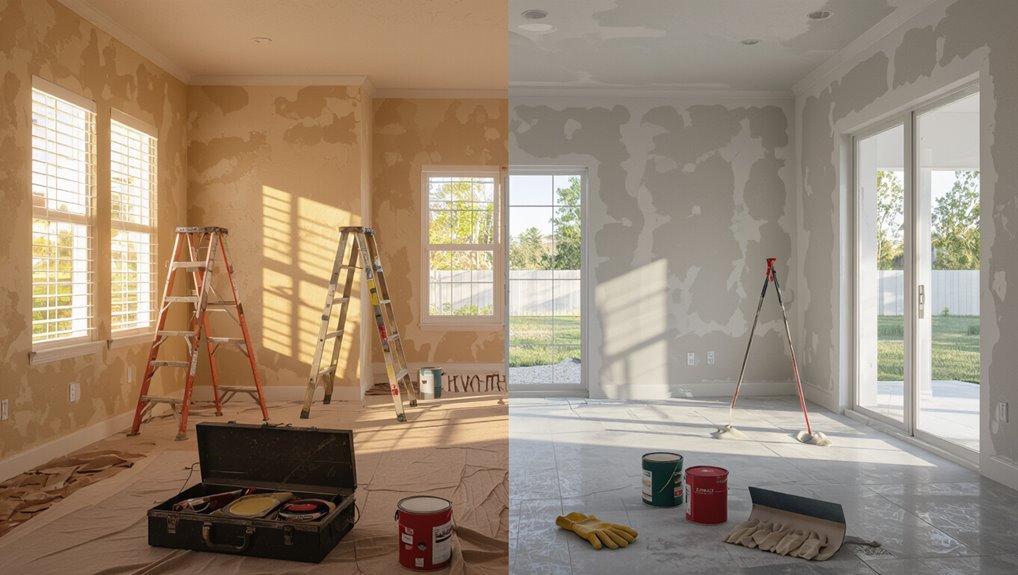
While tract builders often leave orange-peel texture in place to save time and appeal to buyers, many homeowners later choose to remove that finish when renovating for a cleaner, modern look.
You’ll pay about $1.50–$3.50 per square foot for skim-coating and sanding, plus repainting.
Expect dust, a few days of disruption, and a noticeable smooth-wall upgrade that can boost resale appeal.
FAQs
You probably have practical questions about textured walls in Florida, like whether they raise mold risk in humid climates or if they can be smoothed out completely.
You’ll also want to know how hard it’s to match texture when repairing a small area, whether texture affects energy efficiency or soundproofing, and if you should remove it before selling.
I’ll answer these common concerns clearly so you can make informed choices for your home.
Will textured walls increase mold risk in humid climates?
Because textured walls trap more dust and moisture in tiny crevices, they can create more favorable spots for mold to start if humidity’s high and ventilation’s poor.
You should control indoor humidity, run exhaust fans, and use dehumidifiers where needed.
Regular cleaning with appropriate cleaners helps remove spores before they colonize.
Inspect hidden corners and repair leaks promptly to reduce risk.
Can textured walls be smoothed out completely?
If you want a completely smooth finish, it’s usually achievable but it takes careful prep and the right technique.
You’ll remove texture by scraping or sanding, apply joint compound in thin coats, sand between layers, and prime thoroughly.
Expect dust, time, and skill or hire a pro for large areas.
Small imperfections may need extra skim coats for a flawless look.
How hard is it to match texture when fixing a small area?
How tricky is it to match a small patch of texture so it blends with the rest of the wall? It can be challenging but doable.
You’ll need the right compound, tools, and technique: feather edges, replicate spray or stomp patterns, and color-match paint.
Practice on scrap material first. Small imperfections hide better with consistent lighting and careful sanding than with heavy overworking.
Are textured walls more energy-efficient or soundproof?
While textured walls can slightly affect acoustics and thermal performance, they don’t turn your home into a soundproof or super-insulated space.
You’ll notice minor sound dampening because irregular surfaces scatter noise, and thin texture layers add negligible insulation.
Rely on insulation, window upgrades, or acoustic panels for real gains.
Texture’s benefits are mostly aesthetic and practical for hiding imperfections.
Should I remove texture before selling my Florida home?
Thinking about stripping textured walls before listing your Florida home? You don’t have to.
Buyers often accept texture, and removal costs time, mess, and potential repair. If texture is dated, damaged, or hinders staging photos, smooth it in high-traffic rooms.
Otherwise, focus on fresh paint, lighting, and curb appeal—these offer better return on investment than wall stripping.
