
Why Does Hyundai Paint Peel So Easily? What Owners Should Know
You’re seeing peeling because factory clearcoats on many Hyundais were thin or not fully cured, which weakens adhesion between primer, basecoat, and clearcoat. Environmental stress like UV, salt, humidity, and chips then exploit those weak spots, and aftermarket repairs or poor maintenance make it worse. Inspect edges, document damage, and weigh touch-ups versus panel or full repaints with pros who use proper prep. Keep going to learn diagnostics, costs, and prevention steps.
Quick Answer Why Hyundai Paint Peels Easily
You’re seeing peeling because thinner or improperly cured clearcoats, poor adhesion, and environmental stressors make the finish fail.
That means rapid aesthetic decline, higher corrosion risk, and potential resale loss if you don’t address it.
Start by inspecting affected areas and planning prompt repair or protective measures.
Concise summary of causes and immediate implications
Although several factors contribute, Hyundai paint peeling usually stems from thin clearcoats, inconsistent factory application, and environmental stressors like UV exposure and road salts.
You’ll notice flaking, exposed primer, and faster corrosion risk, so act fast. Understand why does hyundai paint peel to choose fixes or prevention.
- Inspect
- Protect
- Repair
Basic Understanding of Automotive Paint and Coatings
To understand why Hyundai paint peels, you should know the three main layers: primer, basecoat, and clearcoat, and what each one does.
Modern factory paint systems spray and cure these layers in controlled stages to bond paint to metal and protect against UV and chemicals.
When adhesion fails you’ll see terms like peeling, flaking, or delamination—each describing different ways the layers can separate.
Layers of car paint (primer, basecoat, clearcoat)
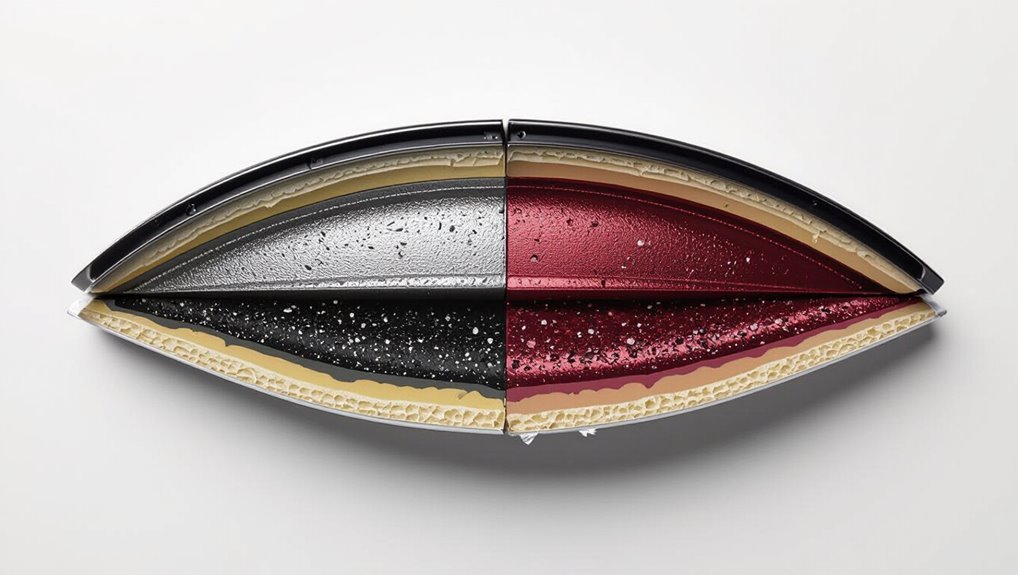
When you look closely at automotive paint, you’ll see it’s a multi-layer system designed to protect and style the vehicle: primer bonds to metal and evens out the surface, the basecoat provides color and visual effects, and the clearcoat seals and adds gloss and UV protection.
If any layer fails—poor adhesion, damage, or improper prep—the top layers can peel, exposing underlying metal and accelerating corrosion.
How modern factory paint processes work
Your paint’s layer structure sets the stage for how factories apply coatings at scale.
You’ll see automated spray booths, precise curing ovens, and quality checkpoints designed to guarantee adhesion and uniform finish.
Processes control temperature, humidity, and coating thickness to minimize defects and speed production.
- Robotic spraying for consistency
- Controlled bake cycles for curing
- Inline inspection and touch-up
Common paint failures and terminology (peeling, flaking, delamination)
Although it may look like a single problem, paint failure actually covers several distinct modes—peeling, flaking, and delamination—each with its own causes and visible signs.
You’ll want to recognize the differences to diagnose and fix issues correctly. Peeling lifts in sheets from edges; flaking breaks into small chips; delamination separates clearcoat from basecoat or primer.
Each needs a different repair approach.
Specific Reasons Hyundai Paint May Peel
You’ll often find peeling starts from specific causes like factory clearcoat or curing problems and poor adhesion between primers and topcoats.
Environmental stressors (UV, salt, humidity) and mechanical damage (stone chips, scratches, impacts) make those weak spots worse.
Aftermarket repairs or bad repainting practices can finish the job by introducing incompatible materials or sloppy application.
Manufacturing and quality-control factors (factory clearcoat issues, curing problems)
Factory-applied clearcoat problems and lapses in quality control can leave Hyundai paint vulnerable to peeling, since improper mixing, uneven application, or insufficient curing create weak bonds between layers.
You might notice premature flaking, orange peel texture, or localized failures where coatings didn’t adhere properly.
Inspections, stricter process controls, and targeted repairs at the plant level reduce risks and protect your vehicle’s finish.
Material and chemical causes (poor adhesion, incompatible primers/clearcoats)
When paints and primers don’t chemically bond or were designed with incompatible formulations, you’ll see the finish fail precisely where adhesion is weakest.
You should inspect for improper primer selection, mismatched clearcoats, or contaminated surfaces that prevent bonding.
Poor adhesion from incorrect solvents, old batches, or rushed repairs lets layers separate.
Fixes require correct substrate prep and compatible primer/clearcoat systems to restore long-term adhesion.
Environmental stressors (sun/UV exposure, road salt, humidity)
Although Hyundai’s coatings are engineered for durability, prolonged sun and UV exposure, road salt, and high humidity can still break down paint binders and clearcoats, causing cracking, chalking, and eventual peeling.
You’ll notice faded color, brittle finish, and weakened adhesion where UV has polymerized resins. Salt accelerates corrosion under the paint, and trapped moisture promotes blistering—regular washing and UV protection slow deterioration.
Mechanical and physical causes (stone chips, scratches, impacts)
Because small impacts break the paint’s protective layers, stone chips, scratches, and dings give corrosion and delamination a foothold—exposing bare metal or primer that lets moisture and contaminants creep underneath the finish.
You’ll notice chips spread as rust lifts surrounding paint; recurring rock strikes and door-edge impacts accelerate peeling.
Promptly addressing damage, using touch-up or protective film, prevents growth and costly refinishes.
Aftermarket repairs and poor repainting practices
Damage that starts from stone chips or dings is often made worse by aftermarket repairs and sloppy repainting.
Improper prep or wrong materials let moisture and contaminants get under the new finish. If a shop skips sanding, uses incompatible primers or low-quality clearcoats, or applies paint in poor conditions, you’ll see bubbling, flaking, and rapid failure.
Always choose qualified technicians and OEM-matching products.
Age, wear, and model-specific vulnerabilities
When a Hyundai ages, normal wear and environmental exposure can break down the factory paint layers. Certain models are more prone to this due to specific materials or coatings they used.
You’ll notice cracking, fading, or flaking where clearcoat thins, seams collect debris, or cheaper primers were applied.
Check recalls, model forums, and inspect vulnerable panels regularly to catch issues early.
Evidence and Case Patterns
You’ll want to look for patterns across reports to see which Hyundai models and model years show the most peeling.
Check common locations like the hood, roof, trunk, and mirrors for typical flaking or clearcoat failure.
Also verify warranty status, recalls, and any manufacturer advisories by searching VIN-based recall lookups and Hyundai service bulletins.
Models and model years commonly reported with peeling
Although reports span several years, certain Hyundai models and model-year ranges show up far more often in complaints about paint peeling. You’ll see patterns in owner reports, service records, and forums pointing to specific compact and mid-size models from mid-2010s to early 2020s.
| Model | Model years |
|---|---|
| Elantra | 2011–2017 |
| Sonata | 2015–2020 |
| Tucson | 2016–2021 |
Typical peeling patterns and locations on the vehicle (hood, roof, trunk, mirrors)
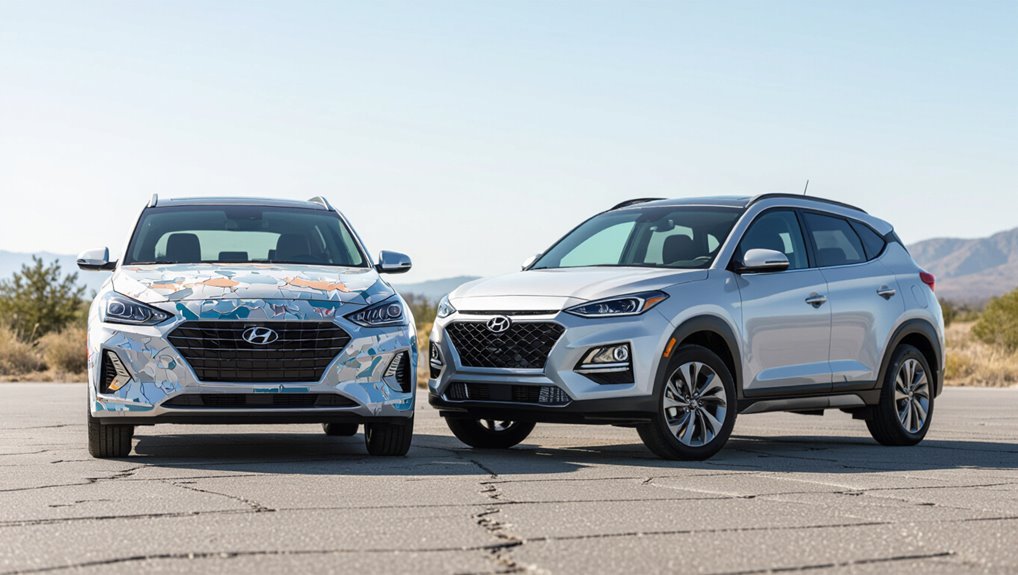
Having identified the models and years most frequently cited for peeling, look next at where the problem shows up and how it progresses on the vehicle.
You’ll often see chips along hood edges that expand into flaking centers, roof blotches from sun exposure, trunk lip peeling from moisture traps, and mirror housings cracking at seams.
Patterns often radiate from edges and high-stress points.
Warranty, recalls, and manufacturer responses (how to check)
When checking whether your Hyundai’s paint issue’s covered, start with the vehicle’s warranty and any related recalls or service bulletins—these documents show what the manufacturer has acknowledged and agreed to repair.
Check Hyundai’s owner portal, NHTSA recall database, and your VIN-specific reports.
Contact your dealer for documented inspections and keep records.
If denied, escalate to corporate customer care and file a formal complaint.
Diagnostics How to Confirm Paint Peeling Cause
Start with a visual inspection checklist: check adhesion with a tape or cross-hatch test, note whether the paint is cracking or flaking, and look for underlying damage or corrosion.
Try simple DIY tests like cleaning a small area, tapping to hear hollow spots, or comparing affected panels to unaffected ones, and call a pro if results are unclear or structural issues appear.
Document dates, locations, photos, test methods, and any service history to support complaints or warranty claims.
Visual inspection checklist (adhesion tests, look for cracking vs. flaking)
Before you dig into repairs, walk the car carefully and run a few simple adhesion checks so you can tell true paint failure from surface contamination or minor wear.
Inspect edges, press gently with a fingernail, and note cracking versus chips. Check for undercoat exposure and rust. Record locations and severity for planning fixes.
- Edge tug test
- Crack pattern check
- Undercoat/rust look-up
Simple DIY tests and when to involve a pro
Although a quick DIY check won’t replace a pro’s diagnosis, you can run a few straightforward tests to narrow the cause of Hyundai paint peeling and decide whether to call in an expert.
Check adhesion with a fingernail or tape, inspect edges for primer exposure, and look for substrate rust or corrosion.
If peeling covers large areas, shows bubbling, or repeats after touch-ups, consult a pro.
What information to document for complaints or warranty claims
After you run those simple checks, gather clear documentation to support any complaint or warranty claim—photos, dates, and descriptions will make your case much stronger.
Keep records organized and time-stamped, note weather and mileage, and record dealer interactions.
- Photos: wide, close-up, and scale reference.
- Timeline: discovery, steps taken, service visits.
- Correspondence: emails, quotes, and technician names.
Repair Options by Severity
If the peeling is minor you can handle small-area DIY fixes like touch-up paint and clearcoat pens with simple step-by-step care.
For larger spots you’ll want a professional for sanding, spot respray and blending, and I’ll explain what that process looks like and what to expect.
When panels or the whole vehicle need repainting I’ll cover indicators, the typical workflow, and the cost ranges and factors that influence price.
Small-area DIY fixes (touch-up paint, clearcoat pens) step-by-step
Start by evaluating the damage so you know whether a small-area DIY fix will do the job: light peeling, tiny chips, or bare spots under 1–2 inches across are usually treatable with touch-up paint and a clearcoat pen, while larger lifts, bubbling, or exposed primer need pro attention.
- Clean, sand lightly, and remove loose flakes.
- Apply color-matched touch-up paint in thin layers.
- Finish with clearcoat pen, let cure, then gently polish.
Professional localized repair (sanding, spot respray, blending) what to expect
When touch-up paint or a clearcoat pen won’t restore the area, you’ll need a professional localized repair that combines sanding, spot respray, and blending to match the surrounding panels.
You’ll drop the car off, expect techs to sand to sound paint, prime if needed, apply basecoat and clear, then blend edges.
Cure time and polish finish guarantee seamless color and gloss match.
Full panel or full-vehicle repaint indicators and process overview
Because spot repairs only work up to a point, you’ll need a full-panel or full-vehicle repaint when peeling, widespread clearcoat failure, or extensive substrate damage prevents a blended match or long-term protection.
You’ll prep by stripping failing layers, repairing corrosion or primer, and sanding to feather edges.
Technicians apply basecoat and clear in controlled booths, then cure, polish, and inspect for color uniformity and adhesion.
Cost ranges and factors that influence price
Although exact prices vary by region and shop, you’ll generally see three cost tiers based on severity: spot and local clearcoat touch-ups (least expensive), full-panel repaints, and full-vehicle resprays (most expensive). Costs depend on labor, paint quality, color matching difficulty, and corrosion prep. Expect warranties, OEM vs aftermarket paint, and dealer premiums to affect price.
| Severity | Typical cost | Key factor |
|---|---|---|
| Spot | $50–$300 | Labor |
| Panel | $200–$1,200 | Color match |
| Full | $2,000–$8,000+ | Paint quality |
Prevention and Best Practices to Minimize Paint Peeling
You can cut the risk of paint peeling by sticking to regular maintenance like washing, waxing, and applying protective coatings.
Consider professional options such as ceramic coatings or clear bras, park in shade or a garage when possible, and avoid habits that expose your car to prolonged sun and pollutants.
When you need work done, choose reputable shops, check reviews and warranties, and verify color matching and prep procedures before they start.
Regular maintenance routines (washing, waxing, protective coatings)
When you keep up with a simple routine of washing, waxing, and adding protective coatings, you’ll greatly reduce the chances of Hyundai paint peeling. These tasks remove contaminants, restore barrier protection, and prevent moisture and UV from breaking down the finish.
- Wash regularly with pH-neutral soap and two-bucket method.
- Wax every few months to replenish sacrificial layer.
- Inspect and touch up chips promptly to stop corrosion undercutting.
Protective products and services (ceramic coatings, clear bras, paint sealants)
A few targeted protective options—ceramic coatings, clear bras (paint protection film), and paint sealants—can dramatically cut the risk of Hyundai paint peeling by adding durable barriers against UV, contaminants, and stone chips.
You should weigh cost, longevity, and professional installation.
Ceramic coatings offer hydrophobic, long-term protection; PPF shields high-impact areas; sealants give affordable short-term defense.
Maintain coatings per manufacturer instructions.
Parking and usage habits to reduce exposure (shade, garage storage)
Beyond protective products, how you park and use your Hyundai makes a big difference in paint longevity.
Park in shade or a garage whenever possible to limit UV and heat stress. Avoid parking under trees that drip sap or drop debris.
Rotate parking spots to prevent prolonged sun exposure on one side. Regularly wash off bird droppings and pollutants to prevent acidic damage.
How to choose reputable repair shops and verify quality
Looking for a shop that’ll fix peeling paint properly? You’ll want certified technicians, clear written estimates, and warranty-backed work.
Inspect past jobs, ask for OEM-compatible materials, and confirm paint-matching tests.
- Check certifications and reviews.
- Request a written estimate and warranty.
- Inspect before/after photos and ask about materials used.
When to Use Warranty, Recalls, or Legal Options
Check your Hyundai warranty first to see if paint defects are covered and note the time and mileage limits.
If coverage doesn’t apply, you’ll want clear steps for filing complaints or claims and checking recall databases for related bulletins.
Keep thorough evidence—photos, repair invoices, and service records—if you pursue small-claims court or a lemon-law case.
Checking Hyundai warranty coverage for paint defects
If your Hyundai’s paint starts peeling, you’ll want to determine whether the manufacturer’s warranty, a recall, or legal action is the right path — each has different timelines, evidence requirements, and likely outcomes.
Check your owner’s manual and warranty booklet for paint, corrosion, and cosmetic coverage periods. Verify mileage and purchase dates, document the damage with photos, and contact your dealer to confirm eligibility before pursuing other remedies.
Steps to file a complaint, submit claims, or seek recall info
When should you escalate peeling paint beyond your dealer?
If repeated repairs fail, damage spreads, or the dealer denies warranty coverage, contact Hyundai Customer Care and file a formal complaint online or by phone.
Check NHTSA for recalls and submit a safety defect report if applicable.
Keep records of communications, repair orders, photos, and estimate letters to support any claim or escalation.
Small-claims and lemon-law considerations (what evidence you need)
Before you consider legal options, document everything related to the peeling paint so you can prove the defect, the attempts to fix it, and the impact on your vehicle’s value or safety.
Keep dated photos, repair invoices, communications with the dealer/manufacturer, and mileage records.
Check state lemon-law criteria and small-claims limits, then consult an attorney or consumer agency before filing to guarantee you meet deadlines.
Common Mistakes Owners Make That Worsen Peeling
Don’t make things worse by scrubbing with abrasive cleaners or the wrong compounds, which can strip clearcoat and speed peeling.
If you leave chips or scratches untreated, moisture and UV light will push the damage outward.
And be wary of cheap aftermarket repaints that skip proper prep — they’ll look fine briefly but usually fail sooner.
Using abrasive cleaners or improper compounds
Although you’re trying to fix flaking paint, using abrasive cleaners or the wrong compounds can strip clearcoat and make peeling spread faster.
You’ll remove protective layers, dull finish, and create rough edges that lift more paint.
Stick to manufacturer-approved products, test in an inconspicuous spot, and use gentle polish pads.
When in doubt, consult a pro to avoid worsening the damage.
Delaying repairs after chips or scratches
If you wait to fix chips or scratches, moisture and road salts can get under the paint and cause the damage to spread quickly, turning a small blemish into a peeling patch.
You should patch or seal damage promptly, because delayed repairs let corrosion lift surrounding layers. Quick touch-ups and rust inhibitors limit spread and keep repair costs down; don’t procrastinate.
Choosing cheap aftermarket repaints without proper prep
When you go for a cheap aftermarket repaint without proper prep, you’re often masking problems instead of fixing them: poor surface sanding, skipped primer, and rushed paint layers let new coatings fail fast and make existing peel spread.
- Skipped primer causes poor adhesion and bubbling.
- Incomplete sanding leaves edges that lift later.
- Thin, rapid coats trap solvents and crack sooner.
Cost-Benefit Comparison of Repair Options
You’ll want to weigh DIY fixes, professional spot repairs, and full repaints by comparing upfront cost, durability, and how well each restores appearance.
Consider whether spending more now on preventive options like ceramic coating or a clear bra reduces future repair needs and resale loss.
That trade-off will guide whether a cheaper quick fix or a pricier long-term solution makes the most sense for your Hyundai.
DIY vs. professional spot repair vs. full repaint
Though tackling paint peeling yourself can save money, choosing between DIY, a professional spot repair, or a full repaint depends on how extensive the damage, your skill level, and how long you want the fix to last.
| Option | When to pick |
|---|---|
| DIY | Small chips, low cost, limited finish |
| Spot repair | Local peeling, faster, moderate cost |
| Full repaint | Widespread peeling, color match, long-term finish |
| Consider | Time, budget, resale impact |
Long-term value of preventive investments (ceramic coating, clear bra)
After deciding between DIY, spot repair, or a full repaint, think about protecting that work with preventive measures like ceramic coatings or a clear bra to extend the finish and reduce future peeling.
You’ll pay more upfront, but ceramic coatings repel contaminants and UV, while clear bras prevent chips.
Over years they cut maintenance, preserve resale value, and often cost less than repeated repairs.
Step-by-Step Action Plan for Hyundai Owners Facing Paint Peeling
Start by closely inspecting and photographing the peeling areas so you’ve got clear documentation.
Then check your warranty and recall databases before getting multiple repair estimates to compare costs and methods.
Finally, pick the repair and prevention strategy that balances durability, cost, and your long-term plans for the car.
Step 1 Inspect and document damage
Begin by doing a careful, systematic walk-around of your Hyundai to find every area where paint is lifting, bubbling, cracking, or missing. Photograph each spot from multiple angles, note its size and location, and record any nearby chips, rust, or previous repairs so you’ve got a clear baseline for claims or repairs.
Log dates, VIN, weather conditions, and take close-ups with a ruler for scale.
Step 2 Check warranty and recall databases
Wondering whether your paint problem is covered? Check your vehicle’s limited warranty first—find the VIN, review coverage terms and time/mileage limits, and note exclusions.
Search NHTSA recall and service bulletin databases using the VIN or model/year. Record any matching recalls or campaigns, print or save confirmation, and contact your dealer with these references before pursuing repairs or reimbursement.
Step 3 Get multiple repair estimates and evaluate options
1–3 estimates give you a solid basis for deciding how to fix peeling paint: get written quotes from a Hyundai dealer, an independent body shop, and a reputable mobile/detailer, then compare scope, materials, warranties, and total cost.
Read each estimate line-by-line, ask about prep work, paint type, and warranty exclusions, and document timelines so you can weigh durability against price and convenience.
Step 4 Choose repair and prevention strategy
Now that you’ve compared estimates and noted differences in prep, materials, and warranties, pick the repair and prevention approach that matches your budget, timeline, and long-term goals.
Decide whether to repair panels now or wait for a full respray, choose OEM-matching paint for warranty, and schedule regular maintenance to prevent recurrence.
- Repair vs. full respray
- OEM paint selection
- Maintenance plan and inspections
FAQs
You probably have specific questions like whether Hyundai’s warranty covers peeling paint and if touch-ups will solve it for good.
You’ll also want to know how long a professional repaint lasts versus factory finish, whether ceramic coating can stop existing peeling, and how to check for known paint defects on your model.
Read on and we’ll answer each of these clearly so you can decide the right next steps.
Is peeling paint covered under Hyundai’s warranty?
Wondering if peeling paint is covered under Hyundai’s warranty? You might be eligible if peeling stems from a manufacturing defect or faulty paint adhesion within the warranty period.
Cosmetic damage from environmental exposure, neglect, or aftermarket repairs is typically excluded.
Check your vehicle’s limited warranty details and document damage promptly.
Contact a Hyundai dealer or customer service to start a claim and get an inspection.
Will touching up fix peeling or will it come back?
If the peeling comes from a one-off chip or small area where the topcoat lifted, a careful touch-up can hide it temporarily and slow further peeling.
You should expect touch-ups to be cosmetic fixes — they won’t address underlying adhesion failures. Prep, matching paint, and proper sealing matter.
If peeling stems from substrate or galvanic issues, it often returns and needs professional remediation.
How long does a professional repaint last compared to factory paint?
How long will a professional repaint hold up compared to factory paint?
You’ll often get 5–10 years from a high-quality shop job if prep, materials, and clearcoat are excellent.
Factory finishes usually last longer—10–15 years—because of controlled application and multi-layer processes.
Longevity depends on prep, environment, maintenance, and UV exposure; proper care extends either finish considerably.
Can ceramic coating stop existing paint from peeling?
Can ceramic coating stop paint that’s already peeling? Not really.
Ceramic seals and protects intact clearcoat but won’t reattach flaking paint. You should remove loose paint, repair bare metal or primer, and repaint or clearcoat repaired areas first.
After proper refinishing, a ceramic coat can help prevent future peeling by adding durable UV and chemical resistance, slowing further deterioration.
How can I check if my model has known paint defects?
Wondering whether your specific Hyundai model has known paint defects?
Check Hyundai recalls and TSBs on NHTSA and Hyundai websites using your VIN.
Search owner forums and model-specific Facebook groups for patterns.
Ask your dealer service department to review warranty/repair history.
Consider a vehicle history report and independent body-shop inspection to confirm recurring issues before pursuing recalls, extended warranties, or legal options.
