
Why Does Paint Bubble on Wood? Reasons and Fixes
You’re seeing paint bubbles on wood because moisture, heat, trapped solvents, old coatings, or poor prep broke the paint’s bond and forced air or vapor up through the film. Often damp wood, incompatible primer and paint, or thick slow-drying coats make the problem worse. Fixes include drying and sealing the wood, sanding to sound layers, using a compatible primer, and applying thin, even coats in proper conditions. Keep going to learn practical fixes and prevention tips.
Quick Answer: Why Paint Bubbles on Wood
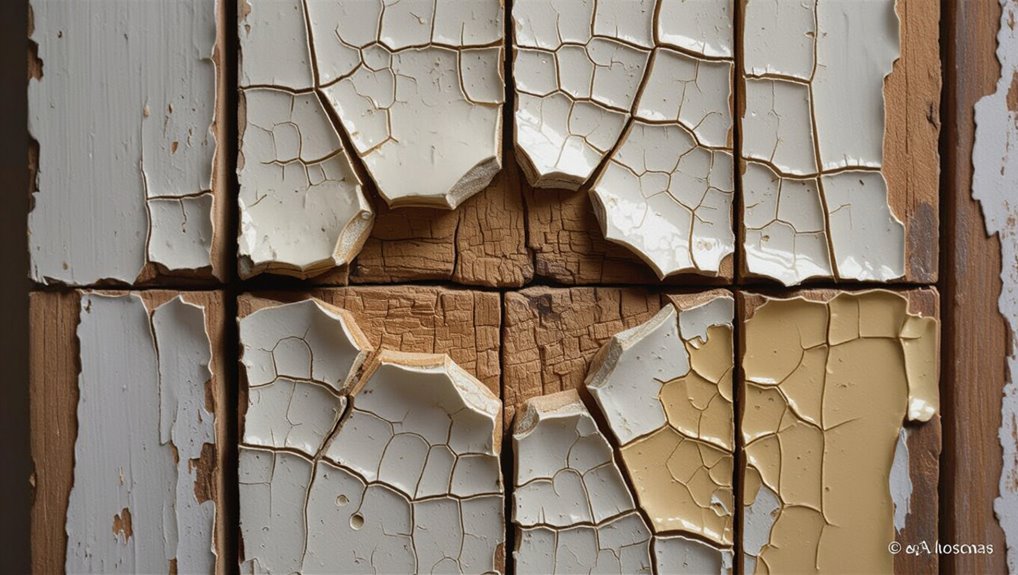
When paint bubbles on wood, it’s usually because moisture, heat, or a poor bond forces air or vapor through the coating; you’ll see raised blisters where the paint has lost adhesion or trapped gases.
You’ll notice bubbling causes tied to damp substrate, trapped solvents, or thermal expansion.
Understand basic paint chemistry—solvent evaporation, film formation, and adhesion—to diagnose why bubbles form and where to inspect.
Fast Fixes to Stop Bubbling Now
Start by quickly sanding and cleaning the surface so paint can adhere evenly and trapped moisture can escape.
Then apply a fast-setting primer to seal the wood and block stains that cause bubbling.
These quick steps will stop new bubbles and give you a stable base for repainting.
Quick Surface Prep
If a paint film’s already blistering, you can still stop further bubbling with a few quick surface-prep steps that take little time but make a big difference. You’ll focus on surface cleaning, sanding techniques, paint compatibility, wood types, primer selection, weather considerations, bubble prevention, and application tools.
| Step | Action |
|---|---|
| Clean | Remove dirt, oils |
| Sand | Feather edges |
| Check | Match paint/wood |
| Tool | Use proper brushes/rollers |
Use Fast-Setting Primer
After you’ve cleaned, sanded, and confirmed your paint and wood are compatible, grab a fast-setting primer to lock things down quickly.
You’ll speed jobs with fast drying techniques: thin coats, warm dry conditions, and a fan.
Apply even primer application to seal pores and stop moisture outgassing.
Let the primer cure fully before painting to prevent bubbling and guarantee adhesion.
How Moisture Makes Paint Blister on Wood
When moisture gets trapped beneath a paint film on wood, it pushes the coating away from the substrate and forms blisters.
You’ll usually see this where vapor tries to escape through brush strokes, end grain, or poorly sealed joints.
You’ll want to identify moisture sources—wet framing, leaks, or high humidity—and fix them, because weakened paint adhesion lets vapor lift the film and cause bubbling.
How Old Paint Layers Trap Moisture and Fail
When you repaint over old coatings that already hold moisture, those trapped layers can’t dry out and start to force the new paint away from the wood.
You’ll see adhesion break down where the old and new films separate, often leading to blisters and flaking.
Addressing the trapped moisture and removing failing layers is key to stopping the problem.
Trapped Moisture Layers
Any old paint layer can act like a moisture dam, holding water against the wood instead of letting it escape.
You’ll see trapped moisture cause bubbling when moisture penetration resumes under brittle coats.
Improve wood sealing to slow recurrence.
Steps you can take:
- Remove loose paint
- Dry the substrate
- Apply proper sealant
- Recoat with breathable paint
Adhesion Breakdown
Trapped moisture doesn’t just cause bubbling; it also undermines the bond between paint and wood.
You’ll see adhesion causes in older paint layering where trapped water breaks bonds. Focus on moisture management, preparation techniques, and primer selection to prevent failure.
Evaluate surface compatibility, perform adhesion testing, and apply adhesion improvements like proper sanding and compatible primers so new coats adhere reliably.
How Poor Surface Prep Leads to Bubbling
If you skip proper cleaning, sanding, and priming, paint won’t bond to the wood and small pockets of dust, oil, or loose fibers will lift the film and create bubbles.
You must control surface contaminants, use correct brush technique, respect drying times, and match product compatibility.
Control contaminants, use proper brush technique, respect drying times, and ensure product compatibility for lasting paint results.
- Clean
- Sand
- Prime
- Apply consistent coating thickness and application pressure, monitor environmental factors and paint quality
Incompatible Primers and Paints That Cause Blisters
Once you’ve prepped the wood properly, you still can get blisters when the primer and paint don’t play well together.
Check primer compatibility with your topcoat—oil over latex or vice versa often fails. Match products from the same manufacturer when possible, read labels, and test a small area.
Smart paint selection prevents adhesion failure and unsightly bubbling.
How Temperature and Humidity Affect Paint Adhesion
Because paint chemically bonds and cures within a narrow temperature and moisture range, you’ll see adhesion problems and blisters when conditions fall outside that window.
- Monitor surface temperature before paint application to avoid extremes.
- Avoid rapid temperature fluctuations that stress the bond.
- Control humidity levels; high moisture traps vapor under film.
- Time paint application for stable, moderate conditions to guarantee proper cure and adhesion.
Why Painting Over Dirty or Oily Wood Creates Bubbles
Often you’ll see bubbles form when you paint over dirty or oily wood because contaminants prevent the paint from wetting and adhering evenly, trapping solvents and air beneath the film.
You must address surface contamination and oil residue with proper cleaning methods and preparation techniques; skipping this is a common painting mistake.
Also consider product selection—use cleaners and primers compatible with the substrate to avoid failure.
Wood Tannins, Sap, and Paint Discoloration
When you paint over wood that contains tannins or active sap, those natural chemicals can bleed through the paint and cause yellowing or brown stains that show up weeks or months later.
If you paint over tannin-rich or sap-filled wood, natural chemicals can bleed through later, causing yellowing or brown stains.
You’ll face tannin bleed and sap issues affecting paint adhesion. Address discoloration causes with proper wood treatment to limit surface reactions.
- Seal
- Prime
- Clean
- Monitor
Why Exterior Wood Blisters More Than Interior Wood
If you expose wood to the elements, you’ll see blisters form more often on exterior surfaces than inside because sunlight, moisture swings, and temperature extremes combine to break paint adhesion. You notice reduced exterior durability and shorter paint longevity as UV, rain, and freeze–thaw force bubbles. Visualize damage:
| UV | Rain | Cold |
|---|---|---|
| Fades | Soaks | Contracts |
| Weakens | Swells | Cracks |
How Wet Coats Trap Solvent and Lift Paint
A wet second coat can trap solvent beneath the surface and force the first layer to lift, because the fresh paint slows solvent evaporation and creates internal pressure as it tries to escape.
- You apply wet paint over tacky film.
- Solvent trapping raises internal pressure.
- Wood absorption and moisture issues alter drying times.
- Reduced surface tension causes paint lifting and bubble formation.
How High‑VOC Paints Can Form Indoor Blisters
The same trapped solvent dynamics that cause wet‑coat lifting also make high‑VOC paints more likely to blister indoors: VOCs speed solvent movement and increase vapor pressure beneath drying films, so you’ll see tiny bubbles forming where the paint can’t release those gases through the film.
You’ll notice a high VOC impact on drying behavior and indoor air quality, so choose low‑VOC options and ventilate.
Wood Movement, Seasonal Expansion, and Cracking
When humidity and temperature shift with the seasons, wood swells and shrinks along its grain, and that movement puts stress on paint films and joints.
When seasons change, wood swells and shrinks along the grain, stressing paint and joints.
You’ll notice cracking, flaking, and bubbles from wood expansion during seasonal changes.
Manage it by:
- Allowing wood to acclimate
- Using flexible primers
- Applying thin coats
- Leaving proper expansion gaps
How Failing Caulk and Joints Let Water Lift Paint
Seasonal movement can open tiny gaps at seams and joints, and if you don’t seal those gaps properly, water will sneak in and lift the paint from the substrate.
You should inspect caulk deterioration and address sealant failure quickly to protect joint integrity.
Otherwise, moisture intrusion and water penetration undermine paint adhesion, causing bubbling and lifting; reseal joints and replace failed caulk to restore protection.
Mildew, Rot, and How They Undermine Adhesion
If you leave wood damp, mold and mildew will grow on the surface and prevent paint from sticking.
Once moisture penetrates, it can cause structural rot that softens fibers and makes coatings peel away.
Controlling moisture is the only reliable way to stop mildew, rot, and the paint failures they trigger.
Wood Mold And Mildew
Because moisture and organic matter give spores a foothold, mold and mildew can quickly colonize wood and start breaking down the surface you’re trying to paint.
You should remove growth before painting and use mold prevention and mildew treatment products.
Steps:
- Scrub with detergent.
- Apply mildew treatment.
- Dry thoroughly.
- Prime with mold-resistant primer.
Structural Rot Damage
Mildew on the surface is often the first sign that wood’s integrity is at risk, but rot goes further by breaking down the fibers that hold paint in place.
You should perform a thorough wood inspection to catch soft spots early. Use simple rot identification methods—probe, smell, and check structural soundness—then remove and replace damaged sections before repainting to restore adhesion.
Moisture-Driven Paint Failure
When moisture gets trapped in or on wood, it undermines paint adhesion by encouraging mildew growth and eventually breaking down the wood fibers themselves.
You’ll spot bubbling where paint loses grip. Identify moisture sources, address mildew, and repair rot to restore coating performance.
- Find leaks
- Improve ventilation
- Remove mildew
- Replace rotten wood
Corroding Fasteners and Paint Lift on Wood
If you’ve ever peeled paint off wood and found rusty stains or loose flakes underneath, corroding fasteners are often the culprit behind paint lift.
You’ll notice localized bubbling, cracking, and stains where nails or screws oxidize, expanding and breaking the finish.
Remove or replace corroded fasteners, clean stains, treat metal with rust inhibitor, and refasten with stainless or galvanized hardware to prevent recurrence.
How Insufficient Drying Times Between Coats Cause Problems
Because fresh paint needs a chemical set-up as well as surface tack, applying another coat too soon traps solvents and moisture between layers and causes bubbling, wrinkling, or poor adhesion; you should wait the manufacturer’s recommended dry and recoat times, check for tack-free feel, and account for temperature and humidity before recoating.
- Wait full drying time.
- Improve insufficient ventilation.
- Feel tack-free surface.
- Adjust schedule for conditions.
Why Spray Painting Sometimes Yields More Blisters
Switching from brush or roller work to spray application can change how solvents and airflow interact with the finish, and that often explains why you see more blisters with spraying. You must adjust spray techniques, choose compatible paint types, control film thickness and drying speed, and avoid trapping solvent under fast skins.
| Factor | Fix |
|---|---|
| Film thickness | Thin coats |
| Airflow | Ventilate |
| Solvent balance | Use compatible paint |
| Technique | Overlap properly |
| Dry speed | Slow drying |
How Underlying Stains or Preservatives Interfere With Coatings
If you’ve used a stain that wasn’t fully cured, its dyes and solvents can migrate into the fresh paint and cause discolouration or loss of adhesion.
Preservatives and water-repellent films can also prevent coatings from bonding properly, leading to blisters as the topcoat lifts.
You’ll need to identify and remove or seal these contaminants before recoating to avoid recurring problems.
Stain Migration Effects
When solvents or tannins leach from underlying stains or preservatives into a freshly applied coating, they’ll break the film’s adhesion and cause bubbles, discoloration, or soft spots.
You should monitor stain penetration and stain resistance, adjust application methods and drying times, and choose protective sealants for wood finishes.
Environmental factors drive color fading and migration; address substrate prep and compatibility.
- Test first
- Strip if needed
- Use barrier primer
- Allow full cure
Preservative Film Interference
Because preservatives and stain components can form a surface film or react chemically with fresh coatings, they often prevent proper adhesion and lead to bubbling, peeling, or soft spots on wood finishes.
You should identify preservative types and assess film properties before painting.
Test for moisture barriers from previous surface treatments, strip or sand incompatible films, and use compatible primers to restore adhesion and prevent future bubbling.
Diagnosing the Type of Bubble You’re Seeing
Though bubbles all look similar at first glance, you can tell their causes by checking size, location, texture, and whether the paint film is lifting or simply blistering — and you’ll diagnose problems faster if you know what each clue means.
Look at bubble size, location, texture, and whether paint is lifting or blistering to pinpoint causes.
- Note bubble types and paint layers.
- Check moisture sources and surface conditions.
- Assess adhesion issues and environmental factors.
- Consider wood treatments and use proper inspection techniques.
Tools for Inspecting Bubbled Paint
Before you start scraping or patching, gather a few key tools that’ll let you inspect bubbled paint accurately: a bright work light or inspection lamp to reveal surface texture and undercuts, a moisture meter to check substrate dampness, a small putty knife or paint scraper to test adhesion, magnifying loupe or hand lens for close-up inspection, and a digital camera or phone to document patterns and progress.
Use inspection techniques and tool recommendations to map bubble locations, note moisture trends, test edges gently, and photograph evidence for repairs or professional consultation.
Safely Remove Bubbled Paint
First, you’ll assess the paint and the wood beneath to decide whether the bubbles are surface-level or signal deeper damage.
Next, remove all loose or flaking paint with a scraper or sander until you reach solid edges.
Finally, clean, prime, and recoat the area with compatible products to prevent recurrence.
Assess Paint And Surface
When you spot bubbling paint on wood, take a careful look to determine how far the damage goes and what’s causing it—moisture, poor adhesion, or an underlying finish can all be culprits.
You should perform a surface inspection and paint evaluation, then plan repairs.
- Identify affected area
- Check for moisture
- Note previous coatings
- Decide recoat or repair
Remove Loose Paint
Now that you’ve inspected the surface and identified what’s causing the bubbles, it’s time to remove any loose or bubbling paint so the repair will hold.
Use appropriate removal techniques—careful paint scraping and gentle sanding—matched to bubble types and wood types.
Follow inspection methods, perform thorough surface cleaning, and choose repair strategies that consider paint compatibility to prevent recurrence.
Prepare And Recoat
Start by protecting yourself and the work area: wear a dust mask or respirator, safety glasses, and gloves, and lay down drop cloths or plastic to catch debris.
Then:
- Scrape bubbled paint to sound wood, removing loose flakes.
- Sand edges smooth; inspect for surface flaws and rot.
- Prime bare wood, matching primer to paint compatibility.
- Recoat with thin, even coats, allowing full cure.
When to Patch vs. When to Fully Strip Paint
If the damage is limited to a few small blisters, peeling spots, or areas where the paint has lifted without extensive wood damage, you can usually patch rather than strip the entire surface. Use patching techniques for localized fixes; choose stripping methods when rot, widespread adhesion failure, or multiple layers exist.
| Scenario | Action | Why |
|---|---|---|
| Small blisters | Patch | Conserves finish |
| Rot/large loss | Strip | Guarantees sound substrate |
| Multiple failed layers | Strip | Prevents re-failure |
| Isolated peel | Patch | Quick repair |
Preparing Wood Properly for Repainting
Once you’ve decided whether to patch or strip, prepare the wood so new paint will adhere and last.
Follow steps to guarantee paint adhesion and avoid bubbling:
- Surface cleaning: remove dirt, loose paint, mildew.
- Wood sanding: smooth edges, feather old coats.
- Observe drying times before coating.
- Consider primer selection, proper application methods, finish coats, and environmental factors.
Best Primers and Paints to Prevent Future Bubbling
Choose primers and paints formulated for adhesion and moisture resistance so you won’t be chasing bubbles later.
Pick primer types like bonding or shellac-based primers for difficult wood, and match paint brands known for durability.
Check surface compatibility to avoid failures, confirm recommended drying times, and follow application guidelines.
Confirm surfaces match product specs, allow full drying times, and follow application steps to prevent coating failures.
Proper selection and cure prevent trapped moisture and adhesion loss that cause bubbling.
Choosing Paints for Exterior vs. Interior Wood
Because exterior and interior wood face very different demands, you should pick paints formulated for each environment: exterior paints resist UV, moisture, and temperature swings, while interior paints focus on washability, low odor, and finish options.
You’ll consider exterior finishes vs interior coatings, paint durability, weather resistance, wood types, finish sheen, color selection, and proper application methods.
- Match wood types
- Prioritize durability
- Choose sheen
- Mind color selection
Application Techniques to Avoid Bubbles
After picking the right paint and sheen for the job, you’ll want to focus on application techniques that prevent bubbling so your finish lasts and looks professional. Use surface techniques like sanding and cleaning, follow paint layering rules, and adopt proper drying methods. For bubbling prevention, apply thin coats, avoid overbrushing, and use recommended application tips.
| Technique | Benefit |
|---|---|
| Thin coats | Reduce trapped solvents |
| Sanding | Improve adhesion |
| Brush direction | Minimize bubbles |
How to Control Temperature and Humidity While Painting
While you’re painting, keep temperature and humidity within the manufacturer’s recommended range so the finish cures evenly and won’t trap solvents or form bubbles; aim for a stable, moderate temperature (usually 50–85°F / 10–29°C) and relative humidity below about 70%.
Avoid rapid swings by using heaters, fans, or humidifiers/dehumidifiers as needed.
- Monitor conditions regularly for temperature control.
- Use fans to promote even drying.
- Run dehumidifiers when humidity management is high.
- Pause work during large temperature or humidity shifts.
Moisture Testing Methods Before Painting Wood
Before you paint, check wood moisture with a surface moisture meter to make sure levels are within the paint manufacturer’s range.
Also measure ambient relative humidity, since high room moisture can trap water under the finish.
Finally, use an adhesion tape test on a small area to confirm the surface is sound and ready to hold paint.
Surface Moisture Meter
If you want accurate, non-destructive moisture readings on paintable wood, a surface moisture meter is a fast, practical tool that measures moisture near the material’s exterior without penetrating it.
You’ll use it for surface testing to gauge moisture impact before priming.
Steps:
- Calibrate meter.
- Scan evenly.
- Note hotspots.
- Hold off painting if levels exceed spec.
Relative Humidity Check
You’ve checked surface moisture with a meter; now check the room’s relative humidity to understand how moisture in the air will affect paint drying and adhesion.
Use a hygrometer to track humidity levels and note surface temperature and wood conditions.
Monitor environmental factors—high relative humidity causes moisture effects that weaken paint adhesion.
Apply humidity control until stable, then paint for best results.
Adhesion Tape Test
One simple, reliable check is the adhesion tape test, which lets you quickly see whether old paint or a moisture-compromised layer will peel away before you repaint.
You’ll spot adhesion failure fast.
Steps:
- Clean surface.
- Press tape application firmly.
- Peel sharply.
- Inspect for flakes.
If paint lifts, strip, dry, and prime before repainting.
Fixing Bubbles on Trim, Doors, and Furniture
When paint bubbles show up on trim, doors, or furniture, you’ll want to act quickly to prevent peeling and an uneven finish.
Inspect for adhesive failure and perform a surface evaluation. Sand, clean, and apply wood conditioning where needed.
Refill and sand damaged spots, choose proper paint selection for trim maintenance, follow door refinishing steps, and keep furniture care routines for long-term bubble prevention.
Budget Fixes vs. Professional Restoration Options
If budget’s tight, you can stop small paint bubbles quickly with a few targeted DIY steps—sand blisters, clean the surface, apply wood filler where needed, and repaint with a compatible primer and topcoat.
While larger or recurring problems usually call for professional restoration to address underlying moisture, adhesion, or substrate damage.
- Budget solutions: DIY repair
- Cost analysis: compare DIY vs pro
- Professional restoration: deep fixes
- Quality comparison: longevity vs price
Long‑Term Maintenance and Common DIY Mistakes to Avoid
Because paint bubbles often signal ongoing issues like moisture, failed adhesion, or surface contamination, you’ll need a consistent maintenance routine to keep wood surfaces stable long-term.
Set a maintenance schedule, use preventive measures like sealants, follow surface cleaning and application tips, choose proper paint selection, mind environmental factors, keep common tools ready, and employ troubleshooting techniques promptly.
Avoid rushed DIY mistakes.
Frequently Asked Questions
Can Paint Bubbles Indicate Hidden Structural Wood Damage Like Rot or Insect Activity?
Yes — paint bubbles can signal hidden rot or insects undermining structural integrity; you’ll notice poor paint adhesion, soft spots, or voids. Inspect, probe, and repair or replace affected wood to confirm and fix damage.
Could Previous Paint Colors Affect Current Paint Adhesion Despite Proper Priming?
About 60% of repainted surfaces show adhesion issues when incompatible coatings stack, and you’ll notice color layering can trap moisture or repel primers—so even with proper priming, previous colors can still compromise adhesion and cause failures.
Do VOC Regulations Influence Paint Blister Tendencies in Different Regions?
Yes — VOC impact matters: regional differences force paint formulation changes, which can alter drying and blister risk. You’ll need to adjust application techniques and drying times to compensate for low‑VOC blends and local climate effects.
Can Wood Species (Hardwood Vs Softwood) Affect Susceptibility to Bubbling?
Yes — you’ll find hardwood versus softwood matters: wood properties like density, grain, and moisture affect paint interaction, so softer, porous species trap moisture and flex more, increasing bubbling risk compared with denser hardwoods.
Is It Safe to Use Heat Guns to Remove Blisters on Painted Wood Indoors?
Absolutely — but cautiously: you shouldn’t casually blast paint indoors with a heat gun; heat gun safety demands ventilation, fire precautions, respirator, and testing for lead. For indoor painting maintenance, proceed slowly and monitor temperatures.
Conclusion
You’ve learned why paint bubbles on wood and how to stop it — act fast to nip small blisters, test for moisture, and prep surfaces properly. Fixing bubbles now saves you bigger headaches later; remember, “a stitch in time saves nine.” Whether you tackle trims yourself or call a pro, keep wood dry, sand and prime right, and inspect regularly. With steady care, your painted wood will stay smooth and last longer.
