
How to Clean Painted Brick Exterior
You can clean painted brick exterior quickly and safely by prepping the area, wearing goggles and gloves, and protecting plants and trim. Start with a gentle mix of mild detergent and water, test a hidden spot, then low-pressure rinse and soft-brush stubborn grime. Avoid harsh scrubbing on damaged mortar and match methods to paint type—acrylic, oil, or elastomeric. Rinse thoroughly, let dry, and document repairs; keep going for step-by-step techniques and seasonal tips.
How to Clean Painted Brick: Fast 5-Step Method

Before you start, gather your supplies and protect nearby plants and fixtures—this quick 5-step method keeps things efficient and avoids damage.
You’ll rinse the surface, apply a gentle cleaner, scrub with a soft brush, rinse again, and inspect for missed spots.
Use eco-friendly solutions to safeguard landscaping and masonry.
Test a hidden area first to guarantee paint adhesion and color stability, honoring historical preservation when working on older properties.
Move methodically from top to bottom, using minimal pressure to avoid stripping paint.
Finish by letting the wall dry fully before touching up or sealing as needed.
Tools You Need to Clean Painted Brick
When you clean painted brick, having the right tools makes the job faster and protects the paint. Gather a garden hose with a spray nozzle, a soft-bristled brush or broom, a bucket, a nonabrasive cleaner (or mild detergent), nitrile gloves, safety glasses, and drop cloths or plastic sheeting to shield plants and fixtures.
Add a plastic scraper for stubborn residue, a spray bottle for spot treatments, and a microfiber cloth for rinsing and detailing. Carry a small paint chip kit if you’re tracking color matching after cleaning.
For older homes, include documentation tools to support historical preservation decisions without altering finishes.
Safe PPE and Site Prep for Painted Brick Work
Although painted brick isn’t as fragile as bare masonry, you’ll still want the right PPE and a tidy work area to safeguard yourself, the finish, and surrounding plants or fixtures.
Wear safety gear: goggles, a respirator rated for particulates and solvents, chemical-resistant gloves, long sleeves, and non-slip footwear.
Lay down plastic or drop cloths to catch runoff and protect landscaping, and tape off adjacent trim, windows, and fixtures.
Move furniture, planters, and grill covers away.
Keep a bucket of clean water and rags handy for spills.
Check weather—no rain or high heat—and make certain of good ventilation before you begin.
How to Inspect Painted Brick Before Cleaning

To prepare for cleaning, walk the wall closely and note areas of peeling paint, chalking, blistering, efflorescence, or fungal growth so you can choose the right methods and avoid causing more damage. Inspect mortar joints, previous patchwork, and substrates; photograph problem spots and mark them. Consider historical preservation needs and any decorative or artistic techniques used on the surface before proceeding. Test a small, inconspicuous area for adhesion and reaction. Record moisture sources, nearby plants, and ventilation. Use the table to log findings quickly.
| Issue | Action |
|---|---|
| Peeling | Document |
| Efflorescence | Trace source |
| Mold | Sample |
| Blisters | Test adhesion |
How Paint Type Affects Your Cleaning Options
Because different paints react to solvents, pressure, and heat in distinct ways, identifying your paint type will determine which cleaning methods are safe and effective. You’ll check whether the finish is acrylic, latex, oil-based, or elastomeric since each offers different paint durability and tolerance.
Acrylic and high-quality latex resist mild detergents and low-pressure washing. Oil-based coatings may handle stronger solvents but can yellow or suffer color fading. Elastomeric layers are thick and waterproof but can peel if scrubbed harshly.
Match cleaners to paint chemistry, start with gentlest options, and test a small area to prevent damage.
How Mortar Condition Changes Your Approach
If your mortar is cracked, crumbling, or missing in spots, you’ll need to adjust cleaning methods to avoid making the damage worse. Inspect joints for mortar deterioration and areas where paint peeling exposes gaps. You’ll avoid pressure washing or harsh scrubs on compromised mortar; instead, use gentle brushing and low-pressure rinses, and plan repointing before aggressive cleaning. Protect exposed edges and test methods on a small area. Prioritize stabilizing mortar to prevent further paint peeling and water intrusion. Use professionals for severe deterioration to ensure durable repairs and safe, effective subsequent cleaning.
| Condition | Recommended action |
|---|---|
| Minor cracks | Gentle brush |
| Crumbling | Repoint first |
| Missing mortar | Fill before wash |
| Paint peeling | Stabilize surface |
Choosing Safe Cleaners for Painted Brick
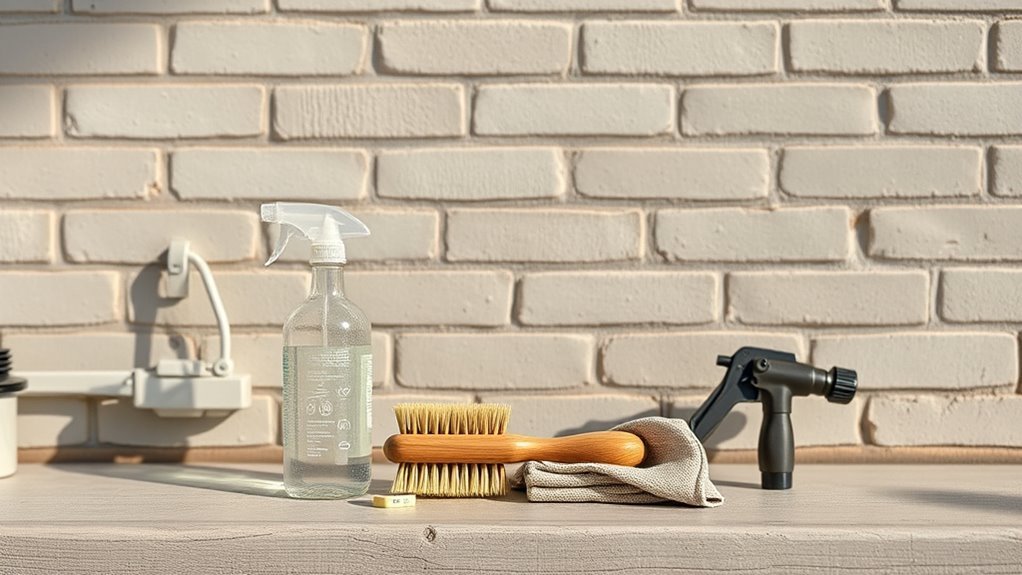
Before you clean the whole wall, test any cleaner on a small, hidden area to make sure it won’t lift paint or damage mortar.
Stick with pH-neutral cleaners that loosen dirt without stripping coatings.
Don’t use harsh solvents or bleach, since they can soften paint and etch brick.
Test Cleaners Inconspicuously
When you’re ready to clean painted brick, always test any cleaner in an inconspicuous spot first so you can see how it reacts without risking visible damage. Pick a small area near downspouts or behind shrubs.
Apply the cleaner, wait the recommended time, then rinse and let dry. Check for color matching issues and early signs of paint peeling.
If the finish dulls, softens, or flakes, stop and try a milder product. Note results and photographed samples so you can compare across options.
Testing first prevents costly mistakes and guarantees the cleaner you choose won’t harm the paint.
Use PH-Neutral Solutions
A pH-neutral cleaner is your safest bet for painted brick because it removes dirt and mildew without stripping or softening the paint. You’ll protect finish and color while using gentle, natural cleaning agents that aid stain prevention. Apply with a soft brush, rinse lightly, and repeat only where needed. Test first in an inconspicuous spot, then work from top down. Rely on products labeled pH-neutral or make a mild mix at home for eco-friendly care. Let surfaces dry fully before evaluation.
| Calm | Confidence |
|---|---|
| Gentle care | Long-lasting color |
| Eco-friendly | Renewed pride |
Avoid Harsh Solvents
Why would you risk stripping paint or damaging masonry with strong solvents when gentler options work just as well? You shouldn’t use acetone, paint strippers, or undiluted bleach on painted brick; they can lift paint, harm mortar, and ruin color matching efforts.
Choose mild, pH-neutral cleaners, diluted detergents, or products labeled safe for painted masonry. Test a small area first to confirm texture preservation and color stability.
Apply gently with a soft brush or low-pressure rinse, repeating if needed. If stains persist, consult a professional who can recommend targeted treatments that protect both paint and brick integrity.
Household Cleaners That Work on Painted Brick
If you want painted brick to look fresh without damaging the finish, choose mild, pH-balanced cleaners and avoid harsh abrasives or strong acids. You’ll use gentle dish soap, diluted vinegar solutions, or specialty masonry cleaners designed for painted surfaces. Test a small area to check color matching and watch for early paint peeling. Rinse thoroughly and work with soft brushes or microfiber cloths.
| Cleaner | Dilution | Use |
|---|---|---|
| Dish soap | 1 tbsp/gal | Light dirt |
| White vinegar | 1:10 | Mildew spots |
| Masonry cleaner | Follow label | Stubborn stains |
Cleaners to Avoid (They’ll Harm Paint or Mortar)
You’ve learned which mild solutions work, so now it’s equally important to know what to steer clear of to protect painted brick and mortar. Don’t use muriatic acid, concentrated bleach, oven cleaner, or paint strippers—they etch paint and erode mortar.
Avoid wire brushes and high-pressure settings that lift paint or pulverize joints. Solvent-heavy graffiti removal products can strip finish and create mismatched areas, complicating color matching later.
If a product smells overwhelmingly chemical or dissolves paint on contact, stop. Opt for gentler options and consult a pro for tough graffiti removal so you don’t trade one problem for another.
How to Test a Cleaner on Painted Brick Safely
Before you apply any cleaner broadly, test it on a small, inconspicuous area so you can spot color change, peeling, or mortar damage without risking the whole wall.
Dampen a hidden spot, apply diluted cleaner per label, wait the recommended dwell time, then rinse and let dry fully.
Compare color matching to adjacent paint in daylight and check for softening or flaking that signals compromised paint durability.
Repeat with increasing concentration only if the first pass is safe.
Document results and choose the gentlest product that cleans without altering color or harming mortar.
Proceed only when satisfied.
Pressure Washing Painted Brick: Pros and Cons
You can use a pressure washer on painted brick, but you need to know when to avoid it—like on flaking paint, old mortar, or thin coatings.
Set the washer to a low psi and use a wide-angle nozzle to prevent paint removal or brick damage.
After washing, inspect the surface closely for lifted paint, mortar erosion, or moisture intrusion so you can touch up or repair as needed.
When To Avoid Pressure
Although pressure washing can revive painted brick, there are clear situations when you should skip it — like when paint is already flaking, mortar is crumbling, or the surface was sealed with a delicate finish.
You should avoid pressure if you’ve noticed color fading or early surface erosion, since blasting can strip remaining pigment and weaken the substrate.
Don’t use pressure on older mortar, thin paint layers, or historic brickwork. Instead, choose gentler cleaning: soft brushes, mild detergent, or professional conservation methods.
If you’re unsure, test a small inconspicuous area or consult a mason to prevent costly damage.
Proper Pressure Settings
When pressure washing painted brick, pick a PSI and nozzle that remove dirt without stripping paint or damaging mortar. Start low (around 500–800 PSI) and use a 25–40° nozzle. Then increase cautiously only if stains persist.
You’ll test a small, inconspicuous area first, note how paint and mortar react, and avoid high-pressure tips that gouge joints. Adjust pressure gradually, keeping the wand at a shallow angle and moving consistently.
If paint flakes or color matching issues appear, stop and consider gentler methods to protect finish and support historical preservation goals. Always prioritize subtle adjustment over brute force.
Post-Wash Inspection
After rinsing and letting the brick dry, inspect every section closely for paint lift, mortar damage, or lingering stains so you can catch problems before they worsen. Walk the perimeter, use a bright light, and feel surfaces for soft spots or flaking paint.
Note areas where pressure may have thinned coating; document with photos for comparison and color retention checks. Repair mortar joints and touch up paint promptly to prevent moisture intrusion.
If the building has historical preservation concerns, consult a specialist before altering finishes. Regular post-wash inspections will extend the life of your painted brick and avoid costly repairs.
Safe Pressure-Washer Settings for Painted Brick
If you use a pressure washer on painted brick, pick lower psi and a wider nozzle to protect the paint and mortar. Start at about 500–800 psi and a 25–40° spray pattern. Test a small inconspicuous area first, and only increase pressure in small increments if needed.
For painted brick, use low pressure (500–800 psi) and a wide 25–40° nozzle; test first.
You’ll prioritize pressure safety: stay back 12–18 inches, avoid direct angled blasts at mortar joints, and wear eye protection.
Check equipment maintenance before starting—inspect hoses, nozzles, and pressure settings.
Use mild detergent compatible with paint, rinse gently, and stop immediately if paint strips or mortar loosens so you can reassess settings.
How to Hand-Scrub Painted Brick Without Damage
When you hand-scrub painted brick, start with a gentle cleaning solution like diluted dish soap or a pH-neutral cleaner to avoid stripping paint.
Use a soft-bristled brush and work in small sections with light, consistent strokes to lift dirt without abrading the surface.
Rinse frequently and check your progress so you can stop scrubbing if the paint shows any wear.
Gentle Cleaning Solutions
Because painted brick is more delicate than bare masonry, you’ll want to choose cleaning solutions that remove dirt without stripping paint or roughening the surface. Use pH-neutral cleaners or diluted mild dish soap; test a hidden spot for color matching and mural preservation concerns. Avoid harsh acids, bleach, or heavy solvents that can fade pigments. Mix small batches, apply gently with a soft sponge, rinse thoroughly, and let areas dry between tests. For persistent stains, use a poultice made from baking soda and water. Keep records of products and ratios to protect finish and artwork integrity.
| Cleaner | Use |
|---|---|
| pH-neutral soap | Daily grime |
| Diluted dish soap | Common dirt |
| Baking soda poultice | Stains |
| Test spot | Color check |
Proper Scrubbing Technique
Although painted brick can handle gentle abrasion, you’ll want to scrub with control so you remove grime without wearing the finish. Use a soft-bristle brush and mild cleaner, working in small sections with circular motions; rinse frequently to check progress.
Test a hidden spot to confirm color matching and paint integrity before tackling larger areas. Avoid wire brushes or harsh pads that scratch or strip paint.
Keep joints damp but not saturated to protect mortar and aid weatherproofing. Finish by rinsing thoroughly and letting the wall dry; touch up any thin spots to maintain appearance and protection.
Removing Mold and Mildew From Painted Brick
If you spot dark patches or a musty smell on painted brick, act quickly to remove mold and mildew before they damage paint or spread.
Mix one part bleach to three parts water (or a commercial mildew cleaner), test a small area, and wear gloves and eye protection.
Mix one part bleach to three parts water, spot-test first, and wear gloves and eye protection.
Apply with a soft-bristle brush, gently scrub to avoid harming paint or causing color fading, then rinse thoroughly with low-pressure water.
For stubborn growth, repeat after 24 hours.
Dry the wall completely and improve ventilation or trim nearby plants to deter return, preserving both paint and brick texture preservation.
Removing Dirt and Soot From Painted Brick
Start by using gentle surface cleaning to lift loose dirt and light soot without damaging the paint.
For stubborn spots, treat them with targeted stain solutions and a soft brush, testing first in an inconspicuous area.
Finish with simple preventative maintenance steps—like regular rinsing and keeping nearby sources of soot away—to keep the brick cleaner longer.
Gentle Surface Cleaning
When dirt and soot sit on painted brick, they’ll dull the color and can eventually harm the paint, so you’ll want to remove them gently with the least abrasive method that works. Start by dry-brushing loose grime with a soft-bristle brush to protect texture preservation and avoid scrubbing that alters color matching.
Then rinse with a garden hose at low pressure. For stubborn soot, mix mild detergent with warm water and test a hidden spot. Work top-to-bottom in sections, rinsing frequently.
- Dry-brush first
- Low-pressure rinse
- Mild detergent test
- Rinse and inspect
Targeted Stain Treatment
Although gentle sweeping and low-pressure rinses handle most dirt, you’ll need targeted stain treatment for stubborn soot spots that won’t budge, using the right cleaner and technique to avoid damaging the paint.
Spot-test a mild, pH-neutral cleaner on an inconspicuous area to check color matching and finish. Apply cleaner with a soft brush, working in small sections and rinsing frequently.
For tougher soot, use a diluted trisodium phosphate alternative, scrubbing gently to protect texture preservation. Rinse thoroughly, let dry, then reassess; repeat only if needed.
Avoid harsh abrasives or high pressure that strip paint or alter appearance.
Preventative Maintenance Steps
Tackling stubborn spots is only part of keeping painted brick looking good; preventing buildup in the first place saves time and preserves the finish. You should schedule gentle washes, inspect mortar joints, and remove soot quickly to avoid staining. Use eco friendly solutions like diluted mild detergent or biobased cleaners to protect paint and support historical preservation goals.
- Rinse annually after pollen season.
- Spot-clean soot within 48 hours.
- Repaint or seal chips promptly.
- Trim plants to improve airflow.
Follow these steps, and you’ll extend the life of painted brick while respecting heritage and the environment.
Removing Grease and Oil Stains From Painted Brick
If oil or grease has stained your painted brick, act quickly to prevent the spot from setting and the paint from discoloring. Blot excess with paper towels—don’t rub.
If oil stains your painted brick, blot excess immediately with paper towels—avoid rubbing to prevent set-in marks.
Sprinkle baking soda or cornstarch to absorb fresh residue; let sit 15–30 minutes, then brush away.
For stubborn spots, apply a mix of dish soap and warm water, scrub gently with a nylon brush, and rinse.
For aged stains, use a low-strength solvent test in a hidden area before treating.
Keep graffiti removal and graffiti prevention in mind when choosing cleaners and coatings, since some solvents affect anti-graffiti finishes.
Repeat as needed, drying fully.
Removing Rust Stains From Painted Brick
Rust stains on painted brick usually come from nearby metal fixtures, flashing, or old fasteners, so you’ll want to inspect and fix the source first.
Once you’ve stopped the metal from shedding, use safe removal methods like a commercial rust remover made for painted surfaces or a paste of oxalic acid applied carefully.
Test any product on a hidden spot, follow label instructions, and rinse thoroughly to protect the paint.
Identify Rust Sources
Before you start scrubbing, take a close look to pinpoint what’s causing the stains so you can stop new ones from forming. Inspect nearby fixtures, fasteners, and objects that touch the painted brick. Identify patterns and note recent repairs or exposed metals. Consider causes related to Rust prevention and Metal corrosion so you can address sources rather than symptoms.
- Check gutters and downspouts for rusted components.
- Inspect window frames, railings, and light fixtures.
- Look for exposed nails, screws, or flashing.
- Note landscaping items (tools, planters) that sit against the wall.
Safe Rust Removal Methods
Now that you’ve located likely sources, you can tackle the stains themselves with methods that won’t damage the paint. Work in small sections, testing a hidden spot first.
Use a mild chelating cleaner or a paste of baking soda and water applied gently with a soft brush; rinse thoroughly.
For stubborn spots try a diluted oxalic acid solution, following label precautions and neutralizing afterward.
Avoid abrasive scrubbing that harms paint adhesion.
After cleaning, dry the area and apply rust prevention: remove or coat metal that caused the stain and touch up paint as needed to protect the brick and prevent recurrence.
Removing Efflorescence on Painted Brick
When white, powdery efflorescence appears on your painted brick, it’s caused by salts migrating from within the masonry and crystallizing on the surface. You can remove it effectively without damaging the paint by using the right cleaners and gentle scrubbing.
Start dry-brushing to remove loose salts, then rinse. For stubborn deposits, apply a diluted masonry cleaner or white vinegar solution, test a small area first to protect paint adhesion. Rinse thoroughly and allow to dry.
Start by dry-brushing loose salts, rinse, then spot-clean stubborn areas with diluted masonry cleaner or vinegar—test first.
For long-term Efflorescence prevention, fix moisture sources. Follow this simple checklist:
- Dry-brush
- Rinse
- Spot-clean
- Address moisture sources
Fixing Peeling or Blistering Paint Before Cleaning
If paint is peeling or blistering, you’ll need to repair those areas first so cleaning won’t make the damage worse or trap moisture under fresh coatings. Start by scraping loose paint with a stiff brush or scraper, targeting peeling paint until you reach firm edges.
For blistering repair, chip away blisters, allow the substrate to dry, and sand smooth. Clean dust from repaired spots, apply a masonry primer, then use a compatible exterior paint.
Match breathability to the brick to avoid future blisters. Let coatings cure fully before pressure washing or chemical cleaning to protect new work.
Cleaning Painted Brick Around Windows and Trim
When you clean painted brick near windows and trim, start by protecting window seals and weatherstripping with painter’s tape or plastic sheeting.
Use a soft cloth or non-abrasive sponge and a gentle cleaner on the trim to avoid stripping paint or damaging finishes.
Keep pressure washer settings low and hold the nozzle at an angle away from seams to prevent water intrusion and paint lift.
Protecting Window Seals
How do you keep window seals and trim safe while cleaning painted brick around them? You’ll focus on window seal protection to prevent water intrusion and paint peeling. Tape seals, cover trim, and control spray angle to avoid soaking seams. Work gently near caulk and weatherstripping to preserve adhesion.
- Use low-pressure washer or garden hose
- Mask seals with painter’s tape and plastic
- Aim spray downward and away from seams
- Check and re-caulk any loose areas afterward
Rinse carefully, dry with a soft cloth, and inspect seals for damage before finishing.
Gentle Trim Cleaning
While you clean painted brick around windows and trim, work slowly and use gentle methods to protect delicate finishes and sealants. Use a soft-bristle brush and mild detergent, rinsing frequently so dirt lifts without scrubbing.
Mask adjacent trim detail with painter’s tape to avoid overspray or cleaner contact. For stubborn grime, spot-clean with a damp microfiber and gentle circular motions.
Inspect paint edges for chips; perform a small paint touch-up after surfaces dry to maintain a seamless look.
Finish by removing tape, checking seals, and wiping drip lines so the cleaned area blends with surrounding brick and trim.
Avoiding Paint Damage
You’ve already taken care around trim; now focus on protecting the paint itself as you clean. Work deliberately to avoid chips, abrasion, or streaks. Test a small area for compatibility, checking color matching after it dries. Use mild cleaners, soft brushes, and low-pressure rinsing. If stains persist, consider stain sealing before repainting.
- Protect edges with painter’s tape.
- Use pH-neutral cleaner and soft bristle brush.
- Rinse gently from top down; avoid high-pressure washers.
- Repair chips, prime, and match paint before finishing.
Stay patient and prioritize stain sealing and careful color matching for a seamless result.
Cleaning Painted Brick on Porches and Steps
Because porch and step brick face constant foot traffic and weather, cleaning painted surfaces there needs a practical, gentle approach that preserves paint and prevents slips.
You’ll start by sweeping and using a soft-bristled brush with mild detergent and water, rinsing thoroughly to avoid residue.
Treat stains gently—use a paste of baking soda and water or a diluted, non-bleach cleaner for oil and grime.
Test a small area first to check color matching and texture blending if you plan touch-ups.
Allow complete drying before applying anti-slip additives or repainting.
Regular light cleaning prevents deep stains and keeps steps safe.
Cleaning Painted Brick on Chimneys and Fireplaces
When dealing with painted brick on chimneys and fireplaces, you’ll want to balance gentle cleaning with preserving the paint and mortar integrity. You should assess soot, creosote, and efflorescence, and test a small area first.
Use soft brushes, low-pressure rinsing, and Eco friendly solutions like mild detergent or diluted vinegar to avoid damage. For historic preservation, avoid abrasive methods and strong chemicals that strip paint or erode mortar.
If stains persist, consult a pro. Follow these steps:
- Test a hidden patch.
- Start with dry brushing.
- Clean with mild solution.
- Rinse gently and inspect.
Cleaning Painted Brick Near Lights and Outlets
Before you start cleaning, switch off power at the breaker to avoid shocks.
Cover lights and outlets with plastic and tape to keep moisture out.
Use mild, non‑abrasive cleaners and a soft brush so you don’t damage paint or electrical fixtures.
Power Off First
Shut off the power to any outdoor fixtures and outlets before you start cleaning painted brick near them to eliminate the risk of shocks or short circuits. You’ll kill risk immediately and protect paint, wiring, and weatherproofing techniques. Confirm breakers with a tester, and don’t rely on switches alone.
Follow this quick checklist:
- Locate and switch off the correct breaker.
- Use a voltage tester to verify power is dead.
- Label the breaker so others don’t restore it accidentally.
- Keep children and pets away until work’s done.
These steps support color preservation by preventing accidental arcing or water contact with live parts.
Protect Electrical Fixtures
If you’re cleaning painted brick near lights and outlets, cover fixtures and outlets with tight plastic sheeting or painter’s tape and use waterproof tape on seams to keep water and cleaners out; this prevents short circuits and protects painted surfaces from staining or blistering.
Next, turn power off at the breaker for electrical safety, and test fixtures to confirm.
Use nonabrasive covers and secure cords away from wet areas.
Keep spray angles directed away from fixtures, and avoid soaking mounting plates.
After cleaning, dry thoroughly before removing covers and restoring power.
Proper fixture protection reduces damage and hazard risk.
Use Gentle Cleaners
While you’re protecting fixtures and cutting power, choose mild, nonabrasive cleaners so you won’t strip paint or leave conductive residues near lights and outlets. You want solutions that remove dirt and graffiti removal agents without harming finish or creating streaks that force color matching later. Test a small area, blot—don’t scrub—and rinse thoroughly. Keep electrical covers dry and sealed.
- Use pH-neutral soap and water.
- Try diluted vinegar for mildew.
- Use specialty graffiti removal sparingly.
- Rinse and dry before restoring power.
If unsure, consult a pro to avoid paint loss or hidden damage.
Protecting Landscaping While Cleaning Painted Brick
Before you start pressure washing or using chemical cleaners on painted brick, take steps to shield your plants and lawn so they don’t suffer damage. You’ll prioritize landscaping preservation and plant protection by covering beds, rinsing with fresh water, and using biodegradable cleaners. Direct runoff away from roots and remove potted plants temporarily. Test cleaners on a small area, then proceed.
| Action | Purpose |
|---|---|
| Cover plants with tarps | Block overspray and debris |
| Create runoff channels | Prevent chemical pooling |
| Rinse soil before/after | Dilute residues |
| Move containers | Avoid root exposure |
These steps protect greenery while you clean.
Working Safely on Ladders and Scaffolding
When you set up a ladder, place it on firm, level ground and angle it so the base is about one-quarter of the ladder’s length from the wall.
If you’re working at height for more than a few minutes, wear a properly fitted harness and attach it to a secure anchor.
Before you climb, inspect any scaffold for missing guardrails, loose planks, or unstable footing and address defects immediately.
Safe Ladder Placement
How high you climb matters as much as how steady your base is, so set your ladder on firm, level ground and use a stabilizer or levelers if the surface isn’t even. You’ll check for loose soil, debris, or slopes, and position the ladder at a 4:1 angle to guarantee ladder stability and height safety.
Tie or anchor the top when possible. Keep three points of contact and don’t overreach; move the ladder instead.
- Inspect feet and locks
- Use a level or clinometer
- Secure top against the wall
- Avoid soft ground or drainage channels
Proper Harness Use
After you’ve set the ladder and secured its top, put on a properly fitted full-body harness any time you’ll be working above shoulder height or on scaffolding without guardrails.
Check buckles, straps, and attachment points for wear before each use.
Adjust the harness so it fits snugly but allows movement; tuck excess webbing.
Always connect the lanyard to an approved anchor rated for fall arrest, keeping the tether short to limit fall distance.
Maintain three points of contact while moving but clip your lanyard first.
Practice rescue planning and brief helpers.
Proper harness safety is essential for effective fall prevention.
Scaffold Inspection Routine
Because a safe scaffold starts with a thorough check, you should inspect every component before you step onto it. You’ll verify planks, guardrails, base plates, and ties, confirming load ratings and stability. Follow scaffold inspection and safety protocols every shift, after assembly, and after severe weather.
- Check for damage and secure connections.
- Confirm level footing and proper bracing.
- Make certain guardrails, toeboards, and access points are intact.
- Verify load limits and no-overload conditions.
Document findings, tag unsafe scaffolds out of service, and correct issues before use. Staying disciplined prevents falls and keeps your brick-cleaning project on schedule.
Cleaning Painted Brick in Cold or Wet Weather
When cold or wet conditions stick around, you’ll need to adjust your cleaning approach to avoid damaging the paint or trapping moisture in the brick.
Assess weather challenges first: postpone power washing if temperatures hover near freezing or rain’s expected within 24 hours.
Use gentler cleaners that suit paint compatibility—test a small area to confirm no blistering or softening.
Work on dry days with temperatures above manufacturer recommendations, and dry sections with soft towels or allow airflow to prevent saturation.
Seal any exposed mortar after surfaces fully cure.
Document conditions and results so you refine timing and methods next time.
Cleaning Painted Brick on Rental Properties
If you rent, check your lease for any restrictions on exterior cleaning and get written permission from your landlord before you start.
Use lease-friendly methods like mild soap, a soft brush, or low-pressure rinsing to avoid damaging the paint or violating terms.
If the landlord wants to handle it, offer to coordinate times and share your plan so everyone’s on the same page.
Lease-Friendly Cleaning Methods
Since you don’t own the property, focus on gentle, nonpermanent cleaning methods that won’t damage painted brick or violate your lease; always check your lease and get landlord approval before starting.
You’ll want to preserve paint color and respect brick texture while removing dirt, mildew, and stains. Use mild cleaners, soft brushes, and spot tests.
Consider these steps:
- Rinse with low-pressure water first.
- Apply diluted dish soap or vinegar solution on a small area.
- Gently scrub with a soft nylon brush following the texture.
- Rinse thoroughly and air dry; repeat spots only as needed.
Landlord Approval Steps
Because you don’t own the building, get explicit landlord approval before you start cleaning painted brick; doing so protects you from lease violations and avoids accidental damage that could lead to charges. Ask permission in writing, note preferred cleaners, and mention Historical preservation rules or restrictions. Propose Eco friendly materials and low-pressure methods, offer to supply proof of insurance, and schedule inspections.
| Step | Action |
|---|---|
| 1 | Request written consent detailing allowed methods |
| 2 | List cleaners and Eco friendly materials to use |
| 3 | Offer proof of insurance and references |
| 4 | Schedule pre/post inspection for Historical preservation concerns |
Cleaning Painted Brick on Older vs. Newer Homes
When you clean painted brick on an older home, you need a gentler approach than you’d use on newer construction because the paint and mortar can be fragile and uneven. You’ll consider historical preservation and color matching, test small areas, and avoid harsh chemicals that strip original coatings.
For older painted brick, use a gentler, preservation-minded clean—test first and avoid harsh chemicals.
For newer homes, you can use stiffer brushes and stronger cleaners, but always follow paint manufacturer guidance.
Key differences to remember:
- Test a hidden area first.
- Use mild detergents on old brick.
- Use pressure cautiously on newer brick.
- Repaint touch-ups for color matching after cleaning.
Rinsing Painted Brick to Avoid Streaks
If you rinse methodically and immediately after cleaning, you’ll prevent detergent and grime from drying into streaks on the painted surface.
Work from top to bottom, using a gentle spray to avoid blast damage that can cause brick erosion or loosen paint. Keep nozzle pressure low and overlap passes to remove residue evenly.
Rinse sections fully before moving on so runoff doesn’t redeposit dirt below. Check shaded areas and crevices where soap hides.
After rinsing, let the wall dry and inspect for uneven color—this helps you spot potential color fading early and address issues before they worsen.
How Long Cleaners Should Dwell on Painted Brick
Decide how long a cleaner should sit based on the product label, the paint type, and how dirty the brick is. Most mild detergents only need a few minutes, while stronger cleaners or mildew removers may require 5–15 minutes to loosen grime without harming the paint.
Decide dwell time by label, paint type, and grime — mild cleaners: minutes; stronger cleaners: 5–15 minutes.
You should test a small area first to check for color fading or paint peeling. Follow this simple checklist before full application:
- Read the label for recommended dwell time.
- Consider painted surface age and adhesion.
- Start with the shortest effective time.
- Rinse and inspect for damage, then repeat if needed.
How to Neutralize Strong Cleaners After Use
After rinsing the painted brick thoroughly with clean water to remove surface residue, you should apply a manufacturer-recommended neutralizing solution to counteract any remaining alkaline or acidic cleaners.
Let the neutralizer sit for the instructed time, then rinse again to remove it.
Before you finish, test the brick’s pH to make sure it’s neutral so paint or sealant will adhere properly.
Rinse Thoroughly With Water
While strong cleaners remove stains and mildew, you need to neutralize them immediately to protect the paint and surrounding plants. Rinse the brick thoroughly with clean water to remove residues that can affect color matching and paint adhesion.
Use a garden hose with a spray nozzle or gentle pressure washer at low setting, working top to bottom. Rinse until suds and runoff are clear.
- Start high, move down.
- Overlap passes for full coverage.
- Flush nearby soil and plants with water.
- Check runoff for clarity before stopping.
Dry fully before any further treatment.
Apply Neutralizing Solution
Because strong cleaners can leave behind residues that harm paint and plants, you should neutralize them right after rinsing by applying a mild neutralizing solution (like a diluted vinegar or baking soda mix) across the painted brick.
Work in small sections, spray or mop the neutralizing solutions evenly, and scrub gently with a soft brush to guarantee contact. Let the mix sit briefly, then rinse thoroughly with clean water to remove loosened residues.
This pH balancing step protects the paint finish and surrounding landscaping. Wear gloves, avoid over-saturating wood trim, and dispose of runoff responsibly.
Test pH Before Finishing
Want to make sure your painted brick is truly safe to finish? Test pH before applying primer or paint to protect paint durability and color matching. Rinse thoroughly, then use pH strips or a meter across several spots.
Neutralize any high or low readings with a mild baking soda (for acid) or vinegar (for alkaline) rinse, then re-test until neutral (pH 6.5–7.5).
Follow this quick checklist:
- Rinse surface well.
- Test multiple areas with strips/meter.
- Apply neutralizing rinse as needed.
- Re-test and allow full drying before painting.
Doing this prevents adhesion problems and uneven color matching.
Drying Painted Brick to Prevent Mildew Return
If you let painted brick stay wet, mildew will get another foothold, so you need to focus on drying it quickly and thoroughly.
For mildew prevention, remove pooled water from ledges and planters, open nearby vents, and, when safe, use fans or a leaf blower to speed air circulation across walls.
Work in sections so surfaces dry uniformly; avoid direct high heat that can damage paint.
Work in sections to ensure even drying, and never use direct high heat that could harm the paint.
Check after rain and morning dew, and trim vegetation away from walls to reduce shade and moisture retention.
Consistent brick drying after cleaning helps prevent mildew recurrence and preserves your paint job.
Spot-Repairing Mortar After Cleaning
When you find crumbly or missing mortar after cleaning, it’s smart to tackle spot repairs right away to keep water from seeping behind the paint and causing damage. You’ll inspect joints, chip out loose bits, and brush away dust.
Mix a mortar repair batch matching texture; don’t worry about exact color now—color fading can be addressed later. Press mortar firmly, tool joints to match profiles, and let cure fully before any paint work.
Follow a simple sequence:
- Remove loose mortar.
- Dampen joints.
- Apply repair mortar.
- Tool and cure.
Keep repairs neat to prevent future moisture problems.
Touching Up Paint After Cleaning Damage
Because cleaning can strip or abrade paint, you’ll often need to do targeted touch-ups to restore protection and appearance. Inspect for thin spots, chips, or uneven texture across brick patterns and note how mortar lines affect visual continuity.
Cleaning can remove paint—inspect for thin spots, chips, and texture differences, noting mortar lines before touch-ups.
Match paint color schemes and sheens; bring a small sample into a store or use a portable color meter for accuracy.
Prep by cleaning only damaged areas, sanding loose edges, and priming bare masonry with a masonry primer.
Apply thin coats with a brush that fits grooves for crisp edges, feathering into surrounding paint to blend repairs seamlessly.
Refreshing Painted Brick With a Sealer or Topcoat
Once your touch-ups are dry and the brick is clean, you’ll want to know when a sealer or topcoat is necessary to protect the finish. Pick a topcoat formulated for painted masonry and UV resistance so it won’t yellow or trap moisture.
Apply it with the right tools and technique—thin, even coats with proper drying time—to keep the paint looking fresh and durable.
When To Seal Painted Brick
How do you know it’s time to seal painted brick? Look for dullness, chalking, water beading, or stains; those signs mean paint needs protection. You’ll act differently if working on historical restoration or using artistic techniques—preserve texture and breathable layers.
- Paint looks chalky or powdery.
- Water penetrates or beads inconsistently.
- Surface stains resist cleaning.
- You’ve done touch-ups or decorative work.
When these occur, seal to lock in color and resist contaminants. Test a small area first, ensure compatibility with the paint, and reseal proactively every few years to maintain appearance.
Choosing The Right Topcoat
When choosing a topcoat for painted brick, pick a product that matches your paint type, surface texture, and exposure conditions so it protects without trapping moisture. You’ll want a breathable sealer for older masonry and a compatible clear coat for modern acrylics.
Consider sheen—matte preserves texture, satin or gloss eases cleaning—and use color matching only if tinting is needed to unify repaired areas.
Prioritize products labeled for masonry to improve paint durability and resist UV, mildew, and water. Check manufacturer specs for compatibility and longevity.
Choosing correctly preserves finish and reduces maintenance without compromising the brick’s ability to breathe.
Proper Application Techniques
Before you start, make sure the brick is clean, dry, and free of loose paint so the sealer bonds evenly and lasts.
You’ll work in sections, testing a small area to confirm color matching and texture preservation.
Use a quality brush for mortar joints and a roller for field areas; avoid spraying near trim.
Apply thin, even coats, allowing recommended drying time between layers.
Monitor sheen to prevent buildup.
Follow this checklist:
- Test in an inconspicuous spot.
- Stir sealer; don’t shake.
- Maintain wet edge to avoid lap marks.
- Clean tools immediately after use.
Choosing a Breathable Sealer for Painted Brick
Because painted brick needs to release moisture to avoid peeling and trapped damp, pick a sealer labeled “breathable” or “vapor-permeable” that specifically lists compatibility with painted masonry.
You’ll want a water-based, matte or satin finish that won’t alter color matching or obscure brick texture. Test a small, inconspicuous area to confirm adhesion and appearance.
Apply with a low-pressure sprayer or brush, following the manufacturer’s coverage rates and dry times.
Avoid solvent-heavy films that form impermeable barriers.
Keep records of product name and batch so you can recoat correctly later if touch-ups are needed.
Preventing Future Stains on Painted Brick
To keep painted brick looking fresh, you’ll want to apply a breathable protective sealant that sheds water and resists dirt.
You should also trim back trees and shrubs, and reroute downspouts so moisture and leaves don’t sit against the wall.
Together these steps cut down on staining and make future cleaning much easier.
Use Protective Sealant
If you want painted brick to stay clean longer, apply a clear protective sealant that repels water, dirt, and stains while preserving the paint’s finish. You’ll choose breathable protective coatings designed for masonry to avoid trapped moisture.
Look for UV resistance and mildew inhibitors to extend sealant longevity. Prep the surface by cleaning and drying, then follow manufacturer drying times.
- Pick a breathable masonry sealant
- Test on a small area first
- Apply with even coats using a roller or sprayer
- Recoat per recommended schedule to maintain protection and avoid buildup
Manage Nearby Vegetation
When plants brush or overhang painted brick, they trap moisture and leave sap, pollen, and organic stains. So keep trees, shrubs, and vines trimmed back at least a few inches from the wall to reduce contact and improve airflow.
You should adopt regular vegetation control: remove climbing vines, clear leaf litter, and relocate potted plants away from the foundation. Schedule plant pruning seasonally to prevent regrowth that shadows or rubs the surface.
Check gutters and downspouts for blockages from nearby foliage. By limiting moisture and organic debris you’ll reduce staining, slow mildew growth, and make future cleaning easier and less frequent.
Setting a Maintenance Schedule for Painted Brick
Because painted brick weathers differently depending on climate, exposure, and paint type, you should set a predictable maintenance schedule that matches your wall’s conditions and your available time.
Inspect annually for peeling, mildew, efflorescence, and mortar cracks. Note areas affected by sun or splashback and consider Creative color schemes‘ durability and Historic preservation rules if applicable. Create a simple checklist and follow it.
- Inspect spring
- Clean mild stains summer
- Reseal or touch up fall
- Address winter damage early
Record dates and actions so you spot trends and prevent larger repairs.
Estimating Time and Cost to Clean Painted Brick
Although many factors affect the job, you can estimate cleaning painted brick by breaking the project into surface prep, actual cleaning, rinse/dry time, and touch-ups. You’ll time each phase per square foot, factor materials (cleaner, brushes, tarps), and include labor. For historic homes, historical preservation rules may limit methods and add cost. Check insurance considerations for water use or pressure washing. Use this quick guide to budget and schedule.
| Phase | Typical time per 100 sq ft |
|---|---|
| Surface prep | 15–30 mins |
| Cleaning | 20–40 mins |
| Rinse/dry | 30–60 mins |
| Touch-ups | 15–30 mins |
When to Hire a Pro for Painted Brick Cleaning
If your brick has extensive peeling paint, persistent mildew, deep staining, or large areas that need repainting, you should hire a pro—these problems demand specialized equipment, chemical knowledge, and care to prevent masonry damage.
You’ll also want a pro when the job involves historical preservation, complex scaffolding, or choosing eco-friendly materials to meet regulations.
Consider hiring professionals if you:
- Face structural or mortar concerns.
- Need matching paint for a historic facade.
- Require permits or insurance-backed work.
- Want guarantees and documented safety practices.
A pro protects your investment and ensures code-compliant, durable results.
How Pros Clean Painted Brick Differently Than DIY
When you choose a pro instead of tackling painted brick yourself, you’ll notice differences in tools, technique, and risk management right away. You’ll see pros select gentler cleaners, adjust pressure washing precisely, and apply artistic techniques to respect paint layers and historic preservation standards. They spot substrate issues, protect landscaping, and avoid common DIY mistakes.
| Pros | DIY |
|---|---|
| Calibrated equipment | Generic pressure washer |
| Conservation-aware methods | Aggressive scrubbing |
| Trained assessment | Guesswork |
You’ll get predictable results, less damage, and preservation-minded choices that honor the building’s character.
Evaluating Contractor Quotes for Painted Brick Work
How do you know which bid actually covers the work and which one’s leaving you with surprises? You’ll compare scope, materials, timeline, and guarantees. Ask how they’ll protect mortar, respect historical preservation rules, and handle paint color selection if repainting’s needed. Require written specifics: surface prep, cleaning method, sealants, and cleanup. Verify licenses, insurance, references, and a payment schedule tied to milestones. Clarify who fixes chips or mortar damage found during work. Get all changes as signed change orders.
Compare scope, materials, timeline, and guarantees — get written specifics, verify credentials, and require signed change orders.
Use the checklist below when evaluating quotes to avoid assumptions and unexpected costs.
- Scope clarity
- Materials listed
- Timeline/milestones
- Warranty/details
Handling Persistent Stains That Won’t Come Out
Because some stains soak into brick or old paint layers, you’ll need a systematic approach that balances effectiveness with preserving the masonry or finish.
Start by testing a small, inconspicuous area with a mild cleaner, then escalate to stronger poultices or a trisodium phosphate mix only if needed.
Use soft brushes and low-pressure rinsing to avoid stripping paint or accelerating color fading.
For stubborn oil, rust, or mildew, try targeted solvents or a clay-based poultice, then rinse thoroughly.
If stains persist, consult a pro to avoid damaging vintage charm or compromising the substrate with aggressive methods.
Documenting Results and Warranty Concerns After Cleaning
If you want to protect your investment and prove the condition of painted brick after cleaning, document each step with dated photos, notes on products and concentrations used, and a brief description of pressure and technique. This record will help you evaluate results, support warranty claims, and guide any follow-up work.
Keep a compact file for results documentation and potential warranty concerns. Share copies with contractors or manufacturers when needed.
Create a simple checklist you update after each session:
- Date and weather
- Photos: wide, mid, close
- Products, dilution, dwell time
- Equipment, pressure/settings, operator initials
Avoiding Common Mistakes Cleaning Painted Brick
When you tackle painted brick, avoid common mistakes that can damage paint, mortar, or the substrate—use the right cleaning agents, gentle pressure, and proper technique to protect the finish.
Don’t scrub with wire brushes, use bleach at full strength, or blast with excessive PSI; those ruin paint and mortar joints. Test cleaners in an inconspicuous spot first and rinse thoroughly.
If you’ll repaint, document original color for future color matching and consult specialists when working on older homes to respect historical preservation standards.
Wear protective gear, follow manufacturer instructions, and stop immediately if you see surface deterioration.
Include Painted Brick Cleaning in Your Home Checklist
Although painted brick often feels like a “set it and forget it” surface, you should add its cleaning to your regular home maintenance checklist to keep the finish looking fresh and prevent long-term damage. You’ll protect color preservation and extend paint life by scheduling simple tasks.
Include this short list for clarity:
- Inspect for dirt, mildew, and peeling.
- Clean gently with appropriate solutions.
- Spot-repair chips and touch up paint.
- Check mortar and flashing for water entry.
Combining these steps with basic weatherproofing techniques helps prevent moisture problems and reduces the need for major repainting.
Seasonal Checklist: Keep Painted Brick Looking Fresh
You’ve added painted brick care to your routine checklist, now set up a seasonal schedule to keep surfaces consistently fresh and protected. Each season, inspect for peeling, mold, and mortar gaps; address minor issues before they worsen.
Add painted brick to your routine: inspect each season for peeling, mold, and mortar gaps—tackle small issues early.
In spring, wash gently and check for stubborn stains.
Summer’s heat is ideal for touch-ups after test patches used for interior painting match.
Fall’s dry weather suits caulking and brick sealing to block winter moisture.
Winter, limit work to clear debris and note areas needing spring repair.
Keep a simple log with dates, tasks, and materials to track ongoing maintenance.
Quick Recap: 10 Maintenance Tips for Painted Brick
Now that you’ve covered seasonal care, keep painted brick looking its best with these 10 concise, actionable maintenance tips—each one focused on preventing damage, simplifying upkeep, and extending paint life.
Inspect yearly for peeling, efflorescence, and mortar cracks.
Clean gently with mild detergent and a soft brush; avoid pressure washing older masonry.
Touch up chips using proper Color matching; document original shades for historical restoration.
Maintain gutters and landscaping to reduce moisture.
Repoint mortar where needed.
Seal only with breathable products.
Keep records of repairs and paint brands.
Plan full repainting before multiple failures appear.
- Inspect monthly
- Clean quarterly
- Touch-up annually
- Repaint decade-wise
Frequently Asked Questions
Can I Use a Garden Hose for Final Rinse Instead of a Pressure Washer?
Yes, you can use a garden hose for the final rinse, but you’ll get faster, deeper results with a pressure washer; if you’re gentle and thorough with the hose, it’ll usually suffice for painted brick finishes.
Will Cleaning Painted Brick Void My Paint Warranty?
Straight up, it usually won’t void your warranty if you follow manufacturer instructions; you should check paint durability and warranty considerations, use approved cleaners, avoid harsh pressure, and document your cleaning to cover your bases.
How Long After Painting Should I Wait Before First Cleaning?
You should wait at least 30 days before the first cleaning to protect paint adhesion and honor surface preparation efforts; this lets the coating fully cure, so you won’t damage the finish or compromise warranty coverage.
Are There Eco-Friendly Cleaners Safe for Painted Brick?
Yes — you can. You’ll find eco friendly solutions that work gently; start with mild soap and vinegar mixes, or plant-based cleaners. Test first, use soft brushes, rinse well, and choose safe cleaning agents to protect paint.
Can I Paint Over Stubborn Stains Instead of Deep-Cleaning?
You can paint over stubborn stains, but you’ll risk poor stain removal and visible bleed-through unless you prep and use a quality primer and paint; proper paint coverage relies on cleaning, sealing, and spot-priming before finishing.
Conclusion
You’ve got a solid plan now to keep your painted brick looking its best — so what will you tackle first? By following safe prep, picking the right cleaners for your paint type, and scheduling seasonal checks, you’ll prevent damage and save time. Stick to the quick 5-step method, avoid common mistakes, and add these tasks to your home checklist so your exterior stays fresh and protected year after year.
