
How to Get Dried Paint Off a Mirror Without Damage
You can remove dried paint from a mirror without damage by softening it, then gently lifting it off with a plastic scraper or cotton swab; start with warm soapy water or rubbing alcohol for water-based paint and use mineral spirits or acetone sparingly for oil-based spots. Work in small sections at a low angle, protect edges and frames, and test solvents first. If progress stalls or the backing looks compromised, stop and get professional advice — continue for full step-by-step guidance.
What You’ll Achieve: Clean Mirror, No Damage
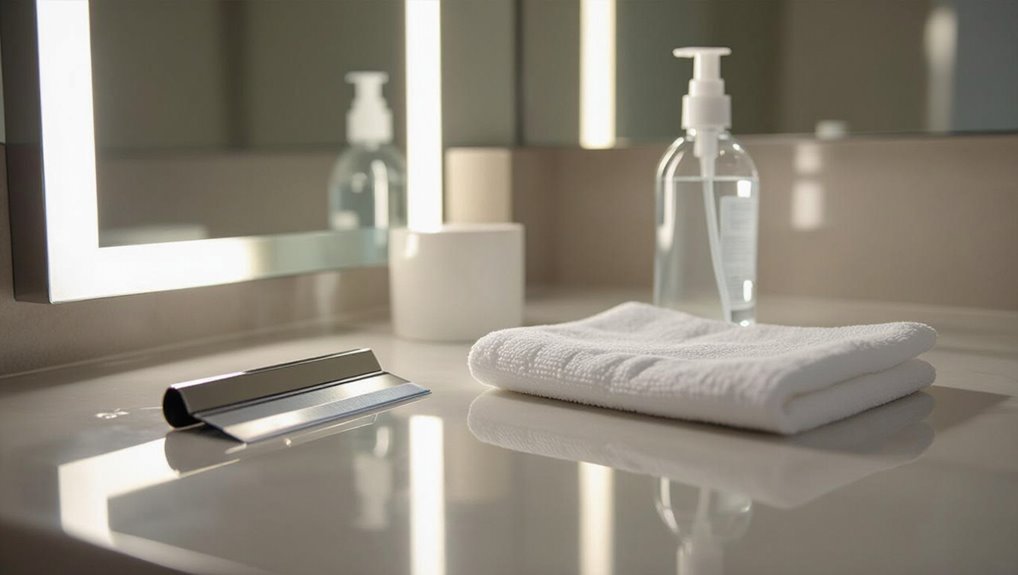
When you remove dried paint from a mirror using the right tools and method, you’ll restore a clear, streak-free reflection without harming the glass or its backing.
You’ll preserve mirror maintenance routines, prevent scratches, and keep silvering intact.
You’ll also learn simple paint prevention habits to avoid repeats.
The result: a spotless mirror that lasts, with minimal effort and no costly repairs.
Quick Answer: Safest Way to Remove Dried Paint
Start by softening the paint: gently scrape away any loose flakes with a plastic scraper, then dab a little rubbing alcohol or a commercial adhesive remover on a microfiber cloth and rub until the paint lifts—working slowly to avoid scratching the glass or damaging the mirror backing.
Follow basic paint removal techniques and mirror maintenance steps:
- Test spot.
- Scrape gently.
- Clean residue.
How to Tell If Paint Is on the Glass or the Backing
How can you tell whether the paint is on the mirror’s glass or on the reflective backing?
Inspect edges and tap lightly: paint on glass sits above the surface and shows brush texture, while backing damage often appears beneath flaking silver or black spots.
Use paint identification techniques like a magnifier and gentle solvent test on a tiny spot to note glass surface differences before removal.
When to Stop and Call a Professional
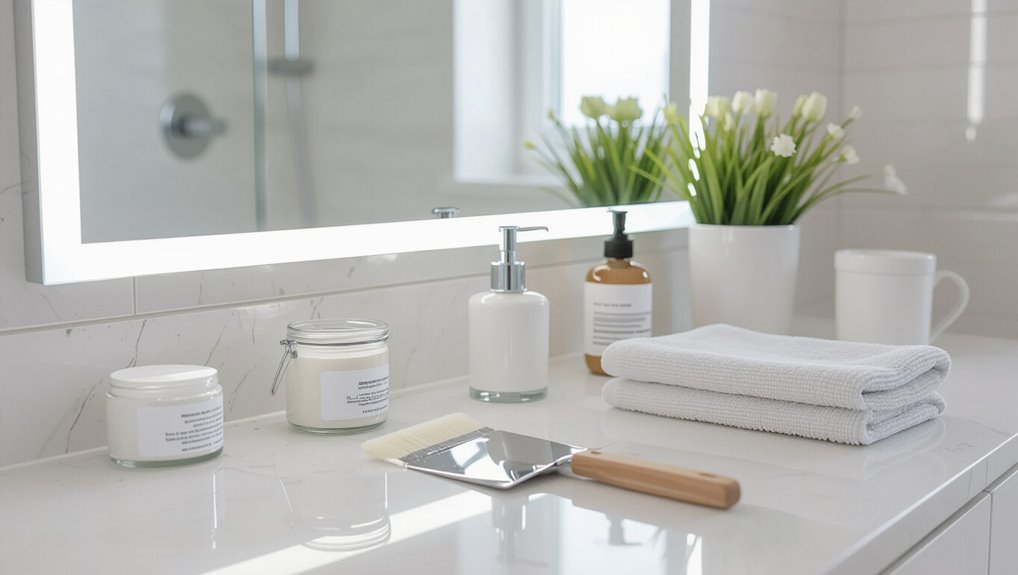
If you notice the paint scrape pulling away silvering, deep scratches appearing, or the glass chipping despite gentle effort, stop and call a professional—continuing risks permanent damage and costly replacement.
Know when to DIY and recognize signs to hire help. Consider:
- Silvering loss or dark spots spreading.
- Hairline or deep glass scratches.
- Loose mirror backing or cracked edges.
Essential Tools and Supplies for Removing Dried Paint From Mirrors
Before you start, make sure you’ve got basic safety gear like gloves and eye protection so you don’t risk cuts or chemical irritation.
Gather gentle cleaning supplies—microfiber cloths, mild detergent, and isopropyl alcohol—for initial soft cleaning.
Keep precision removal tools on hand, such as a razor blade, plastic scraper, and cotton swabs, for stubborn spots you’ll address carefully.
Basic Safety Gear
Because you’ll be working with sharp tools and chemical cleaners, wear proper safety gear to protect your eyes, skin, and lungs.
Put on safety goggles and protective gloves, and guarantee ventilation. Keep a clear workspace and a phone nearby.
- Nitrile or heavy-duty gloves
- Safety goggles with side shields
- Respirator or mask rated for organic vapors
Gentle Cleaning Supplies
Now that you’ve got your safety gear on, gather a handful of gentle supplies that’ll let you remove dried paint without scratching the glass or damaging the mirror backing.
Use microfiber cloths, soft sponges, a plastic razor or scraper for edges, rubbing alcohol or mild detergent, and a paste of baking soda as gentle abrasives.
Consider eco friendly options like vinegar-based cleaners and biodegradable wipes.
Precision Removal Tools
Reach for precision tools that let you remove dried paint without harming the glass or silver backing: a plastic razor or single-edge safety scraper for flat areas, a metal razor held nearly parallel for stubborn spots (used very carefully), fine-point cotton swabs for tight edges, a plastic putty knife for lifting, and a selection of blades with protective guards for controlled scraping.
- Choose ideal scraper choices.
- Use precision removal techniques.
- Work slowly, testing angles first.
Safety Tips to Protect the Reflective Backing and Edges
When you’re removing dried paint from a mirror, take steps to protect the reflective backing and edges so you don’t create permanent damage; work gently, use non-abrasive tools, and keep solvents away from the mirror’s rear and frame seams. Use protective coverings, tape edges, and avoid scraping near reflective coatings.
| Tip | Action |
|---|---|
| Cover edges | Use painter’s tape |
| Protect backing | Cardboard shield |
| Work gently | Soft blade |
| Check seams | Keep dry |
Household Solvents That Work on Dried Paint (Overview)
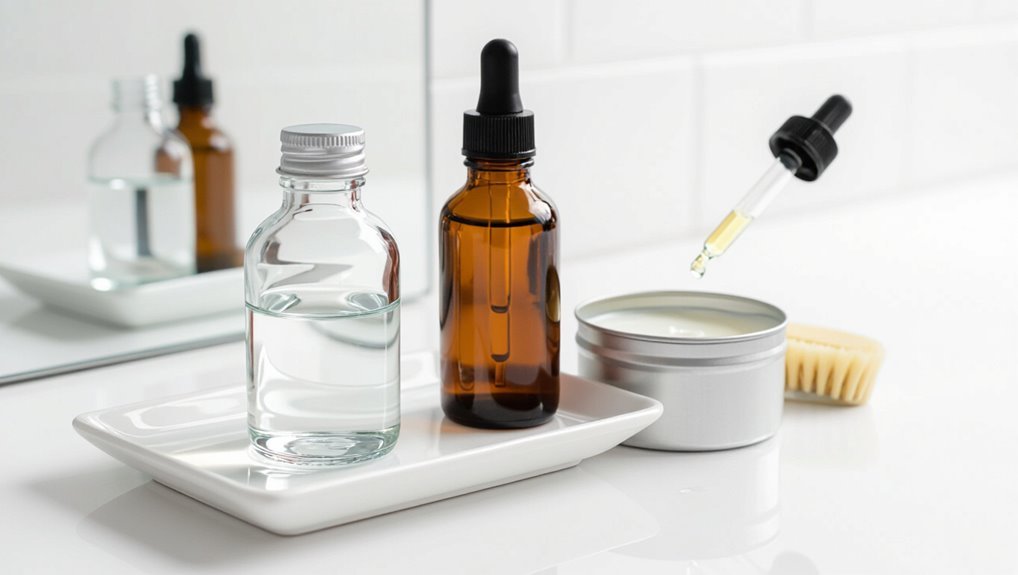
Although some dried paints resist easy removal, several common household solvents will soften or dissolve them enough for safe scraping or wiping.
You’ll match solvent choice to paint types and mirror safety, testing first on an edge.
Consider:
- Rubbing alcohol – good for water-based spots.
- Acetone/nail polish remover – stronger, for stubborn spots.
- Mineral spirits – for oil-based paints.
How to Use Rubbing Alcohol to Soften and Remove Paint
Pick a rubbing alcohol with at least 70% isopropyl strength so it’ll soften paint effectively without excessive scrubbing.
Apply it gently with a soft cloth or cotton pad, letting it sit briefly to loosen the paint before wiping.
After the paint comes off, clean the mirror thoroughly to remove any residue and streaks.
Choose Isopropyl Strength
How strong should your rubbing alcohol be? You’ll pick an isopropyl concentration that balances effectiveness and safety for mirror glass.
Consider these paint removal techniques and match strength to paint type:
- 70% — safe, gradual softening for water-based paint.
- 90% — faster for stubborn latex or acrylic.
- 99% — only for tiny spots; use cautiously, ventilate, and test first.
Apply Alcohol Gently
Dampen a lint-free cloth or cotton pad with your chosen isopropyl alcohol and press it onto the dried paint for 30–60 seconds to let the solvent soften the film.
Test a hidden edge first, since different paint types and surface sensitivity vary.
Gently wipe in one direction with light pressure, reapplying alcohol as needed, and avoid scraping or vigorous rubbing that could harm the mirror.
Remove Residue Completely
Press a fresh lint-free cloth soaked in rubbing alcohol over the softened paint and wipe it away in smooth strokes, rinsing and reapplying alcohol as needed until no tacky residue remains.
You’ll use paint identification methods to choose solvent strength. Follow residue prevention techniques afterward.
- Blot gently
- Wipe in one direction
- Inspect under bright light
How to Use White Vinegar Safely on Mirrors
Start by testing a small, hidden corner of the mirror with a 1:1 mix of white vinegar and water to make sure the finish won’t react.
If safe, apply the vinegar solution with a soft microfiber cloth, avoid soaking edges or backing, and wipe gently in circular motions.
Rinse with plain water, dry immediately, and ventilate the area to prevent lingering odor.
How to Apply Acetone (Nail Polish Remover) Without Harming Backing
If you’re dealing with stubborn dried paint, acetone-based nail polish remover can work quickly—but you need to protect the mirror’s backing and frame.
Work carefully: dab small amounts with a cotton swab, avoid edges, and don’t soak.
Follow these steps for safe acetone application and backing protection:
- Mask frame and edges.
- Dab paint spot-by-spot.
- Wipe residue immediately.
Mineral Spirits & Paint Thinner: Precautions and Steps
One careful approach is to use mineral spirits or paint thinner to soften dried paint, but you’ll need to take precautions to protect the mirror’s backing, frame, and your lungs.
Work in ventilation, wear gloves and a respirator, tape edges, test a small spot.
Apply with a soft cloth, let sit briefly, wipe gently.
Follow mineral spirits precautions and paint thinner steps precisely.
Using a Razor Blade on Mirrors Without Scratching Glass
When you need to scrape dried paint from a mirror, a single-edge razor blade can be the cleanest tool—provided you hold it almost flat, keep the glass wet, and work slowly to avoid scratching.
Use cautious razor blade techniques alongside basic mirror maintenance.
Combine careful razor-blade technique with routine mirror care for safe, effective paint removal.
- Wet surface thoroughly
- Pull paint gently toward you
- Wipe residue with soft cloth
Choosing Blade Angle and Pressure for Safe Scraping
Although you’ll want to keep the blade nearly flat to the glass, tilting it 15–30 degrees lets the edge bite just enough to lift dried paint without gouging; hold the handle firmly, apply steady, light pressure, and let the blade do the work rather than forcing it.
Maintain a consistent blade angle, vary pressure application subtly, and stop if you feel resistance or hear scratching.
When and How to Use a Plastic Scraper Instead
If the paint is thin, water-based, or the glass has scratches nearby, you’ll want to use a plastic scraper instead of a metal blade.
Pick a scraper with a firm, flat edge and the smallest size that lets you control pressure without gouging the mirror.
Hold it at a low angle, push gently, and work in small sections to lift paint without scratching.
When To Scrape
Start scraping only after you’ve softened the paint and confirmed the mirror’s coating won’t chip—so it’s safe to apply gentle pressure with a plastic scraper.
Use scraping techniques with ideal timing: wait until solvents lift edges, test a small spot, then proceed.
- Check coating adhesion.
- Verify paint softened.
- Apply steady, shallow strokes.
Choosing The Right Scraper
1 good plastic scraper can save your mirror from scratches when you’ve softened paint and confirmed the coating’s secure.
You’ll choose based on scraper materials — firmer plastics resist gouging glass, softer ones flex for curved edges.
Consider blade types: beveled edges lift paint; rounded tips reduce pressure points.
Pick a clean, undamaged plastic scraper and test a hidden spot before proceeding.
Safe Scraping Technique
Work deliberately: only scrape after the paint’s softened and the mirror’s dry, wearing gloves and keeping the blade nearly flat to the glass so you lift paint without digging in.
Use gentle scraping techniques focused on mirror safety.
Try this sequence:
- Test a corner with a plastic scraper.
- Work small strokes, re-softening as needed.
- Wipe residue with a soft cloth and cleaner.
How to Use Heat (Heat Gun or Hair Dryer) Safely on Mirrors
Heating a mirror’s surface with a hair dryer or heat gun can soften dried paint and make scraping safer, but you’ll need to control temperature, distance, and exposure time to avoid cracking the glass or damaging any backing. Use low heat settings, keep a consistent safety distance, move constantly, and test small areas first.
| Tool | Temp | Distance |
|---|---|---|
| Hair dryer | Low | 6–8 in |
| Heat gun | Low | 8–12 in |
| Test area | Brief | 10 in |
Steam Method: When to Use It and How to Do It Safely
If the paint’s stubborn but the glass and backing seem stable, try steam to loosen the flakes—it’s gentle and effective for water-based paints and small spots.
You’ll focus on controlled steam application and steam safety.
Steps:
- Hold kettle or steamer 6–8 inches away, protect edges with cloth.
- Wipe softened paint with a plastic scraper.
- Dry and inspect for backing damage.
Removing Latex Paint Vs Oil-Based Paint From Mirrors
Because latex and oil-based paints react differently to solvents and heat, you’ll use different removal approaches on mirrors. For latex paint, soften with warm soapy water or rubbing alcohol; scrape gently. For oil based paint, use mineral spirits or commercial remover, ventilate and test a hidden spot.
| Emotion | Action |
|---|---|
| Relief | Gentle warmth |
| Confidence | Proper solvent |
| Caution | Test first |
Treating Small Paint Splatters vs Large Painted Areas
When you’re dealing with paint on a mirror, small splatters and large painted areas need different strategies:
- Use gentle paint splatter techniques—soft cloth, scraper, solvent on a cotton swab.
- For stubborn patches, apply heat or adhesive remover sparingly.
- For large area strategies, work in sections, use wider scrapers, and protect mirror edges to avoid scratches or streaks.
Step-By-Step: Removing Dried Paint From a Wall-Mounted Mirror
Now that you’ve chosen an approach based on the size of the paint damage, you can tackle a wall-mounted mirror with a clear, step-by-step method.
Remove loose flakes, cover surrounding wall, soften paint with warm soapy water or recommended solvent, gently scrape with a plastic razor, clean residue, and polish.
Follow mirror maintenance tips and paint prevention methods to avoid repeats.
Step-By-Step: Removing Dried Paint From a Framed or Freestanding Mirror
Grab the mirror and lay it face-up on a protected, flat surface so you can work safely and access all edges; if it’s heavy, get help to avoid damage.
Inspect paint types, protect the frame, and follow mirror care steps.
- Peel softened paint with plastic scraper.
- Use solvent on a cloth for stubborn spots.
- Clean with glass cleaner and polish.
How to Handle Antique or Silvered Mirrors Safely
If your mirror is antique or has delicate silvering, you’ll want to protect that finish before you touch any paint.
Use only soft, non-abrasive cloths and gentle cleaners—no scrapers, harsh chemicals, or excessive moisture that can lift the silver backing.
When in doubt, test a tiny area first or consult a conservator to avoid irreversible damage.
Protecting The Silvering
Because the reflective backing on antique or silvered mirrors is fragile, you’ll handle them more gently and with different products than you’d a modern mirror.
Prioritize silvering protection during paint removal: avoid abrasives, test solvents, and limit moisture.
Follow these steps:
- Tape edges and cover frame.
- Use solvent on cotton swab.
- Blot—don’t rub—paint spots.
Gentle Cleaning Techniques
Treat antique or silvered mirrors with quiet care: you’ll clean them more slowly and gently than modern glass, using minimal moisture and only nonabrasive products that won’t reach the silvering.
Work in small sections, test any alternative solvents on an inconspicuous edge, avoid harsh chemicals and metal scrapers, and use soft cloths or very mild gentle abrasives sparingly to lift paint without abrading the backing.
How to Test a Removal Method in an Inconspicuous Spot
Before you tackle the whole mirror, pick a tiny, out-of-the-way corner—like behind the frame or near the bottom edge—and try your chosen removal method there first.
You’ll check test surfaces and confirm compatibility with paint types.
Follow a quick checklist:
- Apply method
- Wait and inspect
- Wipe gently and compare adjacent finish
What to Do If Paint Has Seeped Under the Reflective Coating
If paint has seeped under the reflective coating, you’ll first need to inspect the back and edges for flaking or dark spots to assess coating damage.
If the silvering is compromised, don’t try harsh scraping; you can consider safe repair options like professional re-silvering or replacing the mirror.
We’ll cover how to evaluate the damage and choose the least risky repair next.
Assess Reflective Coating Damage
When paint has seeped beneath a mirror’s reflective backing, you’ll notice dull spots, clouding, or tiny bubbles on the glass that won’t rub off; these signs mean the silvering is compromised and simple surface cleaning won’t fix it.
Do a damage assessment:
- Map affected areas.
- Check edge corrosion.
- Test light transmission to gauge reflective coating loss.
Safe Coating Repair Options
Because seeping paint damages the mirror’s silvering rather than just sitting on the surface, you’ll need repair approaches that address the coating itself rather than typical cleaners or solvents. You can choose between retouching, partial re-silvering, or professional replacement based on coating types and damage. Compare options below:
| Option | Scope | Typical outcome |
|---|---|---|
| Retouch | Small spots | Cosmetic improve |
| Re-silver | Larger areas | Restores reflectivity |
| Replace | Severe | Full recovery |
Removing Paint Flakes and Residue After Solvent Use
Scrape away loosened paint flakes gently with a plastic scraper or old credit card, keeping the blade at a low angle so you don’t nick the glass or backing.
Then wipe residue with a damp microfiber, mindful of paint adhesion and mirror maintenance.
Follow steps:
- Soft scrape
- Microfiber wipe with mild detergent
- Rinse and dry, checking edges for trapped bits
Polishing Glass After Paint Removal for a Streak-Free Finish
After you’ve removed paint flakes and rinsed the mirror, polish the glass with small, overlapping motions to eliminate streaks and restore clarity; use a clean microfiber or a lint-free cloth and a gentle glass cleaner or a 50/50 mix of distilled water and white vinegar for best results.
Work top-to-bottom, change cloth sections often, and employ polishing techniques focused on streak prevention for a clear, even finish.
How to Fix Small Scratches Caused During Paint Removal
If you notice fine scratches after polishing, don’t worry—many can be minimized at home with a few careful steps.
For simple scratch repair and mirror restoration, try gentle methods first:
- Use non-abrasive glass polish with a microfiber pad.
- Rub lightly in circular motions; rinse and inspect.
- For deeper marks, use a cerium oxide paste sparingly and buff until the scratch fades.
Cleaning Products to Avoid Because They Damage Mirror Backing
Don’t use ammonia-based cleaners, because they can eat away at the mirror’s backing and cause black spots.
Avoid bleach as well, since it can strip the silvering and lead to permanent discoloration.
Also skip abrasive powders that can scratch the glass and expose the backing to further damage.
Avoid Ammonia-Based Cleaners
Because ammonia eats away at the mirror’s reflective backing, you should steer clear of ammonia-based cleaners when removing dried paint.
Choose safer ammonia alternatives that still offer cleaning effectiveness. Try gentle options and test a corner first.
- Vinegar solution — mild, effective.
- Rubbing alcohol — spot treatment.
- Warm soapy water — low risk, steady results.
Steer Clear Of Bleach
One strong rule: don’t use bleach on mirrors, since its harsh chemicals can strip or pit the reflective backing and cause permanent dark spots.
If you want to remove paint without risking paint damage, choose safe bleach alternatives like diluted vinegar, rubbing alcohol, or specialized glass cleaners.
Test any solution on an edge first and work gently to protect the mirror’s finish.
Skip Abrasive Powders
If you want to preserve the mirror’s reflective backing, steer clear of abrasive powders and scouring agents—they can scratch the glass and wear away the delicate silvering underneath.
You should avoid harsh scrubs when removing dried paint and practice careful mirror care.
Consider gentler options:
- Soft microfiber and solvent.
- Plastic scraper, gentle pressure.
- Rubbing alcohol, small swab.
How to Protect Mirror Edges and Backing During Painting Projects
When you’re painting near mirrors, protect the edges and backing to prevent stubborn paint stains and corrosion that can ruin the reflective surface; use low-tack painter’s tape on the glass edge, cover the mirror face with kraft paper or a drop cloth, and seal the backing with vinyl or plastic sheeting to keep solvents from seeping in.
You’ll guarantee mirror edge protection and backing shielding; tape seams tightly.
Best Temporary Protections for Mirrors While Painting
Because paint splatters and drips can be stubborn, choosing the right temporary protection makes cleanup quick and prevents damage to the glass and backing.
You’ll use simple mirror protection techniques and smart painting precautions:
- Painter’s tape and plastic sheeting tightly sealed.
- Cardboard or craft paper taped over frame edges.
- Removable adhesive film over glass surface for full coverage.
Removing Paint From Common Frame Materials Without Harming Glass
After protecting the glass, you’ll still need to address paint on the frame without scratching or sending residue onto the mirror.
Identify frame materials—wood, metal, plastic—and test a hidden spot. Use mild solvents, plastic scrapers, or fine steel wool as appropriate, keeping liquids away from reflective coatings.
Work outward from the frame, wipe frequently, and dry thoroughly to prevent seepage or damage.
Eco-Friendly Methods to Remove Dried Paint From Mirrors
You can remove dried paint from a mirror without harsh chemicals by using household ingredients.
Try a gentle vinegar soak to soften the paint, a baking soda paste to scrub residue, or a citrus peel rub to lift stubborn spots.
Test each method on a small area first and work slowly to avoid scratching the glass.
Gentle Vinegar Soak
A simple vinegar soak is one of the gentlest, eco-friendly ways to loosen dried paint on a mirror without harsh chemicals.
You’ll use a mild vinegar solution and soft cloths for careful mirror care.
Do this:
- Mix equal parts white vinegar and water.
- Soak a microfiber cloth, press on paint briefly.
- Gently wipe until paint softens, then rinse and dry.
Baking Soda Paste
Try a baking soda paste when you want an eco-friendly, mildly abrasive option that won’t scratch the mirror.
Mix baking soda effectiveness is best when combined with a little water to form a spreadable paste.
For paste application, gently rub with a soft cloth in circular motions, rinse with water, and dry.
Repeat if residue remains, avoiding harsh scrubbing.
Citrus Peel Rub
One simple eco-friendly method is rubbing the mirror with fresh citrus peels, which release natural oils that help dissolve dried paint without harsh chemicals.
You’ll use citrus benefits and natural alternatives to protect surfaces.
Steps:
- Rub peel oil onto paint, let sit 5–10 minutes.
- Gently scrape with a plastic card.
- Wipe clean with a microfiber cloth and warm water.
Time-Saving Tips for Removing Paint From Multiple Mirrors
If you’ve got several mirrors to tackle, plan a batch workflow that groups tasks—scraping, solvent application, and final polishing—so you’re not repeating setups or cleanup for each piece.
Set up stations, label tools, and choose compatible mirror cleaning techniques and paint removal products.
Work from least to most aggressive methods, rotate helpers for speed, and keep rags and waste containers handy.
Common Mistakes That Increase Mirror Damage Risk
Don’t grab a metal scraper or razor blade without checking the mirror’s surface—you’ll scratch the glass or strip any backing.
Avoid strong solvents like acetone or paint strippers unless the manufacturer explicitly approves them, since they can fog or eat away coatings.
Instead, try gentler tools and cleaners first and test in an inconspicuous spot.
Scraping With Metal
Scrape carefully: using metal tools on a mirror feels efficient, but it’s also where most avoidable damage happens.
You’ll want to learn metal scraper techniques and follow scraping safety precautions so you don’t chip glass or scratch the silvering.
Mistakes include:
- Using dull, wide blades
- Applying uneven pressure
- Skipping protective tape
Work slowly, angle low, and stop at resistance.
Using Harsh Chemicals
When you reach for strong solvents hoping to blast stubborn paint away, you’re actually risking the mirror’s silvering and backing; many harsh chemicals dissolve adhesives and protective coatings, leaving foggy spots or permanent stains.
Pause and choose chemical alternatives or gentle methods instead. Test any cleaner on an edge, wear gloves, and follow solvent safety guidelines so you don’t trade paint for irreversible mirror damage.
Typical Time Required for Each Removal Method
Expect most paint-removal methods to take anywhere from a few minutes to a couple of hours depending on paint type, thickness, and how long it’s been on the mirror.
You’ll want clear time estimates and method comparisons so you plan. Typical ranges:
- Scraping with a razor: 5–30 minutes.
- Solvent wipe: 15–60 minutes.
- Heat or commercial remover: 30–120 minutes.
Final Checklist Before, During, and After Paint Removal
Before you begin, during the work, and after you finish, use a simple checklist to keep the mirror safe and the job efficient:
- wear gloves and eye protection,
- test a small area,
- protect surrounding surfaces,
- use appropriate tools,
- scrape gently,
- clean residue with glass cleaner,
- dry thoroughly,
- inspect for scratches,
- dispose of waste,
- and note steps for future mirror maintenance and paint prevention.
Frequently Asked Questions
Can Dried Paint on a Mirror Release Harmful Fumes When Removed Indoors?
Yes — you can inhale fumes when removing dried paint indoors, especially with solvents; you’ll reduce fume exposure by ventilating, using low-toxicity products, wearing a respirator, and avoiding strong solvents if concerned about paint toxicity.
Can Paint Removal Techniques Discolor Surrounding Wall Paint or Wallpaper?
Measure twice, cut once: yes, paint removal methods can discolor surrounding wall paint or wallpaper if they’re incompatible. You’ll want to test adhesion, protect edges, and choose solvents matched to wall paint compatibility to avoid damage.
Are There Child- and Pet-Safe Products for Paint Removal Near Mirrors?
Yes — you can use eco friendly options like citrus-based removers or biodegradable paste; you’ll follow safe cleaning methods: ventilate, test a small spot, wear gloves, keep children and pets away during use, and rinse thoroughly afterward.
How Should I Dispose of Solvent-Soaked Rags and Used Blades Safely?
Like a ticking clock, you’ll treat waste seriously: follow solvent disposal rules, don’t toss soaked rags loose, store them in metal cans or fireproof containers with lids, label, and take to hazardous waste collection for rag safety and blade disposal.
Can Paint Removal Void a Mirror’s Warranty or Manufacturer Guarantee?
Yes — removing paint can void warranty implications if you ignore manufacturer guidelines; you should check the guarantee, follow approved methods, and contact the maker before proceeding so you won’t unintentionally cancel coverage.
Conclusion
So you’ve spent the afternoon turning your mirror into a modern art piece—congratulations. Now, with a few gentle tools, a steady hand, and less drama than the paint deserves, you’ll reveal the clear reflection hiding beneath. You’ll avoid damage, save time, and probably feel a little smug. If you hit stubborn spots, stop before you panic and call a pro. Mirrors forgive patience; they don’t forgive shortcuts.
