
Will Tacky Paint Eventually Dry in the Sun?
You can often firm up tacky paint by putting it in warm, sunny, well‑ventilated conditions, since heat and airflow speed solvent evaporation and reduce surface stickiness. But sun alone won’t fix problems like excessive film thickness, trapped solvents, or failed chemical curing—those can stay tacky or crust over and trap wet paint underneath. Check for odor, softness, and uneven drying; use thin coats, fans, or controlled heat carefully, and keep going if you want practical fixes and causes.
Will Tacky Paint Dry in the Sun?
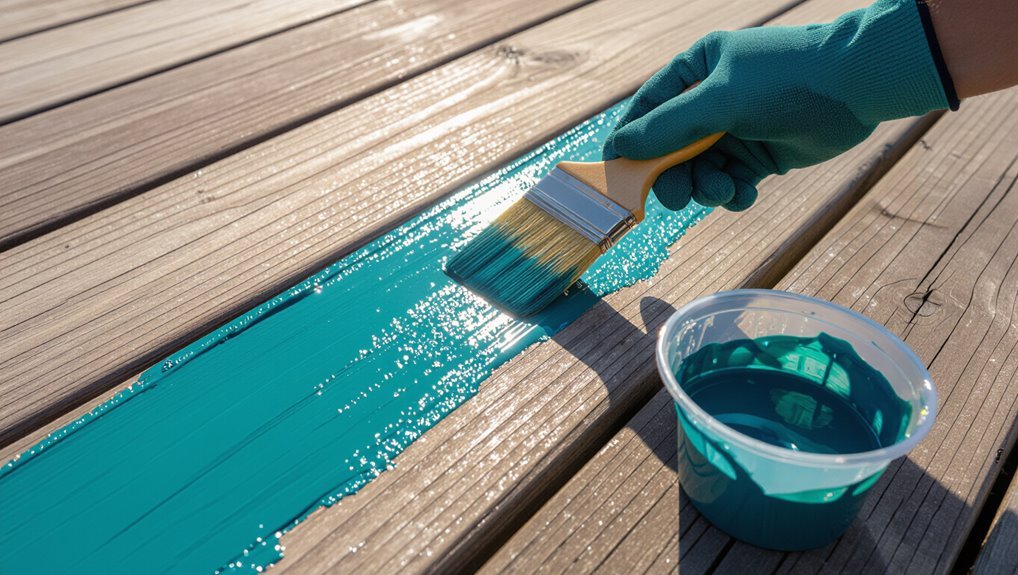
Wondering if tacky paint will dry faster in the sun?
You’ll notice sunlight effects can speed surface evaporation, but deeper curing depends on specific drying mechanisms like solvent loss or polymer crosslinking.
You’ll check paint type, thickness, and temperature—sun helps evaporation yet won’t complete chemical curing for all formulas.
Test a small patch and avoid high heat that traps solvents beneath a skin.
Quick Answer: When Sun Helps – and When It Won’t
Sunlight speeds evaporation, so you’ll often see tacky paint firm up faster in direct sun.
But strong heat can crust the surface while the underlying layer stays wet, trapping solvents.
And if humidity’s high, you’ll notice the whole drying process slows no matter how bright it is.
Sunlight Aids Evaporation
If you’ve got tacky paint on a warm, dry day, direct sunlight can speed evaporation by heating the surface and increasing airflow, but it won’t solve every problem—thick coats, high humidity, or slow-curing formulations will still stay gummy despite the sun.
- Check sunlight intensity.
- Thin layers dry faster.
- Consider paint composition.
- Avoid humid, stagnant air.
Heat Can Seal Surface
When heat from direct sun or warm air raises the paint’s surface temperature quickly, the outer layer can skin over while the underlying paint stays wet, so you’ll get a dry-feeling surface that still traps solvents beneath. You should watch for heat retention that keeps inner layers soft and monitor surface temperature to avoid sealing problems.
| Effect | Cause | Action |
|---|---|---|
| Skinning | rapid heating | cool shade |
| Trapping | heat retention | thin coats |
| Soft core | high surface temperature | ventilate |
| Cracking | uneven cure | wait |
| Blush | solvent build-up | air dry |
Humidity Slows Drying
Because humidity slows evaporation, even bright sun can’t always rescue tacky paint. You’ll notice drying stalls when the air can’t carry solvents away.
You should monitor dew point and avoid painting before humid evenings. Consider ventilation and dehumidifiers as practical humidity solutions.
- Check humidity effects forecast
- Paint during low humidity
- Use fans for airflow
- Employ dehumidifiers
How Paint Drying Actually Works: Evaporation vs. Chemical Curing
You’ll want to know whether your paint is drying by simple evaporation or by a chemical curing reaction, because that changes how tacky feel evolves.
Evaporation-based finishes lose solvents and can firm up on the surface in sun and heat, while chemically curing systems actually bond and harden through reactions that heat can speed up or disrupt.
Temperature, humidity, airflow, and the paint’s formulation all affect which process dominates and how long tackiness lasts.
Evaporation-Based Drying
If a paint feels tacky after application, it’s often not because the coating failed—it’s because the solvent or water in the formulation hasn’t finished evaporating.
You can influence evaporation rates by adjusting temperature, airflow, and humidity. Sun speeds surface drying but won’t fix trapped solvent.
Check these factors:
- Temperature
- Airflow
- Humidity
- Film thickness
Chemical Curing Process
Surface evaporation only tells part of the story; many paints solidify through chemical reactions that keep happening long after the surface feels dry.
You should know the chemical composition dictates curing pathways—oxidation, polymerization, or crosslinking—often accelerated by drying agents.
Those additives promote bond formation, not just solvent loss, so a tacky surface can mask ongoing internal reactions that finish only when curing chemistry runs to completion.
Factors Affecting Drying
Because paint drying blends simple solvent evaporation with often-complex chemical curing, understanding the factors that control each process helps you predict how quickly a finish will harden and when tackiness will disappear.
- Check paint types, paint compatibility, and surface preparation.
- Control environmental factors and seasonal considerations.
- Use proper application methods and drying techniques.
- Employ drying accelerators and problem solving strategies to optimize project timing.
Which Paints Dry Faster in Sun: Solvent vs. Water‑Based
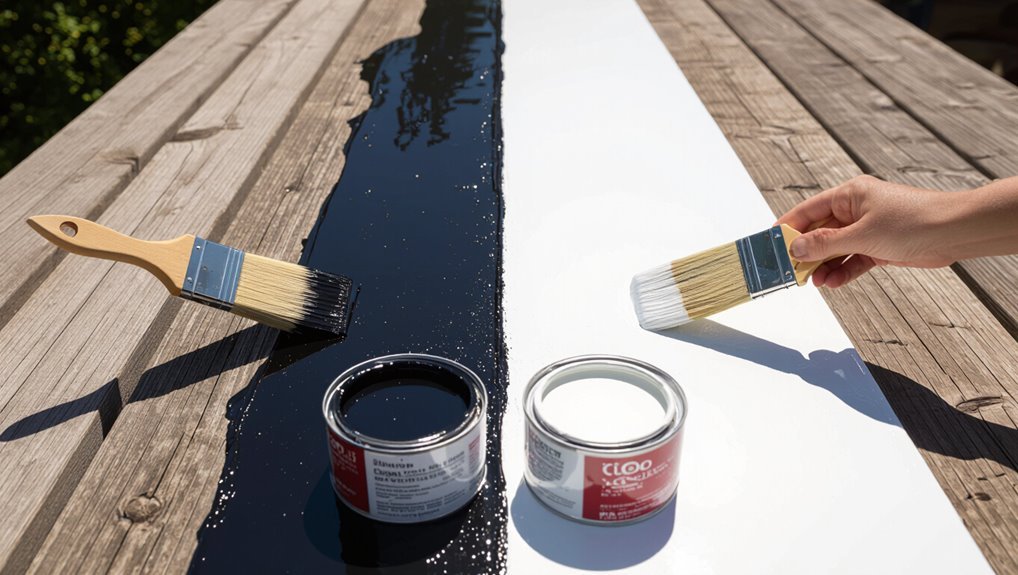
Curious which dries faster in the sun? You’ll see solvent-based paints often dry faster due to solvent evaporation, while water-based cures differently. This paint comparison helps decide based on tack, odor, and surface.
| Type | Drying trait | Notes |
|---|---|---|
| Solvent | Fast | Strong odor, solvent evaporation |
| Water | Moderate | Less odor, longer cure |
| Hybrid | Variable | Balanced traits |
Why Heat and Airflow Speed Solvent‑Based Paint Drying
You’ll notice solvent‑based paint dries faster in heat because higher temperatures speed up solvent evaporation.
Moving air then carries those evaporated solvents away, preventing reabsorption and exposing the film.
Heat also speeds the chemical curing reactions in many solvent systems, so the coating hardens quicker.
Heat Increases Evaporation Rate
When you put solvent‑based paint in sunlight, the heat speeds the solvent molecules’ escape from the film, so the paint dries faster; higher temperature raises molecular energy and vapor pressure, increasing evaporation rate.
You’ll notice improved paint performance but watch for too‑rapid solvent loss that can cause defects.
- Faster drying
- Higher vapor pressure
- Increased evaporation rate
- Potential surface defects
Airflow Removes Solvent
Because moving air sweeps solvent molecules away from the paint surface, airflow speeds drying by maintaining a concentration gradient that pulls more solvent out of the film.
You’ll see faster solvent evaporation when airflow dynamics keep fresh air moving across the coating, preventing vapor buildup.
Positioning the painted object in a breeze or using a fan helps sustain that gradient and accelerates drying without changing chemistry.
Temperature Accelerates Chemical Curing
Airflow helps carry away solvent vapors, but heat actually speeds the chemical steps that lock the coating into a hard film.
You’ll notice faster curing as molecular mobility rises with temperature, but temperature extremes can stall or degrade finishes.
Manage conditions to favor steady chemical reactions without overheating.
- Warmth increases reaction rates
- Air removes evaporated solvent
- Avoid high heat damage
- Moderate warmth is safest
Why Water‑Based Paint Can Stay Tacky Despite Heat
Even in hot, sunny conditions your water‑based paint can stay tacky because heat speeds surface evaporation while the underlying water and binders remain; the paint skins over, trapping moisture below and preventing full cure. You should check paint formulation, drying agents, water absorption and temperature fluctuations.
| Cause | Effect | Fix |
|---|---|---|
| Skinning | Trapped moisture | Stir/apply thinner |
| Poor binder | Tacky film | Recoat/reformulate |
How Humidity Keeps Tacky Paint From Drying in Sun
When humidity is high, you’ll notice paint stays tacky because the air is already full of moisture and won’t accept more from the coating.
That slows the necessary moisture exchange between the paint and the environment, so solvent and water can’t evaporate efficiently.
Even in direct sun, the limited evaporation keeps the surface soft and slow to cure.
High Humidity Effects
Although sunlight heats the paint film, high humidity slows evaporation by saturating the surrounding air with moisture, so solvents and water in the paint can’t escape as quickly.
You notice humidity effects create drying challenges: slower cure, tackiness, solvent retention, and risk of film defects.
- Slower cure
- Persistent tack
- Solvent retention
- Surface imperfections
Moisture Exchange Limits
Because humid air is already loaded with water vapor, it can’t take up much more from a drying paint film, so moisture exchange between the paint and environment slows dramatically.
You’ll notice tacky paint persists because the surface can’t reach a favorable moisture balance; even sunlight won’t fix poor drying conditions.
Improve ventilation or wait for lower humidity to restore evaporation.
How Film Thickness Prolongs Tackiness in Sunlight
If you spread paint too thickly, it’ll stay tacky longer under direct sun because the outer layer cures faster than the underlying film.
You’ll notice higher film density slows solvent escape, extending drying duration.
Consider these practical effects:
- Surface skin forms, trapping solvents.
- Middle layer stays soft longer.
- Heat speeds outer cure but not inner.
- Thicker coats need more time.
Which Paint Additives Change Sun‑Drying Behavior
Which additives speed up or slow down tackiness when paint bakes in the sun?
You’ll find paint additives and curing agents in paint formulation alter solvent evaporation and crosslinking under sun exposure. The choice affects drying techniques and application methods; environmental factors like heat and humidity interact with additives.
Proper surface preparation still matters.
Pick compatible additives to balance faster cure versus potential surface tackiness.
How Surface Contaminants Make Paint Sticky in Sun
When you paint over dust, oil, or old wax and then leave the work in hot sun, those contaminants interfere with solvent escape and prevent proper film formation, leaving the surface tacky.
You’ll see adhesion loss, slowed curing, and sticky patches because poor surface preparation lets residues disrupt paint application chemistry.
- Reduced adhesion
- Solvent trapping
- Surface migration
- Patchy film
Why Cold Nights Can Reverse Daytime Drying on Exteriors
Contaminants can leave a paint film thin and irregular, but temperature swings play a separate, powerful role: cold nights can actually pull back the progress your paint made during a hot afternoon.
You’ll see temperature drops slow the drying process, alter moisture levels and night effects that change paint behavior. Increased moisture retention in cooler surface conditions can rewet the film and undo daytime curing.
When Direct Sun Skins Paint but Leaves Interior Wet
If sunlight dries the outermost layer too quickly, you’ll get a firm skin that keeps solvents and water trapped underneath, preventing the interior of the film from curing properly.
Sunlight can form a hard skin that traps solvents, preventing the paint beneath from curing properly.
You should adjust application to avoid this mismatch between sunlight intensity and paint formulation.
- Move project to shaded area.
- Thin paint per instructions.
- Apply thinner coats.
- Allow longer flash times.
When UV Light Speeds Curing for Certain Coatings
Some specialty coatings use UV-curable chemistry that hardens when exposed to specific UV wavelengths, so you’ll see tacky films become solid quickly under the right light.
You should know sunlight provides some of those wavelengths but is weaker and less consistent than controlled artificial UV lamps.
Before relying on the sun, weigh limitations like depth of cure, temperature, and the coating’s specified UV spectrum.
UV-Curable Chemistry Basics
When UV light hits certain coatings, it triggers photoinitiators that rapidly start polymerization so the film hardens in seconds to minutes rather than hours.
You’ll learn UV exposure effects and how curing agents drive network formation.
Check these basics to decide if a coating suits your job:
- Photoinitiators start radicals or cations.
- Monomers oligomerize into a solid matrix.
- Additives control viscosity and penetration.
- Surface inhibition and oxygen sensitivity matter.
Sunlight Versus Artificial UV
You’ve seen how photoinitiators and resin chemistry determine cure speed; now consider how the light source itself changes that behavior.
You’ll note sunlight exposure offers broad-spectrum UV effects different from artificial lamps, so paint types and paint additives respond variably.
Match drying techniques, curing processes, surface preparation, and application methods to environmental factors and climate considerations to optimize results.
Limitations And Considerations
Although UV exposure can dramatically speed curing for certain coatings, it isn’t a cure-all—you’ll need to weigh material limits, surface conditions, and safety issues before relying on sunlight.
- Check paint types—UV cure works only for formulated coatings.
- Monitor drying conditions; heat vs UV differ.
- Avoid uneven exposure; shadows cause tacky spots.
- Protect skin and eyes; UV can harm and degrade nearby materials.
When UV Exposure Harms Paint Instead of Drying It
If you leave a tacky coat out in strong sunlight hoping to speed drying, UV rays can actually do more harm than good.
You’ll see UV effects that break down paint formulation, weaken paint adhesion, and interfere with curing agents.
Poor surface preparation or adverse environmental factors worsen tackiness.
For outdoor projects, evaluate drying conditions and product instructions before relying on sun exposure.
How Substrate (Wood, Metal, Drywall) Affects Drying Needs
When you’re choosing where to apply paint, the substrate—wood, metal, or drywall—directly shapes drying time and how tackiness behaves.
Consider:
- Wood: wood treatment and surface priming affect paint compatibility and drying techniques.
- Metal: metal preparation prevents adhesion failure; adjust application timing and layering.
- Drywall: drywall sealing controls moisture uptake.
- Always match paint application to environmental conditions and paint layering.
How Previous Coatings Change New Paint Drying in Sun
If you’re painting over an old finish, compatibility matters because an incompatible primer or paint can trap solvents and slow drying.
Residual solvents from the previous coating can re-soften the new layer when heated by sun, leaving it tacky longer.
Check and, if needed, strip or prime the surface so the sun can help—not hinder—drying.
Underlying Coating Compatibility
Because previous coatings form the foundation for new paint, their type and condition directly affect how tacky paint dries in the sun.
You’ll check underlying coatings and compatibility issues before painting so sunlight can aid curing rather than trap tackiness.
- Identify existing coating type.
- Test adhesion compatibility.
- Sand or prime incompatible surfaces.
- Use recommended topcoat systems.
Residual Solvent Effects
Though residual solvents in old coatings might be invisible, they’ll actively change how a new paint layer cures in direct sun.
You should expect trapped residual solvents to slow crosslinking, cause blistering, or reactivate under heat.
Faster solvent evaporation at the surface can mask deeper retention, so check substrate history, thin new coats, and allow extended drying time to avoid tacky failures.
Solvent Retention: How Long Solvents Stick Around and Why
When paint feels tacky in the sun, solvents can still be clinging to the film and slowing down full cure.
So you need to know how long they typically hang around and what controls their departure. You’ll track solvent evaporation and assess drying conditions; temperature, ventilation, film thickness, and solvent type set retention time.
- Temperature
- Ventilation
- Film thickness
- Solvent type
How to Tell If Paint Is Solvent‑Wet or Incompletely Cured
Solvent retention can leave a paint film tacky long after it looks dry, so you’ll want reliable signs to tell whether the surface is still solvent‑wet or has merely not fully cured.
Check gloss, smell, and flexibility: solvent‑wet feels sticky, emits solvent odor, and remains soft.
Cured but uncrosslinked films show reduced odor and firmer surface.
Consider paint types and drying techniques when evaluating.
Simple Tests to Check Paint Dryness Before You Touch It
Before you handle painted surfaces, you can do a couple quick checks to avoid smudges or ruined finishes.
Gently touch an inconspicuous spot to see if it feels tacky, then run a clean finger over to check for a sticky film.
Also compare the paint’s condition to the expected dry time window on the can so you know whether it’s likely cured or still needs more time.
Touch Test Gently
How can you tell if paint’s tacky without ruining the finish? Use a touch test with gentle pressure near an inconspicuous edge, not the centerpiece. Wait a few seconds to sense resistance.
- Light fingertip tap
- Press at corner briefly
- Lift immediately if it feels sticky
- Repeat after 10–15 minutes
Stickiness Film Check
If the fingertip tap feels inconclusive, try a non-contact film check to confirm tackiness without risking the finish.
Hold a clean plastic wrap or wax paper just above the surface; if it pulls film fibers or shows indenting without touching, you’ve detected tackiness.
This helps diagnose stickiness causes and assess drying challenges so you won’t damage a still-curing coat.
Dry Time Window
When you’re ready to touch up or move a painted piece, use a few quick, low-risk checks during the dry time window to confirm surface readiness without harming the finish.
Follow simple tests that consider drying techniques, outdoor conditions, paint types, weather influences, application methods, environmental factors, surface preparation, and drying aids:
- Light fingertip press.
- Tape lift test.
- Smell check.
- Edge inspection.
Immediate Fixes: Speed Drying for Small Exterior Repairs
Because you don’t always have time to wait, quick-drying techniques can save a small exterior repair—especially on touch-ups or chipped trim. Use sun exposure wisely, choose paint types and painting techniques suited for outdoor application, and adapt drying methods to weather conditions to overcome drying challenges with quick fixes.
| Method | Benefit |
|---|---|
| Heat lamp | Speeds surface cure |
| Fan | Improves airflow |
| Thin coats | Reduces tack |
| Fast-dry paint | Shortens wait time |
Bring Painted Pieces Indoors to Finish Drying Faster
Shifting small painted pieces indoors can speed through tackiness by giving you a controlled, dust-free environment where temperature and airflow stay steady.
Shifting small painted pieces indoors shortens tacky times by offering steady temperature, airflow, and dust-free drying.
You’ll monitor progress, prevent debris, and avoid sun-related fading while keeping items in proper paint storage.
Follow steps to finish drying:
- Choose a ventilated room.
- Place pieces on clean racks.
- Keep temperature consistent.
- Avoid cramped stacking.
Use Heat Lamps and Fans Safely to Speed Drying
You can speed tacky paint drying with heat lamps and fans, but keep the lamp at a safe distance to avoid scorching the surface.
Position fans so air flows evenly across the piece without blowing dust onto the paint.
Keep an eye on temperature levels to prevent overheating and adjust lamp height or fan speed as needed.
Safe Lamp Distance
When speeding paint drying with heat lamps and fans, keep a safe distance so you don’t overheat the surface or create a fire hazard.
You’ll follow lamp safety and distance guidelines: position lamps to warm evenly, monitor temperature, and never leave unattended.
- Keep 12–24 inches for low-heat bulbs
- 24–36 inches for higher-wattage lamps
- Use a thermometer
- Maintain clearance from flammable materials
Proper Fan Placement
Although heat lamps provide warmth, placing fans correctly is what really moves moisture away from tacky paint; you should test fan orientation to guide airflow patterns across surfaces, keeping fans angled to sweep vapor toward exhaust and away from painted areas.
| Fan Position | Effect |
|---|---|
| Angled low | Gentle sweep |
| Angled high | Top-layer drying |
| Side-by-side | Crossflow |
Monitor Temperature Levels
Because excessive heat can blister or yellow paint, monitor temperature and humidity closely while using heat lamps and fans to speed drying.
You’ll prevent damage by practicing careful temperature monitoring and watching for heat effects.
- Use a thermometer and hygrometer.
- Keep lamps 2–3 feet away.
- Run fans for gentle airflow.
- Pause heat if paint softens.
Reduce Humidity So Sun Exposure Actually Helps
If you want sun to speed up tacky paint, you’ve got to lower the humidity first — high moisture in the air prevents solvents and water from evaporating, so the sun alone won’t fix a sticky finish.
You can use dehumidifiers, fans, or choose a drier time of day to improve paint application and drying techniques, letting warmth actually remove moisture instead of trapping it.
When Thinning Paint Reduces Tackiness : and When Not To
You can thin paint to reduce tackiness when it’s too thick or solvent-rich coatings are slowing evaporation.
But thinning can also ruin finish and adhesion if you add the wrong thinner or too much.
You’ll learn when thinning helps, when it hurts, and the best thinning practices—like matching solvent type, measuring carefully, and testing a small patch.
Follow those rules and you’ll avoid common mistakes that leave paint gummy or flat.
When Thinning Helps
When a paint feels tacky, thinning can sometimes be the quick fix that gets it back to a proper flow and tack level—especially for oil-based enamels or latex that’s been slightly over-mixed or applied too thick.
Use safe thinning techniques to restore paint consistency without over-diluting. Consider:
- Add small solvent doses.
- Stir gently.
- Test spray or brush.
- Wait between coats.
When Thinning Hurts
Thinning can fix tacky paint, but it can also make problems worse if you don’t match the thinner to the paint type or go too far.
You risk weakening the binder, causing runs, or preventing film formation.
Don’t assume thinning paint always helps; assess product labels and environmental conditions first.
Use proven drying techniques before drastic dilution to avoid harming finish and adhesion.
Best Thinning Practices
If your paint feels tacky and you’ve ruled out temperature, humidity, and incomplete curing, adding the right thinner in small doses can often restore flow and speed drying without wrecking the film.
- Test thinning techniques on a scrap to check paint consistency.
- Add 5–10% thinner, stir, retest.
- Avoid over-thinning; film integrity suffers.
- Use manufacturer-recommended solvents for best results.
How Over‑Application Causes Long Tackiness and How to Avoid It
Because too much paint traps solvents and slows curing, over‑applying leaves a thick, tacky film that can stay soft for days or weeks. You should recognize over application effects and control paint thickness by applying thinner coats, allowing full flash time, and improving airflow.
| Problem | Fix |
|---|---|
| Tacky surface | Thin coats |
| Slow cure | Better ventilation |
Film Thickness Guidelines to Prevent Sticky Finishes
A single properly thin coat is often all you need to avoid tackiness.
Control film thickness for uniform drying and follow good application techniques to prevent runs and puddles. Measure wet and dry mils if you can.
- Use recommended tip size.
- Keep steady speed.
- Thin per label.
- Allow proper flash time.
How to Detect and Remove Surface Contaminants Before Painting
Before you start laying down paint, inspect the surface for dust, oils, waxes, and old residues that can prevent adhesion; use a lint-free cloth, solvent wipe, or a lift test to spot trouble. Your pre painting inspection focuses on contaminant identification, cleaning techniques, surface preparation, paint compatibility, application methods, environmental factors, and ensuring surface adhesion.
| Contaminant | Test | Remedy |
|---|---|---|
| Dust | Visual | Tacky cloth |
| Oil | Solvent wipe | Degreaser |
| Wax | Lift test | Solvent clean |
| Residue | Scrape | Sand/clean |
| Moisture | Sensor | Dry/ventilate |
Fix Tacky Paint on Wood: Do’s and Don’ts
Tacky paint on wood can stall your project and invite dust, so act quickly to diagnose the cause and choose the right fix.
Assess tacky paint causes, then try effective drying methods safely. Don’t sand prematurely; don’t add heat directly.
- Improve ventilation and reduce humidity
- Use fan-assisted airflow
- Apply a thin accelerator per directions
- Test a small area before full treatment
Fix Tacky Paint on Metal: Do’s and Don’ts
First, check whether your metal paint is oil- or water-based so you know how it cures and what solvents are safe.
If it’s tacky, don’t blast it with direct sun or high heat; instead, use gentle warmth and good ventilation to speed drying without causing blistering or runs.
When in doubt, test a small inconspicuous spot and follow the manufacturer’s recommended drying conditions.
Assess Paint Type
Because different paints react to heat and solvents in different ways, you should identify the paint type before attempting any fixes on metal surfaces.
Check labels and test small areas to learn paint chemistry and appropriate drying techniques.
Then:
- Determine oil vs. water-based.
- Note manufacturer recommendations.
- Perform a solvent spot test.
- Record ambient conditions and surface prep.
Safe Drying Methods
Now that you’ve identified the paint type and noted the manufacturer’s guidance, focus on safe drying methods that won’t damage the metal or the finish.
Use safe drying techniques: shaded, well-ventilated areas, gentle airflow, and controlled temperature.
Avoid direct intense sun, heat guns, or ovens.
For stubborn tackiness, try alternative drying methods like low-heat fans or following recommended solvent blending.
Fix Tacky Paint on Drywall: Do’s and Don’ts
When paint feels tacky on drywall, you’ll want to act quickly to avoid smudges, dust pickup, or finish problems; use proven tacky paint solutions and gentle drying techniques to fix it.
Don’t rush or overheat.
Avoid hasty fixes or high heat; let paint cure naturally for best finish and fewer problems
Do:
- Increase airflow with fans.
- Lower humidity with a dehumidifier.
- Lightly blot dust with a soft brush.
- Wait before touching; test a small area.
When and How to Recoat or Remove Tacky Layers Safely
If a paint layer stays tacky after reasonable drying attempts, you’ll need to decide whether to recoat or remove it based on cure level, adhesion, and contamination; testing a small area first prevents bigger problems.
Assess tackiness and smell, then choose paint removal techniques for contaminated or poorly bonded layers.
For salvageable surfaces, use careful recoating strategies: clean, feather edges, and apply compatible primers and thin finish coats.
How Long to Wait Before Sanding Tacky Paint (By Paint Type)
After you’ve determined whether a tacky layer can be salvaged or must be removed, you’ll need clear timing guidelines for sanding—waiting too long wastes time, while sanding too soon can gum up abrasives and ruin the finish.
- Latex: wait 24–48 hours; tacky paint causes delays in cure.
- Alkyd: 48–72 hours.
- Enamel: 72+ hours.
- Shellac: 12–24 hours; use gentle sanding techniques.
Choose Paint Formulations That Dry Reliably in Your Climate
Because climate controls how fast solvents evaporate and resins cure, pick paint formulations that match your typical temperature, humidity, and ventilation so you don’t end up with persistent tackiness.
Use paint selection strategies that favor fast-setting chemistries in humid zones or slower-reacting systems in hot, arid areas.
Apply climate considerations: read technical data sheets, consult suppliers, and test small areas before full application.
How Accelerators and Additives Affect Drying and Durability
Once you’ve matched paint chemistry to your climate, consider how accelerators and additives will change both drying speed and long-term performance.
- Assess drying accelerators and curing agents by paint types to speed drying techniques.
- Match additives to environmental factors and weather conditions for consistent results.
- Adjust application methods and surface preparation to protect adhesion properties.
- Balance formulation strength with durability to avoid premature failure.
How Professionals Diagnose and Fix Tacky Paint on Jobsites
When you spot tacky paint on a jobsite, pros start by isolating variables—surface prep, ambient conditions, and product choice—to pinpoint the cause quickly.
You’ll see them test moisture, temperature, and film thickness, then select corrective tacky paint solutions: remove contaminated coats, improve ventilation, or apply compatible accelerators.
They monitor curing and adjust drying techniques to guarantee a durable, uniform finish.
Common DIY Mistakes That Keep Paint Tacky in the Sun
If you rush through prep or paint in the heat without adjusting technique, you’ll often end up with tacky, uneven surfaces that never fully cure.
You’ll want to spot common DIY tacky paint causes and adopt effective drying techniques to fix issues quickly.
- Painting in direct midday sun
- Applying thick coats
- Skipping primer or surface prep
- Ignoring humidity and ventilation
When Tacky Paint Signals a Product Defect or Warranty Issue
You’ve covered the common DIY mistakes that cause tacky paint, but sometimes the problem isn’t your technique — it’s the product. If tackiness persists despite proper application, document issues, photos, and batch numbers. Poor paint quality or product defects may justify warranty claims; rule out application errors first, then contact the manufacturer for guidance and resolution.
| Step | Evidence | Action |
|---|---|---|
| 1 | Photos | Document |
| 2 | Batch | Contact |
Plan Projects Around Seasonal Weather to Avoid Sticky Finishes
Because temperature and humidity directly affect drying times, plan your painting projects around the season so you’re not left with sticky finishes.
You should use seasonal planning and weather considerations to choose paint compatibility, adjust project timing, and apply proper drying techniques considering environmental factors and outdoor conditions to minimize climate impact.
- Check forecast
- Pick compatible paint
- Time work midday
- Use ventilation
Tools and Gadgets to Diagnose and Resolve Tackiness
When a paint job stays tacky, the right tools help you diagnose the cause and fix it fast. You’ll use diagnostic tools to assess tacky paint, check environmental factors, and evaluate surface preparation.
Follow troubleshooting methods to test drying techniques, trial paint additives, and confirm curing agents’ effectiveness. These gadgets guide repairs so you can target fixes precisely without guessing.
Safety Tips for Using Heat, Fans, or Solvents to Dry Paint
If paint’s staying tacky and you decide to speed drying with heat, fans, or solvents, follow safety rules to protect yourself and your finish.
Use safety precautions and choose effective methods to avoid fire, fumes, or finish damage.
Take precautions and use safe, effective drying methods to prevent fire, fumes, and damage to the finish.
Follow this checklist:
- Ventilate well and wear a respirator.
- Keep heat sources low and indirect.
- Test solvents on scrap.
- Store materials away from ignition.
Quick Troubleshooting Checklist for Tacky Paint in Sunlight
1 clear checklist can help you quickly diagnose and fix tacky paint that’s been left in direct sun: check temperature and humidity, confirm the paint type and layer thickness, look for contamination or improper curing, and rule out surface or application errors before applying remedies.
| Issue | Quick Check |
|---|---|
| Temperature | Is it >90°F? |
| Humidity | Is RH high? |
| Thickness | Too many coats? |
| Contamination | Oils/dust present? |
| Curing | Is solvent trapped? |
Frequently Asked Questions
Can Paint Regain Tackiness Months After Initially Drying in Sun?
Yes — you can see paint regain tackiness months later if tackiness duration was shortened by incomplete cure; moisture impact, temperature swings, or contaminants can re-plasticize or attract solvents, so re-tackiness may recur and need remediation.
Do Pigments or Colorants Affect Sun‑Drying and Tackiness?
Like a clockwork beat, you’ll find pigment types and colorant effects influence drying conditions and tackiness: heavier pigments and certain colorants slow solvent escape, so you’ll adjust paint formulation and curing time to avoid persistent tackiness.
Can Additives That Improve Adhesion Increase Long‑Term Tackiness?
Yes — adhesion additives can increase long-term tackiness. You’ll find some additives boost bonding but retain soft, sticky polymers; over time they can trap solvents or absorb moisture, so long term effects often include persistent tack if not properly formulated.
Will Sun Exposure Fade or Alter Paint Gloss Before It Fully Cures?
“Don’t count your chickens before they hatch.” You might see UV degradation and gloss alteration before full cure, especially in intense sun; it’ll fade unevenly and feel tacky longer, so protect and avoid direct sunlight.
How Does Paint Behave When Applied Over Oil Stains or Waxed Surfaces?
Paint over oil stains or waxed surfaces won’t adhere well; you’ll need oil stain removal and thorough wax surface preparation. You should degrease, sand, and use a suitable primer so paint bonds instead of lifting, blistering, or peeling.
Conclusion
Think of sun and breeze as helpful but not magical: they’ll dry solvent or water‑thin paint that’s only surface‑tacky, but they won’t finish chemical cures or fix over‑thick, under‑mixed, or humidity‑stalled finishes. You can coax paint with warmth, airflow, or a solvent wipe, yet stubborn stickiness often needs proper prep, thinner, or recoating. Plan projects like a gardener times planting—use the right conditions, tools, and patience so your paint can finally set and bloom.
