
Who Painted Ceiling of Sistine Chapel: History and Artist Explained
You’re looking at Michelangelo Buonarroti’s work: he painted the Sistine Chapel ceiling between 1508 and 1512, mostly alone on scaffolding, transforming papal imagery with dramatic, sculptural frescoes that define the High Renaissance. Trained as a sculptor in Florence and chosen by Pope Julius II, he negotiated creative control and tackled huge fresco techniques, anatomical figures, and narrative scenes from Genesis. Keep going and you’ll uncover his methods, iconography, and the ceiling’s lasting impact.
Who Painted the Sistine Chapel Ceiling?
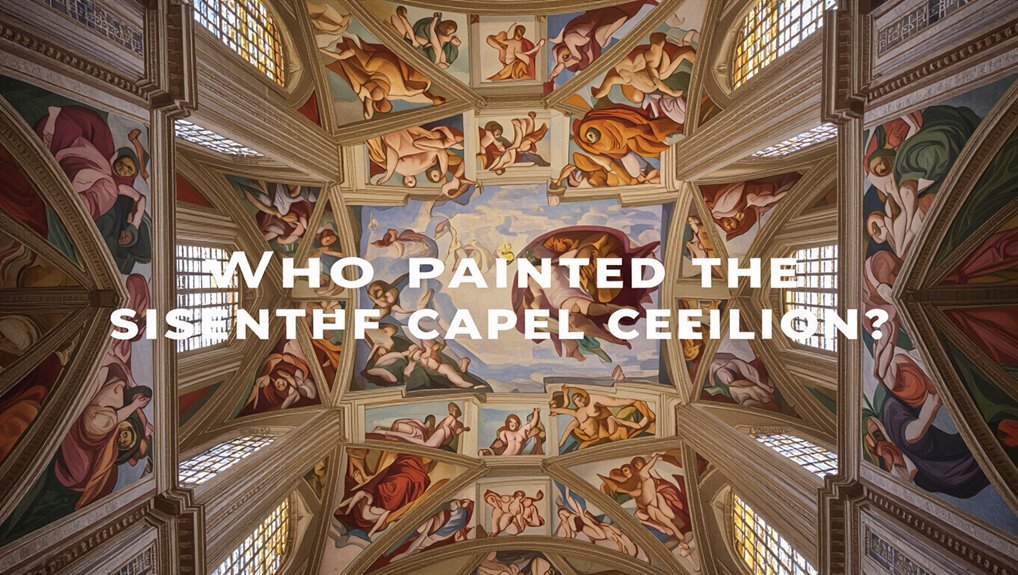
Although many artists worked in the Sistine Chapel over centuries, Michelangelo Buonarroti painted the famous ceiling between 1508 and 1512. He tackled the huge frescoes mostly alone, laying on scaffolding to create scenes from Genesis and dozens of figures that still define the High Renaissance.
You’ll see how his sculptural training and study of classical models shaped composition and artistic influences that guided form, gesture, and monumental drama.
Quick Summary: Michelangelo and the Ceiling in 150 Words
Michelangelo painted the Sistine Chapel ceiling between 1508 and 1512, working mostly alone on scaffolding to transform a vast, curved surface into a narrative cycle of Genesis scenes, prophets, sibyls, and hundreds of expressive figures that fused sculptural form with painterly drama. You’ll grasp Michelangelo’s techniques, artistic influences, and the work’s scale quickly.
| Theme | Feature | Impact |
|---|---|---|
| Genesis | Fresco scenes | Dramatic storytelling |
| Figures | Sculptural modeling | Monumental presence |
Who Was Michelangelo Buonarroti?
You’ll meet Michelangelo Buonarroti as a determined Florentine who trained in sculpting and painting from a young age.
You’ll see how his bold, anatomical style reshaped Renaissance art and influenced generations after him.
Keep an eye on how his training and techniques connect directly to the powerful legacy of the Sistine Chapel ceiling.
Early Life And Training
A Florentine by birth and a rebel by nature, Michelangelo Buonarroti rose from modest origins to become one of the Renaissance’s defining artists through relentless study and apprenticeship.
You’ll follow his early life and training, noting artistic influences and formative experiences:
- Family background and apprenticeship.
- Study under Ghirlandaio and Medici circle.
- Sculptural practice shaping his discipline.
Artistic Style And Legacy
Leaving his apprenticeship and sculptural studies behind, you can see how that rigorous discipline shaped both his technique and his outlook on art.
You recognize Michelangelo’s bold forms, anatomical precision, and dramatic composition as deliberate choices.
His artistic influence reshaped Renaissance ideals, and his legacy impact reverberates in painting, sculpture, and architecture, guiding artists who pursue power, emotion, and monumental scale.
How Michelangelo Got Pope Julius II’s Commission
You’ve just seen Michelangelo’s early reputation in Florence, which set the stage for wider recognition.
Now you’ll look at how papal politics and patronage brought him to Rome and into Pope Julius II’s orbit.
Finally, you’ll examine the negotiations and contract terms that sealed the commission.
Early Reputation In Florence
Although he was still in his twenties, Michelangelo had already built a fierce reputation in Florence for sculpture and forthright independence. That reputation is what first carried his work beyond the city’s workshops.
You see how Florentine Influence and Artistic Networks mattered:
- Patrons noticed his bold marble work.
- Fellows spread his name across courts.
- Commissions followed, leading toward Rome.
Papal Politics And Patronage
When Pope Julius II decided to reassert papal splendor, he looked beyond mere sculpture and tapped into Rome’s rising artistic talent—Michelangelo’s Florentine reputation made him a natural choice. You see papal influence and artistic patronage merge as Julius sought prestige; you get drawn into politics, family ties, and public image shaping the commission.
| Factor | Role | Outcome |
|---|---|---|
| Reputation | Key | Selection |
| Politics | Driving | Favor |
| Patronage | Strategic | Legacy |
Negotiation And Contract Terms
Because Julius II wanted a statement as much as a masterpiece, negotiations with Michelangelo combined high art with hard bargaining; the artist didn’t simply accept the call, he maneuvered for terms that protected his autonomy, schedule, and payment.
- You see contract negotiations shaping scope.
- You note deadlines and fees in artistic agreements.
- You recognize clauses guarding creative control and materials.
Why the Pope Hired a Sculptor
Since sculptors were prized for their mastery of the human form, Pope Julius II turned to Michelangelo—primarily a sculptor—to bring unparalleled anatomical realism and dramatic power to the Sistine Chapel ceiling.
You see Papal patronage combined with Artistic rivalry: the pope wanted a bold statement, and you can sense why he trusted a sculptor’s command of form and emotion to redefine sacred painting.
Project Timeline: 1508–1512, Key Dates
You’ll start by looking at how the commission was arranged and the preparations that set the stage in 1508.
Then you’ll follow the major painting phases as Michelangelo worked across scaffolding and seasons.
Finally, you’ll examine the 1512 completion and the immediate aftermath, including reactions and legacy.
Commissioning And Preparations
When Pope Julius II tapped Michelangelo in 1508 to repaint the Sistine Chapel ceiling, he set in motion a tightly scheduled, politically charged project that would run through 1512.
You’ll learn the artistic vision and historical context shaping preparations.
Key steps you should note:
- Contract negotiations and papal directives
- Scaffold design and material sourcing
- Workshop assembly and team selection
Major Painting Phases
Although the work stretched over four intense years, Michelangelo and his assistants broke the ceiling project into clear, sequential phases that you can trace by date: you follow major themes and evolving artistic techniques across preparatory cartoons, underpainting, fresco execution, detailing, and final varnish-like touchups.
| Phase | Date |
|---|---|
| Preparatory cartoons | 1508 |
| Underpainting | 1509 |
| Fresco execution | 1510 |
| Detailing | 1511 |
| Final touches | 1512 |
Completion And Aftermath
By the time Michelangelo hoisted down his brushes in 1512, the Sistine Chapel ceiling had moved from concept sketches to a completed visual scripture that reshaped papal imagery and Renaissance art.
You get Completion insights and Aftermath reflections in a tight timeline:
- 1508: commission begins
- 1510: major frescoes finished
- 1512: public revelation, lasting influence
How the Ceiling Is Laid Out: Program and Layout
Because Michelangelo had to work within a fixed architectural scheme and a specific commission, he designed the ceiling as an integrated narrative program that organizes biblical scenes, prophets, sibyls, and decorative figures into a coherent visual theology.
You’ll notice the layout significance: spatial zones guide your gaze, while thematic organization links Old scripture prophecy, pagan wisdom, and divine order so you read the ceiling like a unified argument.
What Scenes Michelangelo Painted
Now you’ll look at the main pictorial groups Michelangelo painted: the sequence of Creation scenes at the center, the powerful Prophets and Sibyls along the sides, and the Ancestors with their related episodes.
You’ll see how the Creation scenes form a narrative spine, while the Prophets and Sibyls announce and interpret it.
You’ll also note the Ancestors and episodes that link biblical lineage to the greater story.
Creation Scenes Sequence
The Creation scenes on the Sistine Chapel ceiling form a clear visual sequence that traces Genesis from the separation of light to the creation of Eve and the dramatic Fall. Michelangelo painted nine central panels to narrate that story, each packed with dynamic figures and theological intent.
You’ll notice creation themes and artistic influences guiding form and motion.
- God separates light and dark
- Creation of Adam
- Eve’s creation and the Fall
Prophets And Sibyls
After tracing the Creation panels and the Fall, your eye is drawn outward to the larger framework Michelangelo painted: a procession of prophets and sibyls that frame the central narrative.
You’ll see each figure positioned in niches, their gestures and gazes conveying prophets’ significance while the sibyls’ interpretations suggest pagan anticipation of Christ.
You’re invited to read prophecy and prophecy’s echo visually.
Ancestors And Episodes
When you move from the prophets and sibyls toward the chapel’s lower registers, Michelangelo shifts from prophecy to genealogy, painting a series of Ancestors and Episodes that trace Christ’s human lineage through dramatic, intimate scenes.
Each panel pairs a key ancestor with a brief narrative moment—betrothals, births, betrayals—that links Israel’s history to the promise fulfilled above.
- Jacob’s struggles
- David’s lineage
- Mary’s ancestry
You’ll notice artistic influences in poses and color, and familial connections emphasize continuity, humanizing salvation.
The Central Genesis Panels, Panel by Panel
Imagine standing beneath Michelangelo’s centerpiece and tracing each scene of Genesis from left to right; you’ll find nine panels that compress creation, fall, and promise into a dramatic visual sequence.
You’ll note central themes—divine order, human frailty, and redemption—rendered with raw sculptural force.
Each panel shows artistic inspiration through gesture, light, and compressed narrative, guiding your eye across unfolding drama.
The Creation of Adam: Composition and Symbolism
When you look at Adam’s outstretched hand, you’re seeing more than a relaxed pose—it’s a charged gesture that suggests potential, reception, and the threshold of life.
The near-touch with God’s finger frames a moment of contact that links the divine will to human existence.
We’ll examine how that gesture and the composition as a whole create a visual metaphor for the divine-human connection.
Adam’s Gesture Meaning
Although the simple touch between God and Adam looks effortless, Adam’s outstretched hand—and especially the relaxed fingertip—carries the painting’s central emotional and theological weight.
You read Adam’s Gesture as deliberate, inviting interpretation.
Consider these points:
- vulnerability: awaiting divine spark
- human potential: poised but passive
- relational pause: tension before motion
This Symbolic Interpretation guides how you see human receptivity.
Divine-Human Connection
Building on Adam’s poised fingertip, the painting’s composition stages a profound dialogue between Creator and creature that you feel across the canvas.
You witness a charged pause: God’s reaching arm mirrors Adam’s slack one, linking divine spark and human potential.
Michelangelo uses spatial tension, color, and gesture as spiritual symbolism and artistic expression, inviting you to sense humanity’s origin and ongoing longing.
Major Prophets and Sibyls: Identities and Meanings
Think of the ceiling’s prophets and sibyls as a dialogue across time: each seated figure names a voice—Isaiah, Jeremiah, Ezekiel, Daniel, and the five classical sibyls—whose gestures and attributes signal specific messages about doom, hope, and redemption.
You’ll notice prophetic symbolism and varied artistic interpretations:
- Directional gestures indicating prophecy
- Attributes identifying each figure
- Emotional tones suggesting destiny
Painting on Scaffolding: Physical Challenges
When you look up at the Sistine Chapel ceiling, remember Michelangelo spent long hours lying on his back on a rudimentary scaffold, paint dripping above him and plaster drying beneath his brush.
You imagine cramped positions, neck strain and constant dust.
You’d need exceptional physical endurance and strict scaffolding safety to manage weight, tools and fumes.
His stamina and discipline kept work steady, day after day.
Fresco Technique Michelangelo Used and Innovations
Imagine mixing pigment into wet plaster while racing the clock: that’s fresco to sum up, and it’s the method Michelangelo used—mostly buon fresco, where pigments bond with fresh lime plaster so the color becomes part of the wall.
You’ll notice his innovations in scale and cartoon transfer. He also faced later fresco restoration and benefited from pigment analysis.
- Rapid giornata planning
- Layered sinopia sketches
- Bold chiaroscuro modeling
Materials and Pigments Michelangelo Used
Having wrestled with the hurry of giornata planning, layered sinopia, and bold chiaroscuro, you’ll find Michelangelo’s choices of materials determined how those techniques looked and lasted.
He favored lime plaster, earth and mineral pigment sources—ochres, azurite, malachite—and organic binders from fresco secco touches.
Modern material analysis confirms layered applications, pigment mixing, and later restorations that altered original tonality and saturation.
Michelangelo’s Working Method: Assistants and Cartoons
Michelangelo relied on a small, trusted cohort of assistants and carefully prepared cartoons to translate his colossal visions onto the Sistine Chapel’s vaulted ceiling; you won’t find him delegating the most decisive brushstrokes, but he used aides for preparatory work, plastering, transferring full-scale drawings, and filling in less critical passages.
Michelangelo kept the masterstrokes for himself, yet relied on trusted assistants for plastering, cartoons transfer, and secondary painting.
You observe assistant collaboration within his artistic process via:
- Plastering and grounds
- Full-scale cartoons transfer
- Secondary painting tasks
How Sculptor Training Shaped His Painting
Sculptural training gave him a tactile sense of form that reshaped his painting: you can see how he carved volume into flesh with chisel-like clarity, modeling muscles and drapery as if they were marble under his hands.
You notice the sculptor influence in compositional solidity and in decisive painting techniques that build mass, light, and shadow, making figures feel weighty and monumentally present to you.
Health, Strain, and Personal Cost
Though he was celebrated for genius, you soon see the physical cost: years hunched on scaffolds left his neck, back, and eyes battered by constant strain.
You confront the artistic burnout and the relentless physical toll that followed, and you realize the personal price paid:
- chronic pain
- isolation
- diminished energy for other work
Artistic Controversies During and After the Project
When you step back from the frescoes, the genius is undeniable, but so are the disputes they sparked: patrons grumbled about nudity, theologians debated theology and decorum, and fellow artists criticized his departures from established methods.
You navigate artistic rivalries and intense aesthetic debates, witnessing how innovation provoked resistance, court politics shaped reception, and legacy was contested even as the masterpiece secured its place.
Contemporary Reactions: Praise, Criticism, Satire
You’ll see that the immediate public response to the Sistine Chapel ceiling mixed awe with bewilderment, as crowds and patrons flocked to judge Michelangelo’s bold choices.
Critics and supporters traded sharp opinions in letters and sermons, while satirists turned the controversy into caricature and verse.
Consider how those competing reactions shaped the work’s reputation then and now.
Immediate Public Response
How did people react the moment Michelangelo’s ceiling was revealed? You’d sense shifted public perception and immediate artistic reception: awe, debate, and curiosity.
You’d hear whispered praise, measured criticism from some clerics, and booming admiration from artists.
Numerical highlights:
- Overwhelming awe
- Vocal critics
- Growing influence on painters and public taste
Satirical And Critical Takes
Ever wondered how satire and sharp criticism greeted Michelangelo’s ceiling alongside the awe?
You’ll find satirical interpretations poked at his nudity and dramatic poses, turning sacred scenes into social commentary.
You’ll also encounter sharp critical responses from contemporaries who challenged his unconventional style and iconography.
Both satire and critique pushed discourse, forcing viewers to reassess religious art’s boundaries and artistic authority.
Restoration History: Cleaning, Findings, Debates
Although the Sistine Chapel ceiling had been cleaned and retouched several times since Michelangelo finished it, the dramatic 1980s–90s restoration changed how you see his colors, details, and brushwork.
You’ll confront restoration techniques, cleaning challenges, and controversies:
- Revealed brighter pigments and fine strokes.
- Raised debate over original varnish removal.
- Sparked revisions of attribution and methodology.
How the Ceiling Reshaped Western Art
The revelations from the restoration changed more than pigments; they altered how artists and scholars read Michelangelo’s methods and intentions, and that shift reshaped Western art.
You now trace dramatic compositional daring, anatomical precision, and bold color choices across centuries.
Its artistic impact pushed painters toward monumental narration and expressive realism, while its cultural significance redefined standards for public patronage and artistic ambition.
Iconography and Theological Messages Explained
You’ll notice Michelangelo arranged the Creation narrative imagery to guide your eye from the first spark of life to humanity’s fall and promise of redemption.
Pay attention to how prophetic figures and Church symbols are paired with those scenes to link Old scripture prophecy to New scripture fulfillment.
This iconographic program lets you read the ceiling as a theological argument as well as a visual masterpiece.
Creation Narrative Imagery
Anyone who studies the Sistine Chapel ceiling quickly notices how Michelangelo packs theological argument into every gesture and grouping: you read the Genesis scenes through creation symbolism and artistic interpretation, seeing God’s acts as theological statements.
You’ll notice:
- God’s dynamic poses declare authority.
- Light and bodies signal ordered creation.
- Sequential panels teach cosmic harmony and human origin.
Prophetic and Church Symbols
When you look beyond the Genesis narratives, Michelangelo fills the lunettes, prophets, and sibyls with symbols that link Old Scriptures prophecy to the authority and continuity of the Church—so read the seated prophets as prophetic witnesses whose gestures and attributes anticipate Christ and the papal office.
You’ll notice prophetic significance in scrolls, poses, and gaze; church symbolism ties prophecy to sacrament, authority, and apostolic succession.
Common Myths About the Ceiling Debunked
Curious which stories about the Sistine Chapel ceiling are true and which are just legend? You’ll want clarity: separate mythical interpretations from documented facts and spot historical inaccuracies.
Consider these common myths:
Consider these common myths and learn to separate legend from archival evidence.
- Michelangelo painted every detail alone.
- Hidden modern symbols prove secret messages.
- The ceiling was finished quickly without revisions.
You’ll learn to question sources and trust archival evidence.
How the Ceiling Connects to Michelangelo’s Other Works
Because Michelangelo treated sculpture and painting as part of the same creative language, you can trace themes, poses, and anatomical studies from the Sistine ceiling directly into his other major works.
You’ll notice Michelangelo’s influences in muscular forms, expressive hands, and compressed narrative. This artistic evolution links Pietà, David, and later frescoes, revealing a unified visual vocabulary that you can follow across his career.
What to Look For Visiting the Sistine Chapel
Start by lifting your eyes—there’s more to see than the famous Creation of Adam; look for the smaller narrative scenes, the prophets and sibyls, and the painted architectural frames that guide your view.
Lift your gaze—beyond the Creation of Adam lie prophets, sibyls, hidden narratives, and painted frames guiding your view.
Observe Sistine Chapel highlights and follow Visitor etiquette:
- Move slowly, respect silence.
- Note color shifts and restoration seams.
- Compare panels and iconography.
Reproductions, Photos, and Virtual Tours for Study
While you can’t fully replicate the scale and texture of Michelangelo’s frescoes, high-quality reproductions, photographs, and virtual tours let you study the Chapel’s details up close from anywhere.
You can compare reproductions techniques, examine high-resolution photos for brushwork and restoration traces, and use virtual tours to navigate ceiling scenes, pause on panels, and note composition, color shifts, and anatomical details for careful study.
Recommended Books and Academic Resources
To build a solid understanding of the Sistine Chapel ceiling, pick a mix of books that combine rigorous scholarship with high-quality images and clear analysis.
You’ll want resources offering scholarly articles and visual analysis alongside historical context.
Recommended reads:
- Extensive monograph with images
- Edited volume of essays and scholarly articles
- Catalogue raisonnè with detailed visual analysis and bibliography
Teaching Tips: Presenting the Ceiling in a Lesson or Tour
Now that you’ve gathered strong sources, use them to shape a clear, engaging presentation of the Sistine Chapel ceiling for your students or visitors.
Frame key themes, spotlight Michelangelo’s methods, and mix short talks with interactive activities.
Use visual aids—high-resolution images, diagrams, and floor plans—to guide focus.
Prompt questions, small group discussions, and quick sketches to deepen observation and retention.
Frequently Asked Questions
Did Michelangelo Paint Any Sections Beneath the Altar Area?
No; he didn’t paint sections beneath the altar. You’ll note altar decorations were handled by others, while Michelangelo’s techniques focused on ceiling and Last Judgment frescoes, using dynamic figures, foreshortening, and vigorous chiaroscuro.
Were Women Depicted Anywhere in the Ceiling Frescoes?
Yes — subtle female figures appear. Starting subtly, you’ll spot scarce saintly silhouettes and symbolic sibyls; female representation’s limited, leaving room for artistic interpretation, so you’ll interpret intention, iconography, and gendered gestures within Michelangelo’s monumental scheme.
How Long Did Preparatory Sketches for Individual Panels Survive?
Surviving preparatory sketches for individual panels lasted unevenly; you’ll find a few original cartoons and studies enduring centuries, revealing Michelangelo’s artistic process, though most fragile drawings were lost or only survive in copies and records.
Did Michelangelo Receive Any Payment Bonuses or Penalties?
Yes — you didn’t get bonuses, but payment disputes happened; Michelangelo refused compromises to protect his artistic integrity, enduring delayed or withheld funds and arguing with patrons rather than accepting financial incentives or penalties that would’ve altered his work.
Are There Hidden Signatures or Inscriptions by Michelangelo?
Yes — you’ll find no clear signature, but you’ll spot hidden symbolism and subtle inscriptions embedded in design; you’ll notice Michelangelo’s artistic techniques, like anatomical detail and brushwork, acting as his informal, unmistakable signature.
Conclusion
So you’re standing under Michelangelo’s sweaty, paint‑spattered encore and thinking, “Nice ceiling.” You’ll pretend the Pope hired a sculptor for drama, not duty, and nod at contorted prophets like they’re ancient influencers. You’ll tell students he grumbled, painted anyway, and turned divine commission into performance art. In other words, you’ll keep looking up—part awestruck pilgrim, part art historian with a wry smile—because miracles like this beg for gossip.
