
What Type of Paint for Interior Doors? Best Options Explained
You’ll want a durable, easy‑to‑clean paint that matches door material and traffic. For high‑use doors pick gloss or semi‑gloss; satin works for moderate use. Choose water‑based enamel or a water‑based alkyd for a hard, fast‑drying finish; standard latex is fine for less demanding doors. Prime according to substrate (MDF, solid wood, hollow core) and sand between thin coats to avoid brush marks. Keep going to get tips on prep, methods, and top product picks.
How to Pick Paint for Interior Doors (Quick Decision Matrix)
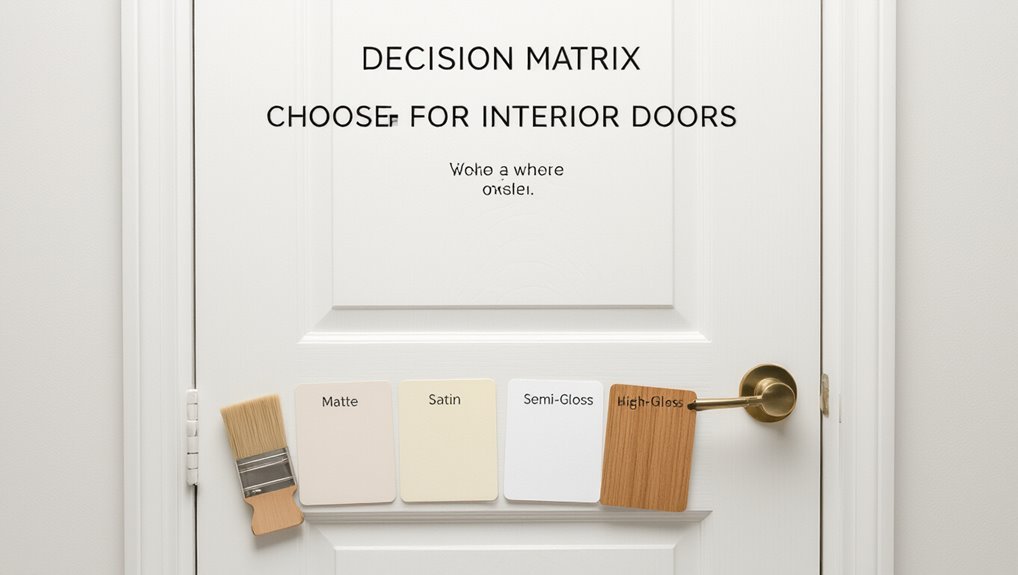
Trying to choose paint for an interior door fast? Use a simple matrix: match finish to traffic (gloss for high use, satin for moderate), weigh color psychology against room mood, and coordinate with door hardware tone.
Consider prep time, durability, and drying speed. Pick a compatible primer if switching substrates, then test a small swatch before committing to the whole door.
Best Paint Types for Interior Doors: Quick Summary
You’ll want to know which paint types work best for doors, from water-based acrylics to oil-based enamels.
Consider finish and sheen—semi-gloss and satin hide wear and clean up well—while matching your look.
Also think about application and durability: some formulas level better for a smooth finish, others resist scuffs longer.
Paint Type Overview
When choosing paint for interior doors, focus on finish and formula since they determine durability, appearance, and ease of cleaning.
You’ll pick between water- and oil-based formulas; each offers different paint characteristics affecting adhesion, cure time, and resilience.
Consider surface texture too—smooth doors favor different products than rough or grained ones.
Match formula to use, maintenance needs, and desired look.
Finish And Sheen
Pick a finish based on how much wear and cleaning your door will face: higher sheens (semi-gloss or gloss) stand up to scuffs and wipe-downs best, while satin or eggshell give a softer, more forgiving look that still cleans reasonably well.
Consider these finish options and sheen variations:
- Gloss — maximum durability
- Semi-gloss — durable, crisp
- Satin/Eggshell — balanced, subtle
Application And Durability
Sheen affects how a door handles wear, but the paint type determines how it applies and holds up over time, so think about both before you buy.
You’ll choose brushes, rollers, or sprayers based on paint viscosity and substrate; use proper prep and thin coats.
Check manufacturer recommendations and independent durability testing to guarantee your chosen system resists scuffs, chips, and frequent cleaning.
Why Door Material Matters: MDF vs Solid Wood vs Hollow Core
When you pick paint for an interior door, the material changes how you prep, which finishes will stick, and how long the result lasts.
MDF usually needs sealing and accepts semi-gloss or satin well. Solid wood may need stain or primer depending on grain. Hollow-core often benefits from a sturdier topcoat to resist chips.
Knowing these differences helps you choose the right products and techniques for a durable, attractive finish.
Surface Preparation Needs
Different door cores demand different prep—MDF, solid wood, and hollow-core each behave uniquely and need specific steps before paint.
You’ll use surface preparation techniques and essential tools tailored to each material. Follow this quick checklist:
- MDF: fill seams, sand sealing primer.
- Solid wood: strip, sand, wood filler.
- Hollow-core: clean, scuff, reinforce edges.
Paint Type Compatibility
Now that you’ve prepped the surface correctly, match your paint to the door core—MDF, solid wood, and hollow-core react differently to primers, sheen choices, and application methods.
For paint compatibility factors, consider MDF’s need for sealing, solid wood’s grain and tannin blocking, and hollow-core’s thin skins that favor light coats.
Your door material considerations determine primer type, paint base, and technique.
Durability And Finish
Because door cores respond very differently to wear and finish, you should choose paint and sheen with the material in mind:
MDF takes paint like a smooth canvas but needs sealing to avoid swelling and visible edges;
solid wood accepts stain or paint but can show grain, tannin bleed, and joint movement over time;
hollow-core doors will show brush marks and thin spots if you overload them, so thin, even coats and a durable topcoat matter most.
- Match sheen to use.
- Prioritize color selection for touch-ups.
- Follow simple maintenance tips: clean, repair chips, recoat.
Latex vs Oil-Based Paint for Interior Doors: Pros and Cons
When you’re choosing paint for interior doors, weighing latex against oil-based options comes down to a few key trade-offs: drying time, durability, ease of cleanup, and finish.
You’ll prefer latex for quicker drying, easy soap cleanup, and flexible coverage that suits varied surface textures; choose oil-based for superior paint longevity and a hard, smooth finish, but expect longer cure times and solvent cleanup.
Acrylic Enamel and Water‑Based Alkyd: Pro Options Explained
If you liked latex for its quick drying and easy cleanup but worried about long-term toughness, acrylic enamel and water-based alkyd give you the best of both worlds: they combine waterborne convenience with a tougher, more enamel-like finish that stands up to knocks and frequent cleaning.
- Acrylic advantages: faster cure, low VOC.
- Enamel durability: resists scuffs, cleans well.
- Best for high-traffic doors; sand between coats.
Best Paint Sheens for Interior Doors (Why Satin Often Wins)
Although you might be tempted by glossy showmanship or the forgiving nature of flat, satin often turns out to be the smartest choice for interior doors: you get subtle sheen benefits—moderate reflection hides imperfections better than high gloss but cleans easier than flat.
In sheen comparisons, satin balances durability, touch‑up ease, and a refined look, making it a practical, attractive default for most rooms.
When to Use High‑Gloss for Durability and Cleaning
Satin works for most interior doors, but you’ll want high‑gloss when durability and easy cleaning matter most.
You’ll choose it for areas that get handled or scuffed frequently because of high gloss advantages and superior cleaning ease.
Consider these situations:
Consider these spots where high‑gloss pays off: kids’ rooms, busy hallways, and messy kitchens.
- Kids’ rooms and play areas
- High‑traffic hallways and entry doors
- Kitchens and mudrooms where stains and spills occur
How Primer Affects Coverage, Adhesion, and Finish
Because primer creates the base layer that paint needs, it directly improves coverage, helps the topcoat stick, and evens out the finish so you’ll use less paint and get a smoother result.
You’ll notice primer impact on color uniformity and sealing porous surfaces.
Choose one with strong adhesion benefits to prevent peeling, reduce sanding, and guarantee a durable, professional-looking door surface.
Best Primers for MDF, Knot-Prone Wood, and Bare Wood
For MDF you’ll want a high-build or shellac-based primer to seal the porous surface and prevent swelling.
For knot-prone wood, use a knot-sealing primer or shellac primer to block sap and tannin bleed-through.
For bare wood, choose a stain-blocking, adhesion-promoting primer suited to the species before you paint.
Primer For MDF
When you’re working with MDF, knot-prone wood, or bare wood, choosing the right primer matters because these substrates absorb paint differently and can cause blotches, tannin bleed, or poor adhesion if left untreated.
You’ll want primers that highlight MDF benefits and guarantee proper primer application:
- Shellac-based for stain blocking
- Acrylate for adhesion on MDF
- Oil-based for bare wood sealing
Knot-Sealing Primers
Knot-sealing primers stop ugly resin and tannin stains from bleeding through your finish, so you’ll want one any time you’re priming knotty or raw wood and MDF that can leach color or sap.
Choose a dedicated knot sealing product to block sap, stabilize knots, and improve adhesion.
The primer benefits include preventing bleed-through, reducing stain migration, and creating a uniform base for topcoats.
Primer For Bare Wood
If you’ve sealed knots and blocked tannin, the next step is picking a primer made for bare wood, MDF, or knot-prone lumber—these primers will give you a stable, uniform base that prevents tannin bleed, hides grain irregularities, and helps topcoats stick evenly.
You’ll focus on bare wood preparation and careful primer application.
Choose:
- Shellac knot sealer
- Oil-based primer
- Acrylic bonding primer
Prep Steps That Prevent Brush Marks and Blotchiness
Start by sanding and cleaning the door thoroughly so paint can lay down smoothly without showing brush strokes or blotches.
Wipe dust, fill dents, and lightly sand between coats. Use even brush techniques, thin coats, and proper drying times to avoid lap marks.
Maintain consistent paint application direction and avoid overworking edges; you’ll get a uniform, professional finish.
Choose: Brush, Roller, or Spray for Door Painting
When you pick between a brush, roller, or sprayer, consider the door’s profile, the finish you want, and how much prep you’re willing to do; each method has clear trade-offs in speed, smoothness, and control.
You’ll choose based on panels, sheen, and mess tolerance.
- Brush: precise for edges, use proper brush techniques.
- Roller: smooth flat panels.
- Spray: fastest, with spray advantages for flawless coverage.
Drying Times and Realistic Recoating Windows
Although paint feels dry to the touch in a short time, actual curing and safe recoating windows depend on the paint type, temperature, humidity, and coat thickness.
You’ll find oil-based paints need longer drying times—often 8–24 hours—while water-based acrylics can allow recoating in 2–4 hours.
Reduce humidity, raise temperature, and apply thin coats to speed drying times and shorten recoating windows.
Picking Door Colors That Complement Trim and Décor
Now that you’ve considered drying and recoating windows, it’s time to pick door colors that work with your trim and décor.
You’ll aim for color harmony while using trim contrast to add definition.
Consider:
- Match undertones between wall and door.
- Use a darker door for contrast with light trim.
- Pick an accent hue that repeats elsewhere to unify the room.
Scuff Resistance and Easy Touch‑Up Techniques
For durable doors, choose high-hardness finishes like satin or semi-gloss that resist scuffs and clean up easily.
If a mark appears, you can usually buff it gently with a damp cloth and mild cleaner without damaging the finish.
For deeper scratches, keep a small jar of matching paint and a fine brush on hand for quick, precise touch-ups.
High-Hardness Finishes
When you need doors that stand up to daily knocks and dragging bags, choose a high-hardness finish that resists scuffs and wears well over time.
You’ll get high hardness durability and a glossy finish option for trim.
Consider:
- Catalyzed lacquer for extreme toughness.
- Two-component polyurethane for moisture resistance.
- Hard enamel for easy cleaning and long life.
Simple Touch-Up Steps
High-hardness finishes give doors long-lasting protection, but even the toughest coatings can pick up scuffs from daily use. You can keep them looking fresh with a few simple touch-up steps.
Wipe, sand lightly, and clean before applying matching paint. Use small brushes or touch-up pens for precise paint repairs.
Blend edges, allow full cure, and avoid heavy contact until fully set.
Budget Paints That Still Perform for Interior Doors
Although you’re on a tight budget, you can still get durable, attractive finishes for your interior doors by choosing paints that balance cost with performance.
Look for budget friendly options with good coverage and scrubbability; check a brief performance comparison before buying.
- Affordable latex semi-gloss
- Economy enamel for trim
- Fast-drying acrylic hybrid
When to DIY and When to Hire a Pro for Door Painting
Picking the right paint on a budget is only part of the equation; you also need to decide if you’re going to tackle the job yourself or bring in a pro.
Weigh DIY Considerations: time, tools, surface prep, and patience for smooth coats.
Choose professionals when doors need complex repairs, spray finishes, or quick turnaround.
Follow Professional Tips: check credentials and get clear estimates.
Common Problems and Fixes: Drips, Orange Peel, Lap Marks
You’ll want to spot and prevent drips by loading your brush or roller correctly and keeping thin, even coats.
If you get an orange peel texture, wet-sanding and a light recoat or switching to a smoother application method will usually fix it.
To eliminate lap marks, maintain a “wet edge” and work quickly enough that new paint blends into the previous strokes.
Drip Prevention Tips
When you’re aiming for a smooth, professional finish on interior doors, preventing drips and surface defects starts with the right prep, technique, and tools.
You’ll focus on drip control and proven paint techniques:
- Thin coats, longer drying between coats.
- Use high-quality angled brush or foam roller.
- Hold brush at consistent angle and avoid overloading.
Fixing Orange Peel
Once you’ve got drip control down, you’ll still sometimes see a textured, bumpy finish called orange peel—light sanding and careful recoating will smooth it out.
Start with fine grit, remove dust, then apply thin, even coats with proper thinning or tip size to avoid new texture issues.
Let each coat dry fully and inspect under good light before the next pass.
Eliminating Lap Marks
Start by spotting lap marks early—those dull, overlapping streaks that show where a wet edge dried before the adjacent area was applied—and plan your next steps before the finish fully cures.
You can fix them by adjusting brush technique and paint consistency.
Try:
- Thin coats, even strokes.
- Keep a wet edge, blend quickly.
- Light sanding, recoat when dry.
Top Paints and Primers by Door Type (Product Picks)
Choosing the right paint and primer depends on your door’s material and desired finish, so I’ll highlight top-rated products for common door types—solid wood, MDF, metal, and hollow-core—to help you get durable, attractive results with minimal fuss.
For solid wood: Benjamin Moore Advance + oil-based primer.
MDF: shellac primer + water-based enamel.
Metal: Rust-Oleum bonded primer + semi-gloss.
Hollow-core: Zinsser acrylic primer.
Consider door color trends and paint safety.
Quick Checklist: Paint, Primer, Sheen, and Method
Although you’ll want to match products to the door material, this quick checklist gives the exact paint, primer, sheen, and application method you need so you can finish doors faster and with fewer touch-ups.
Follow this concise plan:
- Use a bonding primer types: shellac or acrylic for glossy/laminate.
- Choose semi-gloss or satin.
- Prefer brush then roller for smooth paint application and fewer drips.
Frequently Asked Questions
Can I Paint Doors With Existing Wallpaper or Vinyl Covering?
Yes—you can paint doors with existing wallpaper or vinyl covering, but you’ll need prep. You should consider wallpaper effects and vinyl considerations: sand, prime with a bonding primer, patch edges, and use a flexible, durable paint suited for trim and doors.
How Do Humidity and Room Temperature Affect Door Paint Curing?
High humidity slows curing, causes longer tackiness and potential blushing; low humidity speeds drying but can cause cracking. You should control humidity levels and avoid temperature fluctuations to guarantee even film formation and proper paint hardness.
Is It Safe to Paint Doors in a Home With Lead-Based Paint?
You can’t safely paint over lead paint without precautions; you’ll need safety precautions like testing, encapsulation by specialized coatings, HEPA cleanup, and possibly hiring certified abatement professionals to prevent deadly dust exposure and legal issues.
Can I Paint Door Hardware Instead of Replacing It?
Yes — you can paint door hardware; think of it as armor refreshed. You’ll need thorough hardware preparation and choose compatible coatings so paint adhesion holds, and you’ll preserve function while upgrading appearance affordably.
How Long Before I Can Reopen Rooms After Painting Doors?
You can usually reopen rooms after 24–48 hours, but full curing can take up to a week; consider drying time for the paint and guarantee good room ventilation so odors dissipate and surfaces harden before heavy use.
Conclusion
You’ve got this—pick paint that fits your door material, sheen needs, and durability goals, and remember “measure twice, cut once”: spending time on prep saves headaches later. If you want durability, choose enamel or water‑based alkyd; for easy cleanup, go latex with the right primer. DIY small updates; hire pros for tricky panels or high‑end finishes. Follow the checklist, take your time, and enjoy the refreshed look your doors give your home.
