
Did Bob Ross Use Oil or Acrylic Paint? the Real Answer
Bob Ross used slow-drying oil paints, not acrylics, so if you want his look you’ll work in oils with a liquid medium that keeps paint workable on the canvas. Oils let you blend wet-on-wet, make soft gradients, and scrape texture with knives while teaching live. Acrylics dry too fast for his approach without additives. He also relied on specific brushes, titanium-white bases, and safety practices—keep going and you’ll learn how those choices shape technique and care.
Quick Answer: Bob Ross Used Oil Paint and a Slow Medium
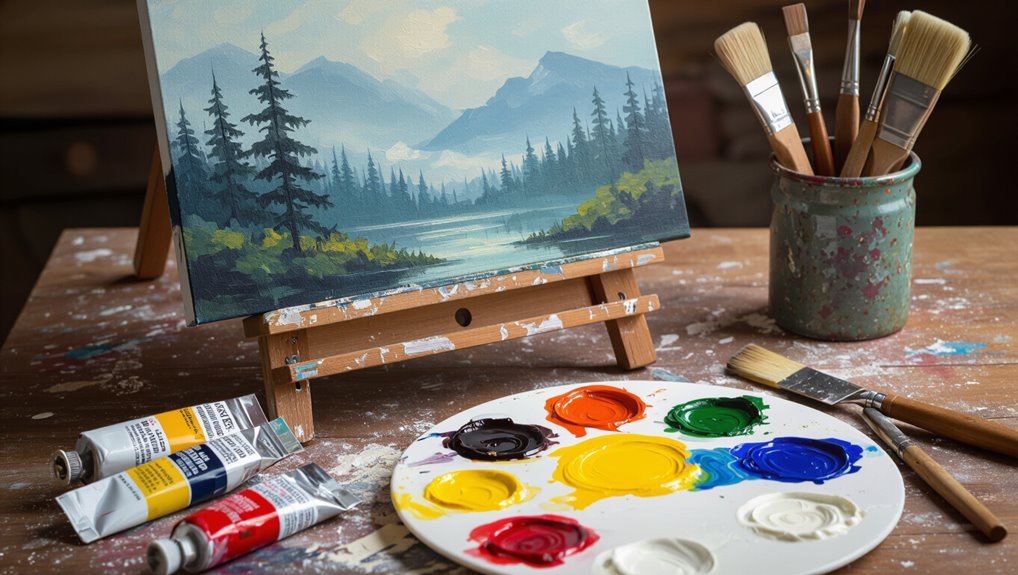
Although acrylics were gaining popularity in his lifetime, Bob Ross chose oil paints and a slow-drying medium so you could work wet-on-wet and blend directly on the canvas.
You’ll appreciate oil paint benefits like extended open time and smoother gradients, while recognizing acrylic paint advantages—fast drying and easy cleanup—yet his method relied on oils’ forgiving blending to achieve the soft landscapes you copy.
Why the Oil vs Acrylic Question Matters to Painters
You should care which medium you pick because oils and acrylics behave very differently as they dry, which affects how long you can work and blend.
Their color mixing and leveling also change how hues respond on the brush and canvas. Those differences drive the techniques and tools you’ll need, from solvents and brushes to drying retarders and varnishes.
Drying Time Differences
Because drying time changes how you plan a session and build layers, it’s one of the clearest reasons painters ask whether Bob Ross used oil or acrylic.
You’ll adjust drying techniques: oils let you blend longer, acrylics force faster layering or retarders.
That affects scheduling, varnishing, and cleanup, and it also ties into environmental impact via solvent use and waste management choices.
Color Mixing Behavior
When you’re mixing color, oil and acrylic behave very differently: oils stay wet longer and glide together, letting you push, pull, and subtly shift hues on the canvas, while acrylics skin over quickly and can either lock a color in place or require mediums to regain blendability.
You’ll weigh pigment properties, paint viscosity, medium characteristics and color theory to choose blending techniques, layering effects, texture variations, and artist preferences.
Technique And Tools Impact
Although the paint choice might seem like a simple material decision, it directly shapes the techniques, tools, and outcomes you’ll use and expect in a painting session.
You’ll adjust brush types, knives, and drying workflows based on medium. Oil encourages slow layering and blending; acrylic demands faster technique variations and thinner paint application.
Knowing those differences refines your approach and tool selection for each effect.
Wet-On-Wet Essentials: Materials, Timing, and Canvas Prep
Start with the right kit: Bob Ross’s wet-on-wet technique works best with tightly loaded titanium-white liquid base, fast-drying but buttery oil colors, a palette knife, fan and filbert brushes, and a pre-primed, slightly textured canvas.
- Canvas priming and surface choices set texture effects.
- Brush selection drives blending methods.
- Layering techniques control color retention.
- Timed medium application guarantees smooth layers.
How Ross’s Liquid Mediums (White/Black/Clear) Worked
1 key to Bob Ross’s wet-on-wet method was his trio of liquid mediums—white, black, and clear—which you’ll see he used to control paint consistency, flow, and tonal grounding.
You’ll add white to lighten and loosen, black to deepen and sap contrast, and clear to thin without color.
These liquid mediums let you predict medium impact and manipulate edges, texture, and blending.
Drying Time: Why Oils Suited Ross’s Live Demos
Having control over consistency with Ross’s white, black, and clear mediums also meant he could exploit oil paint’s slow drying for live demos.
By fine-tuning mediums, Ross used oil paint’s slow drying to perfect live demos without rushing the process
You’ll notice oil advantages in timing, allowing tweaks without rush during live demonstrations. This suited on-air pacing and teaching.
- Extended open time
- Controlled layering
- Fewer accidental skids
- Predictable finish
How Oil Paint’s Slow Drying Enables Wet Blending
Oil paint’s slow drying gives you time to blend colors right on the canvas, letting shifts stay soft and natural instead of locking in harsh edges. You can coax gradients, soften horizons, and rescue marks while the paint stays workable, showcasing wet blending and clear oil advantages for mood and depth.
| Emotion | Response |
|---|---|
| Calm | Smooth skies |
| Hope | Glowing light |
| Nostalgia | Soft edges |
| Awe | Lush depth |
How Oil and Acrylic Behave When You Wet-Blend
When you wet-blend oil, you get a long working time that lets you soften edges gradually and rework tones without the paint skinning over.
Acrylic gives you a much shorter window—edges can lock up quickly unless you slow drying with retarders or keep the surface misted.
Knowing these differences helps you pick tools and timing so your shifts look natural.
Wet-Blend Working Time
Because the drying rates differ so much, your wet-blending technique will change depending on which medium you use.
You’ll adjust wet blending and paint consistency to control working time: oils stay open longer; acrylics tack up fast. Strategies vary so you can blend smoothly without overworking.
- Thin vs. thick layers
- Mediums and retarders
- Brush load management
- Timing and sequencing
Edge Softening Behavior
Shifting from how long paint stays workable, you’ll notice oils and acrylics behave very differently at the edge while you wet-blend: oils stay slick and glide into soft, feathered edges, while acrylics tack up and resist, producing harder, more defined boundaries unless you act quickly or use additives.
You’ll adjust brush pressure, timing, and paint consistency for effective edge blending in each medium.
Solvents, Varnishes, and Ross’s Oil Workflow
Though his brushwork often looks effortless, Ross relied on a straightforward oil workflow that used specific solvents and varnishes to control drying, cleaning, and preservation.
Though his strokes appear effortless, Ross used a simple oil regimen of solvents and varnishes to control drying and preserve work
- You’ll learn solvent types for thinning and brush care.
- You’ll note how varnish applications protect finished pieces.
- You’ll follow a layering routine to manage drying times.
- You’ll balance medium, pigment, and varnish for longevity.
Cleanup, Ventilation, and Health for Ross-Style Oils
When you clean brushes and dispose of used solvent, do it into a sealed container and take it to a hazardous-waste drop-off rather than pouring it down the sink.
Keep your studio well ventilated with a fan and open windows or use a respirator when fumes are strong.
Wear nitrile gloves and wash skin promptly to protect your lungs and hands from prolonged oil and solvent exposure.
Proper Solvent Disposal
1 simple rule will keep your cleanup safe: treat solvents and oily rags as hazardous, not ordinary trash.
You should follow disposal regulations, use solvent recycling when possible, and adopt eco friendly practices to limit waste and risk.
Store used rags in sealed metal cans and label hazardous waste. Dispose through certified collection programs, never into drains or regular bins.
- Seal rags
- Label containers
- Recycle solvents
- Use certified disposal
Safe Studio Ventilation
Good ventilation keeps you healthy and your studio safe, so set up steady airflow and avoid relying on a single open window.
You should use mechanical ventilation systems or extractors to remove solvent fumes, position intake and exhaust to create crossflow, and monitor air quality with a basic detector.
Regular maintenance and filter changes keep the system effective and reduce lingering odors.
Skin And Respiratory Protection
Protect your skin and lungs when working with Ross-style oil techniques by wearing nitrile gloves, using a respirator rated for organic vapors and particulates, and cleaning brushes with low-toxicity solvents or soap and water to minimize solvent exposure.
- Use protective gear to prevent skin irritation.
- Control paint fumes and inhalation risks with ventilation.
- Follow safety regulations and health precautions.
- Maintain studio safety and proper cleanup.
Environmental and Disposal Differences: Oils vs Acrylics
When you compare oil and acrylic paints from an environmental and disposal standpoint, you’ll find they pose different risks and require different handling: oil paints often contain solvents and heavy metals that need careful disposal, while acrylics are water-based but contain plastics and additives that can persist in the environment.
You should follow eco friendly practices for paint disposal, segregate waste, and use licensed hazardous waste services.
Which Brands and Formulations Ross Favored : And Why
You’ll notice Ross leaned toward specific oil paint brands and formulations that suited his wet-on-wet method.
We’ll look at the particular manufacturers he used and why their pigments, consistency, and drying times matched his technique.
Understanding those choices helps you replicate his results more reliably.
Preferred Oil Paints
Although he praised several manufacturers over the years, Bob Ross consistently favored fast-drying, buttery oil paints that suited his wet-on-wet technique, typically using brands like Grumbacher and, later, specially formulated paints sold through his own line.
You’ll notice his oil painting choices supported brush techniques, color theory, blending techniques, medium choices, texture effects, and varied painting styles.
- Fast-drying consistency
- Buttery body
- Reliable pigments
- Mixing flexibility
Specific Brand Choices
1 clear reason Bob Ross stuck with particular paint lines was that they matched his wet-on-wet method’s demands for fast tack-up, buttery body, and dependable pigments. You’ll see his brand recommendations emphasized consistency over novelty; product comparisons favor oils formulated for blending and slow drying.
| Brand | Notable Trait |
|---|---|
| Ross’ | Slow-dry, buttery |
| Alternatives | Varying tack-up |
How Ross’s Limited Palette Supported His Method
Because Ross pared his palette down to a few reliable colors, he could work quickly and predictably, mixing consistent shades on the fly and teaching viewers the exact steps to recreate a scene.
By limiting his palette to trusted colors, he painted swiftly, mixed repeatable shades, and showed others how to follow step-by-step.
You gain palette harmony and color unity, simplifying choices so landscapes read coherently.
- Repeatable mixes
- Faster decisions
- Controlled contrast
- Teachability
Tools Ross Used That Depend on Oil Paint Behavior
When you watch Ross load a knife or pull a fan brush through wet paint, those gestures rely on oil’s slow drying, buttery body and ability to hold peaks and ridges.
You notice specific brush types—fan, filbert, liner—and knives that exploit oil’s tack and slip. His tools depend on predictable medium interactions, letting you scrape, blend, and texture without the fast skinning acrylics cause.
Did Bob Ross Ever Use Acrylics on TV?
Curious whether Bob Ross ever switched to acrylics on The Joy of Painting? You’d note he stuck with oil-based painting mediums for TV, favoring specific canvas types and blending styles.
Still, consider:
- Artist preferences rarely shifted on air.
- Demonstration methods emphasized oil timing.
- Acrylic techniques contrast in drying time.
- Color palettes and brushwork differed by medium.
Can Acrylics Mimic Bob Ross Oil Results?
Could acrylics achieve a Bob Ross–like finish? You can approximate his look with specific acrylic techniques, palette choices, and timing, but you’ll face blending challenges and faster drying. Practice knife work and wet-on-wet adaptations to get close; results differ in texture and sheen.
| Advantage | Limitation |
|---|---|
| Fast drying | Harder blending |
| Cleaner cleanup | Different sheen |
Adapting Ross Techniques With Acrylic Retarders and Mediums
If you want to push acrylics closer to Bob Ross’s wet-on-wet oil look, retarders and specialty mediums are your best tools.
You’ll tweak drying adjustments and color retention, choose proper canvas selection, and use acrylic mediums for texture variation while keeping safety practices in mind.
Practice blending techniques, layering strategies, brush techniques, and palette management.
- Slow drying retarder
- Gel medium
- Flow improver
- Varnish finish
Step-By-Step: Try a Bob Ross–Style Oil Painting Today
1 quick reminder before you start: set up a clean, well-ventilated workspace, stretch or prime a canvas suitable for oils, gather your Bob Ross–style palette (liquid white, titanium white, cadmium yellow, alizarin/crimson, phthalo blue, sap green, van dyke brown, midnight black), and have big brushes, a palette knife, odorless mineral spirits, rags, and a mahl stick ready so you can focus on the painting process without interruptions.
Follow simple brush techniques, explore a harmonious color palette, layer to build painting textures, and shape atmosphere with highlights and shadows.
Use beginner tips to practice strokes, embrace the creative process, and let artistic expression inform your personal style.
Step-By-Step: Try a Bob Ross–Style Acrylic Painting Today
Grab your acrylics, brushes, a palette knife, and quick-drying medium so you’re set to work with the faster pace of acrylics.
You’ll tweak your palette knife technique for thinner, sharper strokes than oil and use layering to build depth without long wait times.
Keep layers thin and cure each one briefly so colors stay crisp and you can move on quickly.
Gather Acrylic Materials
Now that you’ve decided to try a Bob Ross–style acrylic painting, gather a few specific supplies to mimic his effects:
- Acrylic paint set with a simple color palette and recommended medium choices.
- Assorted brush types and basic blending methods, plus mixing techniques guide.
- Sturdy painting surfaces and palette for color mixing.
- Beginner tips, gathering supplies checklist, and safety practices (gloves, ventilation).
Adjust Palette Knife Technique
Shift your grip and angle to get the crisp mountains, rocks, and highlights that define a Bob Ross–style landscape in acrylics. You’ll adapt palette knife techniques from oil paint applications, using thin, decisive strokes and varied pressure to mimic texture without excess blending.
| Stroke | Angle | Effect |
|---|---|---|
| Light | 30° | Soft edge |
| Firm | 60° | Sharp ridge |
Layer With Quick Drying
Someone starting this Bob Ross–style acrylic layered approach will work fast and intentionally, since acrylics dry quickly and demand decisive placement of lights, midtones, and darks.
You’ll use layering techniques and drying mediums to control timing and transparency.
Practice these steps:
- Block in darks quickly.
- Add midtones wet-on-wet.
- Lift highlights with a clean brush.
- Seal with a retarder or gloss medium.
Troubleshooting When You Switch Media (Mixing, Drying, Lift)
Having trouble after switching from oil to acrylic (or vice versa)? You’ll face media compatibility issues and drying challenges that demand technique adaptation.
Study paint behavior, alter blending strategies, and adjust workflow efficiency—wipe, thin, or scumble instead of overworking.
Match medium choice to artist preference, test lifts and mixes on a scrap, and accept slower layering or faster drying as part of the shift.
Pros and Cons for Beginners: Oils vs Acrylics
When you’re starting out, choosing oils or acrylics will shape how quickly you learn core techniques: acrylics dry fast and let you build layers without long waits, while oils dry slowly and give you more time to blend and correct mistakes.
- Consider color intensity and medium preferences.
- Practice application techniques and blending methods.
- Learn layering strategies and drying challenges.
- Explore texture effects; follow beginner tips.
When to Choose Oils for Speed, Blendability, and Glazing
If you’re weighing the trade-offs between acrylics’ quick layering and oils’ slow handling, choose oils when you want more working time, smoother blends, and strong glazing potential.
You’ll use speed techniques that exploit slow drying, employ blending strategies for seamless shifts, layer glazing effects for depth, and select medium choices to control viscosity.
Oil advantages support painting flexibility, texture variations, and varied artistic preferences.
When to Choose Acrylics for Convenience and Safety
Anyone who values quick cleanup and low-odor studios will appreciate acrylics: they dry fast, dilute with water, and don’t require turpentine or long ventilation, so you can paint indoors, finish pieces quickly, and store supplies without special handling.
- You’ll enjoy acrylic advantages for fast layering.
- You’ll avoid solvent fumes.
- You’ll appreciate easy storage.
- You’ll gain clear safety benefits.
Cost and Availability: Oils Compared to Acrylics Today
You’ll notice acrylics are generally cheaper up front than professional-grade oils, but prices vary by brand and pigment.
Supply chain issues—like pigment shortages or shipping delays—can temporarily spike costs for both mediums.
Also weigh long-term costs: oils may need solvents and varnishes while acrylics dry faster and often need fewer extras.
Current Price Differences
Today, oil paints generally cost more per tube than acrylics, though that gap narrows depending on brand, pigment quality, and where you buy them.
You’ll notice current pricing reflects market trends, pigment rarity, and tube size. Consider these points:
- Artist-grade oils vs acrylics: oils pricier.
- Student-grade options: acrylics cheaper.
- Pigment-heavy tubes: spike cost.
- Local shops vs online: compare.
Supply Chain Factors
Because oils need more specialized raw materials and longer manufacturing processes, their supply chains tend to be more complex than acrylics’, which affects both cost and availability. You’ll notice supply chain disruptions hit oil paints harder due to global material sourcing and niche suppliers, while acrylics benefit from broader production.
| Factor | Oils | Acrylics |
|---|---|---|
| Material sourcing | Specialized | Broad |
| Disruptions impact | High | Lower |
| Price volatility | Greater | Less |
Long-Term Cost Considerations
Having seen how supply chains and raw materials shape price stability, let’s look at how those factors play out over years of painting.
- Oils cost more upfront but often last, a better long term investment.
- Acrylics offer affordable options for frequent practice and quick work.
- Consider storage, solvents, and mediums when calculating lifetime cost.
- Resale and restoration potential favors oils for collectors.
How Drying Times Affect Layering, Glazing, and Corrections
When you plan layers, glazing, or corrections, drying time dictates what you can and can’t do next—fast-drying paints let you rework quickly but limit wet-on-wet blending, while slow-drying oils give you more time to blend and lift but force you to wait between opaque layers to avoid muddiness.
You adapt layering techniques and glazing effects, choose correction strategies and blending methods, consider medium compatibility, manage drying challenges, and refine painting strategies for precise color application.
Preservation and Longevity: Which Medium Ages Better
If you care about how a painting will look decades from now, the choice between oil and acrylic matters: oils generally yellow and crack over very long periods if not properly primed and varnished, while acrylics resist yellowing and become more brittle with age but tend to retain original color more faithfully.
- Assess medium stability for your work.
- Use preservation techniques like proper priming and varnish.
- Consider paint longevity vs. desired texture.
- Factor environmental impact—storage humidity and light control matter.
Supplies Checklist: Oils, Media, Brushes, and Safety Gear
Now that you know how oils and acrylics age, let’s look at what you’ll need to paint like Bob Ross: the right oil paints and mediums, reliable brushes and tools, and proper safety gear.
You’ll want linseed or walnut oil, odorless thinner, a selection of hog and synthetic brushes, palette knives, and quality canvases.
Don’t forget gloves, good ventilation, and safe storage for solvents and rags.
Oils And Mediums
Because oils behave differently than acrylics, you’ll want to choose your paints and media with purpose: pick based on medium selection, paint consistency, and medium compatibility to control drying effects and layering strategies.
Consider texture effects, color saturation, and blending techniques tied to application methods and surface preparation.
- Linseed or walnut mediums
- Varnishes and slows
- Impasto gels
- Drying accelerants
Brushes And Tools
When you gather brushes and tools for oil painting, choose ones that match the techniques you’ll use—stiff hog bristles for bold, textured strokes, softer synthetic or sable blends for delicate blending, and a range of filbert, bright, and fan shapes for specific marks.
You’ll plan brush types and brush techniques, consider painting surfaces and canvas choices, arrange palette organization, practice brush care and tool maintenance, and adapt medium applications and brush strokes to your color palettes.
Safety Gear Essentials
Although oil painting can feel cozy and forgiving, you should treat solvents, mediums, and pigments with respect and equip yourself accordingly; a compact safety kit that includes nitrile gloves, a respirator with organic-vapor cartridges, good ventilation (or a fan/exhaust), safety goggles, and absorbent rags will keep you painting longer and safer.
- Nitrile gloves and goggles
- Respirator and workspace ventilation
- Proper storage and emergency procedures
- Absorbents, disposal, health precautions
Use safety gear and essential equipment, follow studio safety and protective measures.
Contemporary Artists Adapting Bob Ross Wet-On-Wet
If you’ve ever tried a Bob Ross wet-on-wet painting, you’ve seen how contemporary artists have taken his approachable techniques and pushed them into new styles and contexts—experimenting with scale, mixed media, and faster execution to suit modern tastes. You’ll notice contemporary techniques and artist adaptations blending oil’s richness with acrylic’s speed.
| Focus | Result |
|---|---|
| Scale | Monumental works |
| Media | Oil + acrylic |
| Speed | Rapid layers |
| Texture | Impasto |
| Audience | Workshop learners |
Final Decision Guide: Choose Oil or Acrylic for Your Goals
Ready to pick between oil and acrylic for your next piece? Consider how color theory, painting styles, and artistic expression drive your medium choice.
Match brush techniques and canvas types to artist intentions, and keep palette organization simple. Choose based on drying time, blending needs, texture, and longevity.
Match brushes and canvases to your intent; simplify palettes, weigh drying, blending, texture, and longevity.
- Blending needs
- Drying time
- Surface choice
- Expression goals
Frequently Asked Questions
Did Bob Ross Ever Paint En Plein Air During His Career?
Yes — you’ll find Bob Ross mostly worked in-studio, but he occasionally used plein air techniques and outdoor inspiration for studies; you’ll notice he adapted those observations into fast-paced, oil-painted landscapes on TV and in workshops.
How Did Ross Prepare Mentally for His TV Painting Sessions?
You primed yourself calmly, you primed yourself confidently, you primed yourself creatively; you used visualization techniques to rehearse each stroke, you cultivated a creative mindset through deep breathing, positive focus, and playful experimentation before every show.
What Was Ross’s Cleaning Routine for His Palette Knives?
You wiped palette knives on paper towels between strokes, used cleaning supplies like odorless thinner and brush cleaner for deeper cleans, rinsed and dried them quickly, and practiced palette knife techniques to keep edges sharp and usable.
Did Bob Ross Teach Any Formal Painting Curriculum at Schools?
No, he didn’t teach formal school curricula; you wouldn’t find Ross leading accredited classes, but he did influence art education widely through televised painting techniques, workshops, and books, so you can learn his methods informally.
How Did Ross Store Unfinished Canvases Between Sessions?
Like a gardener tucking seedlings in, you’ll use canvas preservation techniques: store unfinished artwork upright or flat in a dry, dust-free space, cover with breathable cloth or plastic, and label pieces to protect composition between sessions.
Conclusion
You now know Ross used oil paint with a slow-drying medium—so if you’ve heard he painted with acrylics, that’s a misconception borne of convenience and modern adaptations. Investigate the evidence: his liquid white/black/clear, wet-on-wet demos, and drying times all point to oils. If you’re serious about replicating his process, test both mediums yourself; you’ll discover oils give the blending and open time Ross relied on, while acrylics force faster adjustments or retarders to mimic that behavior.
