
What Type of Paint for Kitchen Walls and Cabinets?
You should pick durable, easy-to-clean paints: use an acrylic-latex in a satin or semi-gloss for walls and a semi-gloss or high-gloss alkyd or waterborne enamel for cabinets so surfaces resist moisture, stains, and frequent wiping. Prime any stained or glossy areas with a stain-blocking or bonding primer, prep by cleaning and sanding or deglossing, and choose low- or zero-VOC formulations if you’re sensitive; keep going to see detailed tips on finishes, primers, and timing.
Quick Answer: Best Paint for Kitchen Walls and Cabinets
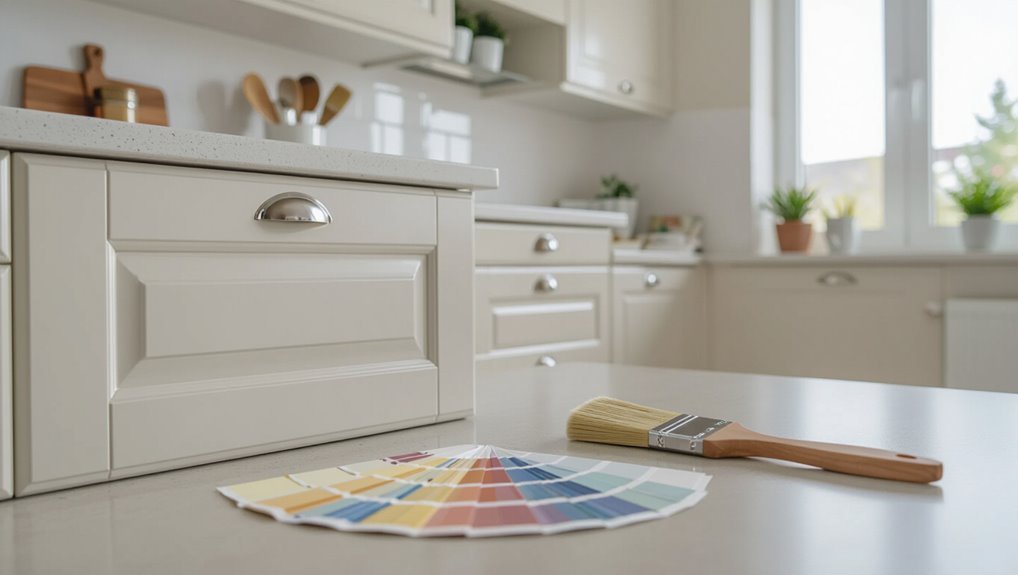
For most kitchens, you’ll want a durable, easy-to-clean paint—choose a semi-gloss or satin finish for walls and a semi-gloss or high-gloss for cabinets.
You’ll balance kitchen aesthetics with durability: pick colors that reflect light and hide wear.
Prep properly, use quality brushes or a sprayer, and follow correct paint application steps to guarantee smooth, long-lasting coverage on both walls and cabinets.
Why Kitchens Need Specialized Paint
Your kitchen gets more moisture and splatters than other rooms, so you’ll want paint that resists stains and won’t peel from humidity.
You’ll also need a finish that stands up to constant touching, cleaning, and bumps in high-traffic areas.
Choosing paints formulated for moisture and durability keeps surfaces looking better longer.
Moisture And Stain Resistance
Because kitchens face steam, splatters, and frequent wipe-downs, you need paint that stands up to moisture and stains without breaking down.
Choose finishes and formulations offering mold resistance and humidity control.
Consider these benefits:
- Easy wipe-clean surface
- Stain-blocking chemistry
- Mildew-inhibiting additives
- Durable film that resists peeling and discoloration
High-Traffic Durability
Kitchens get more traffic than almost any other room, so you need paint that can take constant use without showing wear.
You’ll want formulations made for high traffic areas that resist scuffs, stains, and frequent scrubbing.
Choose durable sheens and quality primers so spills wipe away during easy clean up, maintaining color and finish with minimal touch-ups over time.
How to Choose Between Latex and Oil-Based Paint
When deciding between latex and oil-based paint, weigh durability, drying time, and cleanup to match your project’s needs.
You’ll choose based on paint longevity, desired sheen, and application techniques.
Consider:
- Latex: faster drying, easier cleanup.
- Oil: tougher finish, longer cure.
- Surfaces: trim vs. walls.
- Ventilation: needed for oil fumes.
When to Use Acrylic-Latex for Kitchen Walls
If you want easy cleanup, quick drying, and reliable stain resistance for painted walls, acrylic-latex is a smart choice for many kitchens.
You’ll appreciate acrylic advantages like durability, low odor, and color retention.
Use it in high-traffic, moisture-prone zones where kitchen aesthetics matter—backsplashes, dining nooks, and open-plan walls.
It’s forgiving for DIYers and performs well with regular cleaning.
When Oil-Based or Alkyd Paint Makes Sense for Cabinets
If you want cabinets that stand up to heavy use, oil-based or alkyd paint is worth considering.
You’ll get a harder, more durable surface and a smoother, glass-like finish that resists chipping.
Choose it when longevity and a premium look matter more than quick drying and easy cleanup.
When To Choose Oil
Though water-based finishes have come a long way, oil-based and alkyd paints still make sense for cabinets in certain situations: you want the toughest finish, need superior leveling to hide brush marks, or you’re painting high-traffic surfaces that’ll face frequent cleaning and wear.
- Consider oil properties for stain blocking.
- Use proper application techniques for smoothness.
- Choose oil when sanding’s feasible.
- Pick alkyd for spray-friendly jobs.
Durability And Finish Benefits
You’ve seen when oil or alkyd makes sense; now look at what they deliver for longevity and appearance.
You’ll get tougher, chip-resistant surfaces and a smooth, brush-mark-free finish that stays true to color trends longer.
Proper application techniques—thin, even coats, sanding between layers, and using quality primers—ensure durability, ease of cleaning, and a professional sheen that resists daily kitchen wear.
Sheen vs Brand: What Really Affects Durability
Because sheen determines how a paint wears and how easy it’s to clean, it usually matters more for durability than brand name does.
You should weigh sheen comparison, brand reliability, durability factors, and finish types to choose wisely.
Consider:
- Cleanability
- Scuff resistance
- Maintenance frequency
- Touch-up ease
Pick the right sheen; brand follows.
Best Finishes for Kitchen Walls: Satin, Eggshell, Semi-Gloss
Three common sheens—satin, eggshell, and semi-gloss—cover most kitchen wall needs, each balancing durability and appearance differently.
You’ll choose a satin finish for moderate wall durability and easy cleaning, eggshell finish for subtle texture and forgiving flaws, or semi-gloss finish where moisture resistance matters.
Prioritize surface preparation, thoughtful color selection, correct paint application, and consider cabinet longevity when coordinating finishes.
Best Finishes for Cabinets: Semi-Gloss vs High-Gloss
Walls and cabinets face different demands, so once you’ve picked a wall sheen you’ll want to rethink surface type and traffic for cabinetry.
You’ll choose semi-gloss for muted shine and easier touch-up, or high-gloss for dramatic cabinet aesthetics and max durability. Consider cleaning challenges and light reflection.
- Semi-gloss: forgiving, low glare
- High-gloss: striking, shows marks
- Traffic level
- Maintenance needs
How Sheen Hides or Reveals Surface Imperfections
When you pick a sheen, you’re also choosing how much it will call attention to dents, brush strokes, and uneven sanding; flatter finishes hide imperfections by scattering light, while glossy sheens spotlight every ripple and repair.
You’ll weigh sheen effects and finish choices: flatter paints aid imperfection masking, reduce texture visibility, and minimize light reflection that amplifies surface flaws on cabinets and walls.
Stain- and Yellowing-Resistant Paint Formulations
If you want kitchen paint that resists stains and stays true over time, look at low-yellowing alkyd alternatives that give alkyd performance without the ambering.
Pair those with a stain-blocking primer system to seal nicotine, grease, or water marks before topcoat. That combo keeps cabinets and walls cleaner-looking and simplifies touch-ups.
Low-Yellowing Alkyd Alternatives
Because traditional alkyds can yellow over time, many manufacturers now offer low-yellowing alkyd alternatives that keep whites and pale colors looking fresh without sacrificing durability.
You’ll get low yellowing options with alkyd advantages—hardness, smooth flow, and solvent resistance.
Consider:
- Waterborne alkyds
- Modified alkyd hybrids
- Catalyzed alkyds
- High-TSBN formulations
Stain-Blocking Primer Systems
Though stains and tannins can bleed through ordinary primers, stain-blocking primer systems are formulated to stop discoloration and resist yellowing so your topcoat stays true to its meant color.
You’ll choose primers with high-opacity binders and targeted stain blocking techniques, then follow proper primer application—clean, sand, and dry surfaces—to seal tannins and nicotine, ensuring durable, color-stable finishes on cabinets and walls.
Most Scrubbable Paints for Kitchens
When you need a finish that stands up to grease, fingerprints, and frequent washing, choose a high-sheen, durable paint specifically formulated for scrubbability; these products resist abrasion and retain color after repeated cleaning.
You’ll want scrubbable formulas for easy kitchen maintenance. Pick a tough enamel or acrylic latex and follow manufacturer care instructions.
- Satin
- Semi-gloss
- High-gloss
- Durable enamel
Low-VOC and Zero-VOC Kitchen Paint Options
When you’re choosing kitchen paint, compare low-VOC and zero-VOC formulations so you know what’s actually reduced and what’s eliminated.
Consider how each affects odor and how long the paint takes to dry and cure, since that impacts when you can use the room again.
Picking the right balance will keep fumes minimal while matching your timeline for kitchen use.
Low-VOC vs Zero-VOC
If you’re sensitive to odors or want a healthier indoor environment, choosing between low-VOC and zero-VOC paints matters—these formulations cut the volatile organic compounds that create fumes, but they aren’t identical: low-VOC paints still contain small amounts of VOCs and may off-gas longer, while zero-VOC paints limit those compounds further, though additives like colorants can raise VOC levels slightly.
- low voc benefits: lower emissions
- zero voc options: minimal VOC base
- Choose by sensitivity and ventilation
- Check labels, colorant VOCs
Odor And Drying Time
Choosing between low-VOC and zero-VOC paints affects not just emissions but also how your kitchen will smell and how long the paint takes to dry.
You’ll notice milder odors with zero-VOC; use odor control strategies like ventilation and activated charcoal to speed comfort.
For faster curing, follow drying time tips: thin coats, moderate humidity, and steady airflow so you can reinstall hardware and use the space sooner.
Mildew- and Moisture-Resistant Paints for Humid Kitchens
Because humid kitchens create the perfect breeding ground for mold and mildew, you’ll want paints specifically formulated to resist moisture and microbial growth.
Use mildew prevention strategies and humidity control tips alongside these choices:
- Acrylic latex with antimicrobial agents
- Semi-gloss or satin for easy cleaning
- Mold-resistant primers
- Water-based epoxy for cabinets
These reduce staining and microbial buildup while staying low-odor.
Choosing Kitchen Paint Colors That Hide Stains and Brighten
Pick stain-resistant finishes and washable paints so spills clean up easily without leaving marks.
Choose light-reflecting hues to brighten the room and make stains less noticeable.
With those choices you’ll keep cabinets and walls looking fresh longer.
Select Stain-Resistant Finishes
A few smart choices in finish and color can make your kitchen look brighter while hiding everyday splatters and fingerprints.
You’ll want stain resistance and strong kitchen finishes for easy cleaning. Choose semi-gloss or satin for paint longevity and color retention.
- Semi-gloss for cabinets
- Satin for walls
- Durable primers
- Washable topcoats
Choose Light-Reflecting Hues
When you choose light-reflecting hues, you’ll make the whole kitchen feel brighter while minimizing the look of stains and splatters.
Pale, warm tones bounce light and mask small imperfections better than deep, matte shades. Opt for light reflecting colors like soft ivories, warm greiges, or gentle pastels to lift kitchen ambiance, visually expand space, and reduce contrast that highlights smudges.
Opt For Washable Paints
Light-reflecting hues will brighten your kitchen, but you’ll also want paint that stands up to spills and everyday messes.
Choose washable finishes for walls and cabinets so stains come off without damage. Use gentle cleaning techniques to preserve sheen.
- Satin for durability
- Semi-gloss for trim
- Matte washable for subtlety
- Test spot first
Primer for Walls: When and Which to Use
Priming your kitchen walls stops stains, seals porous surfaces, and helps paint adhere so your finish looks even and lasts longer.
You should use stain-blocking primer for smoke or grease, latex for drywall, and bonding primer on glossy or repaired areas.
Choose based on substrate and finish, and follow proper primer types and application techniques: roller for flat areas, brush for edges, and light sanding between coats.
Primer for Cabinets: Bonding and Stain-Blocking Options
A good cabinet primer bonds to slick finishes and blocks stains so your topcoat goes on smoothly and resists bleed-through from tannins or old varnish.
You’ll focus on cabinet adhesion, primer types, bonding agents, and paint compatibility.
Consider:
- Oil-based for stain-blocking
- Shellac for tough tannins
- Latex for easy cleanup
- Bonding primers for slick surfaces
Mind surface preparation, application techniques, and finish selection.
Prep for Walls: Clean, Sand, and Repair
Start by clearing grease, dust, and cobwebs so paint will adhere and look smooth.
Use surface cleaning with cleaning solutions and prep tools to remove grime from varying wall textures.
Use cleaning solutions and prep tools to remove grime from all wall textures for a smooth paint base.
Follow sanding basics to scuff glossy spots, then apply repair techniques using appropriate repair materials for holes and cracks.
Consider kitchen moisture when choosing products to guarantee lasting paint adhesion and thorough surface preparation.
Prep for Cabinets: Degloss, Remove Hardware, and Sand
Before you paint cabinets, you’ll want to degloss them using a chemical deglosser or liquid sand to help new paint adhere.
Take off all hardware carefully and label hinges and screws so reassembly is painless.
Finish by sanding with fine-grit paper or a sanding sponge to smooth surfaces and feather edges for an even finish.
Deglossing Methods Explained
When your cabinets look shiny or have a factory finish, deglossing evens the surface so paint can adhere without a heavy sanding job; you’ll still remove hardware and sand lightly afterward, but deglossing speeds the prep and reduces dust.
Use deglossing products with care: chemical safety, environmental impact, and paint compatibility matter.
- Liquid deglosser
- Abrasive pads
- Scuffing primer
- Light sanding
Remove Hardware Safely
Carefully remove all knobs, pulls, and hinges so you can work cleanly and avoid damaging finishes; keep each piece with its screws in labeled bags or on a magnetic tray so reassembly is fast and accurate.
During hardware removal, wear gloves and eye protection, use the right screwdriver, and support doors to avoid drops.
Follow safety precautions, label locations, and store parts organized for a smooth reinstall.
Sanding Techniques For Finish
Once the hardware’s off and labeled, it’s time to degloss and sand so paint will adhere properly and the finish looks professional.
Use proper sanding techniques and a sanding schedule to guide surface preparation.
- Start with grit selection—120 then 220.
- Use an orbital sander for flats.
- Hand sanding with sanding blocks for edges and detail.
- Finish with dust removal and finishing touches.
Best Brushes, Rollers, and Sprayers for Kitchen Paint
Choosing the right brushes, rollers, and sprayers makes the job faster and gives your kitchen walls and cabinets a professional, long-lasting finish.
You’ll pick brush types for trim, synthetic for latex, and natural for oil. Compare roller options for texture control.
Consider sprayer benefits for cabinets. Focus paint application speed, tool maintenance after use, and simple finish techniques to guarantee durability and easy cleanup.
Achieving a Smooth Cabinet Finish Without Brush Marks
Start by sanding and cleaning your cabinet surfaces so paint can lay down evenly; this is the foundation for a brush-mark-free finish.
Use high-quality primer, prefer spray painting for ultra-smooth coats, and practice brush techniques for edges.
Follow steps:
- Degrease and sand.
- Prime thinly.
- Spray or cut in.
- Lightly sand between coats for flawless sheen.
Dry Time, Recoat Windows, and Full Curing Schedule
Dry times and recoat windows vary by paint type and conditions, so you’ll want to plan your schedule around the product’s stated tack-free and recoat times and the room’s temperature and humidity.
Consider dry time factors like environmental influences and humidity effects; follow recommended recoat intervals, allow full curing times before heavy use, and account for heat resistance requirements for stove-adjacent cabinets.
Touch-Up and Maintenance Tips to Keep Paint Looking New
When you spot a nick or scuff, address it quickly to prevent stains and peeling from spreading; keep a small kit with matching paint, a brush or touch-up pen, mild cleaner, and fine-grit sandpaper so you can fix blemishes on the spot.
- Clean area first.
- Sand lightly.
- Apply thin coats.
- Blend edges.
Use simple touch up techniques and set maintenance frequency (monthly visual checks) to prolong finish.
Budget-Friendly Kitchen Paints That Still Perform
Keeping up with quick touch-ups helps your kitchen stay fresh, but you don’t need top-shelf paint to get durable, good-looking results. You can choose budget options that balance price and paint performance, focus on washable finishes, and prioritize primer. Compare brands, test small areas, and pick semi-gloss for cabinets.
| Brand | Finish | Cost |
|---|---|---|
| Brand A | Semi-gloss | $ |
| Brand B | Satin | $$ |
| Brand C | Eggshell | $ |
When to Hire a Pro vs. DIY for Kitchen Painting
Wondering whether you should tackle your kitchen paint job yourself or call in a pro?
You’ll weigh professional painters against DIY challenges using clear skill assessment, cost considerations, project timelines, and paint techniques.
Decide based on scope, time, and precision needs.
- Complex cabinets
- Limited time
- Tight budget
- Confident skillset
Common Painting Mistakes That Ruin Kitchen Results
Don’t skip proper prep—cleaning, sanding, and priming are what make paint stick and look smooth.
Picking the wrong sheen can leave walls looking greasy or cabinets showing every imperfection.
Avoid these two mistakes and you’ll get a much more professional kitchen finish.
Skipping Proper Prep
If you rush into painting without sanding, cleaning, and priming, the finish won’t last and you’ll see peeling, brush marks, and uneven coverage almost immediately.
You must focus on paint preparation: surface cleaning, primer importance, sanding techniques, hardware removal, cabinet deglossing, wall repairs, and moisture issues.
- Sand properly
- Clean thoroughly
- Prime critical areas
- Remove hardware first
Choosing Wrong Sheen
Once you’ve prepped surfaces properly, the next big mistake is picking the wrong sheen—gloss level affects durability, hide, and how flaws show up, so a poor choice will undo careful prep.
You should weigh sheen impact: high gloss resists stains and cleans well but highlights imperfections; eggshell or satin hides flaws yet cleans less.
A quick sheen comparison helps you match finish to use.
How to Protect Countertops, Appliances, and Floors
Before you start painting, clear and cover nearby surfaces so paint, drips, and dust won’t damage countertops, appliances, or floors.
Use focused surface preparation: tape edges, remove small appliances, and sweep or vacuum. Follow these steps:
- Countertop protection: drop cloths and plastic sheeting.
- Appliance shielding: foil or removable covers.
- Floor covering: rosin paper or thick drop cloths.
- Secure edges with painter’s tape.
Matching Cabinet Paint to Wall Paint: Coordinated Strategies
After you’ve protected countertops and floors, think about how cabinets and walls will work together visually and functionally.
Use color theory and paint samples to test light reflection and wall texture.
Aim for visual harmony with cohesive design: choose cabinet contrast deliberately, balance finish combinations, and adjust hues until cabinets complement walls without competing, ensuring a unified, practical kitchen palette.
Quick Decision Checklist: Picking Paint for Your Kitchen
Before you pick a color, decide on a finish—satin or semi-gloss for cabinets, eggshell or satin for walls—so it stands up to scrubbing.
Consider how durable the color needs to be in high-traffic, grease-prone areas and choose formulations that resist staining and fading.
Finally, check VOC levels and plan for good ventilation during and after application to protect your health.
Finish Type Choice
When you’re choosing paint for kitchen walls and cabinets, the finish matters as much as the color because it affects durability, cleanability, and sheen.
Use this quick checklist to match finish type to the room’s needs and your lifestyle.
- Satin: easy clean, hides flaws.
- Semi-gloss: durable for cabinets.
- Gloss: high sheen, shows imperfections.
- Eggshell/Matte: softer look, careful with cleaning.
Consider finish types and application techniques for best results.
Color Durability Needs
If you want paint that stays looking fresh through spills, scrubbing, and daily wear, prioritize color durability alongside finish—choose pigments and formulations that resist fading, staining, and yellowing so your kitchen keeps its look with less touch-up. Balance color trends with proven paint longevity; pick washable, UV-stable options and test samples under real light before committing.
| Feature | Benefit | Tip |
|---|---|---|
| Pigment quality | Resists fading | Test sample |
| Stain resistance | Easier cleaning | Wipe regularly |
| UV stability | Maintains hue | South walls check |
| Finish | Durability | Satin/eggshell |
| Maintenance | Fewer touch-ups | Use mild cleaner |
Toxicity And Ventilation
Color longevity matters, but you also need paint choices that won’t compromise indoor air quality while you’re cooking and cleaning.
Choose low-VOC or zero-VOC paints to limit toxic fumes and protect health considerations. Guarantee proper ventilation during and after painting.
Quick checklist:
- Pick low/zero-VOC paint
- Ventilate with fans/windows
- Use respirator if needed
- Allow full cure before occupying
Short Project Timeline: Wall vs. Cabinet Painting
1 key difference between painting walls and cabinets is the time you’ll actually spend on the job: walls go up fast, while cabinets demand patience.
You’ll factor paint preparation techniques and project timeline considerations differently: walls need quick patching and a couple coats, cabinets require removal, sanding, priming, and drying between stages.
Plan extra time for curing and hardware reinstallation.
Resources and Product Recommendations (Quick Links)
Below are quick links to trusted products and resources that’ll get your kitchen walls and cabinets looking professional without wasting time hunting for supplies.
You’ll find eco-friendly options and guides on current color trends to simplify choices.
- Low-VOC wall paints
- Cabinet-specific enamels
- Eco-friendly primers
- Color trend palettes and sample kits
Frequently Asked Questions
Can I Paint Kitchen Cabinets Without Removing Doors and Drawers?
Yes — you can paint cabinets without removing doors and drawers. You’ll use DIY techniques like careful masking, degreasing, sanding, and spraying or brushing to preserve the cabinet finish, though removal yields neater, more durable results.
Will Painted Cabinets Withstand Heat From Ovens or Stoves?
Yes — if you use heat resistant paints and proper prep, your cabinets will hold up near ovens and stoves. You’ll avoid peeling and maintain cabinet durability, though high direct heat still risks damage over time.
How Long Should I Wait to Reinstall Hardware After Painting Cabinets?
Wait at least 24–48 hours of drying time before hardware installation; if you used oil-based or epoxy paint, wait 72 hours to a week for full cure. You’ll avoid smudges and guarantee screws bite properly.
Can I Paint Over Laminate or Thermofoil Cabinet Surfaces?
Yes—you can paint laminate and thermofoil if you prep properly. For laminate preparation, sand and clean, use a strong primer; for thermofoil options, choose a high-bond primer and flexible acrylic paint so coatings adhere and resist peeling.
What Paint Cleanup Methods Are Best for Food-Prep Surfaces?
Use mild soap and warm water for routine cleanup; for tougher residues use a nonabrasive cleaner and disinfectant approved for food-prep areas. With proper surface preparation, choose durable paint types and you’ll avoid damage during cleaning.
Conclusion
Kitchens see more wear than any other room—studies show they receive up to 40% more daily traffic than living rooms—so you’ll want paint that stands up. Choose durable, scrubbable acrylic-latex for walls and consider alkyd or oil-based finishes for high-use cabinets if you need extra toughness and smoother leveling. Match sheen for harmony, prioritize low-VOC options, and follow the checklist to pick the right combo for lasting, attractive results.
