
What Is the Difference Between Flat and Satin Paint? Full Comparison
Flat paint gives you a soft, matte finish that hides wall flaws and mutes glare, so it’s great for ceilings, bedrooms, and low-traffic spaces. Satin has a gentle sheen that makes colors pop, shows contours more, and is tougher to clean—ideal for hallways, kitchens, bathrooms, and trim. Satin resists stains and scrubs better, while flat needs gentler care. Keep this trade-off in mind, and if you keep going you’ll find practical tips for choosing and switching finishes.
Flat vs Satin Paint: Choose the Right Finish
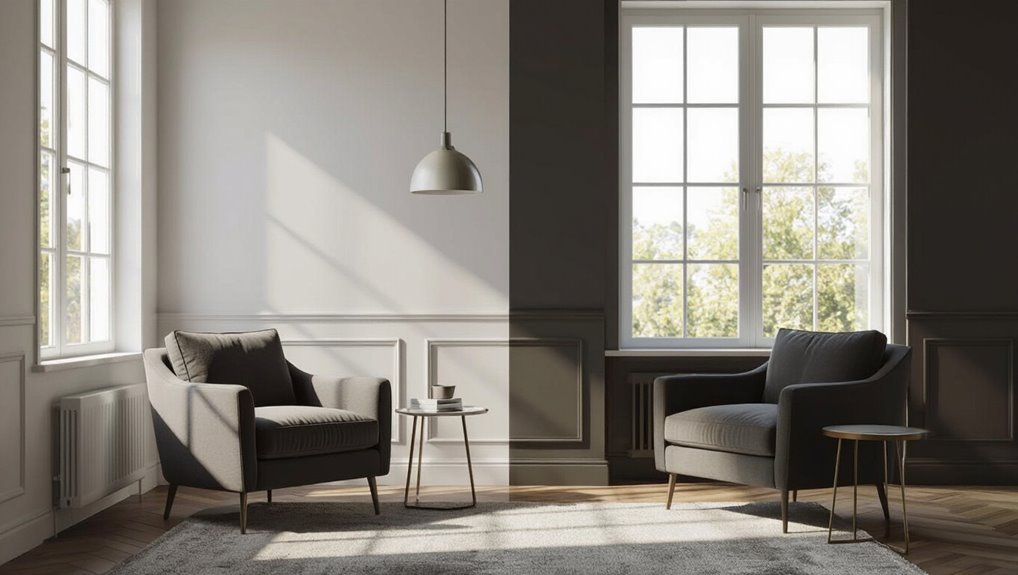
Wondering which finish will suit your room best? You’ll weigh color psychology and how sheen affects mood, then match practical needs: flat hides imperfections and reads softer, satin reflects light and cleans easier.
Consider traffic, desired atmosphere, and finish longevity to decide. You’ll choose flat for muted, cozy spaces or satin where durability and subtle luster matter most.
Quick Answer: Flat or Satin for Everyday Rooms?
For most everyday rooms, choose satin if you need durability and easier cleaning, and pick flat when you want a softer, more forgiving look that hides wall imperfections.
You’ll weigh style and use, considering color psychology and finish longevity.
- Satin: durable, washable.
- Flat: conceals flaws, matte feel.
- Pick based on traffic and mood.
Decision Criteria: Appearance, Durability, Maintenance
When choosing between flat and satin, focus on three practical factors—how the finish looks in your space, how it stands up to wear, and how much upkeep you’re willing to do—because each trait will shape both daily use and long-term satisfaction.
You’ll weigh color selection against cleaning needs: satin offers better stain resistance and finish longevity, while flat hides imperfections but demands gentler maintenance to stay attractive.
How Flat Paint Looks: Finish, Texture, and Light
When you look at flat paint, you’ll notice a matte finish that scatters light instead of reflecting it. That softness can hide minor bumps and brush marks but also makes any larger surface flaws more noticeable up close.
Flat sheens also tend to make colors feel deeper and more uniform, so hues read richer on walls.
Matte Light Reflection
Matte paint absorbs most light instead of bouncing it back, so surfaces look velvety and even rather than shiny.
You’ll notice matte texture and subtle light diffusion that softens contrasts. Consider how it behaves:
- It scatters glare for a calm look.
- It creates depth without sheen.
- It keeps colors steady under varied lighting, giving rooms a muted, refined feel.
Surface Imperfections Visibility
Texture matters: flat paint masks flaws by diffusing light so bumps, brush marks, and minor dents are much less noticeable than on glossier finishes.
You’ll find imperfection visibility drops because surface texture scatters reflections, hiding unevenness.
When you want walls to look smooth without extensive prep, flat’s low sheen and forgiving surface texture reduce the need for perfect walls, though it hides fewer deep gouges.
Depth And Color Richness
Beyond hiding flaws, flat paint also affects how color and depth read in a room. You’ll notice muted reflections and richer perceived color saturation, but less sheen.
Consider how that plays out:
- Flat dampens glare, deepening tones.
- Texture becomes focal, adding subtle depth.
- Expect lower finish longevity than glossier options, so choose by look and wear needs.
How Satin Paint Looks: Sheen, Depth, and Reflections
You’ll notice satin paint has a subtle sheen that catches the eye without being glossy.
That sheen often makes colors look a touch deeper and richer than flat finishes.
When light hits satin, it creates soft reflections that highlight surface contours and imperfections differently than flat paint.
Visible Sheen Levels
Anyone walking into a room will notice satin paint’s soft sheen right away: it catches light more than flat paint, giving walls a subtle glow without strong mirror-like reflections.
You’ll appreciate its sheen perception and enhanced aesthetic appeal as you inspect finish details.
- Soft glow that minimizes flaws.
- Gentle reflections under lamp light.
- Easy-to-clean surface that still feels warm.
Perceived Color Depth
Sheen changes how you perceive a color’s depth: satin’s subtle luster makes hues look richer and slightly more saturated than matte finishes, so walls can feel livelier and more dimensional.
You’ll notice improved color perception because light interacts with the finish, enhancing visual depth without glare.
Satin subtly reveals contours and texture, so choices affect mood and perceived room size.
Light Reflection Patterns
Light reflecting off satin paint creates a soft, directional glow that highlights curves and planes without throwing harsh glare.
You’ll notice how satin balances sheen and subtle shadow through:
- Improved light absorption on textured areas that deepens color.
- Gentle glare reduction on smooth surfaces for clearer details.
- Even reflections that add perceived depth while staying understated.
Why Sheen Level Matters for Your Walls
The sheen level you pick changes how your walls look, feel, and perform in a room. You’ll notice sheen importance in light behavior and wall aesthetics, influencing mood and maintenance. Choose satin for lively, cleanable surfaces or flat for calm, cozy walls that hide flaws.
| Emotion | Effect |
|---|---|
| Pride | Fresh, polished look |
| Comfort | Soft, subdued backdrop |
Which Finish Hides Wall Imperfections Best?
Curious which finish will mask those dings and uneven textures best? You’ll want to focus on imperfection visibility and smart finish selection to minimize light reflection.
Consider:
- Flat hides imperfections by absorbing light, so flaws look muted.
- Matte offers similar concealment with slightly more durability.
- Satin increases visibility due to sheen, so pick it only if texture is smooth.
Which Finish Resists Scuffs, Stains, and Wear?
Usually you’ll reach for satin when you need paint that stands up to daily wear—it resists scuffs, wipes clean easily, and tolerates mild abrasives better than flat or matte.
You’ll choose satin for higher scuff resistance and visible stain durability, especially in hallways, kitchens, and trim.
Flat’s low sheen hides flaws but won’t hold up to frequent contact or scrubbing.
Flat vs Satin Paint: Cleanup and Stain Resistance
Because you’ll be cleaning spills and fingerprints more often in busy rooms, satin paint gives you an easier, more reliable cleanup than flat—its higher sheen and tougher binder let you wipe stains away without damaging the finish.
In contrast, flat paint tends to absorb marks and can rub off or show water spots when scrubbed.
- Use gentle cleanup methods.
- Prioritize stain prevention.
- Test cleaners first.
Best Rooms for Flat Paint and Why
Pick quieter, low-traffic rooms for flat paint, since its matte finish hides imperfections and reduces glare better than glossier options.
Use it in bedrooms, formal dining rooms, and adult living areas where durability isn’t critical.
Choose best colors that create calm, and explore texture options like suede or chalky finishes to add depth without reflecting light, keeping spaces cozy and refined.
Best Rooms for Satin Paint and Why
You’ll want to choose satin for rooms where surfaces get touched often, like hallways, kids’ rooms, and family areas, because it stands up to scrubbing.
It also works well in moisture-prone spaces such as kitchens and bathrooms since its slight sheen resists mildew and cleans easily.
In short, satin gives you durability and moisture resistance without the high gloss.
High-Traffic Areas
When rooms get a lot of use, satin paint is often the smartest choice because it balances durability with a soft, low-sheen finish. It cleans easily and hides minor imperfections better than gloss while still standing up to scrubbing.
- Use in hallways for high traffic durability.
- Choose for kids’ rooms to reduce maintenance challenges.
- Pick for entryways to resist scuffs and clean easily.
Moisture-Prone Rooms
Because satin handles moisture and cleaning better than flat finishes, it’s a smart pick for bathrooms, laundry rooms, and kitchens where steam and splashes are common.
You get improved moisture resistance that prevents peeling and staining, and you can wipe surfaces without damaging finish.
Choosing satin boosts paint longevity in humid spots, reduces maintenance, and keeps rooms looking fresher longer.
Trim, Doors, and Millwork: When to Use Satin
If you want trim, doors, and millwork to stand out and hold up to everyday wear, satin is usually the smart choice.
You’ll balance trim styles, color coordination, finish durability, and design consistency while considering maintenance tips and cost implications.
Balance trim styles, color coordination, and durable finishes while weighing maintenance, cost, and cohesive design.
Use application techniques to manage texture differences and lighting effects for aesthetic appeal.
- Durability
- Shine control
- Easy cleaning
Ceilings and Large Walls: Why Flat Often Wins
For ceilings and expansive walls, flat paint usually gives you the cleanest, most forgiving finish: it hides imperfections, reduces glare from overhead lights, and creates a smooth, continuous backdrop that keeps rooms feeling calm and cohesive. You’ll prefer flat for ceilings benefits and broad wall applications where subtlety matters.
| Surface | Benefit | Use |
|---|---|---|
| Ceiling | Hide flaws | Flat |
| Large wall | Low glare | Flat |
| Mood | Calm backdrop | Flat |
How Drywall, Plaster, and Wood Change Your Choice
Ceilings and big walls often call for flat paint, but the material under that paint matters just as much: drywall, plaster, and wood each interact with sheen differently, so you’ll want to match finish to substrate.
- Drywall impact: flat hides flaws; use satin where durability matters.
- Plaster differences: texture shows; choose finish for depth.
- Wood considerations: grain and surface texture demand careful finish selection.
How Lighting Makes Flat and Satin Look Different
You’ll notice flat and satin behave differently depending on natural versus artificial light, so think about how daylight or bulbs will hit your walls.
Satin’s slight gloss reflects more, changing how shiny it looks and how colors read, while flat absorbs light and minimizes glare.
Also pay attention to shadows and surface texture—satin can highlight bumps and brushstrokes that flat will hide.
Natural Versus Artificial Light
How does light change the way flat and satin paints read in a room? You’ll notice differences depending on natural light or artificial light sources.
Consider:
- Morning sun softens flat, muting imperfections.
- Warm bulbs make satin feel richer and more uniform.
- Cool LEDs reveal texture on both, but satin holds color warmth better.
Reflection And Gloss Perception
When light hits a wall, it reveals how glossy or flat the finish actually is: satin bounces back more defined highlights while flat scatters light and looks softer.
You’ll notice satin feels livelier under bright fixtures, influencing color psychology by making hues seem more vivid, while flat promotes calm, muted tones.
Choose based on desired mood and visual harmony in the room.
Shadows And Surface Texture
Because light sketches shadows differently on varied finishes, flat and satin paints reveal surface texture in distinct ways.
You’ll notice how shadows play across flaws and brushstrokes, affecting texture perception.
Consider these points:
- Flat hides irregularities by scattering light, minimizing shadows.
- Satin emphasizes contours with subtle sheen, casting clearer shadows.
- Choose finish based on how visible you want surface detail to be.
Color Differences: How Finish Affects Perception
Although the color itself stays the same, the finish changes how you perceive it: flat paint soaks up light and mutes tones, while satin reflects more light and makes hues look brighter and slightly more saturated.
Your color perception shifts with finish impact—flat reads softer and more even, while satin reveals depth, sheen, and tiny variations, so choose based on mood and room lighting.
Prep Work Needed for Flat vs Satin
How a finish changes color also affects what you need to do before painting. You’ll tailor prep work and surface preparation to sheen: flat hides flaws, satin shows them.
Follow these steps:
- Clean and repair dents or holes.
- Sand glossy spots; feather edges for flat.
- Prime stained or patched areas to guarantee even absorption and uniform sheen.
Application Tips to Avoid Lap Marks With Flat
When working with flat paint, you’ll want to work in small sections so each area stays wet while you finish it.
Keep a wet edge as you roll to blend new paint into the fresh coat and prevent lap marks.
Use a high-quality roller to lay the paint evenly and reduce touch-up lines.
Work In Small Sections
Start by tackling the wall in small, manageable sections so the paint stays wet and you can blend each stroke before it dries; with flat paint, that short open time makes it easy to get visible lap marks if you let edges set up.
- Use consistent application techniques to address wall imperfections, texture variety, and light absorption.
- Consider color psychology, finish longevity, and aesthetic preferences.
- Factor maintenance frequency, paint formulations, and environmental impact.
Maintain Wet Edges
Because flat paint dries quickly and shows overlap, keep a wet edge so you can blend each stroke seamlessly; work steadily across the wall, feathering new passes into the still-wet paint.
Use wet edge techniques like keeping a consistent paint load and matching stroke direction.
These application strategies minimize lap marks and guarantee an even, uniform finish without reworking dried sections.
Use A Quality Roller
Choose a high-quality roller to get smooth, even coverage with flat paint—cheap rollers shed fibers and leave streaks that show as lap marks.
You’ll see better results when you focus on roller quality and a consistent application technique.
- Pick the right nap for your surface.
- Load evenly; don’t oversaturate.
- Work wet edges, keeping a steady pace.
Application Tips for an Even Sheen With Satin
Want a smooth, consistent sheen with satin? Use satin sheen techniques: work in small sections, maintain a wet edge, and roll in a consistent direction.
Thin coats dry more uniformly, so dilute slightly if needed and apply two light layers.
Keep a quality roller cover, avoid overworking, and check lighting as you go for even application tips that prevent lap marks and sheen variation.
Touch-Ups and Spot Repairs: Which Blends Better?
Wondering which finish hides touch-ups best? You’ll find flat often masks repairs more easily, but satin can match sheen if you use careful touch up techniques and blending methods.
- Feather edges with a small brush.
- Match paint temperature and lighting.
- Blend outward in thin layers.
You’ll get seamless spot repairs when you prep, match, and blend patiently.
Long-Term Durability: Scuff, Stain, and Fade Expectations
After you’ve mastered blending touch-ups, think about how each finish holds up over time—flat and satin wear very differently under everyday use.
You’ll find satin resists scuffs and stains better and tolerates cleaning, while flat hides imperfections but shows wear and fades faster.
Consider durability factors like traffic, sunlight, and cleaning frequency to plan maintenance challenges and repainting intervals.
Cost Comparison: Paint Price and Lifecycle Costs
You’ll notice satin often costs more per gallon than flat, so your upfront spending can be higher.
But you should also factor in long-term maintenance—satin’s easier cleaning can cut repainting and touch-up expenses.
We’ll compare initial price versus lifecycle costs so you can pick the smarter option for your space.
Upfront Paint Price
When comparing flat and satin paint, start with the sticker price: flat finishes typically cost slightly less per gallon than satin.
However, that initial saving can be offset by coverage and durability differences you’ll notice over time.
- Calculate upfront costs per gallon.
- Fit purchases to your paint budget.
- Factor required coats and surface prep into the buy decision.
Long-Term Maintenance Costs
Anyone choosing between flat and satin should look beyond the upfront gallon price and compare lifecycle costs—how often you’ll need touch-ups, how much scrubbing or repainting each finish demands, and the cumulative cost of labor and materials over years.
For long term planning, estimate maintenance frequency: satin often lowers repaint cycles and cleaning costs, while flat may raise touch-up and labor expenses over a decade.
Best Tools & Techniques for Flat Paint
Start with the right tools: a high-quality synthetic or natural-bristle brush for trim and a dense, low-nap roller for walls will give flat paint the smooth, even finish it’s meant for.
Use these application techniques and maintenance tips to preserve paint finish:
- Roller selection: choose low lint, dense nap.
- Brush care: clean and store properly.
- Touch-ups: feather edges for seamless repair.
Best Tools & Techniques for Satin Paint
Choose tools that match satin paint’s subtle sheen and slightly higher flow: a high-quality synthetic brush for trim and edges, a low- to medium-nap roller (3/8″–1/2″) for walls, and a microfibre or foam roller for cabinets or furniture to minimize texture.
Focus on surface prep, steady application techniques, smart roller selection, and monitor drying times.
For touch up methods, feather edges for a consistent finish comparison.
When to Prime Before Flat or Satin Paint
Before you pick flat or satin, check how porous the surface is—bare drywall and new wood soak up paint and need primer.
Also inspect the old paint: if it’s peeling, stained, or has high gloss, you’ll want a primer to guarantee adhesion and even coverage.
Priming saves you time and improves the final look, so don’t skip it when those issues are present.
Surface Porosity Check
If your wall soaks up a small amount of water or looks uneven when you wipe it, you’ve got a porous surface that needs priming before you apply flat or satin paint.
Check surface texture and paint absorption to decide primer type.
- Dab test: note soak rate.
- Sand rough spots.
- Use high-adhesion primer for uniform coverage.
Old Paint Condition
Old paint condition tells you whether priming is necessary: peeling, chalking, or old gloss that’s worn smooth will usually need priming to guarantee flat or satin topcoats adhere and look uniform.
Inspect old paint types—oil over latex, chalky finishes, or previously glossy surfaces—and assess old paint maintenance.
If you see staining, flaking, or poor adhesion, sand, clean, and prime before applying flat or satin.
Common Mistakes Choosing Flat or Satin Finishes
Wondering why your freshly painted wall shows every scuff or seems chalky in photos? You’ll run into common misconceptions when picking finishes.
Know your finish preferences, surface prep needs, and traffic level to avoid regret.
Understand finishes, prep, and traffic before you paint—save frustration and choose wisely for lasting results
- Assuming flat hides everything — it masks imperfections but stains easily.
- Choosing satin for sheen only — it’s more durable and washable.
- Skipping primer ruins adhesion.
VOC & Allergy Considerations for Flat vs Satin
Because paint off-gasses chemicals that can trigger sensitivities, you should consider VOC levels and allergen-friendly formulations when choosing flat or satin finishes. You’ll weigh VOC emissions, paint composition, environmental impact, and health effects. Choose low-VOC, fragrance-free options to reduce allergy triggers and sensitivity reactions.
| Finish | VOC emissions | Allergy risk |
|---|---|---|
| Flat | Low–Medium | Moderate |
| Satin | Low | Lower |
Matching Finish to Home Style and Trends
Think about whether your decor leans timeless or trendy, since flat and satin finishes can either blend in or make a modern statement.
Use flatter sheens in formal or relaxed rooms for understated elegance, and satin where you want slight sheen and durability in casual, high-traffic spaces.
For accent walls and trim, choose contrasting finishes—satin for crisp, durable trim and flat for moody or subtle feature walls—to highlight architectural details.
Timeless Versus Trendy
When you’re choosing between flat and satin finishes, consider whether you want a look that will last or one that follows current trends.
You’ll weigh timeless design against trendy aesthetics and pick finish durability accordingly.
- Flat for understated, enduring walls.
- Satin for modern, washable statement areas.
- Match finish to your long-term goals and room use.
Formal Versus Casual Spaces
As you decide between flat and satin, consider how the room’s formality should guide your finish:
If your space leans toward formal decor, choose satin for subtle sheen that highlights architectural detail and reads polished.
For casual aesthetics, flat’s muted, forgiving surface creates relaxed comfort and hides imperfections.
Match finish to mood, traffic, and maintenance needs so style and function align.
Accent Walls And Trim
If you’ve matched finish to room formality, the next consideration is how accent walls and trim work together to support your home’s style and current trends.
You’ll balance Accent wall aesthetics with Trim color choices and Texture contrasts to boost Design cohesiveness and Visual impact.
Consider:
- Satin trim with flat accent for subtle depth.
- Contrasting finishes for bold focal points.
- Unified Finish combinations for calm flow.
How to Switch From Flat to Satin (And Back)
Ready to switch your walls from flat to satin (or back) without surprises?
Prep surfaces by cleaning, sanding glossy areas, and priming to guarantee adhesion.
For a smooth paint finish changeover, use consistent application techniques: brush cut-ins, roller with even pressure, and thin coats.
Allow full drying between coats, and scuff-sand lightly when reverting to flat for best results.
Pros and Cons: Flat Paint at a Glance
Now that you know how to switch between flat and satin finishes, let’s look at what flat paint offers so you can decide if it fits your space.
- Deep color saturation hides flaws, giving walls a rich, even look.
- Matte surface minimizes glare, ideal for low-traffic rooms.
- Limited washability means careful application techniques and spot-touching instead of frequent scrubbing.
Pros and Cons: Satin Paint at a Glance
Sheen matters: satin paint gives your walls a soft glow that’s more durable and easier to clean than flat finishes.
You’ll enjoy satin finish benefits like stain resistance, mild sheen that hides minor flaws, and ease of maintenance in high-traffic rooms.
Be aware of satin paint drawbacks: it can highlight surface imperfections and demands careful prep and application to look its best.
Frequently Asked Questions
Can I Use Flat or Satin Paint on Kitchen Cabinets?
You can—think of satin as armor and flat as a soft cloak; you’ll prefer satin for cabinet durability and easier paint maintenance, while flat suits low-traffic, decorative cabinets that you’ll handle delicately and clean rarely.
Do Flat and Satin Paints Differ in Drying Time?
Yes — satin usually dries faster to the touch than flat, but both cure similarly; you’ll notice different drying characteristics, so adjust application techniques like thinner coats and proper ventilation to speed drying and avoid lap marks.
Which Finish Is Better for High-Humidity Bathrooms?
You should pick satin finish; it offers superior moisture resistance and cleaning ease, so you’ll wipe away mildew or splashes without damaging the surface, unlike flat paint which traps moisture and resists cleaning.
Can I Mix Flat and Satin Paints Together?
Yes — you can mix flat and satin, but don’t expect miracle results: sheen levels will shift, affecting color blending and durability. Test small batches first, since finish differences can show uneven gloss and wear over time.
Will Either Finish Yellow Over Time in Sunlight?
Yes — both can yellow over time with UV exposure, but satin resists more. You’ll get better paint longevity, color retention, and surface durability from higher-quality formulations and UV-stable primers, maintenance, and avoiding direct sunlight.
Conclusion
Choose satin if you want durability and easy cleaning; pick flat if you prefer hiding imperfections and a soft, modern look. Surprisingly, 68% of homeowners pick satin for high-traffic spaces like kitchens and kids’ rooms because it stands up to scrubbing. You’ll balance appearance, upkeep, and room use: switch to satin in busy areas and keep flat in low-traffic or formal spaces. Trust your style, then match finish to function.
