
How to Paint a Sunburst Finish on a Guitar Like a Pro
You’ll prep the guitar, choose a vintage, modern, or custom sunburst, then pick nitro, acrylic, or urethane based on look and durability. Strip hardware, sand to bare wood or seal, mask carefully, and mix center, mid, and edge tints for smooth gradients. Spray thin, overlapping passes, feather mid-tones, highlight grain with stains or glazes, then clearcoat, wet-sand and polish. Follow timing and troubleshooting tips to avoid halos and orange peel, and you’ll master pro techniques as you go.
How This Step-By-Step Sunburst Guide Helps (Time, Skill, Outcome)
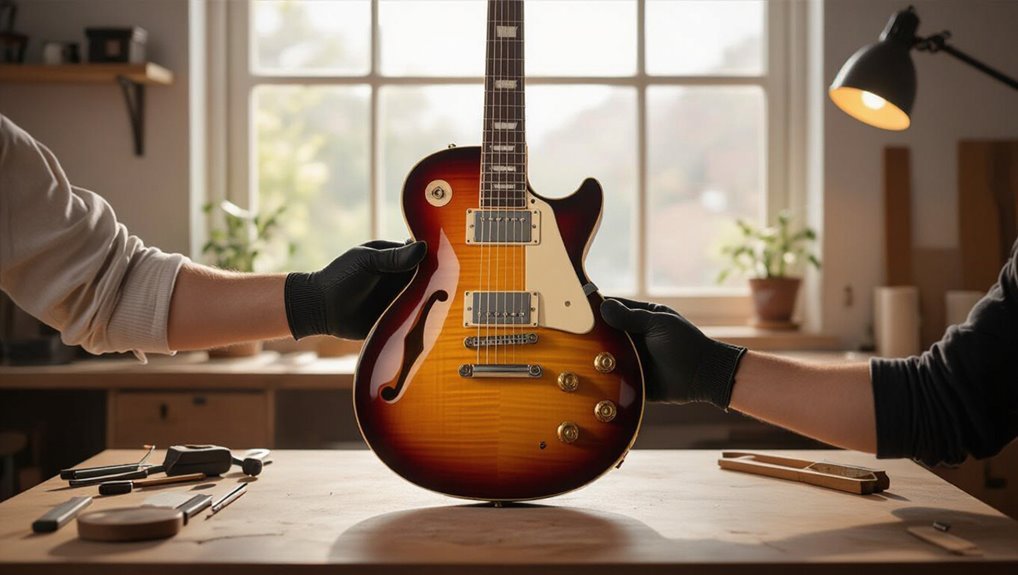
While sunburst painting can seem complex, this step-by-step guide breaks the process into clear, timed stages so you’ll know what to do and when; expect to spend a few focused hours on preparation and layering, with additional drying time between coats.
You’ll gain process understanding, time efficiency, and technique mastery, boosting skill development and realistic outcome expectations while improving finish quality through focused practice.
Decide on the Sunburst Style You Want (Vintage, Modern, or Custom)
When you pick a sunburst style—vintage, modern, or custom—you set the tone for every color choice, masking decision, and blending technique you’ll use, so choose with your end look and skill level in mind.
Decide whether you want worn vintage styles with subtle fade and nitro warmth, sleek modern gradients with bold contrast, or bespoke custom techniques that mix palettes and edge shapes to express your vision.
Gather Tools and Materials for a Pro Sunburst
Before you mix paints or lay down tape, gather a concise kit of quality tools and materials so you won’t interrupt your workflow.
List essential tool types: spray gun or airbrush, masking tape, sanding blocks, respirator, clamps, and soft cloths.
Focus material selection on primers, fillers, stains, and clear coats suitable for wood.
Organize everything before you start.
Choose Paint Type: Nitrocellulose, Acrylic, or Spray Lacquer
Now you’ll pick between nitrocellulose, acrylic, or spray lacquer, since each affects tone, aging, and finish durability.
Nitro offers that vintage look and thinness but can yellow and needs careful handling, while acrylics dry fast and stay clear but may build up differently than lacquers.
Consider how each applies and dries—spray behavior, drying time, and sanding between coats will shape your final sunburst.
Nitrocellulose Pros Cons
Although nitrocellulose lacquer ages beautifully and gives that classic, thin-wearing finish tonewoods love, it has real downsides you should weigh: it yellows over time, is soft and prone to checking, and needs careful ventilation and slow curing compared with modern acrylics or urethanes.
You’ll get superb nitrocellulose durability and vintage feel, but watch nitrocellulose toxicity risks—use respirators and proper curing time.
Acrylic Versus Lacquer
When choosing a paint system for your sunburst, you’ll weigh trade-offs between nitrocellulose lacquer, modern acrylics, and spray urethanes: nitro gives that vintage look and thin, resonant feel but yellows and checks, acrylics dry fast, resist yellowing, and are easier to work with, while urethane sprays offer extreme durability and gloss but can be thick and harder to sand back.
| Nitro | Vintage warmth |
|---|---|
| Acrylic | Fast, good acrylic durability |
| Urethane | High gloss, deep lacquer sheen |
Application And Drying
Start by planning your application strategy—how you spray, how many coats you lay down, and how long you’ll wait between them will change depending on whether you picked nitrocellulose, acrylic, or spray urethane.
Choose application techniques suited to each: thin, frequent coats for nitrocellulose; moderate coats for acrylic; heavier, controlled passes for urethane.
Respect recommended drying times and cure schedules to avoid runs and orange peel.
Choose Colors and Mixing Ratios for Smooth Gradients
Start by choosing a base coat and tinting it subtly to set the warm center tone you want.
Then plan layered dye mixing ratios—begin with higher dilution for translucent center layers and increase pigment concentration as you build toward the edge.
Test each ratio on scrap wood so you can control how smoothly the gradients blend.
Base Coat And Tinting
Pick a base color that complements your chosen sunburst—normally a light amber, honey, or pale yellow—to let the darker edge tints sit cleanly on top; apply it evenly and thinly so the grain shows through if you want depth.
Use proven base coat techniques to seal and level.
For tinting methods, test small mixes, keep thin translucent layers, and blend edges while wet.
Layered Dye Mixing Ratios
With the base coat set and tinted to your liking, you’ll move into layering dyes to build a smooth sunburst gradient.
Choose three to five complementary shades (light center, two midtones, and one or two edge darks) and plan mixing ratios that give predictable, repeatable translucency.
You’ll test layered dyes on scrap, note pigment-to-solvent ratios, start with 1:4 for subtlety, increase to 1:2 for depth, and record mixing techniques.
Prep the Guitar Body: Stripping, Sanding, and Repairing Dents
Strip the hardware and tape off any areas you don’t want painted, then remove the finish down to bare wood or a stable sealer so the new sunburst layers will adhere properly.
Use proper stripping techniques—chemical or mechanical—working with the grain.
Sand progressively to 320–400 grit, inspect for dents, and perform dent repair with steam or grain filler.
Keep surfaces clean and dust-free.
Mask the Neck, Cavities, and Hardware
Before you spray, protect the neck with masking tape and a paper or cloth guard so finish won’t seep under the headstock.
Cover pickup cavities, control cavities, and any exposed hardware with tape and plastic to keep paint and overspray out.
Take your time sealing edges—proper masking makes cleanup easier and prevents finish problems later.
Protect The Neck
Start by carefully masking the neck, pickups, cavities, and any hardware you want to keep paint-free so overspray won’t ruin your setup.
For neck protection, wrap the fretboard and headstock with soft paper and cloth, then secure edges with painter’s tape.
Use layered tape methods for a snug seal, avoid adhesive on frets, and check seams before spraying to prevent bleed and damage.
Cover Cavities And Hardware
Mask the neck, cavities, and hardware carefully so paint only lands where you want it. Use high‑quality tape and foam for cavity protection and precise hardware masking. Press edges firmly, cover pickups, pots, and bridge, and double‑check seams. Remove masking after tack coat cures.
| Item | Action |
|---|---|
| Neck | Tape |
| Cavities | Foam |
| Pickups | Cover |
| Bridge | Mask |
| Pots | Seal |
Apply a Flawless Primer and Tint Coat for an Even Color Base
Lay down a smooth, even primer coat to give your sunburst paint something uniform to bite into—this prevents blotches and guarantees the tint lays true.
Use proper primer techniques: thin, overlapping passes, light sanding between coats, and solvent-wipe cleanup.
For tint application, spray thin layers, build color gradually, and check for streaks or pooling.
Let each layer flash fully before proceeding.
Set Up Spray Equipment, Pressure, and Workspace Conditions
Once your tint coat’s even and dry, set up your spray gear and workspace so you can apply bursts with confidence.
Check spray setup: clean nozzle, correct fluid tip, and 20–25 psi for HVLP or manufacturer-recommended pressure.
Check your spray setup: clean the nozzle, fit the right fluid tip, and run HVLP at 20–25 psi.
Position lights, ventilation, and tack cloths for proper workspace preparation.
Hang the body to access edges, keep airflow consistent, and wear proper PPE.
Spray the Center Color: Tips for Even Coverage Without Runs
Start by spraying the center color in smooth, overlapping passes, keeping the gun about 6–8 inches from the surface and moving at a steady pace so the paint lays down evenly without pooling.
Use light coats, flash between passes, and watch edges for buildup.
Maintain a consistent spray technique and thin, uniform layers to preserve color consistency while preventing runs and sags.
Blend Mid-Tones: Feathering Techniques for Smooth Transitions
Pick mid-tones that sit between your center and edge colors so they’ll blend smoothly without muddying.
Use wet-blending methods—spraying or glazing while the paint’s still tacky—to ease shifts across the grain.
For tighter control, feather with a soft brush or fan brush, lightly stroking outward to soften hard lines.
Choose Compatible Mid-Tones
When you blend mid-tones, choose hues that sit naturally between your center and outer colors so the gradient reads smooth and intentional; matching undertones (warm vs. cool) and similar chroma makes feathering far easier and prevents muddy shifts.
You’ll focus on mid tone selection and color harmony to keep changes clean and predictable.
- Pick transitional hues
- Test small gradients
- Adjust saturation subtly
Wet-Blending Methods
With your mid-tones selected and tested, it’s time to blend them while the lacquer or dye is still workable; wet-blending keeps edges soft and lets you feather colors together for a seamless sunburst.
Work quickly, overlapping edges, adjusting pressure and solvent to soften joins.
Use cloths, sponges, or soft pads to control wet blending techniques, monitoring drying to perfect smooth color gradations.
Feathering With Brushes
Although feathering with brushes can seem delicate, it’s a fast, controllable way to blend mid-tones into a smooth sunburst.
You’ll use light strokes, vary pressure, and soften edges to master brush techniques and achieve seamless color blending.
Work wet-over-wet for easier shifts, lift excess paint with a clean brush, and practice feathering rhythm.
- Light, sweeping strokes
- Variable pressure
- Wet-over-wet practice
Build the Outer Sunburst Edge: Dark Edge Application and Feather Control
Once you’ve sealed and base-coated the body, it’s time to lay in the dark outer ring that defines the sunburst—apply thin, even passes of the darker tint while keeping the spray can or gun moving to prevent hard edges.
Use dark edge techniques and feather control to build depth: overlap light, quick strokes, step back to assess, and soften shifts with reduced pressure and brief misting passes.
Add Wood Grain Effects and Visible Grain Techniques (Flamed/Figured Tops)
If you want a striking sunburst, start by choosing figured wood like flamed maple or quilted mahogany for the top.
You’ll highlight that figuring with grain-filling techniques, dyes, and careful sanding to make the pattern pop under the finish.
I’ll cover specific products and steps to enhance visibility without masking the natural beauty.
Choosing Figured Wood
Choosing figured wood is the most important step when you want a sunburst that highlights grain—flamed, quilted, or birdseye tops give the color depth and shimmer that plain maple can’t match.
You’ll choose among figured wood types by inspecting wood grain patterns, contrast, and cut. Pick tight, consistent figure for subtle shimmer or bold waves for dramatic bursts.
- Flamed maple
- Quilted maple
- Birdseye maple
Enhancing Grain Visibility
After you’ve picked a figured top, you’ll want to make that grain sing under the finish.
Sand smooth, open pores with a light grain filler, then apply tinting glazes or dye washes to highlight flames.
Use controlled wiping and directional spraying as grain enhancement techniques.
Seal with thin clear coats, gently wet-sand between layers to build visual depth and a glassy, three-dimensional look.
Wet-Sand and Flatten Between Coats Without Losing Color Depth
Wet-sanding between color coats and flattening the surface are essential steps you’ll do to get a smooth, even sunburst without washing out the depth of the pigments.
Use fine grit, light pressure, and clean wipes so wet sanding techniques preserve color depth. Focus on feathering edges and checking opacity frequently.
- Light, even passes
- Feather junction lines
- Clean, damp cloth between steps
Apply Clearcoat for Gloss and How Many Coats to Expect
Seal the burst with clearcoat to lock in color and build the glossy depth a guitar needs. Choose clearcoat types (lacquer, polyurethane, or waterborne) and plan 3–8 coats depending on gloss levels desired and durability. Light tack between coats, cure properly, and space coats for even build.
| Coat # | Thickness | Effect |
|---|---|---|
| 1 | Thin | Seal |
| 3 | Medium | Depth |
| 6 | Full | Gloss |
Wet-Sand and Polish the Clear to a Showroom Shine
Start by letting the clearcoat cure fully to the manufacturer’s recommended time so you don’t gum up your sandpaper. Then level the surface with progressively finer wet sandpaper—typically starting around 800–1000 grit, moving through 1500–2000, and finishing at 3000–5000 grit depending on how deep the orange peel and runs are.
Let the clearcoat cure, then wet-sand progressively from 800–1000 grit up to 3000–5000 for a smooth finish.
Use proper wet sanding techniques and quality polishing products to finish.
- Remove sanding scratches
- Work evenly, keep it wet
- Finish with a swirl-free polish
Quick Fixes During Spraying: Control Halos, Blotches, and Runs
Catch problems as you spray rather than trying to hide them later: haloes, blotches, and runs are easiest to stop in-progress, so watch each pass closely and correct small issues immediately.
For halo control, feather edges with light misting and blend before paint skins.
For run prevention, reduce trigger pressure, keep gun moving, and wipe tiny sags with solvent-soaked cloth between coats.
Common Mistakes and How to Fix Orange Peel, Blotches, and Halos
When a finish doesn’t lay down smoothly, you’ll usually see orange peel, blotches, or haloing—and each has a clear cause and fix you can apply right away.
When finishes refuse to lay flat, expect orange peel, blotches, or haloing—each has a clear cause and quick fix.
Assess spray distance, pressure, and thinness; sand and recoat where needed.
Quick fixes include:
- Wet-sand light orange peel, then polish.
- Blend and respray when fixing blotches.
- Feather edges to remove halos and respray.
Aging and Relic Options: Controlled Wear, Yellowing, and Checking
Aging a sunburst gives the guitar character and can be as subtle or extreme as you want; you’ll choose techniques that mimic decades of use—controlled wear, lacquer yellowing, and finish checking—rather than leaving it to chance.
You’ll score edges, sand high spots, glaze yellowing effects into clearcoat, and induce mild checking techniques for realism.
Plan layers, test, and proceed slowly for authentic aging finishes.
When to Hire a Pro for Complex Refinishing or Structural Repairs
If you’re unsure about structural issues, complex color matching, or extensive lacquer work, hire a pro—these jobs demand specialized tools, experience, and an eye for seamless results that most DIY setups can’t match.
You should call for professional refinishing or structural repairs when risks include hidden damage, neck or body alignment, or irreplaceable vintage value.
- Hidden cracks or rot
- Neck or bridge alignment
- Vintage or high-value instruments
Maintenance Tips to Preserve Your Sunburst Finish Long-Term
Because a sunburst depends on layered color and a flawless clearcoat, you’ll want to handle cleaning, humidity, and storage deliberately to keep the finish vibrant.
For finish care, use gentle cleaning techniques, limit sunlight exposure, and enforce humidity control.
Set proper storage conditions, use protective covers, perform routine inspections, prevent accidental damage, mind environmental factors, and apply polish application sparingly.
Frequently Asked Questions
Can I Use Water-Based Dyes With Nitrocellulose Clearcoat?
Yes, you can use water-based dyes with nitrocellulose clearcoat, but you’ll test first: water based advantages include easy cleanup and vivid color, while nitrocellulose compatibility demands proper sealing to prevent lifting or blushing.
How Long Before Restringing and Setup After Final Polish?
Wait at least 48–72 hours after final polish before restringing and setup; you’ll let clearcoat finish settling and curing, ensuring drying times are met so string tension won’t dent or mar the finish once you tune and adjust.
Does Sunburst Technique Differ for Acoustic Vs Electric Bodies?
Yes — you’ll adapt: acoustic nuances demand thinner coats, grain filling, and gentle spraying to preserve resonance, while electric techniques let you layer heavier pigments, masks, and fades over solid bodies for bolder, more controlled sunburst effects.
Can I Replicate OEM Factory Fades Exactly at Home?
You probably can’t replicate OEM factory fades exactly at home, but you can get very close by mastering color blending techniques and using fade consistency methods like controlled spraying, templates, and measured thinning to match OEM appearance.
What Safety Gear for Long-Term Solvent Exposure?
You’ll need respirators, gloves, goggles, and ventilation—seriously, like breathing mountain air forever. You’ll use NIOSH-approved cartridges, chemical-resistant nitrile or neoprene gloves, sealed eye protection, and local exhaust to reduce solvent exposure and long term effects.
Conclusion
So you’ve learned the tools, colors, and tiny disasters that make a real sunburst—congratulations, you’re now dangerously capable. With patience, the right lacquer, and a steady wrist you can fake decades of vintage charm in one weekend—what could go wrong? If you mess up, sand it and try again; if it still looks terrible, call the pro you secretly admired all along. Either way, your guitar will tell a better story than you will.
