
Can Chalk Paint Be Used on Walls? Pros and Cons Explained
Yes — you can use chalk paint on walls if you want a soft, matte, textured look and don’t need heavy-duty scrubbability. It sticks well to many surfaces with basic prep, covers in two or more coats, and’s great for decorative effects and easy touch-ups. Downsides are lower durability, extra sealing and maintenance, and limited moisture resistance unless you topcoat. Keep these trade-offs in mind; keep going to learn where it works best and how to protect it.
Quick Answer: Can You Use Chalk Paint on Walls?
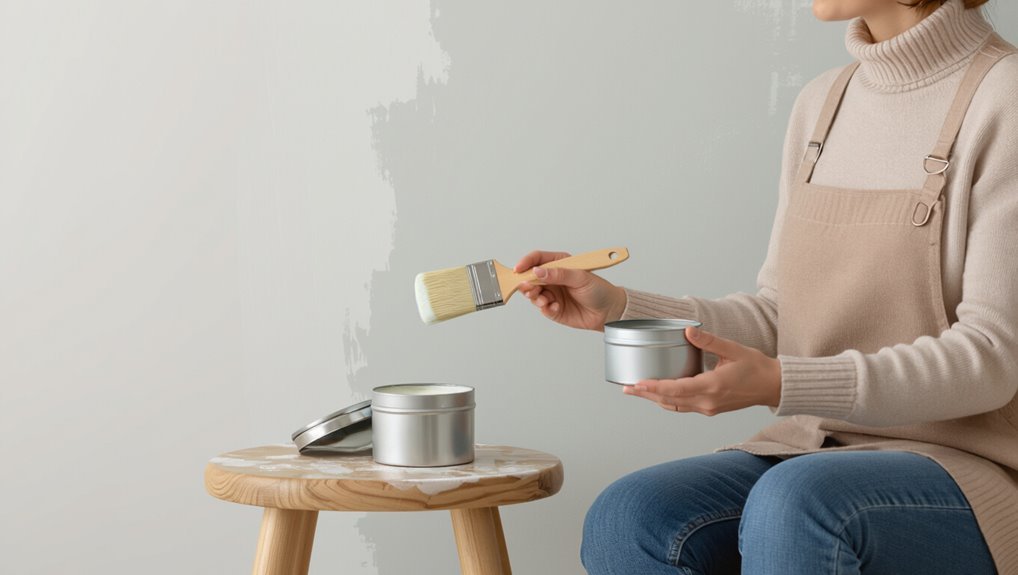
Wondering if you can use chalk paint on walls? You can—chalk paint benefits include easy application, matte finish, and strong adhesion to many surfaces.
You’ll get unique wall aesthetics and a soft, textured look, though durability and washability may lag behind latex. Seal with a clear topcoat for protection.
Consider room use and prep before committing.
What Chalk Paint Is vs. Wall Paint
Think of chalk paint as a decorative, chalky-bodied product that’s formulated for adhesion and texture rather than everyday scrubbability; wall (latex) paint, by contrast, is engineered for durability, stain resistance, and easy cleaning.
You’ll notice chalk paint characteristics like matte, velvety finish and quick distressing, while wall paint differences include tougher binders, washability, and smoother, uniform coverage suited for high-traffic rooms.
Adhesion Basics for Chalk-Painted Walls
Before you grab a brush, make sure the wall is clean, dry, and free of loose paint or grease so the chalk paint can stick properly.
Think about bonding factors like porosity, existing finishes, and room humidity, because they affect adhesion and drying.
With those checks done, you’ll get a more durable, even finish.
Surface Preparation Importance
Because chalk paint sticks best to a clean, stable surface, you’ll get the smoothest, longest-lasting finish by taking preparation seriously.
You’ll assess surface types, address wall texture, and follow paint preparation steps that suit paint compatibility. Proper cleaning, repairing and priming improve application techniques, expand finish options, and protect aesthetic considerations.
That care reduces problems and improves long term effects for chalk-painted walls.
Paint Bonding Factors
Adhesion depends on three main things: the wall’s surface energy, its porosity and texture, and the compatibility between chalk paint and what’s already on the wall. You should test surface compatibility, sand glossy areas, and use bonding agents or primers when needed to improve adhesion and durability.
| Factor | Effect | Solution |
|---|---|---|
| Surface energy | Low adhesion | Primer/bonding agent |
| Porosity | Absorbs paint | Seal or dilute |
| Texture | Mechanical keying | Sand or fill |
Which Wall Surfaces Accept Chalk Paint Best
Texture matters: smooth plaster, drywall with a light sanding, and previously primed or painted surfaces accept chalk paint best because they give the paint enough tooth to stick without excessive prep.
You’ll consider chalk paint adhesion and surface compatibility, choose texture options for desired finish variety, pick color selection wisely, and use proper application techniques to guarantee even coverage and lasting results on compatible walls.
When You Can Skip Sanding and Priming
When your wall is clean, smooth, and already sealed with a stable paint or primer coat, you can usually skip sanding and priming before using chalk paint; just wipe away dust and grease, patch any small holes, and spot-prime bare or stained areas to secure an even finish.
You’ll use light sanding alternatives like deglossers or scuff pads, and selective priming techniques on exposed spots to confirm adhesion.
When You Should Sand and Prime First
If your wall has glossy paint, peeling areas, water stains, or bare drywall, sand and prime first to guarantee the chalk paint bonds and hides imperfections.
You’ll use light sanding techniques to scuff gloss, remove loose flakes, and smooth rough spots.
Then apply a high-quality primer—priming importance can’t be overstated—to seal stains and create a uniform, adherent surface for chalk paint.
Coverage and Hiding Power: Coats to Expect
Expect to cover most walls in two coats of chalk paint, though exact coverage per coat depends on the paint’s thickness and how textured your surface is.
If you’re painting over stains, dark colors, or patched areas, plan on an extra coat or a primer to hide them fully.
Test a small area first so you can judge how many coats you’ll actually need.
Coverage Per Coat
Most chalk paint jobs need two coats to get solid coverage, though light colors or heavily textured walls can call for a third.
You’ll control coverage per coat by varying coverage techniques and coat thickness: thin, even passes dry quickly but may need more layers; slightly thicker application hides better but risks drips.
Test a small area to balance opacity and texture before committing.
Stain & Surface Hiding
When you’re covering stains, seams, or bold color, chalk paint’s hiding power matters more than technique alone: some surfaces will need extra coats or a primer to reach solid opacity.
You’ll assess surface texture—smooth walls hide better; rough ones eat paint. Expect two to four coats for good stain resistance unless you prime first.
Test a small area before committing.
Finish and Texture of Chalk-Painted Walls
Chalk paint gives walls a soft, matte finish that masks imperfections while letting subtle texture show through; you’ll notice brush or roller marks, light stippling, and a velvety surface that feels more tactile than glossy paint.
You can choose finish options from ultra-matte to waxed sheen, and explore texture variations by layering, sanding, or using different applicators to achieve rustic or refined looks.
Durability and Wear on Interior Walls
That soft, matte surface you liked will show wear differently than standard eggshell or satin paints, so you’ll want to plan for how the finish holds up over time.
You’ll face durability concerns in high-traffic areas: chalk paint can chip or abrade more easily.
Consider substrate prep, number of coats, and protective topcoat choices to mitigate common wear factors and extend the finish life.
Cleaning and Maintenance for Chalk-Painted Walls
Although the soft, matte surface looks inviting, you’ll need gentle, regular care to keep chalk-painted walls looking their best.
Use dry dusting, soft-bristle brushes, or a microfiber cloth for routine cleaning techniques. For stains, dampen a sponge slightly and blot; avoid scrubbing.
Seal high-traffic areas with a clear wax or matte topcoat. Simple maintenance tips extend finish life.
Moisture, Humidity, and Bathroom/Kitchen Use
You can use chalk paint in kitchens and bathrooms, but you should know its moisture resistance has limits.
High humidity can encourage mold and mildew on improperly sealed surfaces, so you’ll want to contemplate a protective topcoat.
For the most durable results in wet areas, opt for moisture-resistant primers and clear finishes designed for high-humidity rooms.
Moisture Resistance Limits
When exposed to high humidity or frequent splashes, chalk paint’s porous, matte finish can absorb moisture and degrade faster than water-resistant paints.
So you’ll need to take precautions or choose alternatives for bathrooms and kitchens. You should add moisture barriers and surface treatments to limit humidity effects and preserve paint longevity.
But expect reduced durability compared with true waterproof coatings in wet zones.
Mold And Mildew Risk
Moisture issues also raise the risk of mold and mildew on chalk-painted surfaces in bathrooms and kitchens.
You should control humidity, vent spaces, and fix leaks promptly to support mold prevention.
Because chalk paint is porous, it won’t provide inherent mildew resistance; you’ll need to apply appropriate sealers and use regular cleaning with mild disinfectants to keep spores from taking hold and causing stains or decay.
Durable Finish Options
Although chalk paint gives a soft, matte look, it’s not naturally suited for wet areas, so you’ll need to choose durable topcoats that resist humidity and frequent cleaning.
You’ll boost chalk paint durability with sealers and coatings:
- Clear water-based polyurethane
- Wax plus clear acrylic sealant
- Marine-grade varnish for heavy moisture
- Moisture-resistant eggshell latex
Pick durable finishes based on traffic and exposure.
Topcoats for Chalk-Painted Walls: Wax, Poly, Varnish
Once you’ve finished chalk painting a wall, choosing the right topcoat—wax, polyurethane, or varnish—will determine durability, sheen, and how the surface cleans.
You’ll weigh topcoat options: wax gives a soft, low-sheen feel and easy spot repair; poly offers tough, water-resistant protection; varnish balances durability and clarity.
Match finish types to traffic level and desired maintenance.
Color Choices and Fading on Walls
When you pick chalk paint colors, remember the natural pigment range varies widely and will affect the depth and warmth you get on walls.
Consider lightfastness—some pigments fade faster in sun-exposed rooms, so plan placement and protective topcoats accordingly.
If you need a specific shade, tinting and careful color matching can help, but test swatches in the actual light before committing.
Natural Pigment Range
Because chalk paint relies on mineral and earth-based pigments, its color palette leans toward soft, muted tones and warm neutrals that age gracefully on walls.
You’ll appreciate natural pigment benefits and color palette versatility.
Consider practical options:
- Subtle taupes and beiges
- Dusty blues and greens
- Clay and terracotta hues
- Chalky pastels for layered looks
Lightfastness And Fading
Although chalk paints offer rich, natural tones, you should consider their lightfastness—their resistance to fading under sunlight—before choosing a color for a sunlit wall.
You’ll want pigments rated for good color retention, especially reds and yellows that fade faster.
For fading prevention, place samples in direct light, evaluate over weeks, and choose durable formulations or protective topcoats to preserve hues.
Tinting And Color Matching
Picking the right tint and matching colors for chalk-painted walls means balancing your vision with practical limits: pigments, base shades, and lighting all affect the final result.
You’ll use tinting techniques and color matching to predict hue, but expect variability.
Steps to follow:
- Test small swatches.
- Note light at different times.
- Adjust base primer.
- Seal to reduce fading.
Cost: Chalk Paint vs. Standard Wall Paint
Cost is often the deciding factor when you’re choosing between chalk paint and standard wall paint, and the differences go beyond just the price per can. You’ll want a clear cost comparison: chalk paint often costs more per quart, but coverage and finish can affect total spend. Consider price differences, finish needs, and sealing supplies.
| Item | Chalk Paint | Standard Paint |
|---|---|---|
| Price/quart | Higher | Lower |
| Coverage | Lower | Higher |
| Sealer needed | Yes | Optional |
| Total cost | Variable | Generally less |
Tools and Techniques for Smooth Chalk-Painted Walls
Now that you’ve weighed price and coverage, let’s look at the tools and techniques that help you get a smooth, durable chalk-painted wall.
Use proper brush selection and roller use for even application techniques; consider texture effects, color blending, finish options, and surface types.
Choose the right brush and roller for smooth, even chalk paint—experiment with texture, blends, and finishes for each surface
Mind drying times and layering methods. Clean up tips matter.
- Brushes
- Rollers
- Pads
- Cloths
How to Apply Chalk Paint for Even Coverage
When you prep the wall properly and choose the right tools, applying chalk paint for even coverage becomes straightforward: work in small sections, maintain a wet edge, and use thin, consistent coats to avoid lap marks and drips. Use these Techniques and Tips to roll, cut in, and back-roll for uniform finish.
| Step | Action |
|---|---|
| 1 | Roll |
| 2 | Cut-in |
| 3 | Back-roll |
Create Textures and Decorative Effects With Chalk Paint
Although chalk paint’s matte body lends itself to flat finishes, you can easily build texture and decorative effects with simple tools and techniques.
Experiment with brushes, rollers, trowels, and rags to create stippling, dry-brushed highlights, or raised plaster-like surfaces.
Try these texture techniques and decorative finishes:
- Rag rolling
- Dry brushing
- Trowel scrapes
- Stipple dabbing
Common Problems: Chalking, Flaking, Streaks-And Fixes
1 common set of issues you’ll meet with chalk paint are chalking, flaking, and streaking—each has a simple cause and a straightforward fix if you catch it early.
You’ll treat chalking issues by cleaning and sealing, restore paint adhesion with light sanding and bonding primer, apply flaking solutions like scrape-and-prime, and use gentle sanding and solvent wipes for streak removal to guarantee an even finish.
Safety and VOCs: Ventilation and Health Tips
When you paint, keep windows and doors open or run a fan to move fumes out and fresh air in.
Consider low‑VOC chalk paints or water‑based options to cut exposure compared with regular solvent‑based formulas.
If you’re sensitive or working long hours, wear a respirator rated for organic vapors or at least a well‑fitting mask.
Ventilation During Application
Good ventilation keeps fumes and dust from building up while you’re painting, so open windows and doors and run fans to create a steady cross-breeze that directs air out of the room.
Use these ventilation techniques to improve air circulation and protect your health:
- Position intake and exhaust fans
- Work near open windows
- Schedule breaks for fresh air
- Wear a respirator indoors
Low‑VOC vs Regular
Proper ventilation helps, but choosing the right paint can cut indoor fumes at the source: low‑VOC formulas emit far fewer volatile organic compounds than regular paints, reducing odors and health risks during and after application.
You should pick low VOCs for bedrooms and living areas, read labels for VOC content, and allow time to air out painted rooms before returning furniture or occupants.
Respiratory Protection Tips
1 simple, effective step you can take is to wear the right respiratory protection while painting—especially in poorly ventilated rooms or when using higher‑VOC products.
You should protect yourself from paint fumes with approved respiratory masks and increase ventilation. Choose suitable filters, fit masks snugly, take breaks, and avoid painting alone in small spaces.
- Choose NIOSH‑rated mask
- Check filter type
- Confirm proper fit
- Ventilate frequently
Best Rooms and Styles for Chalk-Painted Walls
When you pick the right rooms and styles, chalk paint can transform ordinary walls into tactile, lived-in surfaces that suit many decor schemes.
You’ll enhance living room focal points, boost bedroom aesthetics for a cozy atmosphere, add kitchen charm or hallway accents, and mix rustic styles, modern designs, or vintage vibes.
Try playful patterns or subtle artistic expression to personalize each space.
When to Choose Regular Wall Paint Instead
If you need walls that stand up to wear, reach for regular wall paint instead of chalk paint.
It’s easier to clean and resist scuffs in busy rooms. For large surfaces or high-traffic areas, regular paint will save you time and maintenance.
When Durability Matters
Because chalk paint offers a matte, textured finish that’s great for décor, you might still opt for regular wall paint in high-traffic rooms where scuffs, moisture, and frequent cleaning are concerns.
Consider a durability comparison and maintenance tips as you decide:
- Kitchens and bathrooms
- Hallways and mudrooms
- Kids’ rooms
- Rental properties
For Easy Cleaning
Although chalk paint gives a lovely matte look, you’ll want regular wall paint in rooms where spills, fingerprints, or greasy residues are frequent because it wipes clean without damaging the finish.
You’ll find conventional paints tolerate tougher cleaning techniques and routine paint maintenance, letting you scrub stains, use mild detergents, and refresh high-use walls without worrying about chipping or altering texture.
Large Or High-Traffic Areas
In busy hallways, family rooms, or commercial spaces you’ll want regular wall paint instead of chalk paint because it stands up to knocks, scuffs, and constant contact without showing wear.
You should pick paints offering high traffic durability and suitable finish for wall texture.
Consider:
- Scrubbability
- Stain resistance
- Durability rating
- Finish sheen for cleaning
Decision Checklist: Should You Use Chalk Paint on Your Wall?
When you’re weighing chalk paint for a wall, consider how the finish, prep, durability, and maintenance fit your space and schedule.
Ask: do chalk paint benefits match your style needs? Will you accept extra sealing and touch-ups?
Compare wall paint alternatives for longevity and washability.
Choose chalk paint only if texture and matte charm outweigh higher upkeep and lower stain resistance.
Frequently Asked Questions
Can Chalk Paint Be Used on Exterior Walls and Siding?
Yes — you can use chalk paint on exterior walls and siding, but you’ll need sealers because its exterior durability is limited; adding a weather resistance topcoat and regular maintenance will keep finish protected and longer-lasting.
Will Chalk Paint Resist Cigarette Smoke or Cooking Grease Long-Term?
No — you shouldn’t expect chalk paint to heroically repel cigarette smoke or cooking grease long-term. It soaks up odor absorption, creating maintenance challenges, so you’ll need frequent cleaning or a protective topcoat to keep walls manageable.
How Does Chalk Paint Interact With Wallpaper or Vinyl Wall Coverings?
Chalk paint can stick to wallpaper and vinyl, but you’ll test Chalk paint adhesion first; smooth vinyl often needs sanding or primer, while pronounced Wallpaper texture will telegraph through paint and may require skim-coating for a flat finish.
Can Chalk-Painted Walls Be Repaired Seamlessly After Holes or Dents?
Yes — you can, yet it’s tricky: you’ll blend patched areas with joint compound, sand, prime, and spot-paint using repair techniques and maintenance tips so your chalk-painted walls regain seamless, durable finish without obvious repairs.
Is Chalk Paint Suitable for Children’s Rooms or Nurseries?
Yes — you can use chalk paint in children’s rooms or nurseries, but you’ll want to seal it for child safety, expect varied color options, and remember it may chip more easily without a protective topcoat to withstand wear.
Conclusion
You can choose chalk paint for creative, casual corners when you crave a matte, textured finish—just confirm surface suitability and consider sealing. Chalk paint’s charm comes from its vintage, velvety look and speedy application, but skip it for high-traffic, moisture-prone rooms where durability matters most. Weigh adhesion, prep needs, and VOCs, then decide: go for gritty, graceful style in low-impact spaces or opt for robust, reliable wall paint when resilience rules.
