
32 Space-Saving Closet Ideas for Better Organization
You can reclaim every inch of your closet by decluttering first, measuring precisely, then mixing vertical shelving, double hanging rods, and built-in shoe organizers to stack storage. Use floating shelves and decorative baskets for lightweight or concealed items, clear bins with labels to prevent overbuying, and lower rods plus icon labels for kids. Add slim drawers, pull-out hampers, and LED strip lighting for function. Keep changes budget-friendly with thrifted hooks and DIY installs — keep going to see specific layouts and swaps.
Declutter Before You Reorganize
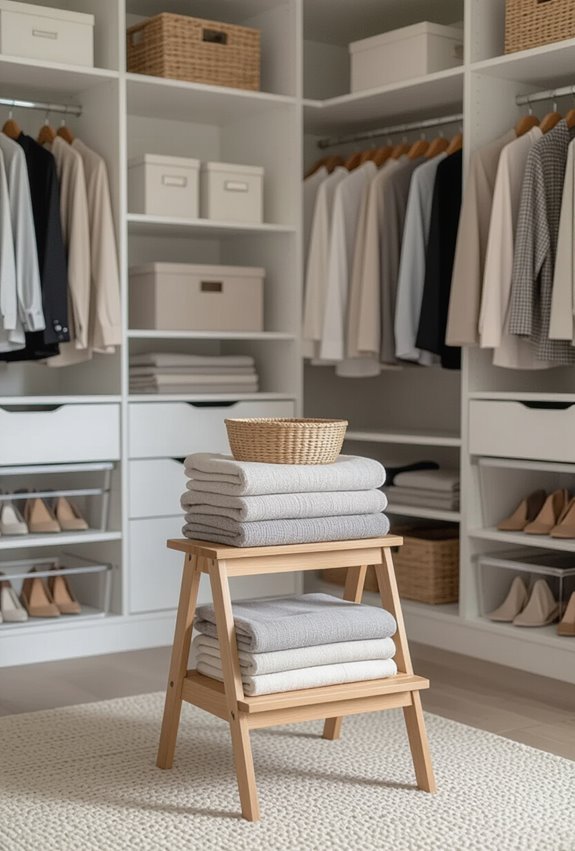
Before you start moving boxes and buying organizers, clear out what you don’t need. You’ll do a quick Mindset Reset: decide what serves you, what’s sentimental, and what’s gone.
Tackle categories one at a time and label donation bags. Use a simple Donation Strategy—schedule pickup or drop-off immediately—so items leave and your closet can actually gain useful, freed-up space.
Measure Your Closet Space Accurately
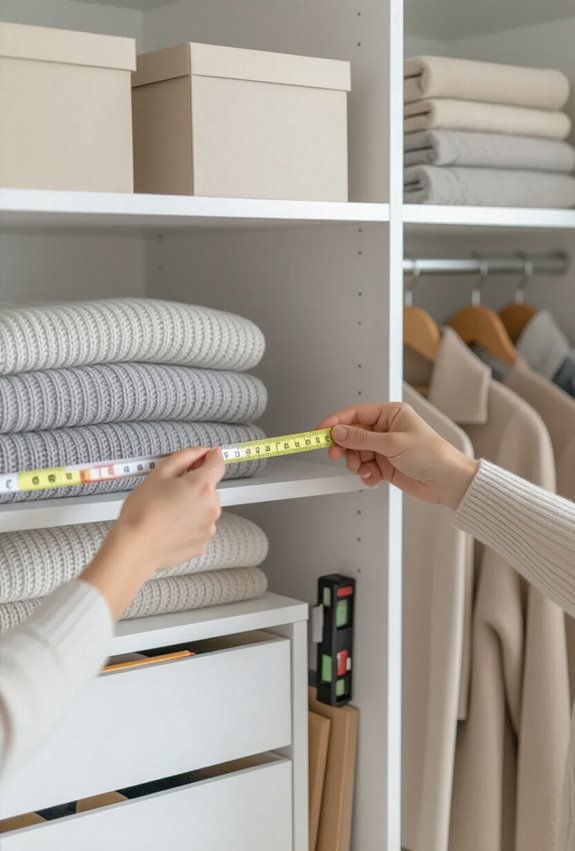
Start by taking precise measurements of your closet’s width, depth, and height so you know exactly what’ll fit.
Use a reliable tape, check tape calibration against a ruler, and record dimensions in inches or centimeters.
Measure clearances for doors, shelving, and hanging rods.
Note recesses, baseboards, and obstructions so your accurate measuring guides purchase and placement decisions.
Use Vertical Space With Tall Shelves
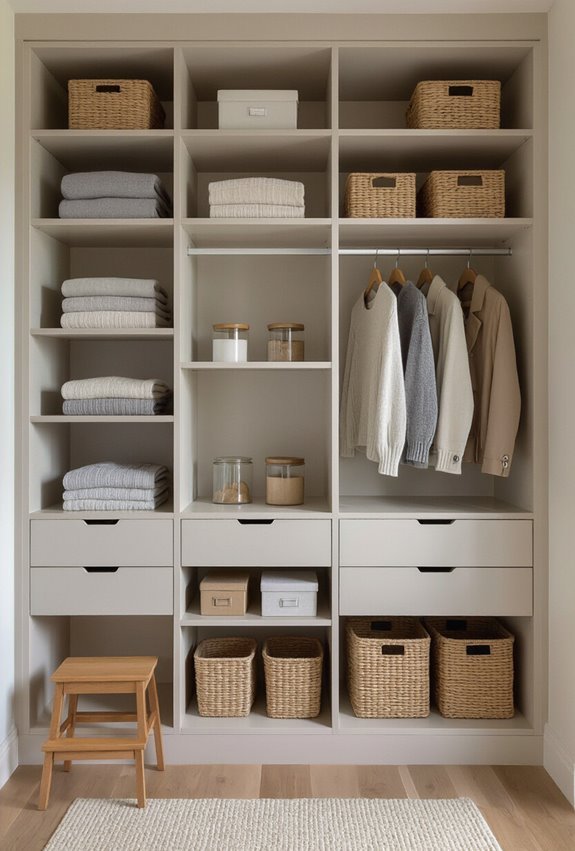
Make the most of every inch by installing tall shelves that run from floor to ceiling—this gives you layered storage for boxes, folded clothes, and seldom-used items while keeping frequently used things within easy reach.
Add narrow shelving to fill gaps beside doors or drawers, label baskets for visibility, and place everyday items at eye level so you access them quickly while optimizing vertical storage.
Install Double Hanging Rods for More Clothes
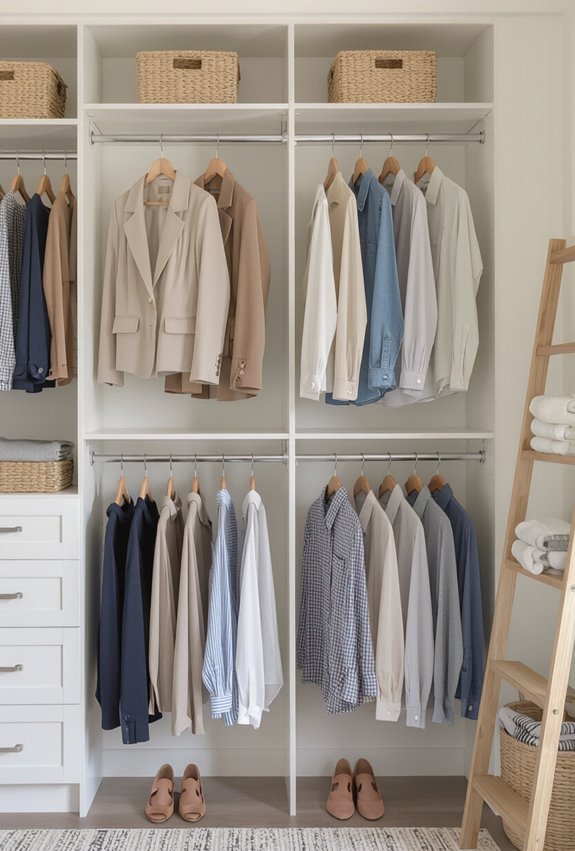
Boost your closet capacity by installing double hanging rods—one at shoulder height and another about 40–42 inches below—to double hanging space for shirts, skirts, and folded pants.
You’ll maximize organization by grouping items by length, using stacked hangers for compact layering, and choosing a sturdy rod extender where needed.
This setup keeps outfits visible, reduces wrinkling, and frees shelf space.
Add a Built‑In Shoe Organizer
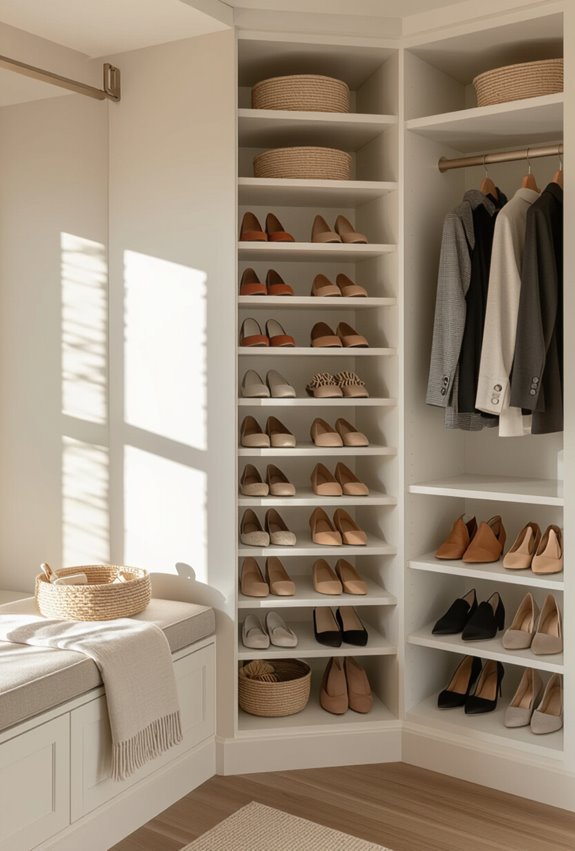
Add a built‑in shoe organizer to reclaim floor space and keep pairs easy to find.
Design low shelves beneath a built in bench for everyday shoes and angled cubbies for heels.
Add rotating racks for boots or limited space, letting you access multiple pairs without bending.
Label sections and use clear dividers so every shoe has a dedicated spot, cutting clutter instantly.
Use Slim, Non‑Slip Hangers to Save Width
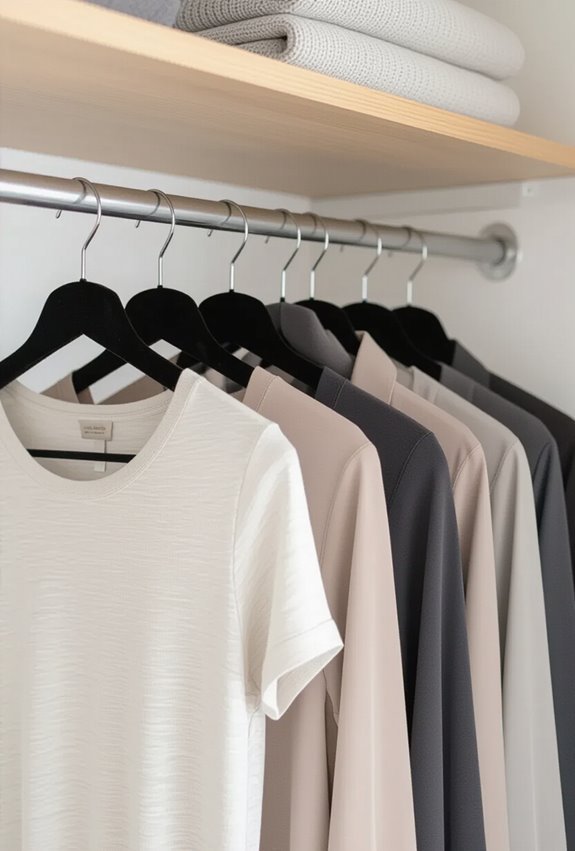
Once your shoe storage is sorted, reclaiming horizontal space becomes the next win — slim, non‑slip hangers let you pack more garments onto each rod without items slipping or bulking out.
Swap bulky plastic for thin hangers and choose models with textured surfaces or foam grip liners so shirts, dresses, and jackets stay put. You’ll see immediate width savings and a neater visual.
Add Pull‑Out Drawers for Small Items
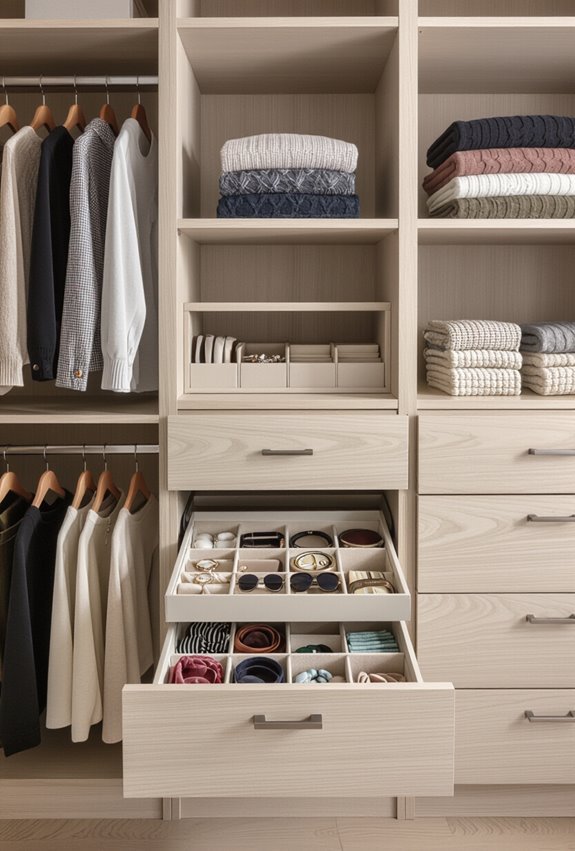
Install pull-out drawers to corral small items like socks, belts, jewelry, and toiletries so nothing gets lost in the back of your closet. You’ll slide them out for easy access, grouping items into modular baskets and labeled trays to keep everything visible.
Choose shallow, smooth-gliding drawers, mount at reachable heights, and commit to regular decluttering so small things stay tidy and usable.
Install Overhead Storage for Seasonal Gear
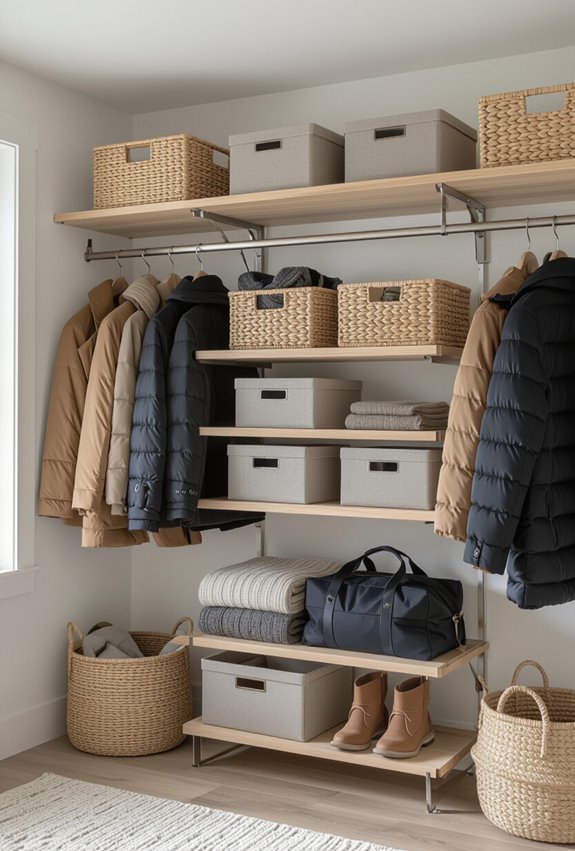
After you’ve tamed small items with pull-out drawers, make use of the often-overlooked space above your closet rod for seasonal gear.
Install low-profile overhead cabinetry to store bulky coats, holiday décor, or camping supplies. Use labeled seasonal bins inside to keep items dust-free and easy to rotate.
Secure cabinets to studs and add a step stool for safe access.
Use Clear Bins and Labels for Visibility
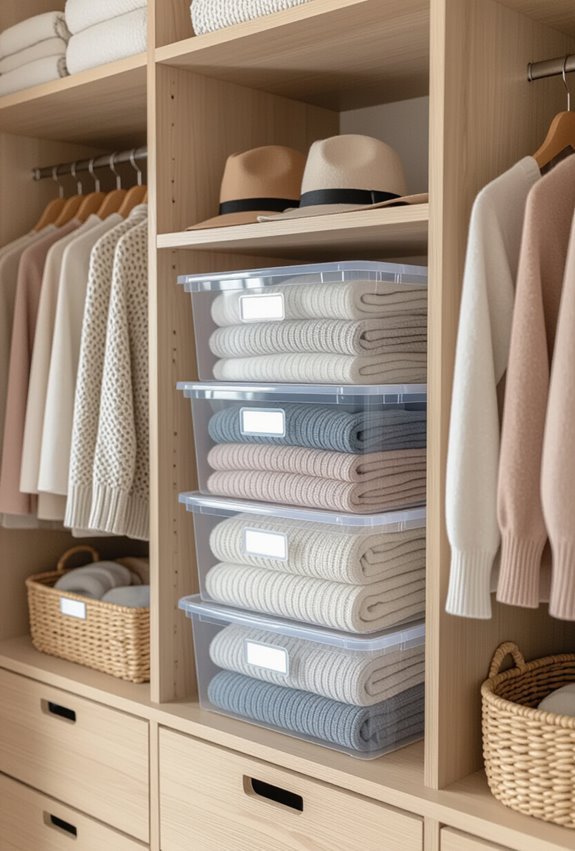
Clear, labeled bins make finding and rotating seasonal items fast and stress-free: you can spot contents at a glance, stack them neatly, and pull exactly what you need without rummaging.
Use transparent bins for shoes, linens, or accessories, add clear labeling for quick retrieval, and group similar items.
You’ll save time, prevent overbuying, and keep shelves tidy with minimal effort.
Add Hooks for Bags, Hats, and Belts
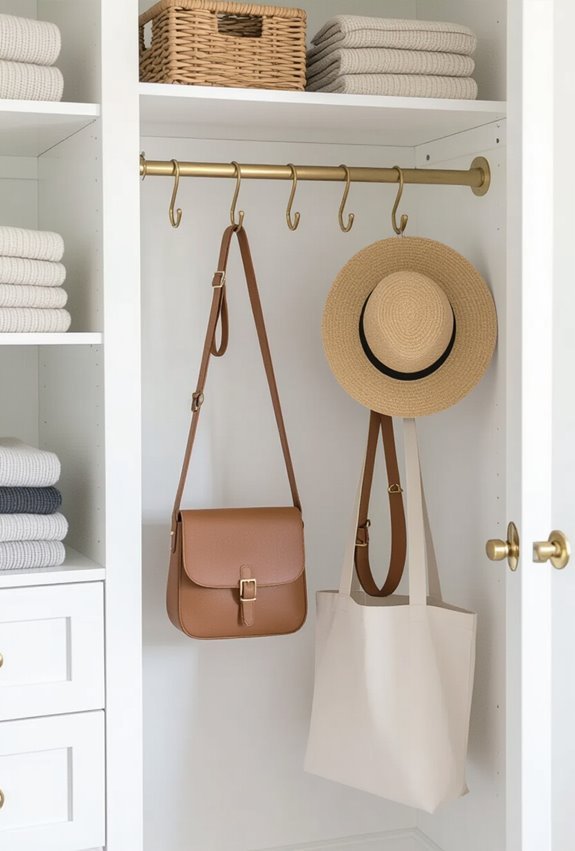
Once you’ve sorted items into clear, labeled bins, add wall hooks to free up shelf and floor space for bags, hats, and belts.
Install hat hooks at varying heights for brim protection, and use sturdy hooks for heavier bags. Attach belt loops or small hangers to keep belts visible and untangled. This keeps daily items accessible and prevents clutter buildup.
Mount a Tie and Belt Rack to Save Drawer Space
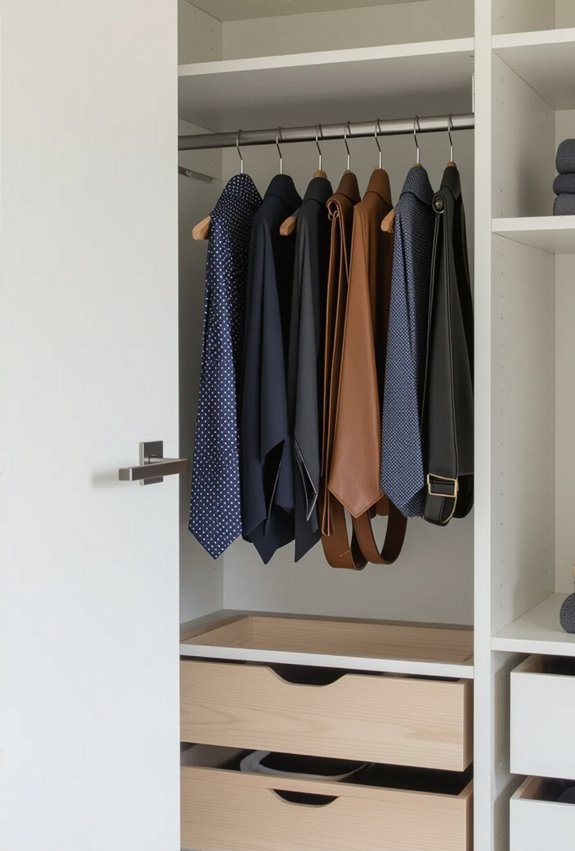
For tight closets, mount a tie and belt rack to reclaim drawer space and keep accessories visible and organized. Choose slim, wall‑mounted tiers with swivel hooks so you can fan items out for quick selection.
Install at eye level or behind the door, grouping by color or length. This frees drawers, reduces wrinkles, and keeps daily accessories accessible without cluttering shelf space.
Install a Fold‑Down Ironing Board Inside
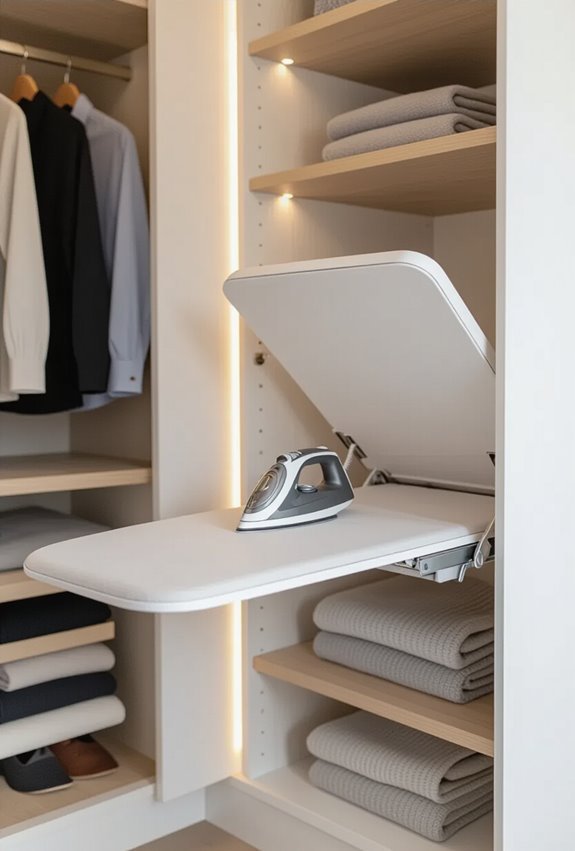
If you’ve freed up drawer and wall space with a tie and belt rack, make the most of that newly cleared area by installing a fold‑down ironing board inside your closet. You’ll create an efficient ironing nook that tucks away when not in use.
Choose a slim, space saving board with a secure latch and heat‑resistant backing to keep garments smooth without sacrificing storage.
Use Door‑Mounted Organizers for Accessories
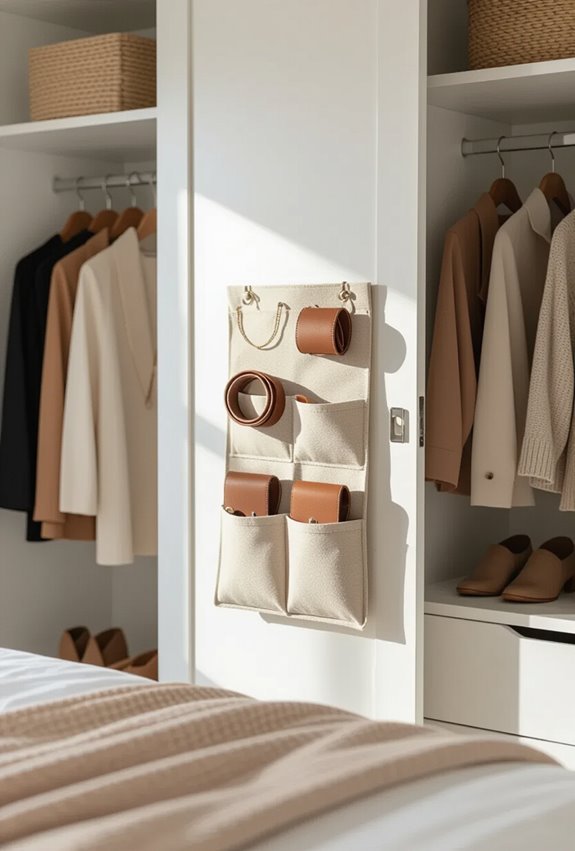
Maximize your closet’s hidden real estate by hanging door-mounted organizers that keep accessories visible and within reach.
Choose an over the door pocket unit or a slim jewelry organizer for necklaces, belts, scarves, and sunglasses.
You’ll free shelf and drawer space, reduce tangles, and streamline outfit prep.
Install at eye level, secure hooks, and sort items by frequency of use for easy access.
Create a Small Folding Station in the Closet
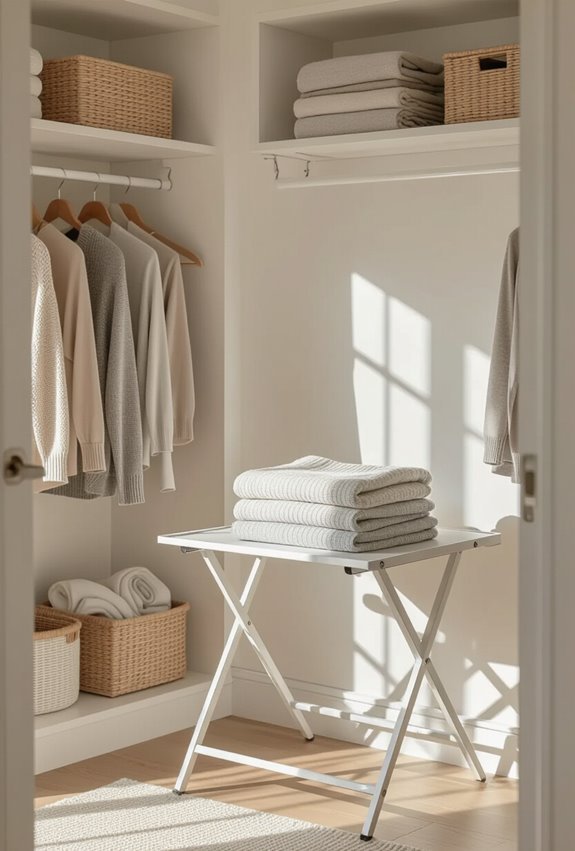
When space is tight, carve out a compact folding station in your closet by adding a narrow shelf or a pull‑out board at waist height—you’ll fold clothes faster and keep garments wrinkle‑free.
Use a sturdy folding countertop for clean stacks, add slim storage for hangers and socks, and tuck away a compact ironing mat or handheld steamer so you can finish outfits without leaving the closet.
Add Lighting to See Everything Easily
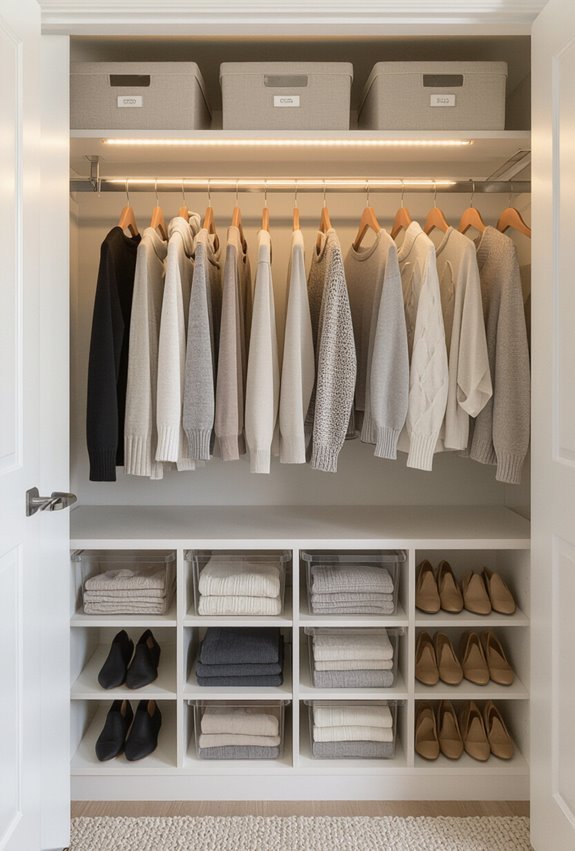
A dedicated light makes everything in your closet easier to find, especially now that you’ve got a folding station tucked inside where shadows can pile up.
Install LED strips under shelves and along rods for even illumination. Add motion sensors to activate lights when you open the door or reach in, conserving energy and keeping hands free so you can grab garments quickly and efficiently.
Use Closet Dividers to Keep Shelves Tidy
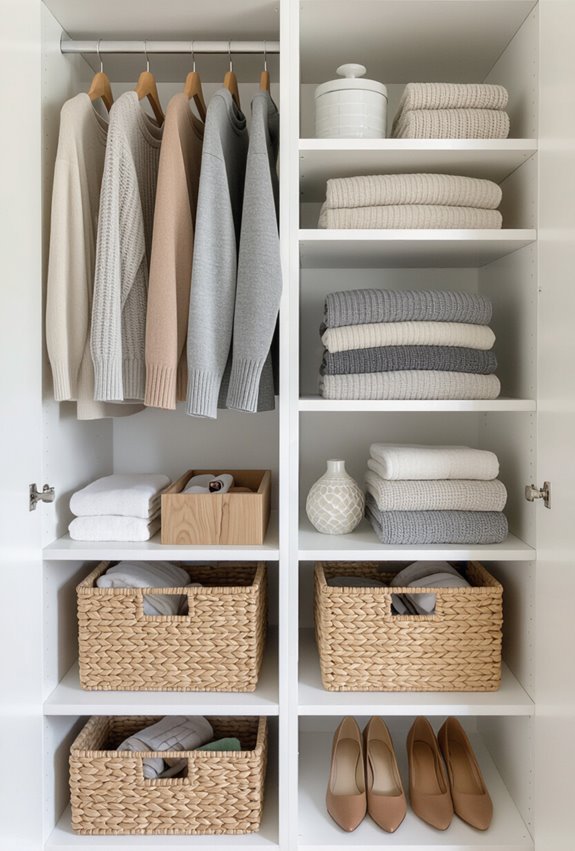
Shelf dividers keep stacks from toppling and make every pile accessible, so you’ll grab what you need without rifling through a mess.
Use adjustable dividers to define shelf spacing for sweaters, towels, and bins. Add divider labels to identify contents quickly.
You’ll maintain neat, efficient shelves, prevent messes, and save time when dressing or packing for travel.
Convert an Underused Nook Into Closet Space
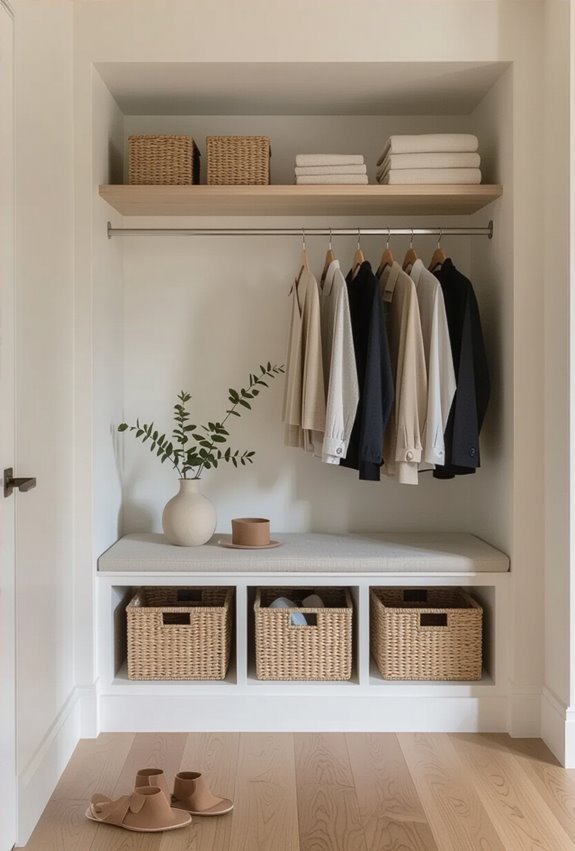
If you’ve got an awkwardly sized nook collecting dust, convert it into useful closet space by tailoring fittings to the exact dimensions—install narrow hanging rods, stacked shelves, or pull-out baskets to maximize every inch.
You can turn an underused nook into efficient storage with custom shelving, shoe cubbies, and labeled bins. Measure carefully, choose slim hardware, and keep access clear for daily use.
Use Corner Shelves to Eliminate Dead Space
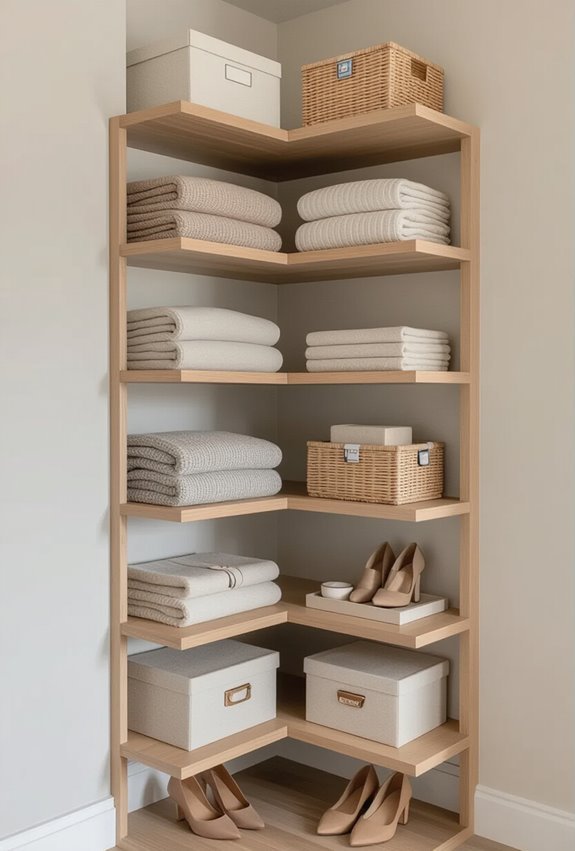
Once you’ve reclaimed an awkward nook, look to corners to pick up any leftover dead space with corner shelves that fit snugly into the angle. You’ll install angled shelving to display shoes, folded items, or decor while keeping sightlines clear.
Use corner baskets for loose items and seasonal accessories; they slide in neatly, maximize storage, and keep the closet organized without blocking access.
Add a Pull‑Out Laundry Hamper
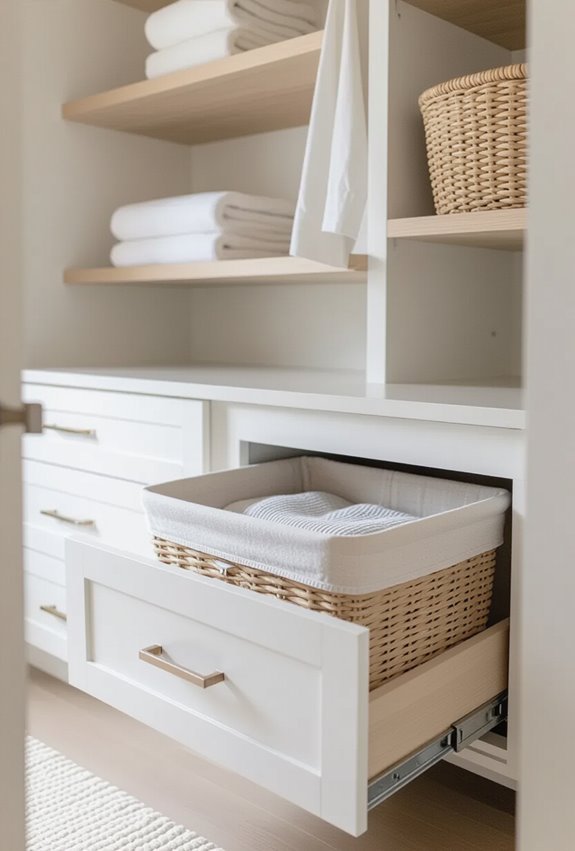
Tucked behind a closet door or beneath a lower shelf, a pull-out laundry hamper keeps dirty clothes out of sight while making collection effortless. You slide it out, drop garments in, and avoid floor piles.
Choose bins compatible with a laundry chute or removable hamper liners for easy transport and washing. Install smooth-glide hardware and label compartments for lights, darks, or delicates.
Install Adjustable Shelving for Flexibility
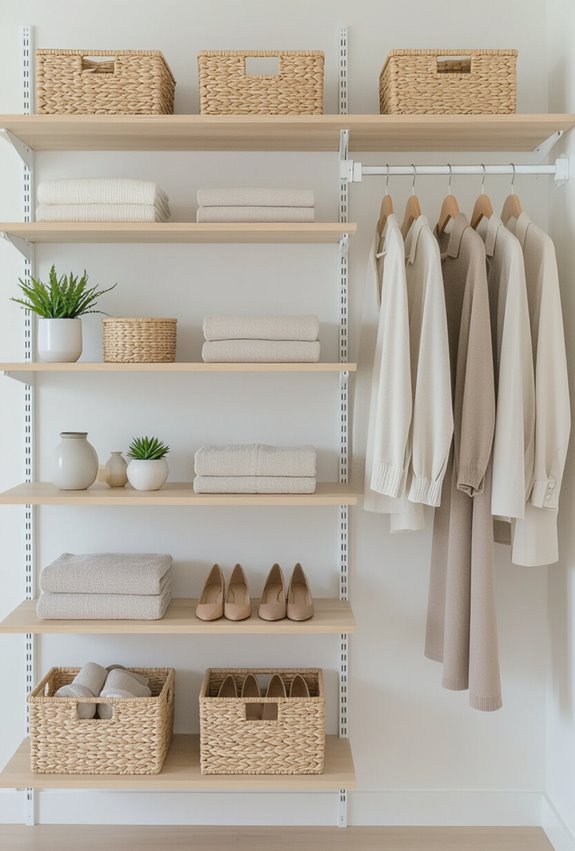
Adjustable shelving gives your closet room to breathe, letting you reconfigure heights and spacing as your storage needs change.
You’ll install adjustable hardware and modular panels to move shelves quickly, creating zones for shoes, bins, and folded clothes.
Measure first, pick sturdy brackets, and mix shelf depths for versatility.
This approach keeps everything accessible and adapts as your wardrobe or gear evolves.
Use Vacuum Storage Bags for Bulky Items
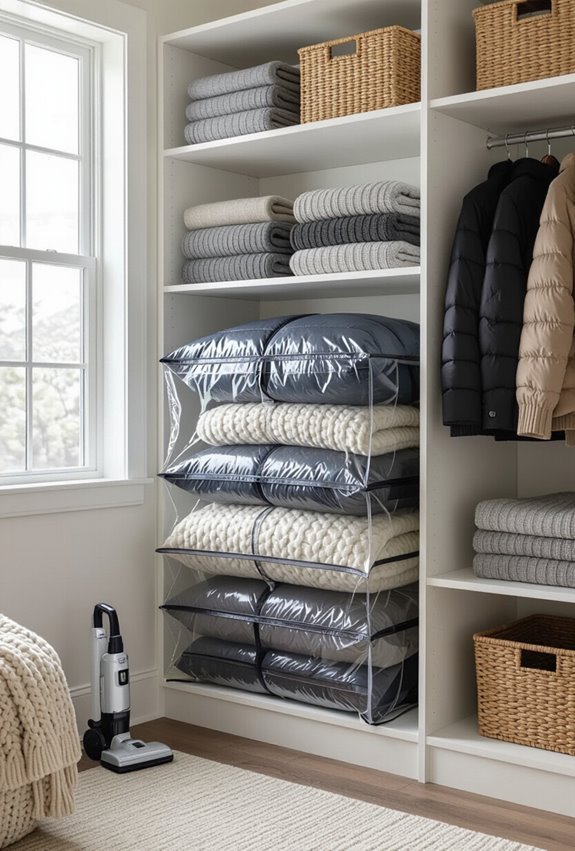
Stash bulky coats, comforters, and out-of-season sweaters into vacuum storage bags to shrink their footprint and free up shelf or floor space.
You’ll get instant space saving compression, protect fabrics from dust and pests, and clearly label bags for quick retrieval.
Follow fabric care tips—ensure items are clean and dry before sealing—and avoid long-term storage for delicate fibers to preserve shape.
Create Zones: Daily, Work, and Seasonal
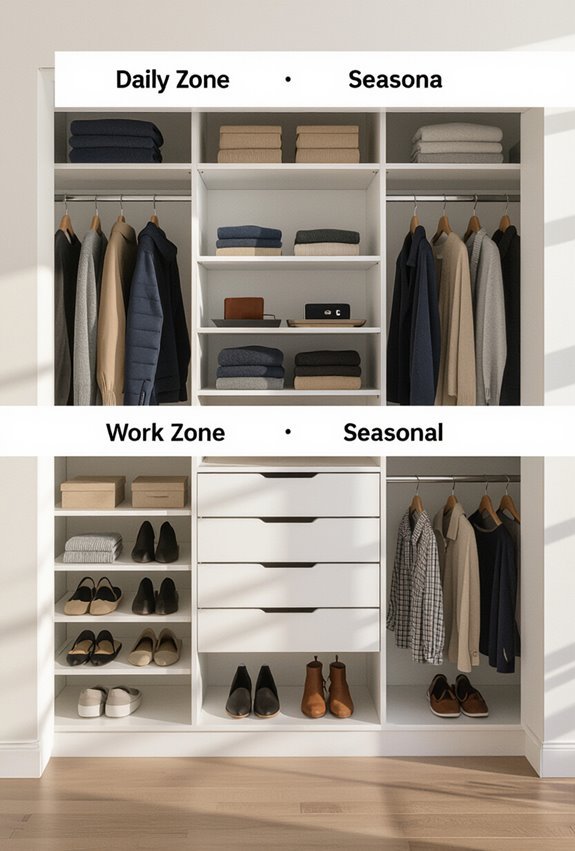
When you divide your closet into daily, work, and seasonal zones, you’ll find getting dressed and staying organized becomes much faster.
Label shelves and rods so your daily rotation is obvious, keeping everyday outfits front and center.
Put workwear on one rack for easy access and reserve top shelves for seasonal swaps.
Review zones monthly to tweak placement and maintain order.
Use Color‑Coded Storage for Faster Sorting
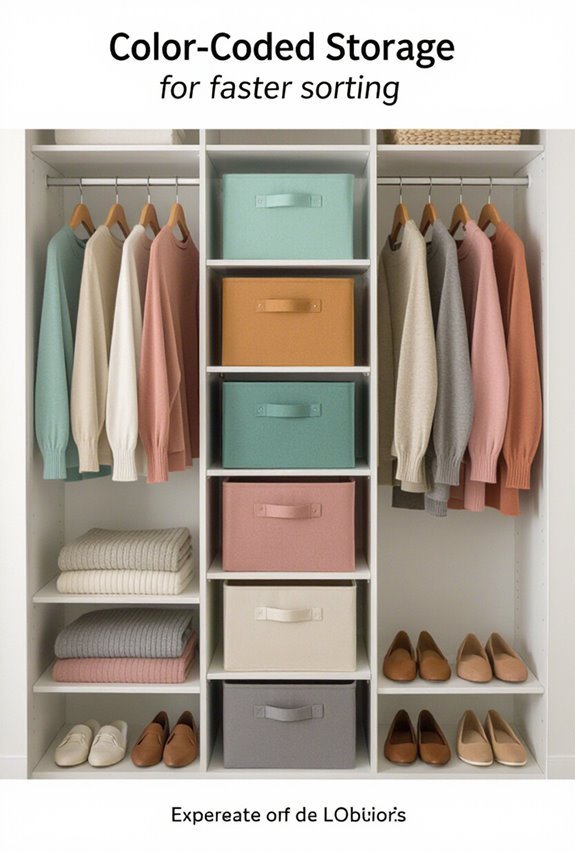
One simple trick is to assign colors to categories—everyday, work, and seasonal items—so you can spot what you need at a glance; use matching bins, labels, or hangers to make sorting and returning things nearly automatic.
You’ll use a color coded plan and clear label system for quick sorting, speed up season swapping, and reduce decision time when dressing or storing items.
Add a Mirror to Make the Closet Feel Bigger
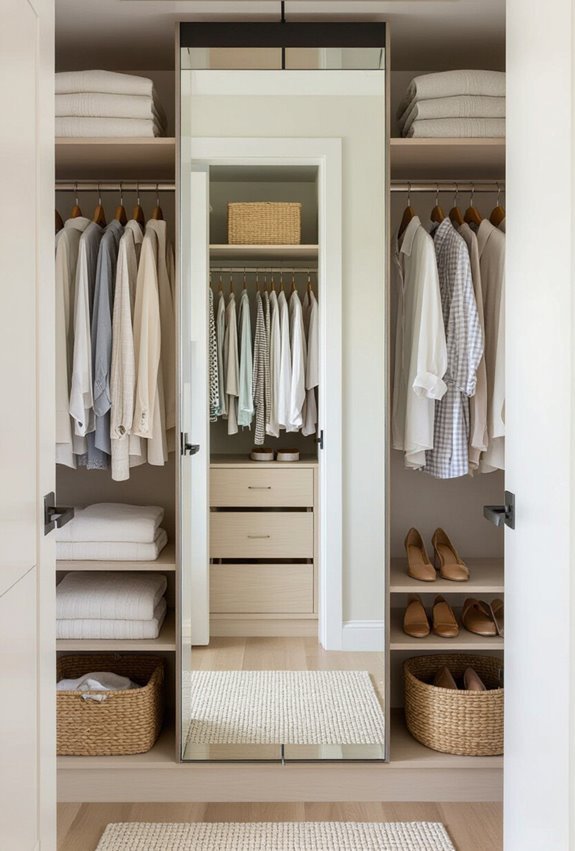
Want more space without any renovation? Add a full length mirror to reflect light and create depth, instantly enlarging your closet’s feel. Mount it on the back wall or install mirrored doors to save floor space and add function.
Mirrors help you outfit-plan faster, brighten dark corners, and make narrow closets seem wider without bulky storage changes or costly remodeling.
Choose Multi‑Function Furniture With Storage
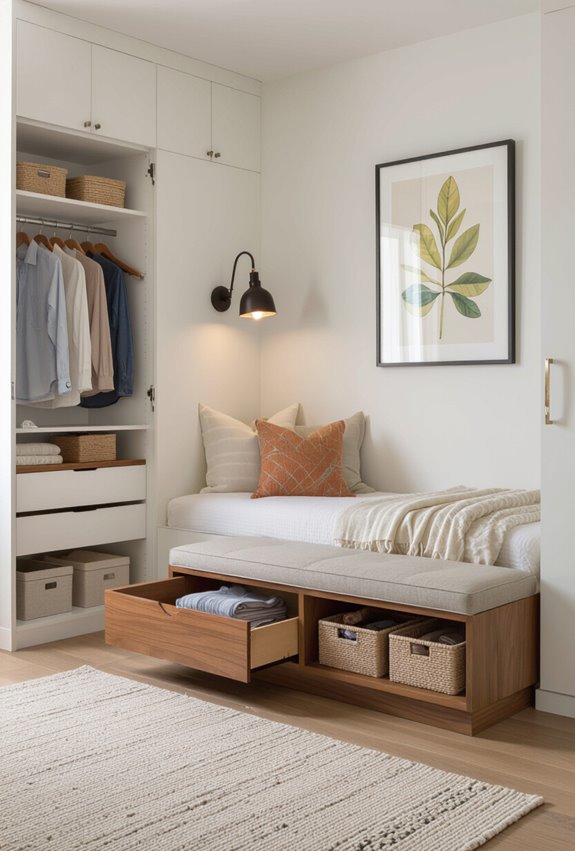
Maximize every inch by picking pieces that pull double duty—think benches with hidden bins, ottomans that stash shoes, or bed frames with built-in drawers.
You’ll choose hidden bedstands to tuck bedside essentials into narrow spaces and storage ottomans for seasonal items.
Select streamlined, durable designs that fit your layout, keep pathways clear, and make daily routines easier without sacrificing style or floor space.
Use Slim Drawers for Socks and Underwear
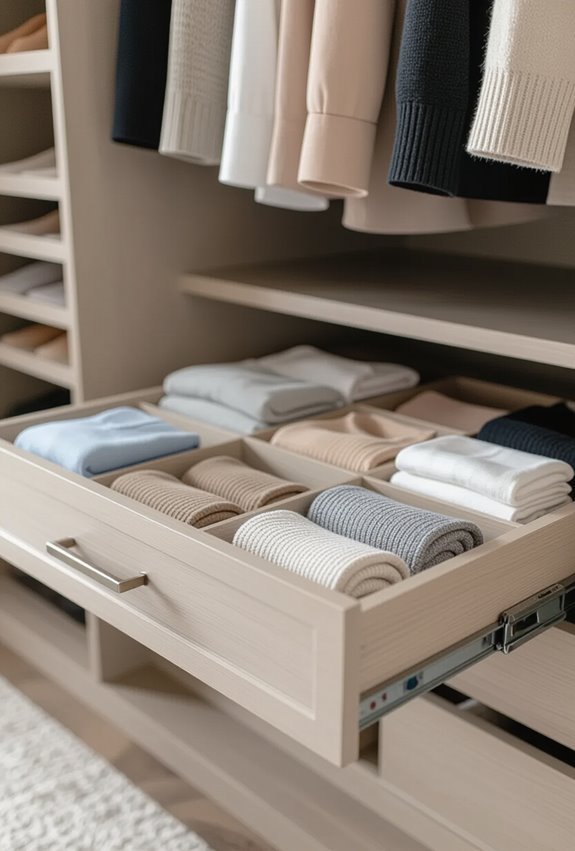
A few slim drawers can transform cramped closet shelves into an orderly system for socks and underwear, letting you see and access items without rummaging.
Install narrow drawers with socks dividers to keep pairs together and an underwear tray for neat stacks. Label compartments, slide drawers smoothly, and position them at waist height so you grab daily essentials quickly and keep clutter contained.
Add a Valet Rod for Outfit Planning
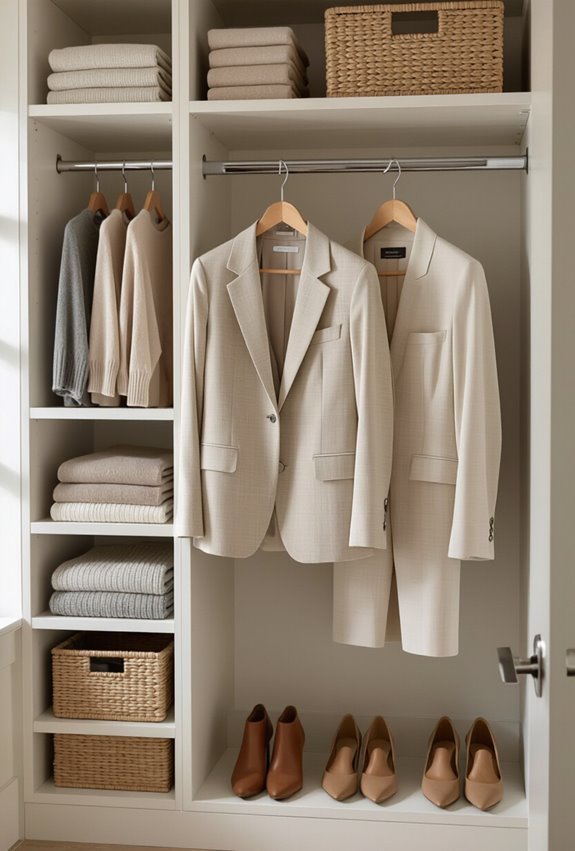
Clip a valet rod into place to simplify outfit planning and keep garments wrinkle-free between wearings. You’ll use it for outfit visualization, hanging tops, trousers, and accessories so you can tweak combinations quickly.
Choose a sturdy, retractable model for temporary installation when needed, then stow it. It saves space, speeds decisions, and prevents creases without permanent alterations.
Install Sliding or Bi‑Fold Doors to Save Floor Space
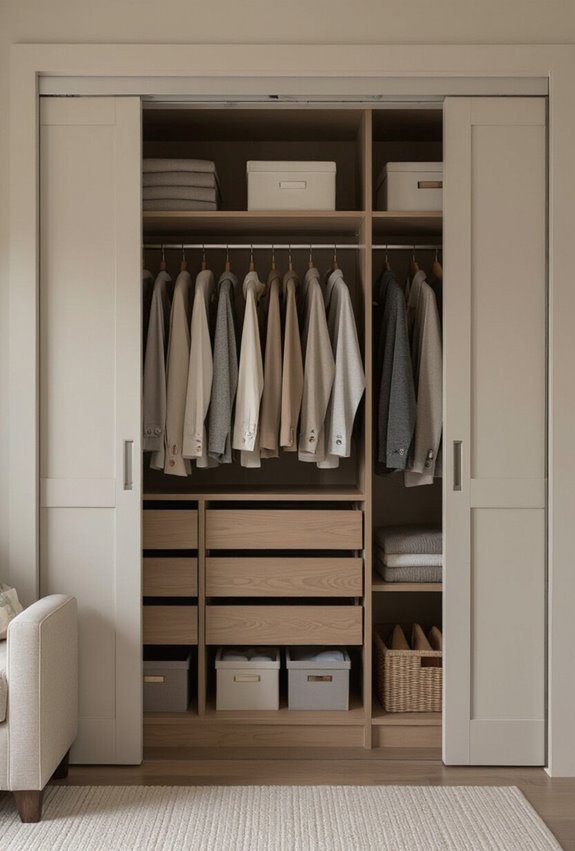
If you like the quick access a valet rod gives you but want to reclaim the floor area in front of your closet, swap swinging doors for sliding or bi‑fold models to keep the pathway clear.
Choose a barn door for rustic style or a pocket door to tuck fully away; both free floor space, improve traffic flow, and let you access clothes without stepping back.
Use Floating Shelves for Lightweight Items
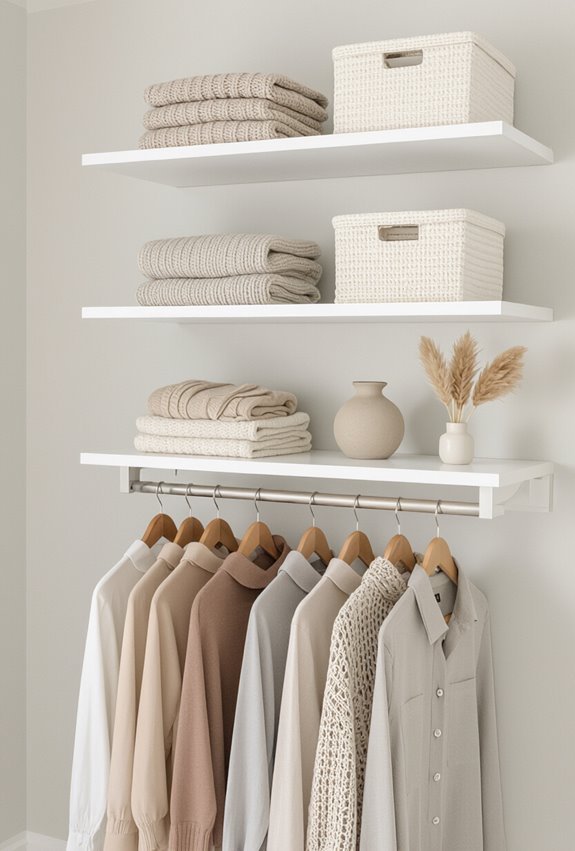
Often you’ll find floating shelves give you surprisingly big returns for little effort: they tuck into narrow spaces, keep lightweight items within easy reach, and maintain an open, airy look without bulky supports.
You can place floating trays for accessories and use lightweight baskets to corral scarves, belts, or socks.
Mount shelves at varied heights to maximize vertical space and keep clutter off the floor.
Add Decorative Baskets for Concealed Storage
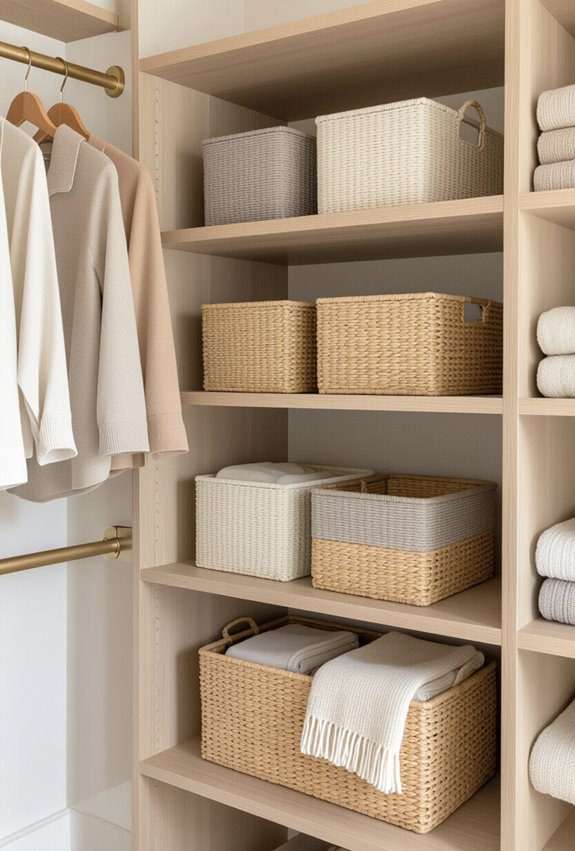
You’ll find decorative baskets are a simple way to hide clutter while adding texture and style to your closet. Use woven baskets on shelves for scarves, belts, and seasonal accessories, and choose lidded bins for items you want out of sight.
Label each container’s exterior so you’ll grab what you need quickly, keeping shelves neat and visually cohesive.
Maximize Kids’ Closets With Lower Rods and Labels
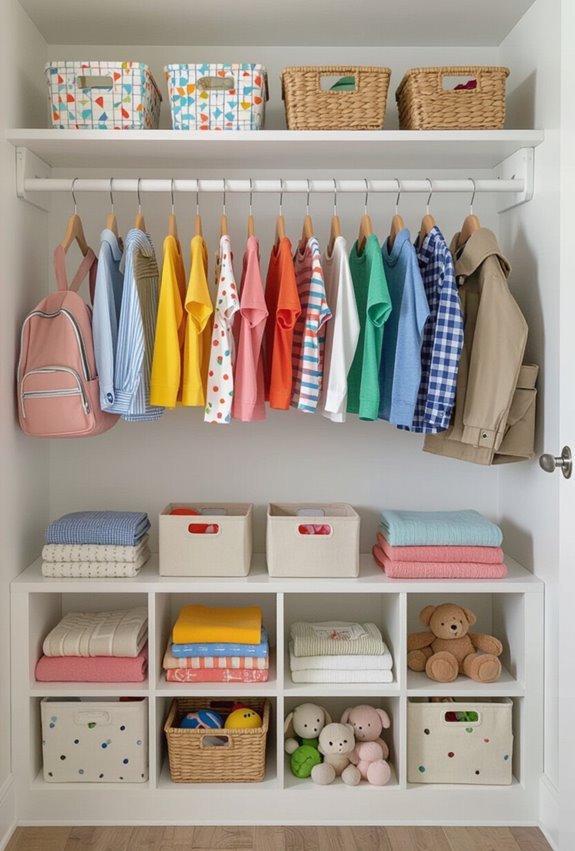
When you lower closet rods and add clear labels, kids can reach their clothes and learn to dress themselves with less help.
Install lower rods at kid height, group outfits by type, and use simple label systems with icons or names.
Rotate sizes seasonally, keep shoes visible on low shelves, and teach kids to return items so the system stays useful and tidy.
Corner Wardrobes
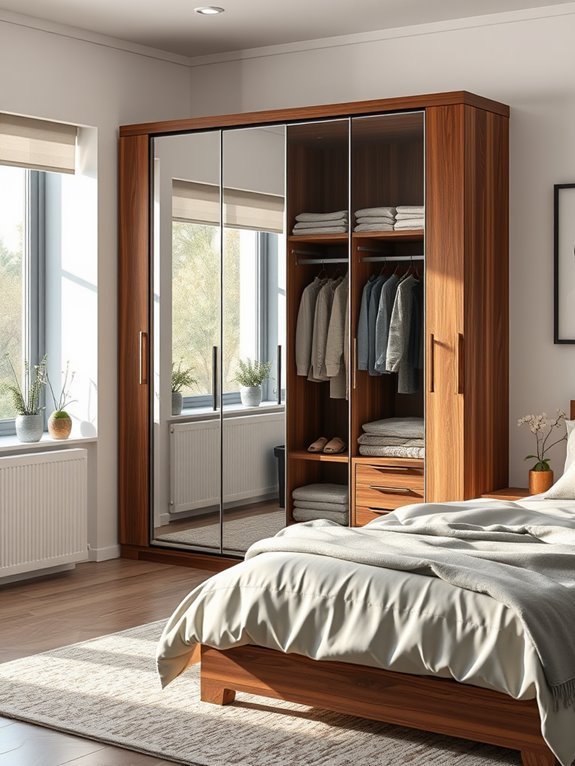
If you’re looking to maximize storage in a tight space, corner wardrobes are an excellent choice. They fit snugly into corners, utilizing often-overlooked areas.
Consider these options:
- Corner wardrobe styles: L-shaped or triangular designs.
- Corner wardrobe materials: Wood, metal, or laminate.
- Customizable features: Shelving, drawers, and hanging rods.
Transform your corner into a stylish and functional storage solution!
Built-In Shelving Units
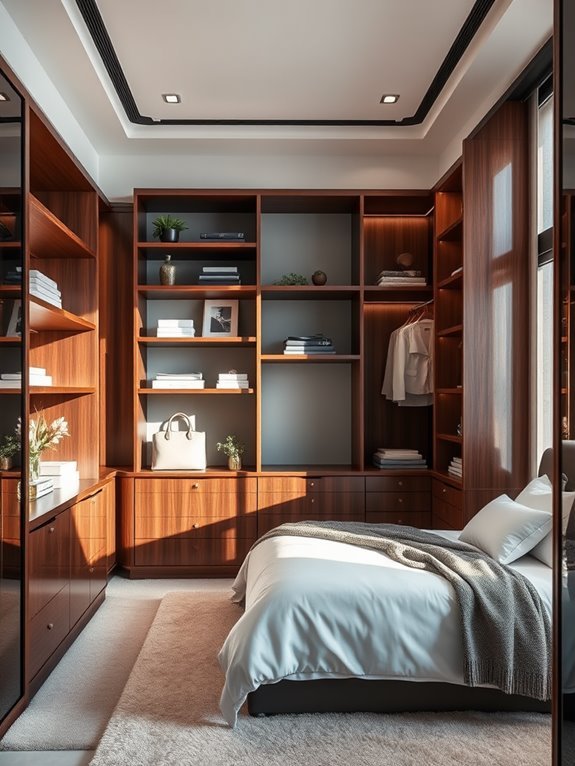
Built-in shelving units can transform your bedroom closet into a highly organized and visually appealing space.
With custom shelving, you can maximize every inch, creating designated areas for shoes, bags, and clothes.
This tailored approach not only enhances functionality but also boosts the aesthetic appeal of your closet.
You’ll appreciate the clean lines and stylish design that built-in options offer, making your closet feel like a dream.
Open Closet Systems
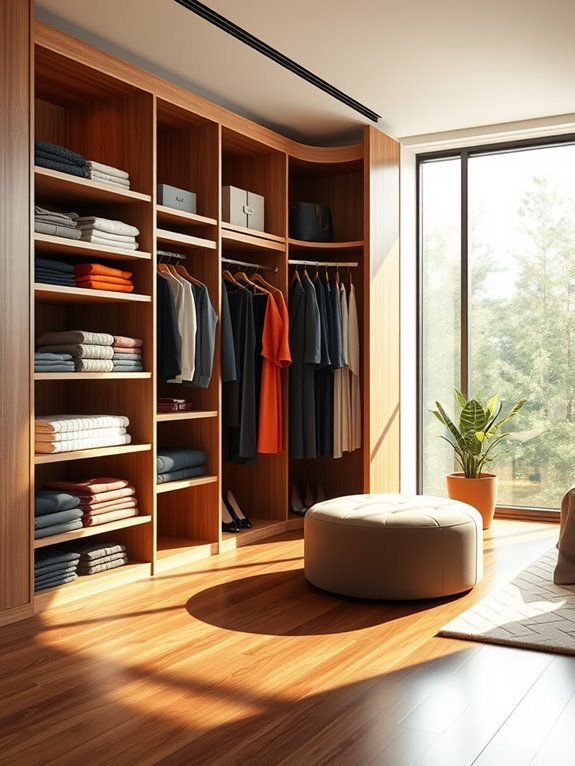
Open closet systems can transform your bedroom into a stylish and organized space.
By incorporating open shelving, you’ll enjoy easy access to your favorite clothes and accessories while showcasing your personal style.
These systems embrace minimalist aesthetics, reducing visual clutter and making your room feel larger.
Plus, you’ll appreciate the simplicity and functionality that open closets bring to your everyday routine.
Modular Closet Systems
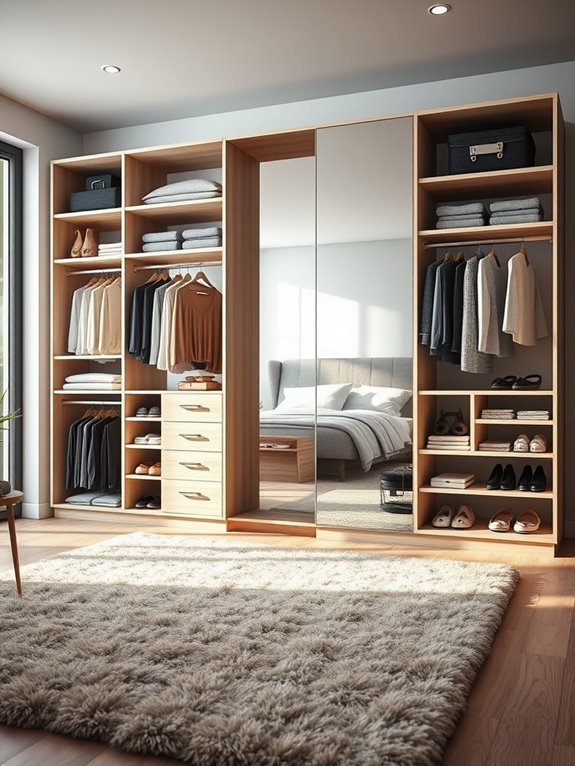
Modular closet systems offer a flexible solution for organizing your space, building on the efficiency of pull-out racks.
You can create custom configurations that fit your needs perfectly. With adjustable shelves, you can maximize every inch of your closet.
Consider these options:
- Drawer units for folded items
- Shoe racks for easy access
- Hanging rods for versatile storage
Conclusion
Incorporating these space-saving closet designs can transform your bedroom into a sanctuary of organization and style. Imagine your clothes neatly tucked away like a hidden treasure, ready to be discovered at a moment’s notice. Whether you opt for under-bed storage or a sleek sliding door closet, each solution brings you one step closer to a clutter-free haven. Embrace these innovative ideas, and watch your small space blossom into a functional retreat that reflects your personal flair!
