
30 Big Living Room Ideas to Maximize Space and Style
You can turn your oversized living room into purposeful zones by defining a conversation area, reading nook, and media corner with large rugs, lighting, and furniture groupings. Float seating a few inches from walls, use sectionals or modular sofas to anchor space, and keep 30–36 inch circulation paths clear. Add built-ins, sculptural plants, and oversized fixtures for scale, and choose durable fabrics for heavy use. Keep going to get layout checklists, measurements, and styling tips.
Zone Your Big Living Room With Distinct Functional Areas
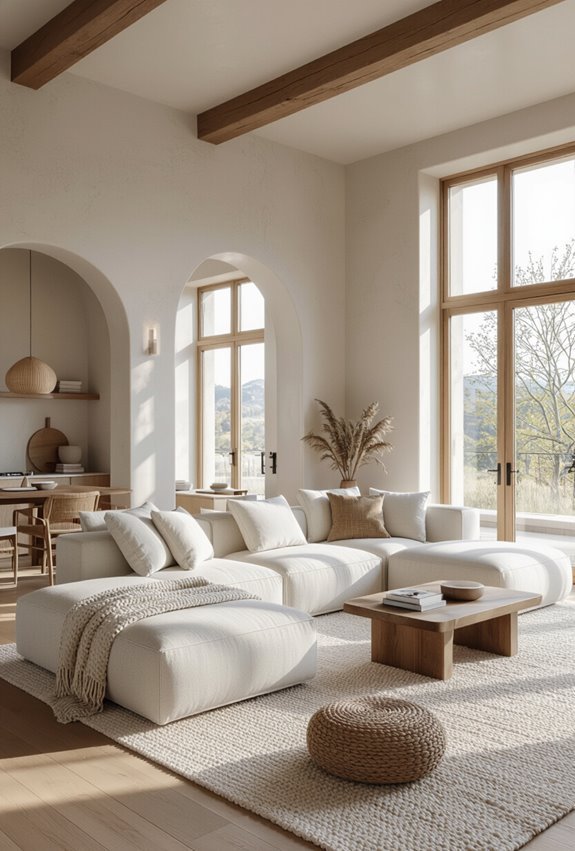
Even in a large living room, you can make the space feel intentional by creating distinct functional zones—think a conversation area, a reading nook, and a media corner.
You’ll define activity islands with furniture groupings, rugs, and lighting.
Use acoustic zoning—curtains, panels, and soft furnishings—to control sound between areas. This keeps flow clear and each zone purposeful without crowding the room.
Position Furniture to Create Conversational Groupings

Move pieces toward one another to form intimate conversation zones that invite lingering and eye contact.
Arrange furniture into conversation circles, closing gaps so people can hear and connect without shouting. Pull chairs and coffee tables inward, tilt angled sofas slightly to face one another, and keep walkways clear.
Balance scale, sightlines, and lighting so each grouping feels purposeful and easy to use.
Layer Multiple Seating Types for Flexibility

Floating your main seating away from walls sets the scene for adding varied pieces that boost comfort and function.
You can mix and match chairs, a sofa, ottomans, and modular benches to adapt seating to guests or activities.
Arrange pieces to create conversation zones, guarantee clear pathways, and use rugs or side tables to visually anchor each cluster without crowding the room.
Create a Focal Wall With Oversized Art or Media

When you anchor the room with an oversized artwork or a bold media wall, you give every other element a clear point of reference and instantly raise the room’s visual impact.
Choose oversized frames or a large-scale print, center at eye level, and balance with minimalist furniture. Add gallery lighting to highlight texture and color, creating cohesion without clutter or competing focal points.
Build a Statement Fireplace or Mantel Wall
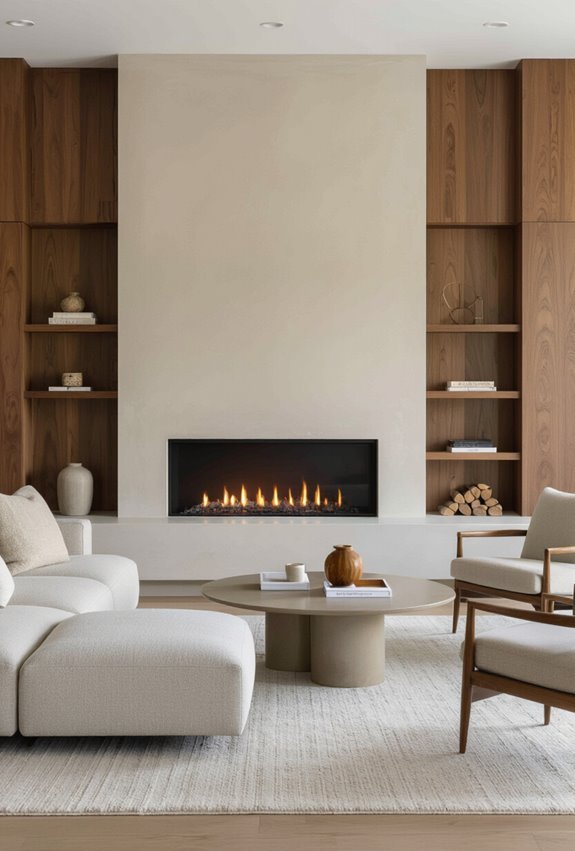
Anchor your living room around a statement fireplace or mantel wall to give the space instant warmth and personality. Choose a marble surround for refined elegance or a reclaimed mantel for rustic charm, then layer texture with tile, paint, or wood paneling.
Position seating to face the hearth, add streamlined sconces, and keep accessories minimal to maintain impact and coziness.
Add a Large-Scale Bookcase or Built-Ins for Balance

Pair your statement fireplace with a large-scale bookcase or custom built-ins on the opposite wall to create visual balance and extra storage.
You’ll favor floor to ceiling units with integrated lighting to spotlight art and books. Mix asymmetrical shelving for interest, include closed cabinets and hidden storage for clutter, and coordinate finishes with your mantel to keep the room cohesive and intentional.
Install Low-Profile Storage to Keep Sightlines Open

Tucking low-profile storage under windows or along the base of a long wall keeps your sightlines clear and the room feeling airy.
Choose low profile cabinetry to conceal clutter without overpowering scale, and use floating benches for seating that doubles as hidden storage.
Keep finishes light and minimal, align heights to furniture, and maintain open sightlines to make the space feel larger and organized.
Use a Grand Coffee Table to Tie the Seating Area

A substantial coffee table anchors a large seating arrangement and gives you a visual and functional center to build around.
Choose a grand piece—wood, marble, or metal—that complements scale and traffic flow. Pair it with an oversized ottoman for flexible seating and a soft surface. Style with an ornate tray to corral books, remotes, and a centerpiece, keeping the area organized and cohesive.
Place Area Rugs to Define Pathways and Zones

After anchoring your seating with a grand coffee table, use area rugs to guide movement and carve out distinct zones.
Place rugs to indicate pathways and prioritize traffic flow, keeping edges aligned for visual continuity. Choose sizes that sit under key furniture legs to anchor each zone, and vary textures or subtle patterns so areas feel connected without competing for attention.
Create a Reading Nook With a Cozy Chair and Lamp

Carving out a reading nook invites you to slow down and enjoy a quiet corner—place a plush, supportive chair where natural light falls and add a task lamp for evening reading.
Tuck the chair into a window nook, pair it with a soft ottoman for kicking up feet, add a small side table and a throw, and keep a basket for books and magazines.
Design a Dedicated Media Wall for TV and Speakers

When you build a dedicated media wall, you’ll create a clean focal point that organizes your TV, speakers, and wiring while enhancing the room’s style; plan placement for ideal viewing height, speaker symmetry, and cable concealment before you start buying components.
Mount the TV, hide wires with discreet cable management, add built-in shelving for components, and use acoustic paneling to improve sound and reduce reflections for a polished, functional centerpiece.
Use Tall Plants and Sculptural Greenery to Fill Vertical Space

Along a tall wall or beside a sofa, tall plants and sculptural greenery lift your eye and give the room instant height and personality.
You can place sculptural fiddleleaf specimens in corner spots, mix vertical planters on staggered shelves, and use slim pots to keep sightlines clear.
These green anchors boost scale, hide empty vertical space, and add organic texture without cluttering the floor.
Layer Varied Lighting: Ambient, Task, and Accent

When you layer ambient, task, and accent lighting, the room feels balanced and every activity gets the right light.
Use layered fixtures—recessed ambient, floor or table task lamps, and targeted accent lights—to define zones and highlight art or architectural details.
Add dimmer switches to control mood and brightness, letting you adapt the space for work, relaxation, or entertaining with precision.
Hang Oversized Light Fixtures to Add Scale

Often you’ll find that an oversized light fixture instantly anchors a living room, giving the space clear scale and a strong focal point.
Hang oversized pendants or a bold chandelier to define zones and lift ceilings visually.
Use chandelier contrast with simpler furnishings and clean lines so the fixture reads as intentional, not overpowering.
Balance height, proportion, and dimming for functional drama.
Choose Furniture With Mixed Textures to Avoid Emptiness

A striking light fixture can set the room’s tone, but you’ll still need furniture that reads as layered to keep the space from feeling flat.
Choose pieces with tactile layering—think a velvet sofa, a woven chair, and a leather ottoman—then mix finishes on legs and tables. That mixed finishes approach adds depth and prevents emptiness while maintaining visual balance and functionality.
Keep a Cohesive Color Palette to Unify a Big Room

Because a unified color palette anchors the eye, you’ll make a large living room feel intentional rather than scattered by limiting your scheme to three to five coordinating hues and repeating them across walls, upholstery, rugs, and accents.
Use monochrome layering to build depth with shades and textures, and practice accent restraint so pops of color remain purposeful, tying zones together without overwhelming the space.
Use Contrast and Pattern Strategically to Create Interest
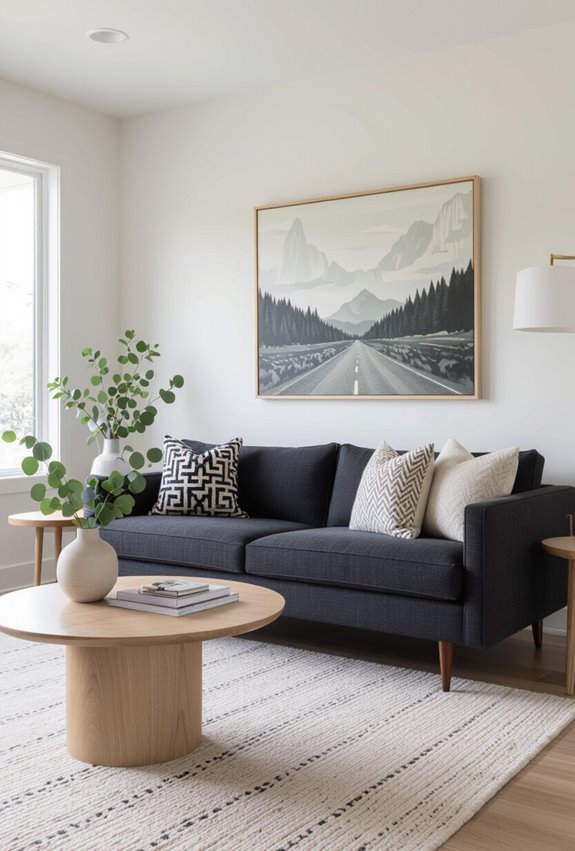
With bold contrasts and well-chosen patterns, you can give a large living room instant character without cluttering it.
Use bold wallpapers on a single accent wall, balance with neutral furnishings, and layer texture. Introduce patterned throw pillows and a geometric rug to anchor seating, but keep scale and color consistent so the room feels dynamic yet calm.
Play With Ceiling Treatments to Visually Lower Height
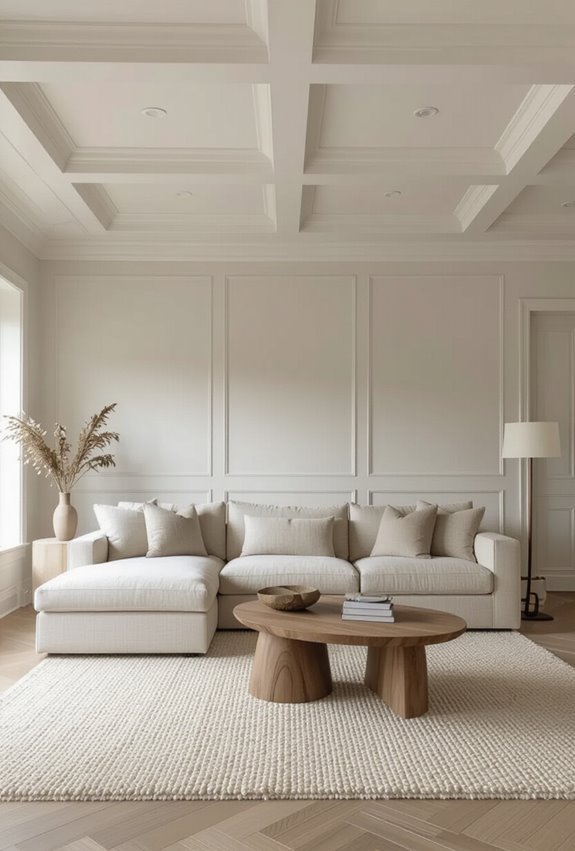
If your living room feels cavernous, lower the perceived height by treating the ceiling as a design surface—paint it a warm, darker tone, add coffered beams, or install a textured wallpaper to draw the eye downward.
You can emphasize lowered coffers and painted beams to create intimacy, then balance with scaled lighting and trim so the room feels cozy without shrinking functional space.
Install Large Mirrors to Amplify Light and Scale

A large mirror instantly multiplies light and opens up a room, so hang one opposite a window or grouping of lamps to bounce brightness and expand perceived depth.
You’ll anchor seating with reflective art or a tall mirror, mindful of mirror placement to avoid glare.
Lean oversized frames for casual scale, or install wall-hung panels to visually widen sightlines and amplify your living area.
Add Architectural Details (Molding, Beams) for Warmth
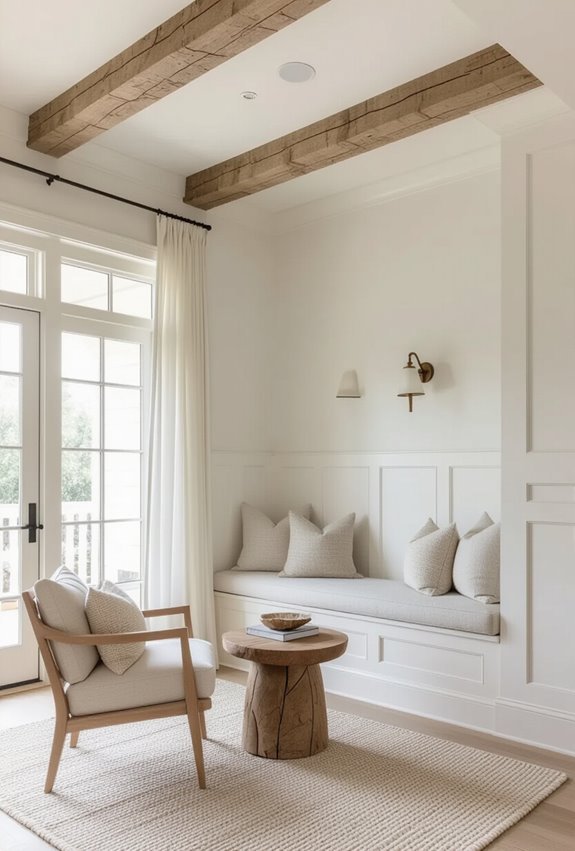
If you want your living room to feel grounded and inviting, add architectural details like crown molding, wainscoting, or exposed beams to introduce texture and character without crowding the space.
You can swap a simple ornate cornice for pared-back trim, highlight exposed joists for rustic charm, and paint details in a warm tone so the room reads cohesive and roomy without extra furnishings.
Plan Furniture Sizes and Spacing With a Simple Layout Checklist

Start by sketching a simple floor plan to anchor decisions about furniture size and spacing.
Use scale measurements to test sofa, table, and rug proportions, marking clear traffic flow paths.
Create a checklist: entry clearance, seating distances, focal point alignment, and flexible zones.
Measure twice, arrange once, and adjust pieces to maintain balance and unhindered movement throughout the room.
Add a Large Coffee Table
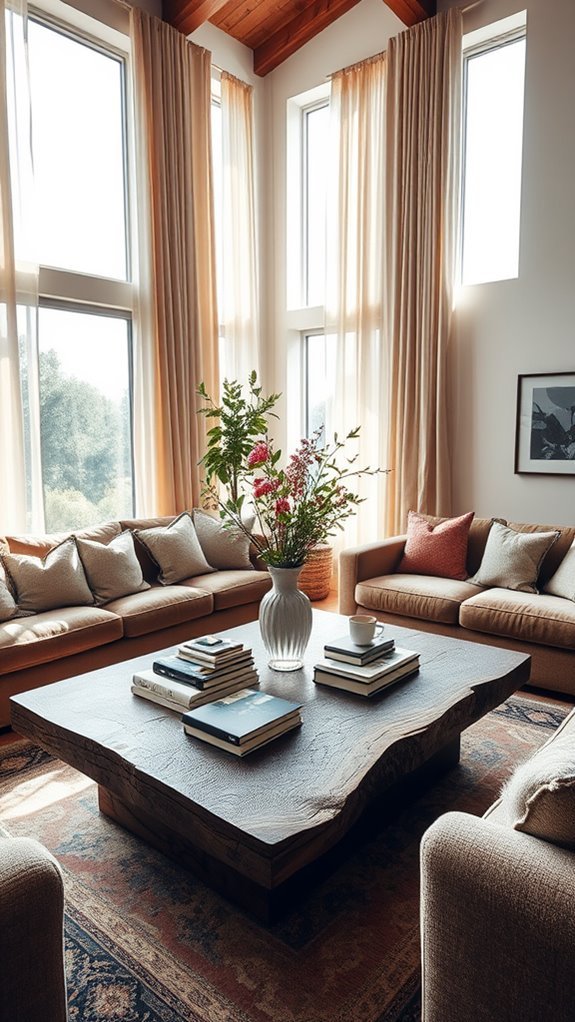
While you might think of a coffee table as just a functional piece, adding a large coffee table can greatly enhance your living room’s style and utility.
A spacious surface invites relaxation and social interaction, serving as the perfect spot for drinks, books, or decorative items.
Consider various coffee table styles that complement your aesthetic, from modern glass designs to rustic wooden options.
The choice of coffee table materials also plays a significant role; durable materials like metal or reclaimed wood can add character while ensuring longevity.
Ultimately, a large coffee table ties your space together, making it both stylish and practical.
Use Artwork to Anchor Spaces
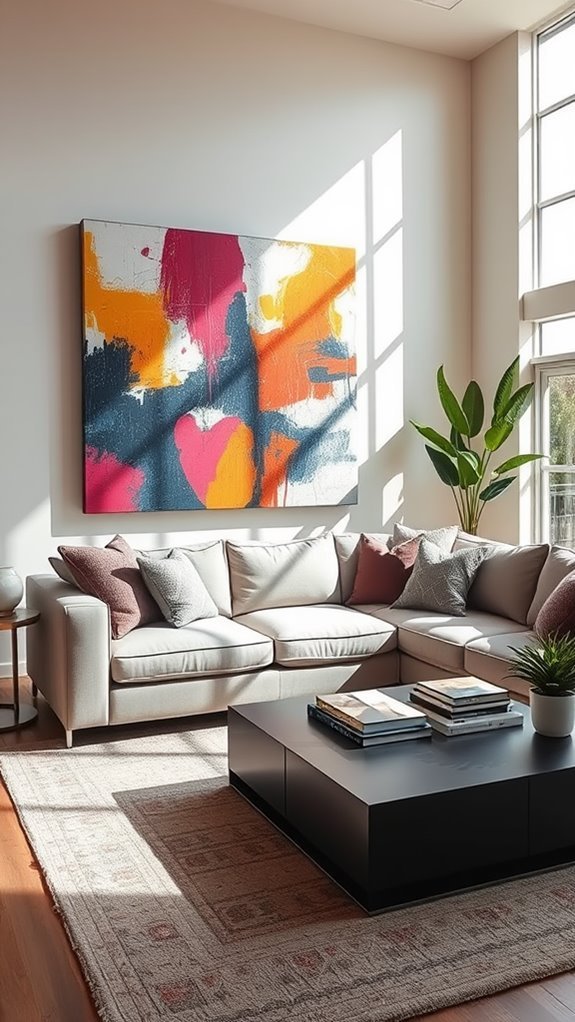
Artwork serves as a powerful tool to anchor spaces in your living room, creating a focal point that draws the eye and sets the tone for the entire area.
To enhance your space, consider these tips:
- Art Selection: Choose pieces that resonate with your personal style.
- Size Proportions: Guarantee your artwork complements the scale of your furniture.
- Frame Styles: Use diverse frame styles for texture contrast and theme coherence.
- Color Palettes: Match your art’s colors to your room’s palette for seamless integration.
Don’t forget to adapt your artwork with seasonal changes for fresh, personal touches!
Choose Oversized Decor
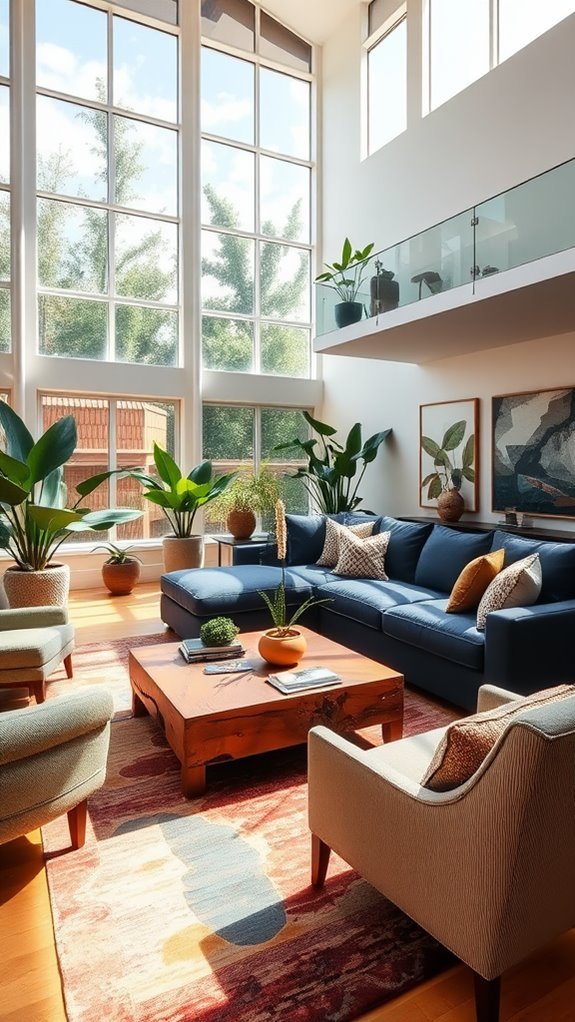
Choosing oversized decor can instantly elevate the style of your living room. Large furniture, like a plush sectional or a grand coffee table, creates a focal point and offers ample seating for gatherings.
Pair that with oversized artwork, such as a statement canvas or a bold sculpture, to draw the eye and add personality to your space. These elements not only fill the room but also make it feel more inviting and curated.
Use Colorful Throw Pillows
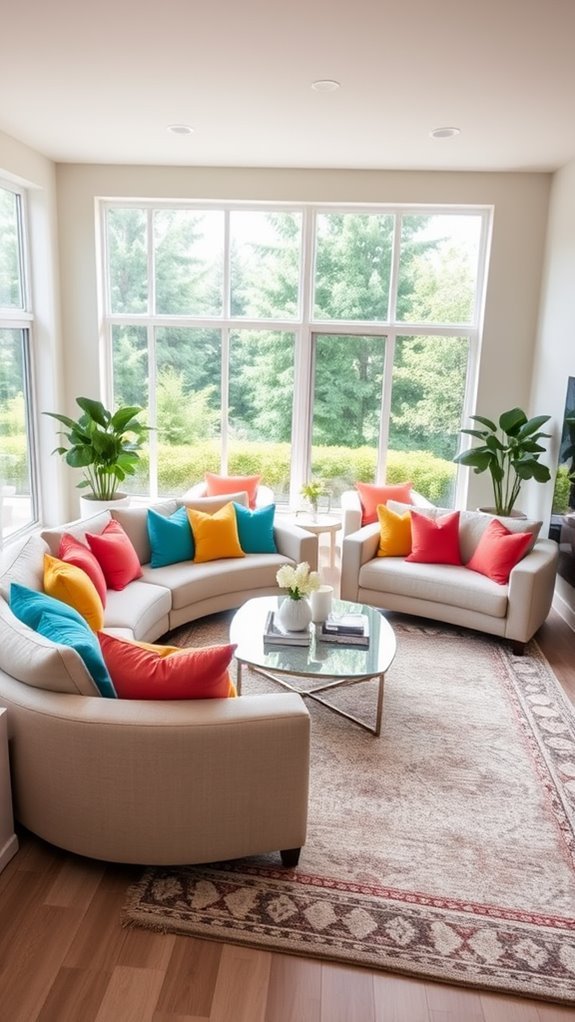
Adding colorful throw pillows can instantly elevate the vibe of your living room, bringing in warmth and personality.
They’re perfect for creating inviting spaces with stylish flair. To make the most of your pillows, consider these tips:
- Mix colorful combinations: Pair bold hues with softer shades for balance.
- Experiment with pillow patterns: Geometric, floral, or abstract designs can add depth.
- Layer sizes: Use different sizes to create visual interest.
- Coordinate with decor: Match pillows to artwork or other accents for a cohesive look.
With the right pillows, your living room will feel vibrant and welcoming!
Add Texture With Fabrics
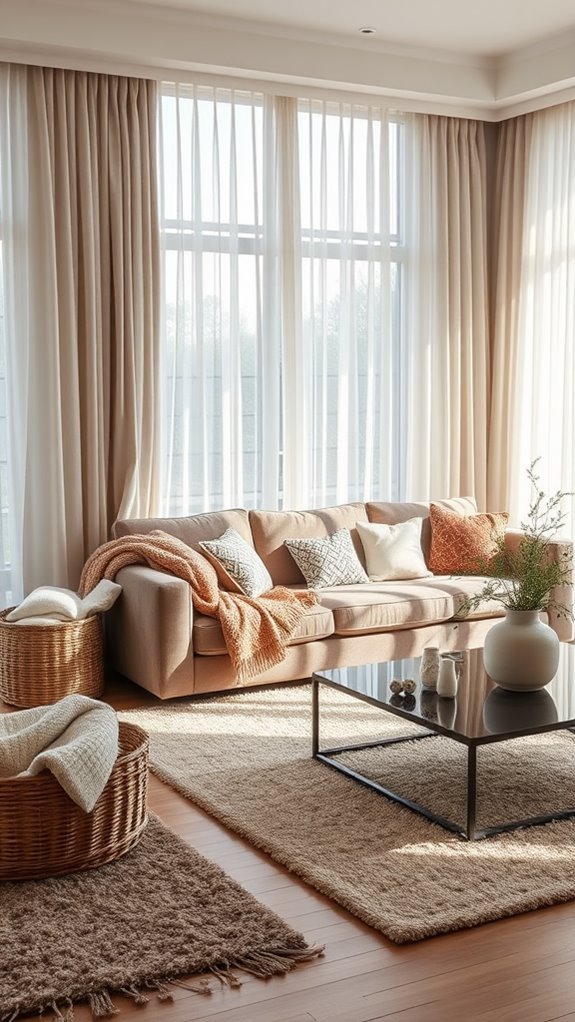
There’s something magical about how fabrics can transform a living room by adding depth and warmth.
By carefully choosing your fabric options, you can create an inviting atmosphere. Here are some ideas to enhance your space:
- Layered Fabrics: Combine different fabric patterns for dynamic texture layering.
- Cozy Textiles: Incorporate soft furnishings like throws and cushions for comfort.
- Textile Combinations: Mix upholstery options and textile accents for visual interest.
- Color Contrasts: Use contrasting colors to make your fabric choices pop.
These elements work together to create a stylish, cozy retreat that reflects your personality.
Conclusion
Maximizing your living room isn’t just about style; it’s about creating a space that works for you. By embracing open floor plans and multi-functional furniture, you can transform even the coziest corners into inviting areas. Think of your living room as a canvas—each rug, mirror, and splash of color adds to the masterpiece. So go ahead, mix it up and make it your own; after all, a well-designed space can spark joy in everyday life!
