
Can You Paint Oil Over Acrylic – What Happens and Best Safe Painting Methods
Yes — you can paint oil over acrylic safely if you take precautions. Make sure acrylic is fully cured (days to weeks), clean the surface, and add a thin isolation coat or oil-compatible primer to improve adhesion. Use thin oil layers and avoid solvents that can attack the acrylic film. Test adhesion and tack before proceeding, and expect better blending and longevity when done right. Keep going to learn detailed steps, materials, and how to avoid common problems.
Can You Paint Oil Over Acrylic?
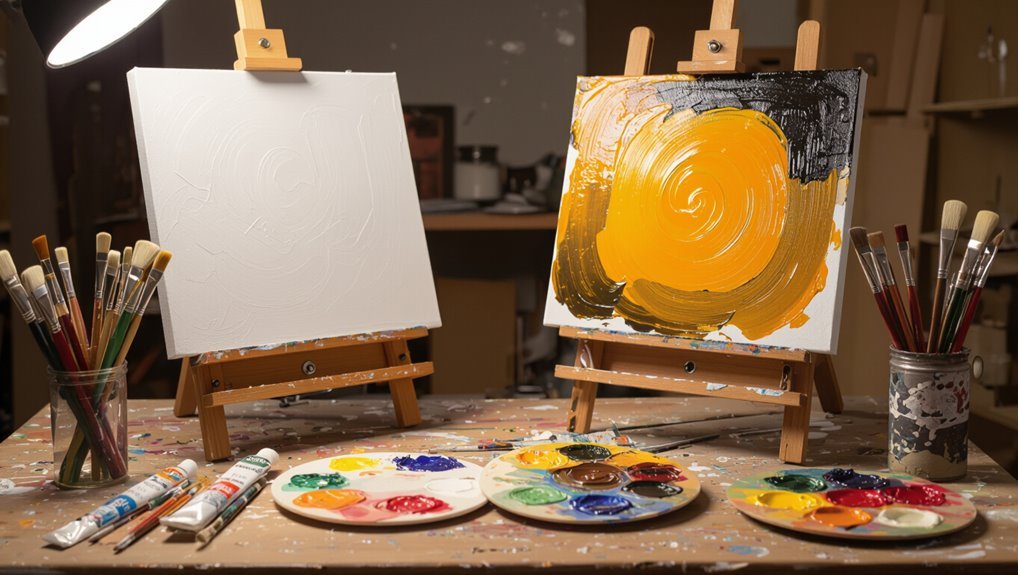
Yes—you can paint oil over acrylic, and artists commonly do this to combine acrylic’s fast-drying base with oil’s rich blending and slower working time.
You’ll use acrylic medium advantages to build stable underlayers, letting oil painting techniques add depth and glazing.
You should verify acrylic is fully cured and avoid solvents that might disturb the flexible acrylic film before applying oils.
Quick Safe Workflow for Oil Over Acrylic
Before you start with oils, make sure your acrylic layers are fully cured—this can take days to weeks depending on thickness.
Once cured, wipe the surface clean and, if needed, apply an oil-compatible primer or an isolation coat to promote adhesion.
That simple prep will help your oil paint bond and reduce cracking or delamination later.
Ensure Acrylic Is Fully Cured
If you’re planning to paint oil over an acrylic layer, make sure the acrylic is fully cured rather than just dry to the touch; uncured acrylic can trap solvents and cause adhesion or drying problems in the oil paint.
Wait manufacturer-recommended curing time for acrylic curing, especially for thick or glossy paint layers.
Test by gently pressing; fully cured acrylic won’t dent and supports reliable oil adhesion.
Apply Appropriate Oil Primer
When you’re ready to switch to oils, seal the cured acrylic with an appropriate oil-compatible primer so the oil paint can adhere and dry predictably; use an alkyd or oil-based primer designed for painting over acrylic, apply thin even coats, and let each coat dry fully before proceeding.
You’ll preserve acrylic layering, guarantee oil compatibility, and create a stable, nonreactive surface for subsequent oil work.
Prepare Acrylic Underpaintings for Oil Layers
Before you oil, make sure your acrylic underpainting is fully cured—usually several days to weeks depending on thickness and medium.
Once cured, tack-test the surface and apply a thin isolation layer (like a retouching varnish or clear acrylic medium) to prevent any lifting or solvent interaction.
That barrier will help your oil layers adhere and age more predictably.
Ensure Acrylic Is Fully Cured
Although acrylics dry to the touch quickly, they need ample time to fully cure before you apply oil paint—otherwise the oils can sink in unevenly or trap solvents and cause delamination.
Wait manufacturer-recommended curing times (often weeks). Test tackiness and hardness before paint layering.
Proper acrylic curing guarantees stable adhesion, prevents cracking, and lets you proceed confidently with oil glazes, varnishes, or heavier impasto.
Apply Proper Isolation Layer
Once your acrylic underpainting is fully cured and feels hard to the touch, apply a proper isolation layer to protect it from oil solvents and to create a stable bonding surface.
Use isolation techniques that guarantee layer compatibility and long-term adhesion.
Follow these steps:
- Clean surface lightly
- Apply thin acrylic varnish
- Let varnish cure fully
- Test adhesion before oil work
Materials That Improve Adhesion and Longevity
A few simple materials can make the difference between a stable oil-over-acrylic painting and one that later flakes or discolors.
Use adhesion techniques like light sanding and a dedicated acrylic-friendly primer.
Apply an isolation layer, then choose longevity products: archival varnishes, oil mediums with low yellowing, and pH-neutral grounds.
Test layers on a scrap before committing to your final work.
How Acrylic and Oil Paints Differ (Drying, Flexibility, Adhesion)
Those surface preparations will help, but you also need to understand how acrylic and oil paints behave differently so you can layer them successfully.
You’ll note differences in:
- Drying speed — acrylics fast, oils slow.
- Flexibility — acrylic films stay more flexible.
- Adhesion — priming matters for oils over acrylic.
- Surface effects — color mixing and texture variation respond differently, so plan layers and mediums accordingly.
What Happens When You Put Oil Over Acrylic : Risks and Outcomes
If you brush oil paint over acrylic, you’ll need to contemplate how well the oil will stick to the acrylic layer and whether the differing drying rates create tension between layers.
Because acrylic dries fast and becomes flexible while oil dries slowly and stays more rigid, mismatched movement can lead to cracking or delamination over time.
These adhesion and drying-time differences are the main factors affecting the long-term durability of such paintings.
Adhesion And Layering
When you brush oil paint over a fully cured acrylic layer, the oil will generally stick well, but there are important caveats about long‑term adhesion and flexibility you need to know.
Use proper adhesion techniques and layering strategies to reduce risk:
- Clean surface
- Confirm full cure
- Apply isolating layer
- Build thin oil layers
These steps help prevent delamination and cracking.
Drying Time Differences
Because acrylics dry much faster and form a less flexible film than oils, putting oil paint over acrylic changes how each layer cures and moves. That mismatch can create stress at the interface.
You should adjust drying techniques: let acrylics fully cure, use leaner oil layers initially, and test paint interaction on samples so oils don’t trap solvents or flex differently, reducing cracking risk.
Long-Term Durability Risks
Those drying and flexibility differences directly affect long-term stability: oil layers sitting on fully cured acrylic can still cause problems over years.
You should consider durability factors and predict long term performance before layering.
Common risks include:
- Cracking as oil moves independently.
- Delamination between layers.
- Yellowing or discoloration of oil.
- Increased restoration needs and conservation costs.
When to Use Oil Over Acrylic (Benefits and Use Cases)
Anyone wanting richer color, longer working time, or a glazed finish can benefit from painting oil over a fully dried acrylic underlayer.
You’ll use acrylic advantages for fast layering, stability, and quick base corrections, then apply oil benefits for blending, depth, and subtle glazing.
This combo suits portraits, still lifes, and mixed-media pieces where extended manipulation and luminous glazing improve final results.
When to Avoid Oil on Acrylic (Red Flags and Risky Scenarios)
While oil over acrylic can give you depth and glazing, there are times you shouldn’t use it. You should avoid it in clear red flag scenarios and when tempted by risky techniques. Consider these:
While oil over acrylic adds depth, avoid it in clear red-flag scenarios and risky techniques.
- Fresh acrylic layers still tacky
- Flexible supports like unstretched paper
- Heavy impasto directly on thin acrylic
- Rapid solvent-heavy fixes that disturb underlayers
Stay cautious to protect your work.
Troubleshooting Cracking, Delamination, and Discoloration
If you see cracking, delamination, or odd yellowing after applying oil over acrylic, act quickly to diagnose the cause so you can limit damage and plan repairs.
Inspect layers for poor adhesion, clean gently, and test small removals.
Use adhesion techniques, consider delamination solutions like reattachment or localized remoistening, apply discoloration fixes carefully, and follow cracking prevention and longevity tips to avoid recurrence.
Varnishing and Long-Term Care for Oil-Over-Acrylic Paintings
After you’ve addressed adhesion problems, discoloration, and cracking, you’ll want to think about how varnishing and routine care will protect what remains sound.
Once structural issues are resolved, varnishing and gentle upkeep will safeguard the remaining sound paint.
You should follow varnishing techniques carefully and use proper maintenance tips to preserve layers.
Consider:
- Test varnish compatibility.
- Use removable varnish.
- Store in stable climate.
- Dust gently with soft brush.
Frequently Asked Questions
Can Oil Paints Cause Allergies When Applied Over Acrylic Layers?
Yes — you can develop oil paint allergies when applying oils over acrylic layers; skin or respiratory reactions happen from solvents, pigments, or sensitization. You should use gloves, ventilation, and low-toxicity materials to reduce risk.
Can Water-Miscible Oils Be Used Over Acrylic Safely?
Like a gentle tide, yes — you can safely use water-miscible oils over acrylic if the acrylic’s fully dry. You’ll enjoy water miscible benefits; follow proper application techniques: thin layers, fat-over-lean, and good curing time.
Does Painting Oil Over Acrylic Change Archival Ratings for Galleries?
Yes — it can affect archival properties and gallery standards. You’ll need proper surface preparation, flexible ground, and drying-time management to meet museum-level conservation expectations; otherwise galleries may lower ratings or decline exhibition.
Can You Use Oil Mediums Designed for Plein Air Over Acrylic?
Yes—you can, but be cautious. You’ll want to test plein air techniques and medium compatibility first; acrylic must be fully cured and nonflexible, or your oil mediums will risk cracking later, so proceed deliberately.
Will Oil Over Acrylic Affect Framing or Backing Materials?
Yes — oil over acrylic can affect framing materials and backing durability if oils penetrate or attract grime; you should seal edges, use archival backing, avoid direct contact, and guarantee proper varnish and spacer to protect frame and support.
Conclusion
You can safely paint oil over acrylic if you treat the acrylic like a sturdy, dry wall and follow a careful protocol. Let acrylic cures fully, sand lightly, and use an absorbent, toothy ground or an isolation coat to help oils grip. Think of the acrylic as a primed canvas—flexible but stable—and the oil as a richer glaze layered like sunset varnish. With patience and proper materials you’ll avoid cracks, lifts, and long-term heartbreak.
