
Can You Paint Peel and Stick Tile? What You Need to Know Before You Start
Yes—you can paint peel-and-stick tile to quickly refresh floors or walls, but it’s best for low-traffic areas and temporary fixes. You’ll need to clean, de-grease and lightly sand the surface, then use a high-bond primer and paint designed for vinyl or laminate. Expect some chipping over time and possible warranty voids. Moisture and sun exposure affect durability, so choose UV-stable products and recoat as needed. Keep going to learn prep steps, product picks, and longevity tips.
Quick Answer Can You Paint Peel and Stick Tile?
Yes — you can paint peel-and-stick tile, and it’s a good short-term fix when tiles are worn or the color’s wrong.
It’s handy for low-traffic areas and saves money, but paint may chip over time and won’t match the durability of replacing the tiles.
We’ll cover the main pros (cost, speed, variety) and cons (adhesion limits, longevity, prep needs) so you can decide if it’s right for your project.
Short verdict and when it’s appropriate
If your peel-and-stick tile is clean, firmly adhered, and in good condition, you can paint it to update the look; otherwise, replacement is usually better.
You can paint peel and stick tile when surfaces are sound, adhesion is strong, and you’re okay with a DIY finish that may need touch-ups.
Choose proper primers and paints for durability and follow prep steps carefully.
Summary of pros and cons
Several clear advantages and a few notable drawbacks make painting peel-and-stick tile a practical short-term option: it’s quick, inexpensive, and lets you refresh floors or backsplashes without ripping them out.
However, painted surfaces can chip, may not last as long as replacement, and require careful prep and the right primers/paints to stick.
- Cost vs. longevity
- Speed vs. durability
- Prep effort vs. finish quality
What Is Peel and Stick Tile and Why People Consider Painting It
Peel-and-stick tile is usually a thin sheet of vinyl, PVC, or composite with an adhesive backing that you press onto smooth surfaces.
You might want to paint it to update color or mimic grout and stone, but these materials don’t always take paint well and have limits on adhesion and longevity.
Painting can improve appearance short-term but may reduce durability and void manufacturer warranties, so you’ll need to weigh cosmetic gain against potential performance loss.
Definition and common materials (vinyl, PVC, composite)
Think of peel and stick tile as a thin, adhesive-backed flooring or backsplash panel made mostly from vinyl, PVC, or composite materials that you press onto a clean surface.
You’ll find flexible vinyl sheets, rigid PVC tiles, and layered composites with a printed surface and foam or fiberglass core.
Each material differs in texture, durability, and how well it accepts primers and paint.
Typical uses and limitations for painting
When you want a quick, low-cost update for a kitchen backsplash, rental bathroom, or laundry room floor, peel and stick tiles are a popular go-to because they’re easy to install and remove.
You can paint to refresh color, match décor, or disguise wear, but expect variable adhesion, limited longevity, and challenges on textured or flexible surfaces.
Test a small area first.
How paint changes appearance, durability, and warranty
Although these tiles were made for quick swaps, painting them can dramatically alter how they look, how long they last, and whether the manufacturer’s warranty still applies.
You’ll gain new color and texture, but paint can chip, hide slip resistance, and trap moisture. That may shorten lifespan and void coverage; check warranty terms and use proper primers and topcoats to minimize risks.
Factors That Determine Paintability
Whether your peel-and-stick tile will take paint depends a lot on the surface composition and finish, so you’ll want to check if it’s vinyl, PVC, or has a glossy coating.
Also consider age, wear, previous treatments, and where the tile is installed—floor tiles, wet areas, and high-traffic spots pose bigger challenges.
Finally, don’t forget the adhesive and backing, since some glues or fabric-backed tiles resist primers and paints.
Surface composition and finish
Because peel-and-stick tiles come in different materials and surface textures, the first thing you should check is what the tile is made of and how it’s finished.
Smooth vinyl accepts primer and paint more reliably than textured or glossy surfaces.
Matte or porous finishes bond better; slick, factory-sealed tiles may need deglossing or a specialized adhesion primer for lasting results.
Age, wear, and previous treatments
If the tiles have been down for years or went through heavy traffic, they’ll likely need more prep before you paint.
Inspect for scratches, peeling edges, adhesive bleed-through, or multiple old coatings.
Sand glossy areas, strip loose finish, and clean contaminants.
Previous treatments like wax or silicone repel paint and must be removed.
Address damage; otherwise paint adhesion will fail prematurely.
Environment (floor vs wall, moisture, foot traffic)
How will the setting affect your project?
You’ll treat walls and floors differently: walls see less abrasion and can use lighter-duty paint, while floors need durable, non-slip coatings.
High-moisture areas demand moisture-resistant primers and paint to prevent peeling or mold.
Heavy foot traffic requires tougher finishes and more frequent touch-ups.
Match product specs to the environment for lasting results.
Adhesive and backing considerations
When you decide whether peel-and-stick tile will take paint, the adhesive and backing are the first things to check: they determine adhesion, porosity, and how coatings will bond over time.
Check manufacturer info; acrylic or solvent-based adhesives often resist paint, while porous paper or vinyl backings may accept primer.
Test a small area, remove loose adhesive, and use a bonding primer for best results.
Step-by-Step Guide to Painting Peel and Stick Tile {step-by-step}
Before you start, gather the right tools and materials and make sure the room is well-ventilated and you’ve got personal protective gear.
Inspect the tile, perform a small test patch, then clean and de-grease the surface thoroughly.
Finish by scuffing or lightly sanding the tiles with the recommended grit to promote adhesion before priming and painting.
Tools and materials needed
To get a durable, professional-looking finish you’ll need the right tools and materials—cleaning supplies, a quality primer and paint formulated for laminate or vinyl, fine-grit sandpaper or a scuff pad, a tack cloth, painter’s tape, foam or high-density rollers, and a clear protective topcoat.
Gather brushes for edges, a small tray, and replacement roller covers.
- Prep
- Paint
- Protect
Safety and ventilation precautions
Because solvents and dust can irritate your eyes and lungs, set up ventilation and wear basic PPE before you sand or paint.
Open windows, run a window or exhaust fan, and use a portable fan to direct airflow outward.
Wear safety goggles, a NIOSH-approved respirator for solvents/dust, and disposable gloves.
Keep kids, pets, and ignition sources away until fumes clear.
Surface inspection and test patch
With ventilation running and your PPE on, take a close look at the peel-and-stick tiles to spot loose edges, lifting corners, deep scratches, or oily residues that will prevent paint from sticking.
Press firmly to test adhesion, mark any compromised tiles, and select a discreet area for a test patch.
Let paint cure fully to confirm adhesion and appearance before proceeding.
Cleaning and de-greasing preparation steps
Cleaning is the essential next step—start by removing loose dirt and dust with a dry microfiber cloth so your cleaner can actually reach the surface.
Next, apply a degreaser or dish soap solution, scrub with a soft brush, rinse thoroughly, and dry with lint-free towels.
Repeat greasy spots until no residue remains, then let tiles air-dry completely before priming.
Sanding or scuffing for adhesion methods and grit guidance
Before priming, you’ll need to scuff the peel-and-stick tile so paint can bite—light sanding removes the glossy top layer and creates microscopic tooth for primer to adhere.
Use 220–320 grit sandpaper or a fine abrasive pad, sanding evenly and gently. Wipe away dust with a tack cloth.
For textured tiles, focus on high spots; avoid aggressive sanding that damages the backing.
Priming: recommended primers and application tips
Pick a high-bond primer made for glossy surfaces—these products stick to slick vinyl or laminate better than standard primers and give your topcoat a durable base.
Clean and degrease, let fully dry, then apply thin, even coats with a foam brush or short-nap roller.
Sand lightly between coats if needed.
Follow manufacturer cure times before topcoating for best adhesion and longevity.
Choosing paint type and finish (epoxy, latex, enamel) pros and cons
With the primer cured and sanded, it’s time to decide what paint will give you the look and durability you need. You’ll weigh epoxy for toughness, enamel for smoothness, and latex for ease. Choose finish by traffic and sheen preference.
| Type | Durability | Ease |
|---|---|---|
| Epoxy | Very high | Hard |
| Enamel | High | Moderate |
| Latex | Moderate | Easy |
Painting technique: rollers, brushes, spray best practices
1 clear technique will set the tone for a durable, even finish, so decide whether you’ll roll, brush, or spray based on the tile layout and paint type.
Use a short-nap foam roller for smooth tiles, angled sash brushes for edges and grout lines, and HVLP or aerosol spray for complex patterns.
Keep light, even passes and overlap slightly to avoid streaks.
Drying, curing times, and recoating schedule
Now that you’ve chosen your application method and applied the paint evenly, give each coat proper time to dry before touching or recoating—rushing this step risks tackiness, runs, or poor adhesion.
Follow manufacturer dry times (usually 30 minutes to 2 hours between thin coats).
Wait full cure before light use—often 24–72 hours; heavy use or full strength can take 7 days.
Sealing and topcoats for durability (polyurethane, epoxy sealer)
Because paint alone won’t stand up to daily wear on peel-and-stick tile, you’ll want a clear topcoat to lock in color and resist scuffs, moisture, and cleaning chemicals.
Choose water-based polyurethane for flexibility and low odor, or a thin epoxy sealer for maximum hardness.
Apply thin, even coats, sand light between coats if directed, and follow manufacturer cure times for durable, long-lasting results.
When You Shouldn’t Paint Peel and Stick Tile
You shouldn’t paint peel-and-stick tile if it’s on high-traffic floors where added slipperiness or wear could create safety hazards.
Avoid painting tiles that are cracked, lifting, or otherwise damaged, since paint won’t fix structural issues and may peel faster.
Also check the manufacturer’s instructions—painting can void warranties or be explicitly prohibited.
High-traffic floors and safety concerns
If your peel-and-stick tile gets heavy daily use—think entryways, kitchens, or hallways—it’s usually not a good candidate for painting.
Painted surfaces will scuff, chip, and become slippery when wet, increasing slip risk.
You’ll also face more frequent touch-ups and maintenance.
For safety and durability, skip painting high-traffic floors and choose more robust flooring or professional coatings instead.
Damaged or lifting tiles
When tiles are cracked, warped, or starting to lift at the edges, don’t paint them—painting won’t fix structural problems and will only hide issues that’ll get worse.
You should replace or properly re-adhere damaged tiles first. Painting over loose pieces risks peeling, tripping hazards, and moisture damage beneath the surface.
Address underlying adhesion and substrate problems before considering any finish.
Manufacturer warnings and warranty voidance
Because manufacturers set installation and maintenance limits, you should check their warnings before painting peel-and-stick tile—doing otherwise can void warranties and leave you responsible for repairs.
If labels or manuals forbid coating, don’t paint. Contact the maker for guidance or approved products.
If you ignore warnings and later face failures, you’ll lose coverage and pay replacement or repair costs out of pocket.
Alternatives to Painting
If painting isn’t right for your peel-and-stick tile, you’ve got practical alternatives that can change the look without a messy repaint.
Consider replacing tiles, using overlays or vinyl plank flooring, or applying decorative options like decals, rugs, or adhesive films.
Pick the option that matches your budget, skill level, and how permanent you want the change to be.
- Replace with new peel-and-stick or ceramic tiles
- Use tile overlays or install vinyl plank flooring
- Try decorative solutions: decals, rugs, adhesive films
Replacing tiles with new peel-and-stick or ceramic
Although painting can be a quick fix, replacing old tile with new peel-and-stick or traditional ceramic gives you a longer-lasting, cleaner look that often pays off in durability and resale value.
You can remove damaged tiles, prep the substrate, and install peel-and-stick for speed or ceramic for permanence.
Choose grout color, plan layout, and budget for labor to guarantee professional results.
Using tile overlays or vinyl plank flooring
You can skip painting altogether by installing tile overlays or luxury vinyl plank (LVP), two durable alternatives that cover worn tile quickly and with minimal demolition.
Overlays adhere directly to existing tile for a fast, low-profile upgrade; LVP offers waterproof, realistic wood or stone looks and floating installation.
Both improve durability and resale value, but check subfloor flatness and edge connections before you buy.
Decorative solutions: decals, rugs, adhesive films
Overlays and LVP give you a major surface change, but smaller-scale decorative options can refresh peel-and-stick tile without replacing it.
You can apply decals for pattern accents, use removable adhesive films to mask color or texture, and layer area rugs to hide worn spots and add warmth.
These nonpermanent choices let you experiment, protect the tile, and revert easily if you change your mind.
Common Problems After Painting and How to Fix Them
After painting peel-and-stick tile you might see peeling, bubbling, or flaking — usually from poor prep or incompatible paint — and you’ll need to sand, re-prime, or in severe cases strip and start over.
For scratches, wear, or yellowing, you can touch up with matching paint, apply a clear durable topcoat, or replace affected tiles if damage is extensive.
If adhesion keeps failing despite proper prep, it’s time to remove the tiles and install a more suitable surface.
Peeling, bubbling, or flaking causes and remedies
When paint starts peeling, bubbling, or flaking from peel-and-stick tile, it usually points to adhesion or surface-prep problems you can fix without replacing the tile.
Clean thoroughly, remove wax or grease, sand glossy surfaces, and use a compatible primer.
Pop bubbles, let tile dry, then recoat with thin layers.
If adhesive failed, consider replacing affected tiles for a lasting result.
Scratches and wear repair options
Once you’ve addressed peeling or bubbling, you’ll likely notice surface scratches and general wear showing up over time on painted peel-and-stick tile.
Tackle light scuffs with a gentle cleanser and microfiber, then buff.
Fill deeper gouges with a touch-up paint or matching vinyl repair kit, sand lightly between coats, and finish with a durable clear sealer to restore appearance and protect against future abrasion.
Discoloration and yellowing prevention and fixes
One common issue you’ll spot over time is yellowing or uneven discoloration on painted peel-and-stick tile, especially in areas exposed to sunlight, heat, or certain cleaners.
To prevent it, use UV-stable primers and topcoats, avoid harsh chemicals, and limit heat exposure.
To fix mild yellowing, clean gently, recoat with a clear UV-resistant sealer, or touch up with matching paint.
Adhesion failure when to remove and replace
Sunlight and heat can’t only yellow paint but also weaken the bond between paint and peel-and-stick tile, leading to flaking, bubbling, or peeling.
If small areas lift, sand, clean, primer, and repaint.
When large sections or adhesive fail, remove and replace tiles—patching won’t hold.
Test a corner first; replacement guarantees durability, proper adhesion, and a cleaner finish.
Best Practices to Maximize Longevity
To keep painted peel-and-stick tile looking good, you’ll need a simple maintenance routine that includes gentle cleaning and prompt touch-ups.
Avoid harsh solvents, abrasive scrubbers, and bleach—use pH-neutral or mild dish soap solutions and microfiber cloths instead.
Also manage humidity and temperature swings (use exhaust fans, dehumidifiers, and proper sealing) to prevent lifting and moisture damage.
Maintenance routine for painted peel-and-stick tile
A simple, consistent maintenance routine will keep painted peel-and-stick tile looking fresh and extend its life.
Wipe spills promptly, dry surfaces to prevent softening, and sweep or dust regularly to avoid abrasive grit.
Reapply a compatible clear topcoat every few years or as wear appears.
Inspect seams and edges, repairing lifts quickly to prevent moisture damage and peeling.
Cleaning products to avoid and preferred cleaners
Along with regular wiping and topcoat upkeep, the cleaners you choose will make or break painted peel-and-stick tile longevity.
Avoid abrasive pads, bleach-based or ammonia cleaners, and solvent-heavy degreasers that strip finishes. Use gentle, pH-neutral cleaners and diluted dish soap, then dry quickly.
- No abrasives or scouring powders
- No bleach/ammonia or harsh solvents
- Use pH-neutral or mild soap
Seasonal and moisture management tips
When humidity spikes or temperatures swing, you’ll want to monitor peel-and-stick tiles closely and adjust care routines so paint and adhesive stay intact.
Keep rooms well-ventilated, run exhaust fans during showers or cooking, and use a dehumidifier in damp seasons to prevent peeling, bubbling, or mold.
Check caulking and seams seasonally, wipe condensation promptly, avoid steam cleaners, and address leaks immediately to protect finishes.
Cost, Time, and ROI Comparison
You’ll compare painted, replaced, and covered options by cost, time, and expected lifespan to pick the smartest route for your budget. Below is a quick table summarizing typical ranges and impacts to help guide that choice. Consider how each choice changes visual appeal and resale value before you commit.
| Category | Typical Range / Impact |
|---|---|
| Painted | Low cost ($50–$300), short project time, 2–5 years lifespan |
| Replaced | High cost ($500–$5,000+), long project time, 20+ years lifespan |
| Covered (new peel-and-stick) | Mid cost ($200–$1,000), moderate time, 5–15 years lifespan |
Painted vs replaced vs covered cost ranges
Curious which route gives you the most value—painting, replacing, or covering peel-and-stick tile?
Painting runs cheapest: materials and primer/paint cost $20–$150, good for budget refreshes.
Covering with floating vinyl or stick-on planks costs $200–$800, balancing price and appearance.
Full replacement (ceramic or luxury vinyl) runs $800–$3,000+, but yields highest resale ROI and durability.
Time investment and expected lifespan
After comparing costs, it helps to look at how much time each option takes and how long the results last—these factors shape your real return on investment.
Painting takes a few hours to a day and lasts 3–7 years with proper prep.
Replacing demands days and lasts decades.
Covering with new peel-and-stick takes a day and can hold up 5–15 years, depending on traffic.
Visual impact and resale considerations
While cost, time, and durability matter, visual impact and resale considerations often decide which route makes sense for your home.
You’ll want a finish that looks intentional and high-quality; poorly painted peel-and-stick can signal shortcuts.
Buyers favor durable, authentic materials—so weigh short-term savings against potential value loss.
If resale matters, choose solutions that mimic real tile or invest in replacement.
Frequently Asked Questions
You probably have a few quick questions before you start, so let’s clear up the main concerns about longevity, prep, safety, products, and warranties.
Below are three focused points that answer what matters most when painting peel-and-stick tile. If you want more detail on any item, I can expand.
- How long paint lasts, whether sanding is needed, and if kitchens/bathrooms are safe to paint.
- Recommended primers and paints that stick to vinyl and resist moisture.
- Warranty implications and how to check manufacturer terms before altering tiles.
How long will paint last on peel-and-stick tile?
If you prep the peel-and-stick tile properly and use quality primer and enamel, the paint can last several years under normal foot traffic and cleaning—typically 3–7 years before you’ll notice significant wear.
Longevity depends on surface prep, paint type, traffic level, and cleaning habits. High-traffic areas may need touch-ups sooner, while gentle use and proper maintenance extend the finish.
Can you paint peel-and-stick vinyl flooring without sanding?
Knowing how long paint lasts is helpful, but you may also wonder whether you can skip sanding altogether when repainting peel-and-stick vinyl flooring.
You can in some cases if the surface is very clean and the original finish is intact, but sanding improves adhesion.
Light scuffing with an abrasive pad, thorough cleaning, and a primer designed for vinyl give the best, longest-lasting result.
Is it safe to paint bathroom or kitchen peel-and-stick tile?
Wondering whether it’s safe to paint peel-and-stick tile in a bathroom or kitchen? You can, but safety depends on moisture and ventilation.
High-humidity areas need mildew-resistant coatings and thorough curing to avoid peeling or mold.
Make certain surfaces are clean and non-greasy, use low-VOC products, and allow adequate drying time before exposing to water.
Test a small area first.
What primer and paint brands are best for peel-and-stick tile?
When you’ve confirmed the surface is clean, dry, and well-ventilated, the next question is which primer and paint brands will stick and hold up on peel-and-stick tile.
Choose a high-adhesion bonding primer (Zinsser Bulls Eye 1-2-3 or Kilz Adhesion) and a durable acrylic or enamel paint (Benjamin Moore Advance, Sherwin-Williams ProClassic, or Rust-Oleum Universal).
Test a small area first.
Will painting peel-and-stick tile void the manufacturer warranty?
If you care about preserving coverage, check your peel-and-stick tile’s warranty before you paint, because many manufacturers either void or limit warranties if the tile’s original surface is altered or a different adhesive environment is created.
If the warranty prohibits alterations, painting can remove protection for adhesion, wear, or damage.
Contact the manufacturer in writing for clarification before proceeding.
Conclusion and Recommended Next Steps
Decide quickly whether to paint or replace by checking adhesion, damage, and your desired look.
If you’re ready to paint, start with a materials checklist (cleaner, primer, paint, rollers, and sealer) and test a small sample area first.
If you want help or product recommendations, consider a pro consult, trying sample kits, or following trusted product links.
Quick decision checklist: paint vs replace
Ready to make a call on paint vs replace?
Ask: Is the tile firmly adhered and free of damage? Do you need a long-term solution or a quick refresh? Is the surface compatible with paint and is ventilation available?
Consider budget, time, resale value, and your skill level.
If doubts remain or tiles peel, replacing is wiser; otherwise painting saves money and time.
Action plan for someone ready to paint (materials checklist and first steps)
You’ve weighed the pros and cons and determined painting is the right move—now gather the right supplies and plan the first steps.
Clean, sand, prime, and protect surrounding surfaces. Work in small sections, ventilate, and follow drying times.
- Materials: cleaner, fine sandpaper, primer, acrylic paint, sealer, tape, drop cloths
- Prep: degrease, sand lightly, tape edges
- First coat: thin, even, cure fully
Call to action: professional help, sample testing, or product links
If you’re unsure about tackling the whole job yourself, consider getting a pro to assess the surface or do a small test patch first—this lets you compare finish, durability, and time without committing fully.
Book an estimate, try sample paints and primers on spare tiles, and follow product links for compatible coatings.
Reach out to a pro if adhesion or longevity looks doubtful.
Visuals and Resources
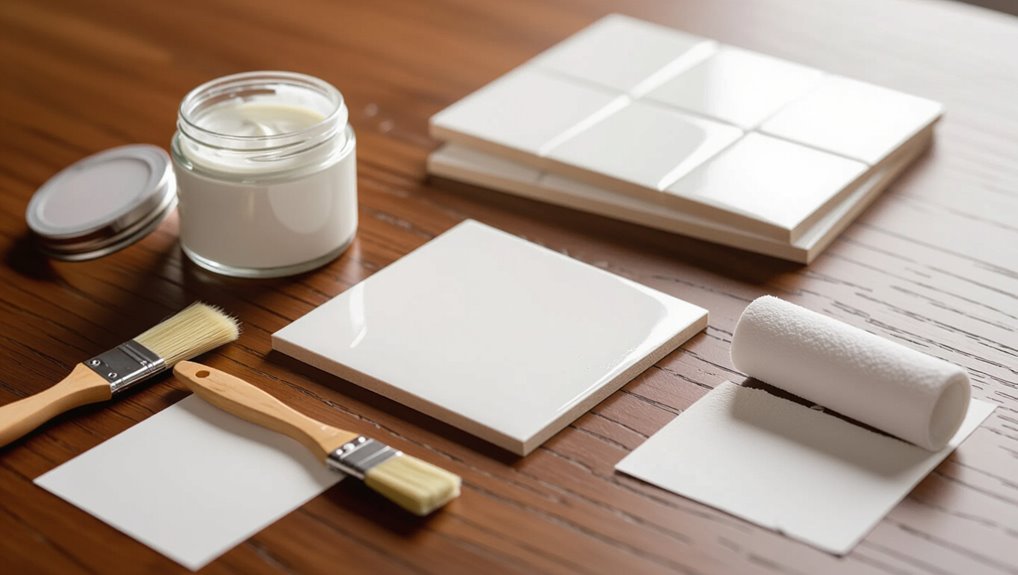
Include clear before-and-after photos so readers can see realistic results and common problem areas on peel-and-stick tile.
Add simple diagrams showing sanding pressure, grit progression, and priming coverage to guide prep steps.
You’ll find these visuals make the process easier to follow and help set proper expectations.
Before-and-after photo suggestions to include
Want a quick way to show the impact of painting peel-and-stick tile?
Photograph the area before cleaning, after cleaning/priming, mid-paint (one coat), and the finished result from the same angle and lighting.
Include close-ups of grout lines and edges, plus a wide shot showing room context.
Add brief captions noting products and drying times for clarity and reproducibility.
Diagrams for sanding and priming technique
Sketch clear, step-by-step diagrams showing how to sand and prime peel-and-stick tile so readers can follow the process visually.
Include tools, grit progression, sanding direction, dust removal, primer type, and drying times.
Use numbered panels, close-ups for edges, and callouts for safety gear.
Label surface prep checkpoints and common mistakes to avoid so readers can replicate results confidently.
