
Can You Use Exterior Paint on Concrete? What Actually Works
You can use exterior paint on many above‑grade concrete surfaces, but it only works if you dry, test and prep the slab first. Check for moisture with a plastic sheet or meter, clean and etch, repair cracks, then prime with a masonry or breathable primer. Use acrylic masonry paint for walls, elastomeric for flexible surfaces, and epoxy or concrete sealer for floors and high‑traffic areas. Keep conditions within manufacturer limits, and read on to learn which option fits your project.
Quick Answer: When to Use Exterior Paint on Concrete?
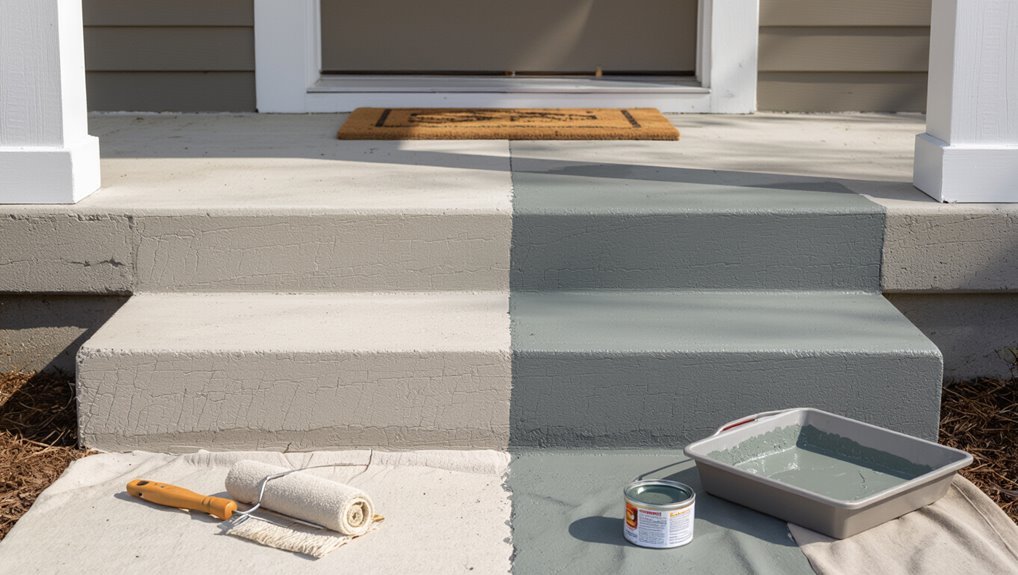
When should you use exterior paint on concrete?
You should choose exterior paint for durable, above-grade concrete surfaces that stay relatively dry and receive regular cleaning. Use it on walls, steps, and decorative elements where color and weather resistance matter.
Avoid using paint where moisture, heavy abrasion, or oil stains persist—those need different treatments to guarantee adhesion and longevity.
Decision Flow: Paint vs. Stain vs. Coating
When deciding between paint, stain, or a protective coating, you’ll weigh appearance, durability, and maintenance needs.
Paint hides imperfections and offers bold color, stain soaks in for a natural look, and coatings prioritize slip resistance and longevity.
Use a simple checklist—desired look, surface condition, and traffic—to pick the best option.
Paint Versus Stain
Although both change a concrete surface’s look and protection, paint and stain do very different jobs, so you’ll want to choose based on appearance goals, durability needs, and maintenance willingness.
- Paint: hides imperfections, quicker paint application, brighter color options, higher maintenance.
- Stain: penetrates, enhances texture, better stain longevity, subtle, low peeling risk.
- Decide by traffic, climate, and desired upkeep.
Coating Selection Guide
Now that you’ve weighed paint versus stain, it’s time to map your needs to the right surface solution: paint, stain, or a specialized coating.
Decide by use (foot traffic, moisture), aesthetics, and longevity. Choose coating types—acrylic paint for color, penetrating stain for texture, epoxy or urethane for durability.
Match application techniques: roller for paint, sprayer for coatings, brush for edges, proper prep always.
How to Test Your Concrete Before Painting?
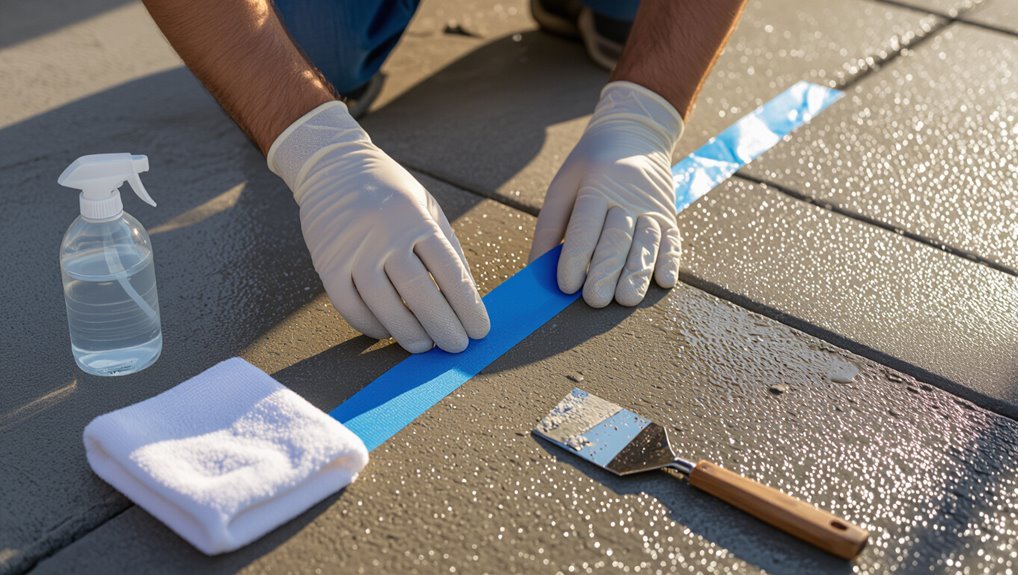
Before you paint, check the concrete’s condition and moisture so your finish will last. You’ll do simple concrete testing and a moisture assessment to avoid adhesion problems.
Follow these steps:
- Probe for cracks, spalling, and contamination; repair or clean as needed.
- Tape a plastic square for 24–48 hours; look for condensation.
- Use a moisture meter or calcium chloride test for precise readings.
Can You Use Exterior Paint on Concrete?
Yes—you can use exterior paint on concrete, but not all paints are equally suited for the job.
You’ll need to choose a product formulated for masonry or concrete and follow proper surface preparation to guarantee adhesion and durability.
Skipping cleaning, etching, or a primer will likely lead to peeling and premature failure.
Exterior Paint Suitability
Although exterior paint isn’t formulated exactly like masonry paint, you can often use it on concrete if you prepare the surface properly and pick the right product.
You’ll want coatings that boost paint durability and color retention while resisting moisture and UV.
- Choose acrylic-latex for flexibility.
- Prefer high-quality exterior formulas.
- Consider breathable masonry-specific topcoats.
Surface Preparation Needs
Surface condition determines whether exterior paint will stick and last on concrete, so you’ll need to remove dirt, efflorescence, loose material, and any previous coatings that are failing. You should focus on surface cleaning, repair, and crack filling before priming. Use pressure washing, muriatic treatments for efflorescence, patching compound, and an appropriate primer.
| Task | Tool | Goal |
|---|---|---|
| Cleaning | Pressure washer | Remove dirt |
| Efflorescence | Acid wash | Restore porosity |
| Cracks | Patch | Crack filling |
| Primer | Concrete primer | Promote adhesion |
When Exterior Paint Will Last on Concrete
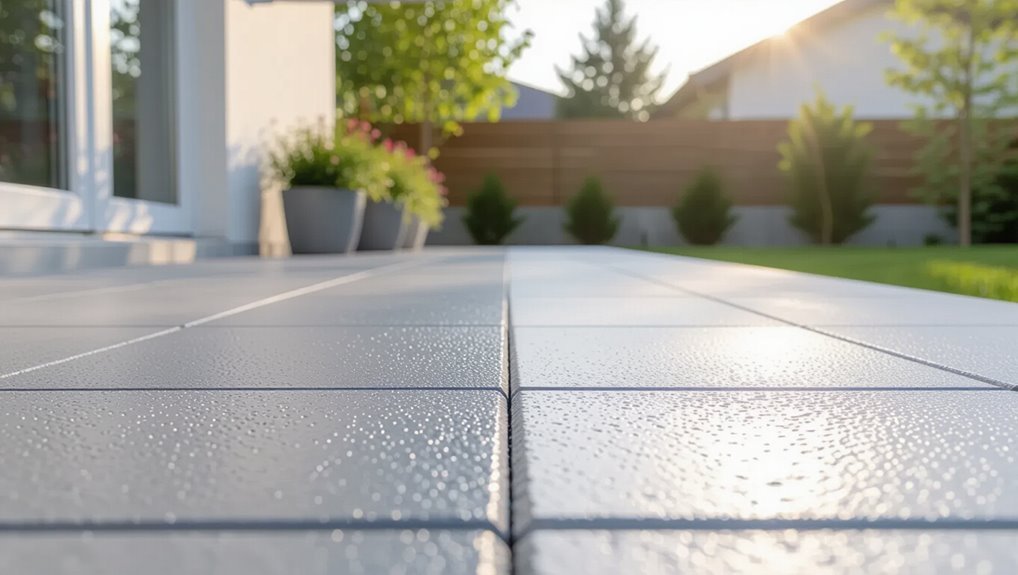
How long exterior paint lasts on concrete depends on factors you can control—paint type, surface prep, and exposure—plus uncontrollable elements like weather and substrate condition.
You’ll boost long term durability and surface compatibility with proper primers, breathable masonry paint, and regular maintenance.
- Choose compatible masonry primer.
- Verify clean, dry substrate.
- Recoat and inspect periodically.
When Exterior Paint Will Fail Quickly on Concrete
If your concrete stays damp, paint can blister and peel as moisture pushes it off.
You’ll also see quick failure when the surface wasn’t cleaned, etched, or patched properly before painting.
And using the wrong type of paint or incompatible primer will cause poor adhesion and premature breakdown.
Moisture-Driven Paint Failure
When moisture moves through or sits against concrete, it can force paint to blister, peel, or flake off much faster than normal.
You’ll notice reduced paint durability as moisture effects break bonds and drive salts to the surface. Preventing this requires controlling water and choosing appropriate systems:
- Test for moisture vapor transmission.
- Use breathable primers/sealers.
- Repair drainage and cracks.
Poor Surface Preparation
One common reason exterior paint fails quickly on concrete is poor surface preparation—skip cleaning, leave efflorescence or loose material, or paint over a damp or oily substrate and the coating won’t bond.
You should perform thorough surface cleaning, remove salts and debris, and dry the concrete.
Use primers or bonding agents when needed so the paint adheres and resists peeling, flaking, or early failure.
Wrong Paint Chemistry
Cleaning and priming only get you so far; picking the wrong paint chemistry will still make coatings fail.
You need compatible paint composition for concrete; otherwise moisture and chemical reactions cause peeling, blistering, and efflorescence.
Choose breathable masonry formulations and proper primers.
Consider:
- Solvent-based paints vs. concrete permeability
- Acrylic masonry coatings for flexibility
- Epoxy risks with trapped moisture
Which Concrete Surfaces Need a Different Approach?
Which concrete surfaces need special treatment depends on where they’re found and how they’re used. You’ll adjust prep and coatings for patios, driveways, walls, and decorative pieces; consider staining techniques and surface types when choosing products.
| Location | Challenge | Recommended Approach |
|---|---|---|
| Patio | Foot traffic | Durable sealer/paint |
| Driveway | Oil/stress | Specialized coating |
| Wall | Vertical runoff | Breathable finish |
How Porosity & Alkalinity Affect Adhesion
You’ll notice that concrete porosity controls how much paint the surface soaks up, which affects coverage and drying.
You also need to account for alkalinity, since high pH can prevent proper bonding and degrade some coatings.
Test porosity and measure alkalinity before painting so you can choose the right primer and paint.
Porosity Determines Absorption
Porosity controls how much paint a concrete surface soaks up, and that absorption directly affects adhesion and finish quality.
You’ll inspect porosity types and measure absorption rates to decide primer and paint. Match materials to avoid under- or over-absorption.
- High porosity: soaks up paint, needs sealing.
- Low porosity: repels coatings, may need etching.
- Mixed porosity: spot-treat and test.
Alkalinity Impacts Bonding
Because concrete naturally absorbs alkaline residues from cement, high pH levels can prevent paint from bonding properly unless you neutralize or block them first.
You should test surface pH, address alkalinity effects with a neutralizing wash or masonry primer, and fix porosity first.
Doing so reduces bonding challenges, guarantees primer adhesion, and helps exterior paint last instead of peeling or staining prematurely.
Quick Checklist: Can You Skip Primer?
Wondering if you can skip primer on exterior concrete? You might, but only after evaluating surface adhesion, porosity, and contaminants.
Consider primer alternatives cautiously; they often compromise longevity.
Consider primer alternatives cautiously—short-term savings can undermine long-term durability and finish quality.
- Porosity: low porosity may allow direct paint.
- Bond: test surface adhesion with a small patch.
- Condition: clean, dry, and stable surfaces reduce risk.
Step 1 : Clean Concrete for Exterior Paint
1. You’ll start by removing dirt, grease, and mildew so paint can adhere.
Use pressure washing for deep grime, scrub stains with a stiff brush and concrete cleaner, and rinse thoroughly.
Wear PPE and use concrete tools like wire brushes, scrapers, and a wet/dry vacuum for residue.
Let the surface fully dry before moving to repairs or priming.
Step 2 : Repair Cracks, Spalls, and Defects
Before you prime or paint, fix any cracks, spalls, or surface defects so the coating bonds evenly and lasts.
You’ll assess damage, choose suitable patching compounds, and perform crack filling and surface leveling before coating.
Follow these steps:
- Clean and widen cracks, then apply flexible crack filling.
- Remove loose spall material; fill with repair mortar.
- Smooth and level patches for uniform texture.
Step 3 : Etch and Profile for Better Adhesion
Once repairs are smooth and dry, you’ll need to etch and mechanically profile the concrete so paint can grip properly.
Use mild acid or alkaline etchers per instructions and scrub or power-wash to remove residues.
Light sanding or diamond grinding creates a consistent profile.
These etching techniques guarantee adhesion improvement, removing laitance and opening pores so coatings bond strongly without relying on guesswork.
Step 4 : Choose the Right Primer for Concrete
After you’ve etched and profiled the surface, pick a primer formulated for concrete so your paint will bond evenly and resist moisture.
You’ll choose primer types based on porosity and exposure, and decide on application methods for durability.
Consider these quick options:
- High-build acrylic for exterior slabs.
- Epoxy for heavy traffic areas.
- Masonry stain-blocking primer for porous walls.
Best Exterior Paint Types for Concrete Surfaces
When picking paint for exterior concrete, you’ll want to compare masonry and acrylic formulas for breathability and ease of application.
For high-traffic or chemical-exposed areas, consider epoxy coatings that offer superior durability.
If you’re dealing with hairline cracks or heavy weathering, elastomeric sealant paints provide flexible, waterproof protection.
Masonry And Acrylic Paints
Although concrete’s porous, rough texture can be challenging to cover, masonry and acrylic exterior paints are formulated to bond well, resist weathering, and breathe so moisture can escape.
You’ll get masonry benefits and acrylic advantages for long-lasting finish. Consider these points:
- Penetration: seals pores without trapping moisture.
- Flexibility: resists cracking with temperature shifts.
- Fade resistance: maintains color outdoors.
Epoxy Coatings For Durability
If you need maximum toughness and chemical resistance for exterior concrete—think driveways, patios, or industrial walkways—epoxy coatings deliver a hard, long-lasting surface that stands up to abrasion, oil, and moisture.
You’ll get clear epoxy benefits: superior adhesion, fast curing, and low maintenance.
Apply over a properly prepared substrate to boost surface resilience and extend service life, avoiding areas needing flexible sealants.
Elastomeric Sealant Paint
Epoxy gives you toughness, but elastomeric sealant paint brings flexibility—ideal for exterior concrete that moves, cracks, or breathes, like stucco-faced walls, foundation exteriors, or sun‑baked patios.
- You get elastomeric benefits: crack bridging, waterproofing, and UV resistance.
- Prep matters: clean, repair, and prime per manufacturer instructions.
- Use proper application techniques: brush, roller, or low-pressure spray in thin, overlapping coats for lasting protection.
Exterior Latex vs. Masonry Paint: Which to Pick?
Wondering which is better for your home’s exterior—standard exterior latex or specialized masonry paint?
You’ll choose based on surface and goals: latex offers ease, flexibility, and good exterior durability on smooth concrete; masonry paint bonds deeper, handles texture, and boosts paint longevity on porous or block surfaces.
Match primer and prep to substrate, and pick masonry for heavy-weathered or highly textured areas.
Why Oil‑Based Paints Often Underperform Outdoors
Although oil‑based paints once dominated exterior work, they often underperform today because they’re less flexible, dry slower, and don’t breathe with masonry the way modern latex and masonry formulations do.
Oil‑based paints, once standard, now underperform—stiffer, slower drying, and ill-suited to breathe with masonry compared to modern formulations.
- You’ll notice oil based shortcomings in cracking and peeling on concrete.
- They trap moisture, reducing outdoor durability.
- They yellow and chalk faster under UV, needing more maintenance.
Exterior Acrylic, Elastomeric, and Epoxy Coatings
When you need a durable, breathable finish for concrete, exterior acrylic, elastomeric, and epoxy coatings each offer distinct strengths: you’ll choose based on acrylic advantages for color and breathability, elastomeric flexibility for crack bridging, or epoxy durability for high-traffic areas; consider overall coating performance for climate and substrate.
| Type | Strength | Best Use |
|---|---|---|
| Acrylic | Color retention | Vertical walls |
| Elastomeric | Crack bridging | Stucco, siding |
| Epoxy | Wear resistance | Garages, floors |
Applying Paint on Horizontal vs. Vertical Concrete
When you paint horizontal surfaces like driveways or patios versus vertical walls, you’ll need different prep—floors often need tougher cleaning and filling for cracks and pitting.
You’ll also adjust product choice and application technique because gravity and runoff affect sagging, coverage, and drying.
Finally, make sure horizontal areas have proper slope and drainage to prevent ponding that can shorten the coating’s life.
Surface Preparation Differences
Because horizontal and vertical concrete wear and interact with moisture differently, you need to prep them differently before painting.
You’ll adjust cleaning, fill cracks, and choose coatings to match surface texture and exposure; use bonding agents where adhesion’s doubtful.
- Clean and etch: pressure wash for horizontals, scrub verticals.
- Repair: low spots versus hairline cracks.
- Prime: breathable primer on verticals, durable sealer on horizontals.
Drainage And Slope
After prepping and priming you also need to address how water will run off the surface: horizontals require a definite slope and clear drainage paths to prevent standing water that will blister or wear paint away.
Verticals need flashing and drip edges to shed water and protect the coating at joints and ledges. You’ll plan slope considerations, add drainage solutions, and seal connections to prolong finish life.
Drying and Cure Times for Exterior Concrete
If you poured or patched exterior concrete recently, know that proper drying and curing are separate processes with different timelines and needs: drying removes excess moisture while curing strengthens the concrete through controlled hydration.
You should follow recommended drying techniques and curing methods before painting.
- Wait initial 24–48 hours for surface set.
- Allow 7 days for light use.
- Prefer 28 days before full coating.
How Weather and Temperature Affect Painting
When you paint exterior concrete, watch the temperature range on the paint can because too cold or too hot conditions will prevent proper adhesion and drying.
You’ll also need to guarantee the surface is dry and that new concrete has cured long enough, since moisture trapped under paint causes peeling and blistering.
Plan your work for days with steady temperatures and low humidity to get a durable finish.
Temperature Limits
Though concrete holds heat and cold differently than wood, you still need to paint only within the paint manufacturer’s recommended temperature and humidity range to get proper adhesion and curing.
You should consider temperature extremes and seasonal considerations so coatings won’t fail.
- Don’t paint below or above labeled temperatures.
- Avoid rapid swings between hot and cold.
- Choose products rated for your climate.
Moisture And Curing
Because concrete absorbs and releases moisture long after it’s poured, you’ll need to account for surface dampness and ambient humidity before you paint; wet concrete prevents proper adhesion and can trap moisture as paint cures, causing blistering or peeling.
Test moisture content, delay painting until concrete fully cures, avoid painting over curing compounds, and use breathable coatings or moisture barriers where needed to control vapor movement.
Top Causes of Peeling and How to Avoid Them
If your paint starts to peel, it’s usually a sign that adhesion failed somewhere—moisture, poor prep, or the wrong product are the most common culprits.
Peeling paint usually means adhesion failed—often from moisture, poor prep, or using the wrong product.
You can stop peeling by addressing causes and focusing on peeling prevention and limiting surface degradation.
- Clean and etch for strong adhesion.
- Use breathable, exterior masonry paint.
- Fix moisture sources before painting.
How to Maintain Painted Concrete for Years
Stopping peeling is only the start; keeping painted concrete looking good for years takes a little routine care and quick repairs.
Inspect annually for surface cracking, loose flakes, and dirt buildup. Clean with mild detergent, rinse, and let dry.
Touch up chips promptly, use compatible exterior paint, and apply UV-resistant topcoat to limit color fading.
Address drainage to prevent recurring damage.
When to Choose Concrete Stain or Sealer Instead of Paint
When you want a more natural, low-maintenance finish that still enhances color and protection, choose a concrete stain or sealer instead of paint.
You’ll pick stain for color that penetrates and resists peeling; choose sealer for moisture and wear protection.
- Stain benefits: long-lasting color, breathable finish.
- Sealer advantages: water repellency, UV resistance.
- Minimal upkeep, preserves texture.
Durable Alternatives for Driveways, Patios, and Foundations
For driveways, patios, and foundations you’ll want materials that stand up to traffic, weather, and time; concrete paint can work, but durable alternatives—like high-performance overlays, stamped or colored concrete, pavers, and epoxy or polyurea coatings—often deliver longer life and easier maintenance.
You’ll choose options offering durable finishes and superior weather resistance, resisting cracking, UV fade, and wear while simplifying upkeep.
Cost & Lifespan Comparison: Paint vs. Stain vs. Coating
Although price and longevity often steer your choice, understanding how paint, stain, and specialized coatings differ helps you match performance to budget. You’ll want a clear cost analysis and consider lifespan factors before deciding.
- Paint: lowest upfront cost, moderate lifespan, needs frequent maintenance.
- Stain: mid cost, penetrates concrete, longer-lasting color.
- Coating: highest cost, best protection, longest lifespan.
Quick Product Picks and Troubleshooting Tips
Now that you know how cost and lifespan compare, let’s look at a few reliable products and common fixes so you can pick the right finish and handle problems quickly.
For product recommendations, try acrylic masonry paint, epoxy coatings, or breathable stains.
Use troubleshooting techniques: clean, etch, repair cracks, test adhesion, and recoat in proper conditions.
Follow manufacturer prep and cure times.
Frequently Asked Questions
Can You Paint Concrete Steps Without a Railing Safety Hazard Review?
Yes — you can paint concrete steps without a railing if you follow safety precautions and proper painting techniques; you’ll clean, repair, etch, use slip-resistant paint or additives, work with good lighting, and wear protective gear to prevent accidents.
Will Exterior Paint on Concrete Affect Nearby Landscaping or Plants?
Like a splash in a pond, yes — if you pick suitable paint types and shield plants. You’ll avoid runoff by using low-VOC masonry paints, keeping soil moist, and setting up landscaping protection like tarps and barriers.
Can You Apply Exterior Paint Over Concrete Sealers Used Years Ago?
Yes — you can, but you’ll test sealer compatibility and guarantee paint adhesion. If the old sealer’s solvent-based or glossy, you’ll strip or scuff it, clean thoroughly, then use compatible primer before applying exterior paint for lasting results.
How Does Concrete Color Influence Heat Absorption After Painting?
Like a magnet, darker concrete pulls in more heat; you’ll notice color psychology and thermal dynamics combine so darker paints absorb and store warmth while lighter hues reflect sunlight, keeping surfaces cooler and reducing heat buildup.
Are Fumes From Exterior Concrete Paint Hazardous in Occupied Spaces?
Yes — fumes can be hazardous; you’ll face fume exposure risk if ventilation’s poor. Prioritize indoor safety by using low-VOC or water-based concrete coatings, ventilating thoroughly, and vacating occupied spaces until odors subside.
