
30 Children’s Study Room Ideas for Focused Learning
You can create a focused study space by choosing a quiet spot away from noise, like a bedroom corner, and maximizing natural light near windows. Use comfortable, child-sized ergonomic furniture and add desk organizers to keep supplies tidy. Incorporate plants for calming air quality, set up timers to manage sessions, and include a reward corner to motivate your child. Rotate decor regularly to keep the environment fresh and engaging. Keep exploring for more ways to enhance your child’s learning area.
Choose a Quiet Spot for Your Child’s Study Room
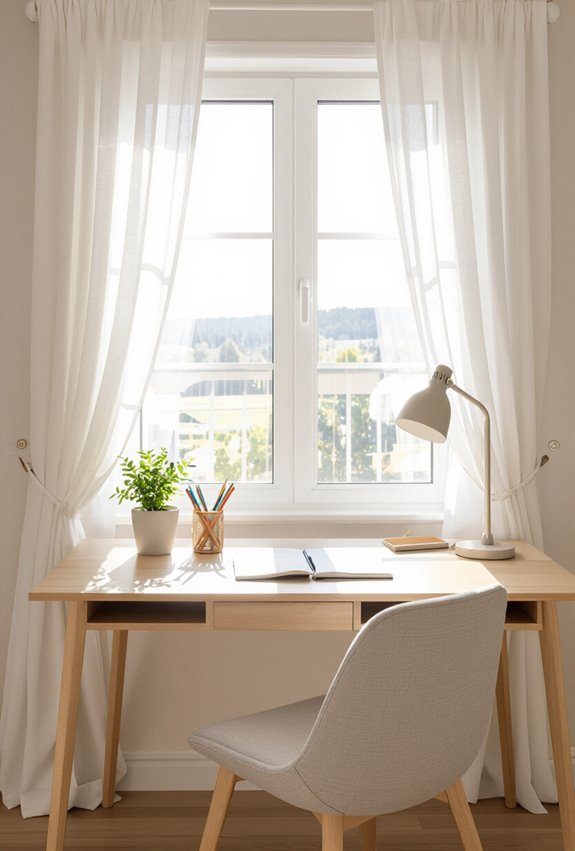
Choosing a quiet spot for your child’s study room often makes a big difference in their focus and productivity. Use a noise map to identify the calmest areas in your home, avoiding noisy zones like kitchens or living rooms. Also, consider window placement carefully to minimize outside distractions, ensuring your child enjoys a peaceful, undisturbed learning environment.
Use Bright, Natural Lighting to Boost Focus

Once you’ve found a quiet spot, the next step is to make sure it’s well-lit to keep your child alert and focused. Maximize daylight by positioning the study area near windows, but use glare control like blinds or sheer curtains to prevent harsh light.
Bright, natural lighting enhances concentration and reduces eye strain, creating an ideal environment for focused learning.
Add a Desk Organizer to Keep School Supplies Neat
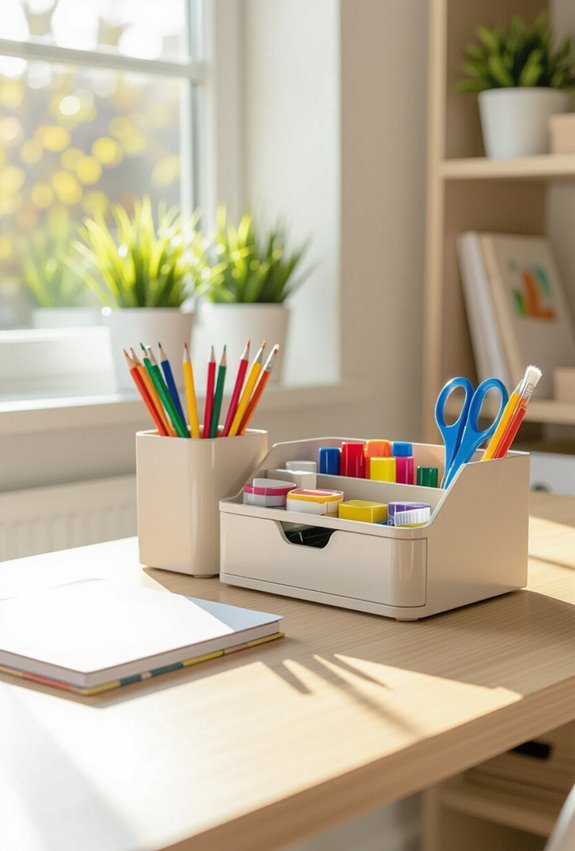
After setting up comfortable, child-sized furniture, it’s important to keep the study area organized. Add a desk organizer with label holders to clearly mark each section, making it easy for your child to find supplies.
Magnetic bins can attach to metal surfaces, saving space and keeping pencils, erasers, and other tools within reach, promoting neatness and focused learning.
Include Open Shelves for Easy Access to Books
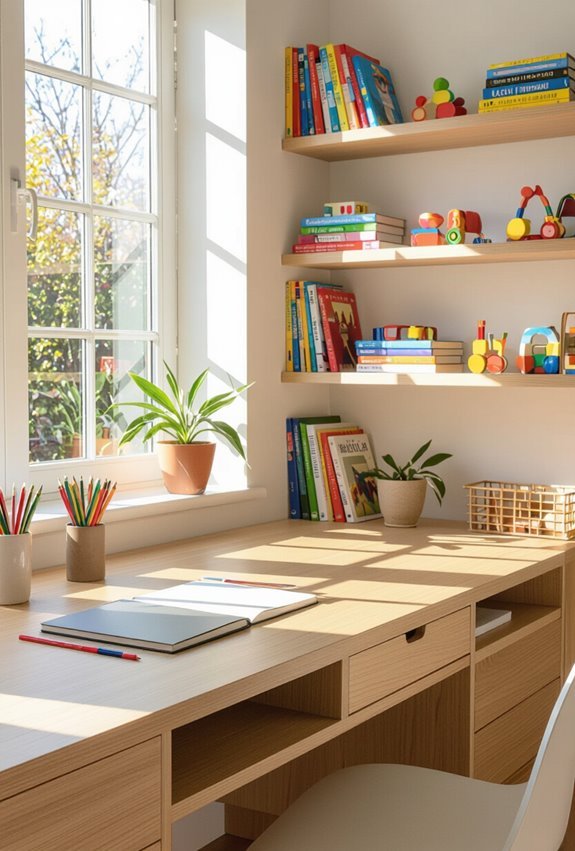
Open shelves often make it easier for your child to reach their favorite books and study materials quickly. By choosing open shelving, you enhance book accessibility, encouraging independent learning and organization.
Your child won’t have to struggle with closed cabinets or drawers, making study time smoother and more efficient. Open shelving keeps essentials visible and within arm’s reach, boosting focus and productivity.
Set Up a Whiteboard or Corkboard for Notes
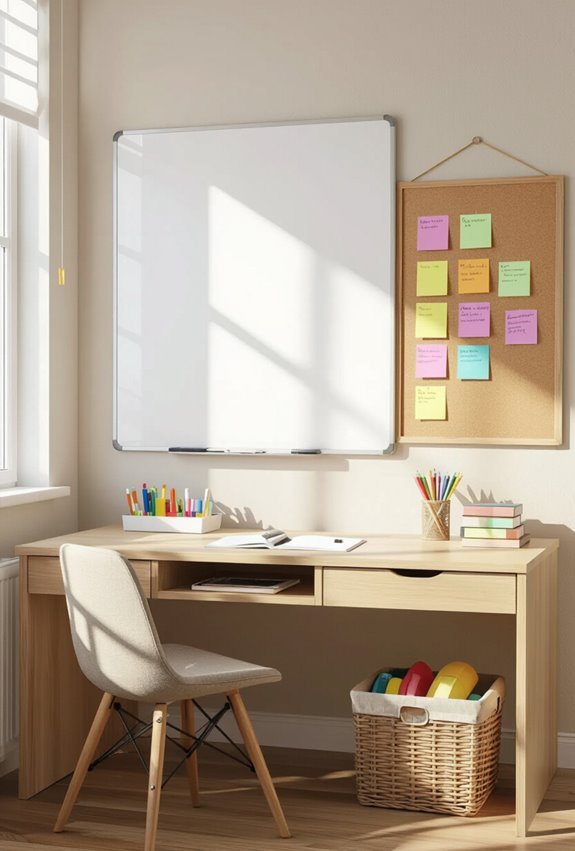
Alongside open shelves that keep books within easy reach, adding a whiteboard or corkboard can help your child organize their thoughts and reminders.
Use a whiteboard with erasable grids to neatly plan tasks or solve problems, and magnetic markers to keep writing tools handy.
A corkboard is perfect for pinning important notes, schedules, or inspirational quotes, keeping the study space clutter-free and focused.
Use Soft Rugs to Define the Study Area
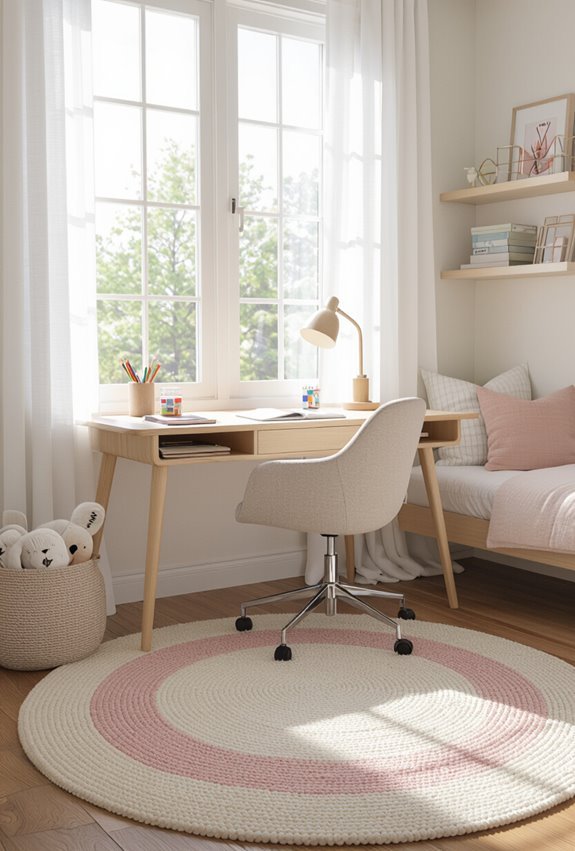
A soft rug can instantly create a cozy, defined space that signals to your child where study time begins.
Using soft textures underfoot not only adds comfort but also helps with clear area definition, separating the study zone from play or relaxation spots.
This simple addition encourages focus and makes the study area inviting, helping your child settle in quickly.
Incorporate Fun Educational Posters and Visuals
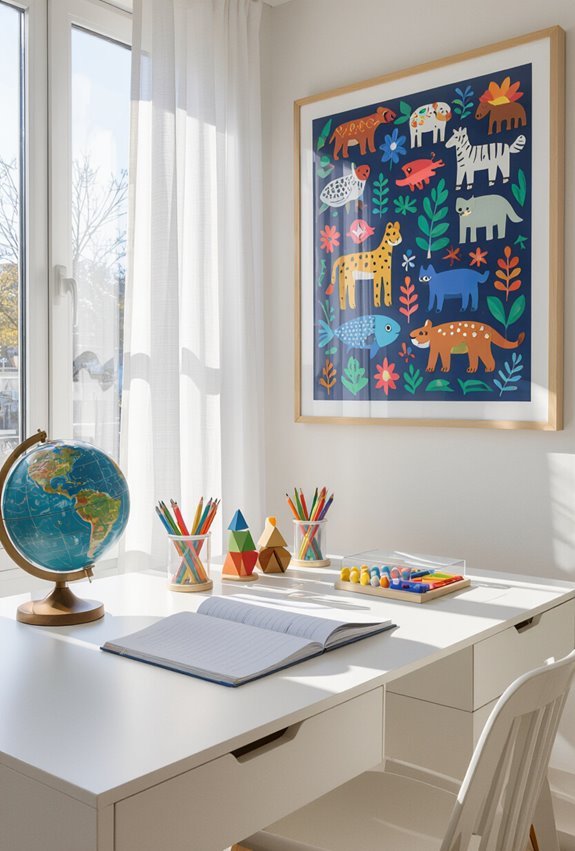
When you add fun educational posters and visuals to your child’s study space, you create an engaging environment that sparks curiosity and supports learning.
Use color coded charts to simplify complex information and mnemonic posters to enhance memory retention.
These visuals keep lessons lively and help your child grasp concepts faster, making study time both effective and enjoyable.
Design a Tech-Friendly Space for Digital Learning
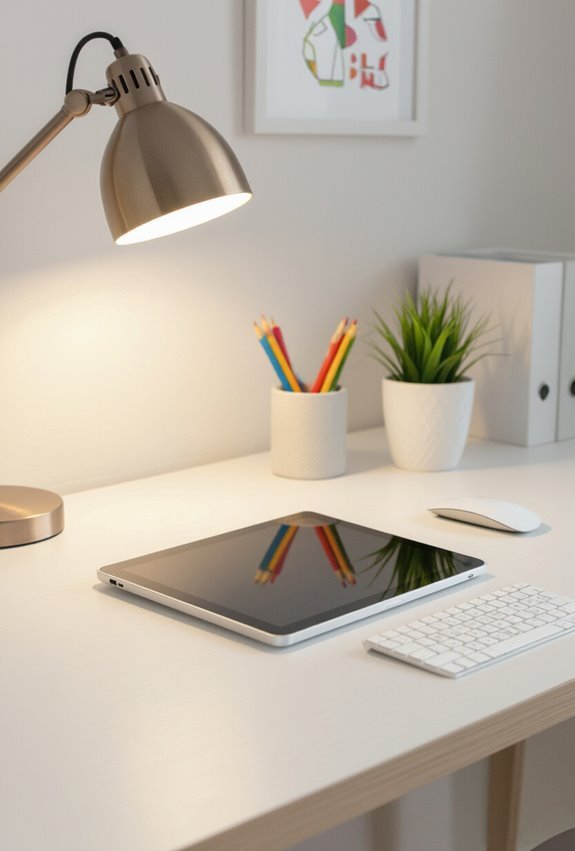
Adding engaging visuals is just one way to make study time more effective, but today’s learning often involves digital tools that need their own thoughtful setup.
Create a tech-friendly space with wireless charging stations to keep devices powered and ergonomic keyboards that support good posture. This setup helps your child focus longer and learn comfortably in a modern digital environment.
Use Soundproofing to Minimize Study Distractions
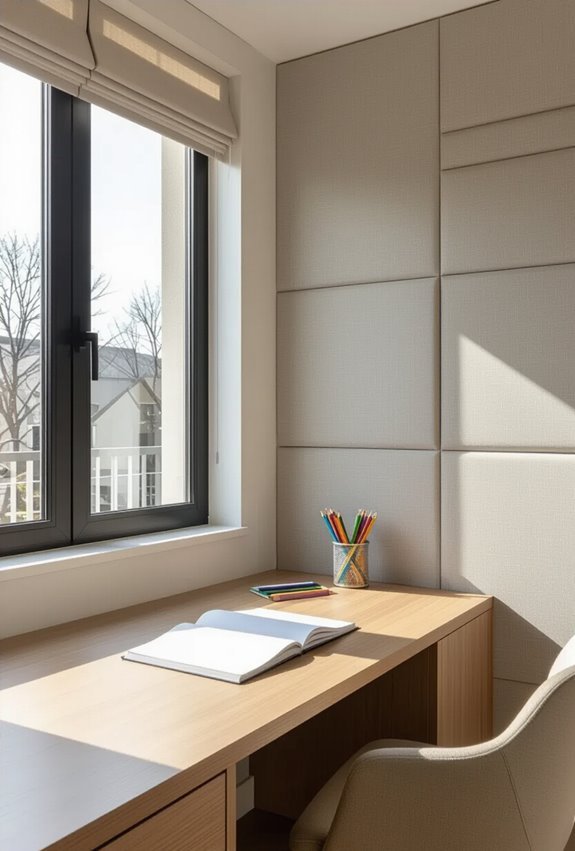
Sound distractions can often break your child’s concentration and disrupt their study flow.
You can install acoustic panels to absorb noise and create a quieter environment.
Adding a white noise machine helps mask sudden sounds, promoting focus.
These simple soundproofing steps minimize distractions, making it easier for your child to stay engaged and productive during study sessions.
Add Adjustable Lighting for Different Study Tasks
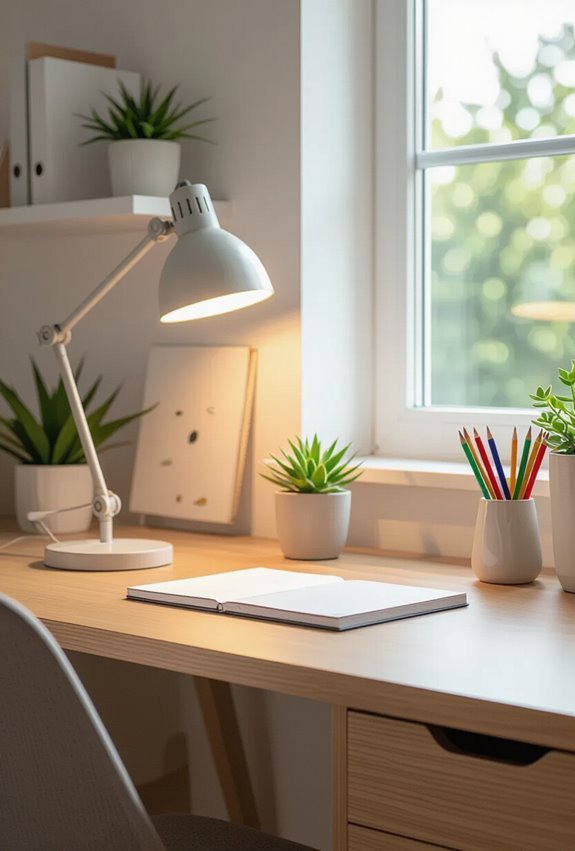
Creating a quiet study space sets the stage, but proper lighting shapes how effectively your child can work.
Install dimmable fixtures to adjust brightness for various tasks, ensuring comfort and focus.
Use task lamps for precise lighting during reading or writing, reducing eye strain.
Adjustable lighting lets your child tailor their environment, boosting productivity and making study time more enjoyable.
Create Zones for Reading, Writing, and Creativity
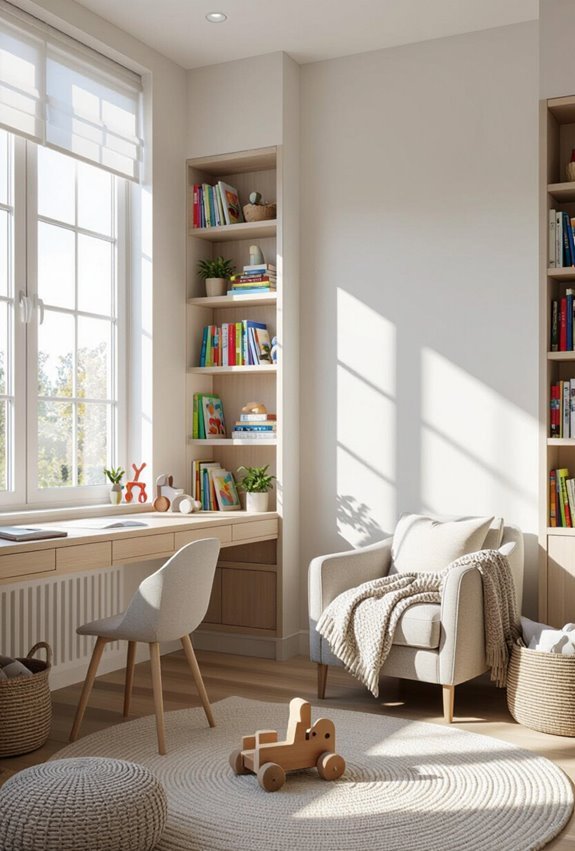
When you design distinct zones for reading, writing, and creativity, you help your child focus better and switch tasks smoothly.
Use clear zone labels to define each area, making it easy to navigate.
Incorporate sensory bins in the creativity zone to inspire hands-on learning, while keeping writing and reading spots calm and organized for maximum concentration and comfort.
Use Storage Bins to Tame Clutter Quickly
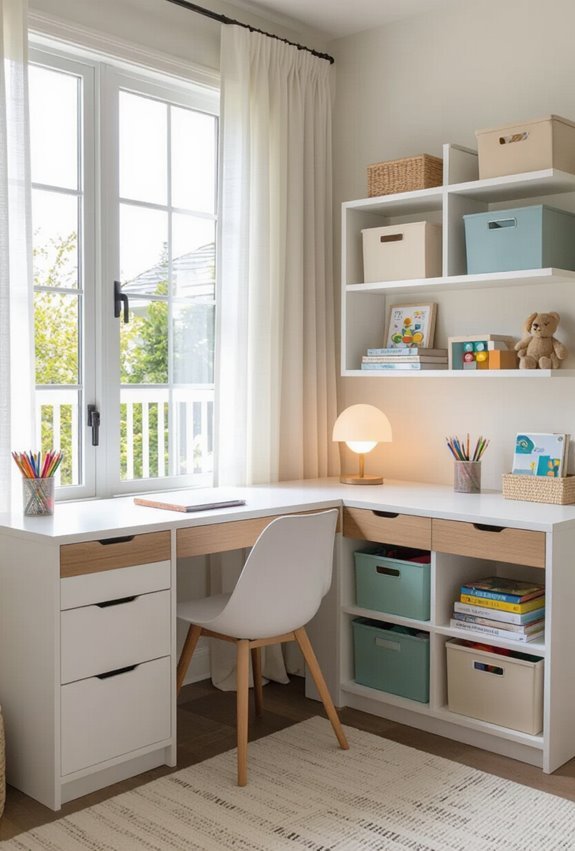
Storage bins offer a simple, effective way to keep your child’s study space neat and organized.
Use bins with clear lids so your child can easily see the contents, speeding up cleanup.
Don’t forget to label bins to help them find supplies quickly and encourage responsibility.
This quick clutter control keeps the room tidy and focused on learning.
Personalize the Space With Your Child’s Favorite Themes
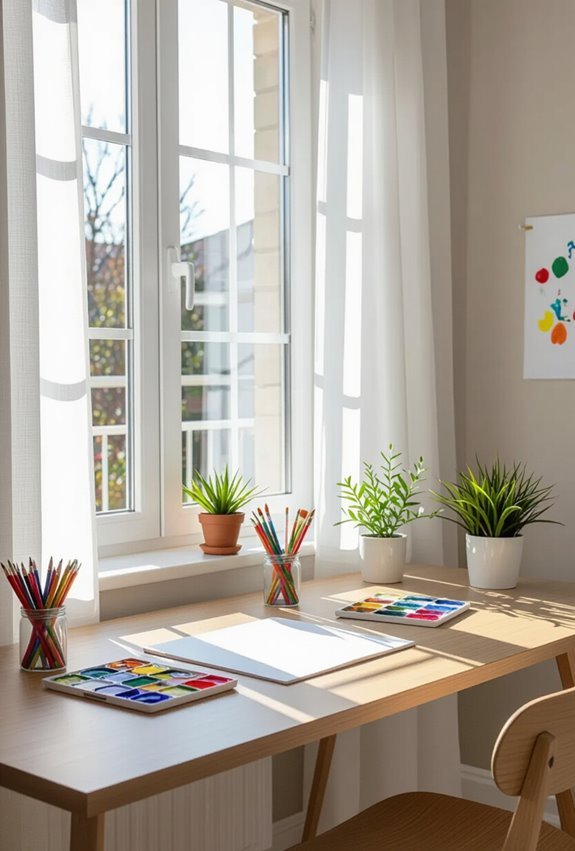
Personalizing your child’s study room with their favorite themes sparks creativity and makes the space truly their own. Use themed lighting to set a fun, inspiring mood, and add character decals to walls or furniture to reflect their interests.
These simple touches keep your child engaged and excited about learning, creating a welcoming environment tailored just for them.
Use Plants to Improve Air Quality and Calmness
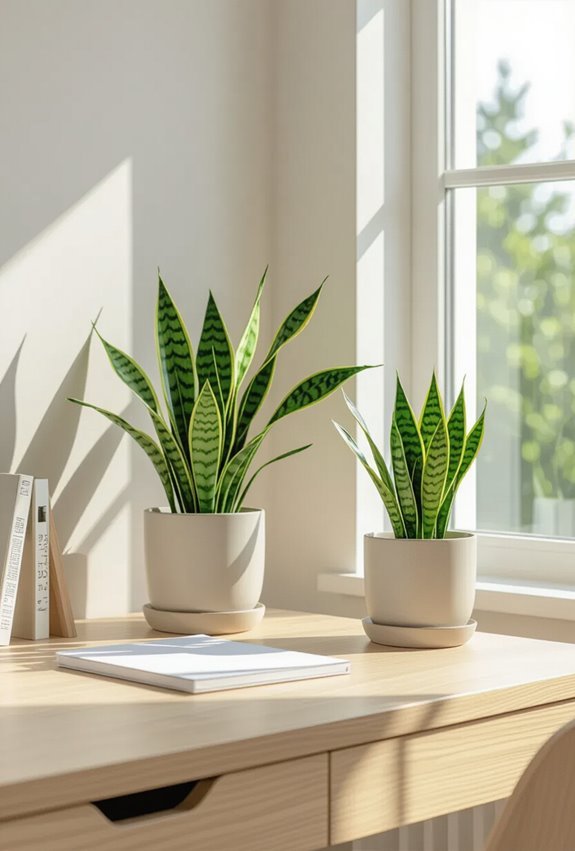
Incorporating plants into your child’s study room brings both freshness and tranquility to the space. Choose air purifying plants to boost air quality, helping your child breathe easier and stay alert.
Sensory calming greenery also reduces stress and enhances focus, creating a peaceful environment that supports productive study sessions. These natural touches make learning more enjoyable and effective.
Create a Reward Corner to Motivate Focused Work
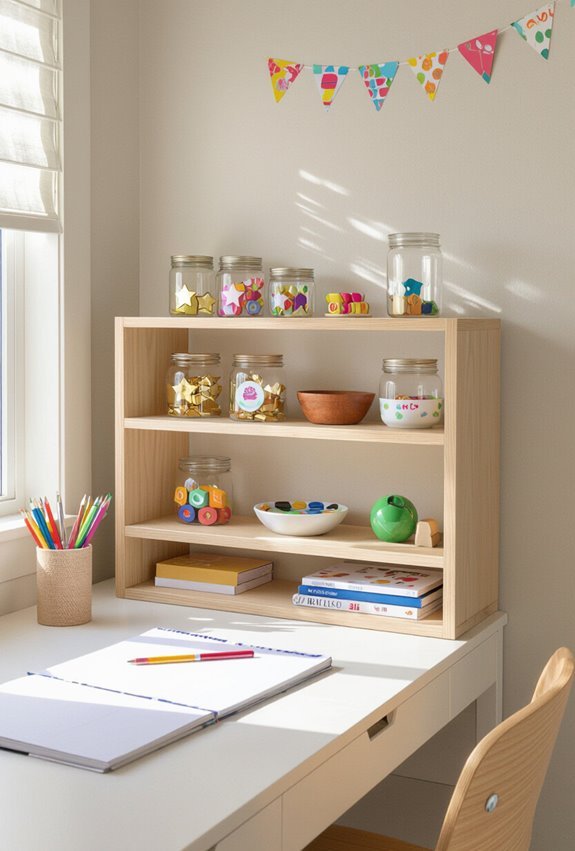
After setting up a timer to keep study sessions on track, you can boost your child’s motivation by creating a reward corner.
Use a token system where your child earns tokens for focused work, which they can exchange for small prizes.
Incorporate sticker rewards for quick achievements, making progress visible and encouraging consistent effort during study time.
Rotate Study Room Decor to Keep the Space Fresh
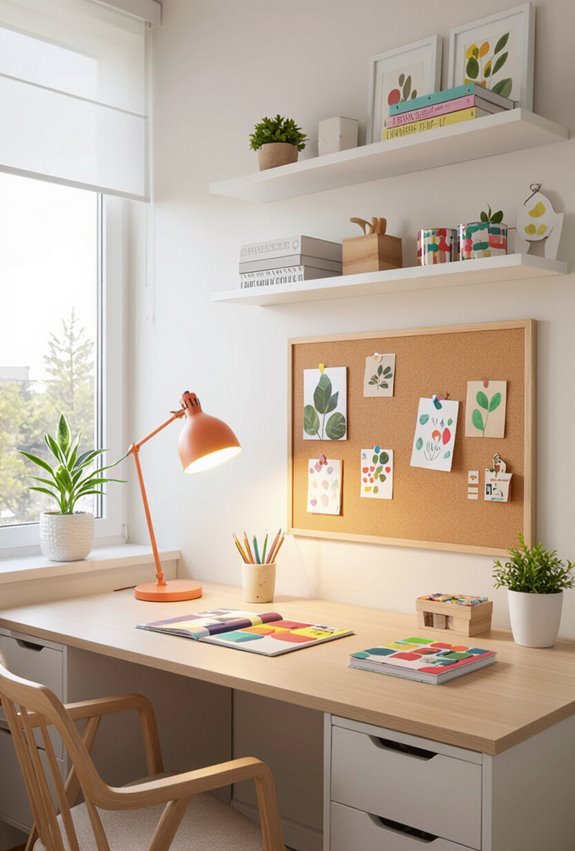
Though your child may enjoy their study space as it is, changing up the decor every few weeks can keep their environment stimulating and inviting.
Swap out seasonal artwork to reflect holidays or nature’s changes, and try rotating rugs to add fresh textures and colors.
These simple updates help maintain your child’s interest and create a dynamic, focused learning atmosphere.
Minimalist Study Spaces
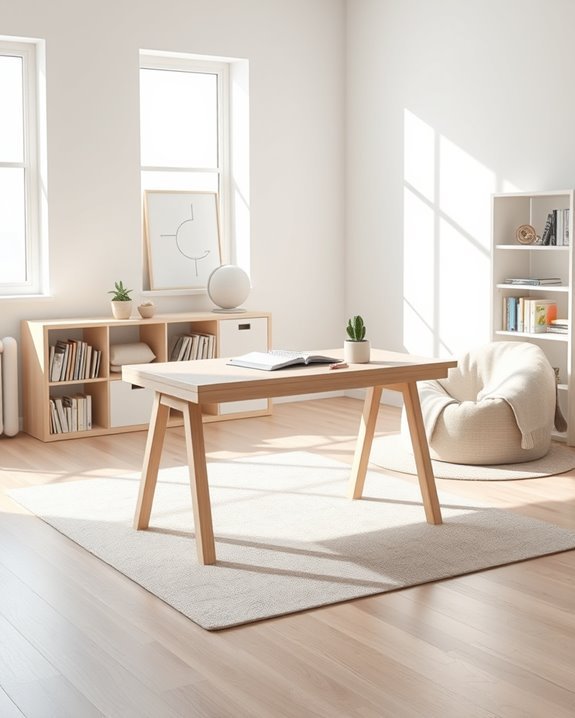
For some children, a minimalist study space can foster focus and clarity, eliminating distractions typical in more vibrant environments.
By using minimalist decor and organized layouts, you can create an environment that encourages productivity.
Choose essential furniture pieces and limit decorative items to maintain a serene atmosphere.
This simplicity helps your child concentrate better, enhancing their learning experience considerably.
Nature-Inspired Learning Areas
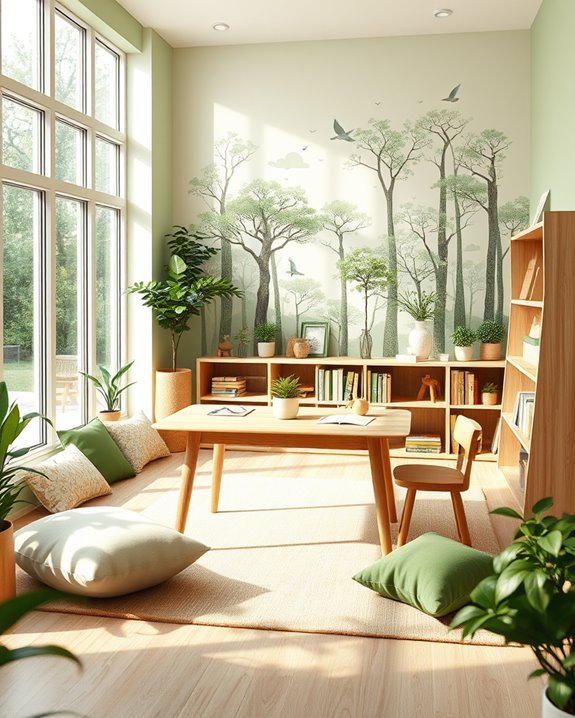
When you incorporate elements of nature into a child’s study area, it can markedly enhance their creativity and focus.
Use nature-themed decor, like leaf patterns or earthy colors, to create a calming atmosphere.
Adding outdoor study elements, such as a small indoor garden or natural light from windows, can foster a connection to the environment, making learning more engaging and enjoyable for your child.
Functional Dual-Purpose Spaces

Creating functional dual-purpose spaces in your child’s study room can maximize both utility and enjoyment.
By incorporating flexible layouts, you can easily transform the area for studying or play. Use integrated technology, like smart boards or tablets, to enhance learning while keeping the space engaging.
This approach not only fosters productivity but also encourages creativity in a versatile environment.
Timeless Classic Study Areas
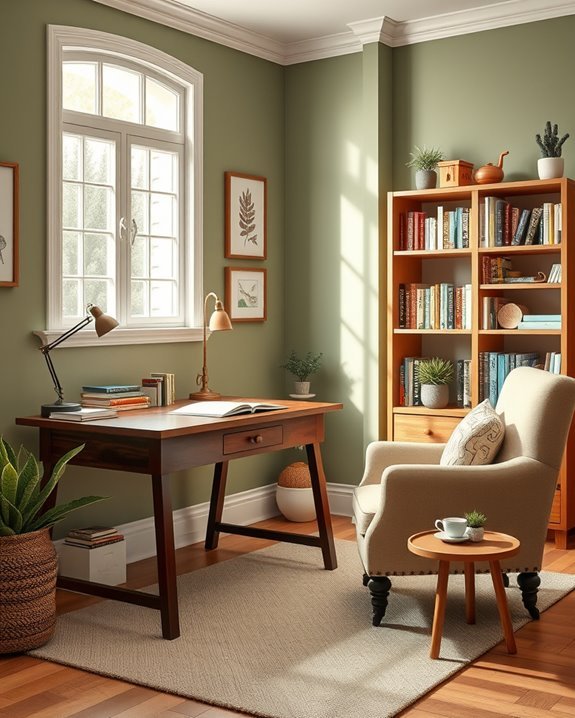
Timeless classic study areas evoke a sense of calm and focus, making them perfect for nurturing young minds.
You can create a serene environment using classic color palettes like soft blues and warm neutrals. Incorporating timeless decor elements, such as wooden furnishings and vintage accessories, adds character.
This combination fosters concentration, inspiring your child to engage deeply with their studies in a beautifully balanced space.
Personalized Study Corners
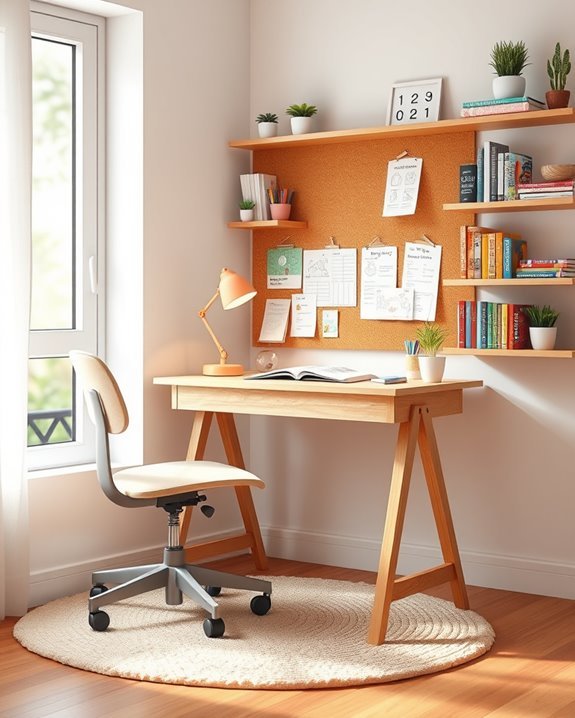
Personalized study corners can transform a simple space into an inspiring and motivating environment.
By incorporating customized decor that reflects your child’s interests, you can create a unique study theme. Choose colors, artwork, and accessories that resonate with them, making the corner inviting.
This personal touch not only boosts motivation but also fosters a love for learning in a comfortable setting.
Arts and Crafts Study Rooms

An arts and crafts study room can spark creativity and inspire your child to explore their artistic side.
To foster this environment, focus on artistic organization and creative storage solutions. Use labeled bins and shelves to keep supplies tidy and accessible.
Encourage your child to personalize the space with their artwork, making it a vibrant reflection of their creativity and interests.
Open Shelving for Organization
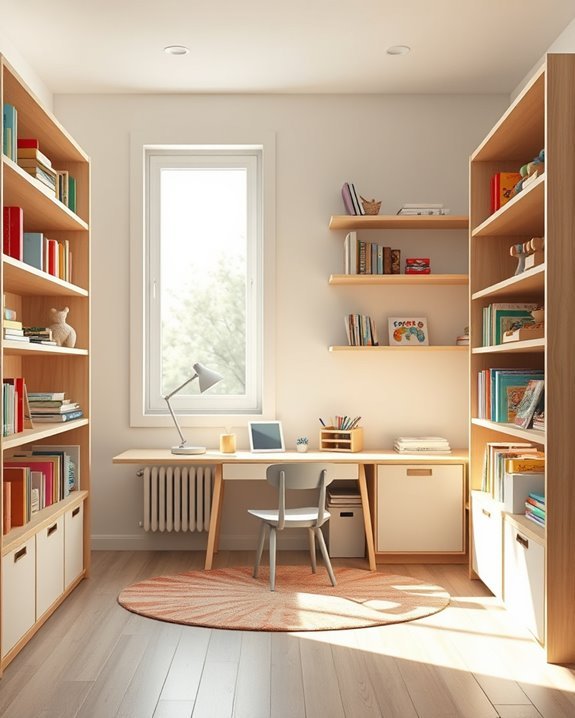
Creating a well-organized study space goes hand in hand with choosing the right furniture, such as multi-functional desks.
Open shelving designs can enhance your child’s organized learning by providing easy access to books and supplies. These shelves eliminate clutter, making it simpler for kids to find what they need.
With the right arrangement, open shelving can inspire creativity and focus in their study environment.
Quiet and Calm Study Environments

To foster effective learning, a quiet and calm study environment is essential for children.
Use soundproof partitions to minimize distractions and enhance focus.
Opt for calming colors like soft blues or greens to create a serene atmosphere.
These elements help reduce anxiety, allowing your child to concentrate better on their studies and feel more at ease while learning.
Study Areas With Built-In Storage

While a clutter-free space can markedly enhance a child’s focus, incorporating built-in storage in study areas is a smart way to keep materials organized and easily accessible.
Consider using hidden compartments, wall-mounted shelves, and versatile organizers. Creative cubbies, multifunctional bins, and stackable containers with personalized labels make for effective space-saving solutions.
Don’t forget under desk storage and modular systems to maximize closet study areas!
Bright Lighting Solutions

Good lighting can transform a study room, making it easier for children to concentrate on their tasks.
Use a combination of ambient lighting and task lighting to create balance. Natural light is ideal, but smart lighting systems with adjustable brightness and energy-efficient bulbs can enhance color temperature.
Incorporate decorative fixtures and accent lighting, while light-diffusing curtains soften harsh rays for a cozy atmosphere.
Color-Coded Study Zones
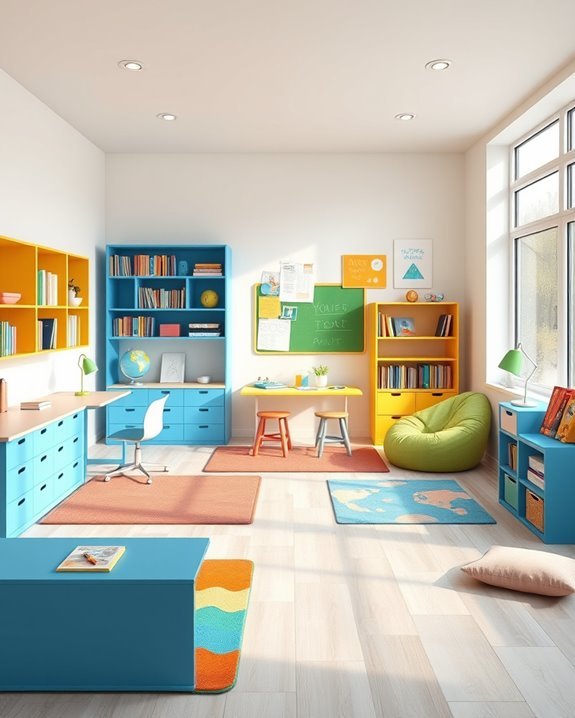
Creating color-coded study zones not only enhances organization but also boosts focus and productivity.
By using distinct study zone colors, you can designate areas for specific tasks like reading, writing, or art.
Incorporate color coded shelves to store materials accordingly; this visual cue helps your child easily find what they need, making study time more efficient and enjoyable.
Cozy Study Bunk Beds

While maximizing space in your child’s study area, consider cozy study bunk beds that seamlessly blend comfort and functionality.
These smart bunk bed designs provide a perfect nook for studying while offering a cozy sleeping space above.
Pair them with soft, cozy bedding to create an inviting atmosphere.
Your child will love having a dedicated area for learning that feels both safe and comfortable.
Outdoor-Inspired Study Spaces

Creating a vibrant study environment doesn’t have to be limited to indoor spaces.
Consider setting up a garden study where your child can immerse themselves in outdoor learning. Use a cozy nook with comfortable seating surrounded by plants, or a shaded area for fresh air and inspiration.
Nature can boost focus and creativity, making study sessions more enjoyable and effective.
Study Spaces With Floor Cushions
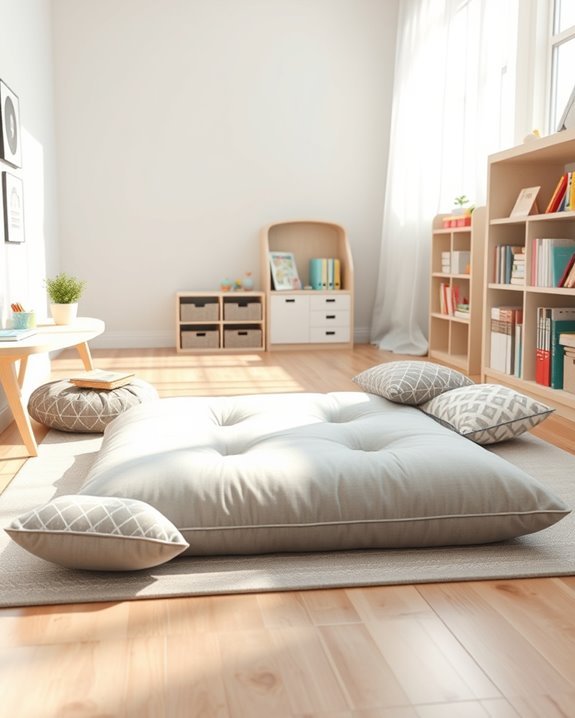
While incorporating floor cushions in your child’s study space, you’ll find that it not only adds comfort but also encourages a relaxed atmosphere for learning.
The benefits of floor cushions include increased flexibility and a cozy vibe, making study sessions enjoyable.
You can choose from various styles, like vibrant patterns or soft textures, to match your child’s personality and enhance their focus.
Under-Stairs Study Areas
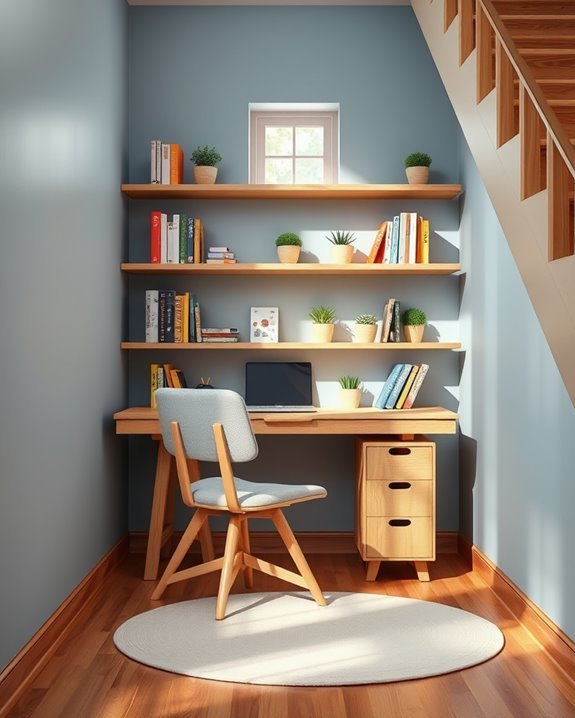
Transforming an under-stairs nook into a study area can maximize your home’s space while providing a unique environment for your child to learn.
You can install under stairs desks that fit snugly in the corner, creating a cozy workspace.
Additionally, consider adding hidden storage for supplies and books, keeping the area organized and clutter-free, making studying more enjoyable and efficient.
Study Rooms With Large Windows

Creating a study room with large windows can greatly enhance your child’s learning experience by flooding the space with natural light.
This bright environment boosts focus and motivation. To manage glare and provide privacy, consider stylish window treatments that complement the room’s decor.
Study Rooms With Bean Bags
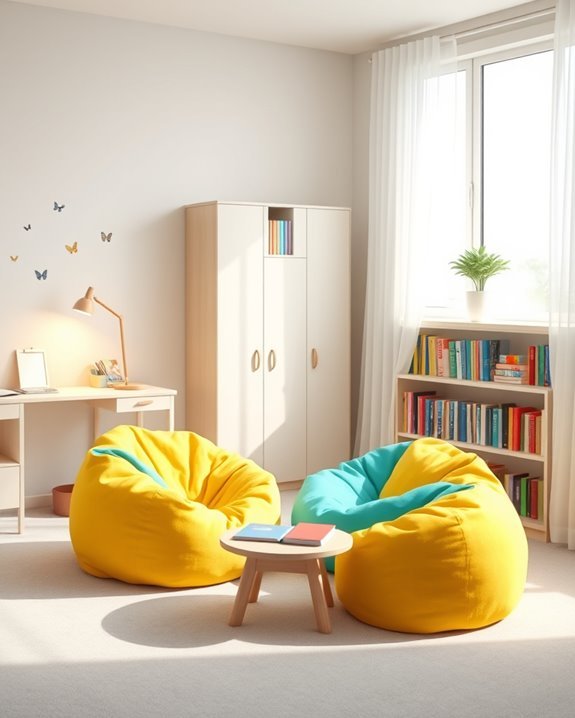
Bean bags can transform a child’s study room into a cozy and inviting space that encourages relaxation and focus.
With their soft, flexible design, they provide comfortable seating, making study sessions more enjoyable.
The bean bag benefits extend beyond comfort; they also promote better posture and can be easily moved around, allowing your child to create their ideal learning environment.
Modular Study Furniture
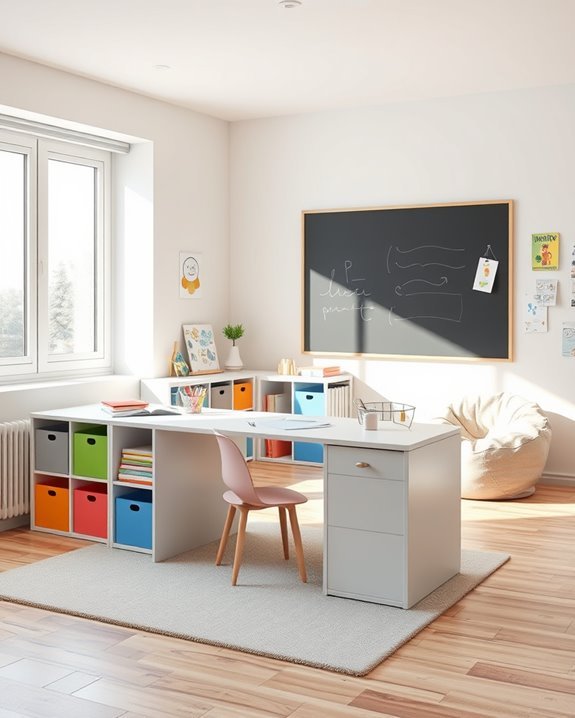
Modular study furniture offers a versatile solution for children’s study rooms, allowing you to adapt the space as their needs change.
You can easily rearrange modular shelving to create the perfect storage for books and supplies.
Plus, adjustable seating guarantees comfort as your child grows, providing the right height and support for different activities.
This flexibility promotes a productive learning environment.
Conclusion
Incorporating thoughtful design into children’s study spaces can greatly enhance their focus and creativity. Did you know that children who study in well-designed environments can improve their concentration by up to 20%? By creating bright, minimalist, or nature-inspired areas, you not only make learning more enjoyable but also foster a positive mindset. So, whether it’s a cozy nook or a themed room, investing in these study spaces can truly transform your child’s learning experience.
